New Jersey Reciprocal Fishing Waters With Pennsylvania
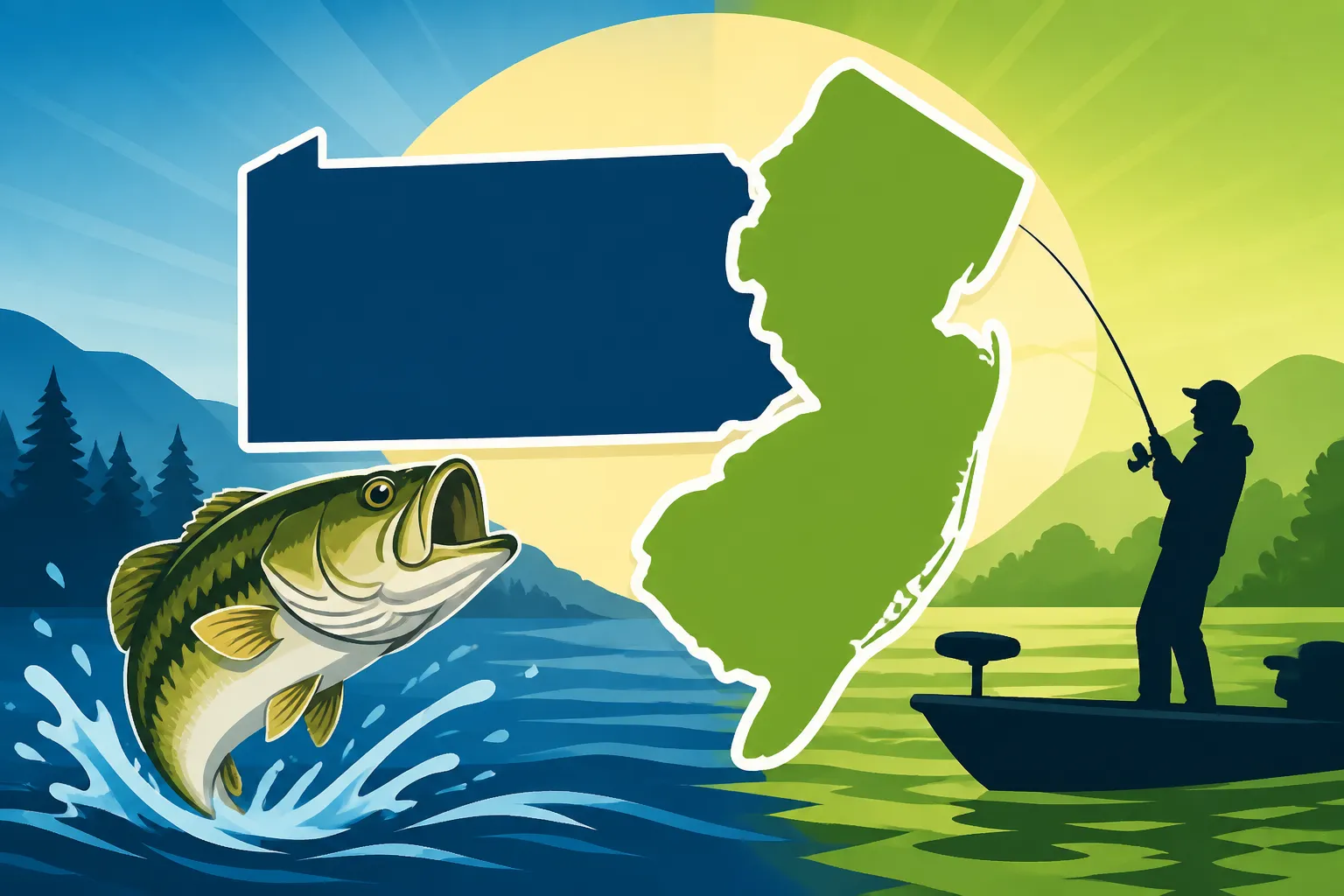
Navigating the fishing regulations when two states share a border river can be incredibly confusing, and the Delaware River, a beloved waterway for countless anglers, is no exception. Many a fishing trip has started with a nagging worry: "Do I need two licenses to fish the Delaware River between New Jersey and Pennsylvania?" It's a valid concern, and the last thing anyone wants is to get a ticket for an honest mistake. This comprehensive guide is here to clear up all that confusion, helping you understand exactly how the reciprocal fishing agreement works between New Jersey and Pennsylvania so you can focus on what truly matters: catching fish.
Understanding Reciprocal Agreements in Fishing
The idea of reciprocal fishing agreements might sound like something straight out of a legal textbook, but it's actually a super practical solution to a common problem faced by anglers in border states. Essentially, it's an agreement that says, "Hey, if you've got a valid fishing license from our state, you can fish in their shared waters too, and vice-versa." It saves anglers the hassle and expense of buying two licenses for one body of water.
What is Reciprocal Fishing?
At its core, reciprocal fishing means that your New Jersey fishing license allows you to legally fish in certain designated waters that are shared with Pennsylvania, even if you technically cast your line into what might be considered Pennsylvania territory. The same courtesy is extended to Pennsylvania anglers holding a valid license from their state when they fish in the New Jersey side of those shared waters. It’s a handshake agreement between the states' fish and wildlife agencies that acknowledges the reality of shared resources and common sense. Without such agreements, every time your boat drifted a few feet across an invisible state line, or if you cast from one shore to the opposite bank, you'd technically be breaking the law. It’s a relief valve for both anglers and law enforcement, making fishing less complicated and more enjoyable.
Why Are Reciprocal Agreements Necessary?
Imagine trying to fish the mighty Delaware River, a ribbon of water that forms a natural boundary for miles and miles, if there were no reciprocal agreement. You'd need to carry both a New Jersey and a Pennsylvania license at all times, constantly worrying about whether your lure landed in the "wrong" state's water. Or, if you're a shore angler, you'd only be able to cast so far out, or you'd be restricted to fishing only from the banks of the state where your license was purchased. It would be a bureaucratic nightmare and would severely limit access to some truly fantastic fishing opportunities. These agreements exist precisely to prevent such absurdity. They ensure that anglers can enjoy continuous stretches of water, like the Delaware, without constantly fretting over invisible lines. It promotes conservation across the entire watershed, as both states have a vested interest in managing fish populations within the shared resource, rather than acting in isolation.
The Delaware River: New Jersey and Pennsylvania's Shared Fishery
The Delaware River is the shining example of reciprocal fishing waters between New Jersey and Pennsylvania. It's a truly magnificent river, offering everything from smallmouth bass to American shad, and its shared status is what makes it so accessible to anglers from both sides.
The Main Stretch of the Delaware River Agreement
The reciprocal agreement primarily covers the main stem of the Delaware River, from its uppermost boundary where New York meets New Jersey and Pennsylvania, all the way down to the point where the freshwater turns brackish and eventually becomes Delaware Bay. This vast stretch means that whether you're fishing near the iconic Delaware Water Gap, enjoying a quiet morning near Frenchtown, or casting for smallmouth bass near Lambertville, your single state license generally covers you. It's a huge benefit, especially for those who frequent various access points along the river. For instance, if you launch your boat from a New Jersey ramp and drift towards the Pennsylvania side, you don't need to panic about crossing an imaginary line. It's worth noting that this agreement is a long-standing tradition that has made fishing the Delaware River a seamless experience for generations. If you're planning a trip, be sure to check the latest regulations by reading the New Jersey Fish and Wildlife Digest.
The Specifics of the Reciprocal License
What exactly does "reciprocal" mean in terms of your license? It means that if you possess a valid New Jersey fishing license, you are authorized to fish in the shared waters of the Delaware River from either the New Jersey or Pennsylvania bank, or from a boat launched from either state. The reverse is also true for Pennsylvania license holders. So, a New Jersey resident with their annual freshwater license can fish the entirety of the main stem of the Delaware River. There’s no need for an additional Pennsylvania license unless you plan on fishing in a non-reciprocal body of water within Pennsylvania, like one of their inland lakes or feeder streams. This simplifies things immensely and is a core reason why so many anglers adore the Delaware.
What a New Jersey License Covers on the Delaware River
Let's break down exactly what your New Jersey license permits when you're on the Delaware River, especially concerning different fishing scenarios. This is where many of the specific questions come up.
Fishing from the New Jersey Shoreline
If you're an angler who prefers to keep your feet on solid ground, fishing from the New Jersey shoreline of the Delaware River is straightforward: your New Jersey freshwater fishing license is all you need. You can cast out into the river, no matter how close or far your lure lands to the Pennsylvania bank, as long as you remain on the New Jersey side. This applies whether you're targeting smallmouth bass, casting for striped bass during their migration, or trying your luck for American shad in the spring. However, remember that while your license covers the water, specific access points might have their own rules. For instance, certain state parks or private properties along the river might require additional permits or have restricted hours, but this is separate from your fishing license requirement. Always respect private property signs and be aware of any local ordinances.
Fishing from a Boat on the Delaware
This is where the reciprocal agreement truly shines for boaters. If you launch your boat from a New Jersey ramp, your valid New Jersey fishing license allows you to fish anywhere on the main stem of the Delaware River, right up to the Pennsylvania shoreline. And, if you were to launch your boat from the Pennsylvania side, you'd still be covered by your New Jersey license for fishing purposes on the main stem. This means you can drift, troll, or anchor anywhere on the river without worrying about which side of the invisible line you're on. This seamless access is a huge boon for anglers pursuing species that roam the entire river, like migratory fish or widespread populations of bass and walleye. Just ensure that your boat itself is properly registered according to the state you're launching from, and you adhere to all boating safety regulations. Remember, the reciprocal agreement is for fishing privileges, not necessarily for boating registration or other specific boating laws, which generally follow the state where your vessel is registered.
Important Considerations and Exceptions
While the reciprocal agreement on the Delaware River is fantastic, it's crucial to understand its limitations and specific nuances. Not every piece of water connected to the Delaware falls under the same umbrella.
Tributaries and Feeder Streams
Here's one of the most critical distinctions: the reciprocal agreement only applies to the main stem of the Delaware River itself. It does not extend to the tributaries, creeks, or feeder streams that flow into the Delaware from either state. So, if you're fishing in New Jersey's Musconetcong River, a renowned trout stream, you absolutely need a New Jersey fishing license and a New Jersey Trout Stamp if applicable. Similarly, if you decide to venture into a Pennsylvania creek that feeds the Delaware, you would need a valid Pennsylvania fishing license and any required permits from their state. This is a common point of confusion, so always double-check where you are. Think of the Delaware River as the big highway, and the tributaries as the local roads; your "main highway pass" doesn't cover the local roads in another state.
Trout Stocked Waters and Special Regulations
Even within the main stem of the Delaware River, there can be specific regulations for certain species or areas that anglers need to be aware of. While your New Jersey license generally covers fishing for trout in the main stem, if you decide to fish a specifically designated "trout stocked water" or a "Trout Conservation Area" within Pennsylvania that happens to be a small offshoot or pond, you might fall under Pennsylvania's specific trout regulations, which could include the need for a Pennsylvania trout stamp. Always consult both state's latest fishing regulation digests – the New Jersey Fish and Wildlife Digest: Where to Find the Current Rules is your best friend for New Jersey rules, and Pennsylvania has its own similar publication. These digests will outline any special areas, season dates, or How Bag and Size Limits Work in New Jersey for species like trout that might have specific rules. It's always better to be safe than sorry when it comes to adhering to conservation efforts.
Carrying Your License and Proof of ID
Regardless of whether you're fishing from shore or boat, and especially when utilizing a reciprocal agreement, you must carry proof of your valid fishing license and a form of identification. A digital copy on your phone is usually acceptable, but having a physical printout can sometimes be easier, especially if you're in an area with spotty cell service. Conservation Police Officers (CPOs) or Waterways Conservation Officers (WCOs) from either New Jersey or Pennsylvania have the authority to check licenses on the shared waters of the Delaware River. They need to confirm that your license is valid from one of the two states involved in the agreement. Being able to quickly produce your license and ID will ensure a smooth interaction and demonstrate that you're a responsible angler following the rules. You can find detailed information on Carrying Proof of Your New Jersey Fishing License to make sure you're always prepared. Don't risk a penalty by fishing without proper documentation.
Here's a quick summary of the reciprocal fishing agreement between New Jersey and Pennsylvania on the Delaware River:
| Feature | New Jersey Fishing License Holder (on Delaware River) | Pennsylvania Fishing License Holder (on Delaware River) |
|---|---|---|
| Main Stem Coverage | Yes, covered for fishing from either bank or from a boat anywhere on the main stem. | Yes, covered for fishing from either bank or from a boat anywhere on the main stem. |
| Tributaries/Feeder Streams | No, need PA license for PA tributaries; NJ license for NJ tributaries. | No, need NJ license for NJ tributaries; PA license for PA tributaries. |
| Trout Stamp Required | Only if fishing designated NJ trout waters or specific PA trout waters (check rules). | Only if fishing designated PA trout waters or specific NJ trout waters (check rules). |
| Proof of ID/License | Mandatory to carry valid NJ license and photo ID. | Mandatory to carry valid PA license and photo ID. |
| Season/Size Limits | Generally abide by the regulations of the state whose license you hold, but always check for species-specific Delaware River rules. | Generally abide by the regulations of the state whose license you hold, but always check for species-specific Delaware River rules. |
Remember, while the reciprocal agreement makes fishing much easier, it's still up to you to be informed. Always review the latest regulations from both the New Jersey Division of Fish and Wildlife and the Pennsylvania Fish & Boat Commission before heading out. Sometimes, specific species regulations, like the New Jersey Striped Bass Slot Limit Explained or even changes to the New Jersey Fluke Size and Bag Limits Explained, can apply universally across shared waters, so knowing the current rules is essential. For freshwater species, understanding things like New Jersey Freshwater Fishing Regulations Every Angler Should Know will keep you in compliance. Many anglers even purchase a small, laminated copy of the current regulations to keep in their tackle box or download the official app to their phone. You can usually find these regulations and even purchase licenses through the state's official wildlife websites, or sometimes through retailers like Amazon if you're looking for a digital version of the digest or specific gear for your trip.
The beauty of the Delaware River, and these reciprocal agreements, lies in the freedom they offer. By understanding these simple rules, you can enjoy some of the best fishing the Northeast has to offer without any unnecessary stress. Just grab your rod, your license, and your sense of adventure, and hit the water!
Disclaimer
The information provided in this guide is for general informational purposes only and is subject to change. Fishing regulations, license requirements, and reciprocal agreements can be updated by state agencies at any time. Always consult the official New Jersey Division of Fish and Wildlife and Pennsylvania Fish & Boat Commission websites or their current regulation digests for the most accurate and up-to-date information before engaging in any fishing activities. Adherence to all local, state, and federal laws is the responsibility of the angler.