New Jersey Reciprocal Fishing Waters With New York
It's incredibly frustrating when you're out on the water, enjoying a peaceful day of fishing, and suddenly find yourself wondering if you've accidentally crossed an invisible state line, putting you at risk of a hefty fine. The thought of needing two different fishing licenses just to fish a single lake or river is enough to make anyone scratch their head. This guide is here to untangle the complexities of reciprocal fishing waters between New Jersey and New York, helping you understand where your license is valid and how to avoid any unwanted run-ins with conservation officers.
Understanding Reciprocal Fishing Agreements
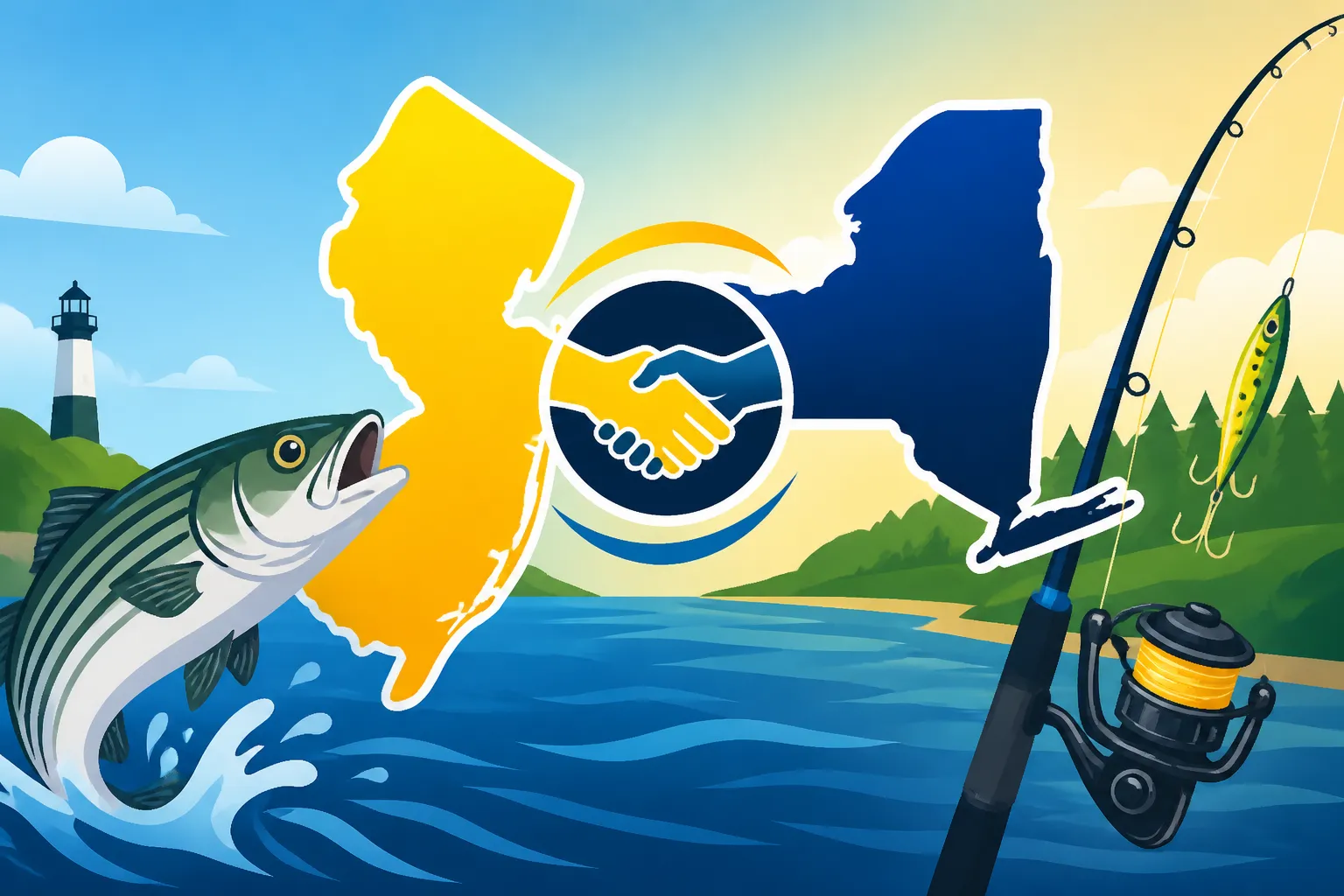
Reciprocal fishing agreements are essentially handshake deals between states that share bodies of water. Imagine a large lake, like Greenwood Lake, or a sprawling river like the Hudson, that naturally forms a border between two states. Without these agreements, an angler might need a New Jersey fishing license to cast on one side of a submerged line and a New York fishing license to cast on the other, which is just impractical and a major headache for anyone trying to enjoy a relaxing day. These agreements aim to simplify things for us anglers, allowing us to fish certain shared waters with a valid license from either state.
What Reciprocity Means for Anglers
For you, the angler, reciprocity means a great deal of convenience. Instead of purchasing two separate licenses – say, a full New Jersey Resident Fishing License Requirements and a New York equivalent – you can often fish the designated reciprocal waters with just one. It's a fantastic way to expand your fishing opportunities without doubling your administrative burden or cost. This doesn't mean all rules are the same, though. While your license might be valid across the border, the actual fishing regulations, like what fish you can keep, their size, and daily limits, often still adhere to the specific state where your line is in the water. It’s a subtle but critical distinction that we'll dive into more deeply.
The Rationale Behind Shared Waters
These agreements aren't just about angler convenience; they also make a lot of sense from a fisheries management perspective. Fish don't carry passports, and they certainly don't recognize state borders. A striped bass migrating up the Hudson River isn't going to stop at the New Jersey-New York line. By having reciprocal agreements, both states can work together on conservation efforts, stocking programs, and managing shared fish populations more effectively. It ensures a cohesive approach to protecting and promoting fishing in these vital interstate waterways, which ultimately benefits everyone who loves to cast a line.
Specific Reciprocal Waters Between New Jersey and New York
When we talk about New Jersey and New York, there are two major bodies of water that immediately come to mind for reciprocal fishing agreements: Greenwood Lake and the Hudson River. These are crucial areas for many anglers, and understanding their specific rules is key to a hassle-free day on the water.
Greenwood Lake
Greenwood Lake is a beautiful, 9-mile-long freshwater lake nestled in both Passaic County, New Jersey, and Orange County, New York. It's probably the most straightforward example of reciprocal waters between the two states. The agreement for Greenwood Lake is pretty clear: if you possess a valid freshwater fishing license from either New Jersey or New York, you are legally permitted to fish anywhere on Greenwood Lake. This is fantastic news for anglers who live near the border, as it opens up the entire lake for exploration without the need for a second license.
However, a crucial point here, one that often catches anglers off guard, is that while your license is reciprocal, the fishing regulations you must follow depend on where your boat or feet are. If you're fishing in the New Jersey portion of the lake, you must abide by New Jersey's freshwater fishing regulations, including bag limits, size limits, and seasons. If you drift into the New York portion, you then become subject to New York's rules. This often requires anglers to be vigilant and aware of their location, especially since the border isn't marked by buoys or visible lines on the water. It's always a good idea to have both states' regulations handy, perhaps even printed or downloaded onto your phone, especially if you plan to traverse the entire lake. You can learn more about Greenwood Lake Fishing Guide.
The Hudson River
The Hudson River presents a slightly more complex scenario due to its tidal nature and the varying fish species found in its different sections. For the portion of the Hudson River that forms the boundary between New Jersey and New York, generally speaking, a valid freshwater fishing license from either state allows you to fish its waters. This applies to the upper, freshwater tidal sections where species like bass, catfish, and various panfish reside. This arrangement simplifies access to a hugely productive fishery.
However, as the Hudson River flows south, it transitions into brackish and then full saltwater before emptying into the Atlantic Ocean. Once you enter the marine district or are targeting marine species like striped bass further south, the rules can change. While your freshwater license might cover you in the upper reaches, you'll need to consider additional requirements for saltwater fishing. New Jersey, for instance, requires anglers fishing for marine species to register with the New Jersey Saltwater Registry Program Requirements, which is free. New York has its own Marine Recreational Fishing Registry. Even if you have a New Jersey freshwater license, if you’re targeting striped bass in the lower, tidal Hudson, you still need to ensure you're compliant with the marine registry requirements of whichever state you're fishing closest to, or if you're a New Jersey resident, always register with New Jersey. The boundary here isn't always clear, so it’s safer to err on the side of caution and understand both states' marine requirements if you plan to fish the tidal portions of the Hudson. You might find our Raritan Bay and Sandy Hook Bay Fishing Guide helpful for understanding contiguous saltwater areas.
Other Border Waters and Their Nuances
While Greenwood Lake and the Hudson River are the primary focus, other smaller streams or reservoirs might touch both states. However, these rarely have formal reciprocal agreements for licensing. In most cases, if a smaller water body forms a border or crosses into both states, you will typically need a license for the state whose waters you are physically fishing in. This means if you start on the New Jersey side of a small border stream and decide to wade across to the New York side, you would technically need a New York license. It's always best to consult the official regulations of both the New Jersey Department of Environmental Protection (NJDEP) Fish & Wildlife and the New York State Department of Environmental Conservation (NYSDEC) for any specific, smaller bodies of water you plan to fish near the border.
Essential Rules and Considerations for Reciprocal Waters
Even with reciprocal license agreements, there are still some critical details every angler needs to understand to stay on the right side of the law and ensure a responsible fishing trip. It's not just about having a piece of paper; it's about knowing the rules of the game.
License Requirements
As discussed, for specified reciprocal waters like Greenwood Lake and certain parts of the Hudson River, a valid fishing license from either New Jersey or New York is sufficient. This is a huge convenience, but it doesn't mean you can leave your license at home. You absolutely must have your physical or digital fishing license on your person, readily available for inspection by a conservation officer from either state. They have the authority to check licenses regardless of which state issued it. For more details on carrying your license, check out Carrying Proof of Your New Jersey Fishing License. It's your responsibility to ensure your license is current and properly issued. Don't forget, if you fish for trout, you might need a New Jersey Trout Stamp Requirements Explained even if your general fishing license is reciprocal.
Bag and Size Limits
This is where many anglers can get tripped up. While your license might be valid in both states' portions of reciprocal waters, the regulations governing what you can catch and keep are not reciprocal. This is a critical distinction! You must always adhere to the bag limits, size limits, and season dates of the state in which your line is currently in the water.
Let's use Greenwood Lake as an example: Imagine New Jersey has a certain size limit for largemouth bass, and New York has a different one. If you catch a bass in the New Jersey portion of the lake, even if you have a New York license, you must follow New Jersey's bass regulations for that fish. If you then move your boat and catch another bass in the New York portion, you'd follow New York's rules. This requires anglers to be keenly aware of their location, especially if they are moving around on the lake. It's not always easy, but ignorance of the law is no excuse. Always check the current New Jersey Daily Bag Limits by Species before you head out.
Special Stamps and Registrations
Beyond your basic fishing license, both New Jersey and New York have additional requirements for certain types of fishing. For instance, in New Jersey, if you plan to fish for trout in designated trout waters, you need a Trout Stamp in addition to your regular license. If you're fishing for saltwater species, even in the tidal Hudson, you need to be registered with the New Jersey Saltwater Registry Explained. New York has its own similar requirements.
The reciprocal agreement usually only covers the general fishing license. It does not automatically extend to these additional stamps or registrations. So, if you're fishing for trout in the New Jersey part of Greenwood Lake with a New York general license, you would likely still need a New Jersey Trout Stamp. It’s essential to clarify these nuances with both state agencies if you're targeting specific species that require additional permits.
Navigating Potential Confusions and Staying Legal
It's clear that fishing shared waters can be a bit of a maze, even with reciprocal agreements in place. To truly enjoy your time on the water without the worry of fines or legal trouble, proactive planning and a good understanding of the rules are your best defense.
Identifying State Boundaries on Shared Waters
Knowing exactly where you are on a large body of water like Greenwood Lake or the expansive Hudson River can be challenging, as there are no painted lines or signs telling you "Welcome to New Jersey Fishing Waters!" Modern technology is your friend here. GPS-enabled fish finders or even fishing apps on your smartphone (like Navionics, Fishbrain, or even Google Maps with satellite view) can often show you the exact state boundary line. Before your trip, take some time to study maps of these reciprocal waters and familiarize yourself with landmarks that might indicate a boundary, such as specific coves, points, or bridges. This pre-trip scouting can make all the difference in staying compliant. Sometimes, speaking with local bait shops can also provide invaluable on-the-ground knowledge from experienced anglers.
Where to Find Up-to-Date Regulations
Regulations, especially concerning bag and size limits, can change. They are often updated annually, and sometimes even mid-season, depending on stock assessments and conservation needs. Relying on old information is a recipe for trouble.
- New Jersey's Official Digest: The New Jersey Department of Environmental Protection (NJDEP) Fish & Wildlife publishes an annual Freshwater Fishing Digest and a Marine Fishing Digest. These are your bibles for New Jersey regulations. You can typically find them online on the NJDEP website, or pick up a physical copy at licensed bait and tackle shops, and often sporting goods stores like some Bass Pro Shops or even Walmart locations. Reading the New Jersey Fish and Wildlife Digest is crucial.
- New York's Official Guide: Similarly, the New York State Department of Environmental Conservation (NYSDEC) provides freshwater and marine fishing regulations on its website and in printed guides.
- Online Resources: Both states' official websites are the most reliable sources for the absolute latest regulations. Before every trip to reciprocal waters, take a few minutes to check both states' online digests or regulation pages. You can also find fishing accessories, maps, and even digital guides through online retailers like Amazon, which can be useful tools for preparing your trip.
It’s always a good habit to check these resources right before you head out. What was true last year, or even last month, might have changed. Staying informed is the best way to protect yourself and ensure you’re contributing to sustainable fishing practices.
Here's a quick reference table for reciprocal fishing between New Jersey and New York:
| Water Body | License Reciprocity (NJ or NY) | Regulations to Follow | Notes |
|---|---|---|---|
| Greenwood Lake | Yes (Freshwater) | State where line is in the water | Anglers must abide by the bag/size limits and seasons of the state they are currently fishing in. GPS recommended for boundary awareness. |
| Hudson River | Yes (Freshwater sections) | State where line is in the water | Primarily for freshwater tidal sections. For marine species (e.g., striped bass) in lower tidal areas, separate marine registrations (NJ Saltwater Registry or NY Marine Registry) may apply. |
| Other Border Streams | Generally No | State where line is in the water | Assume you need the license for the state you are physically fishing in unless explicitly stated otherwise by both state agencies. |
This table should give you a clear, at-a-glance understanding, but always remember to dig into the full details from official sources before your trip!
Disclaimer
The information provided in this guide is for general informational purposes only and is subject to change. Fishing regulations, license requirements, and reciprocal agreements are determined by state and federal agencies and can be updated without notice. Always consult the official websites and publications of the New Jersey Department of Environmental Protection (NJDEP) Fish & Wildlife and the New York State Department of Environmental Conservation (NYSDEC) for the most current and accurate information before engaging in any fishing activities. Failure to comply with all applicable regulations may result in penalties.