What Documents Prove New Jersey Residency for a Fishing License?
It can feel incredibly frustrating when you're just trying to do the right thing, follow the rules, and get your New Jersey fishing license, only to be met with a confusing list of residency requirements. Many anglers moving to or within the state find themselves scratching their heads, wondering which specific documents the state will actually accept. This guide is here to clear up that confusion, detailing exactly what paperwork you need to prove your New Jersey residency for a fishing license, helping you avoid unnecessary trips or delays.
Understanding New Jersey Residency for Your Fishing License
Before we dive into the nitty-gritty of specific documents, let's talk about what "residency" truly means in the eyes of the New Jersey Division of Fish and Wildlife when it comes to fishing licenses. It's more than just having a mailing address here; it's about establishing a physical presence with the intent to remain. This can be a real sticking point for folks, especially if you're new to the state or split your time between New Jersey and another location.
The 6-Month Rule: Physical Presence and Intent
The general rule of thumb that New Jersey often uses for establishing residency for various state services, including fishing licenses, is that you must have continuously resided in the state for at least six months immediately preceding your application. This isn't just a suggestion; it's often a hard-and-fast requirement. The state wants to ensure that you're a genuine resident and not just passing through or trying to get the cheaper resident rate without truly living here. It's about demonstrating a sustained connection to the Garden State.
Think of it this way: if you've been living here since last summer, paying bills, working, and generally building your life in New Jersey, you're likely going to satisfy this requirement. But if you just moved in last month, even if you own a home, you might still face questions about meeting that six-month threshold. It's a key detail that trips up a lot of people, and honestly, it can feel a bit arbitrary when all you want to do is hit the water! For a deeper dive into the specific criteria, check out our guide on what actually counts as New Jersey residency for licensing.
Establishing Domicile vs. Just Living Here
The concept of "domicile" is another important piece of the puzzle. Domicile isn't just where you currently lay your head; it's where you intend to live indefinitely, your principal home. You can only have one domicile. This means that even if you spend a few months out of the year at a vacation home in another state, if your primary home, your driver's license, your voter registration, and your primary employment are all firmly rooted in New Jersey, then this state is your domicile.
Proving domicile involves showing a pattern of behavior and documentation that points overwhelmingly to New Jersey as your true home. For instance, if your car is registered here, your kids are in New Jersey schools, and your bank accounts are linked to a New Jersey address, you're building a strong case. It's about painting a clear picture for the state that you're not just a temporary visitor, but a genuine, committed resident. This distinction is vital because simply having a P.O. Box or a friend's address in New Jersey won't cut it. They need to see a real, established life within the state borders.
Primary Documents to Prove New Jersey Residency
When you head out to purchase your New Jersey fishing license, whether it's online or in person at a licensed agent, you'll need to present official documentation that leaves no doubt about your residency. These primary documents are usually the strongest evidence you can provide.
New Jersey Driver's License or State ID
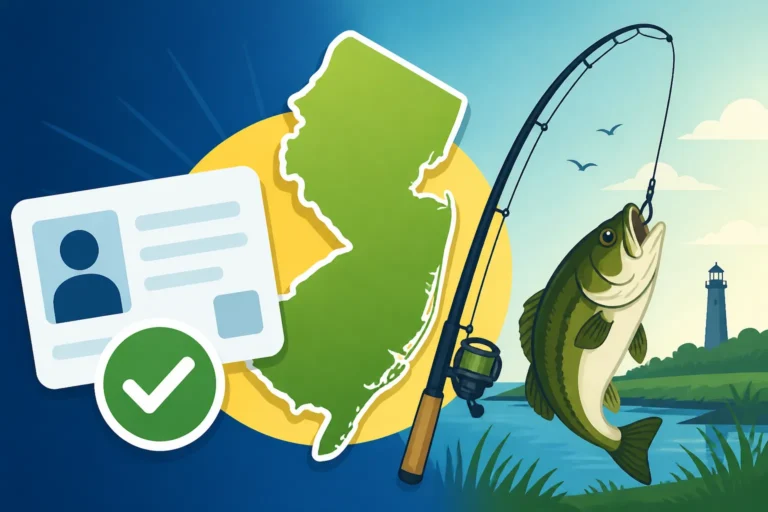
Without a doubt, the easiest and most universally accepted form of proof is a valid New Jersey Driver's License or a New Jersey Non-Driver Identification Card. These documents are issued by the New Jersey Motor Vehicle Commission (NJMVC) and typically require you to prove your residency to them first. So, if you've already gone through that process, getting your fishing license will be much smoother. The address on your driver's license or state ID card must match your current New Jersey residential address. If you've moved recently and haven't updated your license, you need to do that first. Imagine the headache of driving to a sporting goods store, excited to buy your license, only to be turned away because your ID has an old address! It's a common, frustrating scenario, so save yourself the trouble and ensure everything is up-to-date. This simple piece of plastic holds a lot of weight when it comes to verifying your status.
Property Ownership and Rental Agreements
If you don't have a New Jersey driver's license yet, or if there's any question, official documents showing your living arrangements are highly persuasive. This includes:
- Deed to Property: If you own a home in New Jersey, a copy of the deed in your name, showing your New Jersey property address, is excellent proof.
- Residential Lease Agreement: For renters, a formal, signed lease agreement for a New Jersey property, clearly stating your name, the New Jersey address, and the lease term, is crucial. The lease should be current and not expired.
These documents demonstrate a physical connection to a New Jersey address where you reside. The state wants to see that you have a fixed dwelling here. Make sure the name on the deed or lease matches the name on your application exactly. Sometimes, utility bills or even package deliveries from a service like Amazon can help corroborate that you actually live at that address, but the official housing document is the cornerstone.
Voter Registration and Tax Returns
These are strong indicators of your intent to be a New Jersey resident.
- New Jersey Voter Registration Card: Showing that you're registered to vote in New Jersey is powerful proof of domicile, as you generally register to vote where your primary residence is.
- State Income Tax Returns: A copy of your most recent New Jersey Resident Income Tax Return (NJ-1040) is another excellent piece of evidence. This clearly shows the state that you've declared New Jersey as your primary tax-paying residence. Be prepared to show the full return, not just the first page, to confirm your filing status.
These documents go beyond just a physical address; they show your legal and civic engagement with the state, reinforcing your claim of residency. They demonstrate that you're not just staying here, but actively participating as a citizen of New Jersey. Keeping copies of these important documents organized, perhaps in a folder you purchased from Amazon, can save you a lot of hassle when applying for various state services.
Secondary and Supporting Documents for Residency Proof
Sometimes, a single primary document isn't enough, or maybe you're in a situation where you don't have one readily available. That's where secondary and supporting documents come into play. These can strengthen your case or even be accepted in combination if your primary proof is slightly lacking.
Utility Bills and Bank Statements
These types of documents show ongoing activity and a consistent link to a New Jersey address over time.
- Utility Bills: Recent utility bills (electric, gas, water, internet) in your name, showing your New Jersey residential address. It's usually best to have bills from at least two different utility companies, and they should be no more than 60-90 days old. For example, a PSE&G bill and a Comcast bill would be solid. The state needs to see that you're actively using services at your declared residence.
- Bank Statements: Bank statements from a New Jersey-based financial institution, or statements from any bank clearly showing your New Jersey residential address. Like utility bills, they should be recent. These show your financial ties to the state and that your personal finances are managed from your New Jersey home.
The key here is consistency and recency. Having multiple, current bills and statements that all align with your New Jersey address paints a compelling picture. You can often access these electronically, but be ready to print them out if applying in person. If you're constantly ordering things from Amazon to your New Jersey address, that further reinforces your physical presence, though the state won't accept an Amazon shipping label as official proof of residency!
Vehicle Registration and Insurance Policies
Your vehicle documents also provide strong evidence of your residency.
- New Jersey Vehicle Registration: A current New Jersey vehicle registration card in your name for a car registered at your New Jersey address. This is another document that already required you to prove residency to the NJMVC.
- New Jersey Vehicle Insurance Policy: Your auto insurance policy declarations page, showing your New Jersey residential address. This indicates that your vehicle is primarily garaged and insured within the state.
These documents are particularly useful because they are often updated when you move, making them a current reflection of your primary residence. When combined with other proofs, they significantly strengthen your argument for New Jersey residency. The more official documents you can present that consistently show your New Jersey address, the less likely you are to encounter issues when trying to buy your New Jersey fishing license.
School Enrollment and Employment Records
For students or those new to the workforce in New Jersey, these documents can be very helpful.
- School Enrollment Records: If you or your dependents are enrolled in a New Jersey school, college, or university, official enrollment records or transcripts showing your New Jersey residential address can serve as supporting documentation. This is especially relevant for college students from out of state who establish residency here.
- Employment Records/Pay Stubs: Recent pay stubs or an employment verification letter from a New Jersey-based employer, showing your New Jersey residential address, can also contribute to proving your residency. This indicates you're working and contributing to the state's economy from within its borders.
While these might not be primary standalone proofs, they add considerable weight when you're trying to establish residency. They show that your daily life, work, or educational pursuits are centered in New Jersey. Remember, the goal is to provide a comprehensive set of documents that leaves no room for doubt about your sustained connection to the state. Our article on New Jersey fishing license for college students from out of state has more details on specific considerations for that demographic.
What to Do if You Don't Have Traditional Residency Proof
Life happens, and sometimes you don't have all the standard paperwork perfectly lined up. Maybe you've just moved, or you're living with family, or you simply lost some documents. It can feel like an impossible hurdle, but there are still avenues to prove your New Jersey residency for a fishing license.
Affidavits of Residency and Notarized Statements
In situations where traditional documents are scarce, a notarized affidavit of residency can be a viable option. This is a sworn statement, signed in front of a notary public, asserting that you are a bona fide resident of New Jersey.
- Affidavit of Residency: This document would state your name, your New Jersey residential address, the date you established residency, and a declaration that you intend for New Jersey to be your permanent home. It would also list any supporting documents you do have, even if they're not typically "primary" proofs.
- Notarized Statement from a Property Owner: If you are living with a relative or friend and your name isn't on a lease or deed, the property owner can provide a notarized letter stating that you reside at their New Jersey address. This letter should include their name, the property address, your name, and the duration of your residency. They might also need to provide a copy of their own proof of residency (e.g., their driver's license, utility bill).
It's important to understand that while these affidavits can be helpful, they are often considered supplementary. The state may still require you to combine them with other available proofs. Think of it as patching together a strong case when you don't have one single "silver bullet" document.
Combining Multiple Documents for a Stronger Case
When you lack a single, definitive document like a New Jersey driver's license, the strategy shifts to presenting a robust collection of secondary documents. The more pieces of consistent evidence you can gather, the more convincing your case becomes.
Consider gathering:
- Several recent utility bills (electric, cable, water) in your name.
- Bank statements showing transactions and your New Jersey address.
- Vehicle registration AND insurance policy showing your New Jersey address.
- Mail from government agencies (e.g., jury duty summons, Social Security statement) addressed to you at your New Jersey residence.
- Official employment verification on company letterhead with your New Jersey address.
- A recent pay stub with your New Jersey address.
The goal is to demonstrate a consistent pattern across various aspects of your life that all point to your New Jersey residency. If you have any questions about specific combinations of documents, it's always best to contact the New Jersey Division of Fish and Wildlife directly. They can sometimes offer specific guidance based on individual circumstances. Keeping all these documents in an organized folder, maybe one you found on Amazon, will make the process much less stressful.
Here's a quick summary table of commonly accepted documents:
| Document Type | Primary Proof | Secondary/Supporting Proof | Notes |
|---|---|---|---|
| Identification | Valid NJ Driver's License or State ID Card | Must have current NJ residential address. | |
| Housing | NJ Property Deed, Current NJ Lease Agreement | Recent NJ Mortgage Statement, Property Tax Bill | Name must match applicant. Lease must be current. |
| Financial/Bills | Recent NJ State Income Tax Return (NJ-1040) | Utility Bills (2 different types), Bank Statements | Bills/statements must be recent (last 60-90 days), in applicant's name, with NJ address. |
| Government/Other | NJ Voter Registration Card | NJ Vehicle Registration, Vehicle Insurance Policy | Must show current NJ residential address. |
| Employment/Education | Employment Letter/Pay Stubs, School Enrollment | Provides additional context for residency. | |
| Affidavit | Not typically standalone | Notarized Affidavit of Residency | Useful when combined with other limited proofs; may require additional verification. |
Common Misconceptions and Troubleshooting Your Application
Even with all this information, proving residency can sometimes hit a snag. There are a few common misunderstandings and situations that frequently cause issues for anglers trying to secure their New Jersey fishing license.
The "Mailbox" Residency Myth
A common misconception is that simply having a P.O. Box or receiving mail at a friend's address in New Jersey is sufficient to establish residency for a fishing license. This is absolutely not the case. The New Jersey Division of Fish and Wildlife requires proof of a physical, established residential address where you actually live. A P.O. Box is a mailing address, not a physical residence. Similarly, using a relative's or friend's address where you don't actually reside is considered misrepresentation and can lead to penalties for fishing without a license.
The state needs to see that you have a permanent home within its borders, not just a convenient mail drop. This goes back to the concept of domicile – your principal home. While you might use a P.O. Box for some mail, your official documents must consistently point to a physical dwelling in New Jersey. If you're caught fishing with a resident license but can't genuinely prove New Jersey residency, you could face significant fines and other repercussions, as detailed in our guide on penalties for fishing without a license in New Jersey.
Dealing with Recent Moves or Temporary Situations
If you've recently moved to New Jersey and haven't yet met the six-month residency requirement, or if you're in a temporary living situation, obtaining a resident license can be tricky.
- Recent Moves: If you've been in New Jersey for less than six months, you might need to purchase a nonresident annual fishing license initially. While it's more expensive, it ensures you're fishing legally. Once you've met the six-month threshold and updated all your official documents (driver's license, vehicle registration, etc.), you can then apply for a resident license. It's an investment, but it saves you from potential legal issues.
- Temporary Situations: For college students, military personnel, or those on extended work assignments, the rules can be nuanced. Generally, if your permanent legal domicile remains outside New Jersey, you're considered a nonresident. However, if you've established your domicile here (e.g., a student who plans to live and work in NJ after graduation), you might be able to prove residency with a combination of student IDs, lease agreements, and New Jersey bank accounts. It often comes down to the "intent to remain" clause. Make sure to carry proof of your New Jersey fishing license with you at all times when fishing.
It's a common frustration, but it's important to be honest about your situation. Trying to bend the rules can lead to bigger problems down the line. It's often better to play it safe and purchase the nonresident license until your residency is unequivocally established.
Resources for Assistance: NJ Fish & Wildlife Contact
When in doubt, the very best resource you have is the New Jersey Division of Fish and Wildlife itself. They are the ultimate authority on these regulations, and their staff can provide clarification on specific situations.
- Website: The official NJ Fish & Wildlife website is usually the first stop for current regulations and contact information. You can often find detailed licensing information there.
- Phone or Email: Don't hesitate to call or email their licensing department. Explain your specific circumstances clearly, and they can advise you on the best course of action and what documents they will accept. Be prepared to provide specifics about your living situation and the documents you have on hand.
Taking the initiative to contact them can save you a lot of grief and ensure you comply with all state requirements. They understand that every situation is unique, and they are there to help anglers understand the rules, not just enforce them. For general information on how to obtain your license, you can refer to our detailed guide on where and how to buy a New Jersey fishing license.
Disclaimer
Please remember that while this guide provides comprehensive information, fishing regulations and residency requirements in New Jersey can change. It is always your responsibility to consult the most current New Jersey Fish and Wildlife Digest or contact the New Jersey Division of Fish and Wildlife directly for the most up-to-date and accurate information before fishing. This content is for informational purposes only and should not be considered legal advice.