Where Do Striped Bass Spawn Along the East Coast?
It's a question many New Jersey anglers grapple with: you're out there, reeling in beautiful striped bass from our bays and ocean, and you start to wonder, "Where do all these fish actually come from?" It's easy to assume they spawn right here in our local rivers, but the truth is a bit more complex, and understanding it is key to appreciating the vast migratory journey these incredible fish undertake. This guide will take a deep dive into the primary spawning grounds of striped bass along the East Coast, helping you understand the life cycle of the fish you love to catch.
The Critical Role of Estuaries: Primary Spawning Grounds
When we talk about striped bass spawning, we're really talking about estuaries – those unique coastal areas where freshwater rivers meet the salty ocean. These aren't just any stretches of water; they are incredibly rich, complex ecosystems that provide the exact conditions needed for striped bass to reproduce successfully. Think of them as the giant nurseries of the Atlantic striped bass population, and their health is directly tied to the abundance of fish we see migrating along the Jersey Shore. It's a testament to the resilience and adaptability of these fish, but also a stark reminder of how interconnected our coastal environments truly are.
The Chesapeake Bay: The Grand Nursery
For many years, and still to a significant extent, the Chesapeake Bay has been considered the powerhouse of Atlantic striped bass production. This massive estuary, spanning Maryland and Virginia, is an intricate network of rivers, creeks, and shallow areas that offer ideal conditions for spawning. When you're fishing for striped bass in New Jersey, there's a very good chance that the fish you're targeting originated as an egg in the Chesapeake.
Within the Chesapeake Bay system, several major rivers are absolutely critical. The Susquehanna River, which flows into the northern part of the Bay, is perhaps the most well-known. But it's not alone; the Nanticoke, Choptank, Potomac, Rappahannock, and James Rivers also serve as vital spawning grounds. The sheer volume of freshwater flowing into the Bay, combined with its protected, brackish waters, creates a perfect habitat. Stripers need a specific salinity range to spawn, allowing their eggs to remain buoyant and develop properly without being swept out to sea or sinking to the bottom. The Bay's vastness means there's ample room for countless mature striped bass to gather each spring, lay their eggs, and for those eggs to hatch and the larvae to develop in relative safety. Conservation efforts in the Chesapeake Bay are paramount, as the success of its spawning directly impacts the health of the entire East Coast fishery, including our own Striped Bass Fishing in New Jersey.
Delaware River: A Vital Northern Spawning Area
While the Chesapeake often gets the most fanfare, let's not forget about our neighbors to the south, or rather, the incredibly important river that forms part of our western border: the Delaware River. This river is a significant spawning ground, especially for the more northern segment of the migratory striped bass population. For anglers living closer to this waterway, it's a source of immense pride, as fish caught here might truly be "homegrown" in a way that many ocean-migratory fish aren't.
The Delaware River's tidal freshwater stretches, particularly above Wilmington, Delaware, and extending into portions of New Jersey and Pennsylvania, provide crucial spawning habitat. Historically, the Delaware River was even more productive for striped bass, but like many waterways, it has faced its share of environmental challenges. Despite these, it remains a robust spawning area, contributing significantly to the overall health of the Atlantic stock. When the conditions are right – typically in the spring when water temperatures rise – adult striped bass ascend the river to complete their ancient spawning ritual. The success of the Delaware River spawn is vital for New Jersey anglers, as these fish contribute to the local populations that move in and out of the lower Delaware Bay and along our coast. Understanding Freshwater vs Saltwater Fishing Rules in New Jersey is important if you plan to fish these border waters.
Hudson River: Further North, Still Key
Moving further north, we find another critical spawning ground for Atlantic striped bass: the Hudson River in New York. While perhaps not as massive in terms of overall contribution as the Chesapeake, the Hudson River is incredibly important for supporting the northern end of the striped bass population. It demonstrates the widespread nature of striped bass spawning and their reliance on a network of diverse estuarine systems.
The Hudson River's freshwater tidal sections, particularly stretching from the Tappan Zee Bridge north to Albany, are where the magic happens. Similar to the Chesapeake and Delaware, the Hudson offers the necessary brackish water conditions and ample food sources for juvenile stripers. These fish will spend their early lives in the river before venturing out into the Atlantic, eventually joining the larger migratory schools that travel up and down the coast. The fish that spawn in the Hudson contribute to the populations that frequent the waters of northern New Jersey, like Raritan Bay and Sandy Hook. Protecting the health of the Hudson's estuary is therefore just as important for New Jersey anglers as safeguarding the larger Chesapeake Bay, showing that all these waterways are part of one large, interconnected system supporting our beloved striped bass.
Understanding the Spawning Process and Conditions
The act of spawning for striped bass isn't a random event; it's a meticulously timed and condition-dependent process that has evolved over millennia. Anglers who understand these conditions can better appreciate why certain areas are so vital and why conservation is so critical. It's truly fascinating to think about the precise environmental cues that trigger this annual migration and reproductive cycle.
Ideal Water Conditions for Spawning
Striped bass are quite particular about where and when they reproduce. The success of their spawn hinges on a delicate balance of several environmental factors:
- Water Temperature: This is perhaps the most crucial factor. Striped bass typically spawn when water temperatures range between 55 to 68 degrees Fahrenheit (roughly 13 to 20 degrees Celsius), with an optimal range often cited in the low 60s. This temperature window ensures that the eggs develop properly and hatch successfully. Too cold, and development is slow or fails; too warm, and survival rates plummet.
- Salinity: As mentioned earlier, striped bass are anadromous, meaning they live in saltwater but migrate to freshwater to spawn. However, their eggs need a slightly salty, or brackish, environment to stay buoyant in the water column. In purely freshwater, the eggs would sink to the bottom and likely suffocate or be consumed by predators. The mix of freshwater from rivers and tidal saltwater creates this perfect brackish zone in estuaries.
- Dissolved Oxygen: Like all living things, developing eggs and newly hatched larvae need sufficient dissolved oxygen in the water. Healthy, flowing river systems within estuaries naturally have higher oxygen levels, providing a life-sustaining environment for these vulnerable early life stages. Pollution or stagnant water can deplete oxygen, leading to mass die-offs.
These conditions aren't just found anywhere; they exist precisely in the tidal freshwater and brackish zones of large estuaries. This specific requirement explains why so few rivers along the East Coast serve as primary spawning grounds, making those rivers even more valuable. For anyone looking to learn more about the fish that depend on these conditions, sites like Amazon offer a wide range of books on marine biology and fishing techniques.
The Spawning Ritual: From Eggs to Larvae
When the conditions are just right – the temperature is optimal, the river flow is good, and the mature striped bass have ascended the estuaries – the spawning ritual begins. It's a truly amazing natural spectacle, though rarely witnessed by human eyes in its entirety.
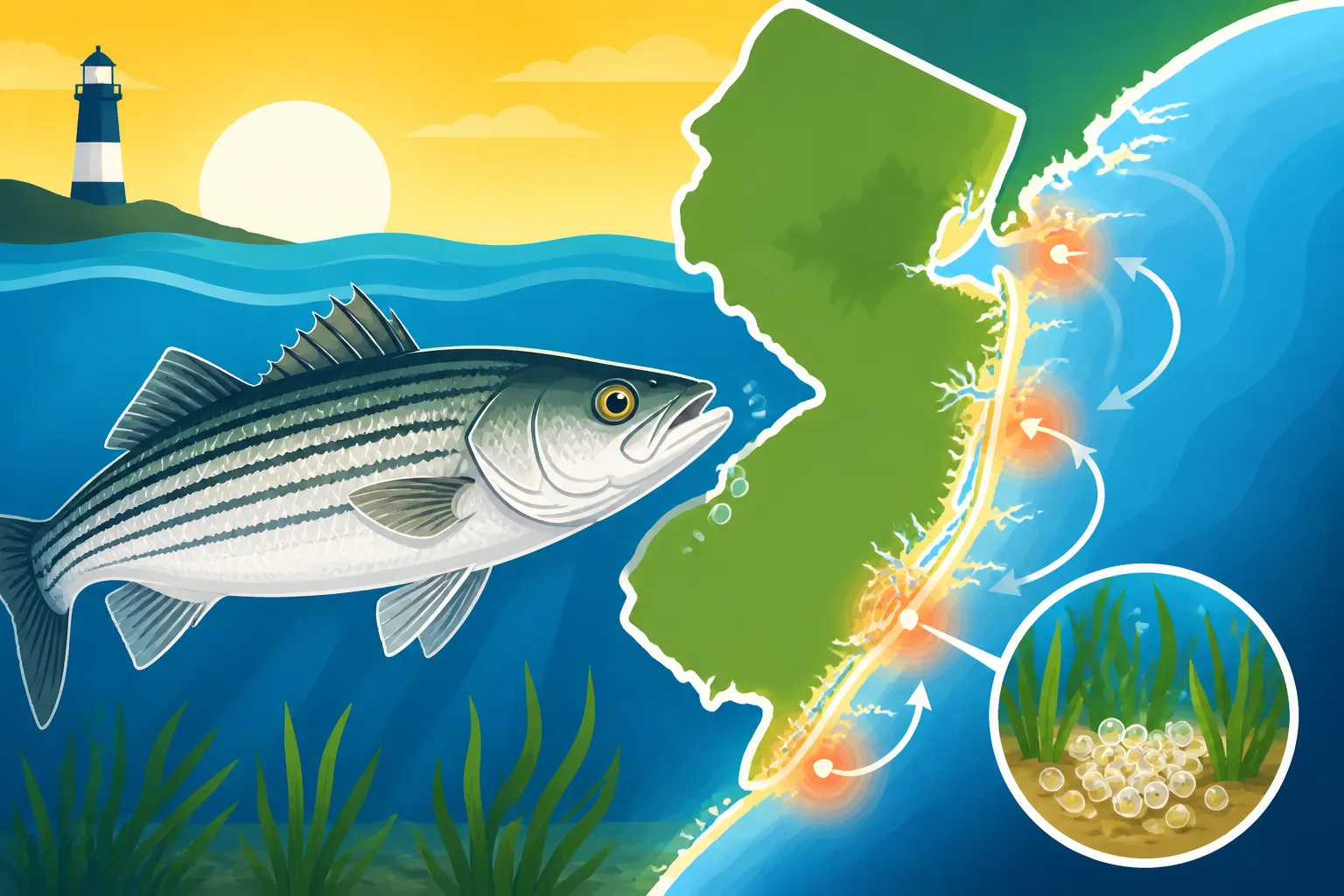
Female striped bass, often accompanied by multiple smaller males, release their eggs into the current. These eggs are non-adhesive and semi-buoyant, meaning they drift with the current rather than sticking to the bottom or floating on the surface. This drift is crucial; it carries the developing eggs downstream through the brackish nursery areas. Depending on water temperature, the eggs hatch within a few days. The tiny larvae, not much more than an eye and a yolk sac, continue to drift, feeding on microscopic organisms. They'll spend weeks to months in these estuarine nurseries, growing larger and developing into juvenile fish before eventually migrating out into the larger bays and ultimately the ocean.
This entire process, from egg to juvenile, is incredibly vulnerable to environmental disturbances. Changes in water flow, temperature fluctuations, pollution, and habitat degradation can all severely impact spawning success. This is why conservation efforts for spawning habitats are so vital for the future of the species.
The Migratory Pattern and Connection to Spawning
The connection between these specific spawning grounds and the phenomenal striped bass fishery we enjoy along the New Jersey coast is absolutely fundamental. Without successful spawning in places like the Chesapeake or the Hudson, our local angling would look very different. The fish we pursue during the legendary "fall run" and "spring run" are a direct product of these distant, yet intimately connected, freshwater nurseries.
How Spawning Grounds Influence the "Fall Run" and "Spring Run"
The migratory patterns of striped bass are deeply intertwined with their need to reproduce. Every year, mature striped bass undertake incredible journeys, traveling hundreds of miles to reach their ancestral spawning grounds.
- Spring Migration (Pre-Spawn and Post-Spawn): In the spring, as waters warm, adult stripers move north along the coast, with many entering estuaries like the Chesapeake, Delaware, and Hudson to spawn. New Jersey sees a significant push of these fish, both those heading to spawn further north and those pausing to feed before continuing their journey. After spawning, spent fish (often referred to as "rack" or "slunk" fish) leave the rivers and begin to move out into the ocean, feeding heavily to regain their strength. This is when our coastal waters really light up with activity. You'll find many anglers eager to catch Striped Bass Fishing in New Jersey during this exciting time.
- Fall Migration (The "Fall Run"): The epic fall run along the Jersey Shore, often considered the highlight of the fishing year, is largely driven by these same fish making their way south for the winter. Many of these stripers are congregating and feeding voraciously, packing on fat reserves before heading to their overwintering grounds, which for many, are the deeper, warmer waters of the Chesapeake Bay or offshore canyons. They’ll then be poised to enter the spawning rivers again the following spring. It’s a continuous cycle, and the health of the spawning grounds directly dictates the strength of these migratory runs. For tips on timing, check out When Do Striped Bass Migrate Through New Jersey?.
Conservation Efforts for Spawning Habitats
Given the critical importance of these few major river systems for striped bass reproduction, conservation efforts focused on protecting and restoring estuarine habitats are paramount. It's not just about regulating catch limits; it's about ensuring the fish have a healthy place to be born and grow.
These efforts include:
- Water Quality Improvements: Reducing pollution from agricultural runoff, urban development, and industrial discharges is crucial. Clean water means healthier eggs and larvae.
- Habitat Restoration: Projects aimed at restoring oyster reefs, submerged aquatic vegetation, and natural shorelines provide crucial cover and food sources for juvenile striped bass.
- Dam Removal and Fish Passage: Removing obsolete dams on spawning rivers can open up historical spawning grounds, allowing stripers to access more areas.
- Fishing Regulations: While not directly related to habitat, managing fishing pressure through New Jersey Striped Bass Slot Limit and Season and How Bag and Size Limits Work in New Jersey ensures that enough mature fish survive to return to the spawning grounds each year.
Anglers themselves play a huge role. By adhering to regulations, practicing responsible catch and release, and supporting conservation organizations, we contribute to the health of the striped bass population. Many vital pieces of fishing gear, from quality reels to proper release tools, can be found on Amazon, helping anglers fish responsibly.
New Jersey's Role in the Striped Bass Life Cycle
So, with all this talk about the Chesapeake, Delaware, and Hudson, where does New Jersey fit into the grand picture of striped bass reproduction? It’s a fair question, and the answer highlights New Jersey's crucial role as a prime feeding, staging, and migratory corridor, even if it's not a primary spawning destination.
Local Spawning vs. Migratory Spawning for New Jersey Anglers
It’s a common misconception that all the striped bass we catch in New Jersey spawn right here. The reality is that while striped bass are incredibly abundant in New Jersey waters, particularly during the spring and fall migrations, the vast majority of these fish are migratory. They were born in one of those major East Coast estuaries we just discussed and are simply passing through, or feeding in, our incredibly rich coastal waters.
Does this mean no striped bass spawn in New Jersey? It's a complex question, and the scientific consensus is that any local spawning in New Jersey rivers, while perhaps occurring at very low levels in some systems, is generally considered insignificant for the overall Atlantic striped bass population compared to the major rivers. New Jersey rivers tend to have less extensive tidal freshwater zones with the precise conditions needed for successful, sustained striped bass spawning. Instead, our estuaries, like Barnegat Bay and Raritan Bay, serve as vital nursery grounds for juvenile stripers after they have hatched elsewhere, or as crucial feeding and staging areas for larger migratory fish. This is why when anglers ask Do Striped Bass Spawn in New Jersey Rivers?, the answer is often a nuanced one, emphasizing New Jersey's role as a fantastic feeding ground rather than a primary birthplace.
How New Jersey Benefits from East Coast Spawning Success
New Jersey is an indispensable part of the Atlantic striped bass ecosystem, even without major spawning grounds of its own. We are essentially a prime destination along the "striped bass highway."
Here’s why the success of those other spawning grounds is so vital for our state:
- Abundant Migratory Fish: The success of the Chesapeake, Delaware, and Hudson spawns means there are millions of new striped bass entering the ocean each year. Many of these fish will eventually migrate along our coastline, providing the incredible fishing opportunities we cherish. If those distant spawning grounds suffer, so too will our local fisheries in the years to come.
- Rich Forage Base: New Jersey's coastal waters, bays, and inlets are teeming with baitfish like bunker, herring, and spearing. This abundant food source makes our state an irresistible pit stop for hungry stripers during their migrations. They come here to fatten up, making them strong and healthy for their long journeys, including their return to spawn. This is why you'll often hear about the Best Bait for Raritan Bay Striped Bass or the Best Lures for Striped Bass Fishing being those that imitate local forage.
- Nursery for Juveniles: While not primary spawning sites, New Jersey's back bays and estuaries do serve as important nursery habitats for juvenile striped bass that have migrated here from their birthplaces. They spend time growing in these protected waters before joining the larger migratory schools.
Essentially, New Jersey is a critical piece of the puzzle, benefiting immensely from the successful reproduction happening in other states. It underscores the truly regional nature of the striped bass fishery and why collaboration across state lines is so important for management and conservation. Knowing this also helps us understand why we need to respect New Jersey Fishing Season Dates and Closures and why conservation police conduct New Jersey Conservation Police and License Checks – it’s all part of managing a shared, migratory resource.
To summarize, while New Jersey offers some of the best striped bass fishing on the East Coast, the vast majority of these fish begin their lives in the brackish waters of the Chesapeake Bay, Delaware River, and Hudson River. These estuaries are the true cradles of the Atlantic striped bass population, and their health is intrinsically linked to the incredible fishing experiences we enjoy along the Jersey Shore.
Key Striped Bass Spawning Rivers on the East Coast
| River System | Primary Location | Key Characteristics | Significance for NJ Anglers |
|---|---|---|---|
| Chesapeake Bay | Maryland & Virginia | Vast, diverse network of tidal freshwater rivers. | Largest producer of migratory stripers for entire coast. |
| Delaware River | Delaware, NJ, PA Border | Tidal freshwater sections above Wilmington. | Important for northern migratory stock, some local impact. |
| Hudson River | New York | Tidal freshwater from Tappan Zee Bridge to Albany. | Supports northern segment of migratory fish, including those in Raritan Bay. |
This article is for general informational purposes only and does not constitute professional advice. Laws, prices and regulations vary by location and change over time. Consult a qualified professional for guidance on your specific situation.