When Do Striped Bass Migrate Through New Jersey?
Anglers in New Jersey often feel a mix of excitement and frustration when it comes to chasing striped bass, especially trying to pin down exactly when these magnificent fish will make their grand appearance. It feels like every year there’s a slightly different schedule, leaving many of us wondering if we’re going to miss the peak action. This comprehensive guide is here to demystify the striped bass migration patterns through the Garden State, helping you understand the typical timing, what influences it, and how to best prepare for both the spring and fall runs.
The Great Striped Bass Migration Through New Jersey Waters
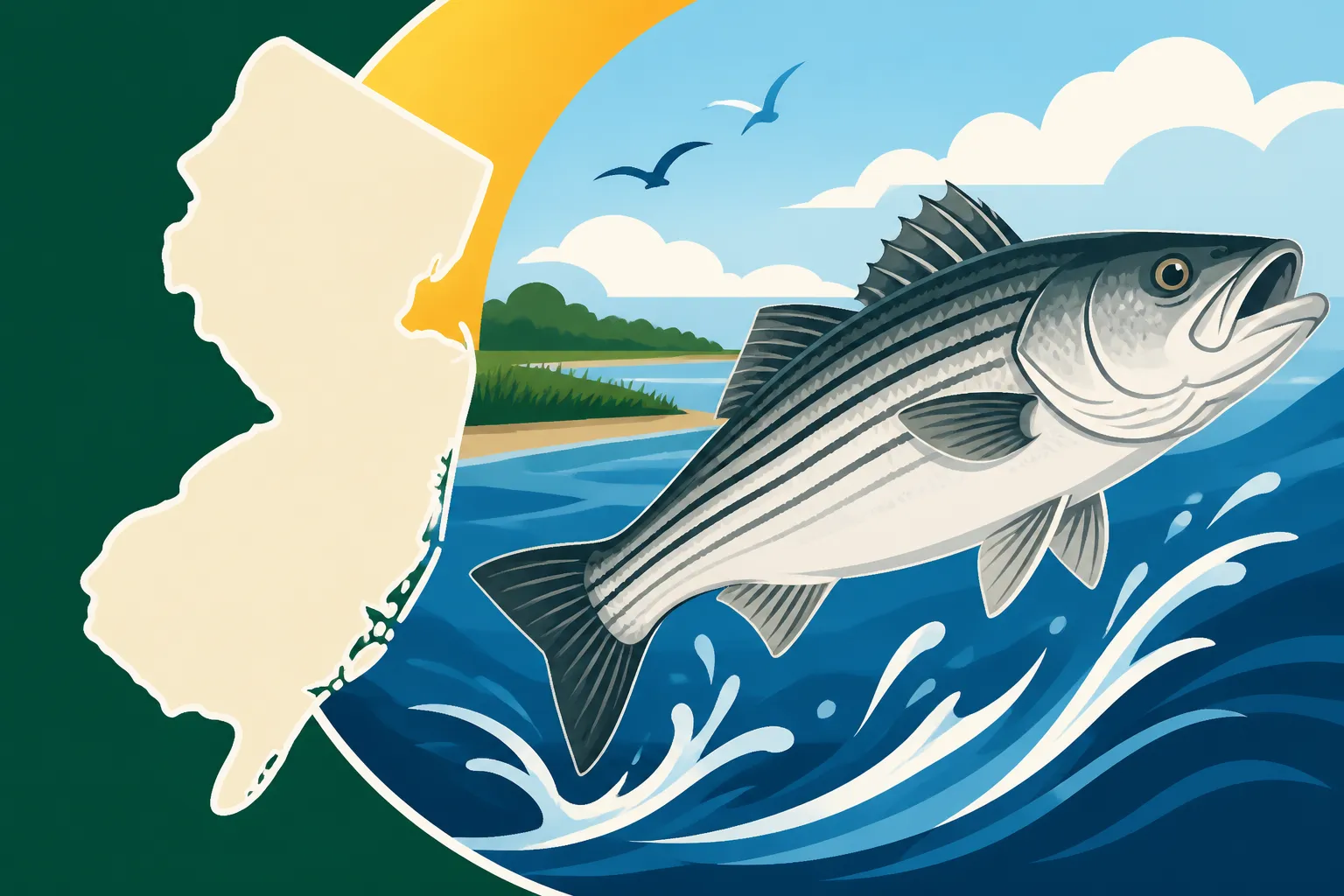
The journey of the striped bass along the East Coast is one of nature's most impressive feats, and New Jersey plays a crucial role in their annual pilgrimage. These powerful anadromous fish, known for their distinctive lateral stripes, travel thousands of miles each year in search of ideal spawning grounds and abundant food sources. Understanding this migration is not just academic; it's absolutely essential for any angler hoping to consistently put stripers on the line, whether from the surf, a boat, or a quiet back bay. Without a grasp of their movements, you’re essentially fishing blind, missing out on the best windows of opportunity.
Why Striped Bass Migrate: A Quest for Ideal Conditions
At its core, the striped bass migration is driven by two primal instincts: reproduction and survival. As the seasons change, so do water temperatures and food availability, prompting these fish to move. In the late winter and early spring, mature stripers gather in massive schools and head towards their natal rivers to spawn. For the Chesapeake Bay stock, which accounts for a significant portion of the fish we see in New Jersey, this means a journey to the fresh and brackish waters of the Chesapeake and its tributaries. Other, smaller populations may spawn in rivers like the Hudson, closer to our shores. After spawning, the fish are hungry and quickly move into the warmer coastal waters of New Jersey and points north to feed heavily and recover.
Conversely, as autumn arrives and the water begins to cool, the stripers begin their southern migration. This isn't just a leisurely cruise; it's a frantic feeding frenzy as they stock up on calories for the lean winter months. They’ll follow massive schools of baitfish, creating some of the most spectacular fishing opportunities of the year. New Jersey's position on the Mid-Atlantic coast means we are perfectly situated to experience both the beginning of their northward push and the full-blown southern run, making our waters a vital corridor for these magnificent fish.
Understanding the Two Major Runs: Spring and Fall
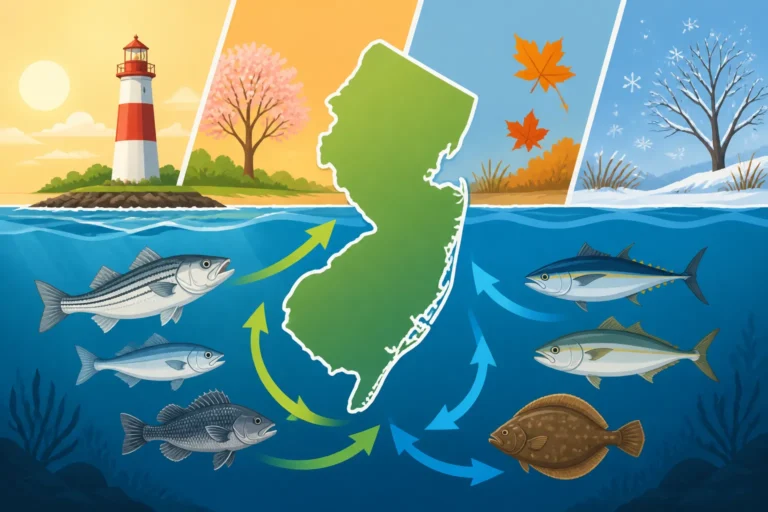
When we talk about striped bass migration in New Jersey, we're really talking about two distinct periods of intense activity: the spring run and the fall run. Each has its own characteristics, challenges, and rewards for the dedicated angler. The spring run, typically starting in April and peaking in May, sees stripers moving north from their spawning grounds. These fish are often lean after their reproductive efforts and are keen to feed. They pass through our bays and along the beaches, offering a fantastic opportunity for both boat and shore anglers to target them as they recover and continue their journey.
Then there's the fall run, which many consider the "main event" of the year. This epic movement generally kicks off in October and can last well into December, sometimes even January if the weather stays mild. During this period, the stripers are moving south, following vast schools of baitfish like bunker, mullet, and sand eels. This is when you hear tales of "blitzes" – incredible feeding frenzies right along the surf, where gulls dive and the water boils with actively feeding fish. The sheer volume of fish and the aggressive nature of their feeding make the fall run an unforgettable experience, drawing anglers from all over the region to the Jersey Shore.
The Eager Anticipation of the Spring Striper Run
The arrival of spring is often heralded by the return of the first striped bass to New Jersey's coastal waters. After a long, cold winter, there’s nothing quite like feeling that first thumping bite of a striper to shake off the rust. Many anglers eagerly await news of the first "schoolie" catches in the back bays, knowing that the bigger, migratory fish are soon to follow. It’s a time of renewed hope and excitement on the water, signaling the start of another fantastic fishing season.
Timing the Spring Migration: Water Temperature is Key
While we all wish there was a hard and fast date, the truth is that the spring striped bass migration through New Jersey is largely dictated by water temperature. Generally, the action really starts to heat up when the water temperatures in the bays and nearshore ocean begin to consistently hover between 45 and 55 degrees Fahrenheit. This usually means late March or early April for the earliest arrivals, with the main push happening through April and May. If we have a mild winter and an early spring, the fish might show up a bit sooner, surprising us in mid-March. Conversely, a prolonged cold snap can easily push the arrival back into late April.
In the early stages of the spring run, the action often begins in the warmer, shallower back bays and tidal rivers. Areas like Raritan Bay Striped Bass Spots and the Delaware River become prime locations as the water warms more quickly there, drawing in the first waves of migrating fish. These initial catches are often smaller "schoolie" stripers, but they are quickly joined by larger, post-spawn fish that are eager to put on weight. As the water warms further and baitfish become more abundant, the migratory schools spread out along the entire New Jersey coastline. Keeping a close eye on local water temperature charts and reports is often more reliable than a calendar for predicting the peak of the spring run.
The Journey North: Spawning and Feeding Frenzies
The primary goal for many of the striped bass moving through New Jersey in the spring is to reach their spawning grounds. The Chesapeake Bay is a major producer of striped bass, and a significant portion of the fish we see will have spawned there or in other key river systems like the Hudson. After the rigorous process of spawning, these fish are often referred to as "spent" and are incredibly hungry. They're on a mission to regain energy, and they do so by voraciously feeding on whatever baitfish they can find. This makes them highly aggressive and often willing to strike a wide variety of lures and baits.
As these fish move north along the coast, they follow the availability of their preferred forage. Early in the spring, smaller baitfish like spearing, grass shrimp, and bloodworms are common in the back bays, attracting smaller stripers. As the water warms and the migration intensifies, larger baitfish like river herring and Atlantic menhaden (bunker) become prevalent, drawing in the bigger, more mature striped bass. This is why you often see incredible feeding frenzies, especially in areas like Sandy Hook and the northern reaches of the coast, where the bunker schools are thick. If you're wondering What Do Striped Bass Eat in New Jersey Waters?, paying attention to the local bait will give you a big clue for what to present them. Targeting these fish requires an understanding of their patterns; they might be shallow in the backwaters one day, then cruising just beyond the surf the next. This seasonal shift is a fundamental part of How to Fish for Striped Bass in New Jersey effectively.
The Spectacular Show of the Fall Striper Migration
While the spring run is exciting, the fall migration is often considered the undisputed champion for New Jersey anglers. It’s a truly epic event, a concentrated period of intense feeding and relentless action that draws anglers from far and wide. The sheer numbers of fish, combined with their aggressive feeding behaviors, create a spectacle that every angler dreams of witnessing. This is when the surf line comes alive, and boat captains work tirelessly to keep up with the moving schools.
Peak Fall Action: When the Stripers Head South
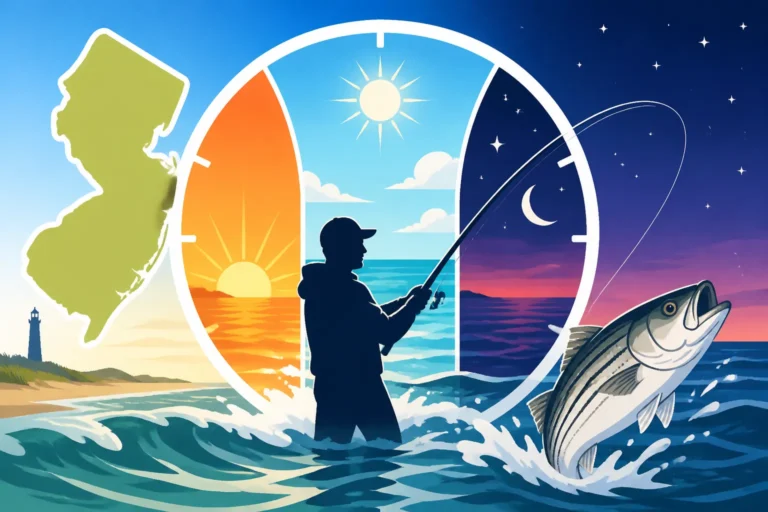
The fall striped bass migration through New Jersey typically begins in earnest in early to mid-October and can continue well into December, sometimes even pushing into January if mild weather persists. Unlike the spring run, which sees fish moving north towards spawning grounds, the fall run is a mass exodus southward, as stripers prepare for winter in deeper, more stable waters. This journey is largely governed by cooling water temperatures, usually when the ocean dips below 60 degrees Fahrenheit and continues to drop, along with the availability of vast schools of baitfish.
The peak of the action often occurs from mid-October through November. During this time, the entire Jersey Shore becomes a hotspot. Iconic locations like Manasquan Inlet, Barnegat Light, Island Beach State Park, and the inlets of Cape May become chokepoints where huge schools of stripers congregate, ambushing baitfish. You might find yourself shoulder-to-shoulder with other excited anglers on a jetty at the Point Pleasant Canal or casting into a rolling surf at Island Beach State Park. The timing can vary slightly each year, so staying connected to local fishing reports and observing baitfish movements is crucial. This is truly the Best Time of Year for New Jersey's Fall Run.
Baitfish Blitzes and Feeding Strategies
One of the most thrilling aspects of the fall run is the phenomenon known as a "blitz." This is when large schools of baitfish, often Atlantic menhaden (bunker), mullet, or sand eels, are pushed to the surface by predatory striped bass (and often bluefish), resulting in a chaotic feeding frenzy. Gulls divebomb the water, gamefish thrash on the surface, and the air is filled with the scent of bunker. Witnessing and fishing a blitz is an unforgettable experience, offering fast-paced, heart-pounding action. The fish are often so focused on feeding that they'll hit almost anything thrown their way, from poppers and swim shads to metal jigs.
To capitalize on these blitzes and the general fall migration, anglers often employ a variety of tactics. Surf anglers might use heavy tackle to cast large plugs, metal lures, or rigged baits like fresh bunker into the breakers. From boats, trolling mojo rigs, livelining bunker, or jigging with vertical jigs are common and highly effective methods. This is a great time to experiment with different Best Lures for Striped Bass Fishing because the fish are so aggressive. For those throwing artificials, having a good selection of swim shads and poppers on hand, perhaps sourced from an online retailer like Amazon, can make a huge difference. You might also want to check out some specialized rigs if you're targeting bigger fish, and many anglers purchase their rigging components, like heavy-duty swivels and leader material, from Amazon before the season. Remember, during these intense feeding periods, presentation is often less critical than simply getting a lure into the strike zone. If you're debating What Bait Works Best for Striped Bass in the Fall Run?, fresh bunker is hard to beat, whether chunked, whole, or livelined.
Key Factors Influencing Striped Bass Migration Patterns
While we can talk about general timing, the truth is that the ocean and its inhabitants don't operate on a strict schedule. Several environmental factors play a significant role in influencing the precise timing and intensity of the striped bass migration through New Jersey. Being aware of these variables can give you an edge, helping you anticipate shifts and adapt your fishing plans accordingly. It’s all about reading the signs that nature provides.
The Unpredictable Nature of Weather and Water Conditions
Mother Nature truly calls the shots when it comes to migration. Prolonged cold fronts in the spring can delay the warm-up of the water, pushing the striped bass migration later into April or even May. Conversely, an abnormally warm fall can keep water temperatures higher for longer, extending the "blitz" season well into December. Strong coastal storms can also scatter baitfish and stripers, temporarily disrupting patterns, only for them to regroup once conditions stabilize. Even factors like heavy rainfall can impact fishing in tidal rivers by altering salinity levels and flushing bait.
Understanding how barometric pressure affects fish behavior is also a subtle but important aspect. Before a storm, falling pressure can sometimes trigger a feeding spree, while post-storm conditions might make fish less active. This constant interplay of temperature, tides, and weather is why no two migration seasons are exactly alike. Anglers who pay close attention to marine forecasts and local fishing reports, often found through community forums or bait and tackle shops, will have the most success. Learning How to Read Tide Charts for Better Fishing in New Jersey is another invaluable skill that gives you a clearer picture of optimal feeding times and locations.
Baitfish Abundance and Location
Without food, there's no reason for stripers to stick around. The migration of striped bass is intricately linked to the migration and abundance of their primary forage species. In the spring, schools of river herring and Atlantic menhaden (bunker) moving into our bays and along the coast are critical attractants. In the fall, the presence of large schools of adult bunker, mullet, and sand eels are the main drivers. If these baitfish schools are plentiful and concentrated, the stripers will be right behind them, aggressively feeding. However, if bait is scarce or dispersed, the stripers might move through faster or be harder to locate.
This is why experienced anglers often spend as much time looking for bait as they do for the stripers themselves. Spotting large schools of bunker dimpling the surface, birds diving, or even whales breaching (they often feed on the same baitfish) are all strong indicators that striped bass are likely nearby. Keeping a pair of binoculars handy, perhaps a durable waterproof pair bought from Amazon, and knowing how to spot these signs from shore or boat can significantly increase your chances of finding the fish. Additionally, staying informed about the health and population levels of these key forage species provides a broader context for understanding the striper migration, and resources like the New Jersey Recreational Fishing Survey: Why You Might Get a Call can help shape conservation efforts around them.
Comparing Spring and Fall Striped Bass Runs in New Jersey
To give you a clearer picture, here's a quick comparison of the key characteristics of the spring and fall striped bass migrations through New Jersey:
| Feature | Spring Migration (Northward) | Fall Migration (Southward) |
|---|---|---|
| Typical Timing | Mid-March to early June (Peak: April-May) | Early October to late December (Peak: Oct-Nov) |
| Water Temp Range | 45-55°F (early arrivals) to 60-70°F (late spring) | 60°F down to 45°F |
| Fish Condition | Often "spent" after spawning, leaner, focused on recovery | Fattening up for winter, very aggressive, strong fighters |
| Key Baitfish | River Herring, smaller bunker, spearing, grass shrimp | Large bunker, mullet, sand eels, anchovies |
| Primary Goal | Spawning (some), recovery, feeding, moving to cooler northern waters | Heavy feeding, preparing for winter, moving to warmer southern waters |
| Common Tactics | Bloodworms in bays, soft plastics, small plugs, livelining bunker | Large plugs, poppers, metals, livelining bunker, jigging |
| Fishing Pressure | Moderate to High | Very High, especially during blitzes |
| Typical Size | Mix of schoolies and larger migratory fish | Often larger, trophy-sized fish more common |
Final Thoughts on Chasing Migratory Stripers
Chasing migratory striped bass in New Jersey is a truly rewarding experience, one that connects you deeply with the rhythm of the seasons and the pulse of the ocean. While the exact timing of their arrival and departure can fluctuate each year due to environmental factors, understanding the general patterns and the key influences on their movements will dramatically improve your success. Whether you prefer the hopeful anticipation of the spring run or the explosive action of the fall blitzes, being prepared with the right gear – from a sturdy rod and reel to a quality fishing line that can handle the fight, perhaps even a trusted brand like Penn or Shimano, which you can often find competitive prices on from Amazon – and staying informed about local conditions are your best bets.
Remember, fishing is as much about the experience as it is about the catch. Embrace the chase, enjoy the stunning beauty of the New Jersey coast, and always respect the resource by adhering to all regulations, including the New Jersey Striped Bass Slot Limit and Season rules. The more you learn about these incredible fish and their journey, the more fulfilling your time on the water will be. Tight lines!
Disclaimer
The information provided in this guide is for general informational purposes only and should not be considered legal or professional advice. Fishing regulations, season dates, and limits can change frequently. Always consult the most current New Jersey Fish and Wildlife Digest or their official website before heading out to fish to ensure compliance with all applicable rules and regulations.