New Jersey Striped Bass Charter Guide
Trying to find the perfect charter to target New Jersey's legendary striped bass can feel like navigating a maze. With so many options, regulations, and fishing styles, it's easy to get overwhelmed and wonder if you're making the right choice for that dream striper trip. This comprehensive guide is here to untangle the complexities, offering you a clear path to booking an unforgettable New Jersey striped bass charter that puts you right in the action.
Why Chase Striped Bass on a New Jersey Charter?
There’s a reason striped bass are often called the "King of the Coast" here in New Jersey. They're powerful, they're smart, and they put up one heck of a fight. While you can catch stripers from the surf or your own boat, a dedicated charter offers distinct advantages that can significantly boost your success and overall enjoyment. It's about more than just catching fish; it's about the experience, the knowledge, and the access that only a professional operation can provide.
The Thrill of the Fight and the Challenge
When a big striped bass hits your line, there's an immediate, undeniable rush. Their powerful runs, headshakes, and sheer endurance can test even seasoned anglers. Unlike some other species that might offer a quick tug and then come right in, stripers often make multiple strong runs, pulling drag and forcing you to work for every inch of line. This battle is precisely what draws so many people to them. Imagine being on a charter, feeling that rod bend, and hearing the drag scream as a 30-pounder makes a dash for deeper water. That kind of excitement is truly addictive and something a good captain lives to share with their clients.
Beyond the physical fight, stripers present a constant puzzle. Their behavior can change with the tide, the bait, the water temperature, and even the slightest shift in wind. A good charter captain spends countless hours on the water, observing these patterns and knowing where the fish are likely to be holding, what they're feeding on, and how they prefer to be presented a bait or lure. They've learned through experience, sometimes the hard way, what works and what doesn't, saving you years of trial and error and significantly increasing your chances of success.
Access to Prime Fishing Grounds
Let's be honest, unless you own a serious offshore vessel and have spent years mapping out every bump and channel, you're limited in where you can fish from shore or a small boat. Striped bass often congregate around specific structures, channels, reefs, and bait schools that are simply inaccessible to the average angler. This is where a charter truly shines. These captains have commercial-grade boats equipped with advanced electronics – powerful fish finders, radar, and GPS plotters – that show them exactly where the bait is holding and, by extension, where the stripers are likely lurking. They know the secret rips, the hidden rock piles, and the subtle depth changes that attract and hold fish.
Think about the productive waters of Raritan Bay, the deep channels around Sandy Hook, or the numerous inlets and artificial reefs along the coast. Many of these prime locations require navigating busy shipping lanes, strong currents, or long runs that are impractical for recreational boats. A charter captain, on the other hand, makes these journeys regularly and safely. They can get you to those coveted spots far more efficiently and safely than you could on your own, putting you on fish that many anglers only dream of reaching.
Expertise and Equipment Provided
One of the biggest hurdles for new or occasional anglers is gathering all the necessary gear. Striped bass require specific rods, reels, lines, and an array of lures and baits that can be expensive and confusing to acquire. On a charter, all of this is provided for you. You don't need to worry about having the right tackle for jigging bunker or trolling Mojos; the captain and crew have already invested in top-of-the-line equipment designed specifically for catching big stripers in New Jersey waters. This means less stress, less cost, and a better chance of fighting the fish successfully with gear that can handle the strain.
More importantly, you get the benefit of the captain's and mate's expertise right there with you. They'll teach you the proper casting techniques, how to jig effectively, how to handle a powerful fish, and even how to read the water for signs of feeding stripers. Imagine watching the mate expertly rig a live bunker, then having him explain why that particular rig is so effective for the current conditions. This hands-on learning is invaluable. Plus, they handle all the messy parts, like baiting hooks and cleaning fish, allowing you to focus purely on the fishing itself. For a full breakdown of what to expect from your crew, check out New Jersey Charter Boat Fish Cleaning Services.
Understanding New Jersey Striped Bass Seasons and Behavior
To maximize your chances of success on a striped bass charter, it helps to understand a little about these incredible fish and their movements throughout the year. New Jersey's waters are a major highway for striped bass, attracting them during distinct migratory periods and supporting resident populations. Knowing when and where to find them is key to a productive trip.
The Spring Migration and Fall Run
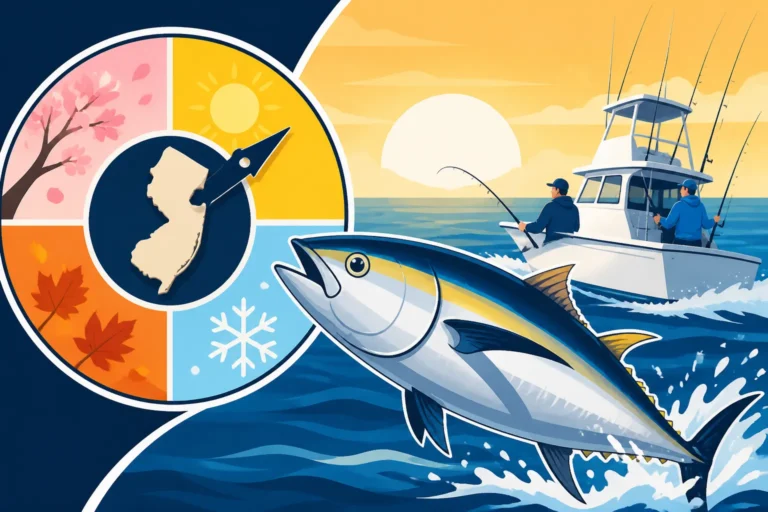
New Jersey experiences two main "rushes" of striped bass: the spring migration and the fall run. These are the peak times when large numbers of stripers move through our waters, offering some of the best fishing opportunities of the year. The spring migration typically kicks off when water temperatures begin to rise, usually in April and May, as stripers move north from their wintering grounds and spawning areas, like the Chesapeake Bay and Delaware River. These fish are hungry and often aggressive, making them a prime target for charters. They’ll be pushing up the coast, often found in bays and inlets, chasing baitfish like herring and bunker.
The fall run, on the other hand, is arguably the most anticipated event for many New Jersey anglers. Starting in late September and extending well into December, millions of striped bass migrate south, following immense schools of baitfish like bunker, mullet, and anchovies. This is when truly massive fish can be encountered right along the beaches and in the nearshore waters. Charters during the fall run often focus on chasing visible schools of bait, where "blitzes" of feeding stripers can create exhilarating, fast-paced action. Understanding the timing of these migrations is crucial when planning your charter, and you can get more details in Best Time of Year to Fish for Striped Bass in New Jersey.
Resident Stripers vs. Migratory Fish
While the migratory fish get most of the headlines, New Jersey also has a healthy population of "resident" striped bass. These are fish that don't participate in the extensive north-south migrations, choosing instead to stay in certain areas of the bays, rivers, and inlets year-round. These resident fish tend to be smaller than their migratory counterparts, often in the 18 to 30-inch range, but they provide consistent action even outside the major migration periods. They're often found in specific structures, like bridges, docks, and mussel beds, where they can ambush baitfish.
Charters targeting resident stripers might focus on calmer back bays, tidal rivers, or protected sections of larger estuaries. While they might not offer the chance at a 50-pound trophy, these trips can be incredibly productive for anglers looking for steady action and a good fight. It's also a fantastic way to introduce new anglers, especially kids, to the sport without the potential for long runs in rougher offshore conditions. A skilled captain will know the difference and can tailor your trip to target either the big migrators or the reliable residents, depending on the time of year and your preference.
Key Factors Influencing Striper Activity
Striped bass are highly attuned to their environment, and several factors dictate their activity levels and where they can be found. Water temperature is paramount; they prefer cooler waters, typically between 55 and 68 degrees Fahrenheit. When waters get too cold in winter or too warm in summer, they become less active or move to more favorable depths. Tide is another critical element, especially in bays and inlets. Moving water, whether incoming or outgoing, often triggers feeding frenzies as baitfish are pushed around and concentrated. A good captain will study the tide charts rigorously to put you in the right place at the right time. How to Read Tide Charts for Better Fishing in New Jersey can give you a better insight into this.
Beyond temperature and tide, factors like moon phase, barometric pressure, and the presence of baitfish schools play significant roles. A full moon can lead to stronger tides, which can in turn mean better feeding. A sudden drop in barometric pressure before a storm might make fish bite aggressively, while a stable, high-pressure system can sometimes make them lethargic. Most importantly, stripers follow their food. If you find the bait – whether it's bunker, spearing, or sand eels – you're often not far from the stripers. Charters spend a lot of time locating these bait schools, using their electronics and observing bird activity, to pinpoint the best fishing locations.
Types of Charters for Striped Bass in New Jersey
When you decide to book a New Jersey striped bass charter, you'll generally find two main categories: private charters and party boats (also known as head boats). Each offers a distinct experience, catering to different preferences, budgets, and group sizes. Understanding the differences will help you choose the best fit for your fishing adventure.
Private Charters: Tailored Experiences
A private charter is exactly what it sounds like: you book the entire boat for your group, typically ranging from 1 to 6 anglers. This option offers the most personalized and flexible fishing experience. You have direct input on the type of fishing you want to do (e.g., targeting trophy stripers, light tackle action, or specific techniques), and the captain can fully customize the trip to your group's skill level and preferences. If one person wants to practice casting and another wants to try jigging, the captain can often accommodate both. It's an intimate setting, perfect for families, close friends, or corporate outings.
The cost of a private charter is usually higher overall because you're paying for the exclusive use of the boat and the captain's undivided attention. However, when split among a group, it can become quite reasonable. The biggest advantage is that the captain's sole focus is on your success and enjoyment. They'll work hard to find the fish for your group, offering coaching and assistance as needed. You'll also typically have more space to move around, dedicated tackle for each angler, and a less crowded environment, which can be a huge plus when fighting a big striper. Platforms like FishingBooker make it easy to compare private charter options by location, boat type, and angler reviews, helping you find the perfect match for your group's needs.
Party Boats: A More Social Approach
Party boats, or head boats, operate on a per-person fare, meaning you buy a "head" on the boat and share the fishing experience with many other anglers. These boats are much larger, often accommodating dozens, sometimes even over a hundred, passengers. They typically run on a set schedule, departing at specific times in the morning and afternoon, and targeting whatever species are most active and abundant at that moment. For striped bass, they'll usually head to known hotspots where they anticipate good action for a larger group. You can learn more about this in New Jersey Party Boat vs Private Charter: What's the Difference?.
The main advantage of a party boat is the cost-effectiveness; it's generally a much more budget-friendly option for individual anglers or smaller groups who don't want to spring for a private boat. All bait and tackle are usually provided, though many anglers bring their own gear. While you won't get the individualized attention of a private charter, the crew (captain and mates) are still there to help, rig lines, unhook fish, and offer advice. Party boats can be a fantastic social experience, allowing you to meet other anglers, share stories, and enjoy the camaraderie of a shared fishing adventure. However, they can get crowded, especially on prime weekends, and you'll have less control over the fishing style or target species. For a dedicated trip out of a major port, you might consider reading Belmar Party Boat Fishing Guide.
Choosing the Right Charter Type for Your Trip
Deciding between a private charter and a party boat really comes down to your priorities. If you're planning a special trip with a tight-knit group, want to learn specific techniques, or have particular fishing goals (like targeting a trophy striper exclusively), a private charter is likely your best bet. The personalized attention and flexibility can lead to a truly memorable and productive day on the water. It’s also ideal for serious anglers who want to fish a certain way without compromise.
If you're an individual angler, a small group on a tighter budget, or simply looking for a fun, casual day on the water without the pressure of a private booking, a party boat is an excellent choice. It's a great way to get out fishing without a huge investment in gear or a deep understanding of local waters. You can still catch plenty of striped bass on a party boat, and the lively atmosphere can be a lot of fun. Ultimately, both offer a chance to catch striped bass in New Jersey, but they provide very different fishing environments. Consider your group size, budget, experience level, and desired level of personalization when making your decision.
What to Look for in a Striped Bass Charter Captain and Boat
Once you've decided on the type of charter, the next crucial step is choosing the right captain and boat. This decision can make or break your trip, so it's worth doing a little homework. A good captain is not just a boat driver; they're a guide, a teacher, a safety officer, and a fish whisperer all rolled into one.
Experience and Reputation
When it comes to striped bass fishing in New Jersey, experience is paramount. Look for a captain who has spent years, preferably decades, fishing these specific waters. They'll have an intimate knowledge of the local currents, bottom structure, bait patterns, and, most importantly, where the striped bass are likely to be hiding throughout the seasons. A captain with a long track record will also have developed effective strategies and techniques that consistently produce fish. Don't be afraid to ask how long they've been running charters in the area or what their typical success rate is for stripers.
A good reputation often speaks volumes. Check online reviews on platforms like FishingBooker, ask for recommendations from local tackle shops, or inquire in online fishing forums. Pay attention to comments about the captain's ability to find fish, their teaching style, their personality, and how they handle adverse conditions. A captain known for patience, enthusiasm, and a genuine desire to put clients on fish is usually a winner. Conversely, steer clear of charters with numerous negative reviews or a history of safety complaints.
Safety First: Licenses and Equipment
Safety should always be your top priority. Ensure that the charter captain holds all necessary U.S. Coast Guard (USCG) licenses and that their vessel is properly inspected and insured for carrying passengers. Don't hesitate to ask about this directly when booking. A reputable captain will be proud to confirm their credentials. Beyond licenses, inspect the boat (or ask for photos) for signs of good maintenance. Is it clean and well-organized? Does it look seaworthy? These are small but important indicators.
The boat should also be equipped with all required safety gear, including life jackets for every passenger (with child sizes available if you're bringing kids), a VHF radio, flares, first-aid kits, and GPS. Additionally, consider the fishing equipment. While most charters provide gear, good quality rods, reels, and fresh line are crucial for fighting powerful stripers. If the tackle looks old, poorly maintained, or mismatched, it could be a red flag. A serious striper captain will have heavy-duty gear capable of handling large fish, as described in How to Fish for Striped Bass in New Jersey.
Communication and Customer Service
From the moment you inquire about a trip to the time you step off the boat, good communication is key. A professional captain or booking agent should be responsive, clear, and helpful in answering your questions about availability, pricing, what to bring, and what to expect. They should be transparent about their policies, including cancellations due to weather, which is a very real possibility when fishing offshore in New Jersey. New Jersey Charter Fishing Cancellation Policies will give you more information on that.
During the trip itself, a great captain and crew will communicate effectively. They'll explain what they're doing, why they're moving spots, what techniques they're using, and offer tips to help you catch more fish. They should be friendly, approachable, and focused on making your trip enjoyable, regardless of whether the fish are biting non-stop or if it's a slower day. Remember, you're paying for an experience, and a positive attitude from the crew goes a long way.
Essential Gear and Techniques Used by Charters
One of the great things about booking a striped bass charter is that the captain and crew come equipped with all the necessary gear and a deep understanding of the most effective techniques. However, having a basic grasp of what they'll be using can enhance your learning and appreciation for their expertise.
Rods, Reels, and Line: Heavy-Duty for Stripers
Striped bass are powerful fish, and the tackle used to catch them needs to be robust. Most New Jersey charters targeting stripers will employ medium-heavy to heavy conventional (baitcasting) or spinning outfits. Conventional gear is often preferred for situations like chunking or trolling, where line capacity and cranking power are important. Spinning gear, while versatile, is typically used for casting lures or light-tackle jigging. The rods will have strong backbones to absorb powerful runs and enough sensitivity to detect subtle bites.
Reels will be spooled with strong braided line, often 30 to 60-pound test, known for its incredible strength-to-diameter ratio and lack of stretch, which provides excellent sensitivity. This is usually connected to a monofilament or fluorocarbon leader, which is more abrasion-resistant and less visible to the fish, with a breaking strength appropriate for the size of the stripers being targeted. The captain and mate will ensure all connections are tied with reliable knots, something critical when battling a trophy fish. You don't need to worry about bringing your own unless you prefer, but the charter's gear is specifically chosen for the job.
Baits, Lures, and Livewell Strategies
New Jersey striped bass are opportunistic feeders, and charters will employ a variety of baits and lures depending on the season, location, and what the fish are feeding on. Live bait is often king, especially for larger stripers. Bunker (Atlantic menhaden) are a primary forage fish, and charters often spend time catching live bunker in cast nets or snagging them before the fishing trip begins. These are kept alive in the boat's livewell, then deployed whole or as "chunks." Other live baits include eels, spearing, and sometimes herring. The effectiveness of live bait is undeniable, as it's the most natural presentation.
When fish aren't readily taking live bait or are actively chasing schools, a variety of artificial lures come into play. Jigging with bucktails or heavy soft plastics, like those from Berkeley Gulp!, is incredibly effective, particularly when fish are holding near structure or on the bottom. Trolling Mojos (large lead-head jigs dressed with skirts) or umbrella rigs behind the boat is a popular technique for covering large areas and attracting aggressive fish. Poppers and large swimming plugs are used when stripers are busting bait on the surface, creating an exhilarating topwater bite. The charter's crew will have a wide selection of these, often in colors and sizes proven effective in local waters.
Common Fishing Techniques: Trolling, Jigging, Live Lining
Charters use several key techniques to target striped bass, adapting to conditions and fish behavior. Trolling involves dragging lures or baits behind the boat at a controlled speed. This allows the captain to cover vast areas and present baits at specific depths where fish are known to be. It’s particularly effective in open water or along contours. Trolling Techniques for New Jersey Lake Trout focuses on a different species, but the principles of trolling remain similar.
Jigging is a more active technique where an angler repeatedly drops a lure to a desired depth and then snaps the rod tip up, making the lure "dance" in the water, mimicking an injured baitfish. This is great for targeting stripers holding near wrecks, reefs, or deeper channels. Live lining, or using live bait, is often a more passive technique where a live bunker or eel is put out on a free line or with minimal weight, allowing it to swim naturally. This is incredibly effective when stripers are actively feeding on live bait. The mate will likely teach you the best ways to present these offerings and how to properly set the hook when a striper takes the bait. This combination of knowledge, gear, and technique is what makes a charter so productive for How to Fish for Striped Bass in New Jersey.
| Technique | Description | Ideal Conditions | Pros | Cons |
|---|---|---|---|---|
| Live Lining | Presenting a live bait (e.g., bunker, eel) with minimal weight, allowing it to swim naturally. | When stripers are focused on live bait; near bait schools or structure. | Highly effective for larger, selective fish; natural presentation. | Requires live bait acquisition and maintenance; can be slower-paced. |
| Jigging | Dropping a heavy lure (bucktail, soft plastic) and actively working it up and down in the water column. | Fish holding deep or near structure; when bait is present but not on surface. | Active fishing, can be very productive; good for various depths and current; exciting strikes. | Can be tiring; requires proper technique to be effective; easily snagged on bottom structure. |
| Trolling | Dragging multiple lures or baits behind the boat at a controlled speed to cover water. | Covering large areas; finding scattered fish; when fish are deep or migratory. | Efficient for locating fish; can present multiple baits/lures simultaneously; relaxed fishing style. | Less active for individual angler; requires specific boat speed and lure choices; can lead to tangles. |
| Chunking | Anchoring and dispensing cut bait (chunks of bunker) to create a scent trail, drawing fish to the boat. | Low current areas; during migratory runs; for targeting larger, lurking fish. | Attracts fish from a distance; can lead to multiple hookups; effective for larger fish. | Can be messy; requires ample bait; less mobile than trolling; slower action if fish aren't around. |
Preparing for Your New Jersey Striped Bass Charter
A successful fishing trip isn't just about what happens on the water; it's also about how well you prepare beforehand. Taking the time to gather your essentials, understand the rules, and know what to expect will ensure a smoother, more enjoyable day chasing stripers.
What to Pack: Clothing, Food, and Essentials
When heading out on a New Jersey striped bass charter, dressing in layers is almost always the best strategy. Even on a warm summer day, it can be significantly cooler on the water, especially at high speeds or when a breeze picks up. Consider non-skid shoes, rain gear (even if the forecast looks clear, offshore weather can change quickly), a hat, and polarized sunglasses to cut glare and help you spot fish or structure. Sunscreen is an absolute must, as the sun's reflection off the water can be intense.
For sustenance, pack plenty of water and snacks. While some party boats might have concessions, private charters generally don't, so bring enough to last the entire trip. A small cooler with ice for your drinks and sandwiches is usually welcome. Don't forget any personal medications. If you're prone to seasickness, take preventive measures before you board the boat. Ginger chews, acupressure wristbands, or over-the-counter medications like Dramamine or Bonine can be very effective if taken well in advance. For a more exhaustive list, see What Should You Bring on a New Jersey Party Boat Trip?.
Licensing and Regulations: What You Need to Know
This is a critical area that often confuses anglers, but it's vital to get it right. For freshwater fishing in New Jersey, you absolutely need a state-issued freshwater fishing license. However, for saltwater fishing, the rules are slightly different. While New Jersey doesn't require a state license for saltwater angling, you do need to register with the New Jersey Saltwater Registry Explained. This program replaced the federal registry and is mandatory for all anglers recreationally fishing in New Jersey's marine waters, including those on a charter boat. The good news is that it's free and relatively easy to do online.
However, many charter boats hold a federal permit that covers all their passengers, meaning you might not need to register individually if you are solely fishing on that specific permitted vessel. It's always best to clarify this directly with your charter captain or booking agent when you book your trip. Ask them specifically if their boat's license covers you or if you need to complete the New Jersey Saltwater Registry yourself. For freshwater fishing, the charter company generally does not cover your license, so if you're on a freshwater bass trip, ensure you have your New Jersey Fishing License Guide for 2026 in hand.
Beyond the general registry, be aware of specific regulations for striped bass. New Jersey employs a New Jersey Striped Bass Slot Limit Explained, meaning you can only keep fish within a certain size range, and there are daily bag limits. These regulations are subject to change, so always check the most current New Jersey Fish and Wildlife Digest before your trip. Your charter captain will be fully aware of the current rules and will ensure compliance, but it's good to be informed.
Etiquette and Expectations Onboard
Understanding basic boat etiquette can make the trip more pleasant for everyone. Listen carefully to the captain and crew, especially during safety briefings or when they're giving instructions on fishing techniques. They are the experts, and their guidance is for your benefit and safety. Be mindful of your casting and avoid tangling lines with other anglers, especially on a crowded party boat. If you get a tangle, politely ask a mate for assistance rather than trying to untangle it yourself and making it worse.
Tipping the mate is customary and highly appreciated, as they often do the lion's share of the work, from rigging tackle and baiting hooks to netting fish and cleaning up. A common guideline is 15-20% of the trip cost. Don't bring excessive amounts of alcohol; a few beers are usually fine on most charters, but hard liquor might be prohibited, and drunkenness is definitely not tolerated. Finally, if you're bringing your own tackle, make sure it's appropriate for the target species and in good working order. Your captain can advise you on this when you book.
Popular New Jersey Ports for Striped Bass Charters
New Jersey's long coastline is dotted with numerous ports that serve as launchpads for striped bass charters. Each area offers unique fishing grounds and advantages, catering to different preferences and proximity. Knowing which ports are renowned for striped bass can help you narrow down your search for the perfect charter.
Central Jersey Hotspots: Manasquan and Belmar
The Central Jersey coast boasts some of the most famous and productive fishing ports for striped bass. Manasquan Inlet and the nearby town of Belmar are legendary among anglers. These ports offer quick access to the open ocean, as well as the rich baitfish grounds of the Manasquan River and nearshore reefs and wrecks. During the spring and fall migrations, the waters surrounding Manasquan Inlet become a major bottleneck for stripers, creating incredible fishing opportunities for both boat and shore anglers. Charters from Manasquan often target stripers just outside the inlet, along the beaches, or out to the artificial reefs.
Belmar, just a stone's throw north of Manasquan, is another vibrant fishing hub, particularly known for its extensive party boat fleet but also home to numerous private charters. Boats sailing from Belmar have excellent access to similar fishing grounds, including the nearshore ocean and the northern reaches of Barnegat Bay. The fishing off this section of the coast is diverse, allowing captains to pursue stripers using various methods, from trolling to jigging. If you're looking for a lively fishing atmosphere with plenty of charter options, Belmar and Manasquan are definitely worth considering for your striper adventure.
Northern Bays and Inlets: Raritan Bay and Sandy Hook
Moving north, Raritan Bay and the waters around Sandy Hook offer a completely different, yet equally productive, striper fishing experience, especially during the spring migration. Raritan Bay is a vast, relatively shallow estuary fed by several rivers, making it a crucial spawning and feeding ground for striped bass. In spring, bunker gather here in massive schools, drawing in large migratory stripers that are often eager to feed. Charters operating out of ports like Atlantic Highlands, Keyport, or Perth Amboy will focus heavily on these bay waters, often using live bunker or trolling Mojos.
Sandy Hook, with its iconic lighthouse, forms the northern barrier of Raritan Bay and offers access to both the bay and the open ocean. Charters from this area can fish the bay's productive rips and channels or venture into the ocean along the Hook's eastern side, depending on where the fish are concentrated. The protected nature of the bay can also offer calmer fishing conditions, which is a bonus for those prone to seasickness. If your ideal striper trip involves chasing big fish in relatively sheltered bay waters, particularly in the spring, look for charters operating out of the Raritan Bay region. For more specific information, check out Raritan Bay Striped Bass Spots and Sandy Hook Bay Fishing Access Points.
Southern Jersey Destinations: Atlantic City and Cape May
Southern New Jersey also provides fantastic opportunities for striped bass charters, especially as the migratory fish push further south in the fall. Ports like Atlantic City and Cape May are major fishing hubs, offering access to the ocean, numerous inlets, and back bay systems. Atlantic City charters often target stripers around the jetties, bridge pilings, and nearshore structure that provides ambush points for feeding fish. The fall run can bring impressive numbers of stripers within easy reach of these boats.
Cape May, at the very southern tip of New Jersey, is strategically positioned at the mouth of the Delaware Bay and offers unparalleled access to the Atlantic Ocean. Charters from Cape May often have the advantage of being able to fish both the bay and ocean sides, depending on where the stripers are staging. During the fall, as fish continue their southward journey, the Cape May region becomes a major thoroughfare. Whether you're looking for bay action or targeting large ocean-run stripers, these southern ports provide excellent jumping-off points.
Maximizing Your Striped Bass Charter Experience
You've picked your charter, packed your bags, and are ready for action. Now, let's talk about how to get the most out of your time on the water. A charter is more than just a boat ride; it's an opportunity to learn, enjoy, and, hopefully, catch some amazing fish.
Asking Questions and Learning from the Pros
One of the greatest benefits of fishing with a professional charter captain and crew is the wealth of knowledge they possess. Don't be shy! Ask questions about the techniques they're using, why they're fishing a particular spot, what kind of bait the fish are eating, or how to properly fight a big striper. Most captains and mates are passionate about fishing and happy to share their insights. This is your chance to learn from experienced anglers who spend hundreds of days a year on the water.
Imagine you're jigging and not getting any bites. Politely ask the mate if you're doing something wrong or if there's a trick to it. They might show you a specific retrieve, explain how to feel for a subtle bite, or suggest a different lure. Even seasoned anglers can pick up new tips and tricks. Observing how the crew works together, how they rig baits, and how they handle fish can provide invaluable lessons that you can apply to your own fishing in the future. Embrace the opportunity to become a better angler.
Catch and Release Best Practices
While keeping a legal-sized striper for dinner is certainly part of the fun, many anglers, and especially charter captains, are increasingly practicing catch and release, particularly for larger breeding fish. If you plan to release fish, it's crucial to do so in a way that maximizes their survival. Your charter captain and crew will be well-versed in New Jersey Catch and Release Striped Bass Handling Rules, but it's good to be aware yourself.
Minimize the time the fish is out of the water. Handle the fish gently with wet hands or a wet towel to protect its slime coat. Avoid touching the gills or eyes. If using a net, choose one with rubberized mesh to minimize scale damage. If the fish is hooked deeply, the crew will likely have tools to quickly remove the hook or snip the line as close to the hook as possible. Once released, ensure the fish swims away strongly. If it seems disoriented, the crew might "revive" it by holding it upright in the water and gently moving it back and forth to push water over its gills until it's ready to swim off on its own.
Handling and Filleting Your Keeper Fish
If you're lucky enough to catch a legal-sized striped bass within the slot limit and decide to keep it, the charter crew will typically handle the fish with care. Many boats have large coolers or fish boxes where your catch will be kept on ice to maintain freshness throughout the trip. This is crucial for ensuring the fish tastes its best when it reaches your plate.
At the end of the trip, most charters offer fish cleaning and filleting services. This might be included in the charter price, or there may be a small additional fee, often paid directly to the mate. This service is incredibly convenient, as filleting a large striped bass requires skill and the right tools. The mate will expertly clean and fillet your fish, packaging the fresh fillets for you to take home. This means you leave the boat with ready-to-cook portions, saving you the mess and effort at home. Again, don't be afraid to ask about this service when booking your trip to understand the expectations and any associated costs.
Disclaimer
This article is for general informational purposes only and does not constitute professional advice. Laws, prices and regulations vary by location and change over time. Consult a qualified professional for guidance on your specific situation.