Carrying Proof of Your New Jersey Fishing License
It’s happened to all of us: you’re out on a beautiful New Jersey waterway, the fish are biting, and then you see it—the unmistakable silhouette of a Conservation Police Officer approaching. Your heart drops a little as you realize you might have left your fishing license in your other jacket, or maybe the digital version on your phone isn't loading. The anxiety is real, and nobody wants a peaceful day of fishing interrupted by a citation. This guide is here to walk you through everything you need to know about carrying proof of your New Jersey fishing license, ensuring you're always prepared and can enjoy your time on the water worry-free.
Why Carrying Proof is Crucial for Every Angler
When you purchase a New Jersey fishing license, you're not just buying a piece of paper or a digital file; you're entering into an agreement with the state. This agreement means you understand and will abide by the regulations designed to protect our fisheries and ensure sustainable angling for generations to come. Part of that agreement is being able to prove you've done your part by obtaining the necessary license.
The Legal Mandate for Anglers
In New Jersey, it's not enough to simply have a fishing license; you are legally required to have proof of that license in your possession while actively engaged in fishing. This isn't just a suggestion; it's a rule outlined in the state's fishing regulations. Conservation Police Officers (CPOs) conduct checks regularly, whether you're casting from a beach in Island Beach State Park, wading a trout stream in northern New Jersey, or on a boat in Barnegat Bay. Their job is to ensure everyone is compliant, which helps manage fish populations and funds conservation efforts through license sales. It's a system that works, but only if everyone participates and follows the rules.
Imagine you're enjoying a quiet morning on the Manasquan River, targeting some striped bass, and a CPO pulls up. If you can't present your license, it immediately raises questions and can lead to a less-than-pleasant interaction. The officer isn't there to ruin your day, but they are obligated to enforce the law. Being able to quickly and clearly show your proof of licensure makes the whole process smooth for everyone involved. For a full understanding of the state's requirements, you might want to review our comprehensive guide: New Jersey Fishing License Guide for 2026.
Avoiding Penalties and Fines
The consequences of not being able to produce a valid fishing license are more than just a minor inconvenience. If a Conservation Police Officer finds you fishing without proper documentation, you could face significant penalties and fines. These fines vary depending on the specifics of the violation, but they are generally not trivial. Beyond the monetary cost, there's also the potential for your fishing equipment to be confiscated, and in some cases, repeat offenses could lead to more severe penalties or even a temporary loss of fishing privileges.
Think about it this way: a license might cost you a reasonable amount for the year, but a single fine for not having it could easily exceed that cost many times over. It’s a classic case of an ounce of prevention being worth a pound of cure. Ensuring you have your license on hand is a simple step that saves you a lot of potential headaches, stress, and money. It's truly not worth risking the day, or your wallet, for a momentary lapse in preparedness. To learn more about the potential repercussions, you can read our detailed article on What Happens If You Get Caught Fishing Without a License in New Jersey.
Supporting Conservation Efforts
Every dollar spent on fishing licenses in New Jersey directly contributes to the management and conservation of the state's diverse aquatic resources. These funds support crucial programs like fish stocking, habitat restoration, scientific research, and environmental education. When you buy a license, you're essentially investing in the future of New Jersey fishing, helping to ensure that there are healthy fish populations and accessible fishing spots for years to come.
Carrying your license and complying with regulations is a visible sign of your support for these efforts. It shows that you're a responsible angler who cares about the health of our waters. CPOs are not just law enforcement; they are often deeply involved in these conservation programs, and your cooperation helps them do their vital work more effectively. When you present your license, you're not just proving your legal right to fish, you're reaffirming your commitment to the sport and the environment it depends on. This extends to other important certifications too, such as the New Jersey Saltwater Registry Explained, which also plays a role in data collection and conservation for marine species.
Physical Proof: The Traditional Way
For many seasoned anglers, the physical paper license is the gold standard. There’s something reassuring about having that tangible document tucked away in your wallet or tackle box. While digital options are gaining popularity, the reliability of a paper license, especially in areas with spotty cell service, remains unmatched for some.
The Standard Paper License
When you purchase your New Jersey fishing license, whether it's online or from a local vendor like a bait and tackle shop, you'll typically receive a physical printout. This is your official proof of licensure. It usually contains your name, address, license number, the type of license you hold (freshwater, trout stamp, etc.), and the valid dates. This document is what a Conservation Police Officer expects to see when they ask for proof.
It's important to remember that this paper document, while seemingly simple, is a legal instrument. Treat it with the same care you would any other important document. Avoid folding it excessively, getting it wet, or leaving it exposed to the sun, as these can all make the information on it illegible over time. A faded or damaged license might still be technically valid, but it can make the verification process difficult and prolonged for the officer. If you're wondering where you can get one, check out our guide on How to Buy a New Jersey Fishing License Online, which often includes options for printing a physical copy at home.
Protecting Your Paper License
Let's be honest, fishing isn't always a clean or dry activity. From unexpected splashes to muddy banks, your paper license is vulnerable to the elements. This is why protecting it is paramount. Many anglers choose to laminate their paper licenses. Laminating provides a durable, waterproof barrier that can withstand much of what a day on the water throws at it. You can find simple laminating pouches at office supply stores or even get it done for a small fee at places like Staples or FedEx Kinko's.
Another popular option is to use a waterproof holder or wallet. These are readily available from retailers like Amazon and are designed specifically for outdoor use. They come in various sizes, some even large enough to hold multiple licenses, permits, and identification cards. A good waterproof holder can be a game-changer, keeping your license pristine even after accidental submersion. Investing a few dollars in a quality protective solution can save you the hassle and cost of needing to replace a damaged license.
Where to Keep Your Physical License
Deciding where to keep your physical license is a matter of personal preference and practicality. The most common places are:
- Wallet: For many, this is the most natural place. If your wallet is waterproof or kept in a waterproof bag, this can be an excellent option. However, if your wallet is prone to getting wet or lost, consider alternatives.
- Tackle Box: A dedicated compartment in your tackle box is a safe spot, especially if the box itself is robust and water-resistant. The downside is that you might not always have your tackle box right next to you, especially if you're moving around.
- Fishing Vest/Jacket Pocket: Many fishing vests and jackets come with specialized waterproof or zippered pockets. These are ideal because they keep your license close at hand and relatively secure.
- Dry Bag: For kayak anglers or those frequently on boats, a small dry bag that holds your essentials (phone, keys, license) is a fantastic investment. These bags offer superior waterproof protection.
The key is to choose a location that is easily accessible when needed but also protected from damage and loss. Consider your typical fishing environment and choose a storage method that best suits your needs. For instance, if you often fish in situations where you might get wet, a simple ziplock bag inside your wallet, or better yet, a dedicated waterproof case, will serve you well. Always make sure that wherever you store it, it's not so hidden that you struggle to find it during a license check.
Digital Proof: The Modern Convenience
In today's digital age, relying solely on a paper document can feel a bit antiquated. Good news for tech-savvy anglers: New Jersey embraces digital proof of your fishing license. This offers a convenient and often more secure way to carry your credentials.
Using Your Smartphone as Proof
Most anglers these days carry their smartphones everywhere, and that includes out on the water. Recognizing this, the New Jersey Department of Environmental Protection (NJDEP) allows you to use your smartphone to display proof of your fishing license. This means you can simply show a clear image or PDF of your license on your phone screen to a Conservation Police Officer. No need to worry about a soggy paper license or forgetting it at home.
The trick here is "clear image or PDF." A blurry photo or a screenshot taken weeks ago that you can barely read might not cut it. The officer needs to be able to verify all the essential information: your name, license number, and the valid dates. Taking a high-quality screenshot or downloading the PDF version directly to your phone's storage (not just relying on an email attachment) is the best practice. This ensures you have immediate access, even if you’re in an area with poor cell reception. Many anglers find this method incredibly convenient, especially when trying to travel light or when transitioning from work to the water without changing gear.
Official NJDEP Fish & Wildlife App and Website
While a simple screenshot can work, the most reliable way to display digital proof is often through the official channels provided by the NJDEP Division of Fish and Wildlife. The state's licensing system typically allows you to log into your account on their website and view or re-print your license at any time. This web portal is an excellent resource if you need to access your license after a purchase or if you've lost your original printout.
While New Jersey doesn't currently have a dedicated, official mobile app specifically for displaying fishing licenses, the mobile version of the NJDEP website is usually quite user-friendly. You can bookmark the page or log in directly when needed. Always make sure you're accessing the official state website to retrieve your license information to avoid any potential scams or outdated data. Using the official website ensures you're displaying the most up-to-date and verifiable information, which makes interactions with CPOs much smoother. It's a proactive step in ensuring compliance, as covered in topics like Reading the New Jersey Fish and Wildlife Digest.
Offline Access and Battery Concerns
One of the biggest concerns with digital proof is connectivity and battery life. There are countless amazing fishing spots in New Jersey where cell service is notoriously spotty, or even non-existent. Round Valley Reservoir, for example, is famous for its trout and also for its patchy cell coverage. You don't want to be in a remote area and unable to pull up your license because you have no signal. Similarly, a dead phone battery renders your digital proof useless.
To mitigate these risks, always save a copy of your license as a PDF or a high-resolution image directly to your phone's internal storage, not just in your email or cloud service. This ensures you can access it offline. Even better, consider taking a screenshot of the official PDF. Many modern phones also have "Emergency Power Bank" or "Low Power Mode" settings, but it’s always wise to carry a small, portable power bank (easily found on Amazon) specifically for your phone. This simple accessory can give you peace of mind and ensure your digital license is accessible throughout your fishing trip, even if it's a long day on the water.
What to Do If You Can't Produce Proof
Even the most prepared angler can run into a situation where they can’t immediately produce proof of their license. Maybe your phone died, your wallet fell out of your pocket, or you simply made an honest mistake. It happens. The key is knowing how to handle it responsibly.
During a Conservation Police Check
If a Conservation Police Officer approaches you and asks to see your license, and for whatever reason, you can't immediately produce it, don't panic. The worst thing you can do is become defensive or evasive. Instead, be polite, cooperative, and honest. Explain the situation calmly. For example, "Officer, I seem to have misplaced my license. I know I purchased it, and I can tell you my license number if that helps."
Often, CPOs have the ability to look up your license on the spot using their mobile systems, especially if you can provide them with your name and date of birth. They are usually more understanding if you are cooperative and transparent. However, they are not obligated to do so, and they may still issue a warning or a summons, depending on the circumstances and their discretion. It’s always best to have it, but if you don't, cooperation is your best bet. Being knowledgeable about how New Jersey Conservation Police and License Checks operate can also help you stay calm and collected in these situations.
Retrieving a Lost or Forgotten License
If you realize your license is lost or you simply forgot to bring it, and you haven't been stopped by a CPO yet, you have a few options to rectify the situation before it becomes an issue.
- Access Online: The quickest way is often to access the NJDEP Fish and Wildlife online licensing system from your smartphone or a nearby computer. You can log into your account, view your license, and either take a screenshot or re-print it. Many local bait and tackle shops might even allow you to quickly print a copy if you're in a bind.
- Contact NJDEP: If you're having trouble accessing it online or need assistance, you can try contacting the NJDEP Division of Fish and Wildlife directly during business hours. They may be able to provide guidance or verify your license status.
- Return Home: If you're close enough, going back home to retrieve your physical license is always an option. Just remember that until you have it, you technically shouldn't be fishing.
Being proactive about retrieving your license, even if it means a temporary pause in fishing, is much better than continuing to fish without proof and risking a penalty. Keeping up with your license details, including understanding New Jersey Fishing License Renewal Rules, can help prevent these scenarios.
Understanding the Consequences
It's vital to fully understand the ramifications of fishing without a valid license or without proof of possession. As mentioned before, penalties can include fines, confiscation of gear, and potential legal action. The exact amount of the fine can vary, but generally, expect it to be more expensive than the annual cost of the license itself. These violations are often considered a disorderly persons offense or a petty disorderly persons offense under state law, depending on the severity and specific circumstances.
Repeat offenses carry even stricter penalties. Imagine you get a ticket for not having your license, and then a month later, you're caught again because you still haven't fixed the issue. That second infraction will likely be viewed much more harshly. The state takes its conservation efforts seriously, and fishing licenses are a cornerstone of that system. While it can be frustrating to get caught without something you believe you own, the legal system needs tangible proof. Always make every effort to have your license on hand to avoid these unpleasant and costly experiences.
Best Practices for Storing and Accessing Your License
Beyond just carrying your license, implementing smart storage and access habits can make your fishing life much easier and reduce the chances of ever facing a problem with a Conservation Police Officer.
Creating Redundancy: Physical and Digital Backups
The old adage "two is one, one is none" certainly applies to your fishing license. The best strategy is to have redundancy. This means having both a physical copy and a digital copy readily available.
- Physical Backup: Print out a copy of your license (perhaps an extra one) and keep it in a separate location from your primary fishing spot. Maybe one in your fishing truck, and another in your primary tackle bag. Laminate it for durability.
- Digital Backup: Save the PDF or a clear screenshot of your license to your phone's camera roll or a dedicated "fishing" folder in your files. Email it to yourself and a trusted family member. You could even print an extra copy and leave it in your glove compartment.
This approach ensures that if one method fails (e.g., your phone dies, or your wallet goes overboard), you have a backup readily accessible. For example, if your wallet disappears during a wade, you still have the digital version on your phone, or an extra laminated copy back in the car. This kind of preparedness is not just about avoiding fines; it's about minimizing stress and maximizing your enjoyment on the water.
Waterproof Storage Solutions
Water is the natural enemy of paper documents, and even some electronics. Investing in good waterproof storage is non-negotiable for a serious New Jersey angler.
- Dry Boxes and Cases: Many tackle boxes come with integrated waterproof compartments. If yours doesn't, consider adding a small, dedicated waterproof dry box. Brands like Plano, Flambeau, and smaller Pelican cases offer excellent protection for licenses, phones, and other small valuables. These are often available through Amazon or at local sporting goods stores.
- Waterproof Pouches and Wallets: These are soft-sided but completely sealable pouches designed to keep contents dry. They're perfect for licenses, IDs, and even your phone. Many come with lanyards so you can wear them around your neck or attach them to your belt, keeping your essential documents literally at hand and out of the water.
- Zip-Top Bags (Heavy Duty): For a budget-friendly and still effective solution, high-quality, heavy-duty zip-top bags (like Ziploc freezer bags) can offer a surprising amount of protection. Double-bagging for extra security is a smart move. While not as robust as a hard case, they're better than nothing.
The goal is to keep your license, whether physical or digital, completely dry. Whether you're caught in a sudden downpour, accidentally drop something in the drink, or simply dealing with damp conditions, having proper waterproof storage will ensure your proof of licensure remains intact and legible.
Regular Checks and Updates
Fishing regulations and your license status aren't static. It's a good habit to regularly check the validity of your license and ensure all your contact information is up to date.
- Expiration Dates: New Jersey fishing licenses typically expire on December 31st of the year they are issued, regardless of when you purchased them. Make a note of this date and plan for your renewal. You can find detailed information on this topic in our article, How Long Is a New Jersey Fishing License Valid?.
- Personal Information: If you move, change your name, or update your contact information, ensure it's reflected in your licensing profile with the NJDEP. While your license number itself might not change, having accurate personal details on record is important for verification.
- Regulation Changes: The NJDEP Division of Fish and Wildlife updates its regulations annually, and sometimes even mid-season. Familiarize yourself with the current New Jersey Fish and Wildlife Digest to stay informed. While not directly about your license proof, being aware of current rules (like bag limits or season dates) helps demonstrate responsible angling if you are checked.
A quick annual review of your license and its storage methods can prevent many common issues. Just like you check your fishing line for nicks before a big trip, make it a habit to check your license status and ensure it's protected and accessible.
Common Misconceptions and FAQs
There are a lot of informal ideas floating around about fishing licenses. Let's clear up some of the common misunderstandings to ensure you're always on the right side of the law and fully prepared.
"My Buddy Has My License" and Other Excuses
One of the most common misconceptions, and a line Conservation Police Officers hear often, is that someone else has your license. "My friend is just around the bend with my wallet," or "My son has it in his bag." Unfortunately, these excuses won't hold water. Your New Jersey fishing license is personal to you and non-transferable. You are individually responsible for having your own valid license and being able to produce it when requested.
This means that if you're fishing, your license must be on your person or immediately accessible to you. It cannot be on the boat with a friend who is far away, or in a vehicle parked miles down the road. Each individual actively engaged in fishing must possess their own proof of license. The only exceptions are specific age-based exemptions like those for younger anglers, as detailed in our article, Do Kids Need a Fishing License in New Jersey?. For adults, however, personal possession is key.
Reciprocity and Out-of-State Licenses
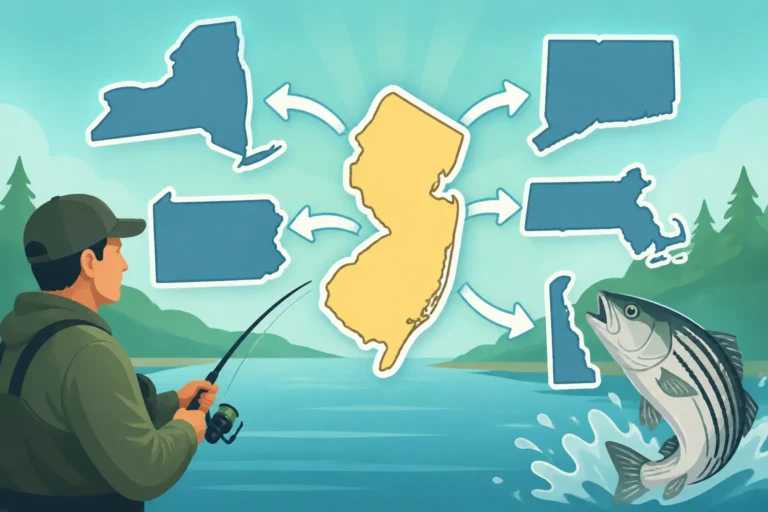
Another area of confusion revolves around fishing across state lines, particularly in shared waterways. New Jersey does have reciprocal agreements with neighboring states like Pennsylvania and New York for certain bodies of water, primarily segments of the Delaware River.
However, these agreements are often specific to certain stretches of water and may still have nuances. For instance, while a Pennsylvania resident might be able to fish the main stem of the Delaware River with their PA license, if they venture into a New Jersey tributary, they absolutely need a New Jersey license. The same applies to New Jersey residents fishing into other states' waters. Always, always check the specific reciprocal agreements for the exact body of water you intend to fish. Assuming your out-of-state license covers all waters just because they are nearby is a common mistake that can lead to unexpected fines. A good resource to consult is Do You Need Two Licenses to Fish the Delaware River Between New Jersey and Pennsylvania?.
Specific Exemptions and Their Proof Needs
While the general rule is that anyone aged 16 and older needs a license to fish in New Jersey's freshwaters, there are some exemptions. However, even with exemptions, sometimes you still need to prove your eligibility for that exemption.
- Age Exemptions: Anglers under 16 years of age do not need a license. Anglers 70 years and older are also exempt from needing a freshwater fishing license or a trout stamp. While exempt, it's still prudent for those 70+ to carry identification that clearly shows their age, like a driver's license, to easily prove their exemption if asked by a CPO.
- Disabled Anglers: New Jersey offers specific provisions for disabled anglers. While they may be exempt or qualify for special licenses, they often need to carry proof of their disability status (e.g., a letter from the VA or a specific state-issued disabled angler permit).
- Private Ponds: Generally, if you are fishing in a completely private pond that is entirely enclosed on private land and has no inlet or outlet to public waters, you might be exempt. However, the definition of "private pond" can be tricky. If there's any ambiguity or connection to public waterways, a license is typically required.
The takeaway here is that an exemption doesn't necessarily mean you can just show up empty-handed. Be prepared to provide proof of why you are exempt. When in doubt, it's always safer to err on the side of caution and either obtain a license or carry appropriate identification validating your exemption.
| Type of Proof | Pros | Cons | Best Use Case |
|---|---|---|---|
| Physical Paper | No battery or signal needed, universally accepted | Prone to damage (water, rips), easy to lose, bulky | Traditional anglers, areas with no cell service |
| Laminated Paper | Durable, waterproof, no battery/signal needed | Still can be lost, requires initial laminating step | Anglers who prefer physical proof & outdoor ruggedness |
| Smartphone (PDF/Image) | Convenient, always with you, digital record | Battery dependent, signal dependent, screen damage risk | Tech-savvy anglers, light packers, urban fishing spots |
| Waterproof Holder | Protects physical license, floats (some models) | Can be bulky, requires separate purchase | Any angler, especially on boats/kayaks or in wet weather |
| Combined Approach | Maximized reliability, multiple backups | Requires more preparation, potentially redundant items | All anglers seeking ultimate peace of mind |
Disclaimer
The information provided in this guide is for general informational purposes only and does not constitute legal advice. While we strive to provide accurate and up-to-date information, fishing regulations and laws in New Jersey can change. It is the responsibility of each angler to consult the official New Jersey Department of Environmental Protection (NJDEP) Division of Fish and Wildlife regulations or contact the appropriate authorities for the most current and accurate information before engaging in fishing activities.