What Counts as New Jersey Residency for Licensing
It’s a common predicament, isn’t it? You’ve settled into life in the Garden State, perhaps you just moved here, or maybe you’re a college student trying to figure out if you qualify for in-state rates. The question of "what counts as New Jersey residency for a fishing license" can be surprisingly tricky and lead to a lot of head-scratching. This comprehensive guide is designed to cut through the confusion, lay out the official criteria, and help you confidently determine your residency status so you can get out on the water without a hitch.
Why Residency Matters for Your Fishing License in New Jersey
When you're eager to cast a line into Lake Hopatcong or brave the surf along the Jersey Shore, one of the first hurdles you face is acquiring the right fishing license. And let me tell you, the distinction between a resident and a nonresident license isn't just a minor detail; it’s a fundamental difference that impacts your wallet, your eligibility, and your understanding of how you contribute to the state's natural resources. It's a system designed to benefit those who call New Jersey home year-round, while still welcoming visitors.
Cost Savings for Local Anglers
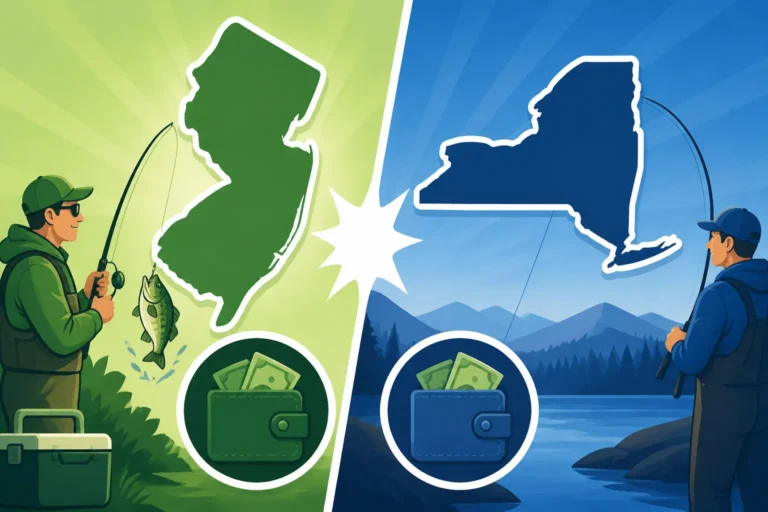
The most immediate and obvious reason residency matters is the cost. New Jersey, like most states, offers significantly reduced prices for its residents. Think about it: a resident annual freshwater fishing license can be substantially less than what an out-of-state angler pays. This isn't about penalizing visitors, but rather acknowledging that residents contribute to the state's economy and tax base year-round, which in turn helps fund wildlife management and conservation efforts. For someone planning to fish regularly, the savings add up quickly, making it well worth the effort to confirm you qualify for the resident rate. You can find a detailed breakdown of these differences in our guide on New Jersey Resident Fishing License Cost 2026 compared to New Jersey Nonresident Annual Fishing License Requirements.
It’s truly a benefit of living here. Imagine planning a full season of fishing – maybe you’re targeting trout in the Pequest River in spring, chasing largemouth bass in Assunpink Lake all summer, and then switching to crappie in the fall. If you’re paying nonresident prices for all your licenses and stamps, you’re looking at a much larger investment. The state wants to encourage its residents to participate in outdoor recreation, and affordable licensing is a key component of that encouragement. This financial incentive makes a huge difference for families and individuals who want to make fishing a regular part of their lives without breaking the bank.
Supporting New Jersey's Conservation Efforts
Beyond your personal savings, your resident license fee plays a crucial role in supporting the very fisheries you enjoy. When you buy a New Jersey fishing license, that money doesn't just disappear into a general fund. A significant portion of it goes directly to the New Jersey Division of Fish and Wildlife. These funds are vital for stocking programs, habitat restoration projects, research into fish populations, and enforcement of regulations.
Essentially, by purchasing a resident license, you’re directly investing in the future of New Jersey's fishing opportunities. This connection between license fees and conservation is a cornerstone of how wildlife agencies across the country operate. It's about more than just getting permission to fish; it's about being part of a larger community that cares for and sustains the state's aquatic ecosystems. Every resident license purchased contributes to ensuring that future generations can enjoy the same, if not better, fishing experiences.
Eligibility for Special Permits or Seasons
While general fishing licenses are usually available to both residents and nonresidents, some specific programs or permits might have residency requirements. For instance, in some cases, certain specialized deer hunting permits or lottery drawings for specific hunting zones might prioritize residents. While less common for general fishing, understanding your resident status keeps you informed about any potential future programs or unique opportunities that might arise, ensuring you don't miss out on any exclusive angling adventures.
It's always a good practice to keep an eye on the Reading the New Jersey Fish and Wildlife Digest for any announcements about new programs or changes. While saltwater anglers need to remember the separate New Jersey Saltwater Registry Explained, which is free but still requires proper identification, freshwater fishing often has more nuanced resident-specific regulations. Staying informed about your residency status is the first step to unlocking all the fishing benefits New Jersey has to offer.
Defining "Resident" According to New Jersey Fish and Wildlife
So, what exactly does New Jersey consider a "resident" when it comes to fishing licenses? This is where many people get tripped up. It's not just about owning property or spending a few weekends here. The state has a fairly clear definition, centered around the concept of a "primary domicile" and the intent to reside permanently. Understanding these criteria is essential to ensure you purchase the correct license and avoid any issues with the New Jersey Conservation Police.
The Primary Domicile Rule
At its core, New Jersey Fish and Wildlife defines a resident as someone who has maintained their primary domicile in the state for at least six months immediately preceding the application for a license. What exactly is a "primary domicile"? It's more than just an address on a piece of mail. It's your principal and permanent home, the place where you habitually sleep, eat, and return to from absences. It's where you genuinely intend to live indefinitely.
This means if you own a vacation home down in Long Beach Island but your main residence, where you get most of your mail, pay most of your taxes, and spend the majority of your time, is in Pennsylvania, then you are not considered a New Jersey resident for licensing purposes. The state looks for clear evidence that New Jersey is the center of your personal, social, and economic life. They want to ensure that people aren't just trying to get a cheaper license by using a temporary address.
Duration of Stay Requirements
The "six months immediately preceding the application" rule is crucial. It’s not enough to say you plan to live in New Jersey, or that you have lived here in the past. You must demonstrate a continuous presence and intent to reside here for that specified period leading up to when you apply for your fishing license. This rule helps prevent individuals from temporarily moving to the state just to qualify for resident rates before leaving again.
Think of it this way: if you moved to Trenton last October and you're applying for your fishing license this coming March, you've likely met that six-month threshold. However, if you just moved in January and are trying to buy a license in February, you would still be considered a nonresident for that initial period. This duration requirement establishes a clear benchmark for what constitutes an established residency, rather than just a temporary stay.
Intent to Remain vs. Temporary Presence
Beyond the six-month physical presence, the state also considers your "intent to remain." This means you must genuinely plan to make New Jersey your permanent home, not just stay for a season or a few years with the clear intention of moving elsewhere eventually. This "intent" is often inferred from other factors, like where you're employed, where your children attend school, where your vehicles are registered, and where you're registered to vote.
For example, a student from Ohio attending Rutgers University for four years, but whose permanent home and family are still in Ohio, would typically be considered a nonresident for fishing licenses, even if they live in a dorm for more than six months. Their intent isn't to permanently reside in New Jersey beyond their studies. Conversely, someone who moves to New Jersey for a new job, brings their family, registers their car, and plans to settle down would quickly establish intent. This distinction helps differentiate between true residents and those with a temporary presence, no matter how long that temporary presence might be.
Common Scenarios and How They Impact Residency Status
The "primary domicile" and "intent to remain" rules are solid, but real life is messy. People move, go to college, serve in the military, and own multiple properties. These common scenarios often create confusion about who truly qualifies as a New Jersey resident for a fishing license. Let's break down some of these tricky situations.
College Students: In-State vs. Out-of-State
This is a classic one. You’ve got students coming into New Jersey for college, and New Jersey students heading out of state. Who counts as a resident? Generally, if your parents or legal guardians are New Jersey residents and provide your financial support, and you maintain New Jersey as your legal state of residence (meaning your driver's license, voter registration, etc., are all still New Jersey-based), you typically qualify for a resident fishing license, even if you’re living in a dorm or off-campus apartment for part of the year. Your "primary domicile" is still considered your parents' home.
However, if you moved to New Jersey from another state specifically to attend college, and your permanent home, family, and other ties remain in that original state, you will likely be considered a nonresident for fishing license purposes. Even if you've lived in a New Jersey college town for two years, if your intent isn't to make New Jersey your permanent home after graduation, you're still a visitor in the eyes of Fish and Wildlife. We delve deeper into this specific situation in our article on New Jersey Fishing License for College Students From Out of State. It's crucial not to confuse college residency for tuition purposes with fishing license residency; they often have different criteria.
Military Personnel and Their Families
Active duty military personnel stationed in New Jersey often have unique residency considerations. If you are active military and permanently stationed in New Jersey, regardless of your state of origin, you typically qualify for a resident fishing license. This is a common courtesy extended by states to those serving our country. It’s a way to thank them and make it easier for them to enjoy local recreation. Often, their dependents (spouses and children) also qualify for resident licenses under certain conditions, as long as they also reside with the service member in New Jersey.
You'll generally need to present your military ID and official orders showing your permanent duty station in New Jersey when applying for your license. It's a fairly straightforward process, and most license vendors are familiar with the requirements. It’s a well-deserved benefit for those who sacrifice so much. For more details on potential savings, you can check out our post on New Jersey Active Military Fishing License Discount.
Property Owners Who Don't Primarily Live in NJ
Owning property in New Jersey is often a source of confusion. Many people have summer homes or vacation properties along the Jersey Shore, or perhaps a mountain cabin in Sussex County, but their primary residence is in New York or Pennsylvania. Unfortunately, simply owning property, or even paying property taxes in New Jersey, does not automatically grant you resident status for a fishing license.
Your primary domicile must be in New Jersey. If you spend 10 weeks a year at your Beach Haven vacation home, but the other 42 weeks are spent at your main house in Connecticut, you are still a Connecticut resident. The state looks for evidence of year-round, permanent living in New Jersey. While it might seem unfair to some, this rule ensures fairness to actual residents who contribute to the state's infrastructure and services year-round. You'll need to purchase a New Jersey Nonresident Annual Fishing License Requirements in these cases.
New Movers to New Jersey
If you’ve recently packed up your life and moved to New Jersey with the clear intent of making it your permanent home, congratulations and welcome! You’re likely on your way to becoming a New Jersey resident for fishing license purposes. The key here is establishing that "primary domicile" and meeting the "six months immediately preceding the application" rule. Once you've established your home, transferred your driver's license, registered your vehicle, and set up utilities in your name at your New Jersey address, you are well on your way.
There isn't a specific "grace period" where you automatically become a resident upon moving in; you need to genuinely establish residency. However, once you've truly set up shop and meet the six-month continuous residency requirement, you can apply for a resident license. It's not usually an instantaneous switch, but a gradual process of establishing your life here.
Documents You'll Need to Prove New Jersey Residency
Okay, so you've read through the definitions and scenarios, and you're pretty sure you qualify as a New Jersey resident. That's great! But proving it to the Division of Fish and Wildlife, or to a license vendor, requires documentation. It's not enough to just say "I live here." They need to see tangible proof that solidifies your claim. Having the right documents prepared beforehand will make the license purchasing process smooth and hassle-free.
Official Photo Identification
The cornerstone of proving your identity and residency is a valid, official photo ID. This is typically your New Jersey-issued driver's license or a New Jersey non-driver identification card. These documents are usually the strongest evidence because they are issued by the state and include your photograph and current address.
Make sure your New Jersey driver’s license or state ID card reflects your current residential address. If you've moved within the state and haven't updated your address on your license, now's the time to do it. An outdated address could cause delays or lead to questions about your actual primary domicile. Always bring the physical card; a picture on your phone might not always be accepted, especially if a vendor needs to scan it.
Proof of Physical Address
Even with an updated driver's license, sometimes vendors or the Division of Fish and Wildlife may request additional proof of your physical address, especially if there’s any ambiguity. These documents provide supplemental evidence that you are indeed living at the New Jersey address you claim.
Common and easily verifiable proofs of physical address include:
- Utility Bills: Recent bills (within the last 60 days) for services like electricity, gas, water, or cable in your name, showing your New Jersey address.
- Lease Agreements or Property Deeds: A current lease agreement for your rental property or a property deed in your name, indicating ownership of a New Jersey residence.
- Vehicle Registration and Insurance Cards: New Jersey vehicle registration and insurance cards listing your current New Jersey address.
- Property Tax Bills: If you own property, a recent property tax bill showing your name and New Jersey address is excellent proof.
- Bank Statements: Recent statements from a New Jersey bank with your current address.
The key is to have documents that are current and clearly show your name linked to a New Jersey physical address. The more official documents you have, the less likely you are to encounter any issues. Our guide on What Documents Prove New Jersey Residency for a Fishing License? offers an even more comprehensive list.
Other Supporting Documents
Sometimes, a combination of documents can paint a clearer picture of your residency. While not always required, having these on hand can strengthen your case, especially in more complex situations like for college students or military personnel.
These might include:
- Voter Registration Card: Showing you are registered to vote at a New Jersey address. This strongly indicates intent to remain.
- State Income Tax Returns: A copy of your most recent New Jersey state income tax return.
- Military Orders: For active military, official orders stating your permanent duty station in New Jersey.
- Student Transcripts or Enrollment Verification: For college students whose parents are NJ residents, documents proving enrollment and parent's address can be helpful.
It's about accumulating enough evidence to demonstrate your clear and unmistakable ties to the state. When in doubt, bring more documents than you think you'll need. It’s always better to be overprepared than to be turned away because you lack sufficient proof.
Here's a handy table summarizing common proofs of residency:
| Document Type | Primary Use | Level of Proof | Key Requirement |
|---|---|---|---|
| NJ Driver's License/State ID | Photo ID & Primary Address Proof | High | Must be current and reflect NJ residential address |
| NJ Vehicle Registration | Address Proof | Medium | Must be current and reflect NJ residential address |
| NJ Vehicle Insurance Card | Address Proof | Medium | Must be current and reflect NJ residential address |
| Utility Bill (Electric, Gas) | Address Proof | High | Issued within last 60 days, in applicant's name |
| Mortgage Statement/Lease Agmt. | Address Proof | High | Must be current, in applicant's name |
| NJ Voter Registration Card | Address & Intent Proof | High | Must be current and reflect NJ residential address |
| NJ State Income Tax Return | Address & Intent Proof | High | Most recent filing, in applicant's name |
| Military Orders | Stationed in NJ Proof | High | For active duty personnel, showing NJ station |
| Student Enrollment Papers | Parental Residency Link (for students) | Medium | Shows NJ parent address, student enrollment |
| Bank Statement | Address Proof | Medium | Issued within last 60 days, from NJ bank |
What Happens if Your Residency Status Changes
Life is fluid, and your residency status might not be static. People move, circumstances change, and what was true last year might not be true today. It's crucial to understand the implications of these changes on your New Jersey fishing license and how to correctly navigate them to avoid unintentional violations. The goal is always to stay compliant and ensure you have the appropriate license for where you actually reside.
Moving Out of New Jersey
Let's say you've lived in New Jersey for years, had your resident fishing license, but now you're moving to Delaware for a new job. Once you establish your new primary domicile outside of New Jersey, your existing New Jersey resident fishing license generally becomes invalid. It's no longer the correct license for your status. You cannot continue to use a resident New Jersey license if you are no longer a resident of the state, even if the license hasn't technically "expired" yet.
In this scenario, if you still plan to come back and fish in New Jersey (and many people do, given our fantastic fishing opportunities!), you would then need to purchase a New Jersey Nonresident Annual Fishing License Requirements or one of the vacation licenses, like the New Jersey 7-Day Vacation Fishing License Explained. It’s an important distinction that can sometimes catch people off guard. The state relies on the honor system to a large extent, but misrepresenting your residency can lead to serious penalties, so it’s always best to be transparent and get the correct license.
Moving Into New Jersey
Conversely, if you're making the exciting move to New Jersey, you'll eventually qualify for a resident license. However, it's not an immediate transition. As discussed, you need to establish your primary domicile here and meet the six-month residency requirement. During that initial six-month period, even if you’re living here, you would still be considered a nonresident for fishing license purposes.
This means you would need to purchase a nonresident license – perhaps a 2-day or 7-day vacation license if you're just dipping your toes in the water, or a full annual nonresident license if you plan to fish frequently during that introductory period. Once you've demonstrably resided in New Jersey for six continuous months and have the necessary documentation to prove your primary domicile and intent to remain, you can then purchase a resident license. There's no pro-rated option or immediate swap; you simply buy the correct license based on your current, established residency status.
Consequences of Misrepresenting Residency
It might seem like a small detail, but misrepresenting your residency status to obtain a cheaper fishing license is a serious offense. New Jersey Fish and Wildlife takes these regulations seriously, and conservation police officers are trained to identify potential violations. Getting caught fishing with a resident license when you are, in fact, a nonresident can lead to significant penalties.
These penalties can include hefty fines, the revocation of your fishing privileges for a period, and potentially even court appearances. It's simply not worth the risk. The difference in cost between a resident and nonresident license is minimal compared to the fines and embarrassment of being caught. Always ensure you are holding the correct license that accurately reflects your legal residency status. You can learn more about the potential repercussions in our guide on Penalties for Fishing Without a License in New Jersey. Play it safe, be honest, and enjoy your time on the water without that nagging worry in the back of your mind.
Navigating the Application Process as a New Jersey Resident
Alright, you've figured out your residency status, gathered your documents, and you're ready to get that New Jersey resident fishing license! The good news is that the application process is quite straightforward, thanks to modern technology and a network of local vendors. Whether you prefer the convenience of online purchasing or the personal touch of a bait shop, New Jersey offers accessible options to get you licensed and ready to fish.
Online Application Steps
For many, the easiest and quickest way to purchase a New Jersey fishing license is online. The New Jersey Division of Fish and Wildlife manages an accessible online licensing system, allowing you to complete the entire process from the comfort of your home.
Here’s a general rundown of the steps you can expect:
- Visit the Official Website: Navigate to the New Jersey Division of Fish and Wildlife’s licensing portal. Make sure you're on the official state website to avoid any third-party scams.
- Create or Log In to Your Profile: If you’re a first-time applicant, you’ll need to create an angler profile. This usually involves providing your personal information, including your name, address, date of birth, and possibly some physical identifiers. If you've purchased a license before, you can log in using your existing details.
- Select Your License Type: Choose the "Resident Annual Freshwater Fishing License" (or a combination hunting/fishing license if applicable). Don't forget any necessary add-ons, like the New Jersey Trout Stamp Requirements Explained if you plan to fish for trout in designated waters.
- Verify Residency Information: The system will often cross-reference your provided address with state databases. Be prepared to confirm your residency status. If there's any discrepancy, you might be prompted to provide additional documentation later, or you may need to apply in person.
- Review and Pay: Double-check all the information you've entered to ensure accuracy. Then, proceed to the payment section, where you'll use a credit or debit card to complete your purchase.
- Print Your License: Once the transaction is complete, you'll usually be able to print a temporary license immediately. This serves as your legal proof until a physical card (if applicable) arrives by mail, or you can often carry a digital copy on your phone. However, it is always a good idea to have a printed copy, especially in areas with poor cell service. Our article How to Buy a New Jersey Fishing License Online provides a step-by-step tutorial.
In-Person Purchase Options
While online is convenient, sometimes you just want to talk to a person, or maybe you need to resolve a specific residency question. New Jersey maintains a robust network of authorized license agents throughout the state where you can purchase your resident fishing license in person.
These agents typically include:
- Local Bait and Tackle Shops: These are often the best places, as the staff are usually avid anglers themselves and can offer local advice on what's biting and where.
- Sporting Goods Stores: Larger retailers like Bass Pro Shops or even some smaller, independent sporting goods stores.
- Designated Walmart Locations: Yes, many Walmart stores that have a sporting goods section are authorized to sell New Jersey fishing licenses. This can be a very convenient option, especially in areas without dedicated tackle shops. You can find a list of common retailers in our guide on Retailers That Sell New Jersey Fishing Licenses, Including Walmart.
- County Clerk Offices or Municipal Buildings: In some areas, these government offices might also serve as license agents, though it's less common for fishing licenses compared to hunting.
When purchasing in person, you'll need to bring your official New Jersey photo ID (driver's license or state ID card) and any other supporting documents discussed earlier to prove your residency. The vendor will process your information, print your license on the spot, and provide you with a physical copy. It's quick, easy, and often comes with the added benefit of local fishing tips!
Required Information Beyond Proof of Residency
Beyond simply proving you live in New Jersey, you'll need to provide a few other pieces of personal information to complete your license application, regardless of whether you apply online or in person. These details help the state accurately identify you and maintain proper records.
Expect to provide:
- Full Legal Name: As it appears on your official identification.
- Date of Birth: Essential for age verification, especially for certain license types or exemptions, such as for seniors over 70.
- Physical Characteristics: Sometimes, height, weight, hair color, and eye color are requested for identification purposes, particularly for physical license cards.
- Contact Information: A current mailing address (if different from your residential address), phone number, and email address for important communications or reminders.
- Previous License Information: If you've had a New Jersey fishing license before, having your previous license number handy can speed up the process, as much of your information might already be in the system.
Having all this information ready will ensure a smooth and efficient transaction, getting you from application to angler as quickly as possible. Don't forget to check out our main New Jersey Fishing License Guide for 2026 for an overview of all licensing requirements.
Disclaimer
The information provided in this guide is intended for general informational purposes only and does not constitute legal advice. While we strive to provide accurate and up-to-date information, fishing regulations and residency requirements in New Jersey can change. It is always the angler's responsibility to consult the most current New Jersey Fish and Wildlife regulations and statutes or contact the New Jersey Division of Fish and Wildlife directly to ensure full compliance before engaging in any fishing activities.