New Jersey Disabled Veteran Fishing License Rules
It’s a sad reality that sometimes, the systems designed to honor our veterans can feel more like an obstacle course than a helping hand. For many disabled veterans in New Jersey, simply wanting to enjoy the peace and quiet of a fishing trip is met with confusion over eligibility, documentation, and the true cost of a fishing license. This guide is here to untangle the bureaucratic knots, offering a clear, step-by-step explanation of New Jersey's disabled veteran fishing license rules so you can spend less time worrying about paperwork and more time with a line in the water.
Understanding New Jersey's Commitment to Disabled Veterans and Anglers
New Jersey recognizes the immense sacrifices made by its service members, and this recognition extends to providing certain benefits, including reduced or free fishing privileges for disabled veterans. However, like many government programs, the specifics can be a bit opaque, leading to frustration and unanswered questions. It’s not always as simple as walking in and saying, "I'm a veteran." There are clear criteria, and understanding them is the first step toward enjoying the state's beautiful waterways.
The "Free" Aspect: What It Really Means for Disabled Veterans
When you hear about a "free" fishing license for disabled veterans, it's easy to assume that any veteran with any level of disability can automatically get one without a cost. Unfortunately, the reality is a little more nuanced, and this misunderstanding often causes unnecessary trips or phone calls. In New Jersey, the truly free annual fishing license is specifically available to resident veterans who have a 100% service-connected disability, certified by the United States Department of Veterans Affairs (VA).
For those disabled veterans who don't meet the 100% service-connected disability threshold, but still have a recognized service-connected disability, New Jersey offers a significantly reduced fee for their annual fishing license. This is a huge benefit, making fishing much more accessible. It’s important to understand this distinction from the outset to manage expectations and ensure you apply for the correct benefit. This system reflects a genuine desire to give back, but it's structured to prioritize those with the most severe service-connected disabilities for the completely free option, while still offering substantial savings to others.
Eligibility Criteria: Who Qualifies and How
To qualify for either the free or reduced-cost disabled veteran fishing license in New Jersey, there are specific boxes you absolutely need to check. It's not just about having served; it's about the nature and extent of your service-connected disability as officially recognized.
First and foremost, you must be a resident of New Jersey. This is a critical point; if you’re an out-of-state veteran, even with a service-connected disability, you'll generally be subject to nonresident fishing rules unless specific reciprocal agreements apply, which are rare for these types of benefits. Establishing your residency means having the appropriate documentation like a valid New Jersey driver's license, utility bills, or other proofs that solidify your ties to the state. Understanding what counts as New Jersey residency is key here.
Next, the core of the eligibility lies in your disability status. You need official documentation from the U.S. Department of Veterans Affairs (VA) that clearly states your percentage of service-connected disability.
- For the FREE annual fishing license: Your VA documentation must explicitly state a 100% service-connected disability. There's no wiggle room here; 90% or 95% does not qualify for the completely free license under this specific provision, though it will qualify for the reduced rate.
- For the REDUCED-FEE annual fishing license: You must have any level of service-connected disability, again, as certified by the VA. So, if you have a 10% or 50% service-connected disability, you will qualify for the reduced-fee license.
It's also imperative to have proof of an honorable discharge. Your DD-214 (Certificate of Release or Discharge from Active Duty) is the standard document for this. Make sure you have a copy readily available, as it's a foundational piece of your application. The state needs to verify your veteran status, and the DD-214 is the universally accepted document for this purpose. Without these key pieces of evidence – the honorable discharge and the VA disability rating – your application for these special benefits will unfortunately be denied.
Navigating the Application Process for Your Discounted or Free License
Once you've determined your eligibility, the next hurdle is the application itself. This is where many veterans encounter friction, especially if they’re not accustomed to dealing with state-specific bureaucracy. The good news is that with the right documents in hand, the process can be relatively straightforward. The key is preparation and knowing exactly what to expect.
Gathering Your Essential Documentation
Before you even think about heading to a license agent or logging onto the state's website, take the time to assemble all your necessary paperwork. This step cannot be overstated; having everything organized beforehand will save you immense frustration and multiple trips or calls.
Here's a checklist of what you'll absolutely need:
- Proof of Honorable Discharge (DD-214): This document is your fundamental proof of military service and honorable separation. Ensure you have the original or a certified copy. If you've misplaced your DD-214, you can request a copy from the National Archives. It can take some time to receive it, so plan ahead if you need to acquire a new one.
- VA Disability Letter: This is the official letter from the U.S. Department of Veterans Affairs (VA) that explicitly states your percentage of service-connected disability. This letter is crucial. It must clearly show the percentage. A VA identification card might indicate "Service Connected" but often doesn't specify the percentage, so make sure you have the official letter. If you have a 100% service-connected disability, the letter needs to reflect that clearly for the free license.
- Proof of New Jersey Residency: As mentioned, these benefits are for residents. A current New Jersey driver's license or state ID card is usually sufficient. If your address on your ID doesn't match your current residence, bring supplemental documents like a utility bill, property tax statement, or voter registration card that shows your current New Jersey address. Remember, the state needs to confirm New Jersey residency to grant you resident benefits.
- Valid Photo Identification: Beyond your proof of residency, you'll need another form of photo ID, typically your driver's license, to confirm your identity.
It's a good practice to make multiple copies of all these documents. Keep one set for yourself, one for the application, and perhaps a digital copy on a secure drive. Remember, dealing with sensitive personal information, especially VA documents, requires careful handling.
Where and How to Apply
New Jersey offers a few avenues for purchasing fishing licenses, and disabled veterans have the same options, with the added requirement of presenting their disability documentation.
- Online Through the NJDEP Fish & Wildlife Website: This is often the most convenient method for many people. The New Jersey Division of Fish & Wildlife website allows you to purchase licenses digitally. However, for a disabled veteran benefit, you might need to first register or verify your veteran status in their system, which sometimes requires an initial in-person visit or mailing in your documentation to be entered into their database. Once your status is verified, future renewals can typically be handled online much more easily. Pay close attention to the instructions on the website's veteran benefits section to see if an initial "manual" verification is required. If you're struggling with the online process, don't hesitate to reach out to their customer service line for assistance.
- In-Person at a License Agent: Many bait and tackle shops, sporting goods stores (like some larger Amazon-affiliated retailers, though not Amazon directly for licenses), and some municipal offices act as authorized license agents throughout New Jersey. This is often the most reliable way to get your disabled veteran license for the first time, as you can present your documents directly to a person who can verify them and process your application on the spot. Make sure to bring all your original or certified copies of the documents listed above. They will typically make copies for their records or for submission to the state. It’s always a good idea to call ahead to ensure the agent is equipped to handle disabled veteran applications, as some smaller agents might primarily deal with standard licenses.
- Through the Mail: While less common now with online options, some individuals may still prefer or need to apply via mail. You would typically download the application form from the NJDEP Fish & Wildlife website, fill it out, and mail it along with copies of your required documentation and payment (if applicable) to the Division of Fish & Wildlife's license unit. Always use certified mail when sending important documents like this.
Remember, the goal is to get your information accurately recorded with the state. Once you're in the system as an eligible disabled veteran, subsequent renewals should be much smoother. For those new to the process, visiting an in-person agent can offer peace of mind, allowing you to ask questions and ensure everything is correct. It's an important part of the process to ensure you have the right credentials.
Beyond the License: Important Considerations for Disabled Veteran Anglers
Securing your fishing license is a significant achievement, but it's just one piece of the puzzle for a fully compliant and enjoyable fishing experience in New Jersey. There are other regulations and considerations that disabled veterans, like all anglers, need to be aware of. Neglecting these details could lead to unnecessary fines or complications.
Combining with Other Licenses and Registries
New Jersey's fishing regulations have a few layers, and a disabled veteran fishing license covers the basic freshwater fishing privilege. However, it's crucial to understand what it doesn't automatically cover:
- New Jersey Trout Stamp: If you plan on fishing for trout in designated trout waters, or during certain trout seasons, you will almost certainly need to purchase a separate New Jersey trout stamp unless a specific exemption applies (which is rare, even for disabled veterans, unless they are 70+ and then it's still a specific exemption). This is a common oversight, as many assume their primary license covers everything. Always check the current regulations, especially if you're targeting trout in stocked waters. The good news is that even if you need a Trout Stamp, the cost is typically nominal.
- New Jersey Saltwater Registry: This is another big one. Many anglers, especially those coming from states where a combined license is common, get tripped up here. New Jersey has a separate saltwater registry that is required for anyone fishing in marine waters (including bays, estuaries, and the ocean). Even if you have a free or reduced-cost freshwater license as a disabled veteran, you still need to register for saltwater fishing. The great news is that the New Jersey Saltwater Registry is free to join, making this requirement easy to fulfill online. However, it's a separate step you must take.
- Combination Hunting and Fishing Licenses: If you're a disabled veteran who also enjoys hunting, you might be considering a combination hunting and fishing package. New Jersey does offer combination licenses, and disabled veteran benefits may apply to these as well, typically providing a significant discount on the combined package. This can be a very cost-effective option for those who participate in both activities. You'll need to follow similar documentation requirements for your veteran and disability status when applying for these.
The takeaway here is always to assume that specialized stamps or registries are separate, even with a veteran's license, unless explicitly stated otherwise in the official New Jersey Fish & Wildlife Digest.
Proving Your Status While Fishing
Just like carrying your driver's license when you drive, you must have proof of your fishing license and, if applicable, your saltwater registry and trout stamp, whenever you are fishing in New Jersey. This is not just a suggestion; it's a legal requirement.
- Physical vs. Digital Proof: New Jersey generally accepts both physical printed licenses and digital copies displayed on your smartphone. Whichever method you choose, ensure it's easily accessible and readable. A dead phone battery or a smudged printout won't cut it during an inspection.
- What to Expect During a Check: License checks are routine. A Conservation Police Officer (CPO) may approach you while you're fishing and ask to see your license and photo ID. They are checking to ensure you are legally permitted to fish. For disabled veterans, they may also verify your veteran and disability status. Be polite, cooperative, and have your documents ready. Trying to argue or evade a check can lead to severe penalties far beyond the cost of a license.
- Importance of Carrying Documents: Imagine spending a peaceful day on Round Valley Reservoir or surf fishing along Island Beach State Park, only to have it ruined by a fine because you left your license in the car. It happens. Always double-check your wallet or tackle box before heading out. It’s your responsibility to carry proof.
Accessibility and Resources for Disabled Anglers
Beyond the license, New Jersey has made strides in making fishing accessible for everyone, including disabled veterans. Look for resources and facilities designed to enhance your fishing experience.
- Accessible Fishing Piers and Docks: Many state and county parks in New Jersey feature accessible fishing piers, complete with ramps, wider spaces, and sometimes even adaptive railings. These are fantastic spots for veterans with mobility challenges to enjoy fishing comfortably. For example, many shore towns have fishing piers that are designed to be wheelchair friendly. A quick search on the NJDEP website for "accessible fishing" can reveal many options.
- Adaptive Equipment: While the state doesn't provide adaptive gear, organizations and companies do. Websites like Amazon offer a vast array of adaptive fishing equipment, from specialized rod holders that attach to wheelchairs to casting aids and ergonomic grips that can make a huge difference in comfort and usability. Don't let a physical limitation deter you; there's often a solution out there.
- Support Organizations: Many non-profit organizations are dedicated to getting disabled veterans out on the water. Groups like Project Healing Waters Fly Fishing, Wounded Warrior Project, and local veteran associations often organize fishing trips, provide equipment, and offer companionship. These organizations understand the unique needs of disabled veterans and provide a supportive environment. They can be an invaluable resource for camaraderie and adapted fishing experiences. They often have local chapters right here in New Jersey, offering guided trips on lakes like Lake Hopatcong or even fly fishing excursions on our trout streams.
Addressing Specific Scenarios and Common Questions
The world of fishing regulations isn't always black and white, and specific situations can lead to more questions. Here are a few common scenarios and their answers that might arise for disabled veteran anglers in New Jersey.
What if My Disability Percentage Changes?
Life happens, and sometimes a veteran's disability rating from the VA can change. If your service-connected disability percentage increases or decreases, it's essential to understand how this might affect your New Jersey fishing license status.
- If your disability increases to 100%: Congratulations, you now qualify for the free annual fishing license! You will need to take your updated VA disability letter, clearly showing the 100% rating, to a license agent or follow the state's procedure for updating your veteran status. It's worth making this update as soon as possible, as it will mean you won't need to pay for your license anymore.
- If your disability decreases from 100%: If you were previously receiving the free license due to a 100% rating, and your rating drops below that threshold, you will then qualify for the reduced-fee annual license, not a free one. You'll need to inform the state and ensure your next license purchase reflects the appropriate fee. This can be an uncomfortable conversation, but it's important to remain compliant with state regulations. Typically, this change would be reflected at your next renewal cycle, but it's always best practice to confirm with the New Jersey Division of Fish & Wildlife.
The key is proactive communication with the licensing authorities. Always keep your VA documentation up-to-date and be prepared to present it.
Non-Resident Disabled Veterans
While New Jersey offers generous benefits to its resident disabled veterans, these specific "free" or "reduced-fee" licenses are almost exclusively for those who officially reside in the state.
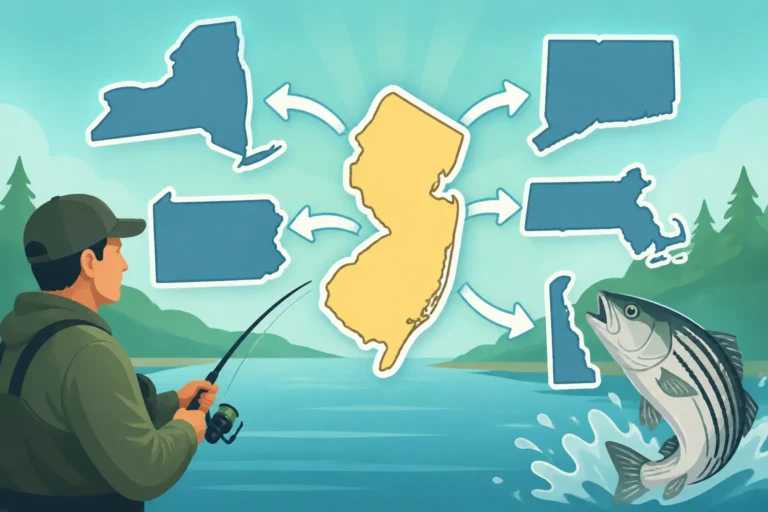
- General Rule: If you are a disabled veteran from another state (e.g., Pennsylvania or New York) and wish to fish in New Jersey, you will typically need to purchase a non-resident fishing license. While you have served our nation, each state's veteran benefits are generally tied to its residency requirements.
- Reciprocal Waters: There are some very limited reciprocal agreements for general fishing licenses in certain border waters, like parts of the Delaware River with Pennsylvania. For example, you might be able to fish certain stretches of the river with a valid Pennsylvania license, but these agreements usually pertain to general licenses and do not extend to disabled veteran specific benefits from one state to another. You'd still need to abide by the more stringent license requirements for the specific state's territory. For instance, if you are a PA resident disabled veteran and want to fish the New Jersey side of the Delaware River, you would need a New Jersey Nonresident Fishing License. For full details on these unique situations, you'd want to consult a guide like New Jersey Reciprocal Fishing Waters With Pennsylvania or Do You Need Two Licenses to Fish the Delaware River Between New Jersey and Pennsylvania?
- Vacation Licenses: If you're visiting New Jersey, even as a disabled veteran, you'd likely look into the standard non-resident annual license or a short-term vacation license option. While not free, they offer flexibility for a visitor.
It's a common frustration that veteran benefits aren't universal across state lines, but understanding this reality upfront will help you plan your fishing trips and ensure you're always properly licensed, no matter which state's waters you're enjoying.
Table of Key Documents for Disabled Veteran Fishing License in New Jersey
To help you keep track, here's a quick summary of the vital documents required when applying for your New Jersey disabled veteran fishing license.
| Document Type | Purpose | Who Needs It | Where to Obtain |
|---|---|---|---|
| DD-214 | Proof of Honorable Discharge | All applicants | National Archives (if lost), personal records |
| VA Disability Letter | Verification of Service-Connected Disability (%) | All applicants | U.S. Department of Veterans Affairs (VA) |
| NJ State ID/DL | Proof of New Jersey Residency | All applicants | NJ Motor Vehicle Commission |
| Valid Photo ID | Identity Verification (e.g., Driver's License) | All applicants | Various (Driver's License, Passport, State ID) |
This table should serve as a handy checklist when you're preparing your application materials, helping you avoid unnecessary delays.
Disclaimer
The information provided in this guide is for general informational purposes only and does not constitute legal advice. Fishing regulations, license requirements, and veteran benefits are subject to change. Always consult the most current New Jersey Fish & Wildlife Digest and contact the New Jersey Department of Environmental Protection (NJDEP) Division of Fish & Wildlife or the U.S. Department of Veterans Affairs for the most accurate and up-to-date information regarding disabled veteran fishing license rules.