How to Split the Cost of a Private New Jersey Charter Among Friends
It's no secret that the dream of a private fishing charter in New Jersey, with just your closest pals or family, can seem like a luxurious splurge. When you first look at the price tag for a full day out on the water, targeting trophy striped bass or giant tuna, it can feel overwhelming. Many anglers immediately dismiss the idea, assuming it's simply too expensive for their budget. But what if I told you that with a little planning and the right approach, splitting the cost of a private charter among friends is not only achievable but often a more economical and enjoyable option than you might think? This guide is all about breaking down that big number into manageable pieces and showing you exactly how to make that dream trip a reality.
Why Private Charters Seem So Expensive at First Glance
When you see a flat rate for a private charter, especially compared to the per-person cost of a party boat, your wallet might instantly recoil. It looks like a huge chunk of change. "Who can afford that?" you might ask. This initial sticker shock is completely understandable because you're looking at the total operational cost of running a professional fishing vessel, not just a seat on a larger boat. But let's dig a little deeper into what that single, seemingly high price actually covers.
Understanding the All-Inclusive Value
A private charter isn't just a boat ride; it's a tailor-made fishing experience. That "expensive" price covers the captain's expertise, who lives and breathes New Jersey fishing, knowing exactly where the fish are biting and what techniques will work best. It also includes the mate's hard work, assisting with rigging, baiting, untangling lines, and even cleaning your catch at the end of the day.
Crucially, the price typically includes all the necessary gear – rods, reels, tackle, and often a substantial amount of live or fresh bait. Think about it: if you were to buy all that high-quality equipment yourself, you’d be spending a fortune. Factor in the fuel costs for running a boat all day, the insurance, the boat's maintenance, and all the behind-the-scenes licenses and permits the captain needs, and that price starts to make a lot more sense. You're paying for a seamless, expert-led adventure where almost everything is handled for you, allowing you to focus purely on the fishing. If you're wondering, do New Jersey charters provide bait and tackle?, the answer is almost always yes, and it’s a huge value add.
Comparing Against Party Boats
It’s natural to compare the cost of a private charter to that of a party boat (also known as a head boat). On a party boat, you pay a per-person fee, which can seem much lower on the surface. However, the experiences are fundamentally different. A party boat accommodates many anglers, sometimes dozens, all vying for space at the rail. While they offer a great way to get out on the water, they are less flexible in terms of target species, fishing locations, and personalized attention.
With a private charter, you get the entire boat to yourselves. This means you and your friends dictate the pace, choose the species you want to target (within reason and season, of course), and receive undivided attention from the captain and mate. If one person needs help, the mate isn't spread thin across twenty other anglers. This personalized instruction and flexible itinerary can significantly enhance your fishing success and overall enjoyment, making the seemingly higher upfront cost a worthwhile investment when shared. To learn more about the differences, check out our guide on New Jersey Party Boat vs Private Charter: What's the Difference?.
The Art of Cost-Sharing: Strategies and Approaches
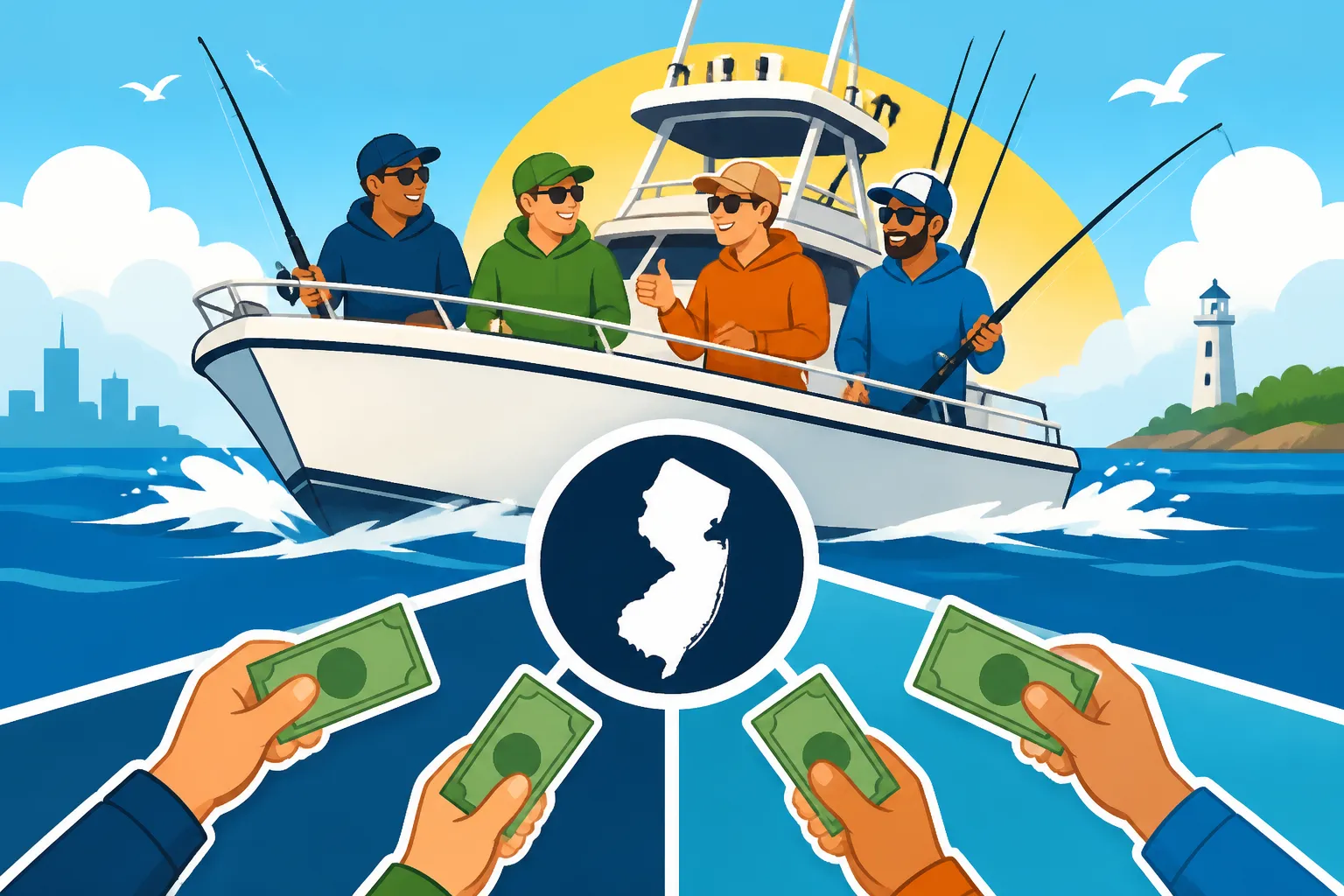
Now that we've demystified the sticker price, let's get into the nitty-gritty of how to divvy up that cost in a way that feels fair and manageable for everyone. The beauty of a private charter is that the total cost is fixed, regardless of whether you have two people or six (up to the boat's capacity, of course). This means the more friends you bring, the lower the individual cost becomes!
Equal Splits: The Simplest Method
The most straightforward approach, and often the least headache-inducing, is simply an equal split. If a charter costs a certain amount and you have X number of people in your group, divide the total cost by X. This works best when everyone is equally enthusiastic about the trip, plans to fish actively, and agrees on the target species and duration.
Let's say a private half-day charter costs $800, and you have four friends going. An equal split means everyone pays $200. Add a typical gratuity of 15-20% (say $150 for this trip), and each person contributes another $37.50, bringing the total to $237.50 each. Simple, clean, and no arguments. This method relies on a level playing field, where everyone contributes and benefits equally. It also works well for figuring out How Much Does a Private New Jersey Fishing Charter Cost? and dividing that figure.
Weighted Splits: Accounting for Different Needs
Sometimes, an equal split just doesn't feel right. Maybe one friend isn't as avid a fisher, or perhaps they're bringing their kids who won't be fishing as much. In these cases, a weighted split can be a fairer option, though it requires a bit more discussion upfront.
- Partial Participation: If someone isn't planning to fish the whole time or is primarily coming along for the ride, you might agree on a lower contribution for them. For example, the primary anglers pay a full share, while a "ride-along" spectator pays half.
- Kids' Rates: Some groups decide that children pay a reduced rate, especially if they are very young and don't require as much individual attention from the crew or use as much bait.
- The "Host" Contribution: One person might be the main organizer and decide to cover a slightly larger portion, or even the deposit, as a gesture of appreciation for everyone coming along.
The key with weighted splits is transparent communication. Everyone needs to agree on the proportional contributions before booking. It’s a good idea to lay out these terms clearly in a group chat or email, so there are no surprises or resentments later.
Budgeting Beyond the Charter Fee
The charter fee itself is usually the largest expense, but it's not the only expense. To accurately split the cost and avoid awkward moments, you need to consider other potential outlays:
- Gratuities: Tipping the captain and especially the mate is customary and expected on a New Jersey fishing charter. The mate works incredibly hard, often for minimal wages, relying heavily on tips. A good rule of thumb is 15-20% of the total charter cost. Make sure to factor this into your cost-sharing plan from the start. We have a great guide on How Much Should You Tip a New Jersey Charter Captain? that can help you with this.
- Food and Drinks: You'll be out on the water for several hours, so snacks, sandwiches, and beverages are essential. Decide beforehand if one person is bringing a shared cooler, or if everyone brings their own. If it’s shared, you might factor a small contribution for these items into the overall split.
- Licenses: For freshwater fishing, everyone over a certain age needs their own New Jersey Fishing License Guide for 2026. For saltwater, if you're on a charter boat, typically the boat's federal permit covers all passengers, so you don't need an individual New Jersey Saltwater Registry Explained. However, it's always wise to confirm this with your chosen charter captain. Don't forget, if you plan to fish freshwater on your own, you'll need one!
- Sun Protection/Apparel: While not a shared cost, remind everyone about personal items like sunscreen, hats, sunglasses, and appropriate clothing (layers are key in New Jersey!). Our article What to Wear on a New Jersey Fishing Charter offers some great advice.
Making it Fair: Addressing Common Concerns and Discrepancies
Even with the best intentions, organizing a group trip can hit a snag or two. Proactive planning can head off most issues, especially when it comes to money.
Handling No-Shows and Last-Minute Cancellations
This is where clear rules upfront are crucial. Imagine you've planned a trip with six friends, splitting a $1200 charter at $200 each. Then, the night before, two people back out. Now, the remaining four are suddenly on the hook for $300 each, plus gratuity. This is a quick way to sour friendships.
- Deposit Policy: Require everyone to pay their share of the deposit upfront. Most charters will ask for a deposit to secure the date. Make it clear that this deposit is non-refundable if they cancel past a certain point, unless they can find a replacement.
- Responsibility: Establish a policy: if someone cancels last minute, they are still responsible for their share unless the group collectively agrees to absorb it, or they find a suitable replacement. This encourages commitment. Many charters also have their own cancellation policies, so be sure to understand them. You can ask your charter about New Jersey Charter Fishing Cancellation Policies when you book.
- Emergency Fund: For larger groups, you might consider having everyone contribute a tiny bit extra to an "emergency fund" to cover a minor shortfall from a last-minute cancellation, rather than burdening just a few people. This is less common but can provide peace of mind.
Equipment Rental and Bait Contributions
As mentioned, most private charters include rods, reels, and bait. However, there might be exceptions or special requests.
- Specialty Gear: If one friend insists on using specific, expensive lures or a specialized rod they want the captain to acquire, that cost should likely fall on them, not the whole group. Or, if they want to bring their own gear, that’s fine, but it doesn't reduce their share of the charter cost.
- Extra Bait: Sometimes, a particularly aggressive fishing style might require more live bait than initially estimated. Discuss upfront if the group is willing to chip in for additional bait if needed, or if the lead organizer should make that call within a pre-approved budget.
- Live Bait Wells: While the boat provides bait, if you have a friend who wants to bring their own massive cooler of bunker or mackerel, that's their choice and expense, not a factor for the group split.
Gratuities and Crew Appreciation
We touched on tipping, but it's worth reiterating how to manage it as a group.
- Collective Pot: The best way to handle gratuity is to collect everyone's tip money at the beginning of the trip, or quietly at the end, and present it as a lump sum to the mate (who will typically share with the captain, or you can tip the captain separately). This ensures a fair and substantial tip for the hard-working crew.
- Recommended Percentage: Aim for 15-20% of the total charter cost. If the crew went above and beyond, consider more. If the fishing was tough but they worked their tails off, still tip well – their effort isn't tied to the fish count.
- No "Catch-Based" Tipping: Emphasize to your group that tips are for service, effort, and experience, not solely for how many fish were caught. Fish are unpredictable, but a good crew's service is consistent.
Practical Steps to Organize Your Group Charter
Getting everyone on board (literally!) requires a bit of organization. Don't worry, it's totally doable, especially with the right tools and communication.
Choosing the Right Charter and Group Size
Before you can split costs, you need to know the total cost! This means selecting your charter. Think about what your group wants to achieve:
- Target Species: Are you all dying to catch big striped bass? Or maybe you want to try for fluke? Or head offshore for tuna? Different charters specialize in different types of fishing. New Jersey Striped Bass Charter Guide or New Jersey Fluke Charter Guide can help you find the perfect match.
- Duration: Half-day, full-day, or even longer trips are available. Half-day trips are generally more budget-friendly and great for beginners or families.
- Group Comfort: How many people are genuinely comfortable on a boat together? While a charter might technically hold six, five might be more comfortable for casting. Our article on Good Group Size for a Private New Jersey Charter offers insights on this.
- Reputation and Reviews: Look for reputable captains and boats. Websites like FishingBooker are excellent resources for finding and comparing charters, reading reviews, and checking availability. They make it really easy to see what's included, how many people the boat can comfortably take, and what the overall cost will be before you even pick up the phone.
Once you have a few options, get quotes. Be transparent with the captain about your group size and what you're looking for.
Setting Expectations and Communication
This is arguably the most critical step for a smooth trip and equitable cost-splitting.
- Initial Discussion: Gather your potential group (virtually or in person) and discuss the idea. Present the estimated total cost and the per-person breakdown based on an equal split.
- Define Rules: Clearly state the agreed-upon rules for cancellations, shared expenses (like food or extra bait), and the tipping policy. "Hey everyone, if we book this, we'll need a non-refundable deposit from each person by [date], and if someone drops out last minute, they'll still be responsible for their share unless they find a replacement."
- Appoint a Lead Organizer: One person should be the primary contact for the charter and responsible for collecting funds. This prevents confusion and ensures decisions are made efficiently.
- Use a Group Chat: A WhatsApp group, text thread, or email chain is invaluable for sharing updates, answering questions, and reminding everyone of deadlines.
Collecting Funds and Confirming the Booking
Once everyone has committed and understood the costs, it's time to solidify the booking.
- Collect Deposits First: Before you even send money to the charter, collect the individual deposits from everyone in your group. This ensures commitment and that you're not left holding the bag.
- Book the Charter: Once you have the deposits, make the official booking with the charter company. Services like FishingBooker streamline this process, allowing you to secure your date with confidence. They often provide detailed booking confirmations, which you can then share with your group.
- Final Payment Collection: Agree on a deadline for the remaining balance. It's usually a good idea to collect the final payment from everyone a week or two before the trip. This gives you time to make the final payment to the charter and ensures no last-minute scrambling. Remember to include the estimated tip in this final collection!
| Cost Category | Description | Typical Split Method | Notes |
|---|---|---|---|
| Charter Base Fee | Price for the boat, captain, mate, gear, and standard bait. | Equal Split | Core cost, divide by number of anglers. |
| Gratuity | Tip for captain and mate (15-20% of base fee). | Equal Split | Collect as a lump sum, present at end of trip. |
| Extra Live Bait | If group requests specialty live bait (e.g., more bunker). | Equal Split (if agreed) | Discuss upfront; optional extra. |
| Food & Drinks | Snacks, sandwiches, beverages for the trip. | Individual / Equal Share | Decide if communal or personal. |
| Special Gear Rental | If someone needs specific, advanced gear not included. | Individual | Usually not a shared cost. |
| Fishing Licenses | Freshwater licenses for individuals, if needed. | Individual | Saltwater charters usually cover registry. |
| Parking/Tolls | Travel costs to the marina. | Carpool Split / Individual | Varies by group logistics. |
Splitting the cost of a private New Jersey fishing charter among friends is a fantastic way to enjoy a premium angling experience without breaking the bank. It offers a more intimate, personalized, and often more productive trip than other options. With clear communication, an organized approach, and honest discussion about finances, your group can create unforgettable memories on the waters of the Garden State. So gather your crew, pick your date, and get ready to cast some lines! You can find many great options and easily coordinate bookings through platforms like FishingBooker.
Disclaimer
This article is for general informational purposes only and does not constitute professional advice. Laws, prices and regulations vary by location and change over time. Consult a qualified professional for guidance on your specific situation.