New Jersey Conservation Police and License Checks
There's a quiet anxiety that many anglers feel when they see a boat approaching with "NJ Conservation Police" emblazoned on the side, or when a uniformed officer steps out of the brush while they're peacefully fishing a stream. It's not about doing anything wrong, but the fear of inadvertently missing a regulation or having the wrong paperwork can cast a shadow on an otherwise perfect day on the water. This comprehensive guide will demystify the role of New Jersey's Conservation Police, explain what you can expect during a license check, clarify your rights, and help you understand the most common violations to ensure your next fishing trip is worry-free.
Understanding the New Jersey Conservation Police
The New Jersey Conservation Police Officers (CPOs) are a specialized division within the New Jersey Department of Environmental Protection (NJDEP), specifically under the Division of Fish and Wildlife. They're not just regular police officers with a badge; they are highly trained professionals with a deep understanding of environmental laws, wildlife, and fish populations. Their presence is vital to maintaining the health and sustainability of New Jersey's natural resources, ensuring that future generations can enjoy the same incredible fishing and outdoor opportunities we do today.
Their Mission and Responsibilities
At its core, the mission of the New Jersey Conservation Police is multi-faceted: protection, enforcement, and education. They are the frontline defenders of New Jersey's wildlife, fish, and their habitats. This means they are responsible for enforcing all state and federal laws pertaining to hunting, fishing, trapping, boating safety, and environmental protection. For anglers, this translates to ensuring everyone adheres to the rules governing bag limits, size limits, seasons, and licensing requirements. They are often the ones you see patrolling lakes like Lake Hopatcong, the rivers, or even conducting checks along the Jersey Shore.
Beyond enforcement, CPOs also play a critical educational role. They're often available to answer questions about specific regulations, identify fish species, or provide insights into local conditions. They understand that not every violation is intentional, and their goal is also to help anglers understand the rules better. They are trained in search and rescue operations, assisting with boating accidents, and responding to various emergencies in remote areas. Imagine a CPO responding to a stranded boater in Barnegat Bay or assisting a lost hiker in the Pinelands – their duties extend far beyond just checking licenses.
Jurisdiction and Authority
New Jersey Conservation Police Officers have statewide jurisdiction, which means they can enforce laws anywhere in the state, whether it's a bustling beach, a quiet freshwater lake, a tidal river, or an offshore fishing ground. Their authority is comprehensive, covering all aspects of fish and wildlife conservation. This includes the power to make arrests, issue summonses, and seize evidence related to violations. Unlike municipal police, their primary focus is environmental and wildlife law, though they can also enforce other laws if necessary.
When you're out fishing, a CPO has the authority to board your vessel (if you're on a boat), request to see your fishing license and identification, and inspect your catch to ensure compliance with size and bag limits. They can also inspect your gear to confirm it meets legal requirements, such as the proper use of circle hooks when bait fishing for striped bass. This broad authority allows them to effectively monitor and protect New Jersey's diverse ecosystems, from the trout streams of North Jersey to the deep-sea fishing grounds off Cape May. They are the guardians of our fishing heritage, working tirelessly to balance recreational enjoyment with ecological preservation.
What Triggers a License Check?
The idea of being stopped and checked can be intimidating, but it's important to remember that CPOs are just doing their job to protect our natural resources. Most checks are routine, a standard part of their patrol. However, some situations might draw more direct attention. Understanding these scenarios can help you feel more prepared and less surprised when an officer approaches.
Routine Patrols and Boat Stops
The most common reason for a license check is simply being in the right (or wrong, depending on your perspective!) place at the right time. CPOs conduct regular patrols on land and water. If you're fishing from the shore, they might walk up and ask to see your license. If you're on a boat, they might pull alongside your vessel. These are often random checks, not necessarily because you've done anything wrong. It's just part of their routine to ensure compliance across the board.
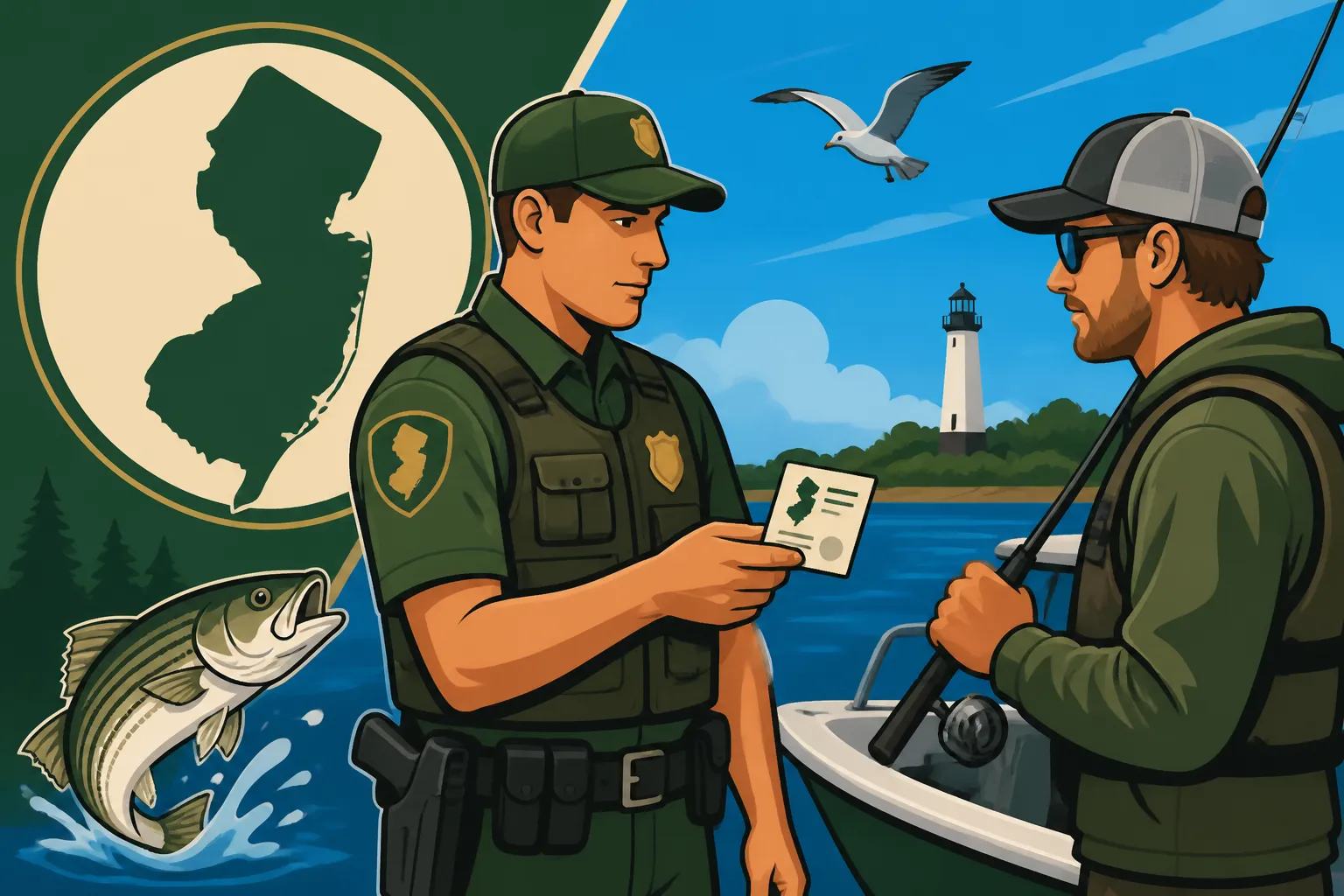
For those fishing from a boat, expect CPOs to approach and initiate a boat stop. They'll typically identify themselves, and ask for your fishing license, valid ID, and sometimes your boat registration and safety equipment. This is standard procedure to ensure you're legally fishing and that your vessel is operating safely. For instance, if you're out on Barnegat Bay targeting fluke, a CPO boat might approach, hail you over, and ask to see your documents. They'll often take a quick look at your cooler to verify your catch meets the current New Jersey Fluke Size and Bag Limits Explained. It's a quick, professional interaction designed to keep things fair and legal for everyone. Think of it like a traffic stop, but on the water, focused on fishing and boating regulations.
Suspicious Activity or Reported Violations
While many checks are routine, CPOs also respond to observed suspicious activity or direct reports from the public. This is where your actions, or those of others, can lead to a more targeted interaction. If an officer sees someone keeping undersized fish, using illegal netting techniques, or catching fish out of season, they will certainly investigate. They are trained to spot irregularities from a distance, like an angler repeatedly putting fish back in a cooler instead of releasing them, or a boat staying in a known restricted area.
Furthermore, anglers often act as the eyes and ears for the Conservation Police. If a fellow angler witnesses a clear violation, they might report it to the NJDEP. For example, if someone sees an individual keeping too many striped bass or harvesting oysters from a closed area, they might call it in. The CPOs will then respond to investigate that specific report. This is why it’s crucial to always follow the rules outlined in the current Reading the New Jersey Fish and Wildlife Digest and be mindful of your actions. A simple misunderstanding of the rules, like not realizing you need a New Jersey Trout Stamp Requirements Explained for a particular waterbody, can inadvertently draw unwanted attention.
What Documents Do You Need to Present?
When a Conservation Police Officer approaches, the immediate request will be for your documents. Having them readily accessible and in order will make the interaction smooth and quick, allowing you to get back to fishing with minimal interruption. Fumbling around or not having the correct papers can prolong the process and, in some cases, lead to issues.
Valid Fishing License and Relevant Stamps
The cornerstone of legal fishing in New Jersey is having a valid fishing license. For freshwater anglers, this means a current New Jersey freshwater fishing license. If you plan to target trout in designated trout waters, you’ll also need a separate trout stamp. This is a common point of confusion for many, so it’s worth double-checking if your planned fishing spot requires one. For instance, if you're heading to the Musconetcong River during trout season, that stamp is non-negotiable.
For saltwater anglers, the situation is a bit different. While New Jersey doesn't require a traditional "saltwater fishing license" for recreational fishing, you do need to register with the New Jersey Saltwater Registry Explained. This registration is free and mandatory for most saltwater fishing activities, including fishing from shore, a private boat, or even a kayak. There are some nuances, like if you're on a federally permitted charter boat, but generally, assume you need to be registered. Knowing your specific needs and having all required licenses and stamps, whether purchased online or from a local retailer, is key. Many anglers choose to keep their license in a waterproof holder, perhaps even one found on Amazon, to protect it from the elements.
Proof of Identification
Along with your fishing license and any necessary stamps, CPOs will also request a form of photo identification. This is to verify that the person presenting the license is indeed the rightful owner. Any government-issued photo ID is typically acceptable, such as a driver's license, state ID card, or passport. It's not enough to just have the license; your identity needs to match the information on it.
This becomes particularly important when officers are investigating a potential violation. They need to correctly identify the individual involved to issue a summons or record an interaction. For example, if you purchased your New Jersey Fishing License Guide for 2026 online, the name and address on your license should perfectly match your driver's license. Always keep your ID handy, preferably with your fishing license, to avoid any delays or complications during a check.
Digital vs. Physical Copies
In today's digital age, the question of whether a digital copy of your license is acceptable often comes up. Good news for tech-savvy anglers: New Jersey does allow you to carry proof of your fishing license on your mobile device. This means showing a clear, legible image or PDF of your license on your smartphone or tablet is generally acceptable, as long as it’s valid and easily readable. However, it's always wise to have a backup plan. What if your phone battery dies? What if you drop it in the water?
While showing a New Jersey Fishing License Digital Copy vs Printed Copy on your phone is convenient, many seasoned anglers still prefer to carry a printed copy, perhaps laminated, or store it in a sturdy wallet to avoid any potential tech issues. If you do rely on your phone, ensure it's charged and protected. The key is that the officer must be able to verify your license information clearly and quickly. Having a physical copy tucked away, even if you usually show your digital one, provides an extra layer of security and ensures you’re always prepared to be Carrying Proof of Your New Jersey Fishing License.
Understanding Your Rights During an Encounter
Interacting with law enforcement, regardless of the context, can be stressful. Knowing your rights and responsibilities during an encounter with a New Jersey Conservation Police Officer can help ensure a respectful and lawful exchange. Remember, CPOs are professionals, and a calm, cooperative attitude from your end will usually lead to a swift and uneventful interaction.
Remaining Calm and Courteous
The most important advice when a CPO approaches is to remain calm and cooperative. They are there to do a job, which is to protect New Jersey's natural resources and ensure everyone is following the rules. A respectful attitude goes a long way. Greet the officer politely, listen to their instructions, and answer their questions truthfully. Avoid becoming defensive or argumentative, even if you feel you haven't done anything wrong. Explanations can be offered clearly and respectfully.
If you are asked to present your license and ID, do so without delay. If they ask to inspect your catch, allow them to do so. Remember, they have the legal authority to conduct these checks. By being cooperative, you not only make the process quicker for everyone but also foster a positive relationship between the angling community and law enforcement. A simple "Good morning, Officer" and a willingness to comply respectfully sets the right tone for the interaction.
The Scope of a License Check
It's important to understand what a CPO can and cannot do during a license check. As mentioned, they can ask for your fishing license, identification, and inspect your catch and gear to ensure compliance with New Jersey Freshwater Fishing Regulations Every Angler Should Know or saltwater regulations. This is a standard and legal part of their duty. They can also ask questions related to your fishing activity, such as what you're fishing for, how long you've been out, or where you launched your boat.
However, their authority is not unlimited. A CPO cannot demand access to areas of your boat or vehicle that are not related to fishing equipment or catch without reasonable suspicion or a warrant. For example, they can inspect your cooler where fish are stored, but they generally cannot search your personal belongings unrelated to fishing without cause. If you feel that an officer is overstepping their bounds, you have the right to politely ask why they are requesting certain actions or information. It's always a good idea to remember details of the interaction and the officer's badge number, but maintaining a calm demeanor is paramount. If a summons is issued, it's best to address any disagreements or challenges through the proper legal channels, not at the scene.
Common Violations and Penalties
Unfortunately, not every encounter with a CPO goes perfectly. Sometimes, mistakes happen, or rules are intentionally broken. Understanding the most common violations and their potential penalties can help you avoid costly mistakes and keep your record clean. The New Jersey Fish and Wildlife regulations are designed to be protective, and violations can carry significant consequences.
Fishing Without a License or Stamp
This is perhaps the most common and easily preventable violation. Heading out to fish without the proper New Jersey Fishing License or the required trout stamp is a direct violation of state law. Many people simply forget, or they mistakenly believe they are exempt. For instance, sometimes people are confused about Do Kids Need a Fishing License in New Jersey? or think that because they're fishing in a private pond, a state license isn't necessary.
The penalties for fishing without a license can vary but typically involve fines, court costs, and potentially the forfeiture of your fishing equipment. Fines can range from a few hundred dollars for a first offense to much higher amounts for repeat offenders. In some cases, especially with egregious or repeated violations, your fishing privileges could even be suspended. Imagine spending a peaceful day on the Manasquan Reservoir, only to face a hefty fine and a revoked license because you overlooked getting your annual license or a required stamp. It's a stark reminder that checking your license's validity before every trip, and knowing When Does a New Jersey Fishing License Expire?, is a critical part of preparation. This is why many anglers choose to buy their licenses well in advance, often through the official NJDEP website or a licensed vendor, and keep a digital copy on their phone, and a physical one on hand.
Bag, Size, and Season Limit Infractions
Beyond just the license, anglers must strictly adhere to the specific How Bag and Size Limits Work in New Jersey for various species. These limits are set by the NJDEP based on scientific data to ensure sustainable fish populations. Keeping an undersized striped bass, exceeding the daily limit for fluke, or fishing for a species outside of its designated season are all serious violations. These regulations are subject to New Jersey Fishing Regulation Changes for 2026, so staying current is paramount.
For example, if you're targeting summer flounder (fluke) off the coast, you must know the current New Jersey Fluke Size Limit: 18 Inches and the New Jersey Fluke Bag Limit Explained. CPOs are diligent in checking catches. If you're found with fish that are too small, too many, or out of season, you can face significant fines for each illegal fish. In some cases, the penalties can be more severe than a license violation, as these rules directly impact fish conservation efforts. It's not uncommon for officers to see an angler "high-grading" their catch, meaning they keep larger fish even after they've reached their bag limit, tossing smaller legal ones back—this is illegal. Always consult the official Fish and Wildlife Digest for the most up-to-date information on specific species.
Here's a quick reference table for common fishing infractions:
| Violation Type | Examples | Typical Consequences | Importance |
|---|---|---|---|
| No Valid License/Stamp | Fishing freshwater without a license; trout fishing without a stamp. | Fines (>$100+), court costs, potential license suspension. | Fundamental legal requirement for all anglers. |
| No Saltwater Registry | Saltwater fishing (shore, boat) without being registered. | Fines (similar to license violations), easily preventable. | Mandatory for saltwater recreational anglers. |
| Undersized Fish | Keeping a striped bass under 28 inches or fluke under 18 inches. | Fines per fish, potential confiscation. | Protects juvenile fish, ensures future populations. |
| Over Bag Limit | Exceeding the daily limit for flounder, bluefish, or other species. | Fines per fish, potential confiscation. | Prevents overharvesting, promotes sustainable fishing. |
| Out-of-Season Fishing | Targeting or possessing fish outside their legal season window. | Significant fines, potential license suspension/forfeiture. | Manages spawning cycles and population recovery. |
| Illegal Gear/Methods | Using more rods than allowed, illegal nets, prohibited bait. | Fines, confiscation of gear, potential license suspension. | Ensures fair chase and prevents excessive harvesting. |
| Littering/Pollution | Leaving trash (fishing line, bait containers) at fishing spots. | Fines, community service. | Protects ecosystems, keeps public areas clean. |
Other Fishing-Related Offenses
The scope of Conservation Police enforcement extends beyond just licenses and fish limits. Other offenses can also lead to citations or penalties. This includes things like littering at a fishing spot, which pollutes our waterways and habitats. Discarded fishing line, bait containers, and other trash are not only unsightly but also harmful to wildlife.
Using illegal fishing gear or methods is another area of enforcement. This might include using nets that are prohibited for recreational use, employing illegal traps, or exceeding the legal number of fishing rods you can use at once. Additionally, fishing in restricted areas, such as designated wildlife refuges or areas closed for spawning, can also result in fines. Even seemingly minor infractions, like failing to display required boat safety equipment, can draw the attention of a CPO. It’s always best to familiarize yourself with all aspects of New Jersey’s fishing regulations, not just the basics, to avoid any unexpected issues during your outing. Being a responsible angler means understanding and respecting all the rules designed to protect our precious natural environment.
How to Report a Violation or Contact NJDEP
Being an informed angler isn't just about avoiding violations; it's also about being a steward of our natural resources. If you witness a violation or have questions about regulations, knowing how to contact the proper authorities is incredibly important. The New Jersey Conservation Police rely heavily on public cooperation to effectively manage and protect our state's fish and wildlife.
Reporting Suspicious or Illegal Activity
If you witness a fishing, hunting, or environmental violation, it's crucial to report it. Whether it's someone keeping dozens of undersized fish, poaching game, or dumping waste into a waterway, your report can make a real difference. The best way to report a violation is to contact the NJDEP's 24/7 hotline. This ensures that the information reaches the Conservation Police Officers quickly, allowing them to investigate promptly.
When reporting, try to gather as much detail as possible: the date and time of the incident, the exact location (GPS coordinates if possible), a description of the individual(s) involved (clothing, distinguishing features), a description of any vehicles or boats (license plate or boat registration numbers), and the nature of the violation. For example, if you see someone with a cooler full of striped bass that are clearly out of the slot limit at a particular beach access point, note the color of their truck and the time. These details are invaluable for CPOs to act effectively. You can remain anonymous if you wish, but providing contact information can sometimes help officers follow up for additional details if needed. Reporting helps maintain the integrity of our fisheries and protects the resources that all anglers cherish.
Contacting the New Jersey Department of Environmental Protection
Beyond reporting violations, there are many reasons you might need to contact the New Jersey Department of Environmental Protection, specifically the Division of Fish and Wildlife. You might have questions about specific regulations, need clarification on a particular fishing season, want to understand the New Jersey Fishing Season Dates and Closures, or perhaps seek information about where to buy a New Jersey fishing license. They are the authoritative source for all things related to fishing and wildlife management in the state.
Their website, NJFishandWildlife.com, is an incredibly comprehensive resource, often containing the latest regulatory updates, stocking schedules, and contact information. You can also find the full New Jersey Fish and Wildlife Digest there, which is your go-to guide for all the rules. If you need to speak with someone directly, their main office numbers are available, or you can find specific regional offices or even direct New Jersey Conservation Police Officer Contact Information for non-emergency inquiries. Don't hesitate to reach out if you have a genuine question; it's always better to clarify a rule beforehand than to inadvertently break it and face the consequences. Being proactive with your knowledge ensures a more enjoyable and responsible fishing experience for everyone.
Disclaimer
The information provided in this guide is for general informational purposes only and is not intended as legal advice. Fishing regulations in New Jersey can change, and it is the responsibility of every angler to consult the official New Jersey Department of Environmental Protection (NJDEP) Division of Fish and Wildlife regulations and laws before engaging in any fishing activities. Always refer to the most current New Jersey Fish and Wildlife Digest for the precise and up-to-date rules and regulations.