Freshwater License and Saltwater Registry Rules for Anglers Who Fish Both
It can feel like you need a law degree to understand New Jersey's fishing regulations, especially if you love casting lines in both shimmering freshwater lakes and the vast expanse of the Atlantic. Many anglers get tangled up trying to figure out if one covers the other, or if they need entirely separate permissions. This guide will untangle the confusion, helping you understand the distinct requirements for fishing in both New Jersey's freshwater and saltwater environments, so you can focus on the catch, not the paperwork.
Understanding the Separate Worlds of Freshwater Licenses and Saltwater Registration
Navigating New Jersey's fishing regulations can sometimes feel like you're trying to solve a complicated puzzle, especially when your passion takes you from the tranquil banks of a freshwater stream to the dynamic coastline. The biggest source of confusion for many anglers is the distinction between a freshwater fishing license and a saltwater registry. It's a fundamental difference that's crucial to grasp because, despite being for the same core activity – fishing – they operate under entirely separate systems with different requirements.
The Freshwater Fishing License: Your Ticket to Inland Waters
When you're dreaming of reeling in a feisty trout from the Pequest River or battling a largemouth bass on Lake Hopatcong, you absolutely need a freshwater fishing license. Think of this as your official, purchased permit from the state of New Jersey. It's a tangible document, whether in print or digital form, that grants you the legal right to fish in public fresh waters. This license isn't just a piece of paper; it's a vital part of New Jersey's conservation efforts, with the funds generated from sales directly supporting stocking programs, habitat restoration, and fisheries management across the state's incredible freshwater resources. Without it, you're not just risking a fine, you're missing out on contributing to the very waters you love to fish.
This license comes with specific requirements that vary based on your age and residency. For instance, most anglers between 16 and 69 years old are required to possess one. However, there are exceptions; children under 16 typically do not need a license, and residents 70 years and older are exempt. It's important to remember that this license is only valid for freshwater environments. It doesn't magically extend to the ocean or bays, no matter how much you wish it did. Before heading out, make sure you're up to date on all the specific rules by checking out our comprehensive guide on New Jersey Freshwater Fishing Regulations Every Angler Should Know. Understanding who needs one and what specific species might have their own additional requirements, like a trout stamp, is paramount to a lawful and enjoyable outing. You can easily purchase your annual license or grab some new gear on sites like Amazon, making preparation simpler than ever.
The Saltwater Registry: Free, But Not Optional
Now, let's talk about the saltwater side of things. If your heart yearns for the crashing waves of the Jersey Shore, the sprawling expanse of Barnegat Bay, or the vibrant fishing grounds off Cape May, you're looking at a different requirement: the New Jersey Saltwater Registry. This isn't a license you purchase; it's a free registration with the state's marine fisheries program. The concept of a registry, rather than a paid license, can be a little puzzling for newcomers. The simplest way to understand it is that it's New Jersey's way of complying with federal mandates to collect recreational saltwater fishing data. This data is critical for managing fish stocks like striped bass, fluke, and black sea bass, ensuring sustainable fishing for generations to come. Without accurate numbers on who is fishing and what they're catching, effective conservation becomes much harder.
The beauty of the saltwater registry is its simplicity and its cost: it's absolutely free to join. While it might feel like "just another piece of paperwork," it's a quick and essential step for any angler aged 16 and older who plans to fish in New Jersey's marine and estuarine waters. This includes everything from surf fishing on the beaches, casting from piers and jetties, or venturing out on a private boat or kayak in the bays and ocean. Even if you're a passenger on a charter or party boat, you're generally covered by the vessel's blanket registration, but if you're fishing on your own, you'll need to register yourself. We've got a detailed breakdown on New Jersey Saltwater Registry Explained, including exactly How to Register for New Jersey's Saltwater Registry Program, which you'll find is a very straightforward process. Don't let the "free" aspect fool you into thinking it's optional; getting caught without being registered can still lead to a chat with a Conservation Police Officer.
Navigating Both Worlds: What Anglers Who Fish Both Freshwater and Saltwater Need
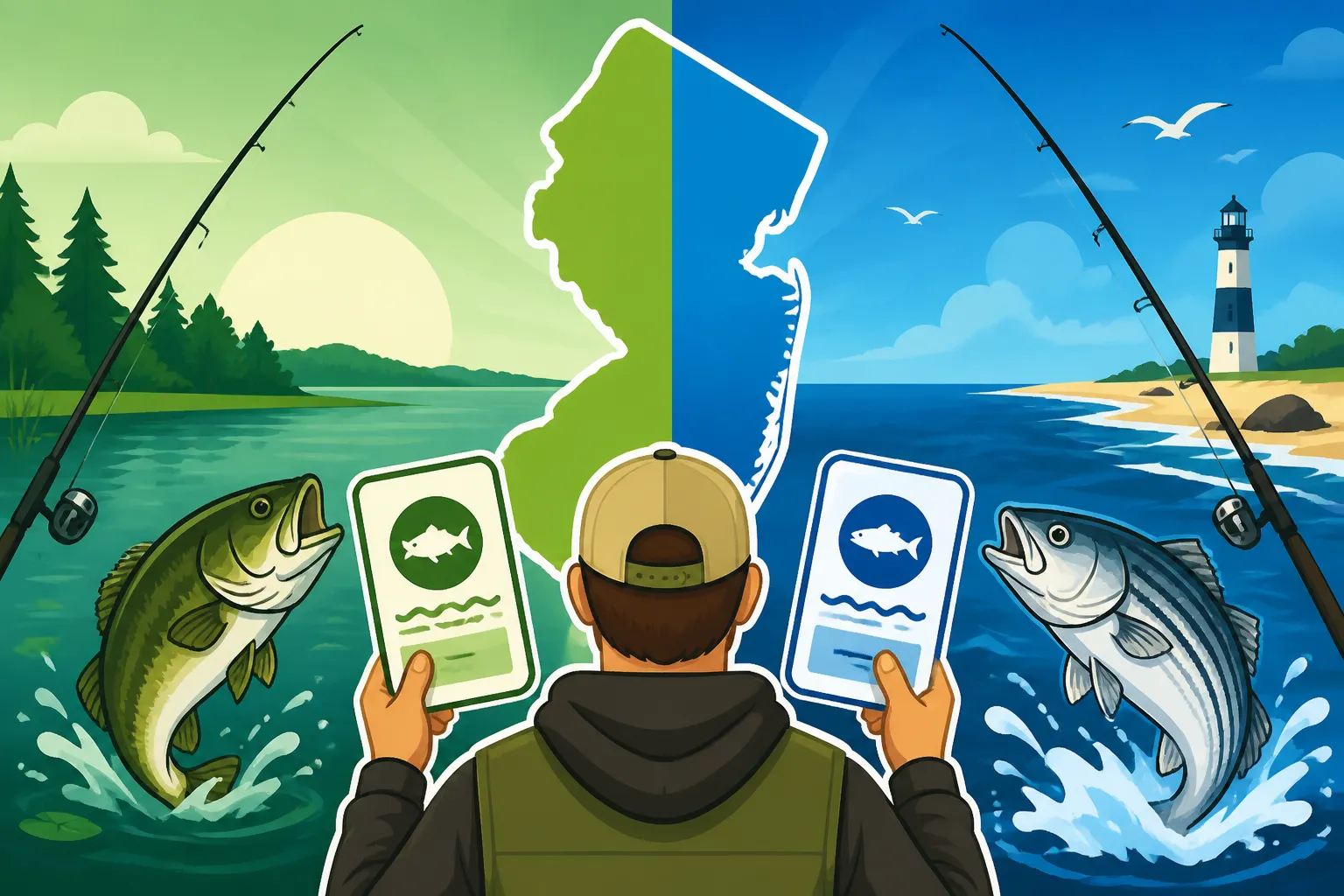
The most common point of confusion arises when anglers enjoy the best of both worlds – hitting a freshwater lake one weekend and the ocean the next. The burning question is: "Does my freshwater license cover saltwater, or vice-versa?" The short answer, and one that often frustrates dual-habitat anglers, is a resounding no. These are two distinct and separate systems, each with its own purpose and legal standing.
No Overlap: Freshwater and Saltwater Requirements are Independent
It's a common misconception, and frankly, a bit of a pain to manage two separate systems, but New Jersey's regulations are clear: your freshwater fishing license does not grant you permission to fish in saltwater, and your saltwater registry does not cover freshwater fishing activities. They are mutually exclusive. This means that if you're an avid angler who enjoys the diverse fishing opportunities New Jersey offers – perhaps you chase trout in the spring and then switch to fluke in the summer – you absolutely need both. There isn't a "combo" license or registration that covers everything under one umbrella. This independence is largely due to the differing management strategies and data collection needs for freshwater and marine species, which are often handled by separate divisions within the New Jersey Department of Environmental Protection (NJDEP) Fish & Wildlife.
This distinct separation also has implications for understanding specific water bodies. Tidal rivers, for instance, can be particularly tricky. A river like the Raritan can hold freshwater species far upstream, requiring a freshwater license. But as you move downstream, especially closer to Raritan Bay, the water becomes brackish (a mix of fresh and salt), and then distinctly salty, holding marine species. In these transitional zones, depending on what you're targeting and how far up or downriver you are, you might theoretically need both. It's why understanding the specific regulations for the particular body of water you're fishing is so crucial. Our guide on Freshwater vs Saltwater Fishing Rules in New Jersey delves deeper into these nuances, helping you identify where one jurisdiction ends and the other begins, saving you from potential headaches.
Practical Steps for the Dedicated Dual Angler
For those of us who love both the calm of a mountain stream and the thrill of the open ocean, managing both requirements becomes a routine part of our fishing prep. The good news is that acquiring both is relatively straightforward, even if it's two separate processes.
First, prioritize your freshwater license. You can easily purchase this online through the NJDEP Fish & Wildlife website, or from a licensed agent such as a local bait and tackle shop or even major retailers like Walmart. Once purchased, you'll receive either a physical license or a digital copy, which you should always carry with you when fishing. Many anglers find it convenient to grab essential gear and even gift cards for licenses on Amazon.
Second, for saltwater, head over to the NJDEP website and complete the free saltwater registry. It's a quick online form that takes just a few minutes. You'll get an immediate confirmation, which you should also keep readily accessible. Since The New Jersey Saltwater Registry Is Free to Join, there's really no excuse not to do it!
Here's a quick reference table to help keep the two systems straight:
| Requirement | Freshwater Fishing License | Saltwater Registry |
|---|---|---|
| What it is | A purchased permit to fish freshwater | A free online registration for saltwater |
| Cost | Varies by residency, age, duration | Free |
| Who needs it | Most anglers 16-69 for freshwater | Most anglers 16+ for saltwater |
| Validity | Annual (typically Jan 1 – Dec 31) | Annual (typically Jan 1 – Dec 31) |
| How to get it | Online, license agents, phone | Online (NJ DEP website) |
| Purpose | Funding conservation, management | Data collection for federal compliance |
| Covered water | Lakes, ponds, non-tidal rivers, streams | Ocean, bays, tidal rivers, inlets |
| Does one cover the other? | No | No |
Common Pitfalls and Smart Strategies for Combined Fishing
Even with a clear understanding of what's required, real-world fishing scenarios can throw curveballs. It's easy to overlook a detail or make an assumption that could lead to an unwanted encounter with a Conservation Police Officer. Staying informed and prepared is your best defense against accidental violations.
Avoiding Accidental Violations in Mixed Waters
One of the trickiest situations arises when fishing in those aforementioned tidal rivers or estuaries. Imagine you're fishing a spot on the Toms River, known for both freshwater bass and migratory striped bass. Depending on the tide and the specific section of the river, you could easily be transitioning between freshwater and saltwater environments without even realizing it. If you're targeting striped bass in a tidal section, you'll need to be registered for saltwater. If you then move upstream to a non-tidal area for largemouth, you'd better have that freshwater license on hand. The frustration is real when you're just trying to enjoy a day on the water, but the consequences of not having the correct credentials can be a hefty fine. Our article on What Happens If You Get Caught Fishing Without a License in New Jersey? lays out those potential penalties, so it's best to be prepared.
Another common pitfall is simply forgetting to renew. Both your annual freshwater license and your saltwater registry typically expire at the end of the calendar year. While the saltwater registry is free and easy to re-up, it’s still something that needs to be done. Your freshwater license requires a purchase each year. Set a reminder on your phone or mark your calendar to ensure you don't lapse. There's nothing worse than getting to your favorite fishing spot, only to realize your license expired last month. Always double-check your documents before heading out. Make sure you have a good waterproof case for your phone to show your digital license, easily found on Amazon.
Staying Informed with the Latest Regulations
New Jersey's fishing regulations, particularly for saltwater species, are dynamic and can change frequently, sometimes even mid-season, in response to scientific assessments and federal mandates. This constant flux can be incredibly frustrating for anglers who just want to know the rules and stick to them. What was legal last year or even last month might not be today. Species like striped bass and fluke often see changes in size limits, bag limits, or open seasons. It's not enough to just get your license and registry; you need to stay current with the specific rules for the fish you're targeting.
The absolute best resource for up-to-date information is the official New Jersey Fish & Wildlife Digest. This comprehensive guide, often referred to simply as "the Digest," is published annually and provides all the details on seasons, sizes, bag limits, and general regulations for both freshwater and saltwater species. You can find it online on the NJDEP website, or pick up a physical copy at bait and tackle shops. Make it a habit to review the relevant sections before each season, or even before a specific trip if it's been a while. Our guide on Reading the New Jersey Fish and Wildlife Digest offers tips on how to navigate this essential document efficiently. Furthermore, many anglers use apps or quick reference guides, often available digitally or in print on Amazon, to help clarify things. Always ensure that any supplementary material you're using is current for the given year. Don't rely on old information; the rules are there to protect the resource, and enforcement officers will expect you to know them. Stock up on tackle, bait, or even a new fishing vest (Amazon has a huge selection, just sayin') but don't forget to prioritize your legal readiness first!
Disclaimer
Always consult the official New Jersey Department of Environmental Protection (NJDEP) Fish & Wildlife website and the current year's New Jersey Fish & Wildlife Digest for the most accurate and up-to-date fishing regulations. This article is intended for informational purposes only and should not be considered legal advice.