The New Jersey Saltwater Registry Is Free to Join
It's a common worry for many anglers heading out to enjoy the beautiful New Jersey coast: "Do I need yet another license or permit for saltwater fishing, and how much is that going to cost me?" The good news, and a huge relief for many of us, is that the New Jersey Saltwater Registry is absolutely free to join. This guide will walk you through everything you need to know about this essential, yet cost-free, requirement, dispelling myths and making sure you're properly prepared for your next coastal adventure.
What Exactly is the New Jersey Saltwater Registry?
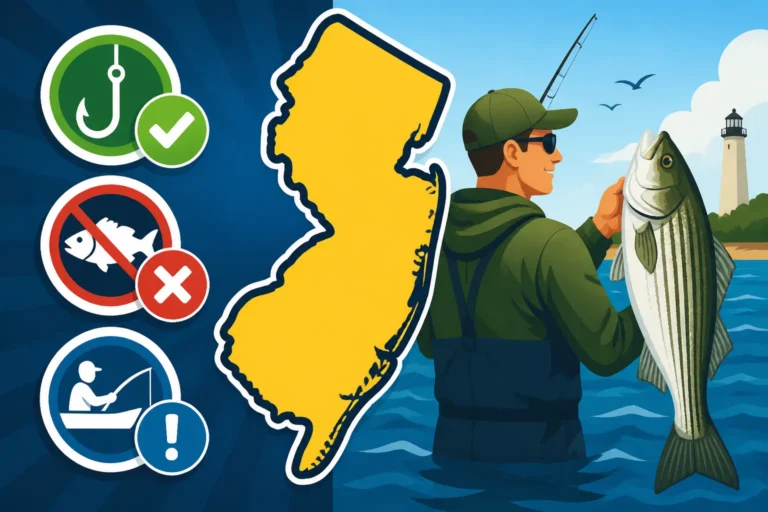
Before we dive into how to sign up, let's get clear on what the New Jersey Saltwater Registry actually is. Think of it not as a "license" in the traditional sense where you pay a fee for the privilege of fishing, but more like a vital data collection tool. It's New Jersey's way of accurately counting recreational saltwater anglers, which is crucial for managing our precious marine resources and ensuring we continue to have healthy fish populations for years to come. It’s a mandatory registration, but it won't cost you a dime.
Why We Even Have a Saltwater Registry in New Jersey
You might be wondering why the state needs to count individual anglers in the first place, especially if it's free. The simple truth is that reliable data is the backbone of sound fisheries management. Without knowing how many people are fishing, how often, and for what species, it's incredibly difficult for biologists and policymakers to make informed decisions about bag limits, size restrictions, and season dates. This information helps protect fish stocks from overfishing and ensures the sustainability of recreational angling. Imagine trying to manage a library without knowing how many people are borrowing books – it'd be chaos!
This data also plays a critical role in securing federal funding for New Jersey's marine fisheries programs. The state receives funds from the federal government for conservation efforts, habitat restoration, and scientific research. These funds are often tied to the state's ability to demonstrate a robust and accurate count of its recreational fishing participants. So, by registering, you're not just complying with a rule; you're actively contributing to the health and future of New Jersey's saltwater fisheries, all without opening your wallet.
The registry helps paint a clearer picture of the fishing pressure on various species, allowing the state to better understand the impact of recreational angling. This is particularly important for species that are migratory or experience fluctuating populations. The Division of Fish and Wildlife uses this information to collaborate with regional and federal agencies, ensuring that New Jersey's regulations align with broader conservation goals. It's a collective effort, and your free registration is a small but mighty piece of that puzzle.
How the New Jersey Registry Replaced the Federal Program
Many years ago, there was a federal saltwater registry program in place. However, states like New Jersey, with their extensive coastlines and vibrant recreational fishing communities, found it more efficient and tailored to their needs to manage their own angler registration programs. This led to New Jersey establishing its own state-specific saltwater angler registry, which officially replaced the federal program for those fishing in New Jersey waters.
The move to a state-managed registry streamlined the process for New Jersey residents and non-residents alike, making it easier to comply with local regulations. It also allowed the New Jersey Department of Environmental Protection (NJDEP) Division of Fish and Wildlife to collect more specific data relevant to our unique marine ecosystem, rather than relying on a broad, one-size-fits-all federal approach. This localized control means that the data collected directly informs decisions about fishing in our bays, estuaries, and ocean waters. You can learn more about this transition by reading our guide on why New Jersey's Saltwater Registry Replaced the Federal Registry.
It’s important to understand that while other states might still rely on the federal registry or have different state-specific programs, if you are fishing in New Jersey's marine waters, you must comply with the New Jersey Saltwater Registry requirements. This ensures consistency for state management and avoids confusion that could arise from overlapping federal and state mandates. The goal was to create a clear, accessible system, and making it free was a key part of that accessibility.
Who Needs to Register and Who is Exempt
Generally speaking, anyone who fishes in New Jersey's marine and estuarine waters (which basically means saltwater, including tidal rivers and bays) needs to register with the New Jersey Saltwater Registry. This includes fishing from shore, a boat, a pier, or a jetty. It doesn't matter if you're a resident or a non-resident; if you're fishing in our saltwater, you need to be registered.
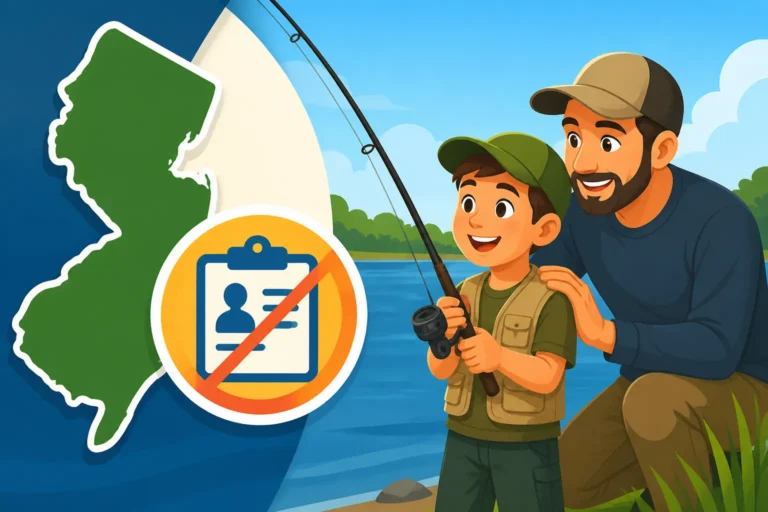
However, there are a few important exemptions. Children under the age of 16 are typically exempt from the registration requirement. Additionally, if you are a passenger on a for-hire vessel (like a charter boat or party boat) that possesses a valid federal Highly Migratory Species (HMS) permit or is already registered with the federal registry, you are usually covered by the vessel's registration. It's always a good idea to confirm with your charter captain beforehand, but generally, the vessel covers its paying passengers. If you're wondering about specific rules, our article on Do Kids Need a Fishing License in New Jersey? might be helpful, even though it focuses on freshwater licenses, it often touches upon age exemptions.
Another common exemption is for individuals who hold a valid commercial fishing license in New Jersey. Since they are already extensively tracked through their commercial permits, they typically don't need to double-register under the recreational saltwater registry. For everyone else, including those who fish for recreation from their own kayaks, private boats, or favorite surf spots, registration is a must. Knowing the rules about who needs to register is the first step in ensuring a hassle-free day on the water.
The Simple Steps to Join the Free Registry
The beauty of the New Jersey Saltwater Registry being free is that it removes a significant barrier to entry for many anglers. The process itself is also designed to be straightforward, usually taking only a few minutes online. You don't need to visit a physical agent or wait for anything to be mailed; it's all digital and instant.
Gathering Your Information
Before you even log on, make sure you have a few key pieces of personal information handy. You'll typically need your full name, date of birth, address, and contact information (like an email and phone number). Having this readily available will make the online registration process go much smoother and faster. It's essentially the same basic info you'd provide for any online account creation.
You won't be asked for any payment details, credit card numbers, or bank account information because, as we've established, it's completely free! This significantly reduces the time it takes to complete the form and eliminates any security concerns related to online transactions. If any website ever asks you for money to register for the New Jersey Saltwater Registry, be extremely wary, as it's likely a scam.
Some online systems might also ask for your driver's license number or state ID. While not always mandatory for the registry itself, it's good practice to have it on hand in case it's requested for verification purposes, especially if you're unsure if you've registered before or if there are any discrepancies with your existing records. The simpler you make it for yourself by having everything prepped, the quicker you'll be done.
Navigating the Online Registration Portal
The primary way to register for the New Jersey Saltwater Registry is through the official New Jersey Department of Environmental Protection (NJDEP) Division of Fish and Wildlife website. They have a dedicated online portal specifically for this purpose. A quick search for "New Jersey Saltwater Registry" will typically lead you directly to the correct page. Be cautious of unofficial sites that might try to charge you a fee or collect your information for other purposes. Our guide on How to Register for New Jersey's Saltwater Registry Program provides step-by-step instructions.
Once on the official site, look for a clear link or button that says something like "Register for Saltwater Angler Registry" or "Federal Saltwater Angler Registry Program." Don't be confused by the mention of "federal" – New Jersey manages its own registry, but the terminology can sometimes be linked due to the historical context of the federal program. The online form will be straightforward, asking for the personal details you gathered earlier.
You'll simply fill in the required fields, confirm your information, and then submit. There's no complex questionnaire or lengthy certification process. It's designed to be as user-friendly as possible, acknowledging that anglers just want to get out on the water. If you encounter any issues, most state websites provide a contact number or email for assistance, so don't hesitate to reach out if you get stuck.
What to Expect After You Register
Once you've submitted your information online, you'll typically receive an instant confirmation. This might be a digital confirmation screen that you can screenshot or print, or an email confirmation sent to the address you provided. This confirmation acts as your proof of registration. You can learn more about what counts as proof by checking out Carrying Proof of Your New Jersey Fishing License, as similar principles often apply to the registry.
It's a good idea to keep this confirmation readily accessible. While conservation officers may not ask for it as frequently as a traditional fishing license, it's still a mandatory requirement. Having it saved on your phone or printed out with your other fishing permits means you're always prepared. Just like with a fishing license, you wouldn't want to get caught without proof.
The registration is typically valid for the entire calendar year. This means you'll need to re-register each year. Don't worry, the state often sends out reminder emails to those who have previously registered, prompting them to renew their free registration for the upcoming year. This annual renewal helps ensure that the data remains current and accurate for ongoing fisheries management efforts.
Common Misconceptions and Important Clarifications
Even though the New Jersey Saltwater Registry is simple and free, there are still a few common points of confusion that can trip up even experienced anglers. Let's clear those up so you can fish with complete peace of mind.
Registry vs. Fishing License: Understanding the Difference
This is perhaps the biggest point of confusion for many. A New Jersey fishing license is a paid permit required for fishing in freshwater (lakes, rivers, streams, ponds). This is where you purchase an annual license, a 2-day vacation license, or a 7-day vacation license. The fees from these licenses go towards funding freshwater stocking programs, habitat restoration, and enforcement.
The New Jersey Saltwater Registry, on the other hand, is a free registration required for fishing in saltwater (ocean, bays, tidal rivers). You do not pay for it. Its primary purpose is data collection for federal reporting and fisheries management. They are completely separate requirements. You can't use a freshwater license to cover your saltwater registration, and vice-versa. Many anglers, especially those who fish both environments, will need both: a paid freshwater license and a free saltwater registration. Our article on Freshwater vs Saltwater Fishing Rules in New Jersey dives deeper into these distinctions.
Think of it this way: if you're targeting striped bass off the beach, fluke in Barnegat Bay, or bluefish in the Raritan Bay, you need the free saltwater registry. If you're after trout in the Musconetcong River or largemouth bass in Lake Hopatcong, you need a paid freshwater license. If you fish for both, you need both! This is a critical distinction that can save you a headache (and potential penalties) down the line.
Does the Registry Cover Charter or Party Boat Trips?
As mentioned earlier, if you are a paying passenger on a licensed for-hire vessel (like a charter or party boat), you are generally covered by the vessel's federal permit or its own registration. This means you personally do not need to register with the New Jersey Saltwater Registry for that specific trip. This is a huge convenience for tourists and those who primarily fish via these services.
However, this exemption only applies while you are fishing from that particular for-hire vessel. If you decide to do some surf fishing from the beach the day before or after your charter trip, you would need to be individually registered for your shore-based activities. The exemption is tied to the vessel, not to you as an individual for all your saltwater fishing activities. Always clarify with your specific charter or party boat if you have any doubts. Our detailed guide on Does the New Jersey Saltwater Registry Cover Charter Boat Passengers? might offer even more clarity.
It’s also important to note that if you are fishing on a private boat that you own or that belongs to a friend, this exemption does not apply. In that scenario, every individual angler aged 16 and over on board would need their own free New Jersey Saltwater Registry. The distinction between a "for-hire" vessel and a "private" vessel is key here.
Consequences of Not Registering
While the New Jersey Saltwater Registry is free, it is still a mandatory legal requirement for recreational saltwater anglers. Failing to register can lead to penalties. If a New Jersey Conservation Police Officer checks your credentials and you are not registered, even if you have a valid freshwater license, you could face a citation.
The penalties for not registering can vary, but they typically involve fines. While they might not be as severe as the penalties for fishing without a freshwater license, they are still an unnecessary expense that can easily be avoided by taking a few minutes to complete the free online registration. It's simply not worth the risk. Our article on Penalties for Fishing Without a License in New Jersey also touches on the consequences for not adhering to all fishing regulations, including the registry.
The easiest way to avoid any issues is simply to register. It costs nothing, takes minimal time, and ensures you're fully compliant with state regulations. Think of it as a small administrative task that contributes to the greater good of New Jersey's fisheries. Why risk a fine when the solution is absolutely free and readily available?
The Benefits of a Free and Accessible Registry
Beyond mere compliance, the New Jersey Saltwater Registry, by being free and easy to access, offers significant benefits that ripple throughout our angling community and marine ecosystem. It’s a smart system that empowers both anglers and regulators.
Contributing to Marine Fisheries Management
Every time an angler registers, they contribute a data point that helps scientists and resource managers understand the scope of recreational fishing activity in New Jersey. This collective data is invaluable. It informs decisions on stock assessments, helps predict potential impacts of environmental changes, and allows for adaptive management strategies to keep our fisheries healthy. Without accurate numbers, management would be based on guesswork, which isn't good for fish or fishermen.
This level of detail enables New Jersey to tailor its regulations more precisely to local conditions, rather than relying solely on broader federal mandates that might not perfectly fit our specific coastal challenges or fish populations. The registry provides the essential foundation for robust and responsive management, ensuring that recreational fishing remains a viable and enjoyable pastime for generations to come. When you register, you’re essentially casting a vote for better-managed fisheries.
Furthermore, accurate angler numbers help allocate research and conservation resources effectively. If a particular area or species shows high recreational fishing pressure, resources can be directed there for monitoring, habitat improvement, or public education. It's a system designed to be proactive, using data to inform decisions before problems escalate. This collaborative approach benefits everyone who enjoys New Jersey's coastal waters.
Ensuring Continued Federal Funding
The federal government, through programs like the Sport Fish Restoration Act, provides significant funding to states for fisheries conservation and management. A state's ability to demonstrate a comprehensive understanding of its recreational fishing effort, often through a robust registry program, is frequently a factor in how these funds are allocated. By maintaining a free and widely adopted saltwater registry, New Jersey ensures it continues to qualify for and receive its fair share of these crucial funds.
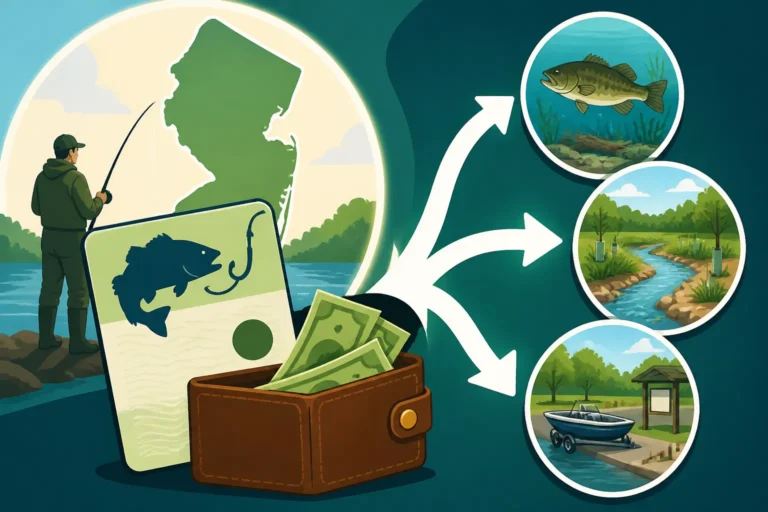
These federal funds support a wide array of vital activities that directly benefit anglers. This includes things like fish stocking programs for species like trout, habitat restoration projects in critical estuaries, public access improvements at boat ramps and fishing piers, and scientific research into fish migration patterns and population health. Imagine if these funds were cut because New Jersey couldn't accurately report its angler numbers – the impact on our fishing opportunities would be substantial.
So, while registering might seem like a small, isolated act, it collectively ensures that the state has the financial resources to protect and enhance the fishing experience for all. It's an investment in the future of New Jersey fishing, paid for not with money from your pocket, but with a few minutes of your time each year. This is a critical aspect of reading the New Jersey Fish and Wildlife Digest, as the regulations are often influenced by data collected through such registries.
Making Fishing More Accessible
By making the saltwater registry free and easily accessible online, New Jersey has removed a potential financial and logistical barrier for many anglers. If the registry cost money, it might deter some casual anglers or those on a tight budget, potentially reducing participation and, ironically, the very data points needed for management. The free nature encourages participation and ensures a broader, more accurate snapshot of the angling community.
This accessibility means more people can experience the joys of saltwater fishing without the added burden of an extra fee. Whether you're a seasoned surf caster, a family introducing kids to crabbing, or someone just trying out a new hobby, the free registry simplifies the process of getting started. You can spend your money on bait, tackle, or maybe even a new fishing hat from Amazon, instead of an administrative fee.
Ultimately, a free and accessible registry champions the idea that New Jersey's natural resources are for everyone to enjoy responsibly. It's a commitment to both conservation and recreation, demonstrating that good management doesn't always have to come with a hefty price tag for the individual angler. It underlines the state's dedication to sustainable and inclusive fishing opportunities across the board.
Saltwater Registry vs. Freshwater Fishing License Quick Comparison
To help clarify the differences, here's a handy comparison between the New Jersey Saltwater Registry and a typical New Jersey Freshwater Fishing License:
| Feature | New Jersey Saltwater Registry | New Jersey Freshwater Fishing License |
|---|---|---|
| Cost | FREE | Varies (e.g., Annual Resident, Non-Resident, Vacation) |
| Purpose | Data collection for federal reporting & marine management | Funds freshwater programs, stocking, habitat, enforcement |
| Waters Covered | Ocean, bays, tidal rivers, estuaries (saltwater) | Lakes, ponds, non-tidal rivers, streams (freshwater) |
| Who Needs It (16+) | Most recreational saltwater anglers | Most recreational freshwater anglers |
| Exemptions | Under 16, passengers on registered for-hire vessels | Under 16, anglers 70+, specific scenarios |
| Where to Obtain | NJDEP Division of Fish and Wildlife website (online) | Online, licensed agents (e.g., bait shops, sporting goods) |
| Proof Required | Digital or printed confirmation | Digital or printed license card |
| Validity | Annual (re-register yearly) | Annual (valid year-round), 2-day, 7-day options |
As you can see, while both are essential for fishing in New Jersey, they serve different purposes and have distinct requirements. Understanding this table is key to staying compliant. You can also explore options like a New Jersey Fishing License Guide for 2026 to see all the different license types and costs available.
Disclaimer
Please remember that fishing regulations and requirements can change. Always consult the official New Jersey Department of Environmental Protection (NJDEP) Division of Fish and Wildlife website or the current New Jersey Fish and Wildlife Digest for the most up-to-date and accurate information before heading out to fish. This guide is for informational purposes only and should not be considered a substitute for official legal guidance.