How to Ice Fish for Panfish in New Jersey
The winter chill in New Jersey doesn't mean you have to pack away your fishing gear until spring. In fact, for many of us, it opens up a whole new world of angling opportunities, especially when it comes to chasing panfish on the hard water. If you've been hesitant to try ice fishing because it seems intimidating, or if you're looking to refine your panfish tactics, this comprehensive guide is for you. We'll dive deep into everything you need to know to enjoy a successful and safe season targeting crappie, yellow perch, and bluegill through the ice.
Understanding New Jersey's Panfish Species for Ice Fishing
When the lakes and ponds freeze over in New Jersey, a unique fishing challenge and reward await. Panfish like crappie, yellow perch, and bluegill are abundant, often willing biters, and excellent table fare. But they behave a little differently under the ice than they do in open water, making it crucial to understand their winter habits.
Crappie: The Winter Delicacy
Crappie, both black and white, are arguably one of the most sought-after species for ice anglers in New Jersey. They tend to school up in winter, often suspending in deeper water or congregating around submerged structure like brush piles, fallen trees, or old weed lines. If you find one crappie, chances are you've found a whole school! Their mouths are quite delicate, hence the "crappie" name, so gentle hooksets and light tackle are key. They're visual feeders, so small, flashy jigs or spoons are often irresistible. A successful crappie outing can mean a bucket full of delicious fillets, making them a true winter delicacy.
Yellow Perch: Abundant and Cooperative
Yellow perch are another fantastic ice fishing target, beloved for their beautiful colors and delicious, firm white meat. These guys are schooling fish, much like crappie, but they tend to stick closer to the bottom or slightly above it, often relating to shallower flats, drop-offs, or the edges of weed beds in 10-30 feet of water. What's great about yellow perch is their aggressive nature; they're usually quite willing to hit a variety of baits. Once you locate a school, the action can be fast and furious, providing endless entertainment even on the coldest days. They are incredibly abundant in many New Jersey lakes, making them a reliable species for consistent action.
Bluegill and Sunfish: Feisty Fun for All
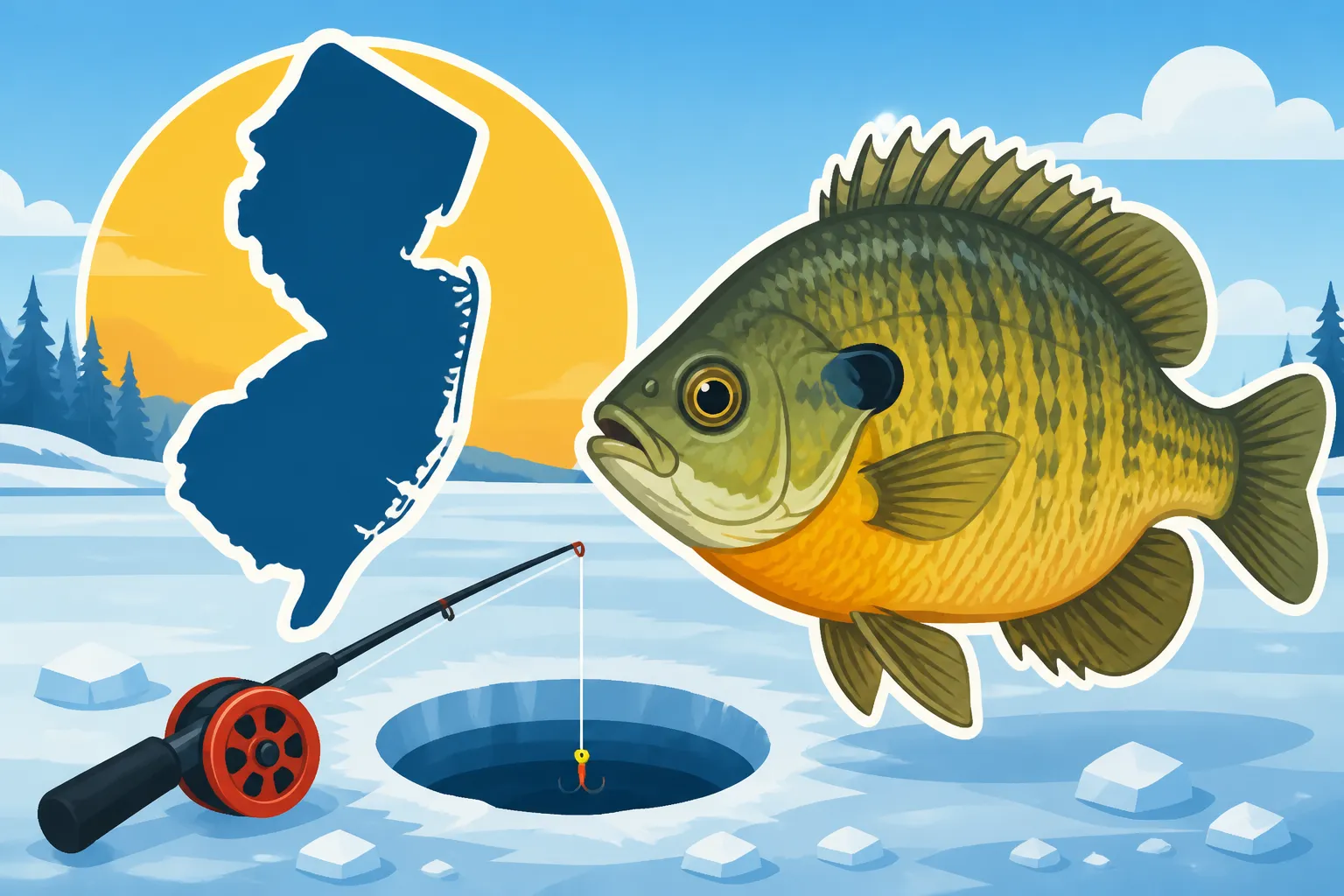
Don't overlook bluegill and other sunfish species (like pumpkinseed and green sunfish) when ice fishing. While they might not grow as large as crappie or perch, they are incredibly feisty for their size and provide consistent action, especially for beginners or kids. Bluegill are often found in shallower water than crappie or perch, typically in 5-15 feet, associating with remaining weed growth, stumps, or the edges of drop-offs. They have smaller mouths, so tiny baits and jigs are essential. A light rod that shows even the slightest twitch is critical. Catching a dozen chunky bluegill can be just as satisfying as a big crappie, and they are excellent pan-fried. Many of New Jersey's smaller ponds and lakes offer fantastic opportunities for these readily available, spirited fighters. You can learn more about specific species in our guide to the New Jersey Crappie Fishing Guide, New Jersey Yellow Perch Fishing Guide, and New Jersey Sunfish and Bluegill Fishing Guide.
Essential Gear for New Jersey Panfish Ice Fishing
Getting geared up for ice fishing doesn't have to break the bank, but having the right equipment makes a world of difference in your comfort, safety, and success. For panfish, you'll want gear that's specifically designed for finesse and sensitivity.
Rods, Reels, and Line: Keeping it Light
When it comes to ice fishing for panfish, light is right. You're not battling monsters, but rather detecting subtle bites from fish that can be finicky in cold water.
- Rods: Look for specialized ice fishing rods that are short, typically 24-36 inches long, with ultra-light to light action. The short length helps in the confines of an ice shelter and reduces line slack for quick hooksets. The most critical feature is a very sensitive tip (often called a "spring bobber" or highly flexible tip section) that telegraphs even the slightest inhale from a panfish. Brands like St. Croix, Fenwick, and Clam offer excellent panfish ice rods.
- Reels: A small spinning reel (500 or 1000 series) is perfect. It should have a smooth drag, as you'll be using light line. Some anglers prefer specialized inline ice reels, which reduce line twist, but a basic spinning reel works wonderfully. You can find many suitable options on Amazon.
- Line: This is where many anglers make mistakes. Heavy line spooks panfish. Stick to monofilament or fluorocarbon in 2-4 pound test. Fluorocarbon is less visible underwater and has less stretch, offering better bite detection. Braided line can also be used, but you'll almost always want to tie a 3-5 foot fluorocarbon leader to it, as braid can absorb water and freeze up on the reel in extreme cold.
Augers and Ice Skimmers: Getting Through the Ice
You can't fish without a hole! Choosing the right auger depends on how many holes you plan to drill and your budget.
- Augers:
- Hand Augers: These are the most economical and lightest option, perfect for early or late ice when the thickness is manageable (6-12 inches). They require manual effort but are quiet and reliable. A 6-inch diameter is ideal for panfish; it's easier to drill and big enough for most crappie or perch.
- Propane Augers: These offer a good balance of power and portability. They start easily in cold weather and make quick work of thicker ice. Brands like Strikemaster and Eskimo are popular.
- Electric Augers: Battery-powered augers have gained immense popularity. They are quiet, scent-free (no gas fumes), and incredibly efficient. A good quality electric auger can drill dozens of holes on a single charge. If you plan on ice fishing regularly, this is a fantastic investment.
- Drill Augers (Auger Bits for Cordless Drills): Many anglers now use specialized auger bits that attach to heavy-duty cordless drills. This is a very popular, lightweight, and effective option for panfish. Ensure your drill is rated for high torque and has a long-lasting battery.
- Ice Skimmers: Once you drill your hole, ice shavings will fill it up. An ice skimmer (also called a slush scoop or ladle) is essential for clearing out these shavings, keeping your hole open, and allowing your line to run freely. A good one will have a measuring device on the handle, useful for checking ice thickness.
Shelters, Heaters, and Safety Gear: Staying Warm and Safe
Staying warm and safe are paramount for an enjoyable ice fishing experience in New Jersey.
- Shelters:
- Portable Shacks/Flip-overs: These are great for mobility. They attach to a sled, can be quickly "flipped over" into fishing position, and often include a seat. They're perfect for anglers who like to move and find fish.
- Pop-up Shelters: These resemble camping tents and offer more interior space for multiple anglers or extra gear. They're lighter to transport than flip-overs but take a little longer to set up.
- Even a simple windbreak or a large umbrella can make a huge difference on a windy day.
- Heaters: A small, portable propane heater (like a Mr. Heater Buddy or Big Buddy) can transform a frigid day into a comfortable one inside a shelter. Always ensure proper ventilation to prevent carbon monoxide buildup.
- Safety Gear:
- Ice Picks: These are non-negotiable. Worn around your neck, they are vital for self-rescue if you fall through the ice. Learn how to use them!
- Spud Bar: A heavy metal bar used to test ice thickness as you walk. It's a lifesaver, especially on unfamiliar ice or at the beginning and end of the season.
- Rope/Throw Bag: For rescuing others.
- Flotation Suit: While an investment, a good flotation suit provides warmth and buoyancy if you go through the ice.
- Layered Clothing: Dress in layers, avoiding cotton, which holds moisture. Opt for wool, fleece, and synthetic materials. Check out our guide on what to wear ice fishing for more detailed advice.
- First-Aid Kit: Always smart to have on hand.
- Buddy System: Never ice fish alone. Always tell someone where you're going and when you expect to return.
- For comprehensive safety, refer to our guide on New Jersey Ice Fishing Safety Basics and learn how cold does it need to be to ice fish in New Jersey? and how thick should ice be before you fish on it?.
Electronics: Flashers and Cameras
While not strictly necessary for panfish, electronics can dramatically increase your success rate and add another layer of fun to ice fishing.
- Flashers/Fish Finders: These devices show you real-time what's directly beneath your hole. You can see your jig, the fish approaching it, and how they react. Brands like Vexilar, Marcum, and Humminbird are popular. For panfish, a flasher helps you dial in the exact depth fish are holding and adjust your presentation. It takes some practice to read, but once you get the hang of it, it's invaluable. If you're new to the technology, our guide on how to read a fish finder for beginners can offer a great starting point.
- Underwater Cameras: These are incredibly entertaining, allowing you to actually see the fish and your lure in action. While not as practical for finding fish quickly as a flasher, they provide amazing insights into fish behavior and strike tendencies. They're especially fun for kids. You can find various models of both flashers and cameras on Amazon.
Finding the Best Spots for Panfish Through the Ice in New Jersey
Knowing where to drill your hole is often the biggest challenge in ice fishing. Panfish location changes throughout the winter, but understanding basic principles will put you on the fish.
Reading the Ice: Depths and Structure
Panfish, even under the ice, relate to structure and depth changes. Their exact location can vary from lake to lake and even day to day.
- Weed Edges: Dying weed beds still hold oxygen and offer cover for panfish and their food. Look for the deepest remaining green weeds. Panfish will often stage along the edges of these weed lines.
- Drop-offs and Ledges: Where a shallow flat suddenly drops into deeper water is a classic panfish holding area. Fish will often suspend along these contours.
- Submerged Structure: Brush piles, old stumps, rock piles, or sunken Christmas trees (often placed by fisheries management) are magnets for crappie and perch. They provide cover and ambush points.
- Basins: In very deep lakes, crappie might suspend in the main basin over deep water, especially in mid-winter. They might be following schools of baitfish.
- Points and Bays: Points extending into the lake and protected bays can concentrate fish.
- Don't be afraid to drill multiple holes and move around. This is often the most effective way to locate schools of active fish. Start shallow and work your way deeper, or vice-versa, until you find them.
Identifying Productive New Jersey Lakes and Ponds
New Jersey offers a fantastic array of lakes and ponds that freeze over and provide excellent panfish opportunities. Some well-known locations include:
- Lake Hopatcong: New Jersey's largest lake, it offers excellent crappie and perch fishing, especially in its shallower bays and around submerged structures. You can learn more about Fishing Lake Hopatcong: New Jersey's Largest Lake.
- Spruce Run Reservoir: Known for its diverse fishery, it has good numbers of perch and crappie in various areas.
- Merrill Creek Reservoir: While deeper, it holds panfish and other species, often along its structured bottom.
- Greenwood Lake: Another large lake with good panfish populations.
- Small local ponds: Many smaller, unnamed ponds across the state can be panfish goldmines, especially for bluegill and smaller perch. These often receive less pressure.
- Consult the New Jersey Fish and Wildlife Digest, which you should be reading to understand regulations, for specific stocking information or species reports. Our guide on New Jersey's Best Spots for Ice Fishing provides more detail on various locations. Additionally, exploring how to find New Jersey's best fishing spots using the state stocking map can reveal some hidden gems.
Safety First: Ice Thickness and Conditions
Ice safety is paramount. The general rule of thumb for new, clear, black ice is:
- 2 inches or less: Stay off!
- 4 inches: Safe for ice fishing on foot.
- 5-7 inches: Safe for snowmobiles or ATVs.
- 8-12 inches: Safe for a small car.
- 12-15 inches: Safe for a medium truck.
However, these are general guidelines only. Always assume ice is unsafe until you've tested it yourself. Ice conditions can vary greatly even on the same body of water due to currents, springs, underwater structures, and snow cover.
- Never trust "first ice" or "last ice": These periods are often the most dangerous.
- Check ice frequently: Use a spud bar or auger to check thickness every few yards, especially when moving to a new area.
- Avoid areas of open water or thin ice: These include inlets, outlets, areas around bridges, pressure cracks, and aerators.
- Beware of snow-covered ice: Snow acts as an insulator, slowing ice formation. It also hides weak spots. Heavy snow can push ice down, causing slush to form on top, which is incredibly dangerous.
- Wear a PFD/flotation suit: Always have flotation on or with you.
- Carry ice picks: Keep them easily accessible around your neck.
- Fish with a buddy: Never go alone.
This diligent approach to ice safety ensures you can enjoy your time on the hard water without incident.
Effective Techniques and Baits for Ice Fishing Panfish
Once you've found your spot and drilled your holes, it's time to entice those panfish. The subtle art of ice fishing for panfish revolves around finesse and presentation.
Jigging Strategies for Different Panfish
Jigging is the most common and effective method for ice fishing panfish. It's an active way to present your bait and entice strikes.
- Subtle Presentation: Panfish in cold water are often lethargic. You don't need aggressive jerks. Start with small, subtle twitches of your rod tip, just enough to make your bait dance.
- Pauses are Key: Many strikes occur on the pause, as the lure is falling or hanging motionless. Experiment with the length of your pauses. A common rhythm is lift-drop-pause for 3-5 seconds.
- Vertical Jigs: Small, vertical jigs (like tungsten jigs) are excellent. Their dense material means they drop quickly and present a small profile. Colors can make a difference, so bring an assortment: glow-in-the-dark, chartreuse, orange, and naturalistic tones.
- Spoons: Tiny spoons, like a Swedish Pimple or Kastmaster, can be deadly for perch and crappie. Their flash and flutter on the fall imitate injured baitfish. Tip them with a small piece of bait for added attraction.
- Experiment with Depth: Don't just fish the bottom. Crappie especially will suspend at various depths. Use your flasher to pinpoint the fish and present your jig just above them. If you see fish on the screen but they aren't biting, try raising your bait slowly. Sometimes a chase triggers a strike.
- For specific choices, our guide to the best panfish jigs for ice fishing offers great advice.
Tip-Up Tactics for Passive Presentation
While jigging is active, tip-ups offer a fantastic way to cover more water and provide a passive presentation, especially useful for more aggressive panfish like larger perch.
- What is a Tip-Up? A tip-up is a device that sits over an ice hole, holding a spool of line submerged in the water. When a fish bites and pulls the line, a flag "tips up," signaling a bite from a distance.
- Spreading Out: Set up several tip-ups (check local regulations for the maximum number allowed) around your primary jigging hole. This allows you to present different baits at different depths or locations.
- Baiting the Hook: For panfish, small live minnows (shiners or fatheads) are killer on tip-ups for crappie and perch. Hook them lightly through the back or lips.
- Depth Control: Adjust the depth so the bait is suspended just off the bottom, or at the depth where you've marked fish on your flasher.
- Waiting Game: Tip-ups allow you to jig in one hole while waiting for a flag to go up on another. When the flag flies, approach quietly and hand-line the fish in. Be prepared for a quick battle! Learning how to set up tip-ups for ice fishing can drastically increase your catch rate.
Best Baits and Lures: Live and Artificial
The right bait can make all the difference, especially on tough days.
- Live Baits:
- Wax Worms/Larvae: These are absolute panfish magnets. They are hardy, lively, and attractive to all panfish species. Thread one or two onto a tiny jig.
- Mousies/Spikes: Similar to wax worms, these small maggots are fantastic.
- Small Minnows: Live shiners or fathead minnows are deadly for larger crappie and yellow perch, especially when fished on tip-ups or a small jigging spoon.
- Mealworms: Another good option, though sometimes less lively than wax worms.
- Artificial Lures:
- Tungsten Jigs: As mentioned, these are excellent due to their density. Available in various shapes (tear drop, horizontal, round), they come in sizes from 1/64 to 1/16 ounce.
- Small Spoons: Swedish Pimples, Kastmasters, and similar designs in 1/16 to 1/8 ounce, often tipped with a grub or minnow head.
- Soft Plastics: Tiny artificial grubs, minnows, or insect larvae imitations, threaded onto a small jig head. These come in an array of colors and scents. Brands like Clam, Custom Jigs & Spins, and Northland Tackle offer great panfish soft plastics.
- Scent: Don't underestimate the power of scent in cold water. Applying a fish attractant paste or gel to your artificial lures can make a significant difference, especially when fish are hesitant. Berkley PowerBait scents or Smelly Jelly are popular choices.
Mix and match your baits and lures. What works one day might not work the next, and what works for crappie might not be as effective for bluegill. Be ready to adapt!
Timing Your New Jersey Panfish Ice Fishing Trip
Just like open water fishing, timing can play a huge role in your ice fishing success. Understanding how panfish behave throughout the winter and at different times of day can help you maximize your catch.
Best Times of Day for Active Panfish
Generally, panfish, like many fish species, have periods of increased activity throughout the day.
- Dawn and Dusk: These are often prime feeding times. The low light conditions can make panfish more comfortable moving into shallower areas to feed. The first hour after sunrise and the last hour before sunset are critical windows. If you're out there early, bring a headlamp for safety and setting up.
- Mid-Day Lulls: While fish can still be caught mid-day, the bite often slows down, especially if it's bright and sunny. During these periods, fish might move deeper, become more lethargic, or require a more subtle presentation. This is when your flasher can be invaluable, helping you pinpoint their exact depth and activity level. Don't be discouraged by a mid-day slowdown; it's a great time to experiment with different baits or simply enjoy a warm snack in your shelter.
- Overcast Days: Often, overcast days can extend the "golden hours" and keep panfish active for longer throughout the day, as the subdued light is more consistent.
Early, Mid, and Late Ice Considerations
The ice fishing season in New Jersey typically progresses through three distinct phases, and panfish behavior changes with each.
- Early Ice (First few weeks after safe ice forms): This is often considered the best time for panfish. Fish are typically still in patterns similar to late fall, often found closer to shallow weed beds, points, and structural elements. They are relatively aggressive as they haven't experienced much fishing pressure and are still actively feeding before the deep winter sets in. Ice can be thinner during this period, so extreme caution is advised.
- Mid-Winter/Mid-Ice (Deep freeze): As the ice thickens and snow accumulates, oxygen levels can drop in shallower areas, and fish often move to deeper basins or along distinct drop-offs. Crappie might suspend over deep water, while perch might hug the bottom in 20-30 feet. The bite can become more challenging and subtle. Finesse fishing with tiny jigs, slow movements, and lots of pauses becomes crucial. This is when flashers and active hole-hopping are most effective to find scattered schools.
- Late Ice (Approaching thaw): As the days lengthen and the sun warms the surface, ice starts to break down, and meltwater brings fresh oxygen into the system. Panfish, sensing the impending spring, often become incredibly active again. They push back into shallower bays, creek mouths, and weed flats, actively feeding in preparation for spawning. This can lead to some of the fastest action of the season, but it's also the most dangerous time for ice thickness. Always prioritize safety above all else, as the ice can deteriorate rapidly and unpredictably. Remember, New Jersey's fishing season dates and closures can affect what you target.
Weather's Impact on the Bite
Weather conditions, beyond just air temperature, significantly influence panfish behavior under the ice.
- Barometric Pressure: A stable high-pressure system typically brings clear skies and can make fish less active. A falling barometer (before a storm) often triggers a feeding frenzy, while a rapidly rising barometer (after a cold front) can shut down the bite completely. Keep an eye on the forecast and try to time your trips for stable or falling pressure. Understanding how barometric pressure affects fishing can be a game-changer.
- Snow Cover: Heavy snow on the ice reduces light penetration, which can make panfish less skittish and more willing to bite, especially in shallower water. However, too much snow can reduce oxygen and push fish deeper.
- Wind: Wind can be a huge factor for angler comfort and, indirectly, for fishing. High winds can make jigging difficult and can rapidly cool exposed lines, causing them to freeze to your reel. Shelters become essential on windy days.
- Light Conditions: Bright, sunny days can drive panfish into deeper water or tighter cover. Overcast days, as mentioned, often provide more consistent fishing throughout the day.
By considering these factors and being adaptable, you can greatly improve your chances of a successful panfish outing on the hard water of New Jersey. Remember, patience and persistence are key, but so is being equipped with the right knowledge and gear.
Here's a quick comparison of our target panfish species for ice fishing:
| Species | Typical Winter Location | Preferred Baits/Lures | Jigging Style | Best Time of Day |
|---|---|---|---|---|
| Crappie | Suspending over deep water (15-30ft), brush piles, old weed edges | Tiny jigs (1/64-1/32 oz) with wax worms/minnows, small spoons | Lift-drop, long pauses, subtle twitches | Dawn/Dusk, Overcast |
| Yellow Perch | Bottom to mid-depth (10-30ft) on flats, drop-offs, weed edges | Small jigs (1/32-1/16 oz) with wax worms/minnows, small spoons | More aggressive jigging, bumping bottom | Consistent throughout day, especially mid-day |
| Bluegill | Shallow weed edges (5-15ft), stumps, docks, transition zones | Micro jigs (1/64 oz) with wax worms/mousies, tiny soft plastics | Very subtle twitches, dead sticking, slow lifts | Mid-day, when sun warms shallower areas, Overcast |
Disclaimer
Fishing conditions and regulations in New Jersey can change. Always consult the most current New Jersey Fish and Wildlife Digest for up-to-date rules, regulations, and safety advisories before heading out on the ice. Ice fishing carries inherent risks; prioritize safety by checking ice conditions, wearing appropriate gear, and fishing with a buddy.