How to Find Structure When Fishing New Jersey Bays
It can feel incredibly frustrating to be out on a vast, beautiful New Jersey bay, casting into what seems like endless open water, only to come up empty-handed. The bay looks uniform, but beneath the surface, it's a bustling underwater landscape full of hidden features. This guide is here to demystify the art of finding and fishing "structure" in our local bays, transforming your approach and significantly improving your chances of hooking into some fantastic fish.
The Secret Sauce of Bay Fishing: Why Structure Matters So Much
When you look out over Barnegat Bay or Raritan Bay, it can sometimes feel like a giant, featureless bathtub. But trust me, that's rarely the case. Fish, like us, seek comfort, food, and safety. They don't just wander aimlessly in open water; they gravitate toward features that offer these essentials. This is where understanding "structure" comes into play – it's the ultimate cheat sheet for locating where the fish are hiding.
What Exactly Is "Structure" in a Bay?
At its heart, "structure" refers to any physical feature on the bottom or in the water column that differs from the surrounding area. Think of it like a neighborhood for fish. Just as we prefer to live near amenities, fish prefer areas with distinct features that serve their needs. These features can be anything from natural underwater formations to man-made objects.
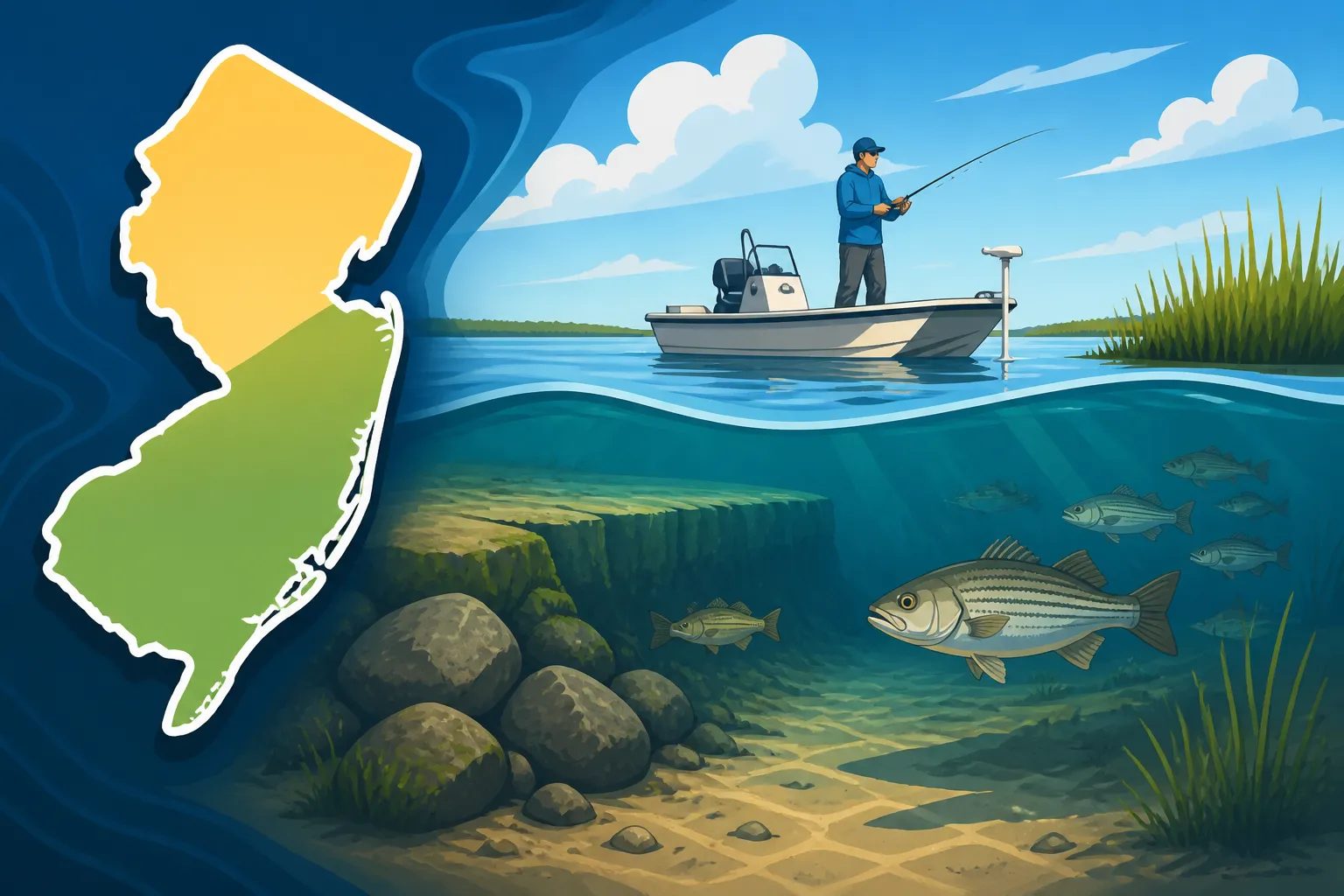
For instance, a sudden drop-off where the bottom depth changes dramatically creates a current break and a distinct habitat. A cluster of old pilings provides shade and ambush points. An expansive oyster bed offers food and shelter. All of these are prime examples of structure. It's the contrast with the "flat" bottom around them that makes them so attractive. Ignoring these details is like trying to find a specific house in a city without a map – you might get lucky, but it's far more efficient with some guidance.
Why Fish Love to Hang Around Structure
Fish are drawn to structure for a few fundamental reasons, and understanding these motivations is key to fishing them effectively. First and foremost, structure provides cover and ambush points. Imagine a striped bass lurking in the shadows of a bridge piling, waiting for an unsuspecting mullet to swim by. The structure gives them an advantage over their prey. Similarly, smaller baitfish seek refuge within the intricate nooks and crannies of oyster beds or dense grass, hiding from larger predators.
Secondly, structure often funnels current and concentrates bait. As water moves across the bay, it interacts with these underwater features. Channels can become highways for baitfish, while eddies and current breaks behind pilings or ledges create calmer areas where baitfish can rest and where predators can lie in wait. This concentration of food is a huge draw. Think of it like a restaurant district – lots of food means lots of customers! Finally, structure can offer shelter from strong currents, harsh sunlight, and even other predators. It’s a safe zone, a place to rest and conserve energy. Especially in colder or hotter months, fish will seek out deeper pockets or shaded areas associated with structure.
Uncovering Natural Structure in New Jersey's Bays
New Jersey's bays are dynamic environments, shaped by tides, currents, and natural processes. This means there's a wealth of natural structure just waiting to be explored by observant anglers. These subtle shifts in the underwater landscape are often the key to finding those elusive schools of fish.
The Allure of Oyster Beds and Clam Shell Hash
Oyster beds are like underwater coral reefs in our bays. They are living, breathing ecosystems that create an incredibly rich environment. The rough, irregular surfaces of oyster shells provide countless hiding spots for small crabs, shrimp, and juvenile fish – essentially, an all-you-can-eat buffet for larger predators. Species like fluke, striped bass, and even tautog will frequent these areas, picking off an easy meal. How to Fish for Fluke in New Jersey is a great resource if you're targeting these bottom dwellers.
Clam shell hash, while not as robust as a full oyster bed, serves a similar purpose. These areas, often found on slightly firmer bottoms, are accumulations of broken clam and oyster shells. They create an uneven, textured bottom that breaks up the current and provides shelter for smaller organisms. When fishing these spots, you'll often feel your sinker or lure "tick" or "thump" along the bottom as it scrapes over the shells. This distinct feel is your cue that you're in a productive zone. Pay attention to those subtle bumps; they could be telling you a story about what's below.
The Dynamic World of Channels, Drop-Offs, and Ledges
These are some of the most consistent forms of natural structure in any bay system. Channels are essentially underwater rivers, carved out by tidal currents. They are often deeper than the surrounding flats and serve as migration routes for many fish species, especially when moving with the tides. Fish will use the edges of these channels to travel, feed, or rest. Imagine them as highways, and the fish are just using the shoulder!
Drop-offs are sudden changes in bottom depth, often found along the edges of channels or where a shallow flat abruptly plunges into deeper water. These are classic ambush points. A predator can sit comfortably in the deeper water, looking up at the shallower, sunlit flat for passing baitfish. Best Time to Fish New Jersey's Backwaters at Low Tide can be especially helpful for understanding how water levels expose and conceal these features.
Ledges are similar to drop-offs but might be more subtle, a gradual slope or a series of stair-step changes in depth. They still provide distinct current breaks and changes in habitat that fish exploit. Learning to "read" your fish finder for these contours is a game-changer. These areas are fantastic for drifting for fluke or casting bucktails for striped bass. The key is to position your boat or cast so your offering drifts along or across the contour line, mimicking a natural movement of prey.
Grass Beds: Hidden Havens for Prey and Predators Alike
New Jersey's bays, particularly the shallower backwaters, are home to expansive grass beds, primarily eelgrass. These lush underwater meadows are teeming with life and represent vital natural structure. Visually, they might look like flat, green patches on the surface, but beneath, they are complex ecosystems.
Grass beds offer incredible shelter for juvenile fish, crabs, and shrimp. They provide camouflage and protection from larger predators and the sun's harsh rays. For a juvenile fluke or a small blue crab, a dense grass bed is a sanctuary. Because of this abundant food source and cover, grass beds become prime hunting grounds for predatory fish like fluke, weakfish, and even smaller striped bass. Imagine a hungry fluke lying camouflaged on the sandy edge of a grass bed, waiting for a shrimp to dart out. New Jersey Fluke Identification Guide can help you recognize your quarry.
Fishing around grass beds requires a slightly different approach. You want to focus on the edges of the beds, where the grass transitions to open sand or mud, or on any potholes or open pockets within the grass. These are the key ambush zones. Lures that glide over the top of the grass, or baits that can be worked along the edges, are often most effective. Be prepared for some snags, as the grass can grab your line, but the rewards are often worth the effort!
Decoding Man-Made Hotspots in Our Waterways
While natural structures are crucial, human activity has also inadvertently created some of the most productive fishing spots in New Jersey's bays. These man-made structures provide similar benefits to natural ones—cover, current breaks, and concentrated food sources—but are often easier to locate and target.
Bridges, Pilings, and Docks: Concrete Fish Magnets
Think about any bridge spanning a New Jersey bay, or the countless docks lining our shorelines. What do they have in common? Pilings! These vertical structures driven into the bay bottom are absolute magnets for fish. They disrupt the current, creating eddies and calm spots where baitfish can congregate. They provide shade from the sun, offering comfort on hot days. And, perhaps most importantly, their rough surfaces quickly become encrusted with barnacles, mussels, and other marine growth, attracting an entire ecosystem of smaller organisms that form the base of the food chain.
Striped bass, particularly, love to stage around bridge pilings, using them as ambush points to dart out at passing bait. Tautog (blackfish) are almost exclusively found around structure like this, scraping barnacles off the pilings. Fishing these areas effectively means understanding current. You want your bait or lure to drift naturally past the pilings, mimicking a struggling baitfish. Sometimes, positioning yourself upstream and letting the current do the work for you is the best strategy. Just be mindful of other boaters and How to Fish Around Bridge Pilings safely and effectively.
Navigational Aids and Buoys: More Than Just Markers
Those familiar red and green markers, channel markers, and buoys that guide boats safely through our bays are actually fantastic pieces of fish-holding structure. Like bridge pilings, their underwater chains and anchors quickly develop marine growth, attracting smaller creatures. The buoys themselves cast a shadow, and the chains provide a vertical structure in an otherwise featureless flat.
While you should never tie off to a navigational aid (it's illegal and dangerous!), you can certainly fish around them. Fluke, bluefish, and striped bass will often hold near these markers, especially those indicating channel edges or shallower shoals. Drifting past them, casting parallel to the chain, or even positioning your boat slightly up-current and letting your lure wash back can be very effective. These are often easy-to-spot landmarks, making them great starting points, particularly for those just beginning to explore a new bay.
Artificial Reefs and Wrecks: Designed for Success
New Jersey has an impressive network of artificial reefs and historical wrecks that are specifically designed to enhance marine habitat and fishing opportunities. These are literally man-made structures placed on the bay or ocean floor with the express purpose of attracting fish. Old barges, subway cars, concrete rubble, and even specially designed reef balls create incredibly complex environments.
These reefs and wrecks offer everything a fish could want: abundant hard substrate for marine growth, countless holes and crevices for shelter, and vertical relief that concentrates baitfish and acts as a beacon for pelagic species. Black sea bass, tautog, fluke, and even offshore species like cod and pollock will congregate on these structures. New Jersey Artificial Reef Fishing Guide offers a deeper dive into these productive areas. Finding these spots typically involves using GPS coordinates (often available from the state marine fisheries departments or on specialized marine charts) and then confirming their location with your fish finder. Fishing them involves jigging, bait fishing directly on the structure, or drifting baits just off the edges.
Your Angler's Toolkit: Finding Structure Like a Pro
Now that we know what structure is and why fish love it, the next step is learning how to actually find these hidden gems. Gone are the days of just guessing; modern technology and old-school wisdom combine to make you a more efficient structure hunter.
Mapping It Out: Charts and Apps Are Your Best Friends
Before you even launch your boat, you should be studying marine charts. These aren't just for navigation; they are treasure maps for anglers. Look for depth contours, channel markers, wrecks (often marked as "Wk" on charts), oyster beds, and areas labeled "rocky bottom" or "snags." These maps give you a crucial bird's-eye view of the underwater landscape. Many modern chartplotters have highly detailed cartography, but even paper charts or digital apps on your phone or tablet, like those you can find on Amazon, offer invaluable insights.
Fishing apps have revolutionized pre-trip planning. They allow you to mark potential hotspots, track your drifts, and even see real-time tide and current data. Before I head out to New Jersey's Barnegat Bay Fishing Guide, I always spend a good half hour with my charting app, looking for those subtle depth changes or clusters of old pilings. It’s like scouting a deer stand before hunting season – preparation makes all the difference.
The Eyes Beneath the Surface: Mastering Your Fish Finder
A good fish finder is arguably the most important piece of electronics for any bay angler looking for structure. It literally shows you what's beneath your boat. Modern units offer a variety of views:
- 2D Sonar: The classic view, showing depth and echoes from fish and structure as arches and lines.
- Down Imaging/ClearVü: Provides a photographic-like image of what's directly below, excellent for distinguishing between different types of bottom (e.g., shell hash vs. mud) and seeing actual structural features like submerged trees or wrecks.
- Side Imaging/Side Scan: This is the real game-changer for structure. It scans out to the sides of your boat, giving you a wide swath view of the bottom. You can spot a rock pile, a sunken crab pot, or a school of baitfish holding off to the side, allowing you to approach it without running directly over it and spooking the fish.
Learning to interpret what you see on your screen takes practice. Start by understanding what a hard bottom looks like versus a soft bottom. Learn to identify the distinct shape of a piling versus a clump of grass. The more time you spend with your unit, the better you'll become at recognizing potential fish-holding structure. Don't just look for fish arches; look for the structure that might be holding those fish! Check out How to Read a Fish Finder for Beginners to get started. Many excellent fish finders are available on Amazon, catering to all budgets and boat sizes.
The Power of Observation and Local Knowledge
While technology is fantastic, never underestimate the power of your own eyes and ears, and the wisdom of local anglers.
Observation: When you're on the water, pay attention to subtle clues.
- Bird activity: Diving birds often indicate schools of baitfish, which means predators aren't far behind.
- Surface disturbances: Splashing, jumping baitfish, or even the subtle swirl of a feeding striper can pinpoint a hotspot.
- Boat traffic: While not always foolproof, observing where other successful anglers are fishing (and how they're fishing) can provide valuable hints, especially around popular spots like Manasquan Inlet Fishing Guide.
- Shoreline features: Look for points, coves, and areas where creek mouths enter the bay. These often have associated underwater structure.
Local Knowledge: There's no substitute for talking to seasoned local anglers, bait shop owners, and charter captains. They spend countless hours on the water and know the subtle nuances of the bay. They've seen how specific tides affect certain spots, or where the fluke tend to stack up during different times of the season. While they might not give up their secret honey holes, they often share general patterns or types of structure that are producing fish. Respect their experience, and you'll often gain invaluable insights.
Fishing Smart: Techniques for Structure-Oriented Angling
Finding structure is only half the battle; knowing how to fish it effectively is where you truly earn your stripes. Each type of structure demands a slightly different approach, but the underlying principle remains the same: present your bait or lure naturally and keep it in the strike zone.
Approaching Different Types of Structure Effectively
The way you approach a piece of structure can make or break your trip. Here’s a quick overview:
- Bridge Pilings & Docks: These require precision. You want to cast as close to the structure as possible without getting snagged. Use the current to your advantage. Cast up-current and let your bait or lure drift naturally back towards and past the pilings. Often, the strike comes just as your offering clears the structure, as the fish are waiting in ambush. For tautog, you might need to position yourself directly over the pilings and drop bait straight down.
- Oyster Beds & Shell Hash: Since these are on the bottom, a slow, methodical retrieve is key. For fluke, a drift with a bucktail or a traditional fluke rig is excellent. For striped bass, soft plastics or live bait worked slowly across the bottom can be deadly. Be prepared for snags and use tackle that can handle some abuse.
- Channels & Drop-offs: Drifting parallel to the channel edge or the drop-off is a fantastic strategy. This keeps your bait in the strike zone for longer. If you have a trolling motor, use it to maintain your position precisely along the contour. Both bait and lures, from bucktails to soft plastics, excel here. Understanding How to Drift Fish for Fluke is critical in these areas.
- Grass Beds: Focus on the edges and potholes. Topwater lures can be exciting over dense grass, especially for bass in brackish areas. Weedless soft plastics or shallow-running crankbaits are great for working through the grass. For fluke, a bucktail with a Gulp! trailer fished on the edges is hard to beat.
Presenting Your Bait or Lure: Matching the Cover
The type of structure you're fishing should influence your bait or lure choice and presentation.
- For dense, snaggy structure (pilings, wrecks): You want baits that can be presented vertically or lures that are somewhat snag-resistant. Jigs, live bloodworms, or small crabs (for tautog) are excellent choices. Use enough weight to get your offering down quickly through the current and into the strike zone. Sometimes, a simple high-low rig is all you need. You can find pre-tied rigs and a variety of weights and hooks on Amazon.
- For open, less snaggy structure (channel edges, subtle ledges): This is where drifting shine. Bucktails with soft plastic trailers, traditional fluke rigs with spearing or squid, or even slow-trolled plugs can be very effective. The goal is to mimic a baitfish or crustacean moving naturally with the current. How to Tie a Fluke Rig provides a step-by-step guide.
- For grassy areas: Weedless lures are a must. Soft plastic swimbaits rigged weedless, shallow-running crankbaits, or even topwater frogs can be productive. Bait fishing can be challenging due to tangles, so artificials often rule the day here.
Remember, fish are often holding tight to structure. A cast that lands a few feet away might not get their attention. Precision and multiple casts to thoroughly work a piece of structure are often required. Don't be afraid to try different angles and retrieve speeds until you find what triggers a bite.
Safety First: Navigating Crowded and Tricky Spots
Fishing around structure, especially man-made features like bridges and docks, often means navigating areas with strong currents, heavy boat traffic, and potential hazards.
- Be aware of your surroundings: Always keep an eye out for other boats, especially when drifting. Strong currents can push you into other vessels or hazards quickly.
- Respect private property: Docks and piers extending from private property are generally off-limits unless you have permission. Stick to public access points, fishing piers, or open water.
- Tides and Currents: Understand How to Read Tide Charts for Better Fishing in New Jersey. Currents around structure can be incredibly powerful. Always be prepared to adjust your boat's position or the weight of your tackle to compensate. A strong outgoing tide under a bridge, for example, can create a serious challenge.
- Anchor smart: If anchoring near structure, ensure your anchor is set securely and that you have enough rode (rope and chain) for the depth and conditions. Avoid anchoring directly in a busy channel.
- Wear a PFD: Accidents can happen fast, especially when concentrating on fishing. Wearing a personal flotation device is always a good idea, especially if you're alone or fishing in strong currents.
By combining technological scouting with keen observation and the right fishing techniques, you'll be able to confidently pinpoint and exploit the myriad of structures hidden within New Jersey's bountiful bays.
Conclusion
Mastering the art of finding and fishing structure in New Jersey's bays is truly one of the most rewarding aspects of angling. It transforms those vast, seemingly empty stretches of water into a rich tapestry of hidden hotspots, each holding the promise of a memorable catch. By understanding why fish gravitate towards these features, learning to identify both natural and man-made structures, and utilizing the right tools and techniques, you're not just casting a line – you're engaging in a strategic pursuit. So, next time you're planning a trip to a New Jersey bay, take some time to study those charts, fire up your fish finder, and keep your eyes peeled for the subtle clues that will lead you directly to the fish. Tight lines!
Disclaimer
This article is for general informational purposes only and does not constitute professional advice. Laws, prices and regulations vary by location and change over time. Consult a qualified professional for guidance on your specific situation.