How to Catch Weakfish in New Jersey
It's frustrating when you head out to the New Jersey coast, hoping to land some of those beautiful weakfish, only to come up empty-handed or just catch a few small ones. Weakfish, often called "sea trout" for a reason, can be elusive, and their populations have seen their ups and downs. This comprehensive guide will walk you through everything you need to know about successfully targeting weakfish in New Jersey, from understanding their habits to mastering the best baits and techniques.
Understanding New Jersey Weakfish: The "Sea Trout" of the Shore
Weakfish, Cynoscion regalis, are a truly prized catch along the Jersey Shore, known for their beautiful iridescent colors and delicate, flaky meat. However, they've been a species of concern for many anglers and scientists alike, with their populations experiencing significant fluctuations over the decades. Knowing more about this species is your first step to catching them.
Identifying Weakfish: What Makes Them Unique?
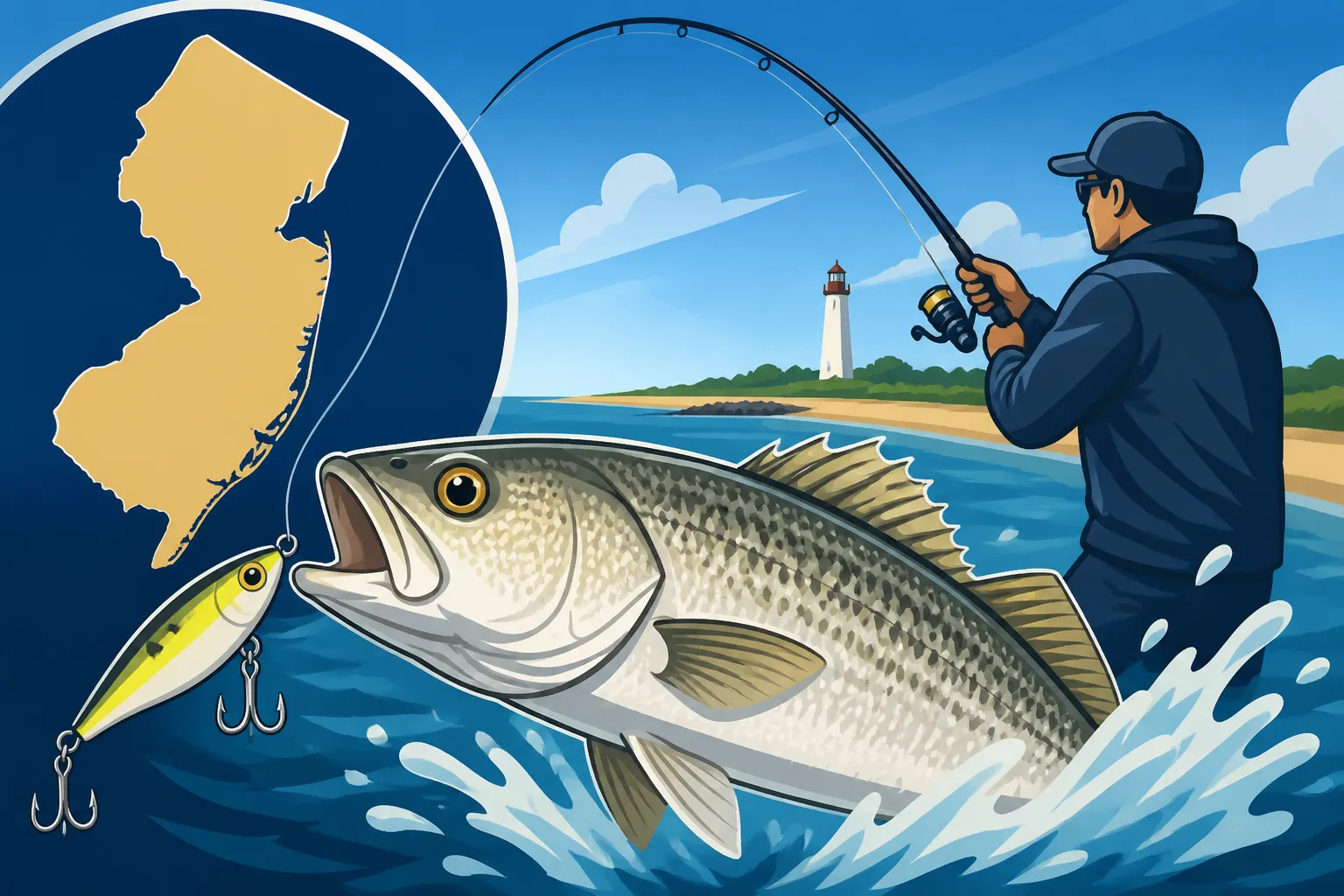
When you pull a weakfish out of the water, you'll immediately notice its stunning appearance. They possess a sleek, elongated body that shimmers with a beautiful pearly white belly and iridescent sides that can flash shades of pink, green, blue, and gold, especially when fresh out of the water. Their backs are usually a darker olive or greenish-brown, often adorned with tiny, scattered spots that form wavy lines. One of their most distinctive features is a pair of prominent canine teeth in their upper jaw, which they use to grasp prey. Compared to their cousin, the speckled sea trout (which isn't common in New Jersey), weakfish have a more streamlined profile and lack the large, distinct spots on their bodies and fins. The name "weakfish" isn't because they're weak fighters, but rather due to their delicate mouth tissue, which can tear easily if not handled carefully, especially when removing hooks.
Weakfish Habitat and Behavior in New Jersey
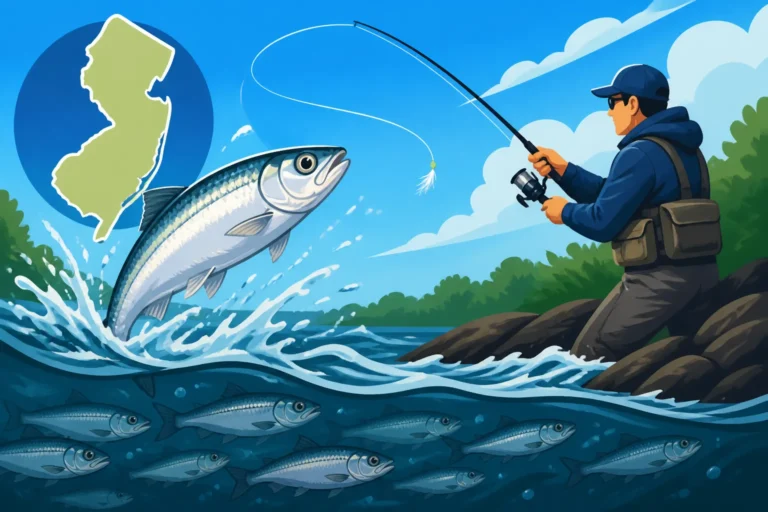
Weakfish are primarily an estuarine and coastal species, meaning they love the transition zones where freshwater meets saltwater, as well as the open ocean nearshore. In New Jersey, this translates to finding them in a variety of environments throughout the year. During the warmer months, from late spring through fall, you'll typically find them in our vast back bays, like Barnegat Bay and Great Bay, as well as in the deeper channels of our major inlets, such as the Manasquan Inlet and Shark River Inlet. They often congregate around structure, including bridge pilings, sod banks, oyster beds, and channel edges, where baitfish and crustaceans seek refuge. As waters cool in the fall, they tend to move offshore into deeper coastal waters, sometimes congregating over wrecks and reefs, before migrating south for the winter. Their diet is varied, consisting mainly of smaller baitfish like spearing, mullet, and bunker, as well as shrimp, crabs, and squid. They are opportunistic feeders, often ambushing their prey, and their feeding habits can be influenced heavily by tidal movements and bait presence.
The Current State of Weakfish Populations in New Jersey
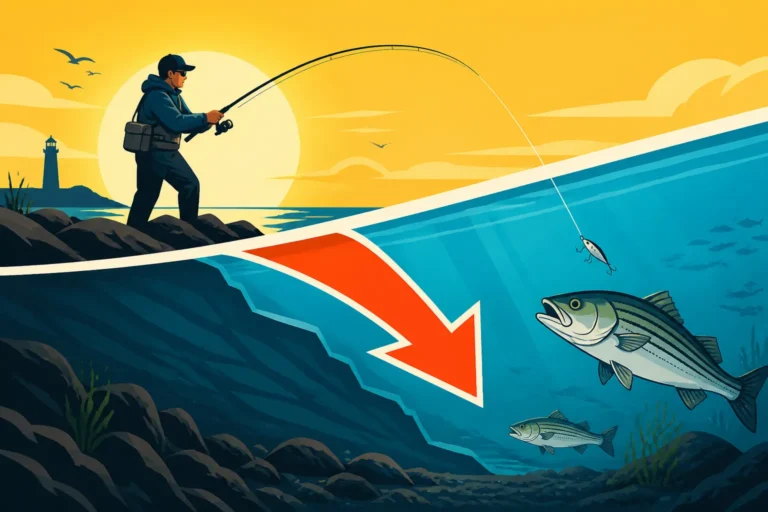
For many years, the weakfish population along the Atlantic coast, including New Jersey, faced significant challenges. Overfishing in the past, combined with environmental factors and habitat degradation, led to a noticeable decline in their numbers. This decline was a major concern for anglers and fisheries managers, leading to stricter regulations and increased conservation efforts. While there have been some positive signs in recent years, with localized booms in certain areas, the overall recovery of the weakfish stock is an ongoing process. Understanding why the numbers of this species have fluctuated is crucial, and you can learn more about the specifics in our guide on the New Jersey Weakfish Decline and Conservation efforts. These regulations, which often include strict bag and size limits, are put in place to ensure the long-term health of the fishery. It's important for every angler to adhere to these rules, not just for compliance but for the future of this fantastic sportfish.
Prime Seasons and Tides for Weakfish in New Jersey
Timing is everything when it comes to weakfish. Unlike some other species that might bite year-round, weakfish have specific windows of opportunity in New Jersey, driven largely by water temperature and the presence of their preferred forage. Paying close attention to the calendar and the tides can significantly increase your chances of success.
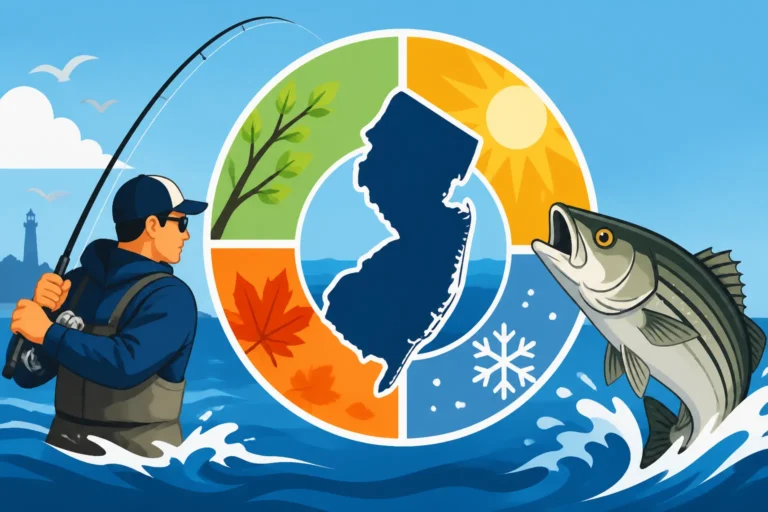
Best Times of Year to Target Weakfish
In New Jersey, the weakfish season generally kicks off in late spring, usually around April or May, as water temperatures in the back bays and coastal estuaries start to consistently climb into the high 50s and low 60s Fahrenheit. This is when the first schools of weakfish begin to move into shallower, warmer waters from their offshore wintering grounds. The bite can be fantastic during this initial push, especially in the deeper channels of the back bays. As summer progresses, particularly from June through August, weakfish spread out more, inhabiting a wider range of habitats, from the bays to the calmer nearshore ocean. This period often sees consistent action, especially during dawn and dusk. By late summer and early fall, typically September and October, the weakfish start to school up again, often putting on a feed in preparation for their southward migration. This "fall run" can be another incredibly productive time, offering opportunities for larger fish before they head back offshore. You can dive deeper into the nuances of these periods in our dedicated guide on the Best Time to Catch Weakfish in New Jersey.
Understanding Tidal Influence on Weakfish Bites
Tides are perhaps the single most critical factor for weakfish fishing in New Jersey. Weakfish are highly influenced by tidal currents, as these movements dictate baitfish activity and oxygen levels in the water. Generally, weakfish are most active during moving tides – either the incoming (flood) or outgoing (ebb) tide. They often position themselves in current rips, along channel edges, or near structure, waiting to ambush bait that is being swept past them. Many seasoned weakfish anglers swear by the last few hours of the incoming tide and the first few hours of the outgoing tide, often referred to as the "top of the tide" and "bottom of the tide," respectively. However, this can vary significantly depending on the specific location. In some inlets, a strong outgoing tide might flush out more bait, making weakfish more aggressive. In shallow bays, a rising tide might bring them closer to structure or allow them to feed on flooded marsh grass. Learning to read and predict these tidal movements is paramount. Our guide on How to Read Tide Charts for Better Fishing in New Jersey can provide invaluable insight into mastering this essential skill.
Ideal Water Temperatures for Weakfish Activity
Water temperature is a primary driver of weakfish behavior, dictating their presence, activity levels, and even their feeding patterns. Weakfish are cold-blooded, so their metabolism and thus their hunger are directly tied to the temperature of the water around them. In New Jersey, weakfish generally become active and begin to feed consistently when water temperatures are in the range of 58°F to 72°F.
When the water is too cold, below 55°F, weakfish tend to be sluggish, their metabolism slows down, and they might not feed as aggressively, if at all. This is why you rarely find them in our estuaries during the dead of winter. Conversely, once water temperatures climb too high, especially above 75°F in shallow bay waters during a hot summer, they can become stressed and less active, often seeking deeper, cooler pockets of water or moving further offshore. Monitoring local water temperature reports, often available from marine weather forecasts or even some fishing apps, can give you a significant advantage. Finding that "sweet spot" temperature range, especially in conjunction with favorable tides, is often the key to unlocking a fantastic weakfish bite.
Essential Gear and Tackle for Weakfish Anglers
Weakfish might have a "weak" mouth, but they can put up a respectable fight, and their subtle bite often demands a sensitive touch. Having the right gear isn't just about comfort; it's about being able to detect those soft takes and keep a lively fish hooked without tearing its delicate jaw. Investing in appropriate tackle can make a huge difference in your success rate.
Rod and Reel Setups for Weakfish
For weakfish fishing in New Jersey, you'll generally want a setup that offers a good balance of sensitivity, moderate power, and casting distance.
A medium-light to medium power spinning rod, typically 6'6" to 7'6" in length, is ideal. Look for a fast action tip, which allows you to feel those subtle bites and quickly set the hook. A graphite blank will provide the sensitivity you need to detect the lightest tap. Rods designed for inshore saltwater fishing or even some heavier freshwater bass rods can cross over perfectly. For instance, brands like St. Croix or Fenwick offer excellent options that can be found on Amazon.
Pair this with a 2500 to 4000 series spinning reel. The reel should be smooth, have a reliable drag system, and be capable of holding a decent amount of line. While a high line capacity isn't always critical for weakfish, a smooth retrieve and strong drag are. Shimano and Daiwa reels are popular choices for their durability and performance in saltwater environments. The goal is a balanced setup that feels comfortable to cast all day and provides enough backbone to handle a good-sized weakfish, which can sometimes reach impressive sizes, especially the "tiderunners" in the fall.
Line and Leader Choices for Sensitivity and Strength
When it comes to line, braided line has become a favorite among weakfish anglers for its unparalleled sensitivity and strength-to-diameter ratio. A 10 to 15-pound test braided line is usually sufficient. The lack of stretch in braid allows you to feel even the slightest weakfish nibble, which is crucial for these light biters. Its thin diameter also helps with casting distance, especially when throwing lighter lures. However, because weakfish have sharp gill plates and can abrade lines, and because braid is visible in clear water, you'll need a fluorocarbon leader. A 2-to-4-foot section of 15 to 25-pound test fluorocarbon leader is a good starting point. Fluorocarbon is nearly invisible underwater, offers good abrasion resistance, and provides a little stretch to absorb shocks, protecting that delicate weakfish mouth. Connect your braid to your fluorocarbon leader using a strong knot like an FG knot or an Albright knot. For those who prefer monofilament, a 10 to 12-pound test clear monofilament line can also work, though you'll sacrifice some sensitivity. Many anglers still find quality monofilament like Ande or Berkley on Amazon for their leader material.
Terminal Tackle: Hooks, Sinkers, and Swivels
Your terminal tackle selection will vary based on your chosen bait or lure, but some staples are essential for weakfish fishing. For live bait, sharp, lightweight hooks are critical. Octopus hooks or kahle hooks in sizes #1 to 2/0 are popular choices, allowing the bait to swim naturally and providing good hookups. If you're using soft plastics, a jig head is your primary terminal tackle. Jig heads ranging from 1/8 ounce to 1/2 ounce, with hook sizes from 1/0 to 3/0, are most common, depending on the current and the size of your plastic.
When fishing with bait, you'll often need a sinker to get your offering to the bottom or to hold it in place against the current. Egg sinkers, bank sinkers, or pyramid sinkers are all viable options, with weights ranging from 1/4 ounce to 2 ounces. Always use the lightest sinker possible to maintain contact with the bottom, as this enhances sensitivity. A small, high-quality barrel swivel or snap swivel can be used to prevent line twist, especially when using live bait or casting retrieves. Look for dark-colored or black swivels to minimize their visibility to the fish. A properly rigged How to Rig a Weakfish Jig can make a significant difference, ensuring your presentation is irresistible.
Top Baits and Lures That Weakfish Can't Resist
Weakfish are opportunistic feeders, but they do have preferences. Matching the hatch, or presenting something that closely resembles their natural food source, is often the most effective strategy. Whether you prefer live bait or artificial lures, having a diverse selection will serve you well when targeting weakfish in New Jersey waters.
Live Bait Tactics for Finicky Weakfish
When weakfish are being finicky or when you're targeting larger "tiderunners," nothing beats fresh, live bait. The natural movement and scent of live bait are often irresistible.
- Shrimp: Live shrimp are perhaps the ultimate weakfish candy. They are a natural part of a weakfish's diet, especially in the back bays. Present them on a small, light jig head or under a popping cork if fishing shallower water. The key is to keep the shrimp lively and allow it to drift naturally with the current.
- Spearing (Silversides): These small, slender baitfish are abundant in New Jersey's estuaries and are a staple food for weakfish. Hook them through the lips or just behind the dorsal fin on a small hook and let them swim freely. A popular rig is a simple top-and-bottom rig with two hooks, allowing you to present two spearing simultaneously.
- Mackerel/Mullet Strips: While live mackerel and mullet are excellent for other species, cut strips of fresh mackerel or mullet can be incredibly effective for weakfish, especially when fished on the bottom or drifted. The oily scent trails attract weakfish from a distance.
- Clams: Freshly shucked clam bellies are another highly effective bait, particularly in sandy or muddy bottom areas where weakfish forage for bivalves. Thread a small piece onto a wide-gap hook.
The crucial part of live bait fishing is to use fresh bait and present it as naturally as possible, letting the current do most of the work to entice a bite.
Soft Plastic Lures: The Weakfish Game Changer
In recent years, soft plastic lures have become undeniably the most popular and often the most productive artificial baits for weakfish. Their versatility, realistic action, and scent-infused options make them weakfish magnets.
- Gulp! Baits: Berkley Gulp! Alive! products are absolute weakfish killers. Their scent dispersion is legendary, and their action, when rigged on a jig head, is incredibly lifelike. The 3-inch or 4-inch "Shrimp," "New Penny" "Swimming Mullet," and "Chartreuse Grub" are perennial favorites. You can find a huge variety of these on Amazon or at any local tackle shop. The beauty of Gulp! is that it combines the scent of bait with the durability and castability of a lure.
- Paddle Tail Shads: Soft plastic paddle tail shads, typically 3 to 5 inches long, mimick baitfish perfectly. Colors like chartreuse, pink, white, and iridescent silver are highly effective. Rig them on a jig head appropriate for the depth and current, and retrieve them with a steady retrieve, a slow jigging motion, or a series of hops off the bottom.
- Curly Tail Grubs: These simple yet effective lures have a pulsating tail that provides irresistible action, especially when retrieved slowly or drifted. White, chartreuse, and clear with glitter are excellent choices.
The key to fishing soft plastics for weakfish is to impart subtle action. Often, a slow, steady retrieve with occasional twitches or pauses is all it takes. Let the current give the lure life, and be prepared for a soft tap, which is often a weakfish mouthing the lure.
Hard Baits and Jigs for Aggressive Bites
While soft plastics and live bait dominate, there are times when hard baits and traditional jigs can be incredibly effective, especially when weakfish are actively feeding and more aggressive.
- Bucktail Jigs: The classic bucktail jig, often tipped with a piece of Gulp! or a pork rind, is a timeless lure that works for many species, including weakfish. White, chartreuse, and pink bucktails in 1/4 ounce to 1 ounce are good starting points. Work them with a lift-and-drop retrieve, letting them flutter to the bottom. They are particularly effective when weakfish are feeding on bottom-dwelling crustaceans or are holding in deeper channels.
- MirrOLure Plugs: These slow-sinking or suspending plugs, especially the MirrOlure 52M or 52MR series, are iconic for weakfish. Their subtle shimmy and enticing flash make them deadly, particularly in clear water. Colors like chartreuse back with silver sides, or pink, are highly recommended. A slow, steady retrieve with occasional twitches is often all that's needed. These plugs are particularly effective in low light conditions or when weakfish are cruising shallower flats.
- Small Metal Jigs: When weakfish are busting on the surface or feeding on small baitfish, small Kastmaster or similar metal jigs can be cast a country mile and retrieved quickly to imitate fleeing bait. Sizes from 1/4 ounce to 1/2 ounce work well. While less common for weakfish than for bluefish or striped bass, they can certainly get the job done in the right conditions.
Proven Techniques for Targeting Weakfish from Boat and Shore
Weakfish are accessible to anglers whether they're fishing from a boat or sticking to the shoreline. The key is understanding how to present your chosen bait or lure effectively in different environments. Different tactics excel depending on whether you're drifting a bay or casting from a jetty.
Drifting and Trolling in Bays and Inlets
For boat anglers, drifting and light trolling are incredibly effective ways to cover water and locate schooling weakfish in New Jersey's vast bays and deep inlets.
- Drifting: This is perhaps the most popular boat technique. You simply let your boat drift with the current over known weakfish haunts, like channel edges, oyster beds, or areas where you've marked fish on your sonar. Live bait (shrimp, spearing) or soft plastics on a jig head are ideal for drifting. Use just enough weight to keep your offering near the bottom without constantly snagging. The goal is a natural presentation that mimics a free-swimming or dying baitfish. As you drift, fan-cast ahead of the boat and to the sides, allowing your lure or bait to hit different depths and cover more ground. When you find weakfish, try to repeat that drift.
- Light Trolling: While not as common for weakfish as for fluke, light trolling can be effective, especially in broader bay areas or along inlet channels. Small soft plastics, bucktail jigs, or even MirrOLures can be trolled slowly, often with the tide, to cover large areas. The key is maintaining a slow speed (1-2 knots) and using lighter tackle to keep the lure action natural. Pay attention to your fish finder for schools of bait or weakfish, and mark any productive drifts or trolling passes.
Fishing from Piers, Docks, and Jetties
Shore-bound anglers have excellent opportunities to catch weakfish from various structures along the New Jersey coast.
- Piers and Docks: Many public piers and private docks, particularly those in the back bays, can hold weakfish. The lights on docks at night can attract baitfish, which in turn attract weakfish. Casting soft plastics or live shrimp around these lights or into nearby channels can be very productive. Early morning and late evening are often prime times. Always check local regulations regarding fishing from private property.
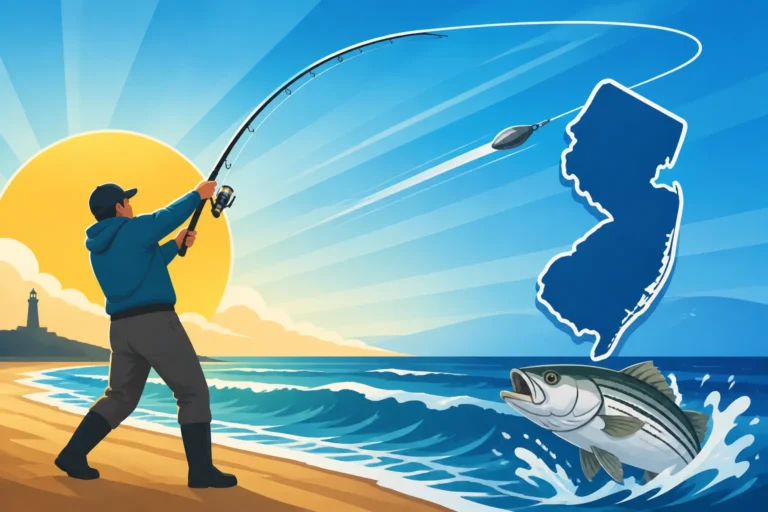
- Jetties: New Jersey's numerous jetties, like those found in Manasquan, Shark River, and Barnegat inlets, are classic weakfish hotspots. Weakfish often hold in the eddies and current breaks along the jetty rocks, ambushing bait. Cast soft plastics or bucktails parallel to the jetty, letting them drift with the current. Target the deeper water near the end of the jetty or where there's a good current seam. The jetties also offer deeper access than most beaches, putting you closer to fish highway. For those looking to explore prime locations, our guide on Best New Jersey Piers and Jetties for Shore Fishing offers fantastic starting points.
Kayak and Shallow Water Weakfish Strategies
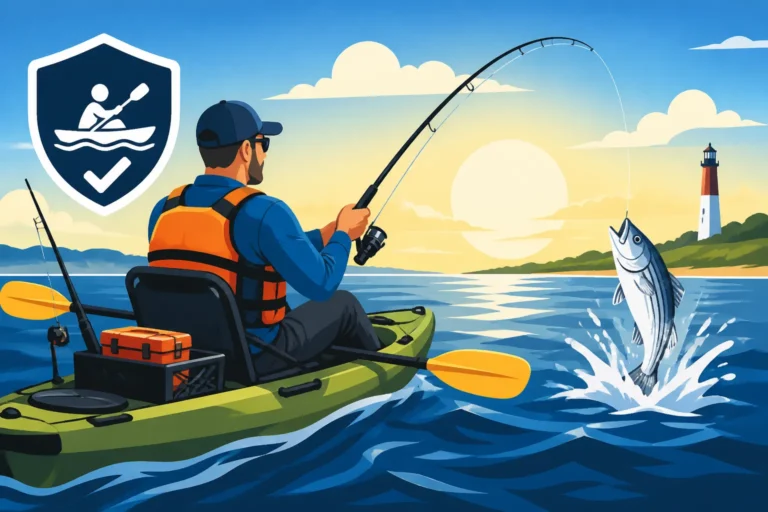
Kayak fishing for weakfish has exploded in popularity, offering a stealthy approach to shallow water and back bay weakfish that are often inaccessible to larger boats.
- Stealthy Approach: Kayaks allow you to sneak into shallow creeks, marsh edges, and flats where weakfish might be feeding on grass shrimp or small baitfish. The quiet nature of a kayak means you can approach fish without spooking them. Use minimal anchor or a drift sock to control your movement.
- Targeting Structure: From a kayak, you can effectively work soft plastics or small bucktails along sod banks, oyster beds, and bridge pilings in tight quarters. The ability to pivot and cast from different angles gives you an advantage in dissecting these areas. Pay attention to changes in bottom contour or current.
- Sight Fishing: In clear, shallow water, it's sometimes possible to sight-fish for weakfish from a kayak. Look for subtle movements, shadows, or even the flash of a weakfish turning. A polaroid lens is essential for this. Cast ahead of the fish to avoid spooking it. For those considering this versatile craft, our guide on the Best Kayak for Bay Fishing can help you choose the perfect vessel for these adventures. Remember, safety first when kayaking, always wear your PFD.
Handling Your Catch and Conservation Efforts
Successfully catching a weakfish is only part of the experience. How you handle the fish, whether you plan to release it or take it home for dinner, is crucial for both the individual fish's survival and the long-term health of the weakfish population in New Jersey. Responsible angling is a cornerstone of our community.
Best Practices for Catch and Release
Given the conservation concerns surrounding weakfish, many anglers opt for catch and release, especially for larger breeding fish. Implementing proper handling techniques ensures the fish has the best chance of survival.
- Minimize Handling Time: The less time a fish spends out of the water, the better. Have your camera ready, and measure quickly if necessary.
- Wet Hands Only: Always wet your hands before touching a fish. Dry hands can remove the protective slime coat, making the fish vulnerable to disease.
- Support the Fish: If you must lift the fish, support its entire body horizontally, especially heavier fish. Avoid holding it vertically by the jaw alone, as this can damage its internal organs or jaw structure, particularly with their delicate mouths.
- Careful Hook Removal: Use de-hooking tools or pliers to remove hooks quickly and gently. If the fish is deeply hooked and removal would cause excessive damage, cut the line as close to the hook as possible. Circle hooks are often recommended when bait fishing, as they tend to hook fish in the corner of the mouth, making release easier.
- Revive If Necessary: If a fish seems sluggish, hold it gently in the water, facing into the current, allowing water to flow over its gills until it swims away under its own power. Never throw a sluggish fish back into the current.
Preparing Weakfish for the Table
Weakfish are renowned for their delicate, flaky white flesh and mild flavor, making them an excellent eating fish. If you decide to keep your legal-sized catch, proper care from catch to plate will ensure the best culinary experience.
- Immediate Icing: As soon as you catch a weakfish you intend to keep, put it on ice. This chills the fish rapidly, preserves its flavor, and prevents bacterial growth. A cooler filled with ice is an essential piece of equipment.
- Filleting: Weakfish are relatively easy to fillet. Start behind the gill plate, run your knife along the backbone, and remove the fillet. The skin can be left on or removed, depending on your preference. Many people choose to remove the skin as it can sometimes have a stronger flavor.
- Cooking Methods: Their mild flavor lends itself well to various cooking methods. They are excellent baked, broiled, pan-fried, or grilled. Simple seasonings like lemon, butter, salt, and pepper often highlight their natural taste. Avoid overcooking, as their delicate flesh can dry out quickly.
- Consumption Advisories: Always be aware of any local fish consumption advisories issued by the New Jersey Department of Environmental Protection (NJDEP) for specific bodies of water. These advisories are based on studies of contaminants and are designed to protect public health.
How Anglers Contribute to Weakfish Conservation
Every angler plays a vital role in the conservation of weakfish and other marine species in New Jersey. It's not just about following the rules; it's about being a steward of the resource.
- Adhere to Regulations: Always know and strictly follow the current New Jersey Weakfish Bag Limit Explained and size limits. These regulations are set based on scientific data to ensure sustainable populations. You can typically find the most up-to-date information in the annual New Jersey Fish and Wildlife Digest, also often available digitally from the state or physical copies at local tackle shops, some of which even carry brand-name gear from Amazon.
- Report Violations: If you witness any poaching or illegal fishing activities, report them to the New Jersey Division of Fish and Wildlife's Marine Enforcement Unit.
- Support Research: Participate in angler surveys or citizen science programs if available. The data collected from recreational anglers is invaluable to fisheries managers. Understanding the New Jersey Marine Fish Size Chart 2026 can also help in quick identification and compliance.
- Practice Ethical Angling: Beyond regulations, practice ethical angling by minimizing your impact, properly disposing of trash, and educating other anglers on best practices. Your actions directly contribute to the health and future of New Jersey's weakfish fishery.
Weakfish Fishing Quick Reference Guide
| Factor | Recommendation | Notes |
|---|---|---|
| Prime Season | Late Spring (Apr-May) & Fall (Sep-Oct) | Peak activity when water temps are 58-72°F. |
| Best Tides | Moving Tides (Incoming/Outgoing) | Often last few hours of incoming, first few hours of outgoing. |
| Rod | 6'6" – 7'6" Medium-Light to Medium Power Spinning, Fast Action | Sensitive tip for detecting soft bites. |
| Reel | 2500 – 4000 Series Spinning Reel | Smooth drag, reliable operation. |
| Main Line | 10-15 lb Braided Line | High sensitivity, low stretch. |
| Leader | 15-25 lb Fluorocarbon (2-4 ft) | Nearly invisible, abrasion resistant. |
| Top Live Baits | Live Shrimp, Spearing, Fresh Cut Mackerel/Mullet | Best for finicky fish, natural presentation. |
| Top Soft Plastics | Berkley Gulp! (Shrimp, Mullet, Grub), Paddle Tail Shads, Curly Tail Grubs | Very versatile, scent-infused, effective on jig heads. |
| Top Hard Baits | Bucktail Jigs (tipped with Gulp!), MirrOLure Plugs (52M/52MR), Small Metal Jigs | Good for aggressive fish or specific conditions. |
| Boat Techniques | Drifting, Light Trolling | Cover water, focus on channel edges, structure. |
| Shore Techniques | Casting from Piers, Docks, Jetties | Target current breaks, light lines at night. |
| Conservation | Adhere to bag/size limits, practice careful catch & release, ice keepers immediately | Crucial for sustainable weakfish populations. |
Disclaimer
The information provided in this guide is for educational and informational purposes only and is not intended as legal advice. Fishing regulations, including bag limits, size limits, and seasons, are subject to change by the New Jersey Department of Environmental Protection (NJDEP) and other governing bodies. Always consult the most current New Jersey Fish and Wildlife Digest or the official NJDEP website before engaging in any fishing activity to ensure compliance with all applicable laws and regulations. The author and publisher are not responsible for any actions taken based on the information presented herein. Fishing can be a dangerous activity; always prioritize safety and be aware of your surroundings.