Do Kayak Anglers Need a License in New Jersey?
It's a common question for us kayak anglers, and frankly, it can be a bit confusing trying to sort through all the New Jersey fishing regulations. Many folks assume that because they're in a smaller, non-motorized vessel, different rules might apply, but that's not always the case. This guide is here to clear up any confusion and walk you through exactly what licenses and registrations you need to paddle out and fish legally in the Garden State.
The Basics: Do You Need a License to Fish from a Kayak in New Jersey?
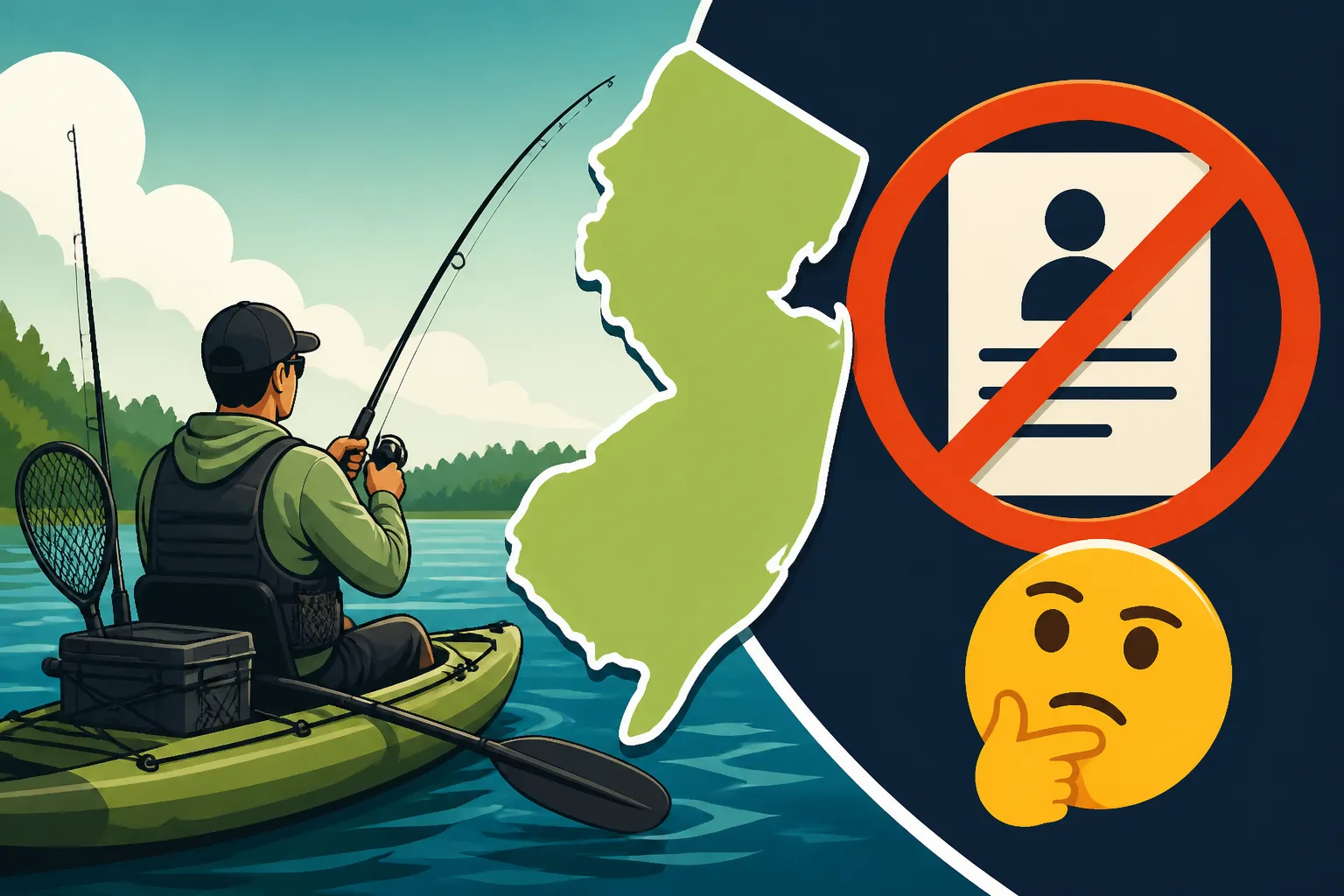
Let's cut right to it: yes, generally speaking, if you're fishing from a kayak in New Jersey, you absolutely need to comply with the same licensing requirements as someone fishing from a powerboat, a dock, or even the shore. The vessel you're using, whether it's a fancy fishing kayak or a simple recreational model, doesn't exempt you from the fundamental rule that fishing in New Jersey requires proper authorization. This can be a bit of a bummer for those just getting into kayak fishing, thinking they might bypass some of the red tape, but it’s crucial for supporting conservation efforts.
Vessel Type Doesn't Dictate Licensing
This is perhaps the biggest misconception out there. Some anglers believe that because a kayak isn't a "boat" in the traditional sense, or because it's human-powered, it falls into some special category. That's simply not true in New Jersey. The state's regulations are primarily concerned with the act of fishing itself, not the platform from which you're doing it. Whether you're standing on the bank of a pristine trout stream or silently stalking bass from your kayak in a quiet cove, the requirement to possess a valid fishing license remains. The revenue generated from these licenses goes directly back into managing fish populations, stocking programs, and maintaining public access points, which benefits all of us, including kayak anglers who cherish those serene paddling experiences.
Why the Rules Apply to Everyone
The intention behind these regulations is to ensure that everyone who partakes in the state's natural resources contributes to their sustainability. Imagine if kayak anglers, or shore anglers, or anyone else were exempt – the system would quickly fall apart, and funding for vital conservation projects would dry up. So, while it might feel like an extra hoop to jump through, your license fee is an investment in the future of New Jersey's fisheries. This includes the beautiful lakes where you might pursue largemouth bass, the winding rivers perfect for smallmouth, and the productive estuaries along the coast. It’s about being a responsible steward of the environment, something most kayak anglers deeply appreciate.
Understanding Freshwater vs. Saltwater Rules for Kayak Anglers
Now, here's where it gets a little more specific, and it's super important for kayak anglers because many of us love to explore both freshwater lakes and saltwater bays. New Jersey distinctly separates its fishing regulations into freshwater and saltwater categories, and you'll need to understand which applies to your intended fishing grounds.
Freshwater Fishing Requires a License
If your kayak adventures take you to freshwater bodies like Lake Hopatcong, Round Valley Reservoir, or the serene Musconetcong River, you absolutely need a New Jersey Freshwater Fishing License. This is a traditional license that you purchase annually or for shorter durations if you're a visitor. It covers all non-tidal waters within the state. For many, this is the most straightforward part of the licensing puzzle. You can easily buy your New Jersey Fishing License Guide for 2026 online through the state's robust system or from numerous authorized retailers, including places like Walmart. Remember, it's not just about having it; you must also be Carrying Proof of Your New Jersey Fishing License while fishing. Whether you're targeting trout, bass, or panfish from your kayak, that freshwater license is your ticket to legally casting a line.
Saltwater Fishing Requires Registration (It's Free!)
This is where some confusion often arises. For saltwater fishing in New Jersey, you generally do not need a traditional "license" in the same way you do for freshwater. Instead, New Jersey requires anglers to register with the New Jersey Saltwater Registry Program. And here's the best part: it's completely free! This registry replaced the federal registry years ago and serves a crucial purpose in helping the state and federal government collect vital data on recreational saltwater fishing effort and catches. This data is essential for managing fish stocks like striped bass, fluke, and bluefish, ensuring healthy populations for future generations of kayak anglers. Whether you're paddling the back bays of Barnegat Bay or hitting the jetties near Manasquan Inlet, if you’re fishing for marine species, you need to be registered. Even if you're only planning to catch and release, the registration requirement still applies. You can easily complete this registration online in a few minutes, making it incredibly convenient for busy anglers.
What If You Fish Both Freshwater and Saltwater?
Many kayak anglers, myself included, love the versatility of fishing both tidal rivers that transition to freshwater and the open ocean or bays. If you're one of these adventurous types, you'll need both! That's right, a valid New Jersey Freshwater Fishing License for all your upstream or lake fishing, and your free New Jersey Saltwater Registry for anything in the salt. It sounds like a lot, but it’s actually quite manageable. Think of it as two separate keys to unlock all the incredible fishing opportunities New Jersey offers. The state has specific rules for Freshwater License and Saltwater Registry Rules for Anglers Who Fish Both, so it’s worth reviewing those to ensure you’re always compliant, regardless of where your paddle takes you. Always check your location to see if it’s considered tidal or non-tidal before wetting a line.
Here's a quick comparison of the two:
| Feature | Freshwater Fishing License | New Jersey Saltwater Registry |
|---|---|---|
| Requirement | Mandatory for most anglers | Mandatory for most anglers |
| Cost | Varies by residency & type | Free |
| Coverage | All non-tidal waters | All tidal (salt) waters |
| Purchase/Registration | Online, agents, retailers | Online only |
| Purpose | Funding, management | Data collection, management |
| Kayak Angler Relevance | Required for freshwater | Required for saltwater |
Key Considerations Beyond Just the License
While the fishing license and saltwater registry are paramount, there are other important factors that kayak anglers in New Jersey need to keep in mind to ensure a safe and legal outing. These often get overlooked in the excitement of planning a trip, but they are crucial for a smooth and enjoyable experience.
Kayak Registration and Safety Gear
This is often another point of confusion. In New Jersey, if your kayak is purely paddle-powered and does not have any mechanical propulsion (like a trolling motor or sail), it generally does not need to be registered with the state's Motor Vehicle Commission. However, if you add an electric motor, even a small one, or a sail, then your kayak does become a "vessel" in the eyes of the law and will require registration. This distinction is vital, so always confirm based on your specific setup.
Regardless of registration, safety is non-negotiable. Every kayak angler should have a U.S. Coast Guard-approved Personal Flotation Device (PFD) readily accessible, and it's highly recommended to wear it at all times. Other essential safety gear includes a whistle or other sound-producing device, a white light for nighttime or low-visibility conditions (even if you don't plan to be out after dark, conditions can change rapidly), and a paddle leash. Many of these items, from compact PFDs to bright navigation lights, can be easily found on Amazon, making it simple to outfit your kayak properly before your next trip. Always prioritize safety, especially when venturing into open waters or challenging conditions.
Understanding Bag and Size Limits
Possessing the right license or registration is only half the battle. You also need to be intimately familiar with the specific bag and size limits for the species you're targeting. These limits are in place to ensure sustainable fishing and can change from year to year. For instance, How Bag and Size Limits Work in New Jersey for popular species like striped bass or fluke are frequently updated. What might be legal one season could be illegal the next. Always consult the current New Jersey Fish and Wildlife Digest before you head out, as these regulations apply universally, whether you’re in a kayak or a much larger boat. Ignorance of the law is never an excuse, and enforcement officers are pretty good at their jobs, especially during peak seasons in popular spots like the Point Pleasant Canal or around the bridges in Toms River.
Common Misconceptions and Why They're Wrong
It's easy to fall into the trap of thinking certain things about fishing regulations, especially when you're using a less conventional vessel like a kayak. Let's bust some of those myths wide open to ensure you're always on the right side of the law and fully understand your responsibilities as an angler.
"It's Just a Kayak, So Rules Don't Apply"
This is arguably the most pervasive myth. Many new kayak anglers, or those accustomed to casual paddling, might assume that because their craft is small and human-powered, it somehow exists outside the traditional realm of fishing regulations. As we've discussed, this is absolutely incorrect. The state of New Jersey views the act of taking fish from its waters as requiring either a license (for freshwater) or registration (for saltwater), regardless of whether you're in a multimillion-dollar yacht or a $300 kayak. The size and type of your vessel simply do not factor into the requirement to be licensed or registered. If you were to be stopped by a New Jersey Conservation Police Officer, the first thing they would ask for is your fishing license (and saltwater registry, if applicable), not your boat registration (unless your kayak is motorized). Failing to produce these documents can lead to Penalties for Fishing Without a License in New Jersey, which can quickly turn a peaceful day on the water into a costly headache.
"I'm Only Catch and Release, So I Don't Need Anything"
This one often trips people up, especially those who practice ethical catch-and-release fishing exclusively. While the conservation ethic behind catch and release is admirable and strongly encouraged for certain species, it does not exempt you from needing a valid fishing license or saltwater registration in New Jersey. The regulations are written around the act of attempting to catch fish, not just keeping them. Even if you meticulously follow New Jersey catch and release rules and never keep a single fish, you still need to be licensed or registered to legally fish the state's waters. The idea is that your presence, your gear, and your attempt to catch fish all contribute to the overall fishing pressure on a fishery. Your license fees still help manage and monitor those fish populations, even if they never end up in your cooler. So, even if your kayak is just a floating platform for photography and immediate release, get that license or registration!
"I'm Fishing on Private Property, So It's Different"
While there are some nuances regarding private ponds or lakes that are entirely self-contained and stocked by the owner, for the vast majority of waterways in New Jersey, including those that may border private property, a state fishing license is required. Most rivers, streams, lakes, and all coastal waters are considered public trust resources. This means that even if you launch your kayak from a friend's private dock on a bay, or paddle through waters adjacent to private land, you are still fishing in state-regulated waters. The only real exception would be a completely enclosed, privately owned and stocked pond or lake where no public access is permitted and the fish haven't come from public waters. These situations are far less common than people imagine, especially for kayak anglers who often seek out extensive public waterways. Always assume you need a license unless you've confirmed otherwise with the New Jersey Fish and Wildlife directly for a very specific, isolated private water body. For the vast majority of public access points, from the Best Kayak Launch Spots on Barnegat Bay to boat ramps on freshwater lakes, a license is a must.
Disclaimer
Please remember that fishing regulations can change. While I strive to provide the most accurate and up-to-date information, it is always your responsibility to consult the official New Jersey Department of Environmental Protection (NJDEP) Division of Fish and Wildlife website or their current regulations digest before heading out. This guide is for informational purposes only and should not be considered legal advice.