How to Rig a Weakfish Jig
Ah, the weakfish! Such a beautiful, shimmering fish, and a true gem of New Jersey waters. But if you’ve spent any time targeting them, you know they can be as frustratingly elusive as they are stunning. Getting your jigging technique and rigging just right can feel like a secret code, leaving many anglers wondering why their efforts aren’t paying off. This guide is here to unravel that mystery, breaking down exactly how to rig a weakfish jig for maximum success, helping you connect with more of these spirited "yellowfins."
Understanding Weakfish Behavior for Jigging Success
Before we even think about tying a knot, it’s crucial to understand the fish we’re after. Weakfish aren't just any old bottom-dweller; they have specific habits and characteristics that dictate the best way to present a lure. Knowing their quirks can be the difference between a blank day and a bending rod.
Why Weakfish Are Called "Weakfish" (and Why They're Still Worth It)
The name "weakfish" often conjures images of a pushover, but trust me, these fish put up a fantastic fight! The "weak" actually refers to their mouth structure, which can be surprisingly delicate and prone to tearing if you're not careful. This is why a gentle hand on the retrieve and a soft hookset are absolutely critical. Many an angler has felt that strong initial pull, only to lose the fish halfway to the boat because they tried to horse it in. Don't let the name fool you, though; a healthy weakfish can be incredibly strong, pulling hard and making exciting runs, especially in open water. They're also incredibly beautiful, with iridescent purple, green, and gold hues that make them a prize for any angler. Plus, they're fantastic table fare, which is a major bonus for many of us.
Where and When to Find Weakfish in New Jersey
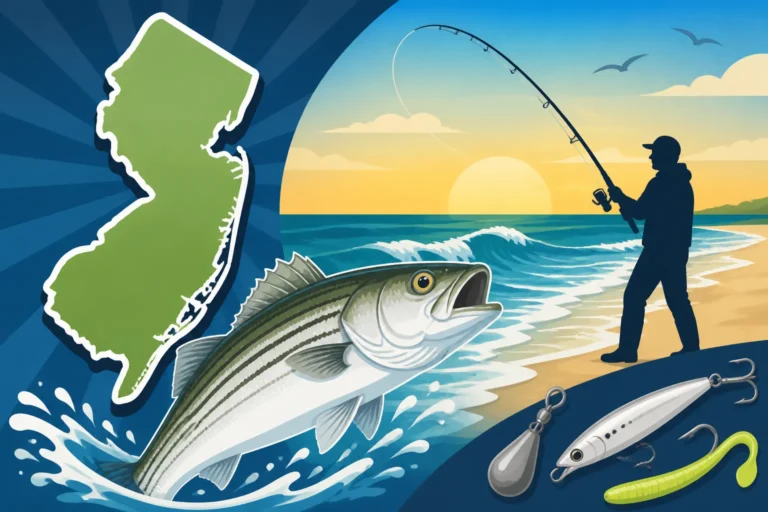
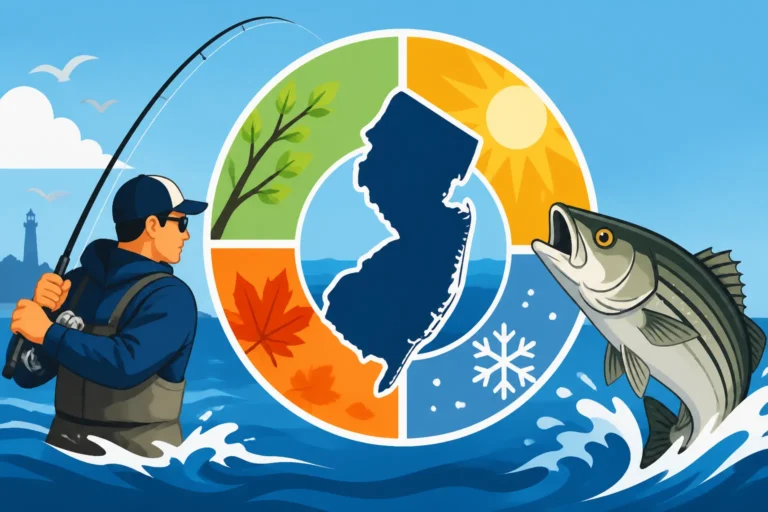
Weakfish are a migratory species that generally make their appearance in New Jersey waters from spring through late fall. The "best time to catch weakfish in New Jersey" often aligns with warming water temperatures in April and May, as they move into the back bays and estuaries to spawn. You’ll find them in tidal creeks, rivers, and bays, often congregating around structure like bridges, docks, mussel beds, and deeper channels. Places like Barnegat Bay, Great Egg Harbor Bay, and the expansive Delaware Bay are classic weakfish haunts. As the summer progresses, they might move to slightly deeper channels within these bays or even out into the ocean around inlets and artificial reefs, seeking cooler water and bait. In the fall, they'll often stage for their southern migration, providing another excellent opportunity to target them. Understanding these seasonal movements and their preference for specific types of cover is key to locating them, especially when you're trying to figure out how to fish New Jersey's tidal rivers or near New Jersey artificial reef fishing guide locations. They often feed on baitfish like spearing, mullet, and silversides, as well as crustaceans, so look for areas where these forage species are abundant.
Essential Components of a Weakfish Jig Rig
Now that we understand a bit more about our target, let's talk hardware. Rigging for weakfish involves selecting the right jig head, pairing it with an enticing soft plastic, and ensuring your leader system is up to the task. It's not overly complicated, but each component plays a vital role.
Choosing the Right Jig Head
The jig head is the foundation of your weakfish presentation. Its weight, shape, and hook quality all matter.
- Weight: Weakfish often feed close to the bottom or in the middle of the water column, but they're not usually in super deep, fast-moving current like some other species. For most bay and estuarial fishing in New Jersey, jig heads ranging from 1/4 ounce to 1 ounce are your go-to. If you’re fishing shallow flats with minimal current, a lighter 1/4 or 3/8 ounce might be perfect for a slow, natural fall. In deeper channels or areas with more tidal flow, you might bump up to 1/2 or 3/4 ounce to ensure your jig gets down to the strike zone quickly and stays there. On those rare occasions you find them holding in a deeper inlet with a strong current, you might even consider a 1-ounce head. The goal is to use the lightest jig possible that still allows you to feel the bottom and maintain control of your lure.
- Shape: Most standard leadhead jigs will work, but some shapes can offer advantages. A banana-shaped head or a standard round ball head with a good collar to hold soft plastics are popular choices. Some bucktail jigs also work wonders, especially if you tip them with a soft plastic or a piece of Gulp! for added attraction. The important thing is that the jig head provides a stable, natural presentation for your chosen soft plastic.
- Color: While often debated, jig head color can make a difference, especially in clear water. White, pink, chartreuse, or even a natural lead color are common and effective. Sometimes, matching the hatch with a dark green or brown head can imitate bottom-dwelling crabs or baitfish. I've personally had great success with bright colors like chartreuse when the water is a bit stained.
- Hook Quality: This is critical for weakfish. Given their fragile mouths, a sharp, strong, but not overly thick wire hook is ideal. You want something that will penetrate easily and hold firm without tearing too large a hole. Many reputable brands offer jig heads with quality hooks straight out of the package. You can often find a wide selection of these, along with soft plastics and leaders, on sites like Amazon.
Selecting Soft Plastic Baits and Colors
This is where you can really entice a weakfish. Soft plastics are incredibly versatile and allow you to mimic the various forage weakfish feed on.
- Paddle Tails: These are probably the most popular choice for weakfish. The paddle tail creates a swimming action that mimics a struggling baitfish, sending out vibrations that weakfish pick up on. Sizes from 3 to 5 inches are generally appropriate. The Z-Man MinnowZ or Bass Assassin Sea Shad are classic examples that perform well.
- Curly Tails: Grubs with curly tails offer a more subtle, undulating action, which can be deadly on slower retrieves or when fish are less aggressive. They tend to move a lot of water even at slow speeds, making them great for suspended fish.
- Jerk Shads: These slender, usually unweighted or lightly weighted soft plastics, when paired with a jig head, can mimic a dying or fleeing baitfish with erratic movements. They require more angler input to impart action but can be irresistible.
- Colors: Weakfish are often attracted to bright, contrasting colors, especially in stained or low-light conditions. Chartreuse, pink, and white are absolute weakfish magnets. Electric chicken (chartreuse with a pink or orange belly) is another popular choice. In clearer water or on bright sunny days, more natural baitfish colors like olive, pearl, or grey can be effective. Don't be afraid to experiment! Sometimes, a subtle shift from a bright chartreuse to a pearl white can unlock a bite. You can find virtually any color and style of soft plastic on Amazon, which makes stocking up easy.
The Importance of Leader Material and Strength
A good leader is non-negotiable when jigging for weakfish. It serves multiple purposes: stealth, abrasion resistance, and shock absorption.
- Material:
- Fluorocarbon: This is generally the top choice for weakfish leaders. It's nearly invisible underwater, which is a huge advantage for skittish fish like weakfish. It also offers excellent abrasion resistance, protecting your line from mussel beds, dock pilings, and sharp teeth (though weakfish teeth aren't usually a major concern).
- Monofilament: While not as invisible as fluorocarbon, a good quality monofilament leader can still be effective, especially in stained water. It has more stretch than fluorocarbon, which can act as a shock absorber against the weakfish’s delicate mouth, preventing hook pulls.
- Pound Test: For most weakfish jigging, a leader ranging from 10 lb to 20 lb test is appropriate. If you're fishing lighter jigs in open water, 10-12 lb is perfectly fine and offers maximum stealth. If you're around heavy structure or targeting larger weakfish, stepping up to 15-20 lb test provides more insurance.
- Length: A leader between 2 to 4 feet long is a good starting point. This length provides enough separation from your main line (especially if it's braided, which can be highly visible) and offers plenty of abrasion resistance. When considering your overall setup, remember to review the New Jersey Marine Fish Size Chart 2026 to ensure you're aware of current regulations for any species you might encounter as bycatch.
Step-by-Step Guide to Rigging Your Weakfish Jig
Let's get down to the actual rigging. It's a straightforward process, but paying attention to the details will make a big difference in how your jig performs and how many fish you catch.
Attaching the Jig Head to Your Main Line/Leader
Assuming you're using a braided main line with a fluorocarbon or monofilament leader, the first step is connecting your jig head to that leader.
- Connecting Main Line to Leader: If you're using a separate leader (highly recommended!), you'll first need to connect your braided main line to your leader material. Knots like the FG knot, Alberto knot, or uni-to-uni knot are excellent choices for connecting braid to fluorocarbon/monofilament smoothly and securely. This connection should be strong enough to handle the fight and pass through your rod guides easily.
- Tying the Jig Head: Once your leader is attached, tie your jig head directly to the end of the leader.
- Improved Clinch Knot: This is a classic and reliable knot for tying terminal tackle. It's relatively easy to tie and strong. Make sure to moisten the line before cinching it down to prevent friction heat from weakening the knot.
- Palomar Knot: Many anglers swear by the Palomar knot for its strength and ease of tying, especially with braided lines (though in this case, it's going on your mono/fluoro leader). It's incredibly strong and creates a loop connection that allows your jig to have a little more natural movement.
- Loop Knot (e.g., Rapala Knot, Non-Slip Mono Loop): For an even more natural, free-swinging action, consider a loop knot. This allows your jig head to move independently of the line, enhancing the swimming action of your soft plastic. This can be particularly effective when weakfish are being finicky.
- Check Your Knot: After tying, always give your knot a good pull to test its strength. Trim any excess tag end close to the knot, but not so close that it compromises the knot itself.
Threading the Soft Plastic onto the Jig Head
This seemingly simple step is where many anglers go wrong, and it can drastically impact your jig's action.
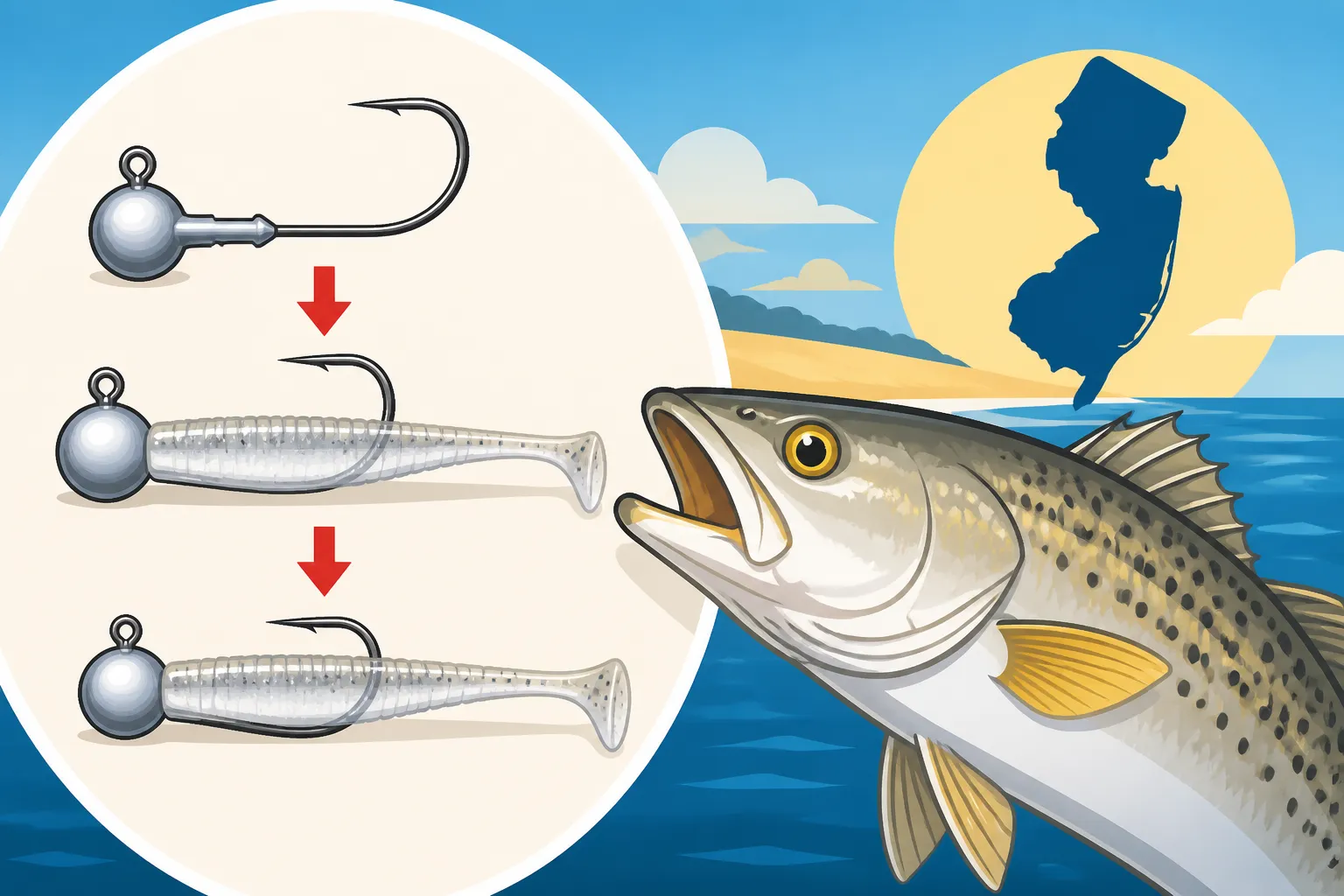
- Measure and Align: Hold your soft plastic bait up to the jig head. Mentally note where the hook point should exit the top of the soft plastic's back to ensure it lies straight and flat along the hook shank. This usually means the hook eye should sit right at the nose of the bait.
- Insert the Hook: Start by inserting the hook point directly into the center of the soft plastic's nose.
- Thread it Through: Gently thread the soft plastic onto the hook shank, ensuring it stays perfectly straight. Push it all the way up so the nose of the soft plastic butts firmly against the lead head of the jig.
- Exit Point: Once the bait is threaded, bring the hook point out of the top of the soft plastic's back at your predetermined spot. The soft plastic should lie perfectly straight on the hook, not bunched up or bent. The hook point should be exposed, ready to set.
- Check for Straightness: Hold the jig up and let it dangle. The soft plastic should hang perfectly straight, not curved or twisted. If it's crooked, it won't swim correctly, and fish are less likely to strike. This might take a few tries to get right, but it's worth the effort. Getting this right is similar to the precision needed for "how to rig a fluke jig" where a straight bait is paramount.
Adding Attractors and Scent (Optional but Recommended)
Sometimes, weakfish need a little extra persuasion. This is where scent and additional attractors come into play.
- Scented Baits: Brands like Berkley Gulp! are incredibly effective because they release a powerful scent trail in the water. A 3-inch Gulp! Shrimp or a Gulp! Grub in white, chartreuse, or pink can be threaded directly onto your jig head as the primary bait, or used as a trailer.
- Scent Sprays/Gels: You can also apply liquid scent sprays or gels directly onto your soft plastics. These enhance the natural appeal of your lure, leaving a scent trail that can draw in weakfish and encourage them to hold on longer, giving you more time to set the hook. Common scents include shrimp, bunker, or a general fish attractant. You can find a good selection of these additives on Amazon, often in convenient spray bottles.
- Trailers: Sometimes, adding a small piece of brightly colored plastic, a small strip of squid, or a tiny bucktail hair trailer behind your soft plastic can add extra flash and vibration, especially if the fish are finicky. This can be particularly useful when fishing for "New Jersey Fluke Fishing" as well, where trailers are common. However, keep it subtle for weakfish; too much bulk can impede their bite.
Mastering the Weakfish Jigging Technique
You’ve got your rig tied, your soft plastic is swimming straight – now it’s time to learn how to present it. Weakfish jigging is all about feel and finesse.
Casting and Presentation
Getting your jig into the right spot and allowing it to sink naturally are the first steps to success.
- Targeting Structure: Cast your jig to areas where weakfish are likely to hold: along channel edges, around bridge pilings, near dock structures, or over mussel beds. Accurate casting allows you to get your lure into the strike zone efficiently.
- Controlled Sink: After casting, allow the jig to sink. The weakfish often strike on the fall, so pay close attention. Keep a semi-slack line, just enough to feel the weight of the jig but not so tight that it impedes its natural descent. Watch your line for any twitches or sudden stops – that's often a bite! This can be especially important when fishing a falling tide, as currents can carry your jig quickly.
- Feeling the Bottom: Once your jig hits the bottom, you'll feel a slackening of the line or a slight thud. This confirms you're in the zone. Weakfish spend a good amount of time cruising near the bottom, so feeling that contact is crucial.
The Retrieve: Jigging Actions and Cadence
This is where the art of weakfish jigging really comes in. It's less about aggressive jerks and more about subtle movements.
- Lift and Drop: A classic jigging retrieve involves lifting your rod tip from a 9 o'clock to an 11 or 12 o'clock position, then slowly dropping it back down, allowing the jig to flutter and fall. The strike often comes as the jig descends. Repeat this motion, reeling in just enough slack on the drop to maintain contact with the lure.
- Twitch and Pause: Sometimes, a series of short, sharp twitches of the rod tip followed by a pause can be incredibly effective. This mimics a wounded baitfish struggling, then resting. The pause is often when the weakfish will commit.
- Slow and Steady: Don't be afraid to experiment with a very slow, steady retrieve, occasionally giving the rod tip a small twitch. This can be deadly when weakfish are lethargic or the water is cold.
- Detecting the Bite: Weakfish bites can range from a violent thud to a very subtle "tap-tap" or even just a feeling of added weight on the line. Sometimes, it might just feel like your jig stopped falling prematurely. Any unusual sensation warrants a gentle hook set. You’ll develop a feel for it over time, but always err on the side of setting the hook if you’re unsure.
Setting the Hook and Fighting the Fish
Given their delicate mouths, how you set the hook and fight the fish is paramount to landing them.
- Gentle Hook Set: Unlike striped bass, which often require a strong, sweeping hook set, weakfish prefer a gentler approach. When you feel a bite, a firm but controlled upward sweep of the rod, rather than a violent yank, is usually sufficient to embed the hook without tearing their mouth.
- Constant Pressure: Once hooked, keep constant pressure on the fish. Avoid pumping the rod too aggressively. Instead, maintain a steady bend in the rod and reel steadily. If the fish makes a run, let your drag do the work.
- Cushioning Runs: Use your rod to absorb the shock of their head shakes and sudden runs. A medium-light to medium action rod with a sensitive tip is ideal for weakfish jigging, as it provides both the feel for subtle bites and the backbone to fight the fish, while also having enough flex to protect their mouths.
- Netting: When the weakfish comes boatside, use a landing net. Trying to hoist a weakfish by the line or even a lip gripper can often result in a lost fish due to their "weak" mouths. Slide the net under them gently.
Weakfish populations have seen their ups and downs in New Jersey, and understanding the New Jersey weakfish decline and conservation efforts can help us all be more responsible anglers. Always be mindful of the "New Jersey Weakfish Bag Limit Explained" and other local regulations to ensure sustainable fishing for future generations.
Weakfish Jigging Rig Comparison Table
To help visualize the choices, here's a quick comparison of common components for your weakfish jigging rig:
| Component | Description | Weakfish Application | Notes |
|---|---|---|---|
| Jig Head | Leadhead with integrated hook | 1/4 oz – 1 oz (matched to depth/current) | Quality, sharp hook is critical for delicate mouths. Banana or round head common. |
| Soft Plastic | Artificial bait mimicking baitfish/crustaceans | 3-5 inch Paddle Tails, Curly Tails, Jerk Shads | Chartreuse, pink, white, electric chicken are popular colors. |
| Leader | Section of line between main line and lure | 10-20 lb Fluorocarbon or Monofilament (2-4 ft length) | Fluorocarbon offers stealth and abrasion resistance; mono adds stretch. |
| Knot (Jig) | Attaches jig to leader | Palomar Knot, Improved Clinch Knot, Loop Knot | Ensure a strong, straight connection. Loop knots give more action. |
| Scent/Attractor | Applied to soft plastic or integrated into bait | Scented soft plastics (e.g., Gulp!), liquid attractants, small flash trailers | Enhances appeal, encourages longer bites. |
By focusing on these details – from selecting the right jig weight and soft plastic color to executing a subtle retrieve and gentle hook set – you'll dramatically improve your chances of success with New Jersey's beautiful weakfish. Don't let their finicky nature deter you; the reward of landing one of these iridescent beauties is truly special. Remember that even on New Jersey free fishing days, understanding these techniques can make all the difference. Sometimes, knowing "how long is a New Jersey fishing license valid" is just as important as knowing your knots!
Disclaimer
This article is for general informational purposes only and does not constitute professional advice. Laws, prices and regulations vary by location and change over time. Consult a qualified professional for guidance on your specific situation.