How to Catch Striped Bass From the Beach at Night
The allure of New Jersey's beaches doesn't fade with the sunset, especially for those of us chasing the elusive striped bass. While daytime fishing can be fun, the nighttime surf often presents a completely different, and sometimes intimidating, challenge. Many anglers shy away from the dark, worried about safety or simply not knowing where to begin. But imagine feeling that powerful tug on your line under a blanket of stars, far from the daytime crowds. This comprehensive guide will illuminate the path, showing you exactly how to gear up, strategize, and safely catch striped bass from the beach at night, transforming you into a confident nocturnal angler.
Why Night Fishing for Striped Bass is So Effective
If you've ever felt like the stripers are just ignoring your offerings during the day, there's a good reason. Striped bass are ambush predators, and they often become significantly more active and less wary once the sun dips below the horizon. The darkness provides them with a cloak of invisibility, making them more confident to cruise inshore and hunt in shallower waters where they might otherwise be hesitant during daylight.
Striped Bass Behavior After Dark
Think about it from a striper's perspective. During the day, they have to contend with clear skies, boat traffic, swimmers, and the general hubbub of a busy Jersey Shore beach. All these factors make them skittish and prone to seeking deeper, safer waters. But when night falls, the game changes. The water cools down, the human activity ceases, and the baitfish, often disoriented by the diminished light, become easier targets. This is when the big girls, the more cautious, larger striped bass, venture closer to the wash to feed aggressively. They use the reduced visibility to their advantage, ambushing crabs, baitfish like bunker, and even eels that become more active under the moon. Understanding this nocturnal feeding pattern is the first step to success.
The Element of Surprise for Anglers
For us anglers, the darkness gives us an advantage too. We're less visible to the fish, which means we can get closer to productive areas without spooking them. You can sometimes wade out a bit further, cast into deeper troughs, or fish around structure like jetties and rocks where stripers might be holding, all without the fish detecting your silhouette against the bright sky. It's a truly primal experience, relying more on feel and sound than sight. Many seasoned surfcasters will tell you that their biggest striped bass have come after dark. The low light conditions also mean the fish are often less selective about what they eat, making them more likely to hit your artificial lures or baits that might get ignored during a bright, sunny afternoon. It's a game of stealth and patience, and the rewards can be truly monumental.
Cooler Temperatures and Less Crowds
Beyond the fish behavior, there are practical benefits to fishing at night, especially during the sweltering New Jersey summer. Who wants to be out on a scorching beach in mid-July? Night fishing offers a much more comfortable experience with cooler air temperatures. There's also the undeniable perk of solitude. Imagine having a stretch of beach all to yourself, the only sounds being the crashing waves and the occasional cry of a seagull. No crowds, no tangled lines with other anglers, no fighting for a prime spot. It's just you, the ocean, and the thrill of the hunt. This peaceful atmosphere allows you to concentrate fully on your retrieve, feel every bump, and truly immerse yourself in the fishing experience. You’ll find parking is easier, access points are less congested, and the overall stress level is significantly lower, leading to a much more enjoyable outing.
Essential Gear for Nighttime Surf Fishing
Approaching the beach at night requires a specific set of tools and a bit of a different mindset than your typical daytime trip. Your gear needs to be reliable, capable of handling the elements, and specifically adapted for low-light conditions.
Rods, Reels, and Line for the Dark
When you’re casting into the dark abyss, you need a setup that inspires confidence. For striped bass from the New Jersey surf, a medium-heavy to heavy power spinning rod, typically between 9 and 11 feet long, is ideal. This length provides the necessary casting distance to reach beyond the immediate wash and allows you to manage larger fish and waves. Brands like St. Croix, Tsunami, and Lamiglas make excellent surf rods that can stand up to the challenge. Pair that with a robust, corrosion-resistant spinning reel in a 5000 to 7000 size range, capable of holding plenty of line and sporting a smooth drag system. Penn, Shimano, and Daiwa all offer reliable options.
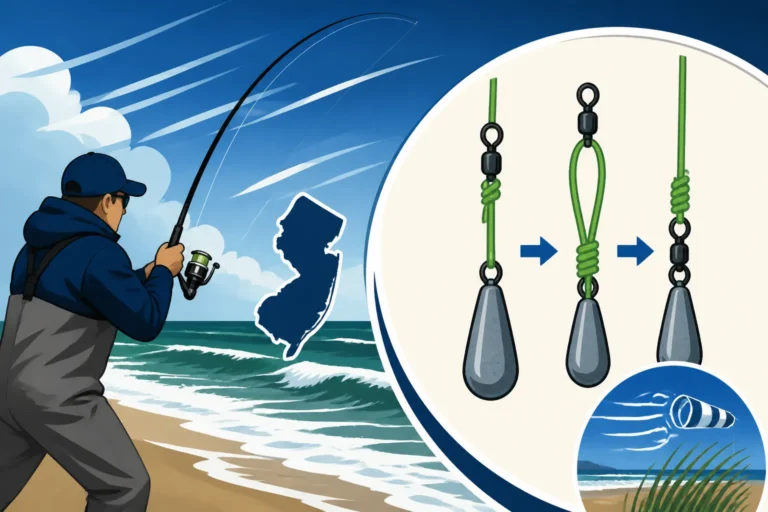
For line, 30-50 lb braided line is a popular choice for its incredible sensitivity, allowing you to feel even the most subtle taps in the dark. The lack of stretch in braid means you can detect a bite from a long distance, which is crucial when you can't see your line. However, always tie a monofilament or fluorocarbon leader of 30-50 lb test, about 3-6 feet long, to your braid. This provides abrasion resistance against sharp rocks and sand, and the clear leader is less visible to the fish. A general rule of thumb for leader material is to match it to the breaking strength of your main line or slightly heavier, depending on the structure you're fishing. Having the right line, like a strong, sensitive braid found easily on Amazon, makes a huge difference. You'll want to ensure your knots are strong and reliable, especially when tying braid to leader, as a lost fish in the dark is doubly frustrating.
Crucial Lighting and Visibility Tools
This might be the most critical section for night fishing. Without proper lighting, you're not just inefficient; you're unsafe. A reliable headlamp is absolutely non-negotiable. Look for one with a red light option. White light can spook fish, ruin your night vision, and annoy fellow anglers. Red light, on the other hand, preserves your natural night vision and is much less intrusive. Brands like Black Diamond or Petzl offer excellent, durable headlamps. Keep a spare set of batteries, or a backup headlamp, in your bag.
Beyond your headlamp, consider a small, portable lantern for your staging area on the beach, especially if you're bait fishing and need to tie rigs or cut bait. Some anglers even use small glow sticks attached to their rod tips if they’re fishing multiple rods with bait, allowing them to see a subtle bite. Reflective tape on your waders or backpack can also enhance your visibility to others, whether it's another angler or a passing vehicle on the sand. Remember, you might not be the only one out there, and being seen is being safe. You can find robust, waterproof headlamps and other safety lighting options readily on Amazon, ensuring you're well-equipped for your nocturnal adventures.
Protective Clothing and Waders
New Jersey coastal nights can be surprisingly chilly, even in summer, and you'll be dealing with water. Quality waders are paramount. Neoprene waders offer excellent warmth for cooler nights and shoulder seasons, while breathable waders are better for warmer summer evenings. Whichever you choose, ensure they are comfortable, fit well, and are leak-free. Pair them with sturdy wading boots that provide good ankle support and grip on slippery sand, rocks, and jetty surfaces. Don't skimp on this; a twisted ankle in the dark is a serious problem.
Layering your clothing is always a smart move. Start with a moisture-wicking base layer, add an insulating mid-layer (fleece works great), and top it off with a waterproof and windproof outer shell. Even if the forecast is clear, a sudden shower or strong ocean breeze can make you miserable fast. Don't forget a warm hat, gloves, and a neck gaiter. A good pair of polarized sunglasses might seem odd for night fishing, but they can protect your eyes from stray hooks or lines if someone else is casting nearby, and they're helpful if you stay out until dawn. Finally, a durable surf bag or backpack is essential to carry your lures, leader material, pliers, and other essentials, keeping them organized and easily accessible in the dark. A good Best Fishing Gear for Beginners article might also cover some basic protective clothing tips.
Strategic Lures and Baits for Dark Hours
Fish rely less on sight and more on other senses at night, so your bait and lure choices need to reflect that. It’s all about creating vibration, a strong silhouette, or an irresistible scent profile that screams "dinner" in the dark.
Top Lures for Nighttime Stripers
When the lights go out, many anglers reach for dark-colored plugs. Black, dark blue, or purple lures create a more defined silhouette against the moonlight or faint sky glow, making them easier for a striper to track. Wooden or plastic darters, needlefish plugs, and bottle plugs are legendary nighttime producers. Their erratic swimming actions and subtle vibrations mimic distressed baitfish or eels. The key is often a slow, steady retrieve that allows the fish to home in.
Bucktail jigs are another phenomenal choice. They can be fished slow and deep, imitating crabs or bottom-dwelling bait. Tipped with a soft plastic trailer like a curly tail grub or a pork rind, they create an enticing profile and a good amount of vibration. Soft plastic jerk shads or swimbaits, especially in darker colors or those infused with glitter, can also be deadly when fished on appropriate jig heads. The subtle tail kick and soft body texture can be incredibly appealing to a wary striper. Remember, a fish can feel the water displacement and vibration of a lure much better than it can see it in the dark. The Best Lures for Striped Bass Fishing guide offers more excellent choices, but for night, focus on dark colors and distinct profiles.
Effective Natural Baits Under the Stars
While lures are exciting, sometimes fresh natural bait is simply irresistible, especially to larger, more cautious stripers. Fresh bunker (menhaden), whether whole, in chunks, or as a filet, is a classic choice for New Jersey surfcasters. Its oily scent trail is a powerful attractant in the dark. Clams, particularly fresh surf clams, are another staple, fished on a standard bottom rig. Bloodworms and sandworms, while smaller, can also entice stripers, especially when they're feeding on smaller invertebrates near the bottom.
When bait fishing, using a fish finder rig or a high-low rig is common. A fish finder rig allows the striper to pick up the bait and swim off with minimal resistance, which is often crucial for getting a solid hookset. Circle hooks are mandatory when using natural bait for striped bass, a regulation aimed at minimizing gut-hooking and improving the survival rate of released fish. You can learn more about New Jersey Circle Hook Requirements for Bait Fishing to ensure you're compliant. A good quality, sharp hook will increase your chances of hooking up, even with subtle bites in the dark. Make sure your bait is presented naturally, not spun up by the current, which can make it look unnatural.
Scent and Sound as Key Attractors
At night, stripers rely heavily on their lateral line system to detect vibrations in the water and their keen sense of smell. This means incorporating elements of scent and sound into your approach can significantly increase your success. For lures, choose those that have a distinct thumping, wobbling, or rattling action. Some plugs even have internal rattles designed to mimic the sounds of struggling baitfish. Slowing down your retrieve also allows the lure to displace more water, creating a larger "signature" for the fish to detect.
When using bait, freshness is key. Oily baits like bunker release a potent scent trail that can draw stripers in from a distance. If you're using cut bait, make sure your knife is sharp to create clean cuts that allow the oils and juices to seep into the water. Some anglers even use commercially available scent attractants, applying them to both natural baits and artificial lures. While opinions vary on their effectiveness, for some, it’s an added confidence booster. The goal is to create a powerful sensory beacon that cuts through the dark water and alerts any passing striper to a potential meal.
Mastering Nighttime Surf Fishing Techniques and Safety
Fishing in the dark requires a different set of skills and a heightened awareness of your surroundings. It's exhilarating, but demands respect for the environment and strict adherence to safety protocols.
Reading the Water in the Dark
One of the biggest challenges of night surf fishing is losing your visual cues. You can't see the sandbars, troughs, and rips that you might easily spot during the day. This is where scouting the beach during daylight hours becomes invaluable. Pay attention to the structure, how the waves break, where the deeper cuts are, and where baitfish congregate. Mentally map out your fishing zone.
Once it's dark, you'll need to rely on your other senses. Listen to the waves – a consistent roar often indicates a sandbar, while a quieter, sucking sound might signal a deeper trough or a rip current. Feel the current on your line as you retrieve your lure; changes in resistance can indicate different depths or currents. Learn How to Read Tide Charts for Better Fishing in New Jersey and pay close attention to the moon phase; new moons (dark nights) often provide the best fishing as there's even less light for fish to detect you. Understand that the beach changes with every storm, so recent scouting is always best. Knowing where to expect a fish to ambush prey in the structure you can't see is half the battle.
Casting and Retrieving with Precision
Casting in the dark takes practice. Always make sure no one is behind you before you cast. Use a steady, controlled motion, aiming for consistent distances rather than trying to bomb it out there every time. Focus on feeling the load of the rod during your backcast and the smooth release of the line. Over-aggressive casting can lead to tangles or, worse, losing your lure in the darkness.
For retrieves, slower is often better at night. Stripers aren't chasing down fast-moving prey as aggressively as they might during the day. A slower retrieve allows the fish more time to locate your lure by its vibration and scent. Maintain constant contact with your lure; feeling for subtle bumps and taps is crucial. Vary your retrieve speed occasionally, adding a twitch or a pause, to mimic a struggling baitfish. If you're fishing bait, let it sit for a while, allowing the scent to dissipate and waiting for a fish to find it. Remember, patience is a virtue, especially when visibility is limited. Consider taking a moment to cast in different directions, fanning your casts to cover as much water as possible without moving your feet too much.
Safety First on the Nighttime Beach
I cannot stress this enough: safety is paramount when fishing at night. Never fish alone. If you absolutely must, inform someone of your exact location and your expected return time. Carry a fully charged cell phone in a waterproof case. Beyond your headlamp, consider having a backup light source. A small, loud whistle can also be useful for signaling in an emergency.
Know your surroundings. Be intimately familiar with your entry and exit points to the beach. The ocean floor can be uneven, and walking in the dark can be treacherous. Watch the tide closely. A rising tide can quickly cut off access points or surround you on a sandbar. Always check the tide chart before you go. Be aware of rip currents; even if you know How to Read a Rip Current for Safer Surf Fishing, they're much harder to spot at night. Avoid excessive alcohol consumption; your judgment and coordination are essential. Carry a basic first-aid kit with essentials like bandages, antiseptic wipes, and pain relievers. If you're wading, always shuffle your feet to avoid stepping on a stingray, especially in the bays. Common sense and preparation go a long way in ensuring a safe and enjoyable night.
Handling Your Catch Safely at Night
Landing and releasing fish in the dark requires careful handling to ensure both your safety and the fish's well-being. Once you've hooked a fish, fight it steadily to the surf line. Have your landing net ready if you plan to use one. A longer handle net can be incredibly helpful for scooping fish in the dark. If you're releasing, try to keep the fish in the water as much as possible. Use your red headlamp setting for minimal disturbance.
For larger stripers, cradle them gently with wet hands, removing the hook with pliers or a dehooker. If you intend to keep a legal fish, dispatch it quickly and humanely, then get it on ice immediately in a cooler, not in a sand spike bucket. Proper fish handling, as detailed in guides like New Jersey Catch and Release Striped Bass Handling Rules, is crucial for conservation. If you plan to take photos, do it quickly with a minimal flash or red light, and return the fish to the water promptly. Your goal is to minimize stress and maximize the chances of survival for released fish.
| Feature | Daytime Surf Fishing | Nighttime Surf Fishing |
|---|---|---|
| Visibility | High, clear view of waves, structure, surroundings | Low, relies on artificial light and other senses |
| Crowds | High, especially during peak season | Low, offers solitude and less competition |
| Fish Activity | Can be wary, often in deeper water, less aggressive | More active, less wary, larger fish often closer to shore |
| Temperature | Can be hot, especially in summer | Cooler, more comfortable |
| Lure/Bait Focus | Varies, brighter colors, visual attraction | Darker colors, strong silhouettes, vibration, scent |
| Safety Concerns | Sun exposure, dehydration, swimming hazards | Tripping hazards, tide misjudgment, limited visibility |
| Challenge Level | Easier to read water, locate spots visually | Requires experience in reading water by feel/sound, heightened awareness |
| Rewards | Consistent action (sometimes), social aspect | Often larger fish, peaceful experience, unique thrill |
Disclaimer
The information provided in this guide is for general informational purposes only. Fishing regulations in New Jersey can change frequently, and it is the angler's responsibility to stay informed and comply with all current local, state, and federal laws regarding fishing licenses, seasons, bag limits, and size restrictions. Always prioritize safety when fishing, especially at night or in challenging conditions. The author and publisher are not responsible for any accidents, injuries, or legal issues that may arise from using this information.