New Jersey Marine Fish Size Chart 2026
It's incredibly frustrating, isn't it? You spend hours planning a fishing trip to the Jersey Shore, finally get out on the water, and then when you reel in a beautiful fish, you're left scratching your head, wondering, "Is it legal? Can I keep this one?" The rules and regulations for marine fish in New Jersey, especially the ever-changing size limits, can feel like a tangled mess of lines. This guide is here to clear the waters, providing a comprehensive look at the New Jersey marine fish size chart, offering clarity so you can fish with confidence and stay on the right side of the law.
Why New Jersey's Marine Fish Size Chart Matters So Much
Navigating the complexities of fishing regulations can feel like a chore, but when it comes to marine fish in New Jersey, understanding the size chart isn't just about avoiding a ticket; it's about playing a crucial role in the health of our ocean ecosystems. The rules aren't arbitrary; they're carefully crafted based on scientific data to ensure there are fish for future generations.
Protecting Our Coastal Ecosystems
Think about it: every fish we catch, especially the smaller ones, represents a piece of the delicate balance in our marine environment. Minimum size limits are primarily put in place to allow fish to reach maturity and spawn at least once, if not multiple times, before they're harvested. This is especially vital for species like fluke or striped bass, which are highly popular among recreational anglers. If we were to keep every fish, regardless of size, we could quickly deplete stocks, leading to fewer and smaller fish in the future.
The goal is always sustainable fishing, ensuring that our grandchildren can experience the thrill of a bending rod and a strong fight just like we do today. These regulations are a cornerstone of effective conservation management. Without them, we risk not only losing individual species but disrupting the entire food web that supports New Jersey's vibrant coastal life.
Avoiding Penalties and Fines
Let's be real, nobody wants a run-in with the New Jersey Conservation Police. Getting caught with an undersized fish, or one outside of a slot limit, can quickly turn a fantastic day on the water into an expensive headache. The penalties for fishing without a license in New Jersey or violating bag and size limits can range from hefty fines to the confiscation of your catch and even your gear. These aren't just minor slaps on the wrist; they can significantly impact your wallet and your future fishing privileges.
It's not uncommon for officers to conduct checks at boat ramps, popular fishing piers, or even out on the water. They're not there to spoil your fun, but to enforce the rules designed to protect our natural resources. Understanding the marine fish size chart before you even cast a line is your best defense against inadvertently breaking the law and facing those unwelcome consequences. Always make sure you're aware of the current regulations, as they are subject to change, sometimes even within a season.
Decoding the New Jersey Marine Fish Size Chart
While the exact regulations for 2026 are still a little ways off and always subject to the most current scientific assessments and regional council decisions, we can project based on the current trends and common species that populate our waters. Remember, these are based on current 2024/2025 regulations and serve as an educated guess for 2026. Always consult the latest New Jersey Fish and Wildlife Digest for the most up-to-date and legally binding information.
Key Species and Their Minimum Size Limits (Projected for 2026)
Here’s a breakdown of some of the most popular marine species in New Jersey and their anticipated size requirements:
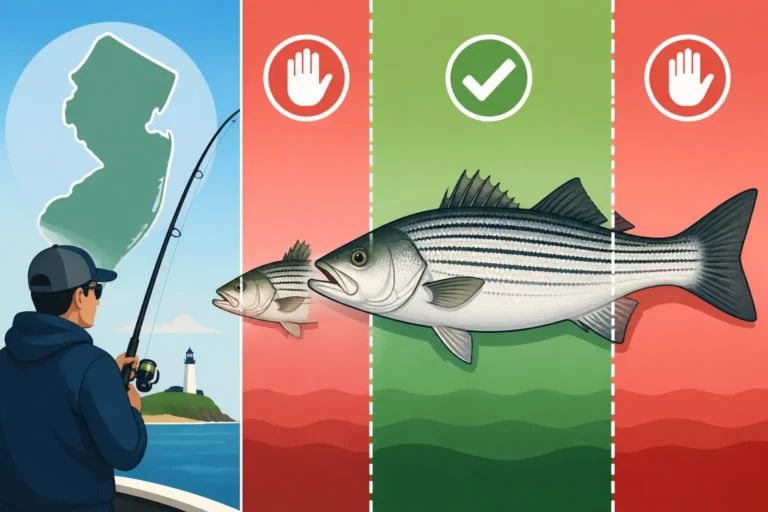
- Striped Bass: This iconic game fish is often subject to a "slot limit," meaning you can only keep fish within a specific size range, not just above a minimum. For 2026, we anticipate a similar slot limit around 28 to 31 inches. This allows smaller, younger fish to mature and larger, older breeding stock to continue contributing to the population. The rules around New Jersey Striped Bass Slot Limit Explained can be quite detailed, so it's always worth a thorough review.
- Fluke (Summer Flounder): A beloved table fish, fluke regulations often see adjustments. For 2026, expect a minimum size of approximately 18 inches for most of New Jersey, with a possible bag limit of three fish. However, it's crucial to note that the Delaware Bay Fluke Rules vs the Rest of New Jersey often present different requirements, so always confirm where you are fishing.
- Black Sea Bass: These tasty bottom dwellers are regulated with specific seasons and size limits. Historically, limits have hovered around 12.5 to 13 inches. New Jersey Black Sea Bass Season Dates are highly managed and can fluctuate, so keep an eye on those changes.
- Tautog (Blackfish): Known for their strong fight and delicious meat, tautog are typically caught around wrecks and rocky structures. Their size limits are usually around 15 to 16 inches, often with very specific seasons. For detailed information, check the New Jersey Tautog Season and Size Limit.
- Weakfish: While their populations have faced challenges, weakfish are still a prized catch. Their minimum size has consistently been 13 inches, with a strict bag limit of one fish per angler. The New Jersey Weakfish Bag Limit Explained highlights ongoing conservation efforts for this species.
- Bluefish: These aggressive fighters typically don't have a minimum size limit in New Jersey for recreational anglers, but they do have bag limits that can vary based on whether you're on a private boat or a for-hire vessel.
These figures are educated estimations based on current trends and management strategies. The actual 2026 regulations will be finalized closer to the fishing season, after review by state and federal fishery managers.
Understanding "Slot Limits" and How They Work
A "slot limit" isn't your typical minimum size rule; it's a specific window. Instead of just "fish must be X inches or longer," a slot limit says "fish must be between X and Y inches." This means that fish smaller than X inches and larger than Y inches must be released.
Why do fisheries managers use slot limits? It's a strategic conservation tool. The goal is often to protect both juvenile fish, allowing them to grow and mature to spawn, and the largest, most productive adult breeders. These large, older fish are often the most prolific spawners, contributing the most to the next generation. By releasing them, we ensure a robust breeding population. Striped bass are a prime example of a species managed with a slot limit in New Jersey, and understanding this concept is vital for compliance.
Practical Tips for Measuring Your Catch Accurately
So, you've reeled in a fish, and you think it might be a keeper. Now what? The difference between a legal fish and an undersized one can be fractions of an inch, and accurately measuring your catch is absolutely critical. A quick, rough estimate just won't cut it, and it could land you in hot water.
Essential Measuring Tools for Every Angler
Having the right tools on hand makes all the difference. You have a few options, each with its pros and cons:
- Measuring Tape: A simple, flexible measuring tape works well, especially if it's waterproof. You can often find durable, marine-grade tapes that float, which is a huge plus if you drop it overboard. Make sure the numbers are clearly legible.
- Bump Boards: These are arguably the most accurate and easiest tools for measuring fish quickly, especially on a boat or kayak. A bump board has a fixed end that the fish's snout "bumps" against, and a clear ruler along the length. This eliminates the guesswork of holding one end of a tape measure steady. Many anglers prefer these for species like fluke or striped bass, as they allow for a consistent measure every time. You can find a wide variety of bump boards, from basic plastic ones to heavy-duty aluminum models, easily available on platforms like Amazon.
- Decal Rulers: Some boats and coolers come with ruler decals already attached. While convenient, ensure they are accurate and haven't faded over time. These are generally less precise than a bump board but are better than nothing.
No matter which tool you choose, make sure it's kept easily accessible, clean, and in good condition. Having to fumble for a ruler or dealing with a faded, illegible one can stress out a fish that needs to be released quickly.
Proper Measuring Techniques to Avoid Mistakes
Once you have your measuring device, technique is key. Here's how to ensure you're getting an accurate, legal measurement:
- Lay the Fish Flat: Always lay the fish on a flat, stable surface. Trying to measure a fish while it's flopping around in your hands or held vertically is a recipe for error. A wet surface or cooler lid works great.
- Mouth Closed: Gently close the fish's mouth. Measure from the tip of the jaw or snout. Don't press too hard, but make sure the mouth isn't agape, which can add false length.
- Bump the Nose: If using a bump board, press the fish's nose firmly against the fixed end. If using a tape measure, align the "zero" mark with the tip of the fish's jaw.
- Pinch the Tail: This is often the most misunderstood part. For most species, you measure to the tip of the tail with the tail pinched. This means gently squeezing the tail lobes together to get the maximum overall length. Don't try to measure to the center fork of the tail unless the regulations specifically state "fork length."
- Read Clearly: Get a clear, direct eye-level reading of the measurement. Don't guess if it's just past the line; if it's questionable, it's usually best to release it.
Practice these techniques, even on fish you intend to release, so you're confident when a potential keeper comes aboard. Quick and accurate measurements reduce stress on the fish, increasing their survival chances if they need to be released.
How New Jersey's Marine Regulations Are Set and Updated
Have you ever wondered how these fishing regulations, including the intricate size charts, actually come into being? It's not just a bunch of folks in a room throwing darts at a board, hoping to hit a number. There's a comprehensive process involving science, public input, and multiple layers of government, both state and federal. This complex interplay helps determine not just size limits but also How New Jersey Sets Its Fishing Regulations Each Year, seasons, and bag limits.
The Role of State and Federal Agencies
New Jersey's marine fisheries are managed through a collaborative effort. The New Jersey Department of Environmental Protection (NJDEP), specifically its Division of Fish and Wildlife, is the primary state agency responsible for overseeing and enforcing recreational and commercial fishing regulations within state waters. They conduct local stock assessments, gather angler data, and propose regulations.
However, many of the highly migratory and commercially important fish species along the East Coast, like striped bass, fluke, and black sea bass, are also managed under federal guidelines. This involves agencies like the National Oceanic and Atmospheric Administration (NOAA) Fisheries and regional fishery management councils, such as the Mid-Atlantic Fishery Management Council (MAFMC) and the Atlantic States Marine Fisheries Commission (ASMFC). These federal bodies develop interstate management plans based on broad scientific assessments of fish populations, considering factors like stock health, spawning success, and angler harvest. New Jersey's state regulations often align with or are influenced by these federal mandates to ensure consistency across state lines and to prevent overfishing of shared stocks. This means that New Jersey can change bag limits mid-season if federal guidelines dictate it's necessary for conservation.
Staying Informed About Regulation Changes
Given the dynamic nature of fish populations and management efforts, regulations can and do change. Sometimes it's a slight tweak to a size limit, other times it's an entirely new season. Staying informed is crucial, and thankfully, New Jersey provides several excellent resources:
- New Jersey Fish and Wildlife Digest: This is your go-to guide. The annual digest, typically released in early spring, contains all the current regulations for both freshwater and marine fishing. You can usually pick up a physical copy at bait and tackle shops, Walmart locations, or download the latest version from the NJ Fish & Wildlife website. It's truly a must-read for any serious angler. Getting familiar with Reading the New Jersey Fish and Wildlife Digest will save you a lot of guesswork.
- NJ Fish & Wildlife Website: The most up-to-date information will always be on their official website. They post emergency regulation changes and updates as soon as they are approved. It's a good habit to check this site before each fishing season, or even before a specific trip if you haven't been out in a while.
- Local Bait and Tackle Shops: These are invaluable community hubs. The folks who run these shops are often deeply embedded in the local fishing scene and are usually the first to know about regulation changes, local conditions, and what's biting. Don't hesitate to ask them for the latest scoop.
Being proactive about checking the rules is part of being a responsible angler. It protects you from penalties and, more importantly, ensures that we're all doing our part to maintain healthy fish stocks in New Jersey's beautiful waters.
Frequently Asked Questions About Marine Fish Size Limits
It's completely normal to have questions about fish size limits. They can be confusing, especially with different rules for different species and areas. Let's tackle a couple of common ones that often trip up anglers.
What if I Catch an Undersized Fish?
If you reel in a fish that doesn't meet the minimum size requirement or falls outside a specific slot limit, the rule is simple and non-negotiable: you must release it immediately and with as little harm as possible. This isn't just a suggestion; it's a legal obligation. The whole point of size limits is to protect those fish so they can grow, mature, and reproduce.
Here are some best practices for releasing undersized fish:
- Handle with Care: Try to keep the fish in the water as much as possible. If you must bring it aboard for a quick measure, do so gently.
- Wet Hands: Always wet your hands before touching a fish. Dry hands can remove the protective slime coat, making the fish more susceptible to disease.
- Support the Body: Support the fish's body, especially larger ones, to avoid damaging internal organs or its spine. Don't hold it by the jaw or gills unless it's a small bass you're planning to immediately release.
- Quick Measure: Have your measuring device ready to go. Measure quickly and efficiently.
- Dehook Carefully: Use needle-nose pliers or a dehooking tool to remove the hook as gently and quickly as possible. If the fish is deeply hooked and removing the hook would cause more damage, it's often better to cut the line as close to the hook as possible.
- Revive if Necessary: If the fish seems stunned or sluggish, gently hold it upright in the water and move it back and forth to force water over its gills until it swims away under its own power. This is especially important for fish caught in deeper water that might be suffering from barotrauma (pressure changes). Knowing New Jersey Catch and Release Striped Bass Handling Rules can be particularly helpful for this popular species.
Does the Size Limit Apply to Catch and Release?
This is a really important distinction, and it can be a source of confusion. When regulations state a minimum size or a slot limit, it generally refers to the size of fish that you are legally allowed to possess. If you are specifically targeting a species with the intention of releasing all of your catch, you still need to be aware of the size limits for possession, but you won't be penalized for briefly catching and then immediately releasing an undersized or oversized fish (in the case of a slot limit).
However, you cannot catch an undersized fish, place it in your cooler, and then decide to release it later. The moment you take possession of it (i.e., put it in your cooler, livewell, or on a stringer), it must meet the legal size and bag limit requirements. The expectation is that if a fish doesn't meet the criteria, it goes straight back into the water. Even for species like New Jersey Summer Flounder vs Fluke: Same Fish, Different Name, the size limits are strictly enforced upon possession.
The idea is that while fishing, you might accidentally catch something out of season or undersized, and that's okay as long as you release it immediately. But if your intent is to keep fish, you must ensure every fish you retain adheres to the current size and bag limits from the moment it comes aboard.
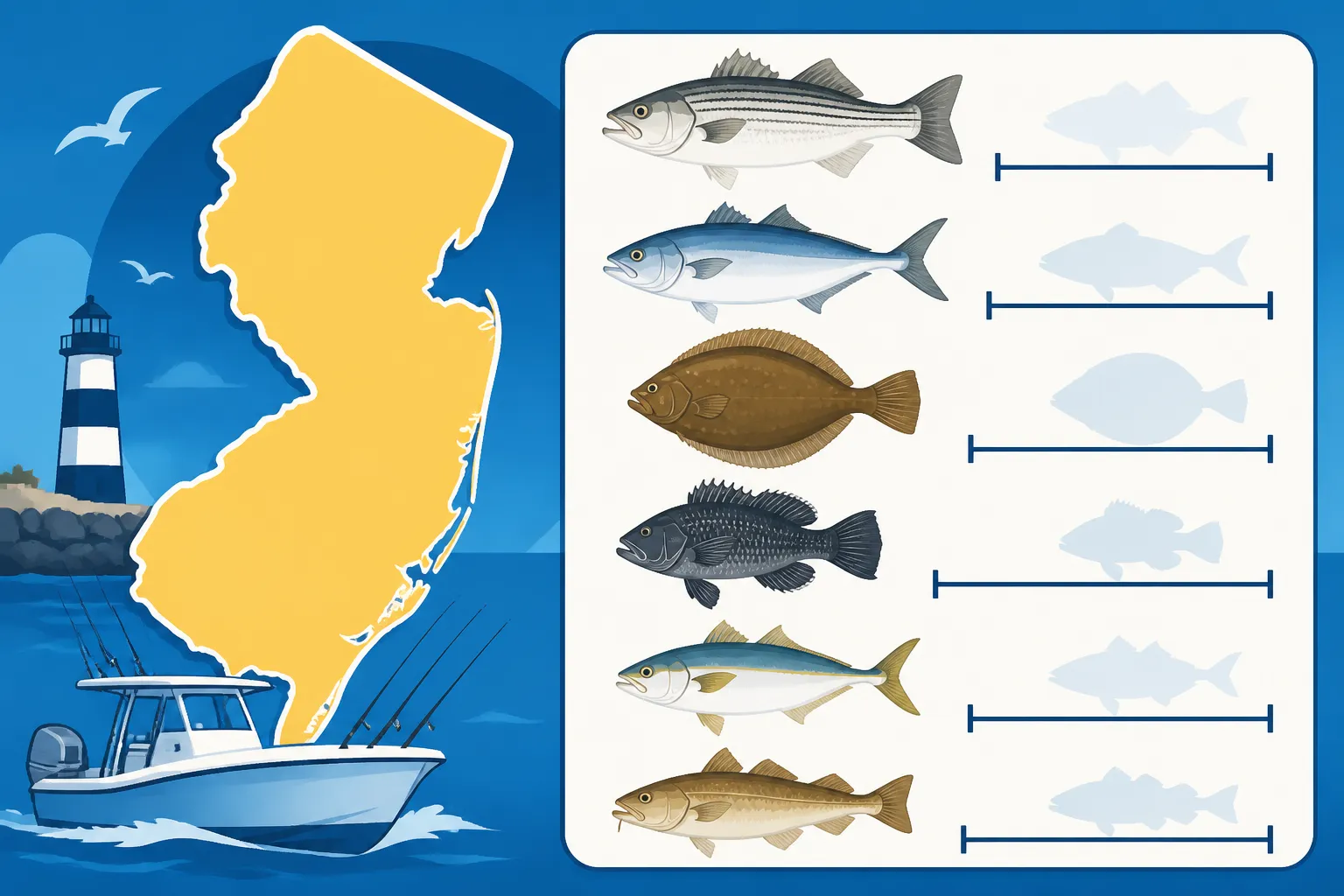
New Jersey Marine Fish Size Chart (Projected for 2026)
This table provides a snapshot of anticipated minimum size and bag limits for popular New Jersey marine species. Please remember these are projections based on current (2024/2025) regulations and are subject to change by 2026. Always consult the official New Jersey Fish & Wildlife Digest for the most current rules.
| Fish Species | Anticipated Minimum Size (2026) | Anticipated Bag Limit (2026) | Important Notes |
|---|---|---|---|
| Striped Bass | 28" to 31" Slot Limit | 1 fish per person | Measure to tip of tail, tail pinched. Larger/smaller fish must be released. |
| Fluke (Summer Flounder) | 18" (most of NJ) | 3 fish per person | Delaware Bay rules may differ (e.g., 17"). Always check regional specifics. |
| Black Sea Bass | 12.5" – 13" (seasonal) | Varies seasonally (e.g., 10-15 fish) | Check specific season dates and limits as they often change throughout the year. |
| Tautog (Blackfish) | 15" – 16" (seasonal) | Varies seasonally (e.g., 1-5 fish) | Heavily regulated with short, distinct seasons. |
| Weakfish | 13" | 1 fish per person | Strict limit due to declining populations. |
| Bluefish | No Minimum Size | 15 fish (private boat) / 3 fish (for-hire) | Bag limits are different for private recreational vs. charter/party boat anglers. |
| Scup (Porgies) | 10" | Varies seasonally (e.g., 30-50 fish) | Check for specific seasonal changes and potential increases in bag limits during certain times. |
| Kingfish | No Minimum Size | No Bag Limit | These small, delicious fish are often caught in the surf or bays. |
Knowing these general guidelines will give you a head start, but your final check should always be with the most recent official sources.
Disclaimer
The information provided in this guide is for general informational purposes only and is based on current (2024/2025) New Jersey fishing regulations and trends. Fishing regulations, including size and bag limits, are subject to change at any time by the New Jersey Department of Environmental Protection (NJDEP) Division of Fish and Wildlife and federal management councils. We strongly advise all anglers to consult the official New Jersey Fish and Wildlife Digest or the NJDEP Fish and Wildlife website for the most current and legally binding regulations before embarking on any fishing trip. Failure to comply with current regulations may result in penalties.