Fishing Split Rock Reservoir for Trout
Many New Jersey anglers dream of finding a peaceful, productive spot away from the crowds, especially when chasing the elusive and rewarding trout. It can be frustrating to put in the effort, only to find overfished streams or lakes where the action is sparse. But fear not, because tucked away in Morris County lies Split Rock Reservoir, a beautiful body of water that offers a truly fantastic trout fishing experience, often overlooked by those who stick to the more publicized spots. This guide will walk you through everything you need to know to successfully target trout in this gem of a reservoir.
Why Split Rock Reservoir is a Prime Trout Destination
Split Rock Reservoir isn't just another pretty lake; it's a meticulously managed and naturally suited environment that makes it a top-tier destination for trout enthusiasts in New Jersey. Many anglers flock to the more well-known rivers and streams, but reservoirs like Split Rock often provide a more stable habitat and less angling pressure, leading to some truly memorable catches.
Understanding Split Rock's Unique Trout Habitat
What makes Split Rock Reservoir so special for trout? It's all about the geology and the hydrology. This reservoir, covering approximately 650 acres, is known for its deep, cold waters, which are absolutely crucial for trout survival and growth. Unlike shallower lakes that can warm up quickly in the summer, Split Rock maintains cooler temperatures in its deeper sections, creating thermal refuges where trout can thrive even during the hottest months. The reservoir is also fed by several clean, cold tributaries, constantly replenishing its oxygen-rich waters.
The bottom structure is another key factor. Split Rock is characterized by its rocky shoreline, numerous submerged boulders, and varying depths, providing an abundance of hiding spots and ambush points for trout. These deep pockets and structural elements mimic the natural environments where trout feel most secure, making them less skittish and more likely to hold in certain areas. You'll find everything from shallow flats that warm up quickly in spring, attracting baitfish and hungry trout, to dramatic drop-offs that plunge into the depths, perfect for summer lunker hunting. Understanding these features is the first step to unlocking its secrets.
Stocking Programs and Trout Species Present
New Jersey's commitment to angling is evident in its robust stocking programs, and Split Rock Reservoir is a prime beneficiary. The New Jersey Division of Fish and Wildlife diligently stocks Split Rock with thousands of trout each year, primarily during the spring and fall seasons. This ensures a healthy and diverse population for anglers to pursue. When we talk about stocking, we're talking about a significant injection of catchable fish, which means your chances of success are greatly improved compared to relying solely on wild populations.
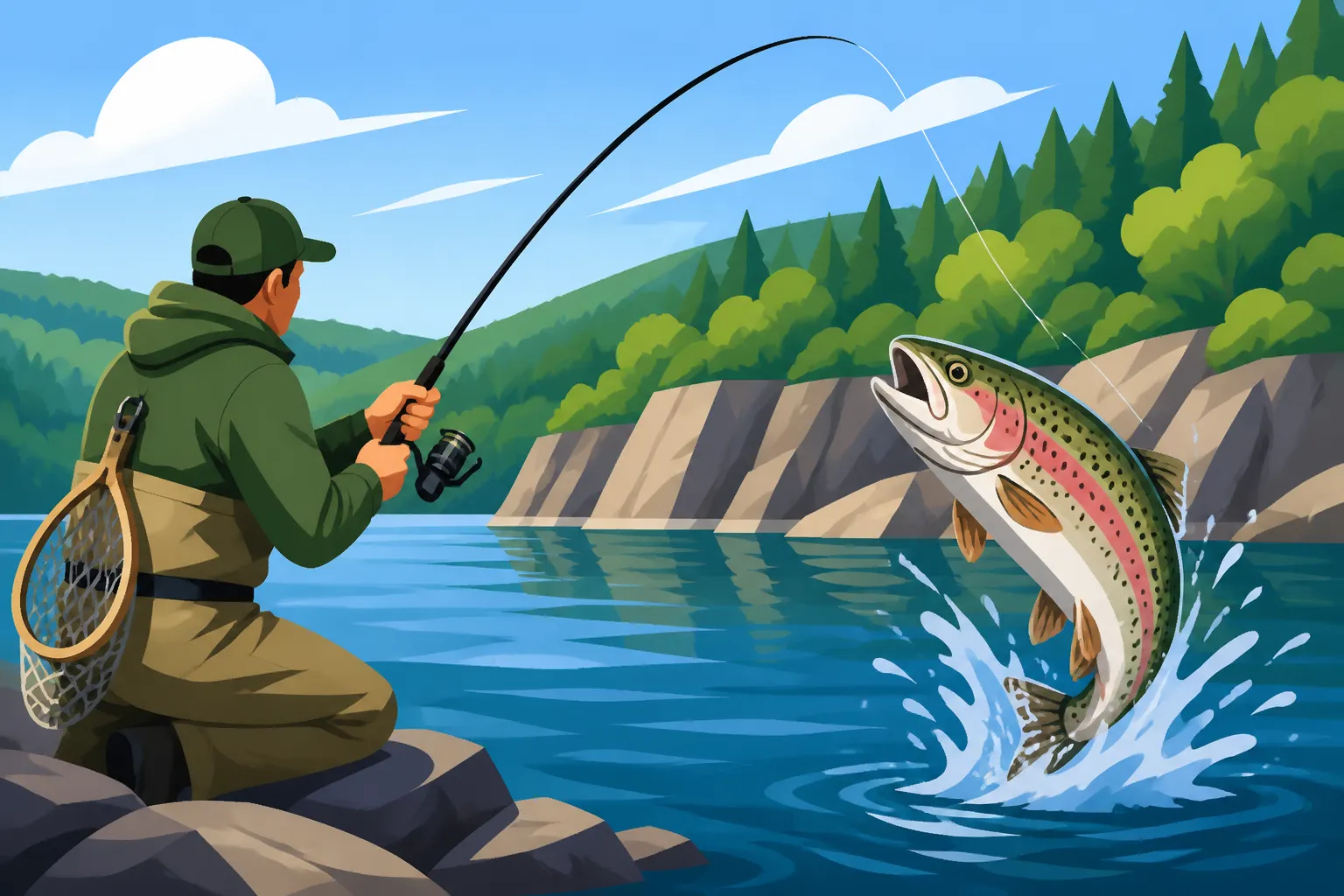
You can expect to encounter a variety of trout species here. Rainbow trout are a staple, known for their aggressive bites and spirited fights. They adapt well to reservoir environments and are often the first to hit an angler's offering after a fresh stocking. Brown trout are also present and are often the target of more seasoned anglers due to their cunning nature and larger potential size. These fish are known to be more wary and will often seek out deeper, more structured cover. While less common, some brook trout, particularly those descended from wild strains in the feeder streams, can also be found. For a deeper dive into the distinctions, check out our guide on New Jersey Rainbow Trout vs Brown Trout vs Brook Trout. The mix of stocked and naturally reproducing fish (especially in the feeder streams) creates a dynamic fishery that keeps things interesting all year round.
Essential Techniques for Catching Trout at Split Rock
Catching trout at Split Rock Reservoir requires a blend of traditional methods and an understanding of the reservoir's specific characteristics. It's not always about brute force; often, it's about finesse and knowing what the fish are looking for at any given moment. Many anglers, especially those new to reservoir fishing, struggle with adapting their techniques from smaller streams. Here, patience and observation are your best friends.
Best Baits and Lures for Split Rock Trout
When it comes to tempting Split Rock trout, you've got a wide array of choices. Starting with the most straightforward, traditional baits are always a solid bet, especially right after a fresh stocking. Live worms, like nightcrawlers or mealworms, fished on a small hook with a split shot or bobber, can be incredibly effective. PowerBait, particularly in vibrant colors like chartreuse, orange, or rainbow, molded into small balls around a treble hook, is another go-to for many anglers. Don't underestimate the power of a single kernel of corn on a small hook, either; it can be surprisingly effective for stocked trout who have been hatchery-fed. For more tips on basic trout baits, our article on Best Bait for Opening Day Trout offers some great insights.
For those who prefer artificials, Split Rock offers plenty of opportunities. Small inline spinners, such as Panther Martins or Mepps, in silver, gold, or black, are deadly when cast and retrieved near cover or along drop-offs. Spoons, like Kastmasters or Little Cleos, in similar metallic finishes, can imitate baitfish and attract larger, more aggressive trout. Ultralight crankbaits that dive to a few feet can also be very productive, especially around rocky points. Fly anglers will find success with various patterns depending on the season. In spring, nymphs like Hare's Ears or Prince Nymphs are excellent subsurface options, while small streamers like Woolly Buggers imitate baitfish. As hatches occur, dry flies such as Adams or Caddis patterns can draw explosive surface strikes. The key is to match the hatch or imitate the natural forage available.
Locating Trout in Different Seasons
Trout are constantly on the move, primarily driven by water temperature and food availability. Knowing where to find them at different times of the year is crucial for success at Split Rock. This adaptability is what frustrates many anglers who expect fish to be in the same spots year-round.
- Spring: After the ice melts and the first stockings occur, trout will often be found in shallower waters. The sun warms these areas first, activating baitfish and insects. Focus your efforts near stream inlets, shallow coves, and areas where the New Jersey Division of Fish and Wildlife typically releases fish. Look for areas with a depth of 5-15 feet, especially early in the season. These fish are often quite active and willing to chase lures.
- Summer: As temperatures rise, trout become more elusive. They retreat to the cooler, deeper sections of the reservoir where oxygen levels are higher and water temperatures are more favorable. This means targeting drop-offs, deep points, and submerged structures. Look for areas 20-40 feet deep or more. Trolling with downriggers or weighted lines can be very effective, as can vertical jigging with spoons or soft plastics. Focus on the thermocline, which is the layer of water where the temperature changes most rapidly. Trout will often hold just above, within, or just below this layer.
- Fall: As the water begins to cool again, trout become more active and start moving back into shallower feeding grounds. This is often an excellent time for aggressive strikes, particularly from brown trout preparing for spawning season. Target similar areas to spring, but also pay attention to rocky shorelines and points where baitfish might be congregating. Surface activity can pick up, making topwater lures and dry flies a blast to fish. For a comprehensive overview of how seasons affect fishing, check out our guide on New Jersey Trout Season Dates and Closures.
Recommended Gear and Tackle Setup
Having the right gear makes all the difference, not just for catching fish, but for enjoying your time on the water. For Split Rock Reservoir, versatility is key.
A good light to medium-light spinning rod, around 6 to 7 feet in length, is ideal. This length provides enough casting distance from shore or a small boat, while still offering the sensitivity needed to detect subtle bites. Pair it with a matching spinning reel in the 1000 to 2500 size range, spooled with 4-8 pound test monofilament or fluorocarbon line. Monofilament offers good knot strength and shock absorption, while fluorocarbon is virtually invisible underwater and has less stretch, providing more sensitivity. Many anglers prefer to use braided line (10-15 lb test) for its incredible sensitivity and casting distance, adding a 6-8 foot fluorocarbon leader with a knot like the FG knot or Albright knot.
For terminal tackle, you'll want a selection of small, sharp hooks (size 8-12 bait holder hooks for worms, or treble hooks for PowerBait), split shot weights, barrel swivels, and perhaps some small bobbers for still-fishing. If you're using lures, ensure you have a variety of weights and colors to adapt to changing conditions.
Finally, access to the water is important. While there are some shore fishing opportunities, a kayak, canoe, or small electric motor boat will significantly expand your reach and allow you to explore more of the reservoir's varied structure. Waders can also be invaluable for accessing shallower areas or navigating rocky shorelines, giving you a better angle to cast into productive zones.
Navigating Access and Regulations at Split Rock Reservoir
Fishing a new body of water can sometimes feel daunting due to unknown rules and access points. The last thing any angler wants is to get a ticket or trespass inadvertently. At Split Rock, knowing the specific access and regulations is straightforward and ensures a smooth, enjoyable outing.
Public Access Points and Boat Launch Information
Split Rock Reservoir is a public waterway, managed by the New Jersey Department of Environmental Protection (NJDEP) Division of Fish and Wildlife and is part of the Split Rock Reservoir Wildlife Management Area. This means there are designated areas for public access, which is fantastic news for anglers. The main public boat launch is located on the eastern side of the reservoir, easily accessible via Split Rock Road. This launch features ample parking and a concrete ramp, making it suitable for launching kayaks, canoes, and smaller boats.
It’s important to note that only electric motors are permitted on Split Rock Reservoir. This rule helps maintain the peaceful atmosphere and water quality, making it a truly serene fishing experience. For many, this restriction is a welcome one, as it cuts down on noise pollution and ensures that the reservoir remains a tranquil escape. Shore access is available around the boat launch area and along some of the hiking trails that border the reservoir. However, much of the shoreline is rugged and heavily wooded, so bringing a small watercraft is highly recommended to explore the best fishing spots. Always be mindful of private property signs if you venture away from designated public access areas.
Key New Jersey Regulations for Trout Fishing
Like all New Jersey waterways, Split Rock Reservoir is subject to state fishing regulations designed to protect fish populations and ensure fair angling. Before you even think about casting a line, you absolutely need to have a valid New Jersey fishing license and, if you're targeting trout, a New Jersey Trout Stamp. These are non-negotiable legal requirements. Trying to fish without them can lead to hefty fines, ruining an otherwise perfect day. You can learn more about where and how to get your license in our comprehensive New Jersey Fishing License Guide for 2026 and detailed requirements for the stamp in New Jersey Trout Stamp Requirements Explained.
| Regulation Type | Requirement for Split Rock Reservoir Trout Fishing | Details |
|---|---|---|
| Fishing License | Required for anglers 16-69 | All residents and non-residents aged 16 through 69 must possess a valid New Jersey freshwater fishing license. Anglers 70 and older are exempt. |
| Trout Stamp | Required if fishing for trout | In addition to the fishing license, a trout stamp is mandatory for anyone fishing for or possessing trout. This applies regardless of age, unless you are exempt from the general fishing license (e.g., age 70+). |
| Bag & Size Limits | Refer to current NJ Fish & Wildlife Digest | Specific daily bag limits and minimum size requirements for trout apply and can change annually. Always consult the most recent New Jersey Fish and Wildlife Digest for up-to-date information. |
| Gear Restrictions | Consult Digest | General rules apply for the number of rods, legal bait, and tackle. For Split Rock, as a freshwater reservoir, live bait, artificial lures, and flies are generally permitted, but check for any specific local restrictions. No live baitfish can be used as bait. |
| Electric Motors Only | Mandated | Only electric motors are allowed for boats on Split Rock Reservoir. Gas motors are prohibited. |
Beyond licensing, pay close attention to the daily bag and size limits for trout, which are published annually in the New Jersey Freshwater Fishing Regulations Every Angler Should Know. These regulations are designed to sustain healthy fish populations and ensure equitable angling opportunities for everyone. It's also a good practice to be familiar with catch and release techniques, especially if you encounter larger, wilder trout that contribute significantly to the reservoir's natural spawning population. Proper handling minimizes stress on the fish and increases their chances of survival after release.
Planning Your Trip: When to Go and What to Bring
A well-planned trip to Split Rock Reservoir can significantly enhance your fishing experience. Knowing the best times to go and what to pack can make all the difference, particularly when fishing a body of water with varied conditions.
The absolute best times to target trout at Split Rock are typically during the spring and fall stocking periods, or a few weeks thereafter. The fish are often more active and concentrated in predictable areas. Early mornings and late evenings are generally the most productive times of day, regardless of the season, as trout tend to feed more aggressively during lower light conditions. However, on overcast days, fish can remain active throughout the day. Keep an eye on the New Jersey Fish and Wildlife stocking schedules; you can often find details on their website or by consulting resources like How to Find New Jersey's Best Fishing Spots Using the State Stocking Map.
For your packing list, aside from your fishing gear, essential items include plenty of water and snacks, especially if you plan on spending several hours on the water. Sunscreen, a hat, and polarized sunglasses are crucial for eye protection and to help you spot fish or underwater structure. Insect repellent is a must, particularly during warmer months and around dusk. A small first-aid kit is always a good idea, as is a multi-tool. If you're going out on the water in a kayak or canoe, always wear a life vest. Safety should be your top priority.
If you're feeling overwhelmed or want to maximize your chances, consider hiring a local guide. A seasoned guide will know the best spots, current patterns, and effective techniques. Services like FishingBooker can help you find experienced, local guides who specialize in trout fishing on reservoirs like Split Rock, offering invaluable insights and boosting your success rate. This can be especially beneficial for anglers new to the area or those looking to refine their techniques.
Beyond Trout: Other Species and Conservation
While trout are certainly the star attraction at Split Rock Reservoir, the waterway holds other fish species that can offer exciting fishing opportunities. Moreover, understanding and practicing conservation is paramount to preserving this beautiful fishery for future generations.
Other Fish Species You Might Encounter
Split Rock Reservoir is a rich ecosystem that supports more than just trout. If the trout aren't biting, or you simply want to broaden your angling horizons, you might be surprised by what else you can hook. The reservoir is home to a healthy population of largemouth bass and smallmouth bass. These powerful fish love the rocky structure and submerged timber that trout also inhabit. Targeting them with crankbaits, jigs, or soft plastics can lead to some exhilarating battles. Pickerel are also prevalent, known for their aggressive strikes and sharp teeth, often found lurking in weed beds or around submerged brush. Panfish, such as bluegill and crappie, provide excellent action, especially for younger anglers or those looking for a relaxing day of catching. These smaller fish are often found closer to shore or around shallower cover. So, while you might be solely focused on "how to fish for trout in New Jersey" (which is a great topic you can explore in more depth), don Rock offers a diverse fishery.
Responsible Angling and Conservation Efforts
Our beautiful New Jersey waterways, including Split Rock Reservoir, depend on the responsible actions of every angler. This isn't just about following the rules; it's about being a good steward of the environment. The "Leave No Trace" principles are incredibly important here: pack out everything you pack in, and if you see litter, pick it up. This keeps the reservoir pristine for everyone.
Proper handling of fish, especially those you plan to release, is also critical. Minimize the time fish are out of the water, use wet hands when handling, and if possible, use barbless hooks to make unhooking easier. This is especially true for any wild trout you might encounter. Reporting any poaching or environmental violations to the New Jersey Division of Fish and Wildlife's conservation officers is vital; these dedicated individuals work tirelessly to protect our natural resources. You can also support conservation efforts by purchasing your fishing licenses and trout stamps, as the revenue generated directly funds stocking programs, habitat restoration, and enforcement. By understanding that we are all part of the conservation solution, we can ensure that Split Rock Reservoir remains a prime trout fishing destination for years to come.
Disclaimer
The information provided in this guide is for general informational purposes only and does not constitute legal or professional advice. Fishing regulations, season dates, and license requirements are subject to change. Always consult the most current New Jersey Department of Environmental Protection (NJDEP) Division of Fish and Wildlife regulations and official sources before planning your fishing trip. The author and publisher are not responsible for any inaccuracies, omissions, or for any loss or damage arising from the use of this information.