New Jersey Rainbow Trout vs Brown Trout vs Brook Trout
For anglers who love the rush of a bending rod and the cool, clear waters of New Jersey's rivers and lakes, few fish offer the same thrill as trout. But when you're out there, reeling in a beautiful specimen, can you really tell the difference between a rainbow, a brown, or a brook trout? It's a common question, and understanding these distinctions isn't just about showing off; it's crucial for understanding their behavior, habitat, and ultimately, how to catch more fish while respecting the state's diverse trout populations. This guide will walk you through the unique characteristics of each, helping you become a more knowledgeable and successful New Jersey trout angler.
Understanding New Jersey's Trout Fishery
New Jersey might be a small state, but it boasts a surprisingly vibrant and diverse trout fishery. From the cold, pristine streams of the Highlands to the heavily stocked rivers in more populated areas, trout fishing is a cherished tradition for many, myself included. However, what many anglers don't realize is that not all trout are created equal, nor do they all thrive in the same conditions. The mix of stocked fish and native populations means that every cast could bring a different experience.
The Role of Stocking Programs
Let's be real, without the tireless efforts of the New Jersey Division of Fish and Wildlife (NJDFW), our trout fishing opportunities would look very different. The state's stocking program is a monumental undertaking, annually releasing hundreds of thousands of trout into over 180 rivers, streams, and lakes. These stockings are primarily made up of rainbow trout, with a significant number of brown trout and, to a lesser extent, brook trout also included. This program aims to provide ample fishing opportunities for a wide range of anglers, especially in waters that might not naturally support robust trout populations year-round. It means that even if you live near a relatively urban area, you often have access to excellent trout fishing, particularly during the spring and fall stocking seasons. You can find detailed information on these programs, including specific dates, in guides like New Jersey Spring Trout Stocking Start Date and New Jersey Fall Trout Stocking Dates.
The sheer volume and strategic placement of these stocked fish ensure that everyone, from seasoned fly-fisherman to kids casting their first line, has a chance to hook up. These fish are bred in hatcheries, primarily the Pequest Trout Hatchery, and are typically a catchable size when released. They're often less wary than their wild counterparts, having spent their lives in a protected environment, which makes them a fantastic target for beginners or those just looking for consistent action.
Wild vs. Stocked Trout
This is where things get really interesting, and where understanding the species truly matters. While stocked trout provide a backbone for many fishing spots, New Jersey also has precious wild trout populations, primarily native brook trout, but also some naturally reproducing brown trout and even a few wild rainbows in certain areas. Wild trout are generally smaller, incredibly elusive, and possess a beauty and resilience that stocked fish simply can't match. They've navigated harsh winters, evaded predators, and outsmarted countless anglers – a true testament to their survival instincts.
Distinguishing between a wild and stocked fish isn't always easy, especially for a novice. Stocked trout often have slightly clipped fins from their hatchery life, or fins that are worn down from rubbing against concrete raceways. They might also appear paler in color compared to the vibrant hues of wild fish. Wild trout, on the other hand, boast perfectly formed fins, brilliant coloration that reflects their natural diet, and an undeniable wildness in their eyes. Catching a wild brook trout in a remote mountain stream is a profoundly different experience than pulling a hatchery rainbow from a popular river, and it often requires a completely different approach, as outlined in articles like New Jersey Trout Fishing Techniques. Knowing the difference is also critical for conservation, as wild populations are much more sensitive to pressure and habitat degradation.
Rainbow Trout: The Acrobatic Introducer
Ah, the rainbow trout! For many New Jersey anglers, especially those just starting out, the rainbow is likely the first trout they ever encountered. These spirited fish are the workhorses of the state's stocking program, celebrated for their aggressive takes and impressive aerial acrobatics when hooked. They're not native to New Jersey but were introduced from the Pacific Northwest, and they've certainly made themselves at home in our waters, albeit primarily through continuous stocking.
Identifying Features and Appearance
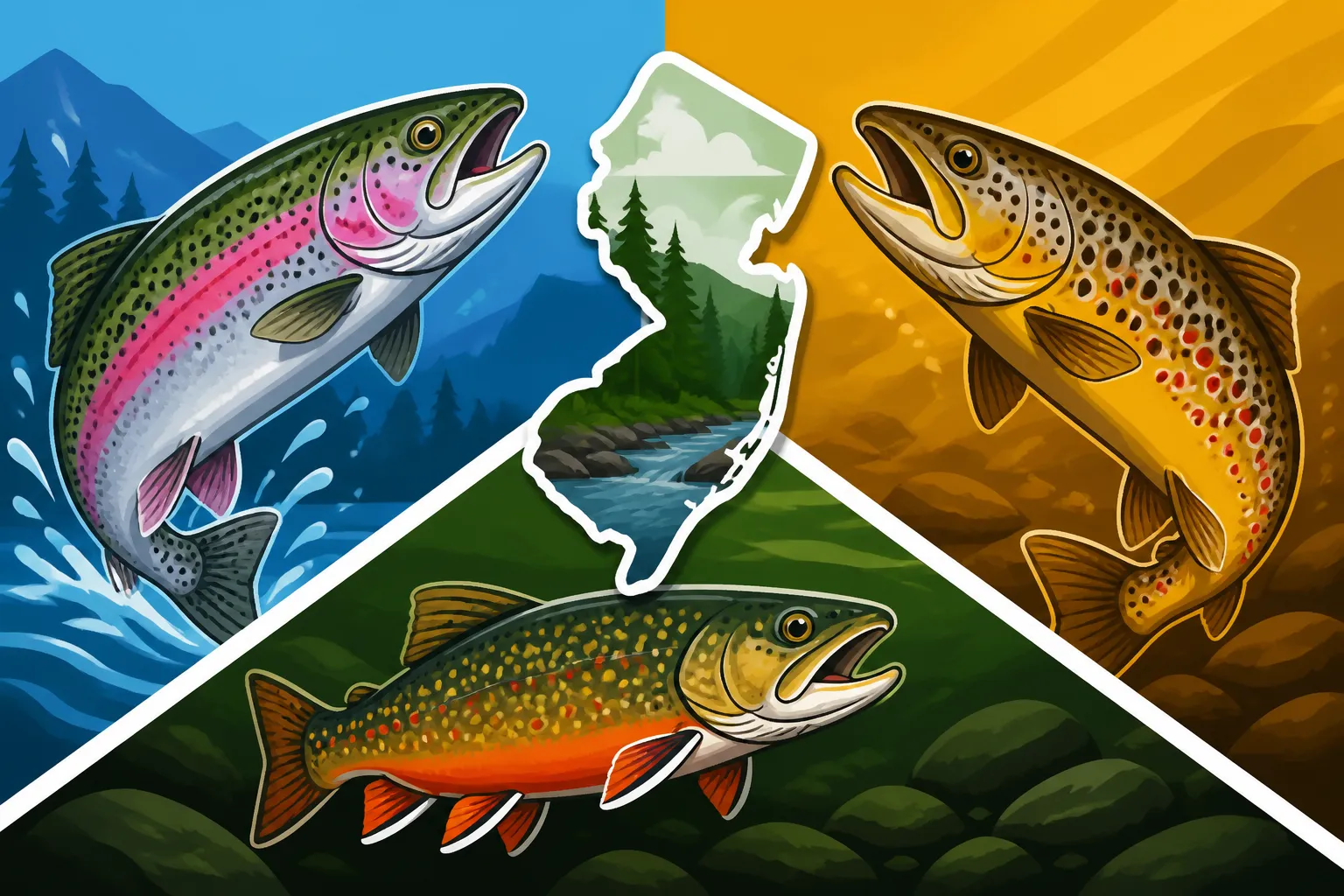
The most striking feature of a rainbow trout is, as its name suggests, the prominent pink or reddish band that runs horizontally along its flank, from its gill plate all the way to its tail. This band can vary in intensity, sometimes appearing as a faint blush and other times as a vivid, iridescent stripe. Their body is generally silvery, transitioning to an olive-green or bluish-green along the back, and a white belly. Look closely, and you'll see a scattering of small, dark spots across their back, sides, and on their dorsal, adipose, and caudal (tail) fins. The tail fin itself is typically broad and slightly forked.
When you compare them to the other species, that rainbow stripe is really the key. Their overall shape is sleek and streamlined, built for speed and fighting hard once they're on the line. I've seen some stocked rainbows that are almost uniformly silver, especially in larger, deeper lakes where they put on a lot of growth, but that tell-tale stripe is usually still there, even if faded.
Preferred Habitats and Diet
Rainbow trout are incredibly adaptable, which is one reason they're so successful in stocking programs. They prefer cool, well-oxygenated water, typically found in rivers, streams, and larger lakes and reservoirs. They can tolerate slightly warmer water temperatures than brook trout, making them suitable for a broader range of New Jersey's waterways, particularly in the later spring or early fall when temperatures might fluctuate. In rivers, they'll often hold in runs, riffles, and pools where the current brings food to them. In lakes, they'll cruise shorelines, drop-offs, and around submerged structures.
Their diet is quite varied, making them eager biters on a wide array of offerings. In the wild, they feast on insects (aquatic and terrestrial), small crustaceans, minnows, and fish eggs. Hatchery-raised rainbows, having grown up on pellets, are often opportunistic and will strike at almost anything resembling food. This is why you'll often hear about them hitting everything from PowerBait and corn to worms and even brightly colored artificial lures. If you're looking for gear to carry a variety of baits, Amazon has a great selection of tackle boxes. Understanding What Do Stocked Trout Eat? can give you even more insights into their feeding habits.
Fishing Techniques for Rainbows
Rainbow trout are generally considered the easiest of the three species to catch, especially when they're fresh from the hatchery. They're not particularly picky and are known for their aggressive strikes. For bait fishermen, staple offerings like powerbait, corn, worms, and salmon eggs are incredibly effective, especially on opening day or right after a stocking. They'll often school up in popular stocking points, making them relatively easy targets.
Lure anglers find success with small spinners, spoons, and soft plastics. Presentation is key; a steady retrieve that imitates a fleeing baitfish or insect often triggers a strike. Fly fishermen target rainbows with a variety of patterns, from nymphs and wet flies imitating subsurface insects to dry flies when hatches are on, and even streamers mimicking baitfish. Their strong fighting spirit, characterized by powerful runs and acrobatic jumps, makes them a favorite among all types of anglers. If you're interested in refining your approach, New Jersey Trout Fishing Techniques offers some excellent guidance.
Brown Trout: The Wary Survivor
If rainbow trout are the eager newcomers, brown trout are the seasoned veterans – cunning, tenacious, and often challenging to catch. Native to Europe and Western Asia, brown trout were introduced to North America in the late 19th century and have established strong populations, including some naturally reproducing ones, in many of New Jersey's colder, cleaner rivers and streams. They are prized for their intelligence and strength, often growing to impressive sizes.
Identifying Features and Appearance
Brown trout have a distinctive, almost classic trout look, but with subtle differences that set them apart. Their coloration is highly variable, ranging from golden brown to olive green on their backs, fading to yellowish-brown or even silver on their sides, and typically a cream or white belly. What truly distinguishes them are the dark spots, often with pale halos around them, scattered across their upper body and dorsal fin. They also have prominent reddish-orange spots, sometimes ringed with a lighter color, along their sides. These red spots are a key differentiator from rainbows.
Their body shape is generally more robust and thick-bodied than a rainbow, especially in larger specimens. The head is often proportionally larger, and the mouth extends past the eye, hinting at their predatory nature. Their tail fin is usually square or slightly emarginate (slightly indented), unlike the rainbow's more forked tail. It's not uncommon to see a brown trout with a distinct yellow-orange adipose fin, another useful identifier.
Preferred Habitats and Diet
Brown trout are notorious for being a bit more discerning about their living conditions than rainbows. They thrive in cold, clear, well-oxygenated water, often preferring streams and rivers with plenty of cover in the form of undercut banks, submerged logs, boulders, and deep pools. They are more tolerant of slightly warmer water than brook trout, but still seek out thermal refuges when water temperatures rise. They are also quite comfortable in larger, deeper lakes and reservoirs where they can grow to truly trophy sizes.
Their diet reflects their predatory nature. While they will certainly consume aquatic insects, particularly nymphs and larger dry flies, as they grow, brown trout develop a strong preference for larger prey. This includes baitfish like minnows, sculpins, and darters, as well as crayfish, frogs, and even small rodents that might fall into the water. This willingness to strike at larger meals contributes to their impressive growth potential. Knowing their dietary habits is key to selecting the right lure or fly; you might find some useful tools on Amazon for tying your own streamer patterns or selecting appropriate minnow imitations.
Fishing Techniques for Browns
Fishing for brown trout requires patience, stealth, and often a more refined approach than fishing for rainbows. They are much warier and easily spooked. Fly fishermen often target them with streamers that mimic baitfish, particularly during low light conditions or after dark when large browns are most active. Nymphing can also be very effective, especially with larger, heavier patterns that get down into their holding lies.
For spin fishermen, small crankbaits, jerkbaits, and larger spinners that imitate baitfish are excellent choices. Live bait, like shiners or worms, presented naturally, can also be deadly. The key is to fish quietly and precisely, minimizing disturbance, and focusing on areas with good cover. Brown trout are incredibly strong fighters, known for their powerful, head-shaking runs and their tendency to dive for cover, making landing a big one a true accomplishment. Anglers often find the fall to be an excellent time to target larger brown trout, coinciding with their spawning season and aggressive behavior. Guides like New Jersey Trout Season: Spring vs Fall can help you plan your trips.
Brook Trout: New Jersey's Native Gem
Last, but certainly not least, we have the brook trout. This isn't just a trout; it's New Jersey's state fish and the only trout species truly native to our waters. Brook trout are a species of char, not a true trout, but they are universally referred to as trout by anglers. They are synonymous with pristine, untouched mountain streams, icy cold water, and wild, remote settings. Catching a brook trout is often less about its size and more about the incredible beauty of the fish and the unspoiled environment in which it lives.
Identifying Features and Appearance
The brook trout is arguably the most stunning of the three species. Their backs are typically a dark olive or black, fading to lighter green or brown on their sides, with a creamy white belly. What truly sets them apart are the intricate, worm-like markings on their back and dorsal fin, known as "vermiculations." They also have small, vivid red spots with blue halos (called "halos" or "areolae") scattered along their sides, a key identifier. No other New Jersey trout has these blue halos.
During spawning season, their colors intensify dramatically, with males developing fiery orange or red bellies and brilliant white leading edges on their pectoral, pelvic, and anal fins, often bordered by a thin black stripe. Their tail fin is typically square or slightly forked. Brook trout generally have a more stout, compact body shape than rainbows or browns, reflecting their life in smaller, often tighter stream environments.
Preferred Habitats and Diet
Brook trout are the most demanding of the three when it comes to habitat. They absolutely require very cold, crystal-clear, highly oxygenated water, which is why you primarily find them in the headwaters of mountain streams and spring-fed creeks in northern New Jersey. These streams often have dense overhead canopy, gravel bottoms, and plenty of natural cover from fallen logs and boulders. They are incredibly sensitive to pollution and habitat degradation, making their presence a strong indicator of excellent water quality.
Their diet is primarily insectivorous, focusing on aquatic insects like caddisflies, mayflies, and stoneflies in all their life stages (larvae, nymphs, pupae, and adults). They will also eat terrestrial insects that fall into the water, such as ants, beetles, and grasshoppers, along with tiny minnows and sometimes even small salamanders. Their feeding habits are quite opportunistic within their preferred environment. Finding remote streams that still hold healthy populations of brook trout is a treasure, and protecting these delicate ecosystems is paramount for their survival. Information on their natural reproduction can be found in Do Trout Reproduce Naturally in New Jersey Streams?.
Fishing Techniques for Brookies
Fishing for wild brook trout is an exercise in reverence and delicate presentation. These fish are often small, rarely exceeding 10-12 inches in New Jersey, but they are feisty and incredibly beautiful. Stealth is crucial; approach their habitats carefully, keeping a low profile, as they are easily spooked. Many brook trout streams are narrow and overgrown, requiring precise casting and careful wading.
Light tackle is the order of the day. Fly fishing with small, delicate dry flies that match the current hatch, or tiny nymphs, is incredibly effective. A common method is "dapping," where the fly is gently lowered to the water's surface without a traditional cast, often through dense foliage. For spin fishermen, ultra-light spinning gear with tiny spinners (size 0 or 1), micro-jigs, or a simple worm under a small float works wonders. The key is to make quiet presentations and focus on small pools, eddies, and areas with structure. When you catch a wild brook trout, handle it with extreme care and practice catch and release, especially for larger specimens, to help preserve these precious native populations.
Key Differences for Anglers: Identification, Habits, and Fishing
Putting it all together, understanding these distinctions isn't just academic; it directly influences your success on the water. Knowing what you're targeting allows you to select the right gear, approach, and even understand the regulations better, such as those discussed in How Bag and Size Limits Work in New Jersey.
Visual Cues and Distinctions
Let's make it easy with a quick rundown of the main visual differences:
- Rainbow Trout: Look for the iridescent pink/red stripe down the side, silver body, and small dark spots on the body and most fins. Tail is typically moderately forked.
- Brown Trout: Check for varying shades of brown/gold, prominent dark spots with pale halos, and distinct reddish-orange spots (sometimes with light halos). Often a larger head, and the tail is usually square or slightly emarginate.
- Brook Trout: Search for the beautiful vermiculations (worm-like markings) on the back, small red spots with blue halos, and often bright white leading edges on their lower fins. A more robust, compact body with a square or slightly forked tail.
These visual cues, especially when you have all three side-by-side (which is rare but educational!), make identification much simpler. The presence of blue halos on spots is unique to brook trout. The strong red stripe is unique to rainbows. The mix of dark and red-orange spots with halos points to a brown.
Behavioral Patterns and Preferred Conditions
Beyond their looks, these trout act very differently, largely due to their preferred environments:
- Rainbow Trout: Generally active, aggressive feeders. They're found in a wide variety of water types, from small streams to large lakes, especially after stocking. Less wary, often hold in open runs and pools.
- Brown Trout: More nocturnal and reclusive, especially larger individuals. Highly wary and intelligent, they seek out deep cover and structure. They are primarily found in colder rivers and larger, deeper lakes where they can grow big.
- Brook Trout: Require the coldest, cleanest, most oxygenated water. Found in small, remote headwater streams. They are opportunistic feeders but easily spooked due to their sensitive environment. Their size is often limited by their habitat.
Think about where you're fishing. A wide, stocked river will likely hold rainbows and browns. A tiny, shaded mountain brook is prime brook trout territory. A large, cold reservoir might have big browns and some holdover rainbows.
Tailoring Your Approach for Each Species
Your fishing strategy should adapt to the species you're targeting.
- For Rainbows: You can often be more direct. Use popular baits like PowerBait, corn, or worms. Spinners and spoons are great. Focus on stocked areas and visible feeding lanes. Don't be afraid to try different colors and retrieves, and bring a selection of baits, which you can easily stock up on from Amazon.
- For Browns: Think stealth and subtlety. Fish during low light, early morning, late evening, or even after dark. Use larger baitfish imitations, streamers, or natural baits presented subtly. Target deep pools, undercut banks, and heavy cover. Patience is a virtue here.
- For Brook Trout: Ultra-light gear is essential. Small flies or tiny lures are key. Approach quietly, cast delicately, and focus on small pockets of water in remote streams. Practice catch and release to protect these fragile wild populations.
| Feature | Rainbow Trout | Brown Trout | Brook Trout |
|---|---|---|---|
| Appearance | Pink/red stripe, small dark spots | Brown/gold, dark spots w/ halos, red/orange spots | Vermiculations, red spots w/ blue halos, white fin edges |
| Back Color | Olive-green to bluish-green, silvery | Golden brown to olive green | Dark olive to black, fading to green/brown |
| Belly Color | White | Cream to white, sometimes yellow | Creamy white, often orange/red during spawn |
| Tail Fin | Moderately forked | Square to slightly emarginate | Square to slightly forked |
| Spots | Small, dark spots on body and fins | Dark spots with pale halos, red/orange spots | Red spots with distinct blue halos |
| Habitat | Wide range: rivers, streams, lakes, reservoirs | Cold rivers, deep pools, large lakes | Cold, clear, oxygenated headwater streams |
| Temperament | Aggressive, acrobatic | Wary, cunning, strong fighter | Feisty, easily spooked |
| Primary Diet | Insects, minnows, crustaceans | Baitfish, crayfish, insects, frogs | Aquatic insects, terrestrial insects |
| Typical Size (NJ) | Stocked 10-18", holdovers larger | Stocked 12-20", wild smaller, trophies larger | Wild 6-10", rarely over 12" |
| Fishing Tip | Use diverse baits/lures, target stocked areas | Fish low light, stealthy, target cover | Ultra-light gear, delicate presentation, remote streams |
Conservation and Management of New Jersey Trout
Our ability to enjoy trout fishing in New Jersey for years to come hinges on responsible angling and effective conservation efforts. The state puts a lot of resources into managing these fisheries, but anglers also play a crucial role. This isn't just about adhering to rules; it's about being good stewards of our natural resources. For instance, understanding New Jersey Trout Stamp Requirements Explained isn't just a formality, it's about supporting these programs financially.
Protecting Wild Trout Populations
While stocked trout provide abundant opportunities, wild trout populations, particularly our native brook trout, are irreplaceable. These fish are indicator species; their health reflects the health of their ecosystem. Protecting them means protecting their habitat from pollution, erosion, and warming water temperatures. This often means advocating for clean water, supporting land conservation efforts, and practicing ethical angling techniques.
When fishing for wild brook trout, especially in small, remote streams, it's vital to handle them minimally and release them quickly to ensure their survival. Use barbless hooks, keep the fish in the water as much as possible, and avoid touching their delicate slime coat. Every successfully released wild trout is a victory for the species and the stream. Many of these remote areas are protected under programs that you can read about in New Jersey Trout Conservation Stamp Explained, highlighting the collective effort to keep these waters pristine.
The Importance of Responsible Angling
Responsible angling goes beyond just following the law; it's about respecting the fish, the environment, and your fellow anglers. This includes knowing your regulations, such as New Jersey Freshwater Fishing Regulations Every Angler Should Know, understanding daily limits, and specific season dates. It also means using appropriate tackle to minimize harm to fish, especially if you plan to release them.
For example, during periods of high water temperatures in summer, trout become stressed. Fishing for them during these times, even if legal, can lead to high mortality rates for released fish. Making informed decisions, like choosing to fish for a more warm-water tolerant species or waiting for cooler conditions, is part of being a responsible angler. Participating in surveys or reporting violations to the New Jersey Division of Fish and Wildlife also contributes to better management and protection of these valuable resources.
New Jersey's Trout Stocking Schedule
The NJDFW's stocking program is a well-oiled machine, carefully planned to maximize angler success throughout the year. The biggest push is, of course, during the spring, leading up to and following the general trout season opening day. But don't forget the fall stockings, which provide a fantastic opportunity to catch bigger, feistier trout as the water cools down. These fall fish often hold over through winter, offering a unique challenge for ice anglers in places like New Jersey Trout Stocked Lakes Stay Open During New Jersey's Preseason Closure.
The stocking schedule is publicly available and highly anticipated by anglers. It's a great tool for planning your trips, especially if you're looking for consistent action. While heavily stocked areas might see more pressure, they also offer predictable opportunities. Remember that the New Jersey Trout Season Preseason Closure Explained ensures that newly stocked fish have a little time to acclimate before the crowds descend, giving everyone a better chance once the season officially opens. Always consult the most current New Jersey Fish and Wildlife Digest for the precise dates and any in-season regulation changes, which are always important to keep up with.
Disclaimer
This article is for general informational purposes only and does not constitute professional advice. Laws, prices and regulations vary by location and change over time. Consult a qualified professional for guidance on your specific situation.