Best Way to Cut Bunker for Chum
There’s nothing quite like the frustration of trying to attract fish, only to find your bait isn't quite doing the job, or worse, you're struggling to prepare it effectively. For many New Jersey anglers, bunker is the go-to secret weapon for chumming, but knowing how to cut it properly can make all the difference between a slow day and a hot bite. This guide will walk you through the most effective ways to cut bunker for chum, ensuring you maximize its fish-attracting power and make your time on the water more productive.
Why Bunker is the Ultimate Chum Bait for New Jersey Anglers
If you've spent any time fishing the rich waters of New Jersey, you've heard the gospel of bunker, or menhaden as they're officially known. These oily, schooling baitfish are absolutely central to the coastal ecosystem and are a prime food source for nearly every major predatory species we target, from striped bass to bluefish, and even some of our beloved fluke. Their abundance and innate appeal make them an unrivaled choice for creating an irresistible scent trail that draws fish right to your boat or position on the shore.
The Allure of Bunker Oil and Scent
What truly sets bunker apart as a phenomenal chumming bait is its incredibly high oil content. When a bunker is cut, its rich, pungent oils and distinct scent are released into the water, creating a powerful, long-lasting aroma that travels far. This isn't just a subtle hint; it's a bold invitation that fish can detect from a significant distance, triggering their feeding instincts. It's like ringing the dinner bell underwater, and trust me, New Jersey's gamefish are always hungry for bunker. This oily cloud doesn't just dissipate quickly; it hangs in the water column, broadcasting your presence and making your fishing spot an irresistible target for passing predators.
Fresh vs. Frozen Bunker for Chumming
When it comes to sourcing your bunker for chum, you'll often encounter both fresh and frozen options. Fresh bunker, if you can get your hands on it, is arguably the best. Its flesh is firmer, its oils are at their peak, and it releases that potent scent most effectively. However, fresh bunker can be harder to come by unless you catch it yourself with a cast net or buy it directly from a commercial bait dealer.
More commonly, anglers rely on frozen bunker, which is readily available at bait shops up and down the Jersey Shore. While perfectly effective, frozen bunker does require a bit more consideration. It tends to get softer and mushier once thawed, which can affect how you cut it and how it disperses in the water. For frozen bunker, it's often best to let it thaw just enough so you can get a knife through it, but not so much that it becomes completely limp. A slightly frozen core can actually help maintain its integrity while you're preparing it, giving you cleaner cuts and more manageable pieces for your chum. The key is to find that sweet spot between rock-solid and completely defrosted.
Essential Tools for Efficient Bunker Chum Preparation
Preparing bunker for chumming doesn't require a commercial fish processing plant, but having the right tools on hand will make the job much easier, safer, and more efficient. Trust me, trying to hack through a frozen bunker with a dull kitchen knife is a recipe for frustration (and potentially, a trip to urgent care). Investing in a few key items will save you time and energy, allowing you to focus on the fishing itself.
The Right Knife Makes All the Difference
A sharp, sturdy bait knife is your best friend when cutting bunker for chum. You want a knife with a blade length of at least 7-9 inches, preferably a filet knife or a dedicated bait knife, designed to handle fish. A sharp edge is absolutely critical for clean cuts and to prevent the bunker from just squishing under pressure, especially if it's partially frozen. Stainless steel blades are a good choice as they resist corrosion, which is a must in a saltwater environment. Some anglers even prefer a serrated edge for breaking through tougher parts or cutting partially frozen bait more easily. You can find excellent options on Amazon or at any good local tackle shop. Having a dedicated knife just for bait preparation also keeps your kitchen knives out of the bait cooler and away from fish guts, which your significant other will likely appreciate.
Safety First: Cutting Boards and Hand Protection
Any time you're working with sharp knives and slippery, oily fish, safety should be your top priority. A stable cutting surface is non-negotiable. A plastic or composite cutting board that won't slip around on your boat deck or picnic table is ideal. Look for one with a non-slip backing or that you can secure firmly. This prevents the board, and your fish, from sliding unexpectedly while you're cutting.
Beyond the cutting board, consider hand protection. Many experienced anglers wear cut-resistant gloves when processing bait. These gloves, often made from materials like Kevlar or high-performance polyethylene, can significantly reduce the risk of accidental cuts. Even a thick pair of rubber gloves can provide some grip and protection against minor nicks, while keeping your hands clean from the pungent bunker oils. Nobody wants a fishing trip derailed by a preventable injury, so take a few extra moments to set up safely.
Step-by-Step Guide to Cutting Bunker for Chum
Now, let's get down to the nitty-gritty of turning those whole bunker into fish-attracting gold. There are a couple of primary methods, each with its own advantages depending on what species you're targeting and how quickly you want your chum trail to disperse. Remember, the goal is to create a scent slick, not to feed the fish until they're full before they even see your hook bait.
Preparing Whole Bunker: Getting Started
Before you even make your first cut, ensure your bunker is at the right consistency. If it's frozen solid, let it thaw for a bit until it's firm but pliable enough for your knife to pass through. If it's completely thawed, it might be a bit soft, but still workable. Lay your bunker on your clean, secure cutting board.
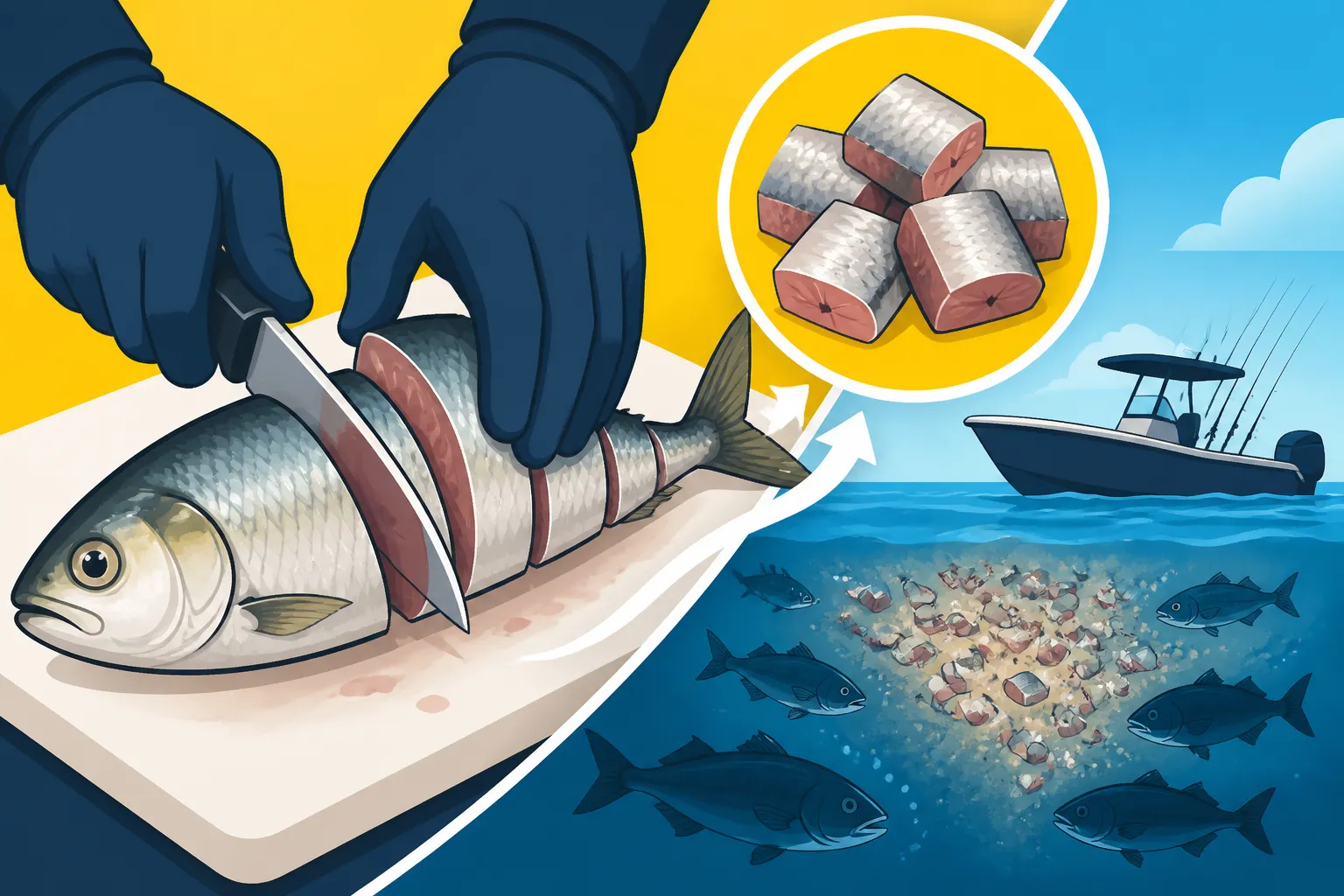
The first step is usually to cut the bunker into larger sections. You can start by simply cutting the fish in half, or even thirds, across its body. Some anglers prefer to remove the head and tail, as these sections contain less meat and oil relative to the main body, though others will use them to maximize every bit of bait. If you're planning on using large chunks as specific 'shots' of chum, these initial cuts are often enough. However, for a more consistent and broad chum slick, you'll want to break these down further.
The "Chunk" Method for Slower Release
The chunk method is fantastic when you want a steady, slower release of scent and oil, without creating too much immediate cloudiness. This is often preferred when fishing in stronger currents or when targeting species that might be a bit warier, like larger striped bass.
Here’s how to do it:
- Initial Cuts: Take your whole or halved bunker and cut it into thick, 1 to 2-inch wide chunks. Imagine slicing a loaf of bread, but thicker. You're basically creating small, meaty steaks of bunker.
- Optional Quartering: For even slower dispersal, or if your bunker are particularly large, you can take each chunk and cut it lengthwise down the middle, essentially quartering the fish. This exposes more of the internal organs and flesh, but keeps the pieces substantial.
- Deployment: These chunks are perfect for dropping into a sturdy mesh chum bag or simply tossing overboard one or two at a time. The smaller surface area relative to their mass means they’ll sink faster and release scent more gradually as they tumble in the current. This method is excellent for a sustained chum line, allowing you to effectively How to Chum for Bluefish in New Jersey Waters or How to Fish for Striped Bass in New Jersey.
The "Fine Mash" Method for Instant Cloud
When you need an immediate, highly visible, and potent scent cloud, the "fine mash" method is your ticket. This is particularly effective in calmer waters, lighter currents, or when you want to attract fish quickly, such as for fluke or smaller bluefish.
Here's the process:
- Small Pieces: Start by cutting your bunker into much smaller, roughly half-inch pieces. Don't worry about perfect uniformity here; the goal is to maximize surface area.
- Mashing/Grinding: Now for the "mash" part. You can do this in several ways:
- Knife Mashing: Using the flat side of your knife blade, press down firmly on a pile of the small bunker pieces, dragging the blade slightly to crush and smear the flesh.
- Chum Grinder: For serious chumming, a dedicated hand-crank or electric chum grinder is invaluable. These machines rapidly turn whole bunker into a pulpy, oily mash in seconds.
- Bucket and Stick: A more rustic but effective method is to put your cut bunker into a sturdy bucket and use a piece of wood or a small paddle to vigorously mash and pound the pieces into a fine consistency.
- Result: You're aiming for a consistency somewhere between a thick soup and a chunky paste. This fine mash releases an incredible amount of oil and tiny particulate matter, creating a milky, oily slick that fish absolutely cannot resist. This is a great technique to use when learning How to Fish for Fluke in New Jersey.
Mixing and Enhancing Your Bunker Chum
While bunker alone is a powerhouse, you can sometimes enhance its effectiveness. Many anglers like to add a few extras to their chum mix, especially if they are trying to really dial in a bite or if they are working with slightly less fresh bait.
- Panko Breadcrumbs or Oats: Adding a dry ingredient like panko breadcrumbs or rolled oats can help bind the chum slightly and absorb some of the oils, allowing for a slower, more controlled release, particularly with the fine mash method. It also adds volume without diluting the scent too much.
- Anise Oil or Commercial Attractants: A few drops of anise oil or a commercially available fish attractant can be mixed into your bunker chum. These scents are often appealing to a wide range of fish species and can add another layer of olfactory temptation to your slick.
- Squid or Mackerel Pieces: For a more varied chum, especially if you're targeting multiple species, consider chopping up some squid or small pieces of mackerel and mixing them in. These additions provide different textures and scents, broadening the appeal of your chum.
Table: Comparison of Bunker Chumming Methods
| Feature | "Chunk" Method | "Fine Mash" Method |
|---|---|---|
| Preparation Time | Moderate (Thicker cuts) | Longer (Finer cuts, mashing) |
| Release Speed | Slower, sustained scent trail | Faster, immediate, dense scent cloud |
| Sinking Rate | Faster (More mass per piece) | Slower (Lighter particles, disperses in water column) |
| Visibility | Lower (Less particulate matter) | Higher (Milky, oily cloud) |
| Best for Currents | Stronger currents | Calmer currents, lighter flows |
| Target Species | Wary predators, larger fish (Stripers, larger blues) | Active feeders, quick bites (Fluke, smaller blues) |
| Typical Use | Chum bags, occasional hand tosses | Chum pots, drift fishing, rapid attraction |
Optimizing Your Bunker Chum Dispersal
Cutting your bunker effectively is just one piece of the puzzle. How you deploy that chum and manage its dispersal is equally important for creating the most effective scent trail. Think of it like painting: you've mixed your perfect colors, now you need the right brush strokes.
Using a Chum Bag or Dispenser
The most common and effective way to deploy bunker chum is using a mesh chum bag. These bags, often made of durable nylon or onion sack material, allow the current to slowly wash over the cut bunker, releasing oils and small particles without simply dumping all your bait at once. This creates that consistent, tantalizing slick.
- Placement: For boat fishing, hang the chum bag off the stern, just below the surface, allowing the current to carry the scent directly behind your boat. For New Jersey Surf Fishing Techniques, you might deploy a smaller chum bag from a pier or jetty, or even use a special surf-casting chum dispenser that attaches to your line.
- Regular Agitation: Don't just leave your chum bag hanging there. Every few minutes, give it a shake or a squeeze. This helps release a fresh burst of scent and dislodges any trapped oils or particles, refreshing your chum line.
- Specialized Dispensers: Some anglers use PVC pipe chum tubes with holes, or even repurposed mesh onion sacks attached to a float, to slowly drip chum at a desired rate. These can be particularly useful for precise control over your chum slick.
Matching Chum Rate to Current and Target Species
One of the biggest mistakes anglers make is deploying too much or too little chum, or the wrong consistency for the conditions. It's an art, not a science, but there are some guidelines.
- Current Speed: In faster currents, you'll need to drop chum more frequently and possibly use larger chunks to ensure the scent trail stays consistent and reaches your target zone before it disperses too widely. Conversely, in slack or slow currents, a fine mash with less frequent deployment can be highly effective without overfeeding the fish.
- Target Species:
- Striped Bass & Bluefish: These aggressive predators respond well to a consistent, oily slick. Both chunk and fine mash methods can work, but for a sustained effort, the chunk method in a bag with periodic agitation is excellent. For a quick blitz, a rapid deployment of fine mash can ignite the bite. Consider a specific approach like How to Rig Live Bait for Striped Bass in your chum slick.
- Fluke: When drift fishing for fluke, a fine mash deployed in a chum pot or slowly disbursed can create an irresistible cloud that attracts them from the bottom. The idea is to draw them in and keep them interested as your boat drifts over them.
- Tautog & Black Sea Bass: While not traditionally chummed as heavily, a few crushed crab pieces mixed with bunker in a small chum pot dropped directly on a wreck or reef can sometimes get these structure-oriented fish interested, as discussed in New Jersey Black Sea Bass Season and Limits.
Ultimately, the best way to cut bunker for chum depends on your specific fishing scenario. Don't be afraid to experiment with different cuts and deployment strategies. Pay attention to how the current is carrying your chum, and adjust your approach based on the fish's response. Happy chumming, and tight lines!
Disclaimer
This article is for general informational purposes only and does not constitute professional advice. Laws, prices and regulations vary by location and change over time. Consult a qualified professional for guidance on your specific situation.