Greenwood Lake Muskie Fishing Guide
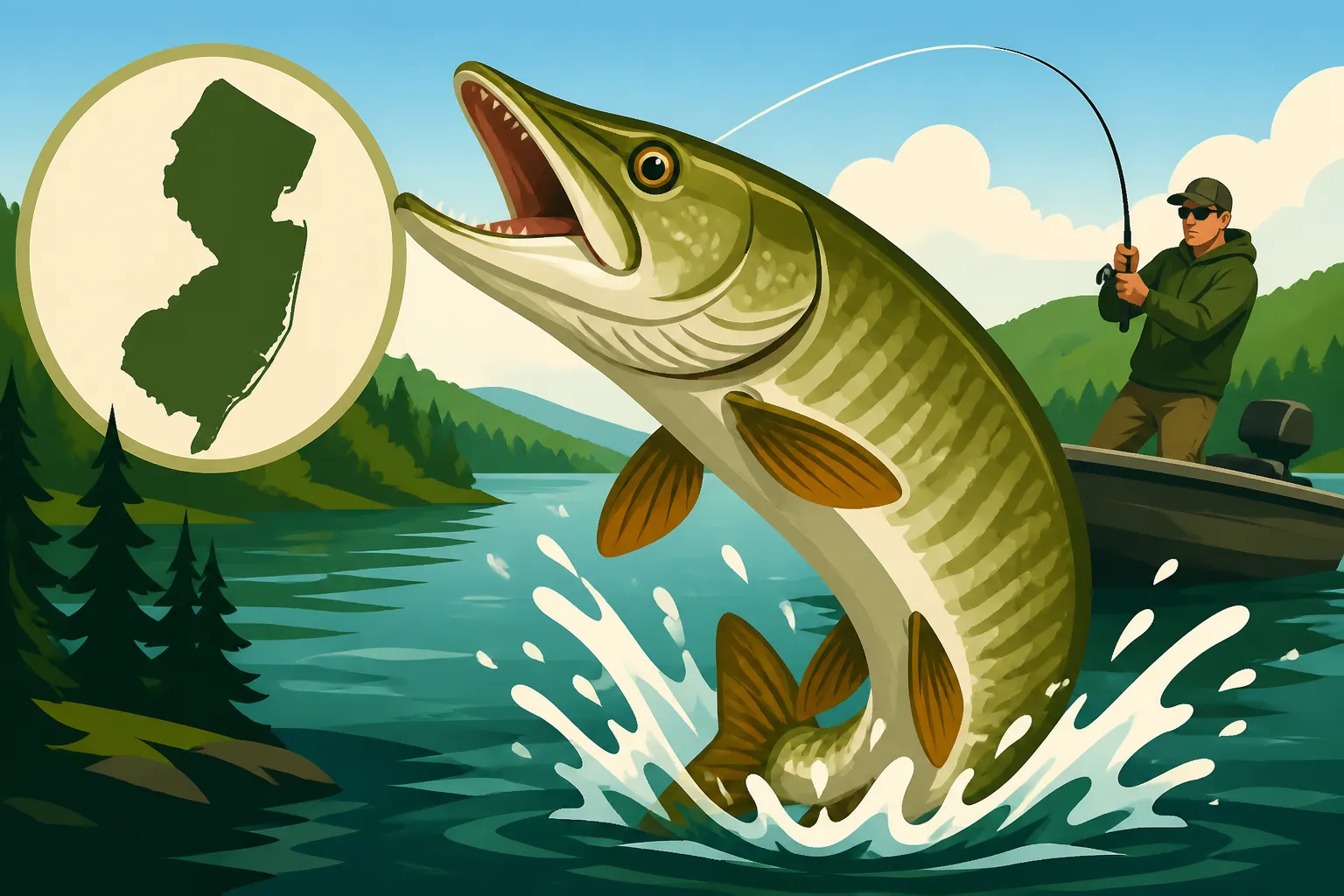
Greenwood Lake offers some of New Jersey’s most thrilling — and challenging — freshwater fishing experiences, especially if you're chasing the elusive muskellunge. Known as the "fish of 10,000 casts," muskie demand patience, specialized gear, and a deep understanding of their habits. This guide will walk you through everything you need to know to tackle Greenwood Lake for muskie, from understanding its unique environment to mastering the techniques that can lead to that unforgettable catch.
The Unique Allure of Greenwood Lake Muskie Fishing
Greenwood Lake isn't just another body of water; it's a vibrant ecosystem that has become a premier destination for muskie anglers. What makes it so special, and what are the foundational elements you need to grasp before you even tie on your first lure?
A Tale of Two States: Navigating the Shared Waters
One of the most distinctive aspects of Greenwood Lake is that it straddles the border between New Jersey and New York. This geographical reality brings with it a unique set of considerations, particularly when it comes to regulations and fishing licenses. While the lake feels like one continuous body of water, the laws governing it are managed by two different state agencies: the New Jersey Department of Environmental Protection (NJDEP) Fish & Wildlife and the New York State Department of Environmental Conservation (NYSDEC).
For years, this cross-border situation could be confusing, but thankfully, a reciprocal agreement is in place. This means that if you possess a valid fishing license from either New Jersey or New York, you are legally permitted to fish anywhere on Greenwood Lake, regardless of which side of the state line you're currently casting from. This removes a significant hurdle for anglers, allowing seamless exploration of the entire lake. However, you still need to be aware of each state's specific size and creel limits for certain species, though for muskie in Greenwood Lake, these are generally harmonized. Understanding this reciprocity is key, and if you're new to fishing in the Garden State, a full read of the New Jersey Fishing License Guide for 2026 can help clarify general requirements.
Muskie’s Home Court: Prime Habitat and Forage
Greenwood Lake itself is a sprawling, glacially carved lake, roughly seven miles long and one mile wide at its broadest points. Its diverse underwater topography provides an ideal habitat for muskies. You'll find everything from deep, cold water basins that plunge over 50 feet, to extensive shallow flats, rocky shorelines, abrupt drop-offs, and dense weed beds. These features are not just scenic; they are critical to understanding where muskies will hold, hunt, and ambush their prey.
Muskies are apex predators, and their presence is directly tied to the availability of a robust forage base. In Greenwood Lake, this includes a healthy population of yellow perch, various shiner species, suckers, and alewife. These baitfish congregate around structure — weed lines, submerged humps, rock piles, and points — and that's precisely where you'll want to focus your muskie efforts. Water temperature also plays a significant role; muskies, like many cold-water predators, will adjust their depth and activity levels based on the thermocline and overall lake temperature. Clearer waters, typical of much of Greenwood Lake, mean muskies rely heavily on ambush points and camouflage. Knowing the general layout of these prime areas, and what baitfish are likely to be found there, is your first step to locating these freshwater giants. Many anglers consult resources like the official " New Jersey Muskellunge Waters " guide to gain further insights into specific stocking programs and management strategies.
Timing Your Attack: Best Seasons for Greenwood Lake Muskies
Muskie fishing isn't a one-size-fits-all endeavor throughout the year. The behavior of these powerful fish changes dramatically with the seasons, influenced by water temperature, spawning cycles, and feeding patterns. Knowing when to target them, and with what approach, significantly boosts your chances of success.
Spring into Action: Post-Spawn Feeding Frenzy
As the ice recedes and water temperatures begin to climb into the 50s Fahrenheit, typically from late April through early June, Greenwood Lake muskies become increasingly active. The spring bite is often characterized by a post-spawn feeding frenzy as these large predators recover from the rigors of reproduction. They'll move into shallower areas, especially those with emerging weed growth, rocky points, and coves warmed by the sun.
During this period, muskies are often found closer to the surface or in mid-depths, making them more accessible to casting techniques. Look for areas where baitfish are abundant, as muskies will be aggressively looking for easy meals. Stable weather patterns, especially a few days of consistent warmth, can really turn on the bite. Overcast days with a light chop on the water are often ideal, as they break up the light penetration and make muskies feel more comfortable venturing from cover. This is a fantastic time to cover water with medium to large jerkbaits and bucktails, searching for those active fish.
Summer Strategy: Deep Water and Low-Light Bites
Summer on Greenwood Lake, particularly from late June through August, presents a different challenge. As water temperatures rise into the 70s and beyond, muskies often retreat to deeper, cooler waters where they can find thermal refuge and oxygenated zones. This doesn't mean they stop feeding, but their activity patterns shift. You'll typically find the best bites during the low-light hours of early morning or late evening, and often into the night.
During the daytime, focus your efforts on deep-water structures: submerged humps, deep weed edges, creek channels, and drastic drop-offs. Trolling large crankbaits and soft plastic swimbaits at these depths can be highly effective for covering ground and presenting a lure to less active fish. If casting, target shaded areas, dense cover, and current seams if they exist. Boat traffic, especially on busy summer weekends, can also push muskies deeper or make them more wary. Patience becomes even more critical during these warmer months, and being prepared to fish deeper and slower can pay dividends.
Fall Fury: The Pre-Winter Feast
Many experienced muskie anglers consider the fall, from September through November, to be the absolute prime time for trophy muskie on Greenwood Lake. As the water temperatures begin to cool down, mimicking the spring conditions, muskies engage in what's often referred to as a "feeding blitz" or "fall turnover." They are actively gorging themselves, building up fat reserves for the lean winter months ahead.
During the fall, muskies will move from deep summer haunts back into shallower to mid-depth areas, often along the same structures they frequented in spring. Long points, deep weed lines, rock reefs, and transitions from shallow to deep water become hotspots. Large, erratic lures that imitate struggling baitfish are highly effective now. Think oversized crankbaits, gliders, and heavy bucktails. This is when muskie are at their most aggressive, and strikes can be absolutely brutal. Be prepared for a powerful fight, as these fish are at their peak physical condition. The cooler air and water temperatures also make it easier on the fish if you plan to Catch and Release Rules in New Jersey, which is strongly encouraged for these magnificent creatures.
Arming Yourself: Essential Gear and Techniques
Chasing muskies is not for the faint of heart, nor for the under-prepared. These fish are powerful, unpredictable, and demand specialized tackle designed to handle their brute strength and razor-sharp teeth. Trying to land a trophy muskie on light bass gear is a recipe for disappointment and potential harm to the fish.
The Arsenal: Lures That Tempt Greenwood Muskie
Muskie lures are a world unto themselves, often large, heavy, and designed to provoke a reaction strike from even a lethargic fish. Matching your lure selection to the conditions and season on Greenwood Lake is crucial.
- Topwater Baits: For low-light conditions, especially in spring and fall, topwater lures create explosive strikes. Think large walk-the-dog baits like a Heddon Super Spook, prop baits, or big poppers. Their commotion on the surface can draw muskies from surprisingly deep water.
- Crankbaits and Glide Baits: These are workhorses for covering water at various depths. Large lipped crankbaits, like a Rapala Super Shad Rap or a Bucher Depth Raider, are excellent for trolling or casting to specific depths. Glide baits, like a Svartoga or Salmo Slider, offer a more subtle, erratic side-to-side action that can be deadly.
- Bucktails and Inline Spinners: These are classic muskie lures, renowned for their flash and vibration. Brands like Mepps (Musky Killer) and Bucher (Tail) offer popular options. They are fantastic for covering large areas quickly and are often effective when muskies are aggressive. Varying colors like black, chartreuse, and white can make a difference depending on water clarity and light conditions.
- Jerkbaits: Large, erratic jerkbaits, such as a Suick or a Grandma, mimic an injured baitfish. They require active rod work to impart their unique swimming action and are excellent for targeting fish holding tight to structure.
- Soft Plastics and Swimbaits: For a slower, more deliberate presentation, especially in summer or when fish are finicky, large soft plastic swimbaits like a Musky Innovations Bull Dawg can be incredibly effective. They can be worked deep and slow, offering a substantial meal profile.
No matter the lure, make sure all hooks are extremely sharp. Many experienced anglers replace treble hooks with larger, stronger ones, or even switch to single barbless hooks to facilitate easier and safer release, which is vital for muskie conservation.
The Right Tools: Rods, Reels, Line, and Leaders
Your gear needs to be robust, period. This isn't the time to skimp.
- Rods: Look for heavy power, fast action rods between 8 and 10 feet in length. These longer rods aid in casting heavy lures, provide better leverage during a fight, and help manage the boat-side figure-eight maneuver. Popular choices include models from St. Croix's Legend Tournament Musky series or Shimano's G. Loomis rods.
- Reels: A heavy-duty baitcasting reel with a low gear ratio (e.g., 5.0:1 or lower) is essential. This ratio provides the cranking power needed to retrieve large, high-resistance lures and haul in a powerful fish. Ensure it has a high line capacity for your heavy braided line. Brands like Abu Garcia (Revo Toro Beast) and Shimano (Tranx) are popular for their durability.
- Line: Spool up with heavy braided line, typically 80 to 100-pound test. Braid offers incredible strength, minimal stretch for solid hooksets, and a thin diameter for its breaking strength.
- Leaders: Muskies have a mouth full of sharp teeth capable of slicing through monofilament or fluorocarbon like butter. A strong leader is non-negotiable. Use heavy-duty steel or fluorocarbon leaders, ranging from 100 to 150-pound test, at least 12-18 inches long. Many come pre-tied with strong snaps and swivels to prevent line twist.
- Essential Tools: Don't hit the water without a large, rubber-coated landing net (at least 36-inch hoop, often larger), a pair of long-nose pliers, bolt cutters (for cutting hooks if necessary), and jaw spreaders. These tools are critical for safe and efficient catch-and-release, which we'll discuss further. For a more general overview of foundational fishing equipment, you might check out a guide on Best New Jersey Fishing Gear for Beginners, although muskie gear is certainly more specialized.
Active Pursuit: Casting, Trolling, and the Figure-Eight
There are two primary methods for targeting muskie on Greenwood Lake: casting and trolling.
- Casting: This is the more active approach, allowing you to target specific structures, weed lines, and ambush points. Make long casts, retrieve your lure with the appropriate action, and always, always perform a "figure-eight" maneuver at the side of the boat. Many muskie follow lures right up to the boat before striking, and a well-executed figure-eight can trigger that strike.
- Trolling: When fish are scattered, or you want to cover large expanses of water, especially deeper zones in summer, trolling can be very effective. Use large crankbaits, swimbaits, or even oversized soft plastics. Experiment with trolling speeds and depths until you find what's working. Planer boards can help spread out your lines and cover more water. Remember that in New Jersey, there are specific rules on How Many Fishing Rods Can You Use at Once in New Jersey?, so always be mindful of state regulations, even when trolling.
Rules of the Game: Regulations and Responsible Angling
Fishing for a trophy species like muskie comes with a responsibility to understand and abide by regulations, and perhaps even more importantly, to practice sound conservation ethics. This is especially true in a shared waterbody like Greenwood Lake.
Border Control: NJ and NY Muskie Regulations for Greenwood Lake
Because Greenwood Lake spans two states, you might expect differing regulations, but for muskellunge, there's a welcome consistency. Both New Jersey and New York agree on specific rules for muskie in Greenwood Lake. For the 2026 season, and typically year after year, the regulation mandates a 40-inch minimum size limit for muskellunge, with a one-fish creel limit. This means any muskie you catch must be at least 40 inches long to be legally kept, and you can only keep one per day.
This unified approach simplifies things for anglers crossing state lines on the lake. However, it's always prudent to double-check the latest regulations from both the NJDEP Fish & Wildlife and the NYSDEC annually, as rules can change. Remember, as mentioned earlier, a valid fishing license from either state grants you access to the entire lake. This reciprocal agreement is a huge benefit for anglers, and you can learn more about its nuances in the New Jersey Fishing License Reciprocity Between New Jersey and Neighboring States guide. Always keep your license accessible, whether it's a physical copy or on your phone, as conservation police from both states patrol the waters.
Catch, Photo, Release: The Muskie Ethic
For a species like the muskellunge, which grows slowly and has a relatively low population density, catch and release is not just a suggestion—it's a deeply ingrained ethic among dedicated muskie anglers. Releasing these fish ensures the sustainability of the fishery and allows these magnificent creatures to grow larger and provide a thrilling experience for future generations.
Practicing responsible catch and release requires specific techniques:
- Minimize Fight Time: Use heavy tackle as described above to reduce the duration of the fight. A shorter fight means less stress and exhaustion for the fish.
- Stay in the Water: Whenever possible, keep the muskie in the water during hook removal and photography. Their large bodies are not designed to support their weight out of water, and prolonged air exposure can cause severe damage to their organs and gills.
- Use the Right Tools: Always have your large, rubber-coated net ready. Once the fish is in the net, use your long-nose pliers to quickly and carefully remove hooks. If a hook is deeply embedded or difficult to remove, do not hesitate to use bolt cutters to snip the hook. It's far better to leave a small piece of hook in the fish than to cause irreversible damage trying to force it out. Jaw spreaders can be helpful but use them sparingly and carefully to avoid jaw damage.
- Support the Fish: If you absolutely must lift the fish for a quick photo, support its body horizontally with two hands—one under the head, the other supporting the tail section. Avoid holding it vertically by the jaw.
- Revive Carefully: After hook removal and a quick photo, hold the fish gently in the water, facing into any current or with a gentle back-and-forth motion, until it regains its strength and swims away on its own.
Organizations like Muskies Inc. strongly advocate for these practices. The minimum size limit of 40 inches also implicitly encourages releasing most fish, as only true trophies qualify for harvest. Always prioritize the health of the fish over a perfect photo. Many general guidelines for ethical release are covered in our broader article on Catch and Release Rules in New Jersey.
Unlocking Greenwood Lake's Muskie Secrets
Muskie fishing is as much a mental game as it is a physical one. Beyond the gear and the seasons, there are subtleties and approaches that can make all the difference between a frustrating day and a successful one.
Local Intel and Technological Edge
While technology has certainly advanced the game, local knowledge remains an invaluable asset on Greenwood Lake. Before heading out, consider visiting one of the local bait and tackle shops around the lake in Hewitt, NJ, or West Milford. Shop owners and regulars are often a treasure trove of information regarding recent catches, successful lures, and general muskie movements. They can provide real-time insights that no app can replicate.
Complementing this, modern electronics can drastically improve your efficiency. A good fish finder with side imaging and down imaging capabilities can help you identify subtle underwater structures like humps, rock piles, and deep weed lines that hold baitfish and, consequently, muskies. GPS is crucial for marking productive spots, tracking your trolling paths, and navigating safely, especially in low light or fog. Platforms like FishingBooker can also be a valuable resource if you're looking to hire a seasoned guide who specializes in muskie on Greenwood Lake. These guides often have years of accumulated knowledge about the lake's ever-changing conditions and muskie patterns, providing an accelerated learning curve for those new to the fishery. Don't be afraid to invest in a guided trip; the lessons learned can save you years of trial and error.
The Art of Patience and Persistence
The nickname "fish of 10,000 casts" isn't just a catchy phrase; it's a stark reality check. Muskie fishing, particularly for trophy-sized fish on a lake like Greenwood, requires monumental patience and unwavering persistence. You might spend an entire day, or even several days, making countless casts without a single follow or strike. It can be mentally grueling, but that's part of the allure. The moment that monstrous muskie decides to hit your lure, all those hours of casting melt away in the adrenaline-fueled chaos.
Developing a strong mental game is paramount. Focus on executing perfect casts, maintaining proper lure action, and staying vigilant for follows right up to the boat. The figure-eight maneuver at the boat, where you continue to work your lure in a large "8" pattern before lifting it out of the water, is often where a seemingly uninterested muskie will strike. This sudden, erratic movement can trigger an otherwise indifferent fish. Don't give up on a spot too quickly, but also know when to move and try new areas. The persistent angler is often the one rewarded with that elusive muskie.
Prioritizing Safety on the Water
Greenwood Lake is a large, busy waterbody, especially during peak seasons. Safety should always be your top priority, particularly when dealing with powerful fish and heavy tackle.
- Wear Your PFD: Always wear a personal flotation device, especially when fishing alone or in colder weather. Accidents can happen quickly.
- Be Aware of Boat Traffic: Greenwood Lake is popular for recreational boating, watersports, and fishing. Stay vigilant, especially during weekends and holidays. Navigate safely and be aware of your surroundings.
- Monitor Weather: Large lakes can experience rapid weather changes. Keep an eye on forecasts, and be prepared for sudden storms, wind, or fog.
- Handle Fish Safely: Muskies have powerful jaws and razor-sharp teeth, and the lures used to catch them have large, sharp hooks. Always use your specialized tools (net, pliers, jaw spreaders, bolt cutters) for hook removal. Keep your hands clear of the mouth and hooks. If you’re not comfortable handling a large muskie, recruit an experienced friend or a guide found on FishingBooker who can help ensure both your safety and the fish's well-being. Knowing how to properly handle your catch is a sign of a true sportsman.
| Lure Type | Best Conditions / Time of Year | Retrieval Style | Target Depth | Notes |
|---|---|---|---|---|
| Topwater | Low light (dawn/dusk), calm water, spring/fall | Steady walk-the-dog, pop/pause, fast rips | Surface | Explosive strikes; best over shallow cover. |
| Crankbaits | All seasons, varied depths, searching | Steady retrieve, varied speeds, stop-and-go | Mid-depth to Deep | Great for trolling; large profile. |
| Glide Baits | All seasons, especially when fish are finicky | Erratic side-to-side jerks, long pauses | Mid-depth | Subtle action, can draw follows. |
| Bucktails | Spring/Fall, aggressive fish, covering water | Fast, steady retrieve, occasional pauses | Shallow to Mid-depth | High flash & vibration; good for active fish. |
| Jerkbaits | Spring/Fall, targeting structure, reaction strikes | Hard jerks followed by pauses, erratic motion | Shallow to Mid-depth | Mimics injured baitfish; requires active rod work. |
| Soft Plastics | Summer, deeper water, slower presentations | Slow roll, jigging, retrieve near bottom/structure | Mid-depth to Deep | Large profile, appeals to less active fish. |
Disclaimer
The information provided in this guide is for general informational purposes only. Fishing regulations, season dates, and limits are subject to change by the New Jersey Department of Environmental Protection (NJDEP) Fish & Wildlife and the New York State Department of Environmental Conservation (NYSDEC). Always consult the most current official fishing regulations before planning any fishing trip to Greenwood Lake. The author and publisher are not responsible for any inaccuracies or for any individual's failure to comply with applicable laws and regulations. Fishing can be a dangerous activity; always prioritize safety and wear appropriate protective gear.