How to Tell If a Fluke Is Legal Size
One of the most heart-pounding moments for any angler targeting fluke in New Jersey is pulling up a beautiful doormat, only to be instantly gripped by the anxiety of whether it's actually legal. That nervous scramble for the measuring tape, the quick glance at the regulations, and the fear of getting it wrong can really detract from the joy of the catch. Trust me, we've all been there! This guide is here to walk you through exactly how to confidently determine if your New Jersey fluke is a keeper, helping you understand the rules and measure with precision.
Understanding New Jersey's Fluke Regulations
Before you even wet a line, it’s absolutely essential to be intimately familiar with New Jersey's fluke regulations. These aren't just suggestions; they're the law, and they change from year to year. Getting it wrong can lead to serious fines and a lot of heartache, which is the last thing any of us want after a great day on the water.
The Ever-Changing Fluke Size Limits and Bag Limits
New Jersey's fluke (also known as summer flounder) regulations are set annually by the state's Fish and Wildlife agency, often in coordination with regional fisheries councils like the Atlantic States Marine Fisheries Commission. The goal is always to manage the stock sustainably, which means sometimes the rules can feel a bit like a moving target. Historically, the statewide minimum size limit for fluke has generally hovered around 18 inches, with a daily bag limit typically set at three fish per person. However, it's not always that straightforward.
For instance, there are often specific nuances, such as special regulations for certain bodies of water. The Delaware Bay Fluke Rules vs the Rest of New Jersey, for example, often dictate a slightly different size limit, sometimes 17 inches, to account for local stock conditions. This is why it’s not enough to just know the general rule; you really need to consult the most current New Jersey Fish and Wildlife Digest for the exact numbers for the season you're fishing. Even within a season, sometimes emergency changes can occur, so staying informed is key.
Why Size Limits Matter for Conservation
You might wonder why these specific numbers are so important. It’s all about conservation and ensuring a healthy future for the fluke population. The size limits are designed to allow fluke to reach maturity and spawn at least once before they are harvested. This biological fact is crucial for the species' ability to reproduce and maintain its numbers. When too many undersized fish are kept, it puts immense pressure on the spawning stock, leading to fewer fish in the long run.
Beyond just minimum size, understanding other aspects of the regulations, like the New Jersey Fluke Bag Limit Explained, also plays a vital role. These limits ensure that the overall harvest remains within sustainable levels, balancing recreational fishing opportunities with the health of the fishery. Catching and releasing undersized fish properly is just as important as measuring correctly, as it gives those smaller fish the best chance to grow up and become future keepers. You can also dive deeper into the general New Jersey Fishing Season Dates and Closures to get a full picture of when you can target various species.
Tools and Techniques for Accurate Fluke Measurement
So, you’ve got a beautiful fluke in hand. Now comes the moment of truth: measuring it. This isn't just a casual guess; it needs to be precise. A few common mistakes can turn a legal fish into an illegal one, or worse, lead to unnecessarily releasing a keeper.
Choosing the Right Measuring Device
Having the right tool is the first step. You need a reliable, easy-to-read measuring device. Here are a few popular options:
- Rigid Rulers or Bump Boards: These are arguably the best. A rigid plastic or metal ruler, often with a raised "bumper" at the zero mark, allows you to butt the fish's nose firmly against it. They are durable, don't stretch, and offer consistent measurements. Many come pre-marked for common species' legal sizes, which is a huge plus. You can find excellent options on Amazon, often designed specifically for saltwater species.
- Tape Measures (Cloth or Metal): While more flexible, a standard tape measure can work in a pinch. However, cloth tapes can stretch over time, and metal tapes can be awkward with a squirming fish. If using one, make sure it’s new and doesn’t have any bends or kinks that could distort the measurement.
- Specialized Fish Rulers: Some tackle boxes or boat coolers even come with integrated rulers. These are convenient, but always double-check their accuracy against a known standard ruler when you first get them.
Here's a quick comparison of common measuring tools:
| Measuring Tool | Pros | Cons | Best Use |
|---|---|---|---|
| Rigid Bump Board | Most accurate, easy to use, durable | Can be bulky, more expensive upfront | All recreational fishing, especially with strict size limits |
| Metal Tape Measure | Readily available, generally accurate | Can be difficult to handle with fish, prone to kinking/bending | Backup, when a bump board isn't practical |
| Cloth Tape Measure | Flexible, compact, inexpensive | Prone to stretching, less durable, can be harder to read accurately | Less critical measurements, or as a last resort |
| Integrated Cooler Ruler | Convenient, always on hand | Accuracy can vary, not always rigid enough | Quick check, but verify accuracy with a known standard |
Remember, whatever you choose, keep it handy and in good condition. A bent ruler or faded numbers won't do you any good in a stressful moment.
Step-by-Step Guide to Measuring a Fluke
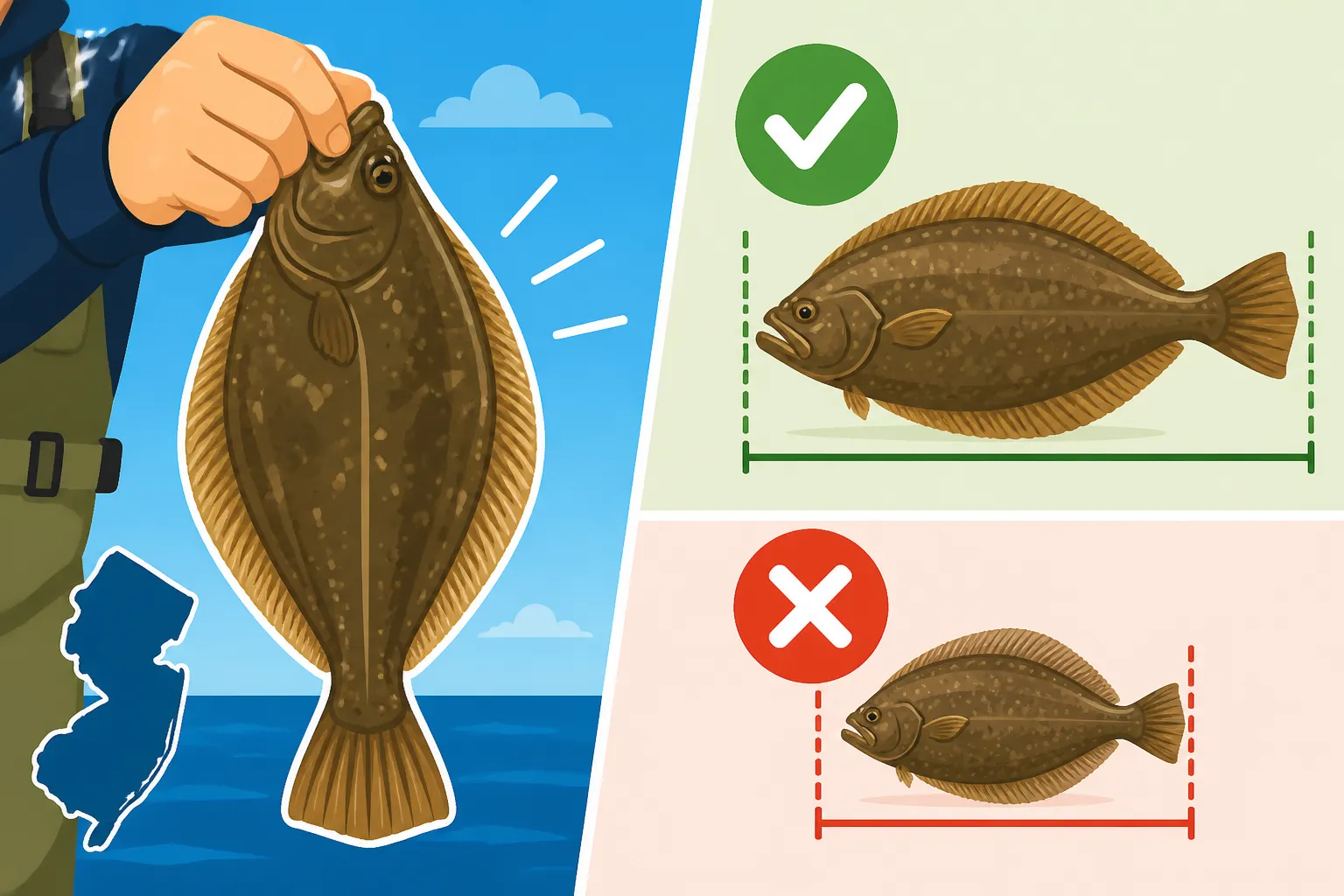
Measuring a fluke correctly means understanding two key points: where to start and where to end. New Jersey, like most states, measures fish from the tip of the snout to the end of the tail, known as "total length."
-
Prepare Your Station:
- Get Your Tool Ready: Have your bump board or ruler laid out flat and ready before you even bring the fish aboard. Wet the measuring surface if possible; this helps protect the fish's slime coat.
- Clear the Deck: Make sure there's nothing for the fish to flop into or get tangled on. Safety for both you and the fish is paramount.
-
Position the Fish:
- Snout First: Gently lay the fluke flat on its side on the measuring device. The absolute tip of its snout (the upper jaw) must be firmly pressed against the zero mark or the rigid bumper of your measuring device. There should be no gap.
- Straighten the Fish: This is critical. A fluke can flex and curl, making it appear shorter than it is. Gently but firmly straighten the fish along the ruler. Make sure its body isn't angled or bowed, which could shave off valuable inches. Avoid pressing too hard, which can injure the fish.
-
Tail Placement:
- Pinch the Tail: While keeping the snout against the bumper and the fish straight, gently pinch the tail lobes together (often called "pinched tail measurement"). This extends the tail to its maximum possible length.
- Read the Measurement: Look where the outermost point of the pinched tail meets the ruler. That's your measurement. Compare it instantly to the legal minimum size (e.g., 18 inches, or 17 inches if you're fishing in the Delaware Bay).
It's common for anglers to slightly mismeasure by not fully straightening the fish or not pinching the tail, potentially leading to the release of a perfectly legal fish. Or, more dangerously, accidentally keeping an undersized one. Practice makes perfect, and developing a quick, efficient measuring technique is a hallmark of a responsible angler.
What to Do When Your Fluke Isn't Legal Size
So, you measured that fluke, and it’s just shy of the mark. Disappointing, right? Every angler knows that feeling. But this is where responsible angling really comes into play. Releasing an undersized fish correctly gives it the best chance to grow, spawn, and become a keeper for you or another angler down the line.
Best Practices for Catch and Release
Proper catch and release techniques are vital, especially for species like fluke that often get caught multiple times. Remember, even a barely undersized fish is a future trophy.
- Minimize Handling Time: The less time a fish spends out of water, the better its chances of survival. Have your measuring device, hook disgorger, or pliers ready before you even bring the fish in.
- Handle with Care: Support the fish horizontally, especially larger ones. Avoid holding them vertically by the jaw or tail, which can damage their internal organs or spinal column. If possible, keep the fish in the water while measuring, or lay it on a wet surface.
- Remove Hooks Gently: Use a hook disgorger or needle-nose pliers to remove the hook as quickly and cleanly as possible. If the fish is deeply hooked and removing the hook would cause excessive damage, it's often better to cut the line as close to the hook as possible. The hook will usually rust out over time.
- Revive If Necessary: If the fish seems sluggish or disoriented after measuring and unhooking, gently hold it in the water, facing into the current, and move it back and forth to help oxygenate its gills. Only release it when it swims away strongly on its own. This is particularly important when you're fishing in warmer water.
Learning about New Jersey Catch and Release Rules is crucial for all anglers, not just those targeting fluke. These practices ensure the health of our fisheries for generations to come.
The Consequences of Keeping Undersized Fluke
It might be tempting to fudge the measurement by a quarter-inch, especially after a slow day or if it's the biggest fish you've caught all day. But don't do it. The penalties for fishing without a license in New Jersey or keeping undersized fish are no joke. Conservation Police Officers (CPOs) are out there, and they take these regulations seriously.
- Fines and Penalties: Keeping an undersized fluke can result in significant fines, often several hundred dollars per fish. These fines are designed to deter violations and protect fish stocks.
- Seizure of Gear: In some cases, your fishing gear, including rods, reels, and even your boat, could be seized.
- Loss of Privileges: Repeated offenses could lead to the suspension or revocation of your fishing license, meaning you won't be able to enjoy the sport for a period.
- Damage to Reputation: Beyond legal repercussions, there’s also the impact on your reputation within the angling community. Responsible anglers uphold the rules.
It’s just not worth the risk. Always err on the side of caution. If there's any doubt about the measurement, release the fish. It’s better to be safe than sorry, and it shows respect for the resource. You can find more information about these consequences in resources like What Happens If You Get Caught Fishing Without a License in New Jersey, which often also covers other violations.
Navigating Regional and Seasonal Variations
Just when you think you’ve got a handle on the rules, New Jersey reminds you that fishing regulations aren't always one-size-fits-all. Different areas, and sometimes even different seasons, can have unique rules that apply specifically to fluke. Being aware of these exceptions is vital for staying compliant and truly enjoying your time on the water.
Special Fluke Rules for Delaware Bay
One of the most notable regional distinctions for fluke fishing in New Jersey is the Delaware Bay. Because the bay is a shared resource with the state of Delaware, and due to specific stock assessments and management strategies for that particular body of water, the fluke regulations often differ from the rest of New Jersey’s coastal waters. For instance, while the general New Jersey Fluke Size Limit: 18 Inches might apply to most of the Jersey Shore, the Delaware Bay might have a 17-inch minimum size limit.
This difference often creates a bit of confusion for anglers, especially those who might fish both the ocean and the bay. This is precisely Why Is the Delaware Bay Fluke Limit Different From the Rest of New Jersey? The key takeaway here is that if you're planning a trip to the Delaware Bay, make sure you specifically check the regulations for that area. Don’t assume the general statewide rules apply, as that could lead to an unfortunate violation. Always carry a copy of the current digest or have the digital version accessible on your phone, as this will prevent any misunderstandings.
Understanding How Regulations Can Change
It's not just regional variations you need to keep an eye on; the regulations themselves can shift. New Jersey's fishing rules, including those for fluke, are not set in stone for years at a time. They are often revisited and potentially updated annually, sometimes even mid-season if a critical conservation need arises. This is how New Jersey Sets Its Fishing Regulations Each Year, a process that involves biological data, public input, and coordination with federal and regional agencies.
For example, the New Jersey Fluke Season Dates for 2026, along with size and bag limits, will be published well in advance. However, unexpected environmental factors or new stock assessments could trigger an emergency rule change. This is why it’s so important to consult official sources frequently. The New Jersey Department of Environmental Protection (NJDEP) Fish and Wildlife website is your best friend here. They publish the most up-to-date information, and often provide helpful summaries or even a New Jersey Marine Fish Size Chart 2026. Ignoring these potential changes means you could inadvertently be fishing illegally, even if you were compliant just a few months prior. It's a bit of a hassle to stay on top of it, but it's part of being a dedicated and responsible angler in New Jersey.
Disclaimer
The information provided in this guide is for general informational purposes only and does not constitute legal advice. Fishing regulations are subject to change and can vary based on specific dates, locations, and other factors. Always consult the official New Jersey Fish and Wildlife Digest or their website for the most current and accurate regulations before you go fishing. Strict adherence to all laws and regulations is the responsibility of the angler.