New Jersey Charter Boat Tipping Etiquette
One of the most common anxieties for anyone booking a fishing charter in New Jersey, especially if it's your first time or you haven't been out in a while, revolves around tipping. It's a completely natural concern – you want to show appreciation for hard work and a great day on the water, but how much is appropriate, who do you give it to, and when? This guide aims to take all the guesswork out of New Jersey charter boat tipping etiquette, so you can focus on reeling in that trophy catch without any awkward moments.
Why Tipping Matters on a Charter Boat
Let's be real, going out on a fishing charter isn't just about the fish you catch; it's about the entire experience. From the moment you step on board until you depart, there's a team working tirelessly to make sure your trip is safe, enjoyable, and hopefully, successful. Understanding why tipping is customary in this industry helps put the whole practice into perspective and makes it feel less like a chore and more like a genuine show of gratitude.
The Crew's Hard Work Behind the Scenes
When you arrive at the dock, sometimes before dawn, your charter or party boat crew has likely already been up for hours. They're not just showing up five minutes before departure. Think about it: they've checked all the safety equipment, ensured the boat is fueled and in top working order, often prepared and loaded bait, organized tackle, and sometimes even cleaned up from the previous day's trip. Once you're out on the water, they're constantly on the move – baiting hooks, untangling lines, netting fish, providing guidance, and keeping an eye on everyone's safety. When the trip is over, their work isn't done. There's fish to clean, the boat to scrub down, tackle to re-rig, and preparations to make for the next group. It’s a physically demanding job, often under the blazing sun or in less-than-ideal weather, and their "office" can be a rolling, pitching deck.
It's easy to overlook the effort that goes into making your fishing trip seamless. Many people assume the cost of the charter covers everything, but the crew's wages, particularly for the mates, are often supplemented significantly by tips. Without them, the financial model for many charters simply wouldn't work, and you wouldn't have the dedicated, experienced hands making your day happen.
Tipping as a Form of Gratitude
Beyond the financial aspect, tipping is fundamentally a way to say "thank you." It acknowledges the service, the effort, and the personal touches that made your day memorable. Did the mate patiently help your child land their first fish? Did they tirelessly untangle your novice friend's birds nest of a line multiple times without a sigh? Did the captain go the extra mile to find a hot bite, even when conditions were challenging? These are the moments when a tip transcends mere expectation and becomes a heartfelt gesture of appreciation.
It's about recognizing that you're not just paying for a service, but for a guided experience crafted by professionals who often live and breathe fishing. A generous tip sends a clear message that their hard work was valued, which in turn motivates them to continue providing excellent service for future anglers. For many, a tip is a direct reflection of how much they enjoyed their day, irrespective of the size of their cooler full of fish.
Industry Standards and Livelihoods
Just like in the restaurant or hospitality industry, tipping has become a long-established standard in charter fishing. This isn't unique to New Jersey; it's a practice across the board. The crew members, particularly the mates who do a lot of the heavy lifting and direct angler interaction, rely on these tips as a significant portion of their income. While captains are often the owners or primary operators, their mates are usually hourly employees whose wages might be modest, with tips making up the difference.
Think of it this way: your tip contributes directly to the livelihood of the people who make your fishing adventure possible. When you factor in the cost of living along the Jersey Shore, where many of these operations are based, every tip helps sustain these passionate individuals and their families. It ensures that the industry can continue to attract and retain experienced, knowledgeable crew members who are dedicated to providing fantastic fishing experiences for everyone. It’s a cyclical relationship: happy customers tip well, which supports the crew, which encourages great service, leading to more happy customers.
Standard Tipping Percentages on New Jersey Charters
So, you understand why tipping is important, but now comes the burning question: how much should you tip? This is where many anglers, especially first-timers, feel a bit lost. While there's no hard and fast law, there are generally accepted guidelines within the New Jersey charter fishing community that can help you budget appropriately.
The 15-20% Rule of Thumb
For most fishing charters, whether you're on a private charter chasing striped bass or joining a larger party boat for fluke, the general rule of thumb is to tip the crew between 15% and 20% of the total trip cost. This percentage is pretty consistent with other service industries and is widely considered fair compensation for the effort put in.
Let's break that down a bit. If you're on a private charter that costs, say, a certain amount for a full day, you'd calculate 15-20% of that total. So, if the trip is, for example, a few hundred dollars, your tip would typically fall into a comfortable range. For a party boat, where you pay per person, you'd calculate 15-20% of your individual fare. It’s important to remember that this percentage is based on the total cost of the trip, not just on how many fish you caught. Even on a slow fishing day, the crew works just as hard, sometimes even harder, trying to locate fish and keep spirits high. Their effort and dedication are what you're primarily tipping for, not solely the bounty. Many anglers use resources like FishingBooker to compare charter prices and reviews, and these platforms often include information or prompts about standard tipping expectations, which can be a helpful reminder when planning your trip.
When to Adjust Up or Down
While 15-20% is a solid starting point, tipping isn't always a rigid calculation. There are definitely times when you might feel inclined to adjust that percentage, either up or down, based on your experience.
Adjusting Up (20% or More):
You should absolutely consider tipping on the higher end of the spectrum, or even above 20%, when the crew goes above and beyond. Did they:
- Provide exceptional service? Maybe they were incredibly attentive, proactive in helping everyone, and genuinely personable.
- Work tirelessly in tough conditions? If the weather was challenging, or the fish weren't biting easily, but the crew never gave up and kept trying new spots or techniques, that extra effort deserves recognition.
- Offer extra assistance? Perhaps they spent significant time teaching you or a beginner how to cast, tie knots, or identify different species. Maybe they cleaned your fish meticulously and quickly, going the extra mile. For more on what services to expect, check out New Jersey Charter Boat Fish Cleaning Services.
- Ensure a fantastic experience despite a slow bite? Sometimes the fish just aren't cooperating. If the crew maintained a positive attitude, shared stories, and made the day enjoyable even without a cooler full of fish, that's worth acknowledging.
Adjusting Down (Below 15%):
Conversely, there might be rare occasions when you feel a lower tip is warranted. This should ideally be reserved for genuine instances of poor service, not just a bad fishing day. For example:
- Disinterested or unhelpful crew: If the mate seemed disengaged, didn't offer assistance, or was rude.
- Safety concerns: If you felt the boat was operated unsafely or the crew ignored safety protocols.
- Lack of effort: If it felt like the crew wasn't trying to find fish or provide a good experience.
It's important to differentiate between a genuinely poor service experience and simply a slow day of fishing. Remember, fishing success can depend on many factors outside the crew's control, like weather, tides, and fish migration patterns. Their job is to put you on fish and provide a safe, fun trip, not necessarily guarantee a limit catch. If you're consistently seeing negative reviews or hearing about poor service, you might reconsider that specific charter altogether when booking through platforms like FishingBooker.
Factors That Influence Your Tip
Beyond the standard percentage, several nuances can and should influence your final tip amount. It's not just a flat rate; it's a reflection of the overall quality of your outing. Recognizing these factors helps you make an informed and fair decision that acknowledges the effort and expertise of the crew.
Exceptional Service and Effort
This is perhaps the most significant differentiator. Exceptional service on a New Jersey charter goes far beyond simply operating the boat and putting out lines. It’s about the intangibles that elevate a good trip to a truly memorable one. Did the mate anticipate your needs before you even had to ask, like having a fresh bait ready as soon as you reeled in? Were they patient and encouraging with younger anglers or those new to fishing, taking the time to explain techniques and help them land their catch? Maybe the captain spent extra time after the trip answering questions about local fishing spots or New Jersey Fishing Season Dates and Closures.
Think about the proactive steps the crew took. Did they make sure everyone had a drink or a snack during a lull in the action? Were they constantly checking lines, offering advice, and ensuring a positive atmosphere on board, even if the bite was slow? These are the hallmarks of a crew that genuinely cares about your experience, not just punching the clock. When a crew member works tirelessly to provide this level of personalized, attentive service, a tip at the higher end of the 15-20% range, or even a bit more, is a well-deserved recognition of their dedication. It signals that their hard work and commitment did not go unnoticed.
Tough Fishing Conditions (and still trying hard)
Let's face it, Mother Nature doesn't always cooperate. Some days, the wind howls, the currents are ripping, or the fish simply aren't in a cooperative mood. These are the days when a crew's true professionalism shines. A less experienced or less dedicated crew might give up quickly, retreat to calmer waters, or simply go through the motions. A great New Jersey charter crew, however, will often work even harder under challenging conditions.
They might spend extra time moving from spot to spot, meticulously checking their sonar, adjusting drifts, or trying different baits and techniques to coax a bite. They'll maintain a positive attitude, offering encouragement and explaining why the conditions are tough, rather than just shrugging. They'll also be extra vigilant about safety, ensuring everyone is secure on deck. If you've been on a trip where the fishing was tough but the crew never stopped hustling, trying every trick in the book, and maintained a great atmosphere, that absolutely warrants a solid tip. It shows you're recognizing their effort and expertise in the face of adversity, rather than just judging the trip by the fish count alone.
Extra Services: Fish Cleaning, Knot Tying, and More
Many New Jersey charter boats offer additional services that significantly enhance your experience and are often implicitly covered by your tip. One of the most common and appreciated services is fish cleaning. After a long day of fishing, the last thing many anglers want to do is spend another hour scaling and filleting their catch. Many mates are incredibly skilled and efficient at this, turning your catch into ready-to-cook fillets in no time. While some operations might charge a nominal fee for this service, often it's included, and the quality and speed of the service should definitely factor into your tip. You can learn more about this by reading Fair Filet Fee on a New Jersey Charter.
Beyond cleaning fish, mates often provide a host of other "extra" services:
- Rigging and Re-rigging: Constantly tying on new rigs, sinkers, or hooks, especially for beginners who might get snagged or break off lines frequently.
- Untangling Lines: This is a common occurrence, especially on crowded party boats, and a patient mate who quickly and efficiently untangles lines is a lifesaver.
- Baiting Hooks: For those who prefer not to handle bait, or for kids, mates will often bait hooks all day long.
- Instruction and Advice: Offering tips on casting, reeling, fighting fish, or even local regulations like New Jersey Striped Bass Slot Limit Explained.
Each of these services adds value to your trip and makes your day on the water more enjoyable and productive. When the crew readily offers these extras with a smile, it's a clear signal that they're invested in your success and happiness, and your tip should reflect that appreciation.
Boat Type and Trip Length
The type of boat and the duration of your trip can also subtly influence tipping etiquette.
Private Charters:
On a private charter, where you've booked the entire boat for your group, the cost is typically higher, and the service is more personalized. Your tip should be calculated as a percentage (15-20%) of that total private charter cost. Since it's a more exclusive experience, the expectation for service is often higher, and therefore, the tip should reflect that level of dedicated attention from the captain and mate. The crew is entirely focused on your group's needs and preferences.
Party Boats (Head Boats):
Party boats, also known as head boats, are different. You pay a per-person fare, and there can be dozens of other anglers on board. While the service isn't as personalized as a private charter, the mates still work incredibly hard, moving up and down the rails, helping many people at once. Here, your tip should be 15-20% of your individual fare. It's a collective tip from all passengers that supports the crew. When considering a trip, you might find useful information on New Jersey Party Boat vs Private Charter: What's the Difference? to understand these distinctions better.
Half-Day vs. Full-Day Trips:
The length of the trip also matters, not in terms of percentage, but in the sheer volume of work. A full-day trip means more hours on the water, more fish to handle, more lines to untangle, and more time for the crew to be actively working. While the 15-20% guideline still applies to the cost of the trip, you might lean towards the higher end of that range for a long, productive full-day outing, simply because the crew has put in more hours of dedicated service.
Understanding these distinctions helps ensure your tip is appropriate for the specific fishing experience you've chosen in New Jersey.
| Factor to Consider | How It Impacts Your Tip | Explanation |
|---|---|---|
| Effort & Attitude | High (20%+) | Crew was constantly working, positive, and attentive, regardless of catch. |
| Exceptional Service | High (20%+) | Went above and beyond with personalized help, teaching, and care. |
| Tough Conditions | Lean High (18-20%) | Crew worked extra hard to find fish despite challenging weather/bite. |
| Fish Cleaning | Factor In (Included in % or slight bump) | Efficient, high-quality cleaning of your catch. |
| Overall Catch | Don't Base Solely | Good catch is a bonus, but effort is key. Don't punish for slow bite. |
| Boat Type | Calculate % of cost | Private charters usually higher total tip; party boats % of individual fare. |
| Trip Length | Lean High for Full-Day | More hours of crew effort and interaction. |
| Safety Awareness | Crucial (minimum 15% if met) | Essential duty, expected; excellent safety deserves recognition. |
| Disinterest/Rudeness | Lower (below 15% or none) | Only for truly poor service, not just bad fishing. |
Who Do You Tip on a New Jersey Charter?
This is another area that can cause confusion: should you tip the captain, the mate, or both? Understanding the typical hierarchy and pay structure on a fishing boat will help you direct your gratuity appropriately and ensure your appreciation reaches the right hands.
Tipping the Mate Directly
On most New Jersey fishing charters, especially party boats and even many private charters, the mate (or deckhand) is the primary recipient of your tip. This is because the mate is usually the one doing the vast majority of the direct service work: baiting hooks, netting fish, untangling lines, providing instructions, and later, cleaning your catch. As mentioned before, mates often earn a significant portion of their income through tips, as their base wages can be modest. They are the engine room of the customer experience, constantly moving and assisting anglers.
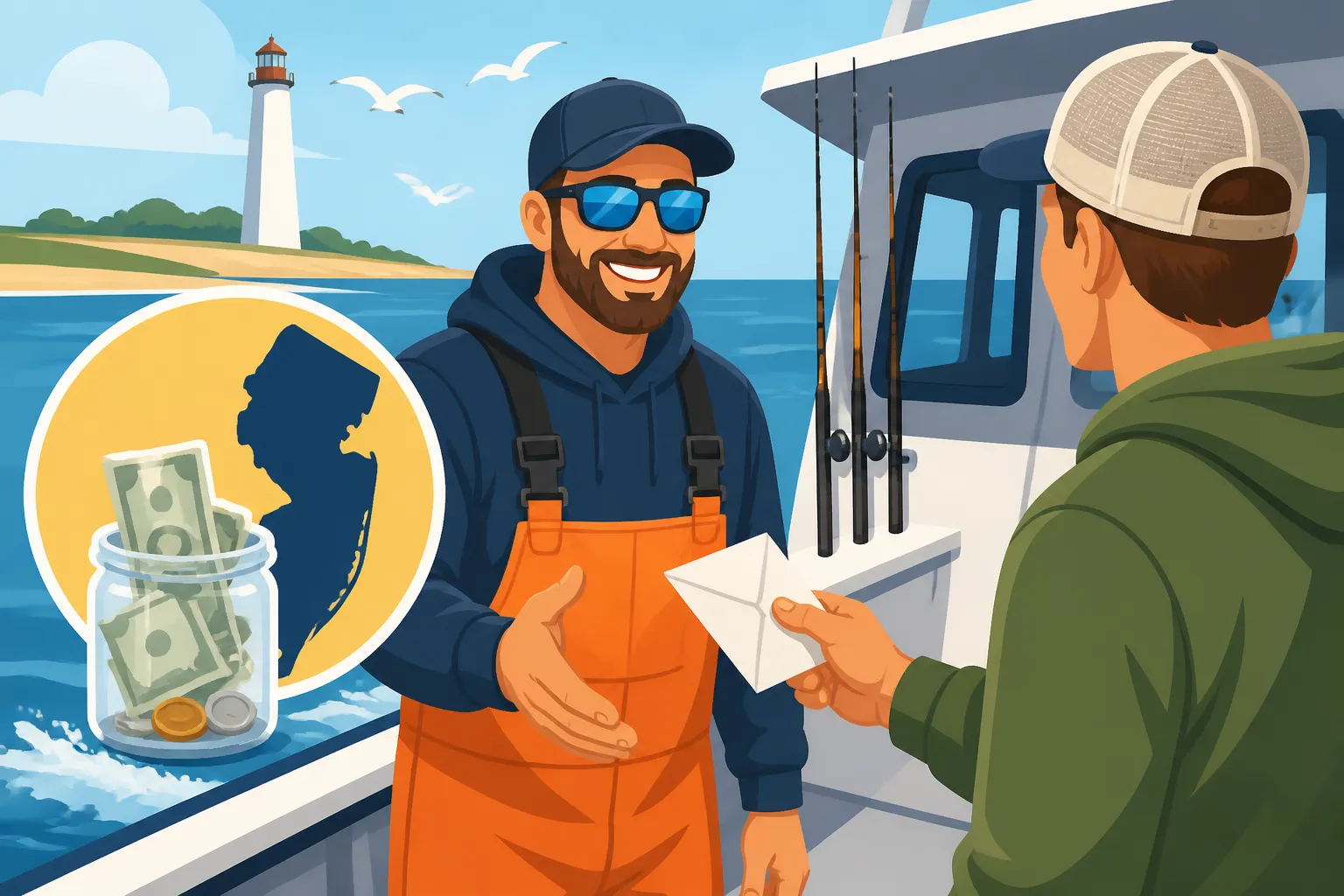
When you're ready to tip, it's generally best to hand the cash directly to the mate at the end of the trip. This ensures they receive it immediately and directly. You'll often see mates making their way around the boat as the trip concludes, perhaps gathering final fish for cleaning or helping people pack up. This is a natural time to discreetly offer your tip. A simple "Thank you for all your help today, I really appreciate it" along with the tip is perfect. On some private charters, there might be multiple mates, and if so, your tip might be split among them, or you might choose to give separate tips if one mate was particularly helpful.
What About the Captain?
The captain's role is different from the mate's. The captain is responsible for navigating the vessel, finding the fish, ensuring everyone's safety, and making critical decisions about where and how to fish. They are the ultimate authority on board and bear immense responsibility. On many charters, especially smaller private boats, the captain might also act as a mate, assisting directly with fishing tasks. In these cases, you would tip the captain just as you would a mate, based on their combined efforts.
However, on larger operations or when there's a dedicated mate on board, the captain's compensation usually comes from the charter fee itself. They own the business or are salaried. Therefore, while it's not strictly required to tip the captain separately if there's a mate, it's certainly a thoughtful gesture if you feel they provided exceptional guidance, found a secret spot, or went out of their way to make your trip special. If you do choose to tip the captain, you would do so separately from the mate's tip. Some anglers will give a portion to the captain and the majority to the mate, or simply give the entire tip to the mate knowing it's customary for them to share a small portion with the captain. When you book a charter, you can always ask directly if the tip should go solely to the mate or if the captain also receives a share. Reputable charters listed on platforms like FishingBooker usually have clear guidance on this.
Group Trips and Tipping Responsibilities
When you're fishing with a group of friends or family on a private charter, the tipping responsibility can sometimes feel a bit vague. The best approach is to designate one person as the "tip collector" beforehand. This individual can collect the agreed-upon tip amount from everyone in the group at the start or during the trip, and then present the collective tip to the mate (or captain/mate if applicable) at the end. This prevents awkward fumbling at the dock and ensures a fair and substantial tip is given.
It's a good idea to discuss tipping expectations with your group when you're planning the trip. Deciding on a percentage or a set amount per person in advance makes the process smooth and hassle-free. This also avoids situations where some members of the group might not contribute their fair share, leaving others to make up the difference. A simple conversation upfront can save a lot of potential discomfort later on.
When and How to Tip
Knowing the amount to tip and who to give it to is great, but the practical logistics of when and how to actually present the tip can still feel a little awkward for some. Let's make it easy and straightforward so you can focus on the memories you've made.
The Best Time to Hand Over the Tip
The ideal time to give your tip is at the very end of the fishing trip, just before you disembark the boat or as you're collecting your cleaned fish. This timing works best for a few reasons:
- Full Service Evaluation: By waiting until the end, you've experienced the entire trip, from start to finish. You've seen the crew's effort, assistance, and attitude throughout the day, including any fish cleaning services. This allows you to give a tip that accurately reflects the complete service.
- Crew Availability: Mates are usually busy assisting passengers with their gear, offloading fish, or getting ready for the next group. They're typically moving around the deck, making it easy for you to catch their eye and offer your gratuity discreetly.
- No Pressure: Giving it as you're leaving avoids making the crew feel like they're "earning" their tip based on a mid-trip assessment. It's a final thank you for a job well done.
Avoid giving a tip at the beginning of the trip unless it's a very specific, pre-arranged situation. Tipping upfront removes the incentive for consistent, excellent service throughout the day. Wait until you've had the full experience to show your appreciation.
Cash vs. Other Payment Methods
When it comes to the method of tipping, cash is king. Always aim to bring enough cash for your tip. Here's why:
- Direct and Immediate: Cash goes directly into the crew's pocket, immediately. They don't have to wait for it to clear, or for the business to process it and then pay them out.
- No Fees: If you were to add a tip to a credit card payment for the charter, the charter company might incur processing fees on that amount, which could reduce the actual tip the crew receives. With cash, what you give is what they get.
- Privacy: Handing over cash is generally more discreet than asking to add it to a card payment.
While some charters might have options to add a tip to a credit card payment, or use digital payment apps, cash is universally preferred and appreciated. Before your trip, make sure to visit an ATM so you're prepared. You can also ask the charter company directly when booking, or check their FAQs on platforms like FishingBooker, if they prefer a specific tipping method, though cash remains the gold standard. For details on general trip planning, you might find What Should You Bring on a New Jersey Party Boat Trip? helpful, and remembering cash for tips is definitely a key item!
Discreet Tipping Practices
Tipping doesn't need to be a grand public announcement. In fact, many people prefer to do it subtly. A quick, quiet exchange with the mate is usually the most comfortable approach for everyone.
- Handshake Method: A common way is to shake the mate's hand while discreetly passing them the folded bills.
- Small Envelope: Some anglers prefer to put the tip in a small envelope labeled "Crew Tip" or "Mate's Tip" and hand it over. This can be especially useful for larger groups to collect and present a collective sum.
- Direct Conversation: A simple, sincere verbal "thank you" while handing over the cash is always well-received.
The goal is to show appreciation respectfully and efficiently, without making anyone uncomfortable. Remember, the crew are professionals, and they understand that tipping is part of the industry's culture. Your gesture of gratitude will be well-received, regardless of the precise method you choose, as long as it's genuine and thoughtful.
Common Tipping Mistakes to Avoid
Tipping etiquette can be tricky, and it's easy to fall into common pitfalls that might inadvertently cause offense or confusion. By being aware of these mistakes, you can ensure your New Jersey fishing trip ends on a positive note for everyone involved.
Forgetting to Budget for a Tip
This is probably the most common mistake, and it often stems from not being familiar with charter fishing customs. Anglers meticulously budget for the charter fee, bait, tackle (if not provided), food, drinks, and even gas to get to the marina, but completely forget to factor in the tip. Then, at the end of a fantastic day, they find themselves scrambling for cash, or worse, unable to offer a tip at all.
This can be incredibly embarrassing for the angler and disheartening for the crew, who have likely just spent hours working hard to provide a great experience. Always, always consider the tip as part of the total cost of your fishing trip. When you're planning your budget, set aside that 15-20% before you even leave the house. Think of it as an essential component, just like your fishing license or the cost of the charter itself. Being prepared with cash on hand makes the end of the trip smooth and respectful. Many online booking sites, including FishingBooker, will often have reminders about customary tipping, which can be a helpful prompt.
Tipping Based Solely on Catch (Without Considering Effort)
This is a significant misunderstanding of tipping culture in the fishing industry. While everyone wants to catch a cooler full of fish, judging a crew's performance—and thus your tip—solely on the quantity or size of fish caught is unfair and incorrect. Fishing is, by its very nature, unpredictable. Weather, tides, bait schools, and fish migration patterns (see New Jersey Striped Bass Slot Limit: 28 to 38 Inches for how some limits are set) all play a role, and many of these factors are completely out of the captain and mate's control.
What you are tipping for is the crew's effort, expertise, service, safety, and positive attitude throughout the trip. Did the captain try multiple spots? Did the mate work tirelessly to help everyone, keep lines untangled, and maintain a cheerful disposition? If they did all of that, even on a slow day, they've earned their tip. Don't penalize them for factors beyond their control. A low tip based solely on a poor catch implies that their hard work and dedication mean nothing if the fish aren't biting, which can be incredibly demotivating. Remember to tip for the experience and service, not just the fish.
Assuming the Tip is Included
Unless explicitly stated otherwise by the charter company in writing or in your direct communication, never assume that the tip is already included in the price of your New Jersey fishing charter. This is a very rare practice in the charter fishing world, and if it were, it would almost certainly be highlighted as a unique selling point.
If you have any doubt, it's perfectly acceptable to ask when you book your trip, "Is gratuity included in the charter fee?" Most reputable operators will appreciate your directness and clarify their policy. Don't just guess or assume, as this often leads to the crew being short-changed. Always go into the trip expecting to tip, and be prepared to do so. If for some reason a charter does include gratuity, then you can decide if you still want to offer an additional amount for truly outstanding service. For clarity on all aspects of booking, especially about New Jersey Charter Fishing Cancellation Policies or what is included, always communicate with the charter operator directly.
Not Tipping at All
The biggest mistake, and one that should be avoided at all costs, is simply not tipping the crew. If you had a safe trip, the crew performed their duties, and you made it back to the dock, a tip is expected. Unless there was a truly egregious, unacceptable breach of safety, rudeness, or complete lack of effort (which should be reported to the charter owner and potentially relevant authorities), not tipping is considered highly disrespectful.
The crew works incredibly hard, often for long hours and under tough conditions, to provide you with a memorable experience. Their income relies heavily on your gratuity. Leaving without tipping sends a message that their efforts were unappreciated, and it can significantly impact their livelihood. If you're on a budget, it's better to choose a less expensive trip and tip appropriately than to book a higher-cost charter and then skip the tip altogether. A fishing trip is a luxury experience, and tipping is an integral part of that experience, ensuring that the professionals who facilitate your adventure are fairly compensated for their dedication and service.
Disclaimer
This article is for general informational purposes only and does not constitute professional advice. Laws, prices and regulations vary by location and change over time. Consult a qualified professional for guidance on your specific situation.