What Do Striped Bass Eat in New Jersey Waters?
There's nothing quite like the thrill of chasing striped bass in New Jersey's diverse waters, but boy, can they be finicky eaters! You head out, full of hope, only to find them ignoring everything you throw. It's enough to make you pull your hair out. This guide is all about peeling back the curtain on what these magnificent fish are really munching on, helping you crack the code and put more stripers in your net.
The Opportunistic Predator: Understanding Striped Bass Feeding Habits
Striped bass, often affectionately called stripers or rockfish, are truly remarkable creatures. They're not picky eaters by any stretch of the imagination, which is both a blessing and a curse for us anglers. They are supreme opportunistic predators, meaning they'll pretty much devour anything that's readily available and fits into their surprisingly large mouths. This adaptability is precisely what makes them so successful in such a wide range of environments, from the turbulent ocean surf to the calm, brackish estuaries and even far up freshwater rivers.
Think about it: one day you might find a striper gorging on schools of tiny baitfish out in the open ocean, driving them to the surface in a spectacular blitz. The next, that same fish (or one just like it) could be tucked deep in a marsh creek, patiently waiting to ambush a crab or a passing minnow. This incredible flexibility in their diet means that a successful angler in New Jersey needs to be more than just good at casting; they need to be a detective, constantly observing and inferring what the local stripers might be feasting on at that very moment. It's a constant puzzle, but that's part of the fun, right? Understanding their general tendencies is the first step toward becoming a more effective striper hunter.
General Diet Overview
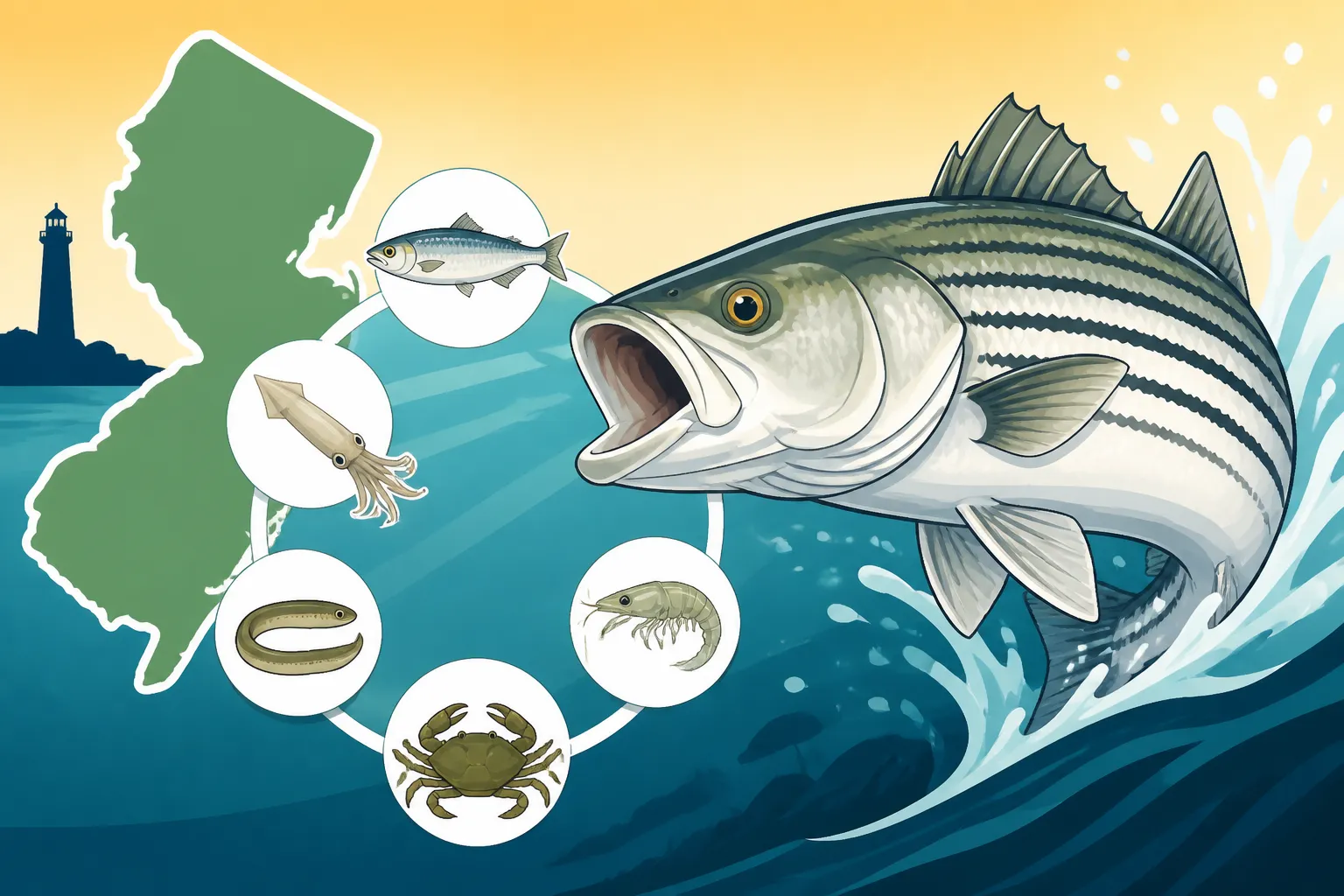
When we talk about the general diet of a striped bass, we're really talking about a smorgasbord of aquatic life. They are powerful, efficient hunters that primarily consume other fish, but they're not above supplementing their diet with a wide variety of crustaceans and even some cephalopods. If it swims, crawls, or drifts into their strike zone and looks like a decent meal, chances are a striper will try to eat it. This is why you hear so many different stories about what "works" for stripers – because at different times and in different places, everything works.
In saltwater, their primary targets are usually schooling baitfish, which provide a high-calorie, easily accessible food source. However, as they move into estuaries and even further upstream into brackish or even freshwater areas, their menu shifts dramatically to whatever the local ecosystem provides. Picture a large striper moving through the Navesink River, encountering an abundance of small river herring. That's a perfect meal for them. Now imagine that same fish, or one of its brethren, cruising along a shallow flat in Barnegat Bay, rooting out a soft-shell crab. Both scenarios are perfectly normal for a striper, demonstrating their incredible ability to adapt their feeding strategy to the available pantry. It's not just about what's there; it's about what's easiest to catch at any given moment. This opportunistic nature is a key characteristic of their survival and success.
Why Their Diet Changes So Much
The ever-changing diet of striped bass isn't random; it's a direct response to a complex interplay of environmental factors. Understanding these drivers is crucial for predicting what they'll be keying in on. First and foremost, their diet is heavily influenced by the season. As the water temperatures rise and fall, different baitfish and crustaceans become active or migrate through New Jersey waters. In the spring, for instance, herring and shad runs ignite a feeding frenzy in our rivers, while in the summer, bunker and sand eels dominate the ocean and bay menus. The fall run sees a massive exodus of baitfish, and stripers gorge themselves on anything they can catch before heading south or finding deeper wintering grounds.
Location also plays an enormous role. A striper patrolling the open beaches off Island Beach State Park will primarily be targeting species like sand eels, spearing, and juvenile bunker in the wash. However, a striper holding in a tidal creek that feeds into the Mullica River might be more interested in fiddler crabs, shrimp, or even small freshwater minnows. Water temperature affects not only the activity levels of the stripers themselves but also the metabolism and availability of their prey. Colder water often means slower-moving bait, while warmer water can bring vast schools of bunker right to our shorelines. Lastly, even the time of day can influence what a striper eats. Night feeders might key in on eels or larger, slower-moving prey, while during the day, they might chase fast-moving schools of peanut bunker. It’s like us changing our meal plans based on what's fresh at the market, what restaurant is open, and whether it’s breakfast, lunch, or dinner! This dynamic nature is why there's no single "best" bait for stripers; it always depends.
Key Forage Species in New Jersey's Saltwater and Brackish Estuaries
New Jersey's coastline, bays, and tidal rivers provide an incredibly rich buffet for striped bass. From the smallest crustaceans to large, oily baitfish, there's always something on the menu. Knowing what these primary food sources are and when and where they're available can give you a massive advantage when planning your fishing trips. This section delves into the most common and important forage species that fuel the New Jersey striped bass fishery.
These are the main dishes that drive the big schools and the trophy fish, and understanding their movements and habits is often the difference between a frustrating day and an unforgettable one. It's not just about throwing a lure that looks like a fish; it's about throwing a lure that looks like the fish they're actually eating right then and there.
The Mighty Bunker (Menhaden)
When you talk about striped bass food in New Jersey, bunker (Atlantic Menhaden) almost always comes up first. These oily, protein-rich baitfish are like candy for stripers, especially the larger migratory fish. Bunker travel in massive, dense schools, and when they show up along the New Jersey coast, it's often a sign that the striped bass action is about to explode. Anglers will often spot them by looking for dark "slicks" on the water (oil from the bunker) or by seeing their tell-tale flips and swirls on the surface. When gannets and gulls are dive-bombing into a churning mass of water, chances are there's a bunker school being hammered from below by hungry stripers and bluefish.
There are two main sizes of bunker that anglers encounter: the large, adult "mossbunker" and the smaller, juvenile "peanut bunker." Adult bunker are excellent for live-lining or chunking. Many anglers will net them in the bays or snag them with treble hooks in the ocean to use as live bait, which is often irresistible to big stripers. When stripers are on adult bunker, they tend to prefer larger presentations, either a whole live bunker or a substantial chunk of cut bait. Peanut bunker, on the other hand, show up in huge numbers, particularly in the fall, and are a favorite snack for schoolie stripers and even larger fish. What Bait Works Best for Striped Bass in the Fall Run? will tell you more about how these smaller bunker become prime targets during the colder months. When stripers are focused on peanuts, smaller swimming plugs, soft plastics, and metal jigs that mimic their size and flash are incredibly effective.
Herring and Shad
As spring rolls around in New Jersey, the anadromous herring (Atlantic and Alewife) and shad (American and Hickory) begin their annual migration from the ocean into our tidal rivers to spawn. This natural event creates one of the most reliable and exciting feeding opportunities for striped bass. Stripers, having spent the winter in deeper waters or migrated north from southern regions, are hungry and instinctively know that these fatty fish are a prime source of energy. They stack up at the mouths of rivers like the Raritan, Mullica, and Delaware, waiting for the schools to push upstream.
The timing of these runs is critical. Anglers often keep a close eye on water temperatures and historical patterns to anticipate when the herring and shad will arrive. For instance, you can learn more about this by reading When Do Striped Bass Migrate Through New Jersey?. When these baitfish are present, stripers will key in on them almost exclusively. Live herring or shad, if legal to use and obtainable, are deadly. Otherwise, anglers often resort to large swimbaits, poppers, and even traditional shad darts or flies that imitate the profile and flash of these migrating fish. The commotion of thousands of baitfish moving upstream creates a feeding frenzy, making it an ideal time for anglers to target aggressive stripers.
Spearing, Sand Eels, and Other Small Baitfish
While the big bunker and herring schools grab a lot of headlines, many of the day-to-day meals for New Jersey stripers come from smaller, yet equally abundant baitfish like spearing, sand eels (often called sand lances), and various juvenile minnows. These tiny forage fish often form dense schools in the bays, estuaries, and along the nearshore ocean, especially during the warmer months. When stripers find a school of these small baitfish, they'll often "blitz" them, driving them to the surface in a spectacular display of feeding activity that sends water showering into the air.
For anglers, this is often the most common scenario they encounter, especially when targeting schoolie stripers from the surf, piers, or small boats in the bay. The key to success when stripers are feeding on these small baits is "matching the hatch." This means using lures that closely imitate the size, shape, and color of the natural forage. Slender metal jigs, small soft plastic paddletails, and slender swimming plugs are all excellent choices. It's often helpful to have a variety of these in your tackle box, in different weights and colors, so you can adapt to what the fish are currently hitting. You can find a huge selection of these specific lure types on Amazon, making it easy to prepare for any scenario. Getting the presentation right, especially the retrieve speed and depth, is crucial when the stripers are focused on these fast-moving, smaller baits.
Crabs, Worms, and Crustaceans
It's easy to think of striped bass as purely fish-eaters, but a significant portion of their diet, especially in shallow bays, estuaries, and around structure, consists of crabs and worms. These bottom-dwelling critters might not be as glamorous as a surface blitz of bunker, but they are a constant, reliable food source that stripers definitely take advantage of. Blue claw crabs are a prime example; when they're shedding their hard shells and becoming "soft shell" crabs, they are incredibly vulnerable and irresistible to stripers. Fiddler crabs, green crabs, and even small rock crabs found around jetties and pilings also end up on the striper menu.
In certain areas of New Jersey, particularly the muddy flats and channels of Raritan Bay, marine worms like bloodworms and sandworms are a crucial food source. Stripers will cruise these areas, rooting out worms from the soft bottom. Anglers targeting Raritan Bay stripers often swear by bloodworms, and for good reason—they're incredibly effective. As explained in Why Bloodworms Work So Well in Raritan Bay, their potent scent is a major attractant. Using simple bottom rigs with these baits can be incredibly productive, especially when the stripers are not actively chasing baitfish. Beyond crabs and worms, stripers will also opportunistically slurp up shrimp, grass shrimp, and other small crustaceans that are common in estuarine environments. This diverse diet demonstrates just how adaptable stripers are, and why anglers need to be prepared with a variety of offerings.
Freshwater and Brackish Water Delights: Beyond the Ocean
While New Jersey's coastal waters are synonymous with striped bass fishing, it's important to remember that these fish are highly migratory and quite comfortable venturing far up into brackish and even purely freshwater environments. When they do, their diet naturally shifts to reflect what's available in these less saline ecosystems. This opens up entirely new strategies for anglers and can lead to some truly surprising catches. Understanding these inland food sources is key to targeting stripers that have ventured away from the traditional saltwater haunts.
Alewives and River Herring
We touched on herring earlier, but it's worth re-emphasizing their importance specifically within the freshwater reaches of New Jersey's tidal rivers. As alewives and other river herring push far upstream to complete their spawning cycle, striped bass follow them relentlessly. These anadromous fish are a high-value meal, and stripers will chase them for miles up rivers like the Delaware, Raritan, and Mullica. Anglers targeting these inland stripers during the spring runs know that imitating these river herring is paramount.
Often, these fish are smaller than the bunker found in the ocean, so scaling down your lure size becomes important. Soft plastic swimbaits with paddle tails, often in silver, white, or olive colors, can be incredibly effective when retrieved to mimic a distressed herring. Topwater plugs can also trigger aggressive strikes when stripers are actively chasing herring near the surface. The stripers that commit to these freshwater pushes are often highly focused on this specific forage, making them a bit more predictable if you can locate the herring schools. It's a thrilling experience to hook into a powerful striper far from the roar of the ocean, all thanks to these crucial baitfish.
Crayfish, Frogs, and Insects
This is where the "opportunistic" nature of striped bass really shines, especially for those that spend extended periods in brackish estuaries or even venture into purely freshwater sections of rivers and connected lakes. While not their primary diet, stripers will absolutely gorge themselves on crayfish, frogs, and even large insects if the opportunity arises. Imagine a striper lurking near a rocky river bottom or under an overhanging bank where crayfish are abundant. A struggling crayfish becomes an easy meal, full of protein.
Similarly, a frog hopping near the water's edge or a large insect struggling on the surface represents a quick, easy snack. This is why freshwater bass anglers sometimes get a shock when a massive striper blasts their topwater frog or a crankbait designed to imitate a crayfish! It underscores the fact that stripers are predators first and foremost, and they're not going to pass up an easy meal just because it's not a fish. Understanding this wider palette means that if you're fishing in a tidal creek or river with known populations of these creatures, trying lures that mimic them can be a surprisingly effective tactic. This adaptability is part of what makes New Jersey Fishing License Guide for 2026 so comprehensive—you need to know the rules for all these different environments where stripers roam!
Smaller Fish in Inland Waters
Beyond the anadromous species, stripers that push into brackish or freshwater environments will also feed on the local baitfish populations native to those areas. This can include shiners, various minnow species, and even juvenile panfish like yellow perch or sunfish. If a striper finds itself in a river or lake where these smaller fish are abundant, they will readily switch their diet to take advantage of the easy pickings.
Consider the stripers that ascend the tidal portions of rivers like the Delaware. While they might initially be chasing shad, if they linger, they'll certainly consume smaller resident fish that they encounter. Anglers need to pay attention to the specific ecosystem they're fishing. If you're in an area known for abundant shiners, a small, silver or golden swimbait or crankbait might be more effective than a large bunker imitation. These stripers might be more accustomed to smaller, faster-moving prey, and your presentation should reflect that. It's about blending in with the local food chain, ensuring your offering looks like the most natural, appealing meal available to that particular fish.
How to "Match the Hatch" for New Jersey Stripers
Knowing what striped bass can eat is one thing; figuring out what they are eating at any given moment is the real challenge, and the key to consistent success. This is where the concept of "matching the hatch" comes into play, a term borrowed from fly fishing that perfectly describes the art of presenting bait or lures that mimic the dominant food source the fish are currently focused on. It requires keen observation, a bit of detective work, and the right tackle in your arsenal.
Observing the Environment
The first and most crucial step in matching the hatch is to become a truly observant angler. The water around you is constantly giving away clues, if you just know what to look for. Start by scanning the surface for any signs of baitfish activity. Are there schools of tiny fish showering out of the water? That's a huge indicator that predators are below, and those predators are likely stripers feeding on small bait. Look for subtle ripples, dark patches, or "nervous water" which often signal a school of bait just below the surface.
Birds are your best friends in this scenario. Gulls, terns, and especially gannets are often diving into schools of baitfish, making them easy to spot. If you see birds working, head in that direction—they're doing the legwork for you! A "bunker slick" on the water, an oily sheen that comes from bunker being torn apart, is another dead giveaway. Beyond visual cues, think about the time of year and location. Are you near a river mouth during a known New Jersey Shad Runs on the Delaware River? Then shad imitations are likely your best bet. Are you fishing a shallow bay flat at low tide? Crabs might be getting flushed out, making them a prime target. Even a How to Spot a Bluefish Blitz From the Beach can indicate what baitfish are being targeted, as stripers often feed alongside bluefish. These environmental observations are your real-time intelligence for what's on the menu.
Choosing the Right Bait and Lure
Once you've made your observations, it's time to choose your weapons! This is where you put your detective work into action. If you're seeing small, slender baitfish, reach for slender metal jigs, small soft plastics, or thin profile swimming plugs. If larger, fatter bunker are present, it's time for big plugs, large swimbaits, or—if regulations allow and you can get them—live or chunked bunker. The table below offers a quick guide to some common scenarios:
| Primary Forage | Common Location | Best Baits / Lures (Examples) | Technique Examples |
|---|---|---|---|
| Bunker (Menhaden) | Ocean, large bays, inlets | Live bunker, chunk bait, large swimming plugs, umbrella rigs | Live-lining, chunking, trolling, casting |
| Sand Eels / Spearing | Nearshore ocean, surf, bays | Slender metal jigs, soft plastic sand eel imitations, small swimming plugs | Casting & retrieving, jigging |
| Herring / Shad | River mouths, tidal rivers | Large swimbaits (silver/blue), poppers, large flies, live herring/shad | Casting, retrieve, live-lining |
| Crabs / Shrimp | Bays, shallow flats, marsh edges | Whole or cut crabs, scented soft plastics (shrimp/crab), peeler crab | Bottom fishing, casting along structure |
| Bloodworms / Sandworms | Mud flats, specific bay areas | Live bloodworms/sandworms | Bottom fishing, high-low rigs |
| Small Freshwater Baitfish | Upper tidal rivers, brackish lakes | Small crankbaits, inline spinners, small soft plastics | Casting, steady retrieve |
Remember, sometimes a particular color or action makes all the difference. Having a diverse selection of lures is key, and online retailers like Amazon offer an incredible array of options to fill your tackle box with everything from tiny sand eel imitations to massive bunker plugs. Don't be afraid to experiment, but always start with what the stripers are most likely eating. You can read more in-depth on this topic with Best Lures for Striped Bass Fishing.
Understanding Seasonal and Tidal Influences
Finally, understanding the broader patterns of seasonal movements and tidal flows in New Jersey waters is a non-negotiable part of matching the hatch. These macro-level influences dictate when and where certain food sources will be available, and consequently, where the stripers will be looking for their next meal.
Seasonal migrations are huge. In spring, the focus shifts to river herring and shad runs in the estuaries. During summer, ocean and bay fishing often centers around bunker, spearing, and sand eels. The fall run is a chaotic, massive feeding event where stripers gorge on anything and everything as they move south. Knowing these general patterns helps you select a starting point for your tackle. For detailed information on these timings, check out New Jersey Fishing Season Dates and Closures.
Tides are equally critical, especially in bays and tidal rivers. A falling tide, for instance, can wash crabs and small baitfish out of marsh creeks and off shallow flats, concentrating them in channels where stripers can ambush them. A rising tide might push bait into those same shallow areas, making them prime hunting grounds. Learning How to Read Tide Charts for Better Fishing in New Jersey is a game-changer, helping you predict when bait will be most vulnerable. Similarly, understanding the nuances of Best Tide for Surf Fishing Striped Bass can dramatically improve your chances from the beach. By combining environmental observation with a solid grasp of seasonal and tidal patterns, you'll be well on your way to consistently anticipating what New Jersey's striped bass are eating.
Disclaimer
This article is for general informational purposes only and does not constitute professional advice. Laws, prices and regulations vary by location and change over time. Consult a qualified professional for guidance on your specific situation.