What Is the New Jersey Weakfish State Record?
There’s a special kind of thrill that comes with reeling in a fish that feels… different. Heavier. More powerful. The kind of fish that makes you wonder, "Could this be the one?" For many New Jersey anglers, that dream fish is often a weakfish, and the ultimate aspiration is to land a state record. This guide will dive into the impressive feat of holding the New Jersey weakfish state record, what it takes to catch a truly monumental tiderunner, and how you can pursue your own trophy weakfish dreams in our vibrant waters.
The New Jersey Weakfish State Record Holder: A Legendary Catch
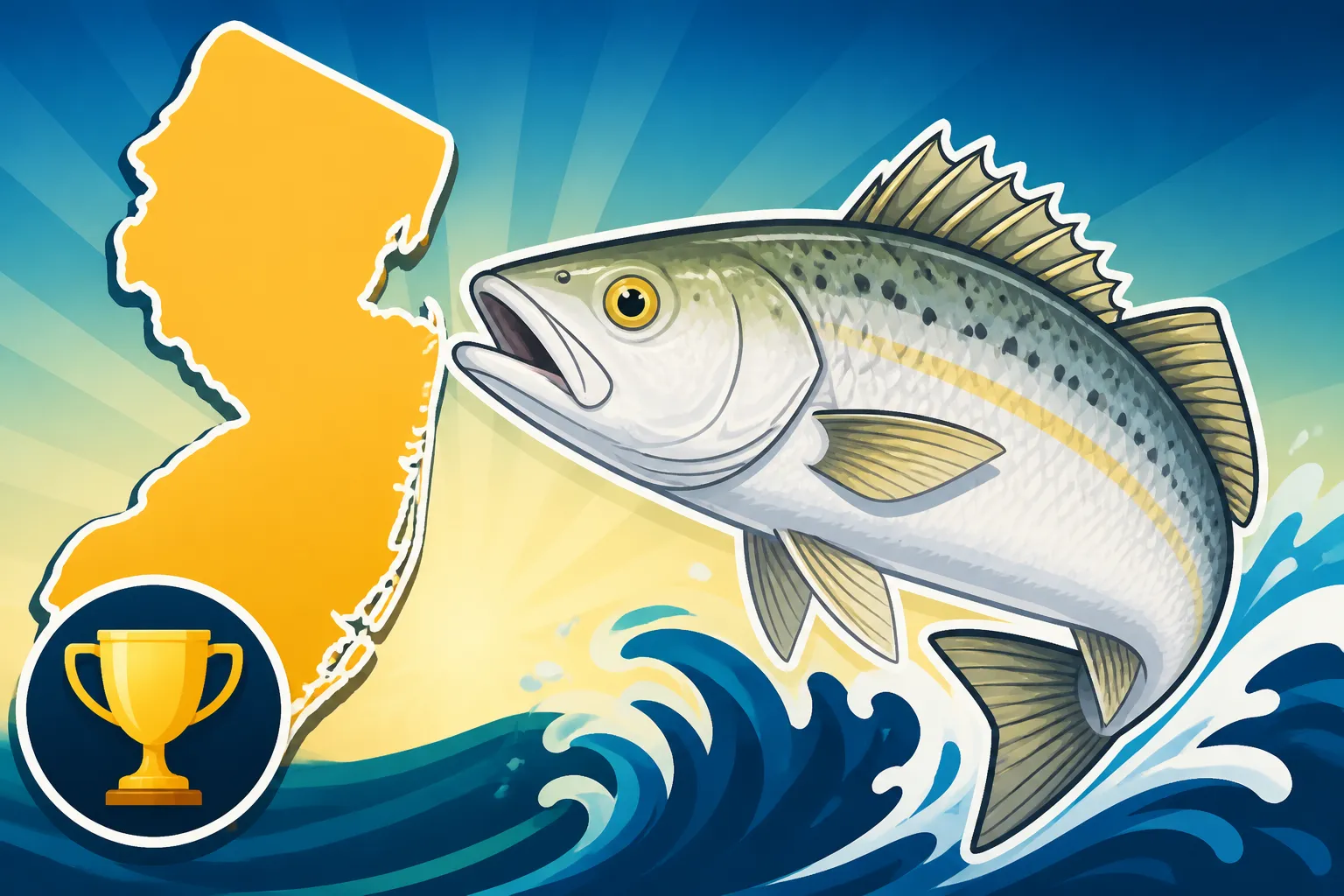
Every angler secretly dreams of etching their name into the record books, and for weakfish in New Jersey, that honor belongs to a truly incredible catch. The New Jersey weakfish state record currently stands at an astounding 19 pounds, 2 ounces. This colossal weakfish was caught by angler Jeffrey P. Wetzel way back in 1982, in the pristine waters of Delaware Bay. Think about that for a moment – a nearly 20-pound weakfish! It's a testament to the potential of our waters and the sheer determination of anglers. This record has held for decades, making it a true benchmark for anyone targeting these beautiful, hard-fighting fish.
The Angler Behind the Legend
Jeffrey Wetzel's name is legendary among New Jersey weakfish enthusiasts. Landing a fish of that magnitude isn't just luck; it speaks to skill, patience, and a deep understanding of the species and its habits. Imagine the fight, the adrenaline, and the careful maneuvering required to bring such a powerful fish to the boat. This wasn't just a big fish; it was a weakfish of a lifetime, caught during a time when weakfish populations in the Delaware Bay were particularly robust, offering prime opportunities for truly giant specimens.
The Moment of Truth and Official Certification
Catching a potential state record isn is just the first step. The process of getting it officially certified is rigorous and designed to ensure accuracy and fairness. For a fish like Wetzel's 19-pounder, every detail matters. This involves immediate and accurate weighing on a certified scale, usually at a local tackle shop or marina, with witnesses present. Length and girth measurements are also crucial, often requiring official forms to be filled out and submitted to the New Jersey Division of Fish and Wildlife. The state takes these records seriously, wanting to validate every claim with ironclad evidence. It's not just about the thrill of the catch; it's about proving it beyond a shadow of a doubt.
Understanding Weakfish in New Jersey Waters
Weakfish, often affectionately called "tiderunners," are iconic in New Jersey's coastal and estuarine environments. Their scientific name, Cynoscion regalis, actually means "royal dogfish," a nod to their predatory nature and esteemed status among anglers. While the record weakfish was caught decades ago, these beautiful fish continue to be a prized target, particularly in areas like Delaware Bay and our back bays. You can learn more about their movements and habitats in our guide on New Jersey Weakfish Decline and Conservation.
Why Weakfish Are Such a Prize
There's something incredibly special about weakfish. Their iridescent, spotted flanks shimmer with hues of purple, green, and gold. They're powerful fighters, often making blistering runs and headshakes that test an angler's skill and tackle. On top of that, they are considered excellent table fare, with delicate, flaky white meat. For all these reasons, they command respect and admiration. While they might not be as universally abundant as they once were, the pursuit of a true trophy weakfish remains a passionate endeavor for many. The sheer beauty and fighting spirit of a large tiderunner make them an unforgettable catch.
The Importance of Weight and Condition for a Record
When it comes to breaking a record, it's not just about how long the fish is. Length is important for size limits, but for a state record, weight is king. A record-setting weakfish, like the 19-pounder, isn't just long; it's incredibly robust, with significant girth. This indicates a healthy, mature fish that has had ample access to food. Factors like water temperature, availability of baitfish (like bunker, spearing, or grass shrimp), and overall habitat health contribute to a fish's ability to reach such immense proportions. Anglers looking to catch a truly massive weakfish need to target areas and seasons where these conditions are optimal.
Chasing Your Own Weakfish Dream: Tips for Trophy-Sized Tiderunners
While breaking a multi-decade-old state record might seem daunting, it's the spirit of the chase that keeps anglers coming back. Focusing on techniques and locations known for producing larger weakfish can significantly increase your chances of landing a true trophy.
Prime Locations and Seasons for Big Weakfish
Historically, the Delaware Bay has been the hotspot for monster weakfish in New Jersey, and it remains a fantastic place to target them. Other productive areas include the expansive back bays along the Jersey Shore, such as Barnegat Bay, Great Bay, and the waters around Cape May. These areas offer ideal foraging grounds and protection for larger weakfish.
The best time to target weakfish generally aligns with their migration patterns, primarily in the late spring and into the summer months. You can get more details on specific timing in our article Best Time to Catch Weakfish in New Jersey. As water temperatures rise, they move into the bays and estuaries to feed aggressively. Focus your efforts during tidal changes, especially the beginning or end of a strong current, as this often brings baitfish through channels and rips where weakfish will ambush them.
Essential Gear and Techniques
To tackle a trophy weakfish, you need gear that can handle the fight but is also sensitive enough to detect their sometimes subtle bite.
Rods and Reels:
- A medium-light to medium power spinning rod, around 7 to 8 feet in length, provides the casting distance and sensitivity needed.
- Pair it with a reliable spinning reel in the 3000-4000 series range, spooled with 10-20 lb braided line. Braid offers incredible sensitivity and casting distance.
- Use a fluorocarbon leader of 20-30 lb test, as weakfish have sharp teeth and fluorocarbon is more abrasion-resistant and nearly invisible underwater.
Baits and Lures:
- Live Bait: This is often the undisputed champion for large weakfish. Live spot, peanut bunker, or even a large grass shrimp can be irresistible.
- Cut Bait: Freshly cut pieces of clam, squid, or bunker can also be very effective, especially when fished on a moving tide.
- Soft Plastics: Pink or chartreuse Gulp! artificial worms and minnows, fished on a light jig head, are incredibly popular and effective.
- Jigs: Bucktail jigs in pink, white, or chartreuse, tipped with a soft plastic or strip of squid, can be deadly when weakfish are feeding aggressively.
Many anglers find it convenient to source their fishing gear from reputable retailers. For example, a quick search on Amazon can reveal a wide range of suitable rods, reels, and terminal tackle that will stand up to a tough fight. You can find more comprehensive advice in our guide Best New Jersey Fishing Gear for Beginners.
| Gear Type | Recommended Specification | Key Benefit |
|---|---|---|
| Rod | 7-8 ft, Medium-Light to Medium power spinning | Sensitivity, casting distance, fighting power |
| Reel | 3000-4000 series spinning | Line capacity, smooth drag |
| Main Line | 10-20 lb braided line | Sensitivity, castability, strength |
| Leader | 20-30 lb fluorocarbon (3-4 ft length) | Abrasion resistance, stealth |
| Baits/Lures | Live spot/bunker, cut clam, Gulp! worms, bucktail jigs | Highly effective for weakfish, versatile colors |
Handling Your Potential Record Fish
Should you be fortunate enough to hook into a weakfish that looks like a contender, responsible handling is paramount.
- Fight Carefully: Don't horse the fish in. Let your tackle do the work.
- Net Wisely: Use a soft, rubberized landing net if possible to minimize scale and slime damage.
- Quick Measurements: If you plan to release, take quick, accurate length and girth measurements immediately. If you suspect a record, have a certified scale ready and get the fish to an official weigh station as quickly and calmly as possible.
- Photography: Get clear, well-lit photos for documentation, especially if it's a catch-and-release scenario.
- Release or Preserve: If releasing, revive the fish thoroughly. If aiming for a record, consult with the weigh station on proper preservation methods while awaiting official verification.
Remember, fishing regulations are in place to protect these valuable resources. Always be aware of How Bag and Size Limits Work in New Jersey and refer to the New Jersey Fishing Season Dates and Closures before heading out.
The Official Process for Certifying a State Record
So, you've landed that weakfish of a lifetime, and it looks like it might break the record. What next? The New Jersey Division of Fish and Wildlife has a clear process for certifying state records.
Immediate Steps After a Big Catch
The moment you land a fish that you believe could be a state record, time is of the essence.
- Keep it Alive (if possible): For freshwater species, keeping the fish alive in a livewell until it can be officially weighed can be crucial, though for a weakfish, immediate weighing is more practical due to size.
- Verify Weight and Measurements: You'll need to get the fish weighed on a certified scale. Many tackle shops and marinas have these. Bring a tape measure to get accurate length and girth measurements.
- Witnesses are Key: Have at least one, preferably two, independent witnesses present during the weighing and measuring process. Their signatures will be required on the official application.
- Documentation: Take clear photographs of the fish, especially with the measurements and scale reading visible.
- Contact NJ Fish and Wildlife: Immediately after weighing, contact the New Jersey Division of Fish and Wildlife's Bureau of Freshwater Fisheries or Marine Fisheries Administration. They will guide you through the next steps and provide the official application form.
The Role of the Division of Fish and Wildlife
The New Jersey Division of Fish and Wildlife acts as the official arbiter of state records. Their role is to ensure the integrity of the process and the accuracy of all submissions. They will:
- Review Application: Examine your completed application form, including all measurements, photos, and witness signatures.
- Verify Scale Calibration: Ensure that the scale used for weighing was properly calibrated and certified.
- Species Identification: Confirm the species of the fish. In some cases, a fisheries biologist might need to examine the specimen.
- Award Record: If all criteria are met, they will officially recognize the catch as a new state record.
This meticulous process ensures that any new record, like a potential weakfish record, is legitimate and stands the test of time. It's a badge of honor not just for the angler, but for the entire state's fishing heritage. Remember, all anglers also need to comply with the New Jersey Saltwater Registry Explained to legally fish our coastal waters, which you can typically handle online through the state's official channels or an authorized vendor like those found on Amazon. Always carry Carrying Proof of Your New Jersey Fishing License or registration. If you ever have questions, the New Jersey Conservation Police and License Checks are there to help ensure everyone follows the rules, contributing to healthy fisheries for all.
Disclaimer
This article is for general informational purposes only and does not constitute professional advice. Laws, prices and regulations vary by location and change over time. Consult a qualified professional for guidance on your specific situation.