How Big Do Weakfish Get?
It’s a question every angler asks when they hook into a fish they haven't seen before, or one that feels particularly hefty on the line: "Just how big can this thing get?" When it comes to weakfish in New Jersey, it's a valid curiosity, especially given their sometimes-elusive nature and the thrill of landing a real "tiderunner." This guide is here to shed some light on the true size potential of weakfish in our local waters, what factors influence their growth, and what you can realistically expect to catch.
Understanding Weakfish Growth and Size Potential in New Jersey
Weakfish, sometimes affectionately called "weakies" or "sea trout," are a fantastic game fish found throughout New Jersey's bays, estuaries, and nearshore ocean. Their size can vary quite a bit, making it exciting every time you feel that distinctive headshake on the other end of your line.
The Average Weakfish You'll Encounter
When you're out fishing in New Jersey, particularly in the back bays like Barnegat Bay or along the tidal rivers, the weakfish you’re most likely to encounter will typically fall into the 14 to 20-inch range. These are often younger fish, sometimes referred to as "spikes," that are still growing. They're feisty, fun to catch, and make for excellent table fare if you decide to keep a legal one. It's a fantastic feeling to catch a few of these, especially if you're trying out a new spot or introducing a new angler to the sport. While they might not be the giants you dream of, they represent the healthy population that keeps our fisheries vibrant.
As weakfish mature, they can reach lengths of 20 to 25 inches, and these are often referred to as "medium" or "nice" weakfish. You'll find these larger specimens in similar habitats, but often they prefer slightly deeper water or areas with more structure where they can ambush baitfish. Factors like the abundance of bait – think silversides, spearing, and juvenile menhaden – play a huge role in how quickly these fish grow. A weakfish in a nutrient-rich estuary with plenty of food will naturally pack on inches and weight much faster than one in a sparser environment.
Factors Influencing Weakfish Size
Weakfish growth is a dynamic process influenced by a combination of environmental factors, genetics, and food availability. It's not just about how long they live, but how well they thrive during their lifespan.
First and foremost, diet is paramount. Weakfish are predatory fish, and their diet consists primarily of smaller fish, shrimp, and crabs. Areas in New Jersey with a thriving population of these bait species, such as our expansive salt marsh systems and protected bays, tend to produce larger, healthier weakfish. If there's a consistent food supply, they don't have to expend as much energy hunting, allowing more energy to be diverted to growth.
Water temperature also plays a significant role. Weakfish are a warm-water species, preferring temperatures generally above 55 degrees Fahrenheit. During the warmer months of spring, summer, and early fall, their metabolism is higher, and they feed more actively, leading to faster growth rates. During colder periods, their growth slows down considerably as they become less active. New Jersey Weakfish Decline and Conservation efforts often focus on understanding these environmental factors to ensure healthy populations that can reach their full growth potential.
Lastly, habitat type can influence size. While smaller weakfish are common in shallow bays, larger, older weakfish often venture into deeper channels, nearshore ocean waters, and around structures like bridges, jetties, and artificial reefs. These areas can offer more substantial prey items and better cover, allowing them to grow to impressive sizes away from constant predation pressures. Knowing where these fish are likely to hold during different parts of the season is key to increasing your chances of landing a larger specimen.
Chasing the Giants: New Jersey's State Record Weakfish and Trophy Potential
Every angler dreams of catching a record-breaking fish, and weakfish are no exception. While the average catch is certainly rewarding, there’s something truly special about landing a weakfish that pushes the tape measure.
The Legendary New Jersey State Record
New Jersey has a rich history of impressive weakfish catches, and the state record stands as a testament to the incredible size these fish can attain in our waters. The current New Jersey state record weakfish weighed in at a massive 19 pounds, 2 ounces! This extraordinary fish was caught back in 1989, and it has held its place in the record books ever since, becoming a legend among local anglers. Imagine the thrill of hooking into something that large, feeling that surge of power, and knowing you’ve landed a fish of a lifetime.
Catching a weakfish anywhere near that size is an extremely rare feat, requiring a combination of skill, luck, the right conditions, and often, an intimate knowledge of weakfish habits and prime fishing locations. This record isn't just a number; it represents a truly exceptional specimen that grew to an immense size, likely due to a perfect storm of abundant food, ideal environmental conditions, and perhaps a touch of genetic predisposition for rapid growth. While most of us will never see a weakfish of that magnitude, it serves as an inspiring benchmark for what's possible in New Jersey's diverse fishery. For more specific details, you can often find information on New Jersey Weakfish State Record.
What Constitutes a "Trophy" Weakfish for Most Anglers
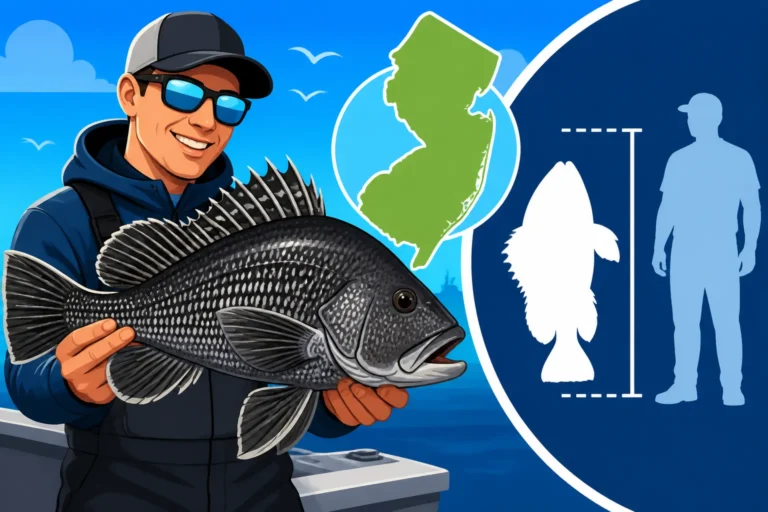
While the state record is a truly monumental catch, what most anglers consider a "trophy" weakfish is a bit more attainable, though still very impressive. For many, a weakfish hitting the 5 to 10-pound mark is considered a trophy. These fish are typically well over 25 inches in length, often pushing or exceeding the 30-inch mark. Landing one of these "tiderunners" is a memorable experience because they put up a fantastic fight on light tackle.
These larger weakfish, often female fish that have been around for several years, are powerful swimmers with broad shoulders, capable of strong runs and deep dives. When you hook one, you’ll know it immediately. They’re a different class of fish than the smaller spikes. For measuring such a prize, having a reliable measuring tape or board is essential. Many anglers choose robust, waterproof options available on Amazon to ensure accurate measurements, especially for those catch-and-release moments or if you're trying to prove a personal best.
The pursuit of these trophy weakfish often involves targeting specific areas and using different techniques than you might for smaller fish. They tend to be more wary and require a stealthier approach. A trophy weakfish isn't just about its weight or length; it's about the challenge, the fight, and the satisfaction of outsmarting a truly magnificent fish in our New Jersey waters.
Weakfish Lifespan and Age Estimation
Understanding how long weakfish live gives us a clearer picture of their maximum growth potential. Like many fish species, their age is directly related to their size, though not always in a perfectly linear fashion.
How Long Do Weakfish Live?
Weakfish are relatively fast-growing fish, especially in their early years, but their overall lifespan is not as extensive as some other long-lived game fish. Generally, weakfish in New Jersey waters are believed to live for about 6 to 9 years, with some larger, older individuals potentially reaching 10 to 12 years under ideal conditions. The first few years of their lives see the most rapid growth, as they pack on size quickly to avoid predation and become efficient hunters themselves.
Scientists determine the age of weakfish, and many other fish species, by examining their otoliths, also known as ear bones. These small, calcium carbonate structures have growth rings, much like a tree, that correspond to annual growth cycles. By carefully removing and analyzing these otoliths, biologists can accurately determine a fish's age. This information is crucial for fisheries management, as it helps in understanding population dynamics and setting appropriate regulations. For example, knowing the age structure of the population helps state agencies like the New Jersey Division of Fish and Wildlife implement rules like New Jersey Daily Bag Limits by Species to ensure sustainable fishing.
Age vs. Size: It's Not Always Linear
It’s tempting to assume that the biggest weakfish is always the oldest, but that's not always the case, especially with fast-growing species. While older fish certainly have had more time to grow, environmental conditions can greatly influence the size-to-age relationship.
For instance, a weakfish that hatches in a year with an exceptionally abundant baitfish population and favorable water temperatures might grow significantly faster than a fish from a less productive year, even if they are the same age. This means you could theoretically have a 3-year-old weakfish that is larger than a 4-year-old weakfish from a different year class or habitat. These younger, fast-growing fish can often be mistaken for older fish due to their size, but their true age would be revealed through scientific analysis.
Factors such as genetic predisposition also play a role; some weakfish might simply have genes that allow them to grow larger and faster. Furthermore, the specific habitat a weakfish occupies can impact its growth. A fish living in a prime feeding ground with less competition and fewer predators might invest more energy in growth, whereas a fish in a more stressful environment might grow slower. This complexity is part of what makes studying fish populations so fascinating and why managing them effectively requires careful consideration of many variables.
Fishing for Bigger Weakfish in New Jersey Waters
If your goal is to hook into those larger, trophy-sized weakfish, you'll need to adjust your strategy a bit. While you can certainly catch big ones by chance, specific approaches can increase your odds.
Targeting Specific Habitats for Larger Specimens
To find those larger weakfish in New Jersey, you'll want to focus on areas that offer deeper water, current, and structure. These are often the places where bigger weakfish will lie in wait, ambushing larger baitfish.
Look for deep channels and holes in our larger bays, such as Barnegat Bay and Great Bay. These areas serve as migratory routes and ambush points for predatory fish. Inlets like Manasquan Inlet, Barnegat Inlet, and Cape May Inlet are also prime locations. The strong currents in these areas bring in abundant bait, and the deep, moving water provides perfect conditions for larger weakfish to hunt. They'll often be found just outside the main current, in eddies or along the edges, waiting for food to be swept past them. Best Time to Catch Weakfish in New Jersey often aligns with when these fish congregate in these deeper, bait-rich zones.
Another excellent strategy is to target structures. Bridges, jetties, rock piles, and artificial reefs provide cover and attract baitfish, which in turn attract larger weakfish. Fishing around these structures, especially during tide changes, can be incredibly productive. For example, bridge pilings in deeper tidal rivers like the Mullica or Maurice rivers can hold some impressive weakfish. These areas require careful boat positioning or precise casting from shore. Sometimes, the bigger weakfish will hold tight to the bottom near these structures, requiring a different approach than the typical drifting you might do for smaller fish.
Baits and Techniques for Trophy Weakfish
When it comes to enticing a bigger weakfish, presentation and bait choice are crucial. These older, wiser fish can be more discerning, so offering something irresistible is key.
Live bait is often the most effective for larger weakfish. A lively peanut bunker, a small spot, or a live shrimp presented near structure or in a deep channel can be hard for a hungry weakfish to resist. You'll typically want to rig these baits on a simple fish-finder rig or a light jig head, allowing them to swim naturally. Make sure your leader is strong enough to handle a larger fish but light enough to not spook it. For those looking for specific live bait rigs, many components are easily found on Amazon, from swivels to sinkers.
Artificial lures can also be highly effective. Soft plastics are arguably the most popular choice for weakfish, and for good reason. Paddle tails, stick baits, and grub tails in colors like pink, chartreuse, or white, rigged on a light jig head, can mimic a variety of weakfish prey. Working these lures slowly along the bottom, or with a gentle jigging motion, often triggers a strike from a larger weakfish. Some anglers swear by scented soft plastics, also widely available on Amazon, believing the scent trail helps draw in those bigger fish. How to Catch Weakfish in New Jersey provides more detailed techniques, but generally, a slow, deliberate retrieve is often best for trophy fish.
Finally, consider fishing at night or during twilight hours. Weakfish are often more active feeders during these periods, and the low light conditions can make larger fish less wary. Casting soft plastics or fishing live baits around dock lights, bridge pilings, or other illuminated structures can be particularly productive after dark. Always remember to check current New Jersey Fishing Season Dates and Closures and local regulations before heading out, especially for specific weakfish rules.
| Weakfish Size Category | Typical Length Range (inches) | Typical Weight Range (pounds) | Description & Location |
|---|---|---|---|
| Average ("Spike") | 14 – 20 | 1 – 3 | Commonly found in shallow bays and estuaries, abundant, active feeders. |
| Medium ("Keeper") | 20 – 25 | 3 – 5 | More mature fish, found in slightly deeper bay channels and nearshore. |
| Trophy ("Tiderunner") | 25 – 30+ | 5 – 10+ | Larger, older fish, often found in deep inlets, around structure, and nearshore ocean. |
| State Record | N/A | 19 lbs, 2 oz | An exceptionally rare catch, a legendary fish in New Jersey's angling history. |
Weakfish in New Jersey offer a fantastic angling experience, from the feisty smaller ones to the elusive, impressive tiderunners that truly test your skills. Knowing their growth potential, where they live, and how to tempt them is half the battle. So, head out there, enjoy the beautiful waters of New Jersey, and who knows, you might just connect with your own personal best weakfish!
Disclaimer
This article is for general informational purposes only and does not constitute professional advice. Laws, prices and regulations vary by location and change over time. Consult a qualified professional for guidance on your specific situation.