Best Time to Catch Weakfish in New Jersey
There's nothing quite like the thrill of a weakfish bite – that distinctive thumping fight and the iridescent beauty of a freshly caught "yellowfin." But let's be honest, trying to pinpoint the exact best time to catch weakfish in New Jersey can feel like chasing a ghost. Many anglers spend hours on the water, only to come up empty, frustrated by the seemingly random nature of these elusive fish. This guide is here to unravel the mystery, offering practical, in-depth advice on understanding weakfish behavior and maximizing your chances for a successful outing.
Understanding Weakfish Migration and Peak Seasons
Weakfish, often lovingly referred to as 'sea trout' or 'yellowfins' by seasoned New Jersey anglers, are migratory fish that grace our coastal waters, bays, and estuaries primarily during the warmer months. Their presence is dictated largely by water temperature and the availability of their preferred forage. If you've ever found yourself wondering why they seem to disappear, it's usually because they've moved on to follow baitfish or find more comfortable water.
Spring Run: The First Signs of Weakfish
When the water temperatures in New Jersey's bays and nearshore ocean finally creep into the low to mid-50s Fahrenheit, usually around late April or early May, that's when you start hearing the first whispers of weakfish returning. This initial spring run can be incredibly exciting for anglers who've been waiting all winter. They're typically hungry after their migration and are often found feasting on baitfish that are also moving into the shallower, warmer waters.
During this period, weakfish tend to congregate in the deeper channels of our major bays, like Barnegat Bay, the Mullica River, and the Great Bay system. They're not yet spread out across the shallower flats, so targeting those specific channels where baitfish are schooling is key. Anglers often find success using soft plastic jigs or small bucktails fished near the bottom. It’s not uncommon to catch some real beauties during this early season, as many of the larger, mature fish are among the first to arrive. This early run is critical for their spawning activities, so understanding New Jersey Weakfish Decline and Conservation efforts is also important to ensure we have fish for future generations.
Summer Bite: Consistency in Warmer Waters
As spring transitions into summer, and water temperatures consistently hit the 60s and 70s, weakfish really settle into New Jersey's waters. This is when the bite becomes more consistent, and they spread out into a wider range of habitats. From June through August, you can find weakfish in bays, tidal rivers, and even along the surf, though the bay fishing usually remains the most productive.
During the peak summer months, weakfish will actively feed both day and night, but their behavior changes with the sun. Early mornings, late evenings, and even after dark often provide the best action in shallower areas. On brighter days, they might retreat to deeper channels, structure like bridge pilings, or underneath docks where they can ambush bait from the shadows. The key to summer success is being adaptable. If you're fishing a popular spot like the Toms River or the Navesink River, don't be afraid to move around until you find them. Live bait, like grass shrimp or shedder crab, really shines in the summer, but a well-presented soft plastic can still fool them. Remember to check New Jersey Fishing Season Dates and Closures to ensure you're fishing within legal timeframes.
Fall Run: The Last Hurrah
Just like many other migratory species along the Jersey Shore, weakfish will have a final, often aggressive, feeding spree in the fall before they head south for the winter. As water temperatures begin to drop in September and October, typically into the high 60s and then 50s, weakfish actively feed to build up reserves for their journey. This can lead to some spectacular fishing, as they often school up tightly and can be found in large numbers.
The fall run often sees weakfish concentrating in estuaries and bays, but they can also make appearances along the beachfront, especially during periods of heavy bait migration. Think mullet runs or schools of peanut bunker. They'll be targeting these abundant food sources with gusto. Larger soft plastics, poppers, and even metal jigs can be effective as weakfish aggressively chase down their prey. This is your last real shot at them before they vanish until next spring, so make the most of it. It’s a great time to experiment with different lures and techniques, trying to find that perfect presentation for a hungry weakfish.
Daily Rhythms: The Best Time of Day for Weakfish
Beyond the seasonal migrations, weakfish also exhibit daily patterns that can significantly impact your success. These fish are known for their sensitivity to light and sound, often making certain times of the day far more productive than others. It's not just about being on the water; it's about being on the water when they are most active.
Dawn and Dusk: The Golden Hours
If there's one piece of advice that almost every experienced weakfish angler will give you, it's to fish at dawn and dusk. These low-light periods are often considered the prime time for weakfish action, especially in shallower bay waters and tidal rivers. Why? Because weakfish are primarily visual predators, and these periods offer them the perfect blend of reduced light to hide their presence from prey, without being so dark that they can't effectively hunt.
At dawn, as the first rays of sunlight begin to paint the sky, weakfish emerge from deeper holding areas and move into shallower flats and channel edges to ambush baitfish. The same applies at dusk, as the sun dips below the horizon. The ambient light allows them to see their prey, but the shadows and reduced visibility give them an advantage. This is when topwater plugs can be exhilarating, or soft plastics slowly retrieved through ambush points. Many anglers will set their alarms extra early or stay out late, knowing these periods often produce the biggest fish and the most consistent bites.
Night Fishing: Tapping into Their Nocturnal Nature
Don't discount the hours after sunset, especially during the summer. Weakfish are surprisingly active nocturnal feeders, and some of the largest weakfish are caught under the cover of darkness. This is particularly true in areas with artificial light sources, such as bridge lights, dock lights, or streetlights reflecting on the water. These lights attract baitfish, which in turn attract weakfish.
Night fishing for weakfish often requires a different approach. Slower retrieves, glow-in-the-dark lures, or even live bait become more effective. The key is to be stealthy; weakfish can be skittish. Drop your anchor quietly, avoid unnecessary noise, and use minimal lighting on your boat or shore setup. The dark provides them an even greater advantage over baitfish, so they can be quite aggressive. Many anglers who swear by night fishing will use small jigs or even just a piece of bloodworm on a hook under a light float, letting it drift with the current. This can be a serene yet incredibly rewarding experience.
Daytime Challenges: Deeper and Shadier
Fishing for weakfish during the bright, midday sun can be tough, but it's not impossible. When the sun is high and bright, weakfish often retreat to deeper, cooler water or seek refuge around structure that provides shade. Think deep channels, the shadows cast by bridges, piers, or even deeper wrecks and reefs if you're fishing nearshore ocean waters.
If you're fishing during the day, focus on these deeper areas. Vertical jigging with bucktails or heavy soft plastics can be effective. If you're fishing near structure, try to cast parallel to it, allowing your lure to drift into the shady zones. This is also a good time to consider using live bait like peanut bunker or spot, as their natural movements can entice a less active fish. Remember that weakfish have delicate mouths, earning them their "weak" name, so use a lighter touch when setting the hook. Learning How to Catch Weakfish in New Jersey with various techniques will serve you well.
Environmental Factors That Influence Weakfish Activity
Beyond the calendar and the clock, there are myriad environmental factors that can make or break a weakfish trip. Paying attention to these subtle cues can give you a significant edge over other anglers. It’s all about understanding the conditions that weakfish prefer and how they react to changes in their environment.
Tides: The Lifeblood of Bay Fishing
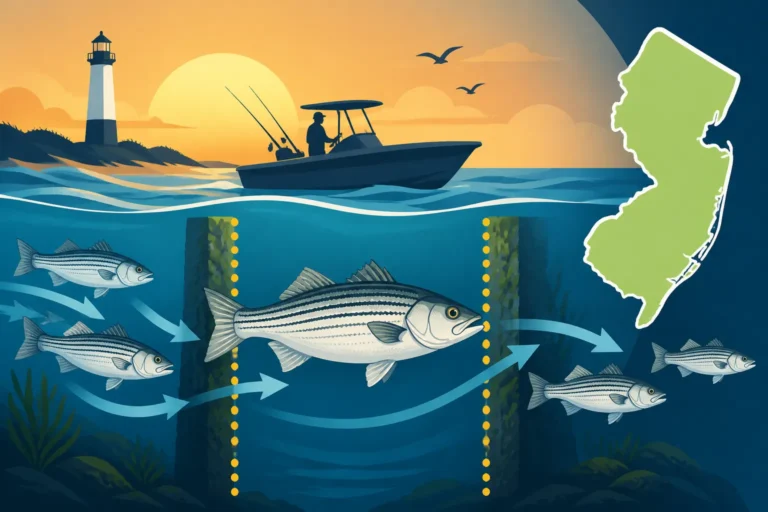
For weakfish in New Jersey's bays and tidal rivers, the tide is arguably the single most important factor. Weakfish actively feed on moving water, which brings baitfish to them and provides current for ambush points. Generally, the last two hours of the incoming tide and the first two hours of the outgoing tide are considered the most productive. This is when the water movement is typically strongest, stirring up bait and concentrating it in various areas.
- Incoming Tide: As the tide floods into the bays and rivers, it pushes baitfish into shallower areas, marsh edges, and flats where weakfish will be waiting. It can also bring in cooler, cleaner ocean water, which weakfish often prefer.
- Outgoing Tide: As the water recedes, it pulls baitfish out of those shallow areas and concentrates them in channels, creek mouths, and bottleneck areas. This creates a funnel effect, making it easier for weakfish to pick off their prey.
Understanding How to Read Tide Charts for Better Fishing in New Jersey is not just helpful, it's essential for weakfish success. A good tide chart will become your best friend, allowing you to plan your fishing around these crucial periods of water movement. Many experienced weakfish anglers will tell you that if the tide isn't moving, you might as well pack up and go home, especially on the flats.
Water Temperature: The Comfort Zone
As mentioned with their migratory patterns, water temperature is a huge driver for weakfish. They prefer a comfortable range, typically between 55°F and 75°F. If the water is too cold, they'll be lethargic or simply not present. If it gets too hot, especially in shallow bay areas during a summer heatwave, they'll seek out deeper, cooler water or become less active.
Anglers often use a portable fish finder with a temperature gauge or simply a thermometer to check the water temperature. If you find a patch of water that's within their preferred range, especially if it's slightly warmer or cooler than the surrounding area, you might have found a weakfish hotspot. For example, after a cold rain in the spring, a shallow flat might cool down too much, pushing fish into an adjacent deeper channel that retains more warmth. Conversely, in the dead of summer, a deep trough might offer a cool respite.
Weather and Barometric Pressure: Subtle Influences
While not as critical as tide or temperature, weather patterns and barometric pressure can certainly influence weakfish behavior.
- Stable Weather: Periods of stable weather, particularly after a few days of consistent conditions, often lead to predictable fishing. Fish get into a routine, and their feeding patterns become more regular.
- Approaching Fronts: Just before a storm front rolls in, when the barometric pressure is falling, fish can sometimes go on a feeding frenzy. They sense the change and feed aggressively before the weather turns foul.
- Post-Frontal Conditions: After a cold front passes, with high, clear skies and rising barometric pressure, fishing can often be tough. Weakfish might become more lethargic and less willing to bite.
Wind can also play a role. A light breeze can create a chop on the water, which breaks up the surface and makes weakfish less visible to their prey (and vice versa), sometimes improving the bite. However, strong winds can make boat control difficult and muddy up the water, often making fishing more challenging. Always check the forecast before you go, and consider how the conditions might affect your target species.
Gear, Bait, and Techniques for Targeting Weakfish
Having the right gear and a solid understanding of effective techniques can dramatically improve your weakfish catch rate, especially when you've managed to time your trip perfectly according to the season, day, and environmental factors. It's not just about what you use, but how you use it.
Rods, Reels, and Line: A Balanced Approach
For weakfish, you generally want a light to medium-light spinning setup. Their mouths are delicate, so a rod with a softer tip will help prevent hooks from tearing out.
- Rods: A 7-foot to 7-foot 6-inch rod with a fast to moderate-fast action is ideal. It provides enough backbone for casting lures and fighting fish, but enough flexibility in the tip to handle their soft bite. Brands like St. Croix or Fenwick offer excellent options that strike this balance.
- Reels: A 2500 to 3000 series spinning reel spooled with braided line is perfect. Braided line offers excellent sensitivity, which is crucial for detecting those subtle weakfish bites.
- Line: Spool your reel with 10-15 lb test braided line. To this, tie a 3-5 foot leader of 10-15 lb test fluorocarbon. Fluorocarbon is nearly invisible underwater and is more abrasion-resistant than mono, protecting your main line from oyster shells or other submerged structure. A good quality leader material from a brand like Seaguar or Berkeley Vanish is always a smart investment. You can find many of these specific lines and rods on Amazon, delivered right to your door.
Baits and Lures: Matching the Hatch
Weakfish aren't overly picky, but they do have preferences, and matching your offering to what they're naturally feeding on is always a winning strategy.
- Soft Plastic Jigs: These are arguably the most versatile and effective weakfish lures. White, pink, chartreuse, and clear with glitter are perennial favorites. Sizes typically range from 3 to 5 inches. Rig them on a 1/4 to 1/2 ounce jig head, depending on current and depth. Berkley Gulp! artificial baits, especially their shrimp or grub variations, are absolute weakfish magnets due to their scent dispersion. When the bite is slow, a slowly twitched Gulp! shrimp can often turn the tide.
- Live Bait: When artificials aren't cutting it, live bait is almost always the answer. Grass shrimp, shedder crabs, bloodworms, and small peanut bunker or spearing are all excellent choices. Present live bait on a small, sharp hook (size 1 to 1/0) with a light sinker (fish finder rig or a small jig head) that allows the bait to drift naturally with the current.
- Bucktail Jigs: Small, light bucktails (1/4 to 1/2 ounce) in white, pink, or chartreuse can be very effective, especially when tipped with a piece of Gulp! or a live minnow. Jigging them slowly near the bottom or along channel edges mimics fleeing baitfish.
- Topwater Plugs: During those magical dawn and dusk periods, or when weakfish are actively feeding on the surface, small topwater poppers or walk-the-dog style lures can provide explosive strikes. These are more about visual appeal and creating commotion on the surface.
Retrieval Techniques: The Art of Presentation
How you work your bait or lure is just as important as what you're using.
- Slow and Steady Jigging: For soft plastics and bucktails, a slow, subtle retrieve is often best. Cast out, let your lure sink to the bottom, then give it a few gentle lifts and drops, mimicking an injured baitfish or a shrimp hopping along. Don't overwork the lure; weakfish will often hit it on the fall or when it's moving slowly.
- Drifting Live Bait: If using live bait, particularly grass shrimp or shedder crab, let the current do most of the work. Use just enough weight to keep your bait in the strike zone near the bottom, but allow it to drift naturally. This natural presentation is often irresistible.
- "Pop and Pause" for Topwater: For topwater lures, a "pop and pause" or "walk-the-dog" action can be deadly. Create some commotion on the surface, then let the lure sit for a few seconds. Weakfish will often strike during the pause.
Whether you're fishing from shore, a kayak, or a boat, adapting your technique to the conditions is paramount. For kayak anglers, learning about Best New Jersey Spots for Kayak Fishing can really open up new weakfish opportunities in those skinny water areas. Always remember that weakfish can be finicky; if one approach isn't working, don't be afraid to switch it up!
Practical Tips for Consistent Weakfish Success
Even with the best timing and gear, weakfish can sometimes be challenging. These practical tips, born from years of experience on the New Jersey waters, can help you turn those challenging days into successful ones.
Focus on Structure and Current
Weakfish love structure and current. Any area where current flow is interrupted or where baitfish can congregate is a potential weakfish hotspot. Think about:
- Bridge Pilings and Abutments: The shadows and eddies created by bridges provide perfect ambush points. Cast parallel to the structure.
- Docks and Piers: Especially lighted ones at night, these attract bait and weakfish.
- Channel Edges and Drop-offs: Weakfish will sit along these edges, waiting for baitfish to be swept by.
- Oyster Beds and Mussel Lines: These provide food and cover for baitfish, which in turn attract weakfish.
- Inlets and River Mouths: Areas where large bodies of water meet or funnel are always high-percentage spots due to concentrated current and baitfish.
When scouting a new area, look for these features on your chart or by observing the water. If you're on a boat, use your fish finder to locate schools of bait or deeper pockets near structure.
Stay Mobile and Adaptable
Weakfish are not always in the same place. What worked yesterday might not work today, and what works in the morning might not work in the afternoon. Don't be afraid to move if you're not getting bites. Fish a spot for 20-30 minutes, and if nothing's happening, move to another promising area. This is especially true during the daytime when they might be deeper or in more shaded areas.
Being adaptable also means being willing to switch lures, baits, or techniques. If soft plastics aren't working, try live bait. If the fish are ignoring your jig on the bottom, try a suspended lure or even a topwater if conditions are right. Sometimes, a subtle change in color or retrieval speed is all it takes to trigger a strike. It's an ongoing puzzle, and part of the fun is figuring it out.
The Importance of Stealth
Weakfish are surprisingly wary fish. They can be spooked by loud noises, sudden movements, or even bright lights (especially at night). If you're fishing in shallow water, try to be as quiet as possible. This means no slamming tackle box lids, no loud talking, and if you're on a boat, approach your spot slowly and anchor quietly.
Wearing neutral-colored clothing, especially during daylight, can also help you blend in more with your surroundings. While weakfish might not have the same eyesight as a striped bass, reducing any potential disturbance can only work in your favor. It’s a bit like hunting – the less they know you’re there, the better your chances.
Understanding and Respecting Regulations
Finally, it's absolutely crucial to stay up-to-date with New Jersey's fishing regulations for weakfish. Their populations have seen fluctuations over the years, leading to changes in bag and size limits to protect the species. Always check the latest New Jersey Fish and Wildlife Digest before you head out. Understanding the New Jersey Weakfish Bag Limit Explained is not just about avoiding fines; it's about being a responsible angler and contributing to the conservation of this fantastic fish. If you're unsure about a fish's size, it's always better to measure it carefully. Many anglers keep a small, soft tape measure handy, and you can even find waterproof rulers on Amazon for this purpose. If you catch a fish that is undersized or over your limit, handle it carefully and release it quickly.
| Weakfish Activity Factor | Prime Time/Conditions | Why it Matters | Gear/Technique Notes |
|---|---|---|---|
| Season | Late Spring (May-June), Early Fall (Sept-Oct) | Water temps in ideal range, active feeding/migration | Soft plastics, bucktails, live bait. |
| Time of Day | Dawn, Dusk, Night | Low light offers ambush advantage, reduced predator visibility. | Topwater, slow-retrieved jigs, glow lures, live bait. |
| Tide | Last 2 hours incoming, first 2 hours outgoing | Strongest current, moves and concentrates baitfish. | Fish finder rigs, weighted soft plastics, focus on channels. |
| Water Temp | 55°F to 75°F (13°C to 24°C) | Optimal metabolic rate for feeding and activity. | Use a thermometer, fish deeper in heat, shallower in cool. |
| Weather | Stable periods, pre-front | Consistent conditions lead to predictable feeding, pre-storm bite. | Adapt lure presentation, fish structure during high sun. |
| Structure | Bridge pilings, channel edges, docks, oyster beds | Provides ambush points and concentrates bait. | Cast parallel to structure, jig vertically. |
Fishing for weakfish in New Jersey is a rewarding pursuit that combines patience, skill, and a deep understanding of their behaviors. By paying close attention to the seasonal movements, daily rhythms, and environmental factors, you'll significantly increase your chances of experiencing that distinctive weakfish thump on your line.
Disclaimer
Please remember that fishing conditions and regulations can change rapidly. Always consult the official New Jersey Department of Environmental Protection (NJDEP) Fish and Wildlife website or the current year's New Jersey Fish and Wildlife Digest for the most up-to-date information on licenses, bag limits, size restrictions, and season dates before heading out on the water. This guide is for informational purposes only and should not replace official regulatory sources.