What Is the New Jersey Muskie State Record?
For many New Jersey anglers, landing a muskellunge is the ultimate freshwater challenge. These powerful predators are famously elusive, often requiring immense patience and specialized tactics, making any significant catch a true triumph. But the quest for a trophy muskie always begs the question: what's the benchmark? This guide delves into the official New Jersey state record for muskellunge, exploring the details of this monumental catch and offering insights into the pursuit of these incredible fish.
The New Jersey State Record Muskie: The One to Beat
The New Jersey state record for muskellunge is a testament to perseverance and a dash of good fortune. This isn't just about a big fish; it's about a memory etched in the annals of New Jersey fishing history, inspiring countless anglers to keep casting, even through the famous "fish of a thousand casts" frustration.
Details of the Record Catch
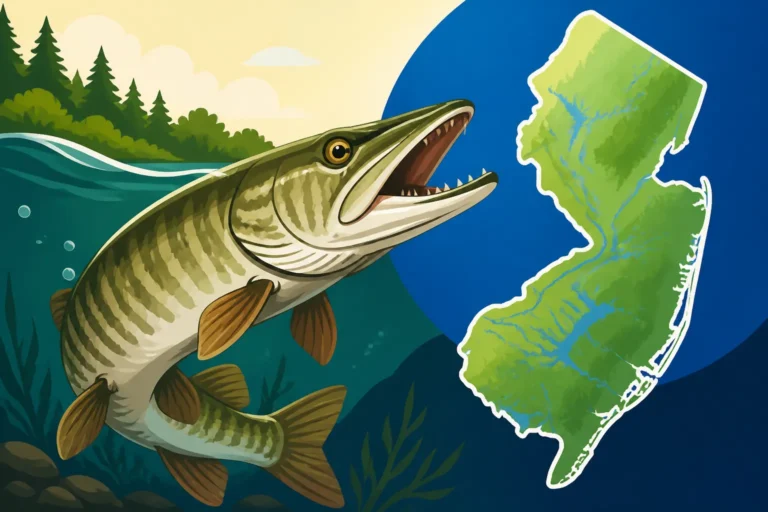
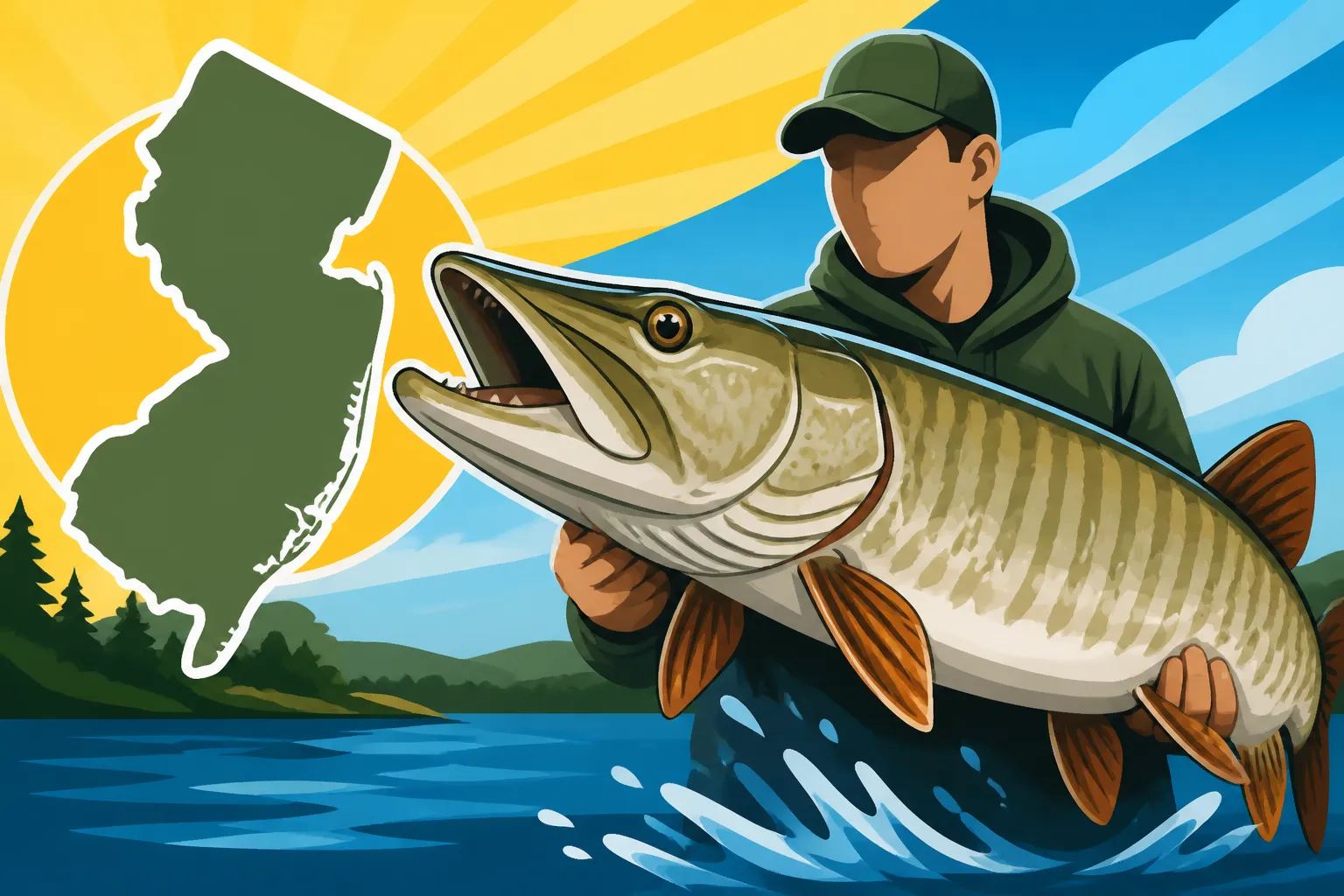
The current New Jersey state record muskellunge weighed an astounding 42 pounds, 13 ounces. This colossal fish was caught by angler Anthony LaGrossa in the waters of Monksville Reservoir back in 1997. Imagine the fight! Hooking into a fish of that size in freshwater requires serious strength, skill, and a good bit of luck. It's a weight that many saltwater anglers would be thrilled with, let alone someone pulling it from a lake in northern New Jersey. The sheer power of a muskie, especially one pushing 43 pounds, is something truly remarkable. Anglers often spend years, even decades, trying to find a fish of this caliber, making this record a truly exceptional achievement.
The Angler's Story: A Glimpse into the Chase
While every record catch has a story, the specific details often fade into legend. However, you can bet that Anthony LaGrossa's day on Monksville Reservoir was unforgettable. Picture the scene: a quiet morning, casting large baits, and then that sudden, jarring strike that makes your heart leap into your throat. A muskie of that size doesn't just come to the boat. It's a battle of wills, with powerful runs, headshakes, and deep dives. Landing such a fish typically involves careful boat maneuvering, precise net handling, and often, a moment or two of sheer panic when you think it's going to get away. This record isn't just a number; it represents a personal triumph, a story told and retold among fishing buddies, and a dream for every angler who sets out targeting these magnificent creatures.
Why Muskie are Such Elusive and Prized Catches
Muskies aren't your everyday panfish. They occupy a unique space in the freshwater ecosystem, demanding respect, patience, and a particular kind of dedication from those who pursue them. They truly are the apex predators of many lakes and rivers.
Their Nature as Apex Predators
Muskies are at the top of the food chain in their freshwater habitats. They're built for ambush, with long, sleek bodies, powerful fins, and mouths full of razor-sharp teeth. They primarily feed on other fish, but they're opportunistic and won't hesitate to strike at waterfowl, frogs, or even small mammals if the opportunity arises. This predatory nature makes them incredibly wary and intelligent. They're not easily fooled, and they don't school up like many other species. Instead, they patrol their chosen territories, often around structure, waiting for the perfect moment to strike. Understanding their solitary, predatory habits is key to even having a chance at hooking one. Muskie and Pike Fishing in New Jersey delves deeper into these magnificent fish.
Growth and Lifespan of New Jersey Muskie
New Jersey muskies can grow to impressive sizes, as evidenced by the state record. They are long-lived fish, often reaching ages of 15 to 30 years, and sometimes even longer in ideal conditions. This long lifespan allows them to grow steadily, packing on pounds over many seasons. Their growth rate is influenced by factors like water temperature, food availability, and genetics. A muskie that reaches record proportions has likely survived many seasons, outsmarting predators (including human anglers) and finding ample forage to fuel its growth. It's truly a testament to the health of the waters where they thrive. For more on what to expect size-wise, check out Average Size of a Muskie Caught in New Jersey Lakes.
The "Fish of a Thousand Casts" Reputation
Ah, the "fish of a thousand casts." This legendary moniker is both a badge of honor and a source of deep, deep frustration for muskie anglers. It perfectly encapsulates the immense challenge of consistently catching these fish. You can spend hours, days, even weeks, throwing massive lures, meticulously working prime spots, and not get a single strike. Then, out of nowhere, you get that heart-stopping hit, and all the previous hours of fruitless casting melt away. It's this extreme challenge, the sheer difficulty, that makes landing a muskie, especially a trophy one, such a celebrated event. It's not about the quantity of fish, but the quality of the chase and the immense satisfaction of finally connecting.
Top New Jersey Waters Known for Trophy Muskie
While muskellunge are not found in every waterbody, New Jersey boasts several prime locations where dedicated anglers have a legitimate shot at encountering these formidable fish, including the waters that produced the state record.
Key Lakes and Reservoirs
When it comes to muskie fishing in New New Jersey, a few names consistently rise to the top. Monksville Reservoir, the home of the state record, is obviously a prime spot. This reservoir is known for its deep, clear waters and abundant forage, providing the ideal conditions for muskie to thrive and grow large. Other notable locations include Lake Hopatcong, the state's largest freshwater lake, and Mercer Lake. These larger bodies of water offer diverse habitats, from shallow weedy flats to deep channels, giving muskie plenty of room to roam and ambush prey. Each of these lakes presents its own unique challenges and rewards, but they all share the common thread of holding healthy populations of these trophy-sized fish. Exploring these waters is a must for any serious muskie angler. You can find more details on these and other spots in New Jersey Muskellunge Waters.
Habitat Preferences Within These Waters
Muskies are ambush predators, so their preferred habitats revolve around structure and cover where they can lie in wait for prey. In New Jersey's lakes and reservoirs, this means focusing on areas like:
- Weed Beds: Thick submerged vegetation provides excellent camouflage and a buffet of smaller fish.
- Drop-offs and Ledges: The edges where shallow water suddenly plunges into deeper sections are prime hunting grounds, offering access to different depths and baitfish movements.
- Fallen Timber and Submerged Trees: These provide excellent cover and ambush points.
- Rocky Points and Humps: Structure, especially where currents or wind can concentrate baitfish, is always a good bet.
- Inlet and Outlet Areas: Moving water often concentrates baitfish, which in turn attracts muskie.
Understanding these preferences and using electronics or even just keen observation to find such features can dramatically increase your chances. It's not just about being on the right lake, but being on the right spot within that lake.
Essential Gear and Strategies for Muskie Fishing
Chasing muskie isn't for the faint of heart, nor for light tackle. These fish demand robust equipment and specific techniques. Having the right tools and knowing how to use them are critical components of success.
Rods, Reels, and Lines: Heavy Duty is Key
Forget your bass spinning combo; muskie fishing requires specialized heavy-duty gear designed to withstand the violent strikes and powerful runs of these giants. A strong, fast-action baitcasting rod, typically 8 to 9 feet long, is a common choice, offering the leverage needed to cast large lures and control a big fish. Matched with a heavy-duty baitcasting reel with a robust drag system and plenty of line capacity is essential. You'll want to spool up with at least 80-100 pound braided line, which offers incredible strength and no stretch for solid hooksets. Adding a heavy fluorocarbon or wire leader is an absolute must to prevent those sharp muskie teeth from severing your line. You can find a great selection of muskie-specific rods, reels, and braided lines on platforms like Amazon, making it easier to gear up properly without needing to visit specialty shops if they're not local.
Lures and Bait: Go Big or Go Home
Muskies are all about big meals, so your lures need to reflect that. Think oversized. Common muskie lures include:
- Large Bucktail Spinners: These create a lot of flash and vibration, mimicking a fleeing baitfish.
- Jerkbaits and Glide Baits: These are worked with a stop-and-go retrieve, imitating an injured or disoriented fish.
- Swimbaits: Large, realistic soft plastic or hard-bodied baits that swim with a natural motion.
- Topwater Lures: Massive prop baits or walkers that create a commotion on the surface, especially effective during low-light conditions.
Anglers often cast these large lures repeatedly to trigger a strike. It's physically demanding work, but the payoff can be huge. When you're looking for these specialized, often expensive muskie lures, it's worth checking out online retailers like Amazon, which often have a broader selection of sizes and colors than local shops. Live bait, particularly large suckers, is also highly effective but requires different rigging and tactics. More on lure choices can be found in Best Lures for Muskie Fishing.
Proper Handling for Release: Protecting the Future
Given the "fish of a thousand casts" reputation and the conservation efforts to sustain muskie populations, catch and release is paramount, especially for trophy fish. Proper handling is crucial to ensure the fish survives to fight another day and potentially grow even larger.
- Minimize Fight Time: Use heavy tackle to bring the fish in as quickly as possible, reducing stress.
- Use a Large, Rubberized Net: A big net with a rubberized mesh protects the fish's slime coat and fins.
- Keep the Fish in the Water: If possible, unhook and photograph the fish while it's still in the net or partially submerged.
- Use Tools: Long-nosed pliers, bolt cutters (for cutting hooks if necessary), and a jaw spreader can make hook removal safer for both angler and fish.
- Support the Fish: If you must lift it for a quick photo, support its body horizontally with both hands, one under the belly and one by the tail. Never hold a large muskie vertically by the jaw.
- Revive Gently: Hold the fish upright in the water, facing into any current, until it swims away under its own power.
Understanding and practicing these techniques not only benefits the fishery but also ensures the thrill of muskie fishing can be enjoyed by future generations. For more on ethical practices, refer to Catch and Release Rules in New Jersey.
The Process of Verifying a State Record Fish in New Jersey
Landing a potential state record muskie is just the first, albeit most exciting, step. The official verification process is stringent to ensure the integrity of the record books. It's not enough to simply say you caught a big one; you need to prove it.
The Steps for Submitting a Potential Record
If you believe you've landed a state record fish, the clock starts ticking. Here’s a general rundown of the steps involved:
- Contact the Division of Fish and Wildlife: Immediately after the catch, contact the New Jersey Department of Environmental Protection's Division of Fish and Wildlife. They will guide you through the official process. It's often best to call as soon as possible, even from the water, if you suspect you have a record.
- Official Weighing: The fish must be weighed on a certified scale, usually at a post office, butcher shop, or an official weigh station that has regularly calibrated scales. The weigh-in must be witnessed.
- Measurements: Accurate length and girth measurements are required.
- Photographs: Clear, well-lit photographs of the fish, the angler, the weighing process, and the measurements are essential for documentation.
- Species Verification: A qualified fisheries biologist or official from the Division of Fish and Wildlife must positively identify the species. This is particularly important for muskie, as they can sometimes be confused with pike or tiger muskie. What Is the Difference Between a Muskie and a Pike? can help with initial identification.
- Application Submission: Complete the official state record application form with all required details, including date, time, location, bait/lure used, and witness information.
Required Documentation and Measurements
The key to a successful record submission lies in meticulous documentation. Without proper proof, even the biggest fish won't make it into the record books. The Division of Fish and Wildlife takes these submissions very seriously to maintain credibility. You'll need:
- Weight Slip: From a certified scale, clearly showing the weight, date, and name of the establishment.
- Photographic Evidence: Multiple photos from different angles, showing the entire fish, the angler, the weighing, and distinct features for species identification.
- Witness Signatures: People who observed the catch and the weighing process.
- Detailed Narrative: A written account of the catch, including the fight, landing, and immediate post-catch handling.
- Angler Information: Your full name, contact details, and current New Jersey fishing license information (if applicable, though for muskie it almost certainly is). Always remember to keep your New Jersey Fishing License Guide for 2026 handy.
The Role of the State's Wildlife Agency
The New Jersey Department of Environmental Protection's Division of Fish and Wildlife plays a crucial role in maintaining the state's fishing records. Their staff are the ultimate arbiters, ensuring that all criteria are met and that the record stands up to scrutiny. They are responsible for:
- Setting the Rules: Defining the exact procedures and requirements for record submissions.
- Species Identification: Having experts verify that the fish is indeed the species claimed.
- Maintaining Integrity: Preventing fraudulent claims and upholding the historical accuracy of state records.
- Promoting Conservation: By recognizing record catches, they also highlight the success of their management and stocking programs, encouraging public interest and support for healthy fisheries.
This rigorous process ensures that when an angler's name goes into the record books, it's a truly verified and celebrated accomplishment. For detailed information on all regulations, always consult the New Jersey Fish and Wildlife Digest: Where to Find the Current Rules.
Muskie vs. Pike: Key Differences for Identification
It's common for anglers, especially those new to targeting larger freshwater predators, to confuse muskellunge with their close cousins, northern pike. While they share similarities, there are distinct features that differentiate them, which is crucial for record verification and understanding their behavior.
| Feature | Muskellunge (Muskie) | Northern Pike (Pike) |
|---|---|---|
| Body Markings | Dark markings (bars, spots, blotches) on a lighter background. Markings are often irregular. | Light markings (spots, beans) on a darker background. Spots are generally round or oval. |
| Scales on Cheek | Upper half of cheek scaled, lower half bare. | Fully scaled cheek. |
| Scales on Opercle | Upper half of opercle (gill cover) scaled, lower half bare. | Fully scaled opercle. |
| Pore Count (Underside Jaw) | Usually 6-9 pores on each side. | Usually 5 pores on each side. |
| Tail Fin Shape | More pointed, often deeply forked. | More rounded, less deeply forked. |
| Snout Shape | Usually broader and duck-bill shaped. | Often more elongated and pointed. |
| General Size | Can grow much larger; often longer and heavier for their age. | Generally smaller, though large pike are still impressive. |
Knowing these differences is not just academic; it directly impacts identifying a potential state record. The New Jersey state record pike, for instance, is a different fish and a different record altogether. The What Is the Difference Between a Muskie and a Pike? article provides a visual guide that can be quite helpful in the field.
The Future of Muskie Fishing and Records in New Jersey
The pursuit of the next state record muskie is a continuous journey, fueled by dedicated anglers and ongoing conservation efforts. New Jersey's commitment to its muskie populations ensures that these opportunities will continue to exist.
Conservation Efforts and Stocking Programs
New Jersey's Division of Fish and Wildlife actively manages muskie populations through stocking programs. While muskies do naturally reproduce in some waters, supplemental stocking helps maintain healthy numbers and provides anglers with opportunities to catch these impressive fish. These efforts are often funded through fishing license sales, highlighting the importance of every angler doing their part by purchasing a New Jersey Fishing License Guide for 2026. Conservation also involves protecting habitat, managing water quality, and educating anglers on responsible catch-and-release practices. The goal is not just to produce large fish for records but to sustain a robust and healthy fishery for generations to come.
Will the Record Be Broken?
It's the question every trophy hunter asks: will the 42-pound, 13-ounce record ever be broken? Records are meant to be broken, but it takes a truly exceptional fish and a skilled, prepared angler to achieve it. With ongoing stocking programs, improved fishing techniques, and better understanding of muskie behavior, it's certainly possible. Anglers are constantly pushing the boundaries, spending countless hours on the water, meticulously working their craft. The state record stands as a challenge, a testament to what's possible, and a beacon of hope for every muskie fisherman in New Jersey who dreams of that one-in-a-million catch.
Disclaimer
This article is for general informational purposes only and does not constitute professional advice. Laws, prices and regulations vary by location and change over time. Consult a qualified professional for guidance on your specific situation.