What Is the Difference Between a Muskie and a Pike?
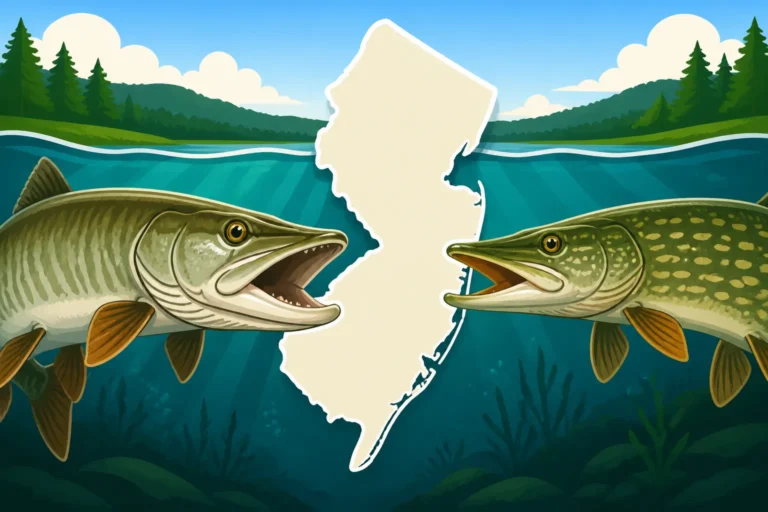
Anyone who loves to fish the freshwater lakes and rivers of New Jersey knows the thrill of hooking into a big, toothy predator. But if you're like many anglers, you might sometimes wonder if that long, slender, olive-green fish with the sharp teeth is a muskie or a pike. The confusion is totally understandable, as these two species, along with their hybrid cousin, look incredibly similar at first glance. This guide is here to clear up that mystery, giving you all the definitive markers you need to confidently identify whether you've landed a true muskie, a feisty northern pike, or even a tiger muskie, right here in the Garden State.
The Basics: Understanding Muskie and Pike as Separate Species
Muskellunge and Northern Pike are both formidable freshwater game fish that belong to the Esocidae family, often simply called the "pike family." This shared lineage is precisely why they look so much alike, leading to many a head-scratching moment on the water. They are both apex predators in their respective habitats, known for their aggressive strikes and powerful fights, making them highly sought-after by sport anglers across North America, including our own New Jersey waters.
Why the Confusion Exists
The confusion largely stems from their similar body shapes, coloration patterns, and shared predatory habits. Both are long, cylindrical fish with duckbill-shaped snouts filled with razor-sharp teeth, and their dorsal and anal fins are set far back on their bodies, near the tail. This anatomical design is perfect for explosive bursts of speed to ambush prey. Many local anglers might even use the terms "pike" and "muskie" interchangeably or refer to any large, toothy fish as just "pike." It doesn't help that some regions have historical common names that further blur the lines. For those new to chasing these giants, or even seasoned veterans, a quick glance might not be enough to pinpoint the exact species, especially when a fish is thrashing around boat side.
General Overview of Muskie
The muskellunge, often affectionately called a "muskie," is the largest member of the pike family. These are truly trophy fish, revered for their elusive nature and powerful fight. In New Jersey, encountering a purebred muskie is a special event, a testament to patience and persistence. They are often described as having dark markings—whether spots, bars, or wavy lines—on a lighter body background, giving them a distinct tiger-like appearance, though this can vary. Muskie are the ultimate challenge for many anglers, earning them the nickname "the fish of 10,000 casts." Landing one often feels like winning the lottery, and they demand respect for their sheer size and power.
General Overview of Pike
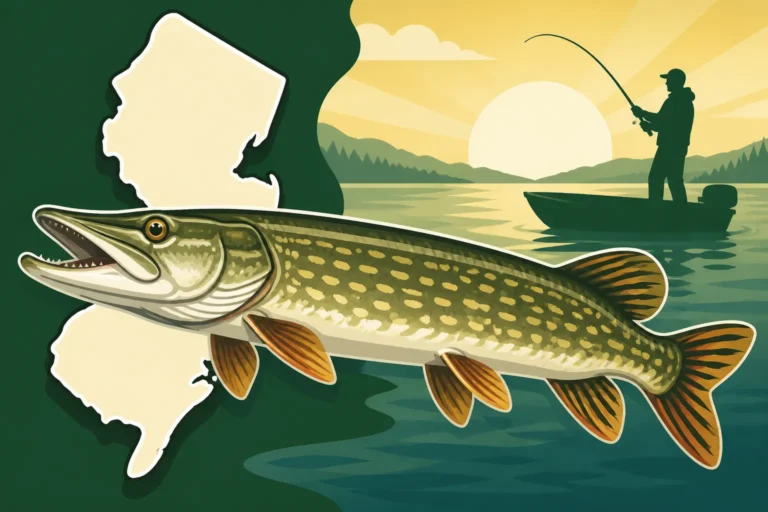
Northern Pike, or simply "pike," are much more widespread in New Jersey than their muskie cousins. While they don't typically reach the sheer bulk of a muskie, they are still substantial, aggressive predators that offer fantastic sport. Pike tend to be more common in a wider range of habitats and are often more willing to strike lures, making them a popular target for many anglers. Their coloration is typically a darker green or olive background with lighter, often bean-shaped or horizontal bar-like spots. They are known for their voracious appetites and can quickly decimate baitfish populations in a given area. You'll find them mentioned frequently when talking about New Jersey Northern Pike Waters.
Key Physical Differences: How to Tell Them Apart
Alright, let's get down to brass tacks. When you've got one of these beauties in hand (or in your net, if you're smart about safe handling!), there are a few tell-tale signs that will help you distinguish between a muskie and a northern pike. These aren't subtle hints; they're definitive anatomical differences that Mother Nature put there just for us anglers.
Scales on the Cheeks and Gill Covers
This is arguably the most reliable and easiest way to tell them apart, even for a beginner. You need to look closely at the side of the fish's head, specifically the cheek area (just behind the eye) and the gill cover (the bony plate protecting the gills).
- Muskellunge: If you look at a muskie, you'll notice that the scales cover only the upper half of both the cheek and the gill cover. The lower half of both areas will be bare, without scales. It’s like they’re wearing a tiny, scaled cap.
- Northern Pike: A northern pike, on the other hand, has scales covering its entire cheek. However, just like the muskie, its gill cover will only be scaled on the upper half, with the lower half being bare. So, full cheek, half gill cover.
This difference is crucial because it's consistent across all muskie and pike, regardless of size or geographic location within New Jersey. It's the first thing I look for when I'm trying to identify one of these fish, and it rarely lets me down. How Many Fish Species Live in New Jersey Waters? – many, but these two require specific identification know-how!
Coloration and Markings
While the scale pattern is definitive, coloration and markings offer good clues, though they can be a bit more variable depending on the water body and individual fish.
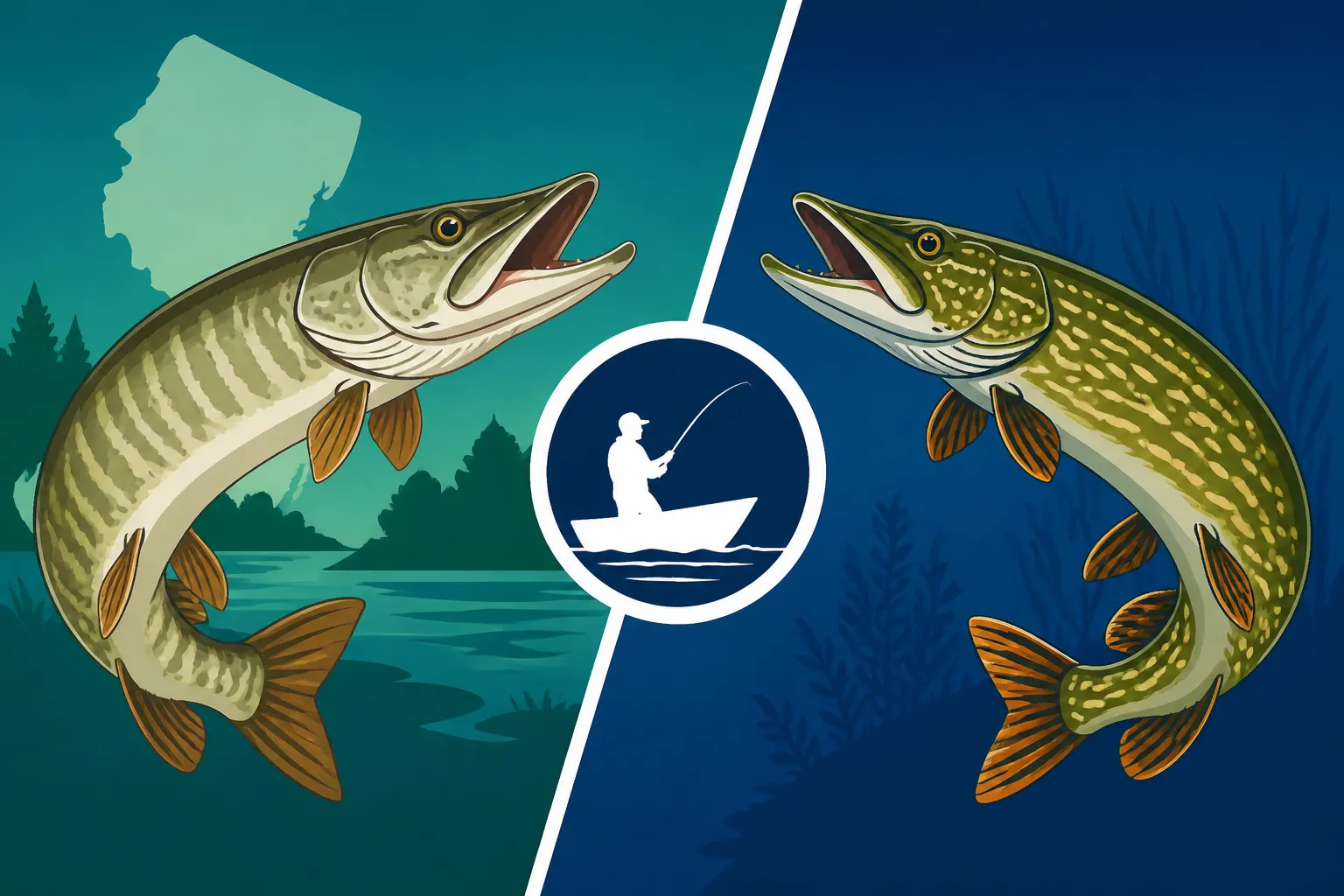
- Muskellunge: Purebred muskie typically have a lighter background color (often silver, gold, or light green) adorned with dark vertical bars, spots, or wavy stripes. These markings can sometimes look like a "tiger" pattern, which is where the term "tiger muskie" comes from for the hybrid. The patterns can be quite striking, but they generally appear darker on a lighter background.
- Northern Pike: Northern pike usually exhibit a darker body color (often a rich olive green or brownish-green) with distinct, lighter, bean-shaped or horizontal bar-like spots. These spots are typically lighter on a darker background. Sometimes their fins can have reddish tints, especially the lower ones.
Remember, environmental factors like water clarity, diet, and even the fish's mood can slightly alter these colors, so don't rely solely on this, but it’s a strong secondary indicator.
Tail Fin Shape
Take a look at the tail (caudal fin) for another helpful distinction.
- Muskellunge: Muskie tend to have a more deeply forked tail fin. The two lobes of the tail will be more distinct and often come to sharper points.
- Northern Pike: Northern pike typically have a less deeply forked, more rounded tail fin. The lobes are not as pronounced, giving it a somewhat blunter appearance.
While perhaps not as obvious as the scale pattern, once you've seen a few of each, the difference in tail shape becomes quite noticeable.
Number of Pores Under the Jaw
This one requires a bit more careful observation and is generally considered a secondary identifying feature, but it's another consistent difference.
- Muskellunge: Look at the underside of the fish's lower jaw. Muskie typically have between 6 to 9 sensory pores on each side.
- Northern Pike: Northern pike usually have 5 sensory pores on each side of their lower jaw.
Counting these pores can be tricky on a feisty fish, and it’s often something you might do more out of curiosity after confirming the scales. For a quick ID in the field, the scale pattern is usually enough.
Here's a handy table to summarize these key identification points:
| Feature | Muskellunge | Northern Pike |
|---|---|---|
| Cheek Scales | Scaled only on the upper half | Entire cheek scaled |
| Gill Cover Scales | Scaled only on the upper half | Scaled only on the upper half |
| Body Markings | Dark bars, spots, or stripes on a lighter background (dark on light) | Lighter, bean-shaped spots on a darker background (light on dark) |
| Tail Fin Shape | More deeply forked, often pointed tips | Less deeply forked, more rounded tips |
| Pores Under Jaw (per side) | Typically 6-9 | Typically 5 |
Habitat, Behavior, and Fishing Nuances in New Jersey
Knowing the physical differences is essential, but understanding where muskie and pike live and how they behave in New Jersey can also help you anticipate what you might hook into. Their ecological niches, while similar, do have distinctions that influence where and how we target them.
Where You'll Find Them in New Jersey
The specific waterways you're fishing often dictate which species you're more likely to encounter. This is especially true in New Jersey, where conservation efforts and natural distributions play a big role.
- Muskellunge: Purebred muskie populations in New Jersey are more limited, typically found in larger, clearer lakes and reservoirs that offer expansive habitat and abundant forage. They prefer deep, cool waters in summer and often relate to significant structure like submerged islands, deep weed lines, or vast points. Some prime New Jersey Muskellunge Waters include places like Mercer Lake, Lake Hopatcong, and parts of the Delaware River system. These are challenging waters, and finding a muskie requires patience and often local knowledge.
- Northern Pike: Northern pike are far more widespread and adaptable. You're more likely to find them in a greater variety of water bodies across New Jersey, including shallower, weedy areas of lakes, ponds, and slower-moving rivers. They thrive in vegetated cover where they can ambush prey. You'll find them in places like Cranberry Lake, Lake Hopatcong, and many of the state's larger pond systems. Check out guides on New Jersey Northern Pike Waters for more specific locations. If you're fishing a relatively smaller, weed-choked pond, chances are good you're after pike.
Their Different Temperaments and Hunting Styles
While both are formidable predators, their general temperaments and hunting strategies can differ, which influences how you approach fishing for them.
- Muskellunge: These are the ultimate "fish of a thousand casts." Muskie are notoriously elusive and often require immense persistence. They are ambush predators, but they can be highly selective and finicky. They might follow a lure right to the boat, stare at it, and then turn away, leaving you with a racing heart and a story of "the one that got away." Their strikes are incredibly powerful, but getting them to commit is the real challenge. You need to be prepared for long periods of no action, punctuated by explosive, heart-stopping encounters.
- Northern Pike: Generally, northern pike are more aggressive and less hesitant than muskie. They are often quicker to strike, especially when hungry, hitting lures with a brutal efficiency. While also ambush predators, they tend to be less discerning about their prey and will readily attack anything that looks like an easy meal. This isn't to say they're easy, but they tend to be a more "willing" participant for anglers seeking consistent action. Their fights are spirited and powerful, marked by head shakes and violent runs.
Tackle and Techniques: Subtle Differences
While much of the gear used for pike and muskie fishing overlaps, there are subtle differences in what experienced anglers might choose. Both require heavy-duty equipment because of their size and fighting power, and critically, their razor-sharp teeth. Don't even think about targeting these fish without a steel leader – they will effortlessly chew through monofilament or fluorocarbon. You can find a wide variety of these essential leaders, along with specialized lures, on Amazon or at your local tackle shop.
- Muskellunge: Due to their potential for extreme size and their reputation for being incredibly hard fighters, muskie anglers often opt for even heavier rods (heavy to extra-heavy power), larger baitcasting reels, and stronger braided line (often 80-100lb test). Lures are typically much larger, including giant bucktails, gliders, jerkbaits, and soft plastics, often 8 inches or more in length. The retrieve style can be critical, often involving figure-eights at the boat to try and trigger a strike from a following fish. If you're interested in muskie tactics, searching for Best Lures for Muskie Fishing can give you some great ideas.
- Northern Pike: While still requiring robust gear, pike can often be caught on slightly lighter, though still heavy, setups (medium-heavy to heavy power rods, 20-50lb braided line). They are less particular about lure size and will hit a wider range of offerings, from smaller spinnerbaits and spoons to larger plugs and soft plastics. They're also a popular target for How to Catch Pike Through the Ice, requiring a different set of specialized gear like tip-ups and shorter ice rods. The focus is often on covering water and presenting attractive, fast-moving baits to trigger their aggressive strikes. For any of this gear, from specialized lures to line, a quick search on Amazon will show you the immense selection available.
The "Tiger Muskie" – A Special Case
Just when you thought you had it figured out, there's a third character in this toothy drama: the tiger muskie. This isn't a separate naturally occurring species, but rather a fascinating hybrid that combines traits of both its parents.
What is a Tiger Muskie?
A tiger muskie is a sterile hybrid fish resulting from the cross-breeding of a female muskellunge and a male northern pike. These fish are not able to reproduce on their own, which makes them a unique case in the angling world. They are almost always produced in hatcheries and then stocked into specific water bodies to provide a thrilling sportfishing opportunity. The name "tiger" comes from their truly distinctive markings, which are often even more pronounced than those of a purebred muskie. You can learn more about them specifically in What Is a Tiger Muskie and Is It Stocked in New Jersey?.
Why New Jersey Stocks Them
New Jersey, like many other states, sometimes chooses to stock tiger muskies for several strategic reasons. First, they grow very quickly, often faster than purebred muskie, reaching impressive sizes in a shorter period. Second, they are generally considered to be more aggressive and easier to catch than their purebred muskie parent, offering a higher success rate for anglers. This means more action and more exciting fishing experiences for the public. Because they are sterile, there's no concern about them establishing wild, reproducing populations that might compete with native fish species in unintended ways. They provide a fantastic "put-grow-and-take" fishery focused on recreation.
Identifying a Tiger Muskie
Identifying a tiger muskie is usually quite straightforward once you know what to look for, as their markings are typically very striking. They combine the overall body shape of a muskie with a unique pattern that often features very dark, wavy, and irregular bars or stripes on a lighter, often greenish-gold background. These markings are much more distinct and defined than the often more subtle patterns on a purebred muskie.
When in doubt, you can still refer to the scale pattern on the cheek and gill plate, but the coloration is usually a dead giveaway. They often look like a muskie that went all out with its "tiger" stripes. Their hybrid vigor makes them incredibly strong and exciting fish to catch, truly a jewel in Muskie and Pike Fishing in New Jersey experiences. You can always confirm identification by comparing your catch to official guides or images. If you're ever looking for specialty lures or lines perfect for these aggressive predators, don't forget to check out what's available on Amazon or at your preferred local tackle shop.
So, the next time you're out on the water in New Jersey and you hook into one of these magnificent fish, take a moment to look closely. The scales on the cheek, the markings, and the tail fin can all tell a story about whether you've landed a true muskie, a northern pike, or that exciting tiger hybrid. Knowing the difference not only satisfies your curiosity but also deepens your understanding and appreciation for these incredible freshwater giants.
Disclaimer
This article is for general informational purposes only and does not constitute professional advice. Laws, prices and regulations vary by location and change over time. Consult a qualified professional for guidance on your specific situation.