What Is a Resident Striped Bass vs a Migratory Striped Bass?
It's a question that has probably crossed every New Jersey angler's mind at one point or another: what's the deal with striped bass moving around? You hear whispers of "resident fish" and "migratory runs," and it can be genuinely confusing trying to figure out if the striper you just caught spent its whole life in our bays or if it's just passing through on a grand journey. This guide is here to unravel that mystery, helping you understand the distinct lifestyles of these incredible fish and how that knowledge can make you a more successful angler right here in the Garden State.
Understanding Resident Striped Bass in New Jersey
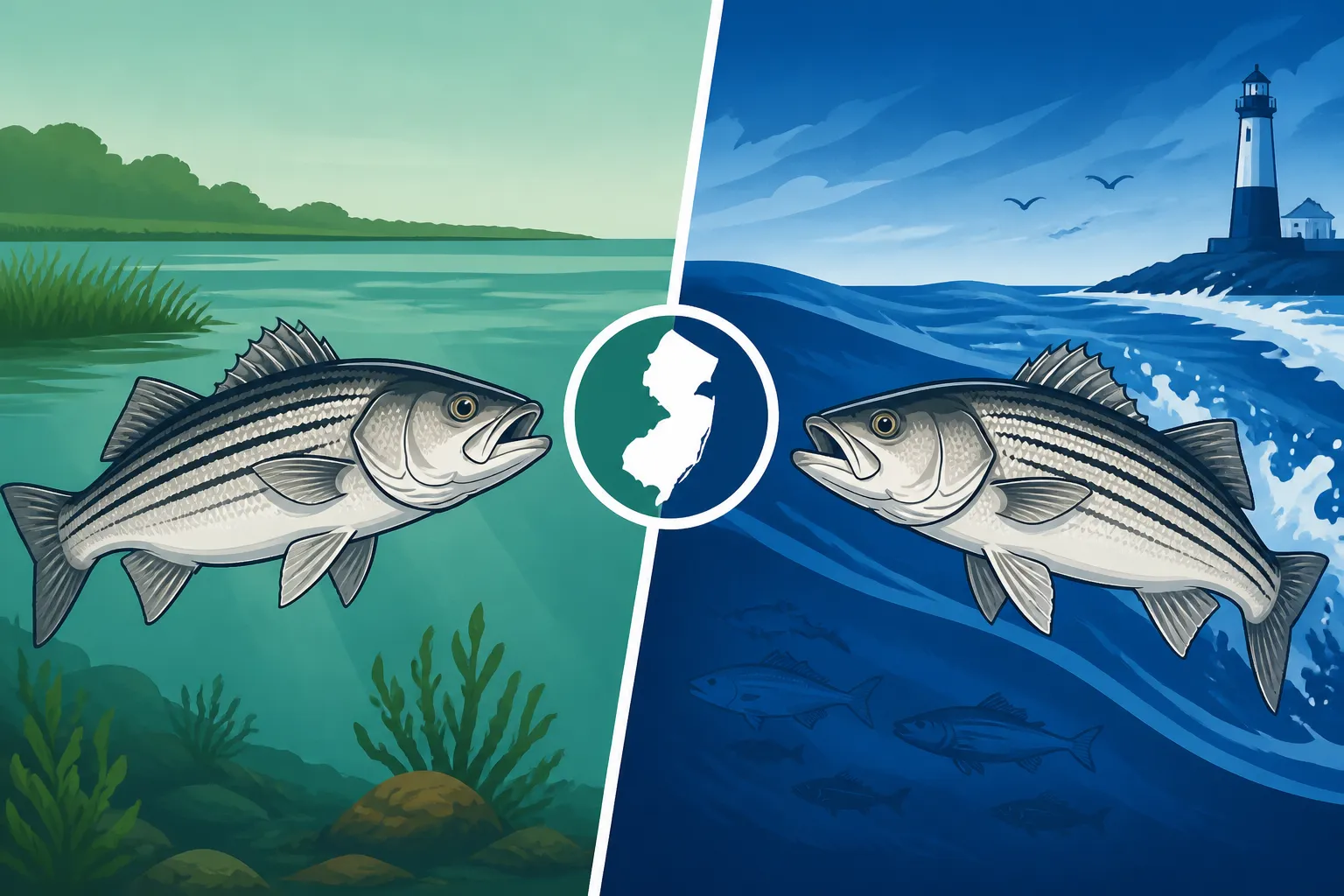
When we talk about "resident" striped bass in New Jersey, we're referring to those fish that pretty much call our waters home year-round. They don't participate in the epic coastal migrations that their brethren undertake. Instead, they find comfortable haunts in our back bays, rivers, and estuaries, sticking around as long as conditions allow. It's a localized existence, but don't let that fool you into thinking they're any less feisty or challenging to catch!
What Makes a Striper a "Resident"?
A resident striped bass is typically a younger, smaller fish, though certainly not always. They've found a consistent food source and suitable habitat that keeps them from needing to travel long distances for sustenance or spawning. Think of them like the local kids who never leave the neighborhood – they know all the best spots, the shortcuts, and where the good grub is. These fish might move around within a specific bay system or river, shifting with tides, bait movements, and water temperature, but they won't venture far up or down the coast. Their commitment to a particular area is often tied to the abundance of small baitfish, crustaceans, and a relatively stable environment that offers both feeding and protection.
Sometimes, especially in the larger back bay systems like Barnegat Bay or Raritan Bay, you'll find a strong population of these resident fish. They can be incredibly valuable to anglers during times when the migratory fish are absent, offering consistent action and a chance to hone skills. Their patterns can be more predictable because they're not beholden to the whims of a multi-state journey.
Where You'll Find Resident Stripers
Our back bays, tidal rivers, and estuaries are prime real estate for resident striped bass. Places like the Mullica River, the Raritan River, and segments of Barnegat Bay are known for holding these local populations. They seek out areas with structure—docks, bridge pilings, sod banks, oyster beds, and marsh edges—where they can ambush bait. These areas provide both cover from predators and currents that bring food right to them.
These stripers thrive in waters that might be a bit shallower or have more diverse bottom structures than the open ocean. They're often found hugging shorelines, prowling around creek mouths, or lying in wait near channel edges. Knowing the local geography and the seasonal movements of baitfish within these specific waterways is key to targeting them. For instance, in the spring, they might be deeper in the rivers, following the herring runs, while in the summer, they'll spread out more into the bay's shallower flats or seek cooler water around inlets.
Fishing for Resident Stripers
Targeting resident stripers requires a slightly different approach than chasing the big migratory schools. Since they're often smaller and in more confined areas, lighter tackle can be incredibly effective and a lot of fun. Think about using light spinning gear with jigs, soft plastics, or small swimming plugs. Best Lures for Striped Bass Fishing might give you some ideas. If you're fishing from shore, a medium-action rod and reel combo that can handle casting smaller lures a good distance is perfect. You can find excellent options on Amazon that won't break the bank.
Live bait like spearing, killifish, or small peanut bunker can also be irresistible to resident fish. Look for moving water, especially around dawn and dusk, or during tide changes in the back bays. Pay attention to bird activity, as diving birds often indicate baitfish, which in turn attract stripers. A stealthy approach, making accurate casts to structure, and understanding the local tides are far more important than brute force when it comes to these localized fish.
Deciphering Migratory Striped Bass
Now, let's talk about the rockstars of the striped bass world: the migratory fish. These are the ones that undertake an incredible annual journey, often stretching from the Chesapeake Bay all the way up to New England and back. Their movements are a fundamental part of the East Coast fishing landscape, and when they arrive in New Jersey waters, it's nothing short of a spectacle for anglers.
The Grand Journey: Why They Migrate
Migratory striped bass undertake their epic journey primarily for spawning and feeding. The vast majority of striped bass that move along the Atlantic Coast originate from major spawning grounds, particularly in the Chesapeake Bay, Delaware River, and Hudson River. After spawning in these freshwater to brackish environments in the spring, they disperse along the coast to feed and grow in cooler, bait-rich waters to the north. As autumn approaches and waters cool, they reverse course, heading south to warmer overwintering grounds, often congregating again near the entrances to their spawning rivers. This cyclical pattern is driven by water temperature and the availability of their primary food sources, such as bunker, herring, and squid.
This migration isn't a single, unified wave but rather a series of pushes and pulls, influenced by weather fronts, ocean currents, and baitfish movements. A strong nor'easter can push bait, and therefore stripers, closer to shore, creating incredible surf fishing opportunities. Understanding these drivers is crucial for predicting when and where these big fish will show up along our coast.
When Migratory Stripers Pass Through New Jersey
New Jersey is a critical stop on the migratory highway for striped bass. We essentially get two major runs each year: the spring run and the fall run.
-
The Spring Run: Typically begins in April and can last through May. As water temperatures climb and baitfish like bunker and herring move north along the coast, so do the stripers. This is when you'll find them along our oceanfront beaches, inlets, and even pushing into the bays as they head towards or away from spawning grounds. For many anglers, the spring run offers the first shot at trophy-sized fish of the year. It's an exciting time to be on the water, whether you're casting from a jetty or trolling from a boat. When Do Striped Bass Migrate Through New Jersey? has more details on this.
-
The Fall Run: Often considered the pinnacle of striper fishing, the fall run kicks off in earnest usually in October and can extend well into December, depending on water temperatures. This is when the stripers are moving south, gorging themselves on baitfish to build up reserves for the winter. The fishing can be absolutely phenomenal, with large schools of big fish chasing bunker pods right along the beaches. Anglers flock to the jetties, beaches, and inlets, hoping to intercept these hungry predators. Best Month to Catch Striped Bass in New Jersey dives deeper into the timing.
These periods are when the largest stripers are most accessible to anglers throughout the state. It's a time of intense activity, often marked by massive bait balls, diving birds, and frenzied feeding events that every angler dreams of witnessing.
Impact on New Jersey Anglers
The arrival and departure of migratory striped bass have a profound impact on New Jersey anglers. During the runs, the fishing can be nothing short of legendary. People travel from all over to fish our inlets, like Manasquan Inlet and Barnegat Inlet, and our famed surf zones like Island Beach State Park. The excitement is palpable, with tackle shops bustling and boats filling up for charters.
These fish often present opportunities for larger catches than the resident populations, and targeting them frequently involves heavier tackle, different techniques, and a readiness to cover more ground. Surfcasters might be throwing large plugs and metal lures, while boat anglers might be trolling Mojo rigs or live-lining bunker. It's an intense, often crowded, but incredibly rewarding experience. However, it also means that when the migratory fish move on, there can be a lull in the action, leading anglers to either switch gears to other species or focus on those smaller, more elusive resident stripers.
Key Differences and Why They Matter to Anglers
Understanding the distinction between resident and migratory striped bass isn't just an academic exercise; it has real, practical implications for how, when, and where you fish in New Jersey. Their differing lifestyles dictate everything from their size to their preferred baits and the regulations that might apply.
Behavioral and Feeding Patterns
Resident stripers often exhibit more localized and consistent feeding patterns tied to specific structures and available bait within their home waters. They might be less inclined to chase fast-moving, open-water bait and more focused on ambushing unsuspecting prey that wanders too close to a dock or a marsh bank. They learn their environment intimately, making them sometimes harder to fool once they've seen a particular lure too many times.
Migratory stripers, on the other hand, are often in full-on feeding mode, driven by the need to fuel their long journeys. They are opportunists, often targeting large schools of baitfish in open water. Their feeding can be frenzied and competitive, especially when large pods of bunker are present. They might be more willing to chase down a fast-retrieved plug or hit a live bait presented in a chum slick. Their patterns are more about covering ground and exploiting abundant food sources, making them less predictable in terms of exact location but more predictable in terms of their general movement corridors along the coast.
Size and Age Considerations
Generally, resident striped bass tend to be smaller and younger. While you can certainly catch a respectable resident fish, the truly trophy-sized stripers – those in the 30, 40, or even 50-pound class – are almost exclusively migratory fish. These larger fish have had more years to grow and have benefited from the rich feeding grounds they encounter during their coastal travels. They represent the older, more experienced segment of the population, those who have survived many seasons and many anglers.
This size difference directly impacts the tackle you choose. For residents, a medium-light setup is often adequate. For the big migratory brutes, especially when they're in the surf or running deep, you'll want heavier rods, larger reels with plenty of line capacity, and robust terminal tackle. No one wants to be undergunned when that fish of a lifetime strikes! You can find excellent heavy-duty fishing lines and leaders on Amazon to ensure your gear can handle the fight.
Navigating Regulations for Both Types
This is where things get really important, and frankly, a bit complicated for anglers. Striped bass regulations in New Jersey, including bag and size limits, are typically set to manage the overall health of the migratory stock. However, since resident fish are part of that same genetic population, they fall under the same rules. The challenge is that these regulations are often tailored to protect the larger, spawning migratory fish, which means smaller resident fish are also protected.
For instance, the New Jersey Striped Bass Slot Limit Explained is designed to protect larger, breeding fish while allowing for the harvest of some fish within a specific size range. This slot limit applies to all striped bass caught in New Jersey waters, regardless of whether they are resident or migratory. This means you could be fishing for smaller resident fish in a back bay, but if you catch one outside the legal slot, it must be released. It's a system designed for the broader population, and it's vital to stay informed about the current rules, which can change. Always check the official New Jersey Fish and Wildlife Digest before heading out.
The Nuance of "Resident" vs. "Migratory" for New Jersey Fishing
While the terms "resident" and "migratory" help us categorize striped bass, the reality in New Jersey is often a beautiful, fishy blend. Our state is uniquely positioned to experience both types of fishing, and sometimes, the lines can blur, making for truly dynamic angling opportunities.
Seasonal Shifts and Angler Strategies
The presence of both resident and migratory populations means that striped bass fishing in New Jersey can be a year-round affair for dedicated anglers, even if the action changes significantly with the seasons.
- Winter: While most migratory fish have moved south, many resident stripers remain in our deeper bays and tidal rivers, often becoming sluggish in the cold water. Anglers targeting them might use slower presentations, like jigging soft plastics slowly along the bottom or fishing bait in deep holes. It's not a numbers game, but dedicated winter anglers can find success.
- Early Spring: As waters warm, resident fish become more active, and the first waves of migratory fish begin to appear. This transition period can be exciting, offering opportunities for both types. Light tackle for residents in the backwaters and heavier gear for the oceanfront. New Jersey Fishing Season Dates and Closures will give you an idea of the broader season.
- Summer: Many migratory fish continue north, but a significant portion of the population might "summer over" in New Jersey, especially around cooler inlets, deeper structure, and artificial reefs. Our resident populations are also very active in the bays. This is a great time for both boat and surf fishing, targeting different schools.
- Fall: This is the prime time when the great southbound migration sweeps through. It's the moment anglers wait for, as huge schools of hungry stripers chase bait down the coast. This is where the biggest fish are often caught.
Knowing which type of fish you're likely to encounter based on the season and location allows you to tailor your gear and techniques accordingly. You wouldn't use a heavy surf rod with large plugs to target small resident stripers in a shallow creek, just as you wouldn't bring light spinning gear to a raging fall run surf.
Conservation Efforts and Population Health
The management of striped bass populations is a complex issue, especially given their migratory nature. Decisions made in one state, or along the entire Atlantic Coast, affect the fish that pass through New Jersey. The distinction between resident and migratory fish is vital for scientists and fisheries managers. By understanding where fish spawn, where they grow, and where they travel, biologists can make more informed decisions about harvest limits, seasons, and slot limits to ensure the long-term health of the stock.
Anglers play a crucial role in conservation. Adhering to regulations, practicing careful catch and release, especially for fish outside the slot limit or those exhibiting signs of stress, contributes directly to the sustainability of the fishery. Organizations and state agencies work tirelessly to monitor populations, and your participation in surveys or simply reporting your catches (even when released) helps them gather critical data. This collective effort ensures that future generations of New Jersey anglers can enjoy chasing both resident and migratory striped bass for years to come.
| Feature | Resident Striped Bass | Migratory Striped Bass |
|---|---|---|
| Primary Location | Back bays, tidal rivers, estuaries | Oceanfront beaches, inlets, open ocean |
| Movement Patterns | Localized within specific waterways, short shifts | Epic coastal journeys (north in spring, south in fall) |
| Typical Size | Generally smaller (schoolie to mid-size) | Can be much larger (trophy-sized fish common) |
| Peak Activity | Year-round in suitable habitat, especially spring/fall | Spring (April-May) and Fall (Oct-Dec) runs |
| Primary Driver | Consistent local food sources, stable habitat | Spawning, extensive feeding for long journeys |
| Angling Tackle | Lighter spinning gear, baitcasters | Heavier surf rods, robust boat setups |
| Accessibility | Often accessible from shore, smaller boats | Accessible from shore (surf), boats (inlets/ocean) |
Understanding whether you're encountering a resident striped bass or a migratory one might feel like a nuanced detail, but it genuinely enhances your fishing experience in New Jersey. It allows you to appreciate the different lifecycles of these magnificent fish, refine your tactics, and choose the right gear for the specific challenge at hand. So, the next time you're out on the water, take a moment to consider the journey of the striper on your line – it might just be a local hero, or it could be a seasoned traveler just passing through on its incredible odyssey.
Disclaimer
This article is for general informational purposes only and does not constitute professional advice. Laws, prices and regulations vary by location and change over time. Consult a qualified professional for guidance on your specific situation.