Weakfish Fishing in New Jersey
Oh, the weakfish! There's a fish that really captures the imagination of New Jersey anglers, yet it often presents a bit of a puzzle. Their populations have seen their ups and downs over the years, making them a truly rewarding, albeit sometimes elusive, target. If you've ever felt that thrill of a weakfish bite, only to have it spit the hook or struggle with landing it, you're not alone. This comprehensive guide is here to shed light on everything you need to know about weakfish fishing in our beautiful Garden State, from understanding their biology to mastering the techniques that will put more "tiderunners" in your cooler (or back in the water!).
Understanding the Weakfish: A New Jersey Icon
The weakfish, known scientifically as Cynoscion regalis, holds a special place in the hearts of many New Jersey anglers. For decades, they were a highly sought-after species, prized for their beauty, fighting spirit, and delicious table fare. They are a classic example of a species that has faced significant challenges, making their pursuit today all the more meaningful.
What Makes a Weakfish So Unique?
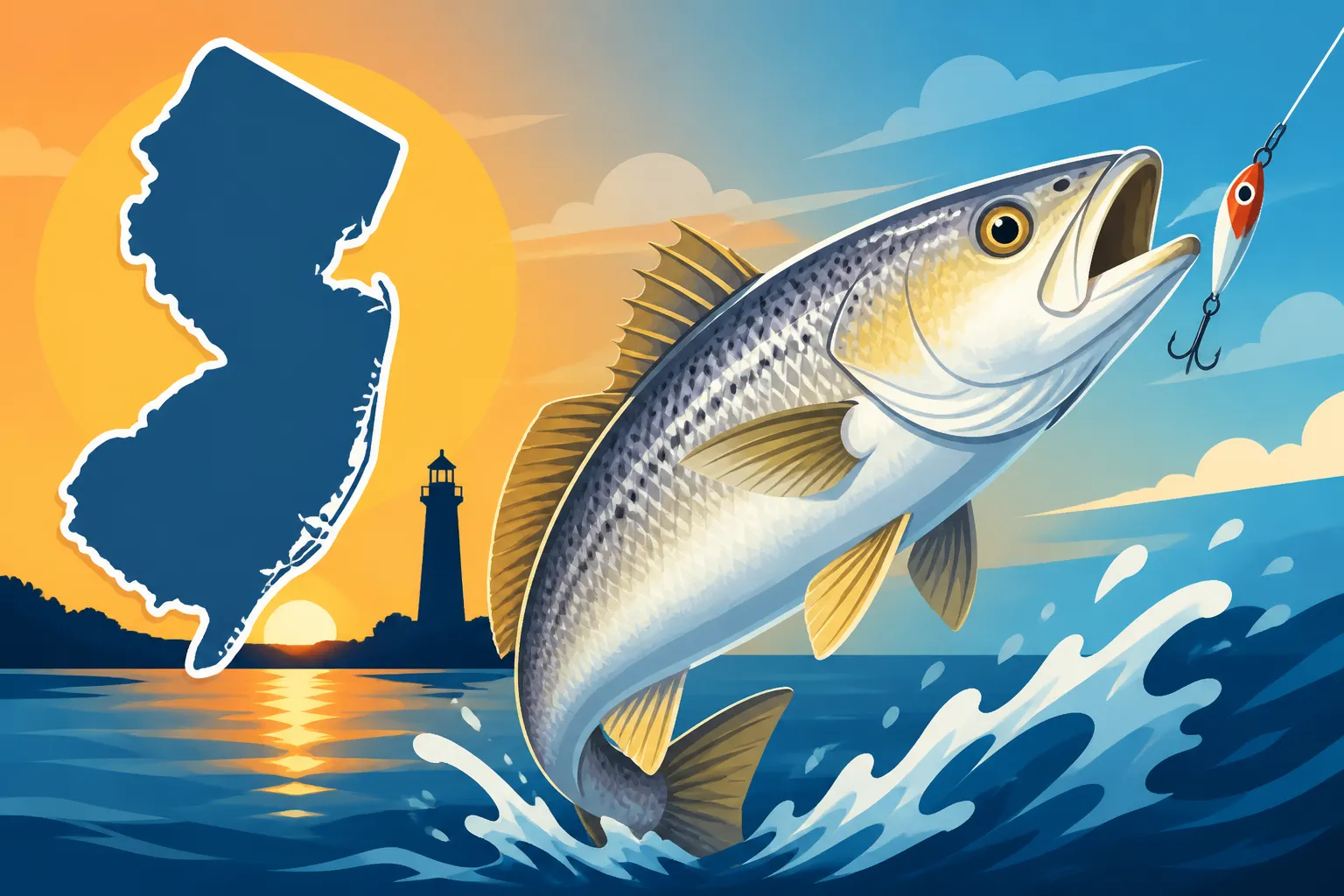
First off, let's talk about their appearance. Weakfish are truly stunning. They typically have a sleek, elongated body with a shimmering, iridescent hue that shifts from olive green on their back to a silvery-white belly. Their sides are often speckled with small, dark spots arranged in wavy lines, and their fins can have a yellowish tinge, particularly the caudal (tail) fin. When you see a fresh one out of the water, it's easy to understand why they're so admired.
But perhaps the most distinctive characteristic, and the one that gives them their common name, is their mouth. "Weakfish" refers to their delicate mouth structure, which is quite soft and easily torn, especially when a fish is hooked. This "weak mouth" can lead to many frustrating moments for anglers, as a hard hookset or too much pressure during a fight can result in the hook pulling free, leaving you with nothing but a story about "the one that got away." Their teeth are small but sharp, designed for grasping baitfish, and they have two prominent canine teeth in the upper jaw.
Beyond their looks, weakfish are also known for their vibrant calls. Yes, weakfish "talk"! They produce a drumming or croaking sound by vibrating muscles against their swim bladder, particularly during spawning season or when stressed. You might even hear it if you're holding a fresh catch in your hand. This unique vocalization adds another layer of intrigue to this already fascinating fish.
Historical Significance and Population Changes
For generations, weakfish were incredibly abundant along the New Jersey coast and throughout the Mid-Atlantic. They were a cornerstone of both recreational and commercial fisheries. Stories from older anglers often recall days when "tiderunners"—large weakfish, often weighing over ten pounds—were a common sight, caught almost at will in the bays and inlets. They were a dependable target, a species you could almost always count on for a good day on the water.
However, starting in the late 1980s and continuing into the early 2000s, weakfish populations experienced a significant and alarming decline. This downturn was attributed to a complex mix of factors, including overfishing, habitat degradation, and environmental changes. The disappearance of these once-plentiful fish left a noticeable void in the local fishery and deeply concerned conservationists and anglers alike. Regulations became much stricter, with reduced bag limits and increased size minimums, all in an effort to help the species recover.
Today, while they haven't returned to their historical highs, there's a cautiously optimistic outlook. We've seen periods of stronger year classes and some promising signs of recovery, particularly in certain areas. They remain a species that requires careful management and responsible angling practices to ensure their continued presence in our waters for future generations. For more on how fish populations are managed, you might find How New Jersey Sets Its Fishing Regulations Each Year an interesting read.
The Weakfish Lifecycle and Habitat
Weakfish are truly estuarine-dependent fish, meaning their lives are closely tied to the brackish waters of our bays and rivers for spawning and early development. Adult weakfish typically migrate from their offshore wintering grounds into the shallower, warmer, and nutrient-rich waters of New Jersey's coastal bays and estuaries in the spring.
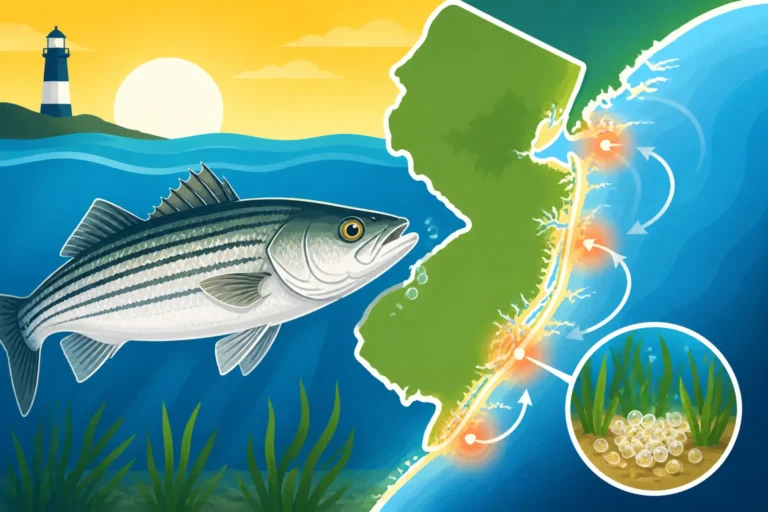
Spawning usually occurs from late April through early July in these protected, shallow backwater areas. The eggs and larval fish then develop in these nursery habitats, feeding on small zooplankton and invertebrates. As they grow into juveniles, they continue to utilize these productive estuarine environments, which provide both abundant food and shelter from predators. Areas like Barnegat Bay, the Mullica River, and the Great Egg Harbor Bay are critical weakfish nurseries.
As the juvenile fish mature and the weather cools in the fall, they, along with the adult fish, begin their migration back out to deeper, warmer offshore waters where they will overwinter. This migratory pattern makes them a seasonal target for New Jersey anglers, primarily from spring through fall. Understanding this cycle is key to predicting when and where you're most likely to encounter these beautiful fish. They thrive in waters with good salinity but also tolerate brackish conditions, often associating with oyster beds, marsh edges, channels, and other structures that hold baitfish.
Where to Find Weakfish in New Jersey Waters
Finding weakfish can sometimes feel like a treasure hunt. They're not always in the same exact spot, and their movements can be influenced by tides, bait presence, and water temperature. However, certain types of locations consistently produce weakfish year after year, offering excellent starting points for your angling adventures.
Back Bays and Estuaries: The Nursery Grounds
New Jersey's vast network of back bays and estuaries are prime weakfish territory, especially during the spring and early summer months. These shallow, productive waters are rich in baitfish and invertebrates, making them ideal feeding grounds. Think of places like Barnegat Bay, where the sheer expanse of water offers countless potential weakfish hideouts. Anglers often find success drifting along the edges of channels, over mussel beds, or near marsh grass lines. The warmer water in the bays also makes them attractive in the spring as weakfish move in to spawn and feed.
The expansive Delaware Bay is another crucial weakfish stronghold, especially in its shallower sections and tidal creeks. The Mullica River and Great Egg Harbor Bay further south also host healthy weakfish populations. When fishing these areas, look for subtle changes in bottom contour, areas where currents create eddies, or any kind of structure that might hold bait. Sometimes, just a slight drop-off or a patch of slightly deeper water can be the key. Small boats, kayaks, and even wade-fishing can be highly effective in these bay environments. Knowing how to read a tide chart and identify productive current flows is invaluable here. Barnegat Bay Bluefish and Fluke Spots can give you an idea of the kind of locations within the bay that weakfish might also frequent.
Inlets and Channels: Migration Corridors
As weakfish move between the ocean and the back bays, they use inlets and deeper channels as their highways. These areas become excellent ambush points, as the strong currents funnel baitfish through, providing easy meals for hungry weakfish. Places like the Manasquan Inlet, Shark River Inlet, and the Cape May Canal are famous for producing weakfish. These spots often feature jetties, bulkheads, and bridge pilings that create current breaks and structure, which weakfish love to hold around.
Fishing these areas often requires heavier tackle and more robust presentations due to the strong currents. The key is to present your bait or lure naturally with the current, allowing it to sweep into areas where weakfish are likely lying in wait. Casting parallel to the jetties or fishing the slack water on either side of the main current can be very effective. Many anglers also find success fishing from the rocks or piers directly in these inlets. Remember that fishing regulations can sometimes vary slightly in specific areas like these, so always check your Reading the New Jersey Fish and Wildlife Digest for the latest. For specific insight into one of these hotspots, check out the Manasquan Inlet Fishing Guide.
Nearshore Ocean Structure
While weakfish are primarily thought of as bay fish, larger "tiderunners" and schools of weaker fish will also congregate around nearshore ocean structure, especially during migration or when feeding on offshore bait schools. This includes natural lumps, rock piles, and artificial reefs and wrecks found just a few miles off the coast. These structures attract baitfish like spearing, sand eels, and even small bunker, which in turn attract predators like weakfish.
Often, you'll find weakfish mixed in with other species like fluke, sea bass, or even small striped bass in these ocean environments. Fishing these areas typically involves boat fishing, either drifting over the structure or anchoring up-current and casting into the zone. Sonar becomes an invaluable tool here for locating submerged structure and marking schools of fish. While not as consistently productive as the bays or inlets for sheer numbers, these ocean spots can often yield larger, more impressive weakfish for those willing to venture out.
When to Target Weakfish: Best Seasons and Tides
Timing is everything when it comes to weakfish. Their movements are highly seasonal, dictated by water temperature and their reproductive cycle. Understanding the prime windows and how tides influence their behavior will significantly increase your chances of success.
Spring and Early Summer: The Prime Time
Without a doubt, spring and early summer represent the absolute prime season for weakfish fishing in New Jersey. As ocean waters begin to warm up, typically from late April through June, weakfish migrate from their offshore wintering grounds into the bays and estuaries to spawn and feed. This influx of fish into accessible, shallower waters creates excellent opportunities for anglers.
During this period, weakfish are often very active, feeding aggressively after their long migration and in preparation for spawning. You'll find them in the back bays, around inlets, and sometimes just off the beaches. The water temperatures are in their comfort zone, and baitfish are abundant. This is when you're most likely to encounter both respectable numbers of fish and a good chance at a larger "tiderunner." Early mornings and late evenings, often referred to as "low light periods," can be particularly productive as weakfish are typically more active hunters during these times. Keep an eye on New Jersey Fishing Season Dates and Closures to know exactly when the season kicks off and any specific regulations that might apply.
Late Summer and Fall: Challenging but Possible
As the summer progresses and water temperatures peak in July and August, weakfish can become a bit more scattered and challenging to locate. Some fish will remain in the cooler, deeper channels of the bays, while others may move out into nearshore ocean waters. They can become less aggressive in the heat, and their feeding patterns might shift. Anglers who find success during this period often focus on deeper areas, fishing at night, or targeting specific structures where weakfish might be schooling.
By late summer and into the fall (September and October), weakfish begin their southward migration back to their offshore wintering grounds. While not as concentrated as the spring run, the fall migration can still offer good fishing, particularly around the inlets and close to ocean structure. These fish are often feeding heavily to build up reserves for their journey, making them receptive to well-presented baits and lures. The key during late summer and fall is persistence and willingness to explore different depths and locations.
Understanding Tides and Currents
Tides and currents play a monumental role in weakfish behavior, especially in our bays and inlets. Weakfish are opportunistic feeders and often use currents to their advantage, ambushing baitfish that are swept past them.
- Incoming Tide: An incoming tide often brings cooler, cleaner, and more saline ocean water into the bays. This can stimulate feeding activity, especially if it coincides with baitfish moving into the bay. Many anglers swear by the last half of an incoming tide and the beginning of the outgoing tide as prime weakfish windows.
- Outgoing Tide: An outgoing tide flushes baitfish and nutrients out of the bays and estuaries. Weakfish will position themselves along channel edges, points, and other ambush points to intercept this outward flow of food. The last hour or two of the outgoing tide, before slack, can be excellent.
- Slack Tide: This is the period of minimal water movement between tides. While sometimes slow, it can also concentrate fish in certain areas, especially if they are schooled over structure. It's often a good time to fish bottom baits.
The general rule of thumb for weakfish is that moving water is almost always better than slack water. Look for current seams, eddies behind structure, and areas where baitfish are being pushed around. Fishing the edges of these currents or allowing your bait to drift naturally with the flow will often lead to strikes. Being able to read a tide chart and understand its impact on your chosen fishing spot is crucial for maximizing your time on the water.
Essential Gear for New Jersey Weakfish Fishing
Having the right gear makes all the difference when targeting weakfish. Because of their delicate mouths, a balanced setup that allows for sensitivity without overpowering the fish is key. You want to feel the subtle bite but also apply enough pressure to fight the fish without ripping the hook out.
Rods and Reels: Balancing Sensitivity and Strength
For weakfish, especially in the bays and inlets, a medium-light to medium action spinning rod, typically in the 6'6" to 7'6" range, is ideal. The rod tip should be sensitive enough to detect those sometimes light weakfish bites, but the backbone should be sufficient to cast lures and handle a decent-sized fish. A fast or moderate-fast action will give you good casting distance and help with quick hooksets without being too stiff.
Pair this rod with a lightweight spinning reel in the 2500 to 4000 size range. You don't need a huge, heavy reel; the goal is a balanced setup that feels comfortable to cast and retrieve all day. The reel should have a smooth drag system, which is paramount for weakfish. When that fish makes a run, you want the drag to give line smoothly, preventing sudden pressure that could tear the hook free from their soft mouth. Brands like Shimano, Daiwa, and Penn offer excellent options across various price points, and you can find a wide selection of these on Amazon.
Line and Leaders: Stealth and Abrasion Resistance
When it comes to main line, many weakfish anglers prefer braided line for its incredible sensitivity and thin diameter. A 10 to 15-pound test braided line is usually sufficient. The lack of stretch in braid means you'll feel every tap and nudge, which is crucial for weakfish. If you're fishing in areas with lots of snags or structure, you might bump up to 20-pound braid, but generally, lighter is better for presentation.
Because weakfish can be line-shy and braided line is highly visible underwater, a fluorocarbon leader is essential. Fluorocarbon is nearly invisible in water and offers excellent abrasion resistance against teeth or rough structure. A 15 to 25-pound test fluorocarbon leader, about 3-5 feet long, is a good starting point. Connect your main braid to your fluorocarbon leader using a strong knot like an FG knot or an Albright knot. The knot should be strong yet small enough to pass through your rod guides smoothly.
Terminal Tackle: Hooks, Weights, and Swivels
Your terminal tackle selection will depend largely on the rig and bait you're using.
- Jig Heads: If you're using soft plastics, a jig head is your primary weight and hook. Sizes typically range from 1/4 ounce to 1 ounce, depending on current and depth. The hook size on the jig head should match the soft plastic you're using, usually a 1/0 to 3/0 hook. Look for jig heads with sharp, strong hooks.
- Hooks for Live/Cut Bait: When fishing with live or cut bait, a 1/0 to 3/0 sized Octopus or Kahle hook is a popular choice. These hooks have a wide gap and are designed to securely hold bait and provide a good hookup. Circle hooks are also an excellent choice, especially if you plan to Catch and Release Rules in New Jersey, as they significantly reduce gut hooking. Many anglers in New Jersey are also adopting New Jersey Circle Hook Requirements for Bait Fishing for other species, so it’s good practice to get familiar with them.
- Weights/Sinkers: For bottom fishing with bait, an egg sinker or a bank sinker is commonly used. The weight (from 1/4 oz to 2 oz or more) will depend on the strength of the current and the depth you're fishing. A simple slip-sinker rig allows the fish to pick up the bait without feeling the weight immediately.
- Swivels: A small, good-quality barrel swivel or a three-way swivel can be useful, especially when creating specific rigs or preventing line twist. Ensure all your terminal tackle components are saltwater-grade to prevent corrosion.
Effective Weakfish Rigs and Baits
When it comes to weakfish, there's no single "magic bullet" rig or bait, but some presentations are undeniably more effective than others. Adaptability is your best friend, as what works one day might not the next.
Jigging for Weakfish: Soft Plastics and Bucktails
Jigging with soft plastics is arguably one of the most popular and effective ways to catch weakfish, especially in the bays and inlets. The versatility of soft plastics allows you to imitate a wide variety of baitfish and crustaceans that weakfish feed on.
- Soft Plastics: Paddle tails, shad bodies, and grub tails are excellent choices. Sizes usually range from 3 to 5 inches. Popular colors include chartreuse, pink, white, clear with glitter, and motor oil. The key is to match the hatch – if weakfish are feeding on spearing, use a slender silver or clear bait. If they're on grass shrimp, a small pink or motor oil grub might be better. Brands like Z-Man, Berkley Gulp!, and Zoom all make fantastic options. You can easily stock up on a variety of colors and sizes for your tackle box through Amazon.
- Technique: Cast your jig out, let it sink to the bottom or desired depth, and then impart action with a series of gentle lifts and drops of the rod tip. The goal is to make the lure "dance" and appear alive. Sometimes a slow, steady retrieve with a twitch will work, other times a sharper jigging motion is needed. Weakfish often hit on the fall, so pay close attention as your lure sinks.
- Bucktails: While often associated with fluke, small bucktail jigs (1/4 to 1 ounce) can also be highly effective for weakfish, especially when tipped with a soft plastic grub, a strip of squid, or a Gulp! Swimming Mullet. The undulation of the hair combined with the added scent or vibration can be irresistible.
- Technique: Similar to soft plastics, bucktails are jigged near the bottom. A slow retrieve with occasional sharp snaps of the rod tip can trigger a strike. Experiment with retrieve speeds and jigging cadence until you find what the fish prefer.
Live Bait Rigs: Shrimp, Minnows, and Crabs
When weakfish are finicky or when you're targeting larger "tiderunners," live bait can often outproduce artificials. The natural scent and movement of live bait are hard for a hungry weakfish to resist.
- Shrimp: Live grass shrimp are a classic weakfish bait in the back bays. They are a natural food source, and weakfish devour them. You can fish them on a simple small hook (size 4 or 6) under a bobber or on a light bottom rig.
- Minnows: Live killifish (often called "killies" or "mud minnows") are another excellent choice. They are hardy and active, making them a great offering. Hook them through the lips or just behind the dorsal fin on a small jig head or a light slip-sinker rig.
- Small Crabs: In certain areas, particularly around structure, small green crabs or fiddler crabs can be effective. They're more often a fluke or tautog bait, but hungry weakfish won't pass up an easy meal.
- Other Live Baits: Larger weakfish will also readily take small spot, peanut bunker, or spearing.
- Rigs for Live Bait:
- Slip-Sinker Rig: This is a versatile bottom rig. Thread an egg sinker onto your main line, tie on a swivel, and then attach a 12-18 inch fluorocarbon leader with a hook. This allows the fish to pick up the bait and run without feeling the resistance of the sinker.
- High-Low Rig: This rig features two hooks on snelled leaders coming off a main leader, often with a sinker at the bottom. It allows you to present two baits at different depths and can be effective when weakfish are schooled. You might recognize this as a common How to Tie a Fluke Rig, which often works well for weakfish too.
- Free-Lining: In areas with minimal current or when fishing from a boat, simply casting a live minnow or shrimp with no weight can be deadly. The natural, unencumbered movement of the bait is irresistible.
Cut Bait and Scented Options
Sometimes, the scent trail of cut bait is what it takes to draw in weakfish, especially if they are a bit sluggish or when you're fishing in murky water.
- Clam: Fresh clam is a time-tested bait for many bottom-dwelling species, and weakfish are no exception. Use a small piece of clam on a bottom rig. The scent will disperse and attract fish from a distance.
- Squid: Strips of fresh squid are another reliable option. They are tough, stay on the hook well, and offer a visual appeal and scent. A long, thin strip of squid fished on a jig head or a bottom rig can be very effective.
- Berkley Gulp! Artificials: While technically artificial, Gulp! baits are impregnated with a powerful scent that mimics natural bait. Gulp! Swimming Mullets, Shrimp, or Minnows in various sizes and colors are incredibly popular and often outperform natural bait. They offer the convenience of artificials with the added attraction of scent. A great weakfish specific option is the Gulp! Swimming Mullet in white, pink, or chartreuse. You can find these readily available on Amazon and they are a must-have for many anglers.
- Technique: When using cut bait or Gulp!, a slow retrieve or simply letting it sit on the bottom with a slip-sinker rig can be effective. Give it a gentle twitch or lift every now and then to disperse more scent and attract attention.
| Weakfish Bait/Lure Type | Description & Best Use | Pros | Cons |
|---|---|---|---|
| Soft Plastics | Paddle tails, grub tails (3-5") on jig heads (1/4-1 oz). Best for jigging. | Highly versatile, mimics various baitfish, effective movement, wide color selection. | Requires active presentation, not always effective on very finicky fish. |
| Live Shrimp | Small grass shrimp on light rigs. Primarily for back bays. | Natural scent and movement, often irresistible to weakfish. | Fragile, can be hard to keep alive, often smaller fish. |
| Live Minnows | Killifish, spot, or peanut bunker on slip-sinker rigs. | Excellent for larger weakfish, strong natural appeal. | Can be difficult to procure, requires livewell, sometimes attracts undesirable species. |
| Cut Clam | Small pieces on bottom rigs. Effective when scent is key. | Strong scent trail, attracts weakfish from a distance. | Messy to handle, can be easily picked off by small bait stealers. |
| Cut Squid | Strips on jig heads or bottom rigs. | Durable, good visual appeal and subtle scent. | Less natural movement than live bait, some days weakfish prefer more active presentations. |
| Berkley Gulp! | Scented artificials (Swimming Mullet, Shrimp). Very versatile. | Combines artificial action with strong scent, durable, no need for live bait. | Can be more expensive than natural bait, specific colors/shapes work better on certain days. |
| Bucktail Jigs | Small bucktails (1/4-1 oz) tipped with soft plastic or squid. | Good for depth, excellent vibration, can cover water quickly. | Requires a good jigging technique, might be too aggressive for very sluggish fish. |
Techniques for Successful Weakfish Angling
Once you have your gear and bait sorted, it's time to talk about technique. Weakfish can be finicky, and a subtle approach often yields the best results. Whether you're fishing from a boat or the shore, understanding how to present your offering effectively is paramount.
Drifting and Trolling: Covering Water
When fishing from a boat, drifting is an incredibly effective technique for weakfish, especially in larger bay areas or over subtle structure. It allows you to cover a lot of water and present your bait or lure naturally with the current, searching for schools of fish.
- Drifting with Live or Cut Bait: A classic approach is to use a slip-sinker rig with live bait (shrimp, minnows) or cut bait (clam, squid) and allow your boat to drift with the tide. Pay attention to how the boat moves and try to keep your line as vertical as possible, adjusting your sinker weight if needed. This technique is particularly effective over shell beds, channel edges, or in deeper sections of the bay.
- Drifting with Jigs: You can also drift soft plastic jigs. Cast your jig ahead of your drift, let it sink, and then work it back with gentle jigging motions as your boat moves. This allows the lure to mimic a distressed baitfish struggling in the current.
- Controlled Drifting/Trolling: For those with trolling motors, a controlled drift or very slow trolling can be excellent. This allows you to maintain a specific depth or follow a contour more precisely. Some anglers will even use small planers or trolling weights to get their lures deeper when slow trolling soft plastics or small spoons. Always be mindful of your boat's speed relative to the current to ensure your presentation looks natural.
Shore and Pier Fishing Strategies
You don't need a boat to catch weakfish in New Jersey. Many excellent opportunities exist for shore-bound anglers, particularly in inlets, along bulkheads, and from piers.
- Inlets and Jetties: These are prime shore fishing spots, especially during the spring and fall migrations. Look for areas where the current creates eddies or pockets of calmer water behind structure. Weakfish will often hold in these current breaks, waiting to ambush bait. Cast your soft plastics or live/cut bait into the current and allow it to swing into these ambush zones. A gentle retrieve with pauses can be highly effective. Remember to be safe when fishing on jetties, as the rocks can be slippery and waves unpredictable. You can read more about specific inlet fishing in guides like Shark River Inlet Fishing Guide.
- Piers and Docks: Piers that extend into deeper water or over channels can be weakfish magnets, especially at night when the lights attract baitfish. Use light bottom rigs with clam, squid, or live shrimp, or cast soft plastics and work them around the pilings. The structure provides cover for weakfish, and the lights draw in their food source.
- Beaches: While less common than bay or inlet fishing, weakfish can be caught from the surf, particularly during the spring and fall runs when they are close to shore. Light surf tackle with a fish-finder rig and clam or small pieces of cut bait can produce. Targeting deeper cuts or sloughs where weakfish might be cruising is key. This is also a good strategy for New Jersey Surf Fishing Techniques generally.
- Tide Considerations: For shore fishing, pay very close attention to the tide. Often, the last two hours of the incoming tide and the first two hours of the outgoing tide are the most productive, as moving water dislodges bait and concentrates fish. Night fishing under a full or new moon can also be particularly good for weakfish from shore, as they often feed aggressively in the dark.
Reading the Water: Signs of Weakfish Activity
Becoming a successful weakfish angler means learning to "read the water" and look for subtle clues that indicate fish presence.
- Baitfish Schools: The most obvious sign is the presence of baitfish. If you see schools of spearing, peanut bunker, or grass shrimp in the water, weakfish are likely nearby. Look for nervous bait, or baitfish jumping out of the water – that's often a sign of predators below.
- Bird Activity: Gulls, terns, and other seabirds dive-bombing into the water are a classic indicator of baitfish being pushed to the surface by feeding fish. While often a sign of bluefish or striped bass, weakfish will sometimes be mixed in or feeding below the surface action.
- Subtle Bites: Weakfish bites can range from a violent strike to a very subtle "tap" or just a feeling of added weight on your line. With their weak mouths, a sensitive rod is essential to detect these lighter bites. If you feel anything unusual, set the hook!
- Water Clarity and Color: Weakfish generally prefer cleaner water, but they can adapt to some turbidity, especially if there's an abundance of bait. Pay attention to water color changes, as often a distinct line between clear and murky water can be a productive feeding zone.
- Sonar (for boat anglers): On a boat, your fish finder is your best friend. Look for bait balls, schools of fish holding near the bottom or around structure, or even individual fish arcs. Learn to distinguish different species if possible, but any fish on the screen in a known weakfish area is worth investigating.
New Jersey Weakfish Regulations and Conservation
As an angler, understanding and adhering to weakfish regulations isn't just about avoiding a fine; it's about being a responsible steward of the resource. Weakfish populations are still recovering, and our actions play a direct role in their future.
Bag and Size Limits
Regulations for weakfish in New Jersey can and do change, sometimes annually, based on stock assessments and management goals. These limits are put in place to ensure the long-term sustainability of the species.
Typically, weakfish regulations involve a minimum size limit and a daily possession limit (bag limit). For example, you might be allowed to keep one weakfish per day, with a minimum size of 13 inches. It's crucial to understand that these numbers are subject to change, so always, always consult the most current New Jersey Marine Fish and Shellfish Regulations, which are published annually in the Reading the New Jersey Fish and Wildlife Digest. This digest is available online through the New Jersey Department of Environmental Protection (NJDEP) Fish & Wildlife website, and often in print at bait and tackle shops. You can also find quick references in the New Jersey Daily Bag Limits by Species. Measuring your catch accurately, from the tip of the snout to the end of the tail, is vital before deciding whether to keep it.
Beyond specific weakfish regulations, remember that if you're fishing in saltwater, you also need to register with the New Jersey Saltwater Registry Explained. This is a free registration that helps the state monitor saltwater fishing activity.
Catch and Release Best Practices
Given the delicate nature of weakfish populations, practicing catch and release, especially for larger breeding fish, is highly encouraged. Even if you're within the legal limits, releasing some or all of your catch contributes to the recovery efforts. When practicing catch and release, consider these best practices:
- Minimize Handling: Try to keep the fish in the water as much as possible. If you must bring it aboard, handle it gently with wet hands or a wet towel. Avoid touching the gills or eyes.
- Use Barbless Hooks: Crushing the barb on your hook or using specifically designed barbless hooks makes removal much easier and less damaging to the fish's mouth.
- Pliers or Dehookers: Have needle-nose pliers or a dehooking tool readily available to quickly remove the hook.
- Reduce Fight Time: Fight the fish as quickly as possible without "horsing" it in, which can cause internal damage. A balanced rod and reel with a smooth drag system help here.
- Revival: If a fish is exhausted, hold it gently in the water, facing into the current, allowing water to flow over its gills. Move it slowly back and forth until it regains its strength and can swim away on its own.
- Circle Hooks: As mentioned earlier, if you're bait fishing, using circle hooks can significantly reduce the incidence of gut-hooking, leading to much higher survival rates for released fish.
For more detailed information on ethical angling practices, refer to Catch and Release Rules in New Jersey.
The Future of Weakfish in New Jersey
The future of weakfish in New Jersey waters largely depends on continued conservation efforts, responsible management, and the commitment of anglers. Scientific research into their population dynamics, spawning success, and habitat needs is ongoing. By adhering to regulations, practicing careful catch and release, and supporting conservation initiatives, we all play a part in ensuring these beautiful and exciting fish remain a vital component of New Jersey's diverse fishery. Education and awareness are key, as is reporting any observed violations to the appropriate authorities.
Common Challenges and Tips for Weakfish Anglers
Weakfish are a truly rewarding catch, but they can also be challenging. Knowing what difficulties you might face and having some strategies up your sleeve can turn a frustrating day into a successful one.
Dealing with the "Weak Mouth"
This is probably the biggest hurdle for weakfish anglers, and it's where their name comes from! Their delicate mouth structure is prone to tearing, which means a missed hookset or a lost fish at the boat or shore is a common occurrence.
- Gentle Hook Sets: Unlike a strong-mouthed striped bass, you don't need a massive, arm-jerking hook set for a weakfish. A firm, steady sweep of the rod tip is usually all that's required to set the hook. Too much force, especially with braided line, can rip the hook right through their mouth.
- Consistent Pressure: Once hooked, maintain consistent, steady pressure on the fish. Avoid sudden jerks or slack line. Let the rod do the work, absorbing runs, and keep your drag set just right – not too tight, not too loose.
- Landing Techniques: This is critical. Avoid lifting a weakfish by the line, especially if it's a larger fish. If possible, use a net. A rubberized landing net is ideal as it's gentle on the fish's slime coat if you plan to release it. If you're fishing from a boat, gently lip-gaffing them (if keeping) or hand-landing them with a wet glove can work, but again, be extremely careful around their mouth. From shore or a pier, try to slide them onto the sand or use a pier net rather than swinging them up.
Avoiding Bycatch and Targeting Weakfish Specifically
Weakfish often share habitats with other popular species, which means you'll sometimes catch fish you weren't targeting. While encountering other fish is part of the fun, sometimes you want to focus specifically on weakfish.
- Adjust Your Lure Size and Type: Smaller, more subtle soft plastics are often more attractive to weakfish than large, aggressive lures designed for striped bass or bluefish. Pink, chartreuse, and clear are classic weakfish colors, whereas flashier or larger profiles might draw in other predators.
- Depth and Location: While weakfish can be found throughout the water column, they often prefer to feed closer to the bottom or suspended just above structure. If you're getting hit constantly by bluefish on topwater, try fishing deeper. Conversely, if you're getting fluke on the bottom, try raising your retrieve a few feet.
- Time of Day/Night: Weakfish are notoriously good night feeders. While you'll still get striped bass, fishing after dark, especially around lights, can often increase your weakfish-to-bycatch ratio.
Persistence and Adaptation
Weakfish fishing isn't always easy. There will be days when they seem to vanish, or when they're incredibly finicky. The key is to stay persistent and be willing to adapt your approach.
- Experiment with Colors and Sizes: If weakfish aren't hitting your go-to lure, try changing colors, then sizes, then shapes. Sometimes a subtle change is all it takes.
- Vary Your Retrieve: Try fast retrieves, slow retrieves, jigging, long pauses, short twitches. Every day can be different.
- Move Around: If a spot isn't producing after a reasonable amount of time, don't be afraid to move to another area. Weakfish can be highly mobile, and sometimes finding them is just a matter of covering ground.
- Consult Local Knowledge: Talk to local bait and tackle shop owners, particularly those who are avid weakfish anglers. They often have the most up-to-date information on where the fish are biting and what they're hitting. Online forums and local fishing reports can also be helpful resources for current trends.
- Learn from Every Trip: Even on slow days, pay attention to tide, water temperature, moon phase, and bait presence. Over time, you'll start to recognize patterns and become a more effective weakfish angler. It's all part of the journey, and the challenge is what makes landing a beautiful New Jersey weakfish so incredibly satisfying.
Disclaimer
This article is for general informational purposes only and does not constitute professional advice. Laws, prices and regulations vary by location and change over time. Consult a qualified professional for guidance on your specific situation.