Do Muskie and Pike Live in the Same New Jersey Lakes?
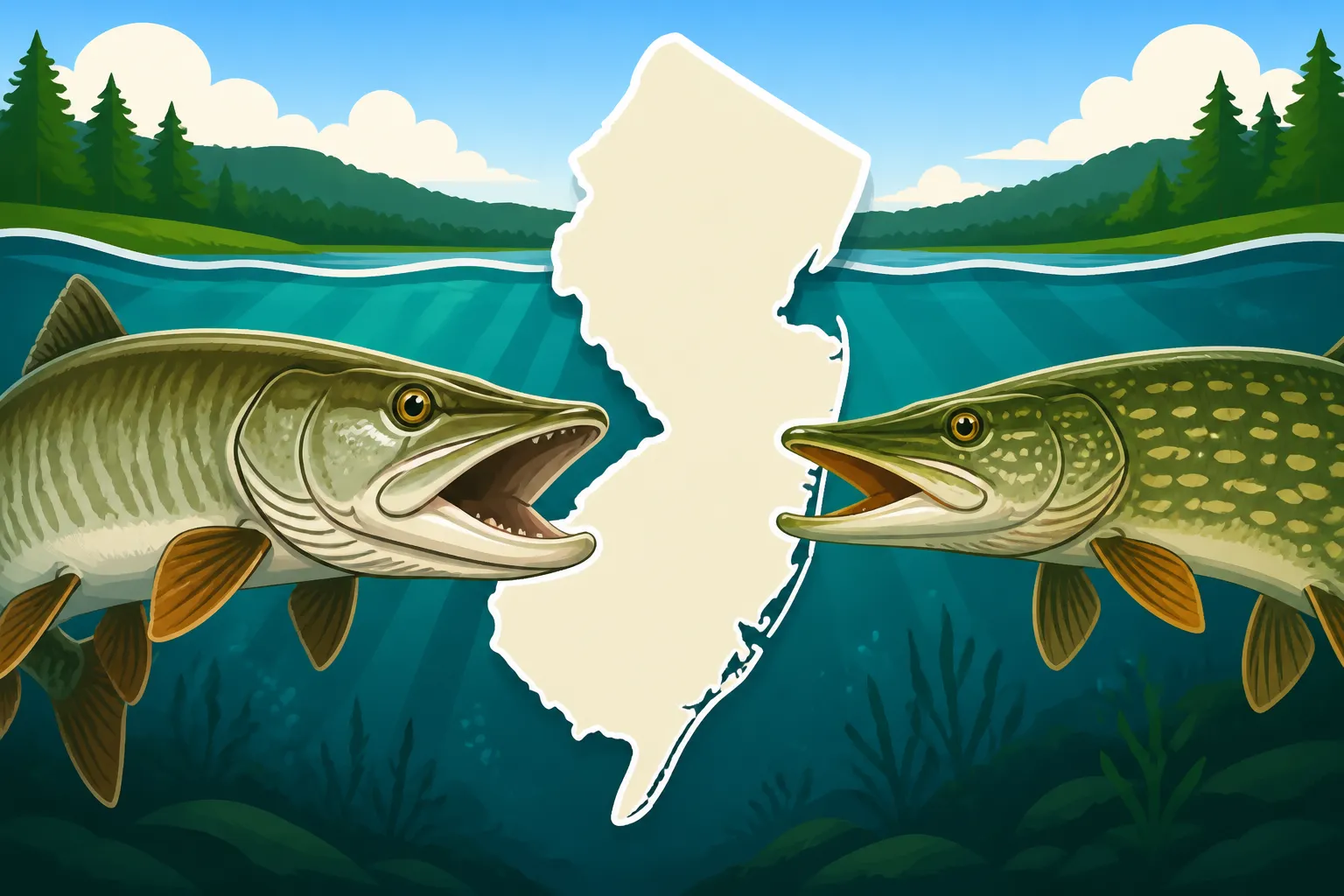
It’s a common question among New Jersey anglers, and one that sparks a lot of discussion around the bait shop counter: do muskellunge (muskie) and northern pike actually share the same waters in the Garden State? While these two formidable freshwater predators might look similar at first glance – both possessing that long, torpedo-shaped body and a mouth full of razor-sharp teeth – their preferences for habitat and often their distribution in New Jersey can be quite distinct. This guide will untangle the mystery, exploring where you can find these exciting gamefish and shedding light on whether they truly coexist in the same New Jersey lakes and rivers.
Unpacking the Muskie Presence in New Jersey
When we talk about "muskie" in New Jersey, it's often a mix of purebred muskellunge and the more commonly stocked tiger muskie, which is a sterile hybrid of a muskie and a northern pike. These fish are true apex predators, growing to impressive sizes and providing an unforgettable fight for any angler lucky enough to hook one.
Purebred Muskie vs. Tiger Muskie: The Garden State Distinction
New Jersey's efforts to establish a robust muskie fishery have largely focused on stocking, with a particular emphasis on the tiger muskie hybrid. Purebred muskellunge do exist, sometimes naturally or from earlier stocking programs, but the tiger muskie is often the more accessible target for many anglers. These hybrids are hardier and grow faster than purebreds, making them an excellent choice for state stocking initiatives aimed at providing exciting trophy fisheries.
You'll find designated waters known for their muskie, often including prominent lakes like Lake Hopatcong, Monksville Reservoir, and Greenwood Lake. These are typically larger, deeper bodies of water with a good forage base to support such large, predatory fish. Anglers specifically targeting muskie usually head to these well-known spots, often preparing for a long day of casting large baits in hopes of that single, explosive strike. Understanding this distinction is key because it influences where stocking efforts are concentrated and, consequently, where you’re most likely to encounter these giants.
Preferred Muskie Habitat: Deep, Clear, and Full of Forage
Muskellunge, both purebred and tiger, are generally drawn to larger, deeper, and often clearer lakes. They are ambush predators that thrive in environments with ample structure – think extensive weed beds, sharp drop-offs, submerged timber, and rocky points. These features provide cover for them to hide and launch their attacks on unsuspecting prey like perch, suckers, and even smaller bass. They are often less tolerant of murky, shallow waters, preferring the cooler, oxygen-rich depths that larger lakes provide, especially during the warmer months.
Consider a place like Round Valley Reservoir or parts of Lake Hopatcong, known for their depth and diverse underwater topography. These areas can hold robust populations because they offer the perfect combination of hiding spots and abundant prey. Muskellunge are typically solitary creatures, needing a significant territory to hunt, which means they are rarely found in high concentrations. Their presence often indicates a healthy, well-managed aquatic ecosystem, as they sit at the very top of the food chain. New Jersey Muskellunge Waters offers more specific details on where to find these majestic fish.
Northern Pike in New Jersey: A Different Kind of Predator
Northern pike, while sharing some visual similarities with muskie, have their own unique preferences and are found in different types of environments across New Jersey. They are also aggressive predators, famous for their lightning-fast strikes and powerful fights.
New Jersey's Pike Hotspots: Weedy Shallowness and Flowing Water
Northern pike in New Jersey tend to favor shallower, weedier waters, often with a good current or flow. They are frequently found in larger rivers, slow-moving sections of streams, and shallower lakes and impoundments that might not be suitable for muskie. Some notable pike hotspots include parts of the Passaic River system, the backwaters of the Delaware River, Cranberry Lake, and Swartswood Lake. These areas typically have extensive submerged vegetation, which is ideal for pike to ambush their prey.
Unlike muskie, which prefer deeper, more open water for hunting, pike are masters of camouflage in dense cover. They'll lie perfectly still, blending into the weeds, waiting for a baitfish, frog, or even a duckling to swim by before exploding with incredible speed. Their distribution in New Jersey often overlaps with areas where other warm-water species like bass and panfish thrive, as these smaller fish serve as their primary food source. It’s a classic case of adaptation, where the pike has evolved to dominate a specific type of habitat. New Jersey Northern Pike Waters provides a deeper dive into specific locations.
Pike's Preferred Environment: Masters of the Shallows
Northern pike are perfectly adapted to environments characterized by dense vegetation and shallower depths. They are more tolerant of warmer water temperatures and slightly less clear water than purebred muskie. Their elongated bodies and dorsal fins set far back on their bodies are designed for sudden bursts of speed in confined spaces, making them incredibly effective hunters in tangled weeds and lily pads.
Imagine fishing a large, shallow lake or a wide, slow river. The areas with thick weed beds and fallen logs are prime pike territory. They will often hold tight to this cover, darting out to snatch any prey that ventures too close. This preference means that even within a very large body of water, pike and muskie might occupy entirely different zones – pike dominating the shallow, vegetated coves, while muskie patrol the deeper, more open water. This spatial separation is a key factor in understanding their coexistence (or lack thereof).
Overlap or Separation? Do They Truly Coexist?
This is where the rubber meets the road. Given their somewhat similar appearances and predatory nature, it's easy to assume muskie and pike would simply occupy the same ecological niche. However, the reality in New Jersey is a bit more nuanced than that.
The Reality of Shared Waters: A Nuanced Answer
While it's not impossible to find both muskie (especially tiger muskie) and northern pike in the same large water body in New Jersey, it's generally rare for them to occupy the exact same prime habitats in significant numbers. Instead, if they are present in the same lake or river system, they typically partition the available habitat. For instance, in a vast lake, muskie might be found in the deeper, rockier sections or along steep drop-offs, while pike might concentrate in the shallower, weedy bays and feeder creek mouths.
Think of a large, diverse water body like Greenwood Lake, which might be stocked with tiger muskie. While a muskie might cruise the main lake basin, northern pike, if present, are likely to be found further up in the lake's shallower, more vegetated arms or associated tributaries. They tend to stick to their preferred zones, minimizing direct competition for prime ambush spots and food resources. This natural partitioning allows both species to thrive, albeit in different parts of the same aquatic environment. So, while they might exist within the same geographical boundaries, their actual "homes" often differ.
Why They Might Not Mix (or Mix Minimally)
Several factors contribute to this minimal mixing:
- Habitat Specialization: As discussed, muskie prefer deeper, clearer waters with larger forage, while pike are content in shallower, weedier, and sometimes warmer conditions. Their physical adaptations and hunting strategies are tailored to these specific environments.
- Stocking Programs: New Jersey's stocking efforts are carefully managed. If a lake is designated as a muskie fishery, the emphasis is placed on maintaining that population. Conversely, lakes with natural pike populations are managed accordingly. It's rare for the state to intentionally create a scenario where both thrive in high numbers in the same specific fishing zones, although the possibility exists in very large, diverse systems.
- Competition for Resources: While they might prey on similar baitfish, their preferred hunting grounds mean they're often not directly competing for the same individual schools of forage. If they were to heavily overlap, competition for food and prime ambush locations could become a limiting factor for one or both species.
- Temperature Tolerance: Purebred muskie, especially, tend to prefer cooler water than northern pike, particularly during the hot summer months. This difference in thermal preference can also lead to spatial separation, with muskie seeking out deeper, cooler water when surface temperatures rise.
So, while you might hear of someone catching a pike and a muskie from the same large lake in New Jersey, it's generally because that lake offers a wide range of habitats that cater to the distinct preferences of each species, rather than them schooling up together in the same weed line.
Gear and Tactics: Targeting Muskie vs. Pike
Understanding the subtle differences in muskie and pike behavior and habitat preferences also informs how anglers approach targeting them. While there's some overlap, specialized gear and techniques can significantly improve your chances for each species.
Muskie Fishing Essentials: Heavy Gear for Heavy Hitters
Muskie fishing is not for the faint of heart, or for light tackle! These fish are often called the "fish of 10,000 casts" for a reason – they require immense patience and specialized, heavy-duty gear. You'll need a stout, fast-action rod, typically 7.5 to 9 feet long, paired with a robust baitcasting reel capable of handling heavy braided line (think 65-100 lb test). The lures are equally impressive: giant bucktails, enormous crankbaits, gliders, and swimbaits, often ranging from 8 to 14 inches or more. These are not cheap, and many dedicated muskie anglers find a great selection of quality, specialized muskie lures and rods on Amazon.
When fishing for muskie, you're often covering a lot of water, casting repeatedly to structure like deep weed edges, rocky points, and submerged humps. A wire or heavy fluorocarbon leader is absolutely essential to prevent their sharp teeth from cutting your line. It's a game of power and persistence, where every cast is made with the expectation of a monster strike. Knowing how to properly "figure-eight" your lure at the boat is also a crucial tactic for provoking a follow-up strike from a hesitant muskie.
Pike Fishing Approaches: More Accessible, Still Exciting
Northern pike, while still requiring durable gear, are often more forgiving to target than muskie, especially for anglers new to these toothy predators. A medium-heavy to heavy spinning or baitcasting rod, typically 6.5 to 7.5 feet, with a reliable reel spooled with 20-50 lb braided line, is usually sufficient. Wire leaders are just as critical for pike as they are for muskie, as their teeth are equally capable of shredding line.
Pike respond well to a variety of lures, including spoons, spinnerbaits, inline spinners, smaller jerkbaits, and swimbaits. Live bait, like large shiners or suckers, can also be highly effective, especially when fished under a bobber near weed lines. Many anglers can easily find suitable pike lures and terminal tackle on Amazon, making it a convenient option for stocking up. Because pike often inhabit shallower, weedier areas, techniques like casting and retrieving lures over weed beds, or jigging through pockets in the vegetation, are very effective. How to Catch Pike Through the Ice offers more specific techniques for cooler months.
Safety First: Handling These Toothed Critters
Whether you're after a muskie or a northern pike, safety is paramount, both for you and for the fish. Their mouths are packed with razor-sharp teeth that can cause serious injury. Always carry a long-nose pliers, a jaw spreader, and a sturdy landing net or a large, rubberized net designed for these predators. Lip-gripping tools are also popular for controlling the fish while you remove hooks.
It’s advisable to wear heavy-duty gloves when handling these fish, especially if you plan to hold them for a quick photo. Minimizing the time the fish is out of the water is crucial for its survival if you intend to release it. Many of these essential handling tools can be found in fishing supply sections on Amazon, ensuring you're prepared for any encounter. Learning proper catch-and-release techniques is vital, particularly for large, older fish, to help preserve these exciting fisheries for future generations.
Comparing Muskie and Northern Pike in New Jersey
To help visualize the differences between these two fascinating species and their presence in New Jersey, here's a quick comparison:
| Feature | Muskellunge (including Tiger Muskie) | Northern Pike |
|---|---|---|
| Typical Size in NJ | Larger, often 30-50+ inches, sometimes exceeding 20-30 lbs | Smaller on average, often 20-35 inches, 2-10 lbs |
| Primary Habitat | Larger, deeper, clearer lakes; extensive structure (rock, timber, deep weeds) | Shallower, weedier lakes, slow rivers, backwaters; dense vegetation, lily pads |
| Tolerance to Warmth | Less tolerant, seeks cooler, deeper water in summer | More tolerant of warmer, shallower water |
| Diet | Larger baitfish (suckers, perch, trout), often opportunistic on anything | Baitfish (perch, shiners), frogs, small birds, rodents |
| Body Markings | Often vertical bars, spots, or clear patterns; dark markings on a light background | Often horizontal rows of bean-shaped spots; light spots on a dark background |
| Cheek & Gill Cover | Cheeks usually fully scaled, upper half of gill cover scaled | Cheeks usually fully scaled, entire gill cover scaled |
| Tail Fin | More pointed lobes, often slightly more rounded | More forked, often sharper lobes |
| Fight | Powerful, often long runs, head shakes, deep dives | Explosive initial runs, thrashing, sometimes jumping |
Note: These are general characteristics, and individual fish or specific regional variations can occur.
The journey to understand New Jersey's diverse fishing scene is an ongoing one, and knowing the nuances between species like muskie and pike truly enhances the experience. While they might occasionally cross paths in vast water systems, their distinct preferences generally ensure they maintain their own territories. This guide, hopefully, has cleared up some of the confusion and armed you with the knowledge to appreciate and pursue both of these magnificent predators in the appropriate settings. Remember to check New Jersey fishing regulations before heading out, as rules and seasons vary.
Disclaimer
This article is for general informational purposes only and does not constitute professional advice. Laws, prices and regulations vary by location and change over time. Consult a qualified professional for guidance on your specific situation.