How Do Biologists Track Striped Bass Populations in New Jersey?
As New Jersey anglers, we often wonder about the health of our beloved striped bass populations. You hear whispers at the bait shop, see varying catches from year to year, and can't help but ask: how do the scientists actually know what's going on with these incredible fish? It feels like trying to count individual grains of sand on the beach sometimes, but rest assured, there's a whole world of dedicated effort behind understanding the movements and numbers of stripers. This guide will pull back the curtain on the fascinating methods biologists use to track striped bass populations right here in New Jersey.
The Importance of Tracking Striped Bass Populations
When you cast a line into the surf or drop a jig in the back bays, you're not just hoping for a fish; you're participating in a tradition deeply woven into the fabric of New Jersey's coastal culture. Striped bass are more than just a trophy catch; they're a cornerstone of our marine ecosystem and a huge economic driver. So, when we talk about tracking their populations, it's not just academic curiosity – it's crucial for the future of fishing and the health of our waters.
Why We Care So Much About Stripers
Striped bass, often simply called "stripers" or "rockfish," hold a special place in the hearts of New Jersey anglers. They're powerful, beautiful, and offer some of the most exciting fishing opportunities, whether you're tossing plugs from the beach or trolling offshore. Ecologically, they're important predators, helping to maintain balance in the food web. Economically, their presence supports countless bait shops, tackle stores, charter boats, and coastal businesses. Imagine a Jersey Shore without robust striped bass runs – it's almost unthinkable for many of us. Their strong migratory patterns also make them an indicator species; what affects them often affects a wide range of other marine life. Understanding their numbers and health is vital for sustained enjoyment and responsible stewardship.
The Challenges of Counting Fish
Let's be real: trying to count fish, especially highly migratory ones like striped bass, is an incredibly difficult task. They don't stay in one place, they live in a vast, opaque environment, and their numbers fluctuate naturally due to spawning success, predation, and environmental factors. It's not like counting deer in a field, where you can often spot them from a distance. Striped bass move up and down the Atlantic coast, from the Carolinas all the way to Maine, depending on the season and their life stage. This constant movement means that any single survey in New Jersey only captures a snapshot of a much larger, dynamic population. Biologists face the challenge of piecing together these snapshots from various locations and over time to form a coherent picture of the entire stock. They're dealing with a massive, moving puzzle, and every piece of data is critical to seeing the whole image.
Traditional Methods of Population Assessment
Before the days of fancy electronics, biologists relied on more straightforward, albeit labor-intensive, methods. These traditional approaches are still fundamental today, forming the bedrock of much of our understanding of striped bass. They require cooperation from anglers and keen observation from scientists.
Commercial and Recreational Catch Data
One of the most valuable sources of information comes directly from the people who spend the most time on the water: commercial fishermen and recreational anglers like us.
Commercial fishermen are often required to fill out detailed logbooks, recording how many fish they catch, where, and when. This provides a consistent stream of data on catch rates and sizes. For recreational anglers, the approach is a bit more varied. State agencies, often in collaboration with federal programs, conduct creel surveys at boat ramps, fishing piers, and beaches. Here, friendly survey takers might ask about your catch, how long you fished, and what you used. You might also receive phone surveys at home, asking about your fishing activity over a certain period. While these methods rely on self-reporting and sampling, when aggregated across thousands of anglers and over many years, they provide crucial insights into trends in striped bass abundance and fishing effort. It's how biologists get a sense of the "pulse" of the fishery. New Jersey Recreational Fishing Survey: Why You Might Get a Call explains more about these efforts.
Independent Trawl and Seine Surveys
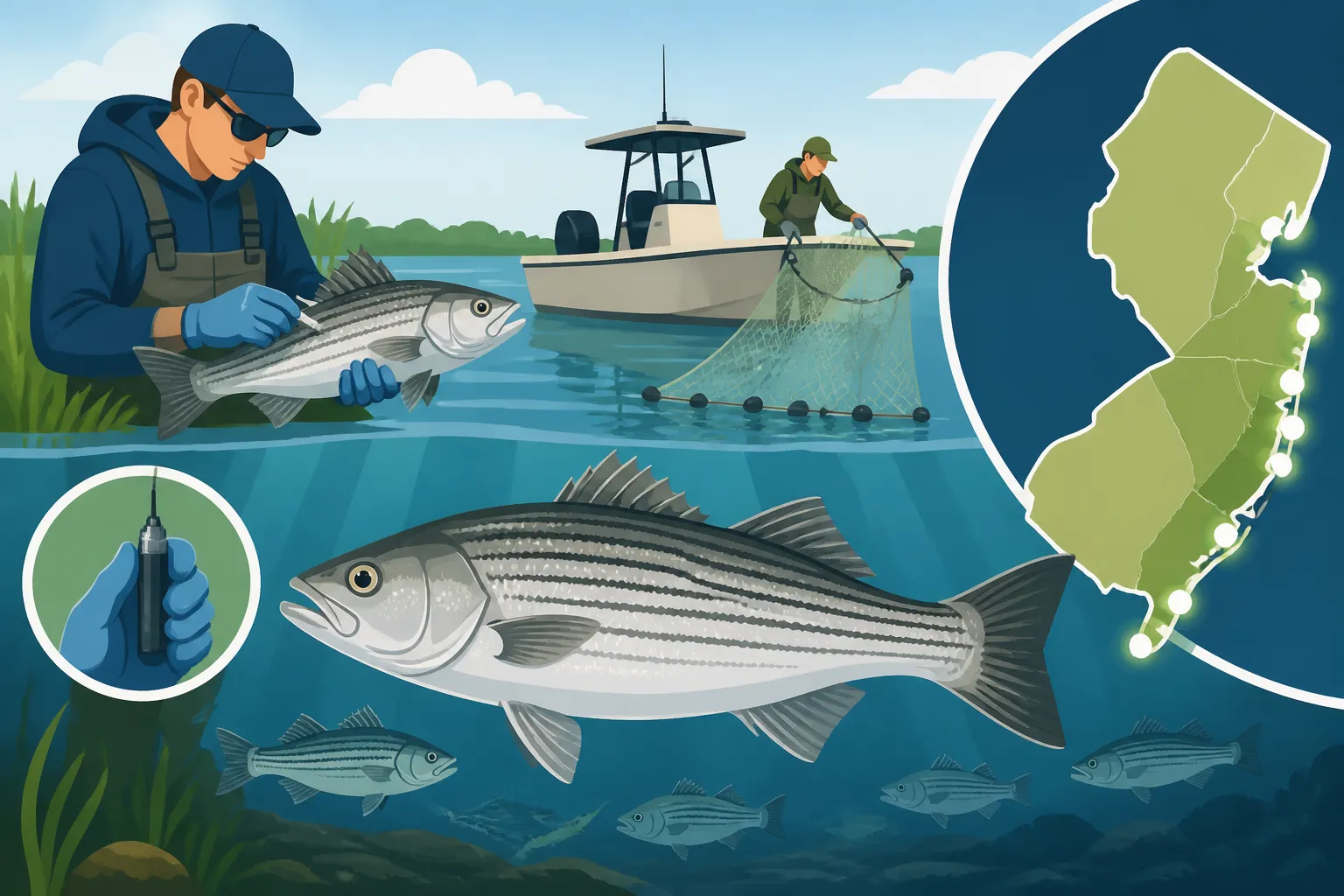
Beyond what anglers report, biologists actively go out and collect their own samples. Trawl surveys involve dragging a large net, shaped like a cone, through the water at various depths and locations. The net is designed to catch fish of different sizes, allowing scientists to sample the population. Seine surveys use a long net that is deployed in a semi-circle, often from the shore or a small boat, to enclose a section of water. As the net is pulled in, it traps fish, providing a sample of what's present in that specific habitat. These surveys are meticulously planned and executed at consistent locations and times each year, providing standardized data that can be compared over decades. They often target juvenile striped bass in estuaries like the Delaware River or Barnegat Bay, which are crucial nursery areas. By tracking the number of young-of-the-year fish, biologists can predict future recruitment into the adult population, helping to project how many fish will be available for harvest in years to come. These surveys are essential for understanding the natural fluctuations in striped bass reproduction.
Tagging and Recapture Programs
Tagging programs are like giving fish tiny GPS trackers (well, not exactly GPS, but you get the idea!). Biologists catch striped bass, carefully attach a small, numbered tag (often a plastic dart tag or an internal anchor tag), record the fish's size, date, and location, and then release it unharmed. When an angler catches a tagged fish, they're encouraged to report the tag number, the fish's new size, and where it was caught to the relevant agency. Some dedicated anglers even purchase their own tagging kits, sometimes found on online retailers like Amazon, to participate in citizen science efforts, though official research programs typically use specific, validated tags.
This recapture data is gold! It helps biologists understand:
- Migration patterns: Where do the fish go? How far? How quickly?
- Growth rates: How much do stripers grow over time?
- Mortality rates: How many tagged fish are recaptured versus how many disappear (indicating natural or fishing mortality)?
- Population size estimates: Using complex statistical models based on tagging and recapture rates, scientists can estimate the overall size of the stock.
These programs rely heavily on angler participation, so if you ever catch a tagged striped bass, make sure to report it! New Jersey Catch and Release Striped Bass Handling Rules are important to know when encountering a tagged fish, ensuring its best chance of survival.
Advanced Technologies and Modern Approaches
As technology advances, so too do the methods for tracking fish. Biologists are now using sophisticated tools to gain even deeper insights into the complex lives of striped bass, often complementing the traditional methods rather than replacing them entirely.
Hydroacoustics and Sonar
Think of hydroacoustics as underwater radar for fish. Specialized sonar equipment mounted on research vessels emits sound waves into the water. When these sound waves encounter fish, they bounce back, creating echoes that are detected by the equipment. The strength and pattern of these echoes can tell biologists about the size, density, and even species composition of fish schools. It's particularly useful for estimating the biomass of fish in a given area, especially in larger bodies of water or where fish might be schooling densely. While it doesn't identify individual fish, it offers a broad, real-time snapshot of fish distribution and abundance in areas that are hard to survey with nets. This technology provides valuable data for How Biologists Track Striped Bass Populations in New Jersey, especially for larger, more elusive schools.
Genetic Studies and DNA Sampling
Just like humans, fish have unique genetic fingerprints. By taking small tissue samples (often a tiny fin clip that doesn't harm the fish), biologists can analyze the DNA of striped bass. This allows them to:
- Identify distinct spawning stocks: Are the stripers we catch in New Jersey all from the same spawning grounds, or do they come from multiple rivers along the East Coast? Genetic markers can differentiate fish originating from, say, the Chesapeake Bay versus the Hudson River. This is crucial because different spawning stocks might have different population trends and need separate management strategies.
- Assess genetic diversity: A healthy population generally has high genetic diversity. Low diversity can indicate a population under stress or a bottleneck event.
- Trace parentage: In some highly detailed studies, scientists can even trace fish back to their parents, providing insights into reproductive success.
These studies help inform discussions like Do Striped Bass Spawn in New Jersey Rivers? by confirming the genetic origins of fish found in those waters.
Environmental DNA (eDNA)
This is a really exciting, newer technique! Instead of needing to catch a fish, eDNA involves collecting water samples and then filtering them to find traces of DNA that fish shed into their environment. Think of it like a crime scene investigator finding a single hair – you don't need the person there to know they were present. Fish constantly shed skin cells, mucus, and waste, all containing their unique DNA. By analyzing the eDNA in a water sample, biologists can detect the presence of striped bass (or other species) in an area, even if they're rare or hard to catch. This method is non-invasive, less labor-intensive than traditional netting, and can be highly sensitive. It's particularly useful for confirming the presence of species in hard-to-reach habitats or for monitoring populations at very low densities. You can find specialized water filtering kits and collection tubes for field sampling, often available from scientific suppliers found through platforms like Amazon, for research or citizen science eDNA projects.
Satellite Tagging and Telemetry
For the ultimate in tracking individual fish, satellite tagging is deployed. These advanced tags are attached externally or internally and can transmit data to satellites when the fish surfaces. The data can include location, depth, and even water temperature. This provides incredible detail about the migratory routes and behaviors of individual striped bass over long periods, offering unparalleled insights into their journeys. Acoustic telemetry uses smaller tags that emit sound pulses. These pulses are picked up by an array of underwater receivers deployed by biologists along coastlines and in estuaries. When a tagged fish swims past a receiver, its presence is recorded. This network of receivers can show fine-scale movements, how long fish stay in certain areas, and even their survival rates as they pass through different environments. How Do Biologists Track Striped Bass Populations in New Jersey truly benefits from this technology, especially for understanding seasonal movements and behavior.
How Data is Analyzed and Used for Management
All this data collection isn't just for curiosity's sake. It feeds into a rigorous scientific process designed to ensure the long-term sustainability of the striped bass fishery. It’s where all the pieces of the puzzle come together to guide critical decisions.
Stock Assessments
The culmination of all these tracking efforts is the "stock assessment." This is a comprehensive scientific review that uses all available data – catch reports, survey data, tagging information, genetic studies, and more – to build a mathematical model of the striped bass population. This model estimates key biological parameters, such as:
- Population size: How many striped bass are there?
- Spawning stock biomass: How many adult fish are reproducing? This is critical for the future.
- Fishing mortality: How many fish are being caught by anglers (both recreational and commercial)?
- Natural mortality: How many fish are dying from other causes (predation, disease, old age)?
- Recruitment: How many new young fish are entering the population each year?
Stock assessments are complex, peer-reviewed processes, often conducted by regional bodies like the Atlantic States Marine Fisheries Commission (ASMFC), which manages migratory species across multiple states. These assessments provide the scientific basis for all management decisions.
Setting Regulations
Once a stock assessment is complete, its findings are used to set fishing regulations. If the assessment shows the striped bass population is healthy and growing, regulations might be more liberal. If the population is declining or considered overfished, stricter measures are put in place. This is why you see changes in New Jersey Striped Bass Slot Limit Explained, New Jersey Fishing Season Dates and Closures, and New Jersey Daily Bag Limits by Species. These regulations aren't arbitrary; they are directly informed by the best available scientific data from these tracking efforts. The goal is to manage fishing pressure in a way that allows the population to remain healthy and sustainable for future generations of anglers. These regulations are then published and widely disseminated, often through channels like the New Jersey Fish and Wildlife Digest: Where to Find the Current Rules.
Collaborative Efforts
Because striped bass are highly migratory, individual states can't effectively manage them alone. Their journeys take them through the waters of many different states along the East Coast. This is where collaborative efforts become paramount. The Atlantic States Marine Fisheries Commission (ASMFC) plays a vital role. This interstate compact coordinates the management of shared marine fishery resources, including striped bass, across the Atlantic coast. Biologists and managers from New Jersey work closely with their counterparts in other states and federal agencies to share data, conduct joint surveys, and develop coastwide management plans. This ensures that a fish tagged in New Jersey might be recaptured in North Carolina, and that data contributes to a larger, unified understanding of the entire Atlantic striped bass stock. Without this level of cooperation, effective management of such a wide-ranging species would be impossible.
Comparing Striped Bass Tracking Methods
Each method used by biologists offers unique insights and comes with its own set of advantages and challenges. By combining these different approaches, scientists can build a more complete and accurate picture of striped bass populations.
| Method | What It Measures | Pros | Cons |
|---|---|---|---|
| Commercial & Recreational Catch Data | Catch rates, sizes, fishing effort | Wide geographic coverage, direct angler input | Relies on reporting accuracy, sampling bias |
| Independent Trawl & Seine Surveys | Abundance of juvenile fish, species presence | Standardized, consistent long-term data | Labor-intensive, gear-specific, limited to shallow areas |
| Tagging & Recapture Programs | Migration, growth, mortality rates, population estimates | Direct individual fish movement data, angler engagement | Requires high recapture rates, tag loss can occur |
| Hydroacoustics & Sonar | Biomass estimates, school density, distribution | Non-invasive, covers large areas quickly, real-time | Doesn't identify individual species reliably, costly |
| Genetic Studies & DNA Sampling | Stock origins, genetic diversity | Precise identification of spawning groups | Requires lab analysis, not real-time population count |
| Environmental DNA (eDNA) | Presence of species, low-density detection | Non-invasive, high sensitivity, less effort | Doesn't provide population size, only presence/absence |
| Satellite Tagging & Telemetry | Individual movement, behavior, depth, temperature | Highly detailed individual tracking, remote data | Very expensive, limited number of tags, battery life |
It's clear that a multi-faceted approach is necessary to tackle the complexities of understanding striped bass. Each tool in the biologist's arsenal adds a crucial layer to the overall picture, helping to solve the puzzle of these magnificent migratory fish.
Conclusion
Understanding how biologists track striped bass populations in New Jersey is a journey through dedicated science, angler cooperation, and cutting-edge technology. From the humble creel survey at a local boat ramp to advanced satellite tags transmitting data from offshore, every piece of information contributes to the grand effort of managing this iconic species. It's a testament to the commitment of our state and federal agencies, working hand-in-hand with anglers, to ensure that the thrill of a striper on the line remains a cherished part of the New Jersey fishing experience for generations to come. So, the next time you're out on the water, remember that your actions, whether reporting a catch or safely releasing a tagged fish, play a vital role in this ongoing scientific endeavor.
Disclaimer
This article is for general informational purposes only and does not constitute professional advice. Laws, prices and regulations vary by location and change over time. Consult a qualified professional for guidance on your specific situation.