Black Crappie vs White Crappie: What’s the Difference?
It's a familiar moment for many New Jersey freshwater anglers: you pull in a beautiful crappie, gleaming in the sun, and for a split second, you pause. Is it a black crappie or a white crappie? The distinction might seem like a small detail, but understanding the differences between these two beloved panfish can profoundly impact your fishing strategy, success, and even your approach to conservation. This guide will walk you through everything you need to know to confidently identify and effectively target both black and white crappie in New Jersey's diverse waterways.
The Crappie Conundrum: Why Distinguishing Matters
For many, a crappie is just a crappie, and that's perfectly fine when you're just enjoying a peaceful day on the water. But for the angler looking to truly understand their quarry, or simply to fill a cooler efficiently, knowing which species you've hooked can be a game-changer. These two species, while similar in many ways, have distinct preferences that can guide your approach.
Why Identification Isn't Just for Biologists
Think about it: if you know that black crappie prefer clearer, cooler water around dense submerged structure, and white crappie are often found in more turbid conditions, schooling in open water, that immediately tells you where to cast your line. You wouldn't use the same approach for both if your goal is maximum efficiency. Moreover, while New Jersey's general crappie regulations are often quite generous, staying informed about species-specific rules, if they ever were to be implemented or vary slightly in certain areas, is crucial for responsible angling. It’s about becoming a more knowledgeable and therefore more successful angler, moving beyond just guessing and into informed decision-making. Knowing your fish is a foundational piece of the puzzle that often gets overlooked, but it contributes directly to more consistent catches.
A Quick Look at New Jersey's Crappie Scene
Crappie are incredibly popular freshwater game fish across New Jersey, cherished for their delicious white flesh and their willingness to bite, making them excellent targets for anglers of all skill levels. From the quiet farm ponds in South Jersey to the sprawling reservoirs up north, these panfish thrive in a variety of environments. They're often among the first fish that new anglers catch, and they remain a favorite for seasoned veterans seeking a tasty meal or a fun day out. You'll find them schooling around submerged timber, docks, lily pads, and brush piles, making them accessible from shore, kayak, or boat. The abundance and widespread distribution of both black and white crappie make New Jersey a fantastic state for crappie enthusiasts. While we don't often distinguish them in casual conversation, understanding their subtle differences can lead to even greater success in our local waters.
Black Crappie: The Speckled Beauty
Often considered the "prettier" of the two by many anglers, the black crappie is recognized by its darker, more mottled appearance. They are a beloved species throughout New Jersey, known for putting up a spirited fight on light tackle.
Key Physical Characteristics
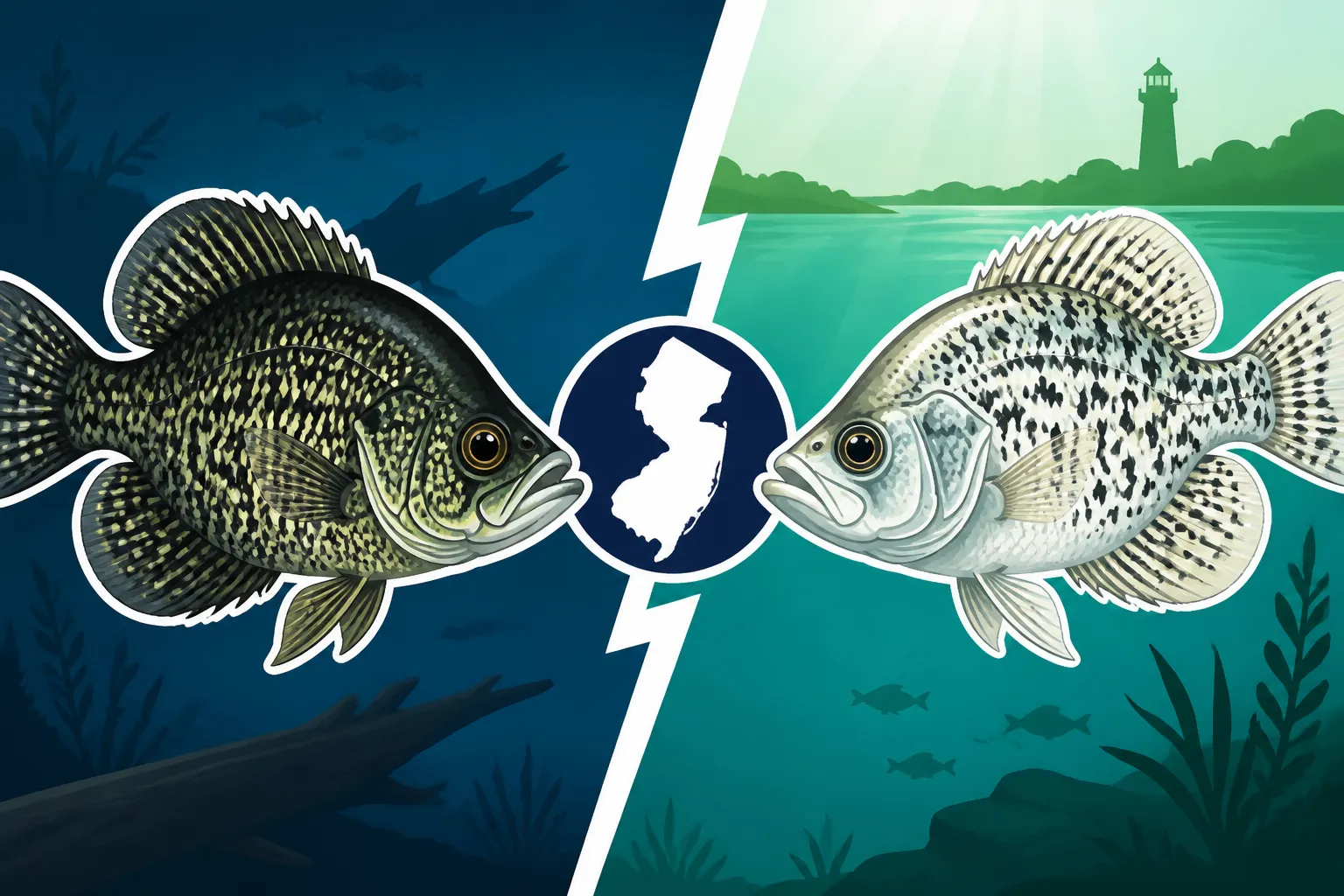
The most striking feature of a black crappie is its dark, irregular spotting. These spots are typically scattered randomly across its silvery-green or olive body, giving it a somewhat "peppered" look. There aren't usually any distinct vertical bars like its white crappie cousin. Its body tends to be a bit deeper and more compressed laterally, giving it a somewhat "round" or "disk-like" profile.
But the most reliable way to tell a black crappie from a white crappie, even if the colors are a bit muted or variable due to water conditions, is to count the spines in its dorsal fin (the fin on its back). A black crappie will almost always have seven or eight dorsal fin spines. This is a consistent and definitive identifier. Their mouths are also proportionally a bit smaller than a white crappie's, extending to just under the middle of the eye. Their overall coloration can vary from almost black in tannic, dark waters to a lighter, silvery-green in clearer lakes.
Preferred Habitats and Behavior
Black crappie generally prefer clearer, cooler water with abundant submerged vegetation, brush piles, fallen trees, and other forms of dense structure. You'll often find them lurking in the shadows of lily pads, under docks, or nestled deep within brush, especially during the warmer months. They tend to be a bit more solitary or gather in smaller, looser schools compared to white crappie.
During the spawning season, typically in spring when water temperatures reach the mid-50s to low 60s Fahrenheit, black crappie will move into shallower areas to fan out nests. Outside of spawning, they might suspend in deeper water near the edge of drop-offs, especially if there's good cover nearby. Their preference for cover makes them a bit trickier to pinpoint sometimes, requiring more precise casting and presentation. They can be found in many of New Jersey's larger lakes and reservoirs, often coexisting with other panfish and bass.
Fishing Tips for Black Crappie
To successfully target black crappie, focus on their love for structure and clear water. Light tackle is key – a sensitive ultralight spinning rod and reel combo spooled with 4-6 pound test line will allow you to feel their subtle bites. Small jigs, often 1/32 to 1/16 ounce, tipped with tiny plastic grubs, tubes, or even live minnows, are incredibly effective.
Techniques often involve slow jigging, vertical jigging, or slowly drifting baits near submerged timber, brush piles, or bridge pilings. A slip bobber rig is also a fantastic way to present a small jig or live minnow at a precise depth over structure without getting snagged constantly. Pay attention to fish finders if you have one, as black crappie will often suspend at specific depths. If you're looking for prime spots, consider checking out Best New Jersey Ponds for Crappie Fishing, which often hold a good population of these speckled beauties. Early morning and late evening are often prime times, especially during the warmer months, as they move out from deeper cover to feed.
White Crappie: The Striped Contender
The white crappie is another highly sought-after species in New Jersey, known for its strong schooling behavior and tolerance for a wider range of water conditions. If you've ever caught a stringer full of crappie in short order, chances are a good number of them were white crappie.
Key Physical Characteristics
The white crappie's most distinctive identifying mark is the presence of five to ten distinct dark vertical bars (sometimes described as broken stripes) running down its silvery body. These bars are usually more pronounced than the random spots of the black crappie. Its body shape is generally more elongated or "football-shaped" compared to the black crappie's deeper, more rounded profile.
Like its cousin, the most reliable scientific distinction comes from counting the dorsal fin spines. A white crappie will consistently have five or six dorsal fin spines. This fewer number of spines is the definitive characteristic that separates it from the black crappie. Their mouth is also typically larger, extending back past the middle of the eye, giving them a slightly more aggressive look. Their overall coloration can range from pale silver in clear water to a more yellowish tint in turbid environments.
Preferred Habitats and Behavior
White crappie are generally more tolerant of turbid or murky water and often prefer larger, more open bodies of water, including slower-moving rivers, large lakes, and reservoirs. While they appreciate structure, they are more likely to be found schooling in open water, suspending over flats, or along channel edges, particularly when chasing baitfish.
They are known for forming much tighter, larger schools than black crappie, which can lead to incredible "crappie fishing frenzies" when you find a school. Like black crappie, they spawn in the spring, moving into shallower areas, but may prefer slightly warmer water than black crappie for nesting. During the summer, they often retreat to deeper, cooler waters, suspending at depths where baitfish are abundant. They are highly migratory within their preferred bodies of water, constantly moving to find food, making a fish finder an invaluable tool for locating these nomadic schools.
Fishing Tips for White Crappie
When targeting white crappie, leverage their schooling behavior and preference for open water. Trolling or slow-drifting multiple jigs or minnow rigs is a popular and highly effective technique. A classic "spider rigging" setup, where multiple rods are deployed from the boat, covering various depths and areas, can be incredibly productive when you've located a large school.
Small jigs, similar to those used for black crappie (1/16 to 1/8 ounce), often tipped with small plastic bodies or live minnows, are go-to baits. When you find a school, stick with them! You can often catch dozens of fish from a single concentrated group. Consider using crappie lights at night to attract baitfish and, subsequently, crappie directly to your boat; this is a popular method on many New Jersey lakes. If you're looking for gear, a quick search on Amazon will reveal a huge array of options, from pre-rigged crappie setups to specialized trolling motor mounts for multiple rods. White crappie can be caught throughout the day, but often feed heavily during low-light conditions or when a large school is actively chasing bait.
Side-by-Side: Black Crappie vs. White Crappie Comparison
Now that we've looked at each species individually, let's put them side-by-side to highlight the crucial distinctions. This comparison will help solidify your identification skills and inform your angling approach.
Visual Distinctions at a Glance
Sometimes, it's hard to remember all the nuances, especially when you're quickly trying to identify a fish. Here's a quick comparison table to keep in mind, focusing on the most reliable visual and anatomical cues:
| Feature | Black Crappie | White Crappie |
|---|---|---|
| Dorsal Spines | 7-8 spines (often the most reliable ID) | 5-6 spines (fewer than black crappie) |
| Body Markings | Irregular, scattered dark spots, "peppered" | 5-10 distinct dark vertical bars/stripes |
| Body Shape | Deeper, more rounded, "disk-like" | More elongated, "football-shaped" |
| Mouth Size | Mouth extends to under middle of eye | Mouth extends to past middle of eye |
| Coloration | Darker, silvery-green to olive, mottled | Lighter, silvery with dark vertical bars, yellowish in turbid water |
The dorsal spine count is truly the definitive feature. If you can get a clear count, you'll know for sure. Remember that overall color can be deceptive, as it can change based on water clarity, diet, and even the fish's stress levels.
Habitat and Behavioral Differences
Beyond their looks, where and how these fish live are key to understanding them. These preferences often dictate where you'll find them and how they'll react to your presentation. Black crappie are like shy, introverted individuals who prefer quiet corners and dense cover in clear water. They might be harder to find, but once you do, you often know where to look for others nearby, tucked away in similar hideouts. They often feed by ambush, darting out from cover.
White crappie, on the other hand, are the social butterflies of the crappie world. They thrive in bustling, open waters, even if it's a bit murky, and love to party in large schools. Their behavior is more about active pursuit, often chasing down baitfish in open water. This means a more mobile, search-oriented fishing strategy for them. If you're fishing a clear, heavily structured lake, you're likely dealing with black crappie. If you're on a large, somewhat turbid reservoir with open flats, white crappie might be your primary target. This information is invaluable when planning your fishing trip, especially if you're trying to meet specific bag limits for a day's dinner, as covered in How Bag and Size Limits Work in New Jersey.
Impact on Your Fishing Strategy
Understanding these differences isn't just academic; it directly translates into more successful fishing trips. If you're approaching a new body of water in New Jersey, a quick assessment of its characteristics – clarity, amount of structure, size – can help you determine which crappie species is likely dominant and thus what techniques to employ.
- For black crappie: Think precision. Target specific brush piles, submerged trees, or dock pilings. Use vertical presentations or cast small jigs accurately into cover. Be stealthy, as they are often in shallower, clearer water and can be spooky.
- For white crappie: Think mobility and covering water. Troll small jigs or minnow rigs along channel edges, over submerged humps, or across open flats. Use your fish finder to locate schools that might be suspending. When you find them, you can often drop anchor and catch several in quick succession.
This strategic shift, based on knowing your target species, means less wasted time and more fish in the cooler. It's a fundamental principle of effective angling that applies to many species, including a deeper understanding of New Jersey Daily Bag Limits by Species.
Crappie Fishing in New Jersey: General Tips for Success
Whether you're after the speckled black crappie or the striped white crappie, some general principles apply to catching both effectively in New Jersey waters. It's about having the right gear and understanding universal crappie behavior.
Essential Gear for Crappie Anglers
Crappie are light-tackle fish, meaning you don't need heavy-duty rods and reels to catch them. In fact, lighter gear makes the fight more enjoyable and helps detect their often subtle bites.
- Rods: An ultralight or light action spinning rod, ideally 5 to 7 feet long, is perfect. Graphite rods offer excellent sensitivity, allowing you to feel even the lightest "tap" when a crappie bites. You can find many excellent options online at retailers like Amazon, often bundled as combos.
- Reels: Pair your rod with a small spinning reel (e.g., 1000 or 2000 series) that balances well. Smooth drag is important, especially when a larger crappie makes a run.
- Line: 4 to 6-pound test monofilament or fluorocarbon line is standard. Some anglers prefer braided line (6-10 lb test) for its sensitivity and strength, but adding a fluorocarbon leader (4-6 lb test) is often recommended to make it less visible to the fish.
- Jigs: Small jigs (1/32 to 1/8 ounce) are the most popular lure. Experiment with different colors of soft plastic bodies like curly-tail grubs, paddle-tail grubs, or tube baits. White, chartreuse, black, and pink are often reliable colors.
- Live Bait: Live minnows, threaded onto a small hook (size 4 or 6 light wire Aberdeen hook) under a bobber or fished on a crappie rig, are incredibly effective, especially when crappie are finicky. Waxworms and small shiners can also work.
- Bobbers: Both fixed and slip bobbers are useful. Slip bobbers are invaluable for fishing at precise depths, especially over deep structure.
- Net: A small, fine-mesh landing net can help you safely land larger crappie without stressing your light line.
- Tackle Box: Keep your crappie tackle organized. A small, specialized tackle box just for crappie jigs and hooks can save you time on the water. Many brands offer great crappie-specific kits you can pick up from Amazon or your local tackle shop. Having a good assortment, as suggested by Best New Jersey Fishing Gear for Beginners, is crucial for adapting to different conditions.
Best Practices for Catching Both Species
Regardless of the crappie species you're targeting, a few universal best practices will increase your chances of success.
- Locate Structure: Both species relate to structure, whether it's dense brush for black crappie or open water humps for white crappie. Use your electronics to find submerged cover, drop-offs, and baitfish schools. If fishing from shore, look for docks, fallen trees, and lily pad fields.
- Vary Your Depth: Crappie are often suspended at a very specific depth. If you're not getting bites, try adjusting your bait's depth by a foot or two until you find the sweet spot. A slip bobber is fantastic for this.
- Slow and Steady: Crappie are not usually aggressive chasers. A slow, steady retrieve or a subtle jigging motion is often more effective than fast, erratic movements. Let your bait do the work.
- Fish During Prime Times: While crappie can be caught all day, low-light periods (dawn, dusk, overcast days) and night fishing can be particularly productive. Crappie also become very active during their spring spawning season.
- Be Quiet: Especially in shallower water, crappie can be spooked by loud noises or sudden movements. Be stealthy, particularly if you're fishing from a kayak or small boat.
- Observe Your Surroundings: Pay attention to what other anglers are catching, what bait they're using, and where they're fishing. Look for signs of baitfish activity, such as nervous minnows near the surface.
- Check Regulations: Always consult the current New Jersey Freshwater Fishing Regulations Every Angler Should Know for bag and size limits before you head out. While crappie regulations are generally stable, it's always good to be sure. Remember to carry proof of your license, too. If you ever have questions about the rules, the New Jersey Fish and Wildlife Digest, which you can often find online or at tackle shops, is your best friend.
Understanding the subtle yet significant differences between black crappie and white crappie empowers you to be a more effective and adaptable angler in New Jersey. By paying attention to dorsal spine counts, body markings, and preferred habitats, you can fine-tune your approach and enjoy even more success on the water. Happy fishing!
Disclaimer
This article is for general informational purposes only and does not constitute professional advice. Laws, prices and regulations vary by location and change over time. Consult a qualified professional for guidance on your specific situation.