How Far Offshore Do New Jersey Tuna Charters Travel?
One of the most thrilling pursuits in New Jersey fishing is heading offshore for tuna, but if you've never done it, you're probably wondering exactly how far out into the vast Atlantic you'll be traveling to chase these incredible giants. It’s a valid question, as the distance can profoundly impact everything from trip duration to what you need to pack. This guide will take a deep dive into the various distances New Jersey tuna charters travel, exploring the factors that influence these journeys and what you can expect when you venture into the deep blue.
The Allure of Offshore Tuna Fishing in New Jersey
There's something truly captivating about offshore tuna fishing. It's a sport that combines the thrill of the chase with the majesty of the open ocean. Anglers dream of the screaming reels and powerful runs that only a tuna can deliver, making the journey out into the deep worth every mile.
Why Tuna Go Far Out
Tuna are highly migratory, apex predators, and their movements are largely dictated by their food source and preferred water temperatures. Unlike the inshore species like striped bass or fluke that might hug the coastline or dwell in our bays, tuna thrive in the rich, deep waters of the open ocean. They follow schools of baitfish like mackerel, squid, and butterfish, which in turn are often found in areas with upwellings and nutrient-rich currents. These conditions are typically found much further offshore, particularly near prominent underwater structures.
Imagine the vast expanse of the ocean floor, stretching out beyond the familiar sandy bottom of our coastal waters. As the seabed slopes downwards, eventually it plunges dramatically into the deep. This "shelf break" is where the magic happens, creating an environment where currents collide, bringing nutrients from the depths to the surface and forming a vibrant food chain that tuna can't resist.
The Different Types of Tuna Targeted
New Jersey anglers are fortunate to have access to several species of tuna, each with their own habits and preferred habitats, which in turn influences how far offshore a captain might take you.
- Bluefin Tuna: These are often the stars of the show, known for their incredible power and size. Juvenile and medium bluefin are sometimes found closer to shore, particularly during certain migrations, but the true giants often require a substantial journey.
- Yellowfin Tuna: Highly prized for their delicious meat and strong fights, yellowfin are typically found in warmer, pelagic waters, often associating with temperature breaks and currents further out.
- Bigeye Tuna: These deep-water dwellers are known for their massive eyes and brutal fighting style. They tend to prefer cooler, deeper waters, often congregating around submarine canyons.
- Albacore Tuna: While smaller than their bluefin and yellowfin cousins, albacore (often called "longfin") are excellent fighters and table fare, typically found in offshore waters.
Understanding which species is in season and where they're biting dictates a captain's game plan, and consequently, the distance you'll travel. For example, chasing giant bluefin might mean a very different trajectory than targeting schoolie bluefin closer in.
The Thrill and Challenge of the Deep
Going offshore for tuna isn't just a fishing trip; it's an expedition. It’s about being truly out there, with nothing but the ocean stretching to the horizon. The challenge comes not only from the fish themselves but from the demanding nature of the environment. Longer runs mean more time on the boat, navigating potentially rougher seas, and maintaining focus over extended periods. But for many, this very challenge is what makes it so rewarding. The shared experience with your crew, the anticipation, and the sheer power of a tuna on the line create memories that last a lifetime. It’s a stark contrast to a casual day fishing from shore at a local spot like Island Beach State Park Fishing Access.
Defining "Offshore": Proximity to the Continental Shelf
When New Jersey anglers talk about "offshore," they're usually referring to waters beyond the immediate continental shelf, where the ocean floor begins its dramatic descent. This geological feature is crucial for tuna fishing.
Understanding the Continental Shelf Break
The continental shelf is essentially the underwater extension of the continent. For New Jersey, this shelf stretches out a considerable distance, but it's relatively shallow, typically less than 200 feet deep. The "shelf break" is where this gentle slope suddenly steepens, plunging into depths of hundreds, then thousands, of feet.
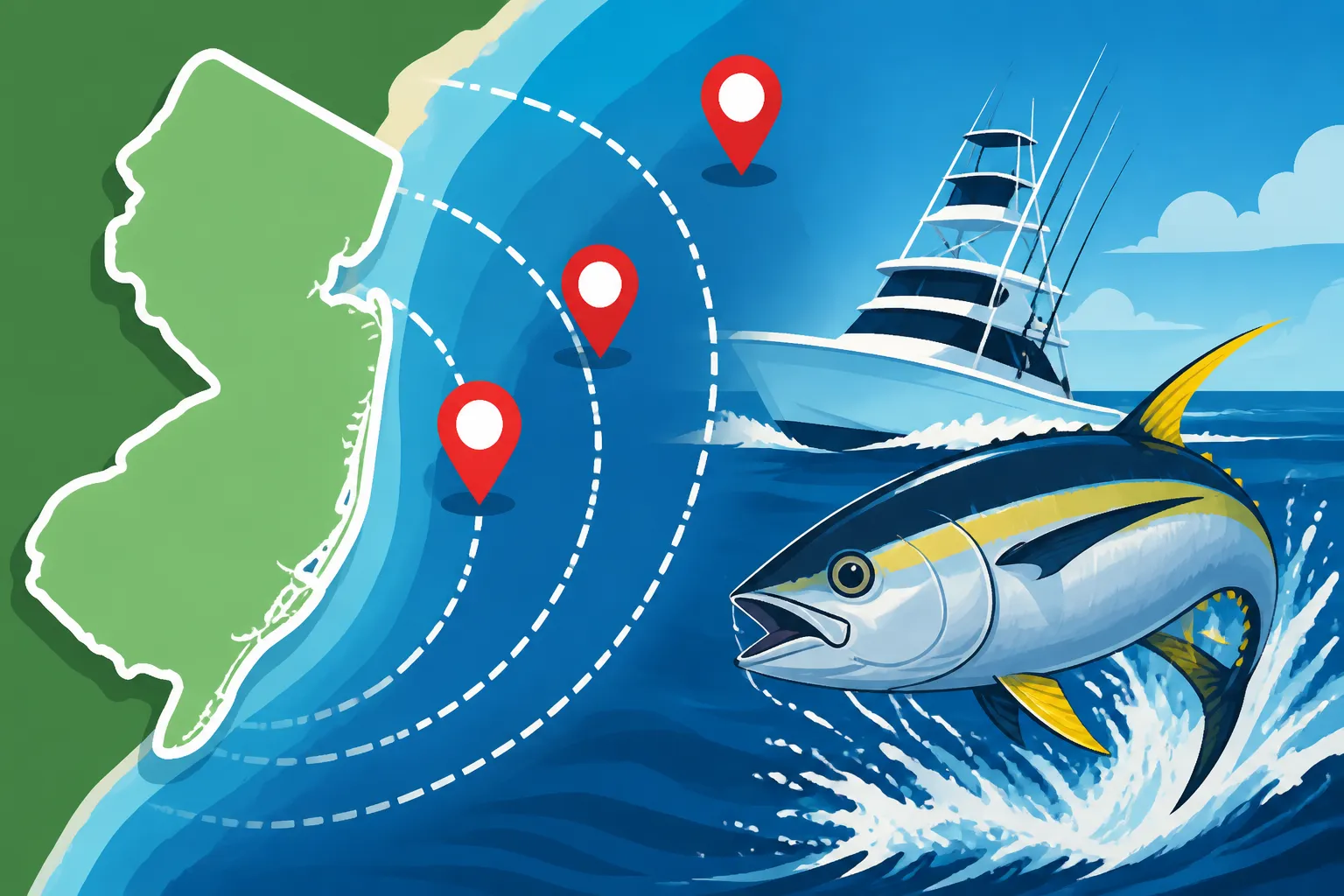
This break in the topography creates a dynamic environment. Cooler, nutrient-rich water from the deep is forced upwards as it hits the shelf, creating upwellings that bring food to the surface. These areas are magnets for baitfish, which in turn attract the larger predators like tuna. Think of it as an underwater superhighway for marine life. From the New Jersey coast, the shelf break can start anywhere from 50 to 80 miles offshore, depending on your exact departure point. This initial journey takes a significant amount of time, even on a fast vessel.
The Canyon System and Its Role
Beyond the shelf break, the ocean floor becomes even more complex, featuring massive submarine canyons. These aren't just minor dips; they are underwater geological formations comparable in scale to the Grand Canyon. Along the New Jersey and Mid-Atlantic coast, several prominent canyons are world-renowned tuna hotspots.
- Hudson Canyon: Perhaps the most famous, the Hudson Canyon is a truly massive underwater gorge that begins about 90-100 miles southeast of New York Harbor and extends for hundreds of miles. It's a prime destination for bluefin, yellowfin, and bigeye tuna.
- Lindenkohl Canyon, Baltimore Canyon, Poormans Canyon, Spencer Canyon: Further south, these canyons offer similar deep-water structures and are equally productive for various tuna species.
The distance to these canyons can range anywhere from 80 miles to well over 120 miles from the New Jersey coastline. A trip to the Hudson Canyon, for example, is a long haul, often requiring an overnight excursion, sometimes even multi-day trips. These are not short jaunts; they are serious journeys into the deep sea, far from any sight of land.
How Far "Offshore" Really Is
To give you a clearer picture, let's break down typical distances for different offshore tuna experiences from New Jersey:
| Tuna Fishing Zone | Typical Distance from NJ Coastline | Common Species Targeted | Trip Duration | Notes |
|---|---|---|---|---|
| Nearshore/Inshore Bluefin | 20-50 miles | Smaller Bluefin (schoolie size), occasional larger ones | Full day (8-12 hours) | More accessible, weather-dependent, seasonal. |
| Continental Shelf Break | 50-80 miles | Yellowfin, Albacore, Medium Bluefin | Full day to Extended Day (12-16 hours) | Often marks the start of true offshore fishing. |
| Canyon Edge (e.g., Hudson) | 80-120+ miles | Yellowfin, Bigeye, Large Bluefin, Albacore | Overnight to Multi-Day (24-48+ hours) | Serious commitment, requires specific boats and experienced crew. |
| Beyond the Canyons | 150+ miles | Large Bluefin, Swordfish, Marlin, Bigeye | Multi-Day (48+ hours) | Highly specialized, deep-drop, true big-game expeditions. |
These distances represent significant travel time. For perspective, traveling 100 miles by boat can easily take 4-6 hours each way, depending on sea conditions and the vessel's speed. So, a significant portion of your trip will be dedicated to getting to and from the fishing grounds.
Factors Influencing a Tuna Charter's Journey
It’s not just about pointing the bow east and hitting the gas. Several critical factors come into play when a captain decides how far offshore to travel.
Target Species and Time of Year
As we touched upon, different tuna species have different preferences. If a charter is specifically targeting large bluefin tuna, they know they'll likely need to travel further out to the canyons where these giants roam. However, if schoolie bluefin are abundant closer to shore during the fall run, a captain might opt for a shorter, more comfortable trip to target them effectively. When Do Striped Bass Migrate Through New Jersey? and tuna often follow similar seasonal patterns.
The time of year is also paramount. Tuna migrations are highly seasonal. Yellowfin and bigeye are typically summer and fall targets when the waters are warmer and the canyons are active. Bluefin can be found in various sizes throughout much of the year, but their location can change dramatically from spring to winter. A captain will study these seasonal patterns and recent fishing reports meticulously when planning a trip.
Weather and Sea Conditions
This is perhaps the single most influential factor. Even if the tuna are biting hot 100 miles out in the Hudson Canyon, a responsible captain will never make that run if the weather forecast calls for heavy seas, strong winds, or dangerous storms. Safety is always the top priority.
Choppy waters not only make for an uncomfortable ride but can also be dangerous. A trip that might take 4 hours in calm seas could take 6-8 hours or more in rough conditions, consuming extra fuel and leaving less time for actual fishing. Moreover, fishing effectively in rough seas is incredibly challenging and often unproductive. Keep an eye on the forecast, and trust your captain's judgment if they recommend postponing or choosing a closer destination. It's always better to be safe than sorry, especially when you're 80 miles offshore.
Boat Capabilities and Fuel Capacity
Not all boats are created equal, especially when it comes to offshore tuna fishing. A small center console might be perfectly suited for inshore fluke fishing, but it's simply not built for a 100-mile run offshore. Tuna charters utilize specialized vessels that are typically larger, more stable, and equipped with powerful engines and substantial fuel tanks.
A reputable charter boat will have the range to not only reach the canyons but also to troll or drift there for many hours and make it back safely with a significant reserve of fuel. A captain must calculate fuel consumption meticulously, considering variables like sea conditions, cruising speed, and time spent fishing. When booking a trip, especially one that advertises canyon fishing, ensure you're going with a vessel specifically designed and equipped for such an expedition. This is where resources like FishingBooker can be useful, allowing you to filter by boat type and amenities for offshore trips.
Captain's Experience and Fishing Reports
A seasoned tuna captain is worth their weight in gold. Their experience tells them where to go based on years of accumulated knowledge, understanding ocean currents, temperature breaks, and historical bite patterns. They don't just go where everyone else is; they know how to find the fish.
Beyond their own wisdom, captains are constantly monitoring real-time fishing reports, satellite imagery (for sea surface temperatures and chlorophyll breaks, which indicate baitfish), and communicating with other captains. These daily intelligence briefings are crucial for pinpointing the most productive grounds. Sometimes, the fish might be just 60 miles out over the shelf; other times, a 120-mile trek to the deepest part of a specific canyon is required. A good captain makes these decisions daily, aiming to maximize your chances of a successful trip while balancing safety and efficiency. This expert navigation can save hours of travel time and lead to better catches, unlike simply trying to fish randomly from shore, as discussed in New Jersey's Island Beach State Park Shore Fishing Rules.
The Realities of a New Jersey Tuna Charter Trip
Embarking on a tuna charter is an incredible adventure, but it comes with its own set of realities, especially concerning the time commitment and what you should expect.
Typical Travel Times and Trip Durations
Let's be honest, offshore tuna fishing from New Jersey involves a lot of boat travel. For a typical canyon trip:
- Travel to the Grounds: Expect anywhere from 4 to 8 hours (or even more) of continuous steaming each way. This means a significant portion of your trip will be spent traveling.
- Fishing Time: Once on the grounds, you might have 8-12 hours or more of actual fishing time, depending on the trip length. This could involve trolling, chunking, or jigging.
- Total Trip Duration:
- Extended Day Trip (12-16 hours): Often targets the closer shelf break for yellowfin or bluefin. These start very early, often pre-dawn, and return late evening.
- Overnight Trip (24-30 hours): The most common for canyon fishing. You leave late morning/early afternoon, steam out, fish through the night (when bigeye and yellowfin are often most active), fish the following morning, and steam back, returning late afternoon the next day.
- Multi-Day Trips (48+ hours): For serious anglers targeting distant canyons, swordfish, or marlin. These involve staying out for two or more nights, maximizing fishing time on remote grounds.
Understanding these timelines is crucial for setting expectations. You're not just hopping on a boat for a few hours. You're committing to an expedition.
What to Expect on a Long-Distance Trip
These trips are not for the faint of heart, but they are incredibly rewarding. Here's what you should anticipate:
- Comfort and Space: Even on larger boats, space can be at a premium, especially with multiple anglers and gear. Most overnight boats have bunks, a head (bathroom), and a galley (kitchenette). Be prepared for close quarters.
- Seasickness: The further offshore you go, the more exposed you are to open ocean swells. If you're prone to seasickness, take preventative measures seriously. Over-the-counter medications, patches, or even prescription options can make a huge difference. Don't risk a miserable trip! You might also want to read up on Best Seasickness Remedies for New Jersey Boat Trips.
- Night Fishing: A significant part of canyon tuna fishing happens after dark. Be ready for cooler temperatures, low visibility, and the unique experience of fighting a fish under the stars. Headlamps are essential.
- Food and Drink: Bring plenty of non-perishable food, snacks, and water. While some boats might offer basic amenities, you're usually responsible for your own provisions for the duration of the trip. Large coolers are a must.
- Specialized Gear: Tuna fishing requires heavy-duty rods, reels, and tackle. Most charters provide this gear, but confirm beforehand. If you bring your own, make sure it's up to the task.
- Preparation is Key: Pack layers of clothing for changing conditions, rain gear, sunscreen, a hat, sunglasses, and any personal medications. Consider what you need for a 24-hour or longer period away from land. You'll want to be prepared, just like for any serious angling endeavor, such as understanding How to Rig for Surf Fishing in New Jersey.
Costs Associated with Offshore Tuna Fishing
The longer distances, specialized boats, and extended durations of tuna charters mean they are typically more expensive than inshore trips. The cost structure reflects several factors:
- Fuel: This is often the largest single expense. Burning hundreds of gallons of diesel at cruising speed adds up quickly.
- Boat Maintenance and Insurance: Maintaining a large, seaworthy offshore vessel is a substantial ongoing cost.
- Specialized Gear: Heavy tackle, high-end electronics, and bait for tuna are expensive.
- Crew Expertise: You're paying for the captain's knowledge, experience, and ability to put you on fish safely, as well as the hard work of the mates.
- Trip Length: Longer trips naturally incur higher costs due to increased fuel, crew time, and provisions.
You can expect to pay a premium for a dedicated tuna charter, especially for canyon trips. These trips are an investment, but for many, the experience of catching a powerful tuna far offshore is absolutely priceless. When exploring options, remember that platforms like FishingBooker can help you compare different charter types and their general costs, allowing you to find a trip that fits your budget and ambitions.
Conclusion
New Jersey tuna charters offer some of the most exhilarating fishing experiences available, taking anglers far out into the Atlantic's rich pelagic waters. Whether you're making a shorter run to the continental shelf or embarking on an overnight expedition to the deep submarine canyons, the journey offshore is a fundamental part of the adventure. The distance traveled is a dynamic calculation, influenced by the target species, the time of year, prevailing weather, the boat's capabilities, and most importantly, the captain's expertise. Prepare for the journey, embrace the open ocean, and get ready for a true angling challenge that will take you many miles from the shores of the Garden State.
Disclaimer
This article is for general informational purposes only and does not constitute professional advice. Laws, prices and regulations vary by location and change over time. Consult a qualified professional for guidance on your specific situation.