Do You Need a License to Crab in New Jersey?
That crisp salty air, the anticipation of pulling up a trap, and the promise of a delicious crab feast – crabbing in New Jersey is one of those quintessential summer (or even fall!) traditions we all cherish. But before you even dip your first crab pot, a thought often creeps in, causing a little anxiety: do I actually need a license for this? The bureaucracy of fishing and crabbing regulations can feel overwhelming, making a simple, relaxing outing seem like a legal minefield. This guide is here to clear the waters, providing you with all the essential information so you can crab with confidence and compliance in the Garden State.
The Short Answer: Recreational Crabbing in New Jersey
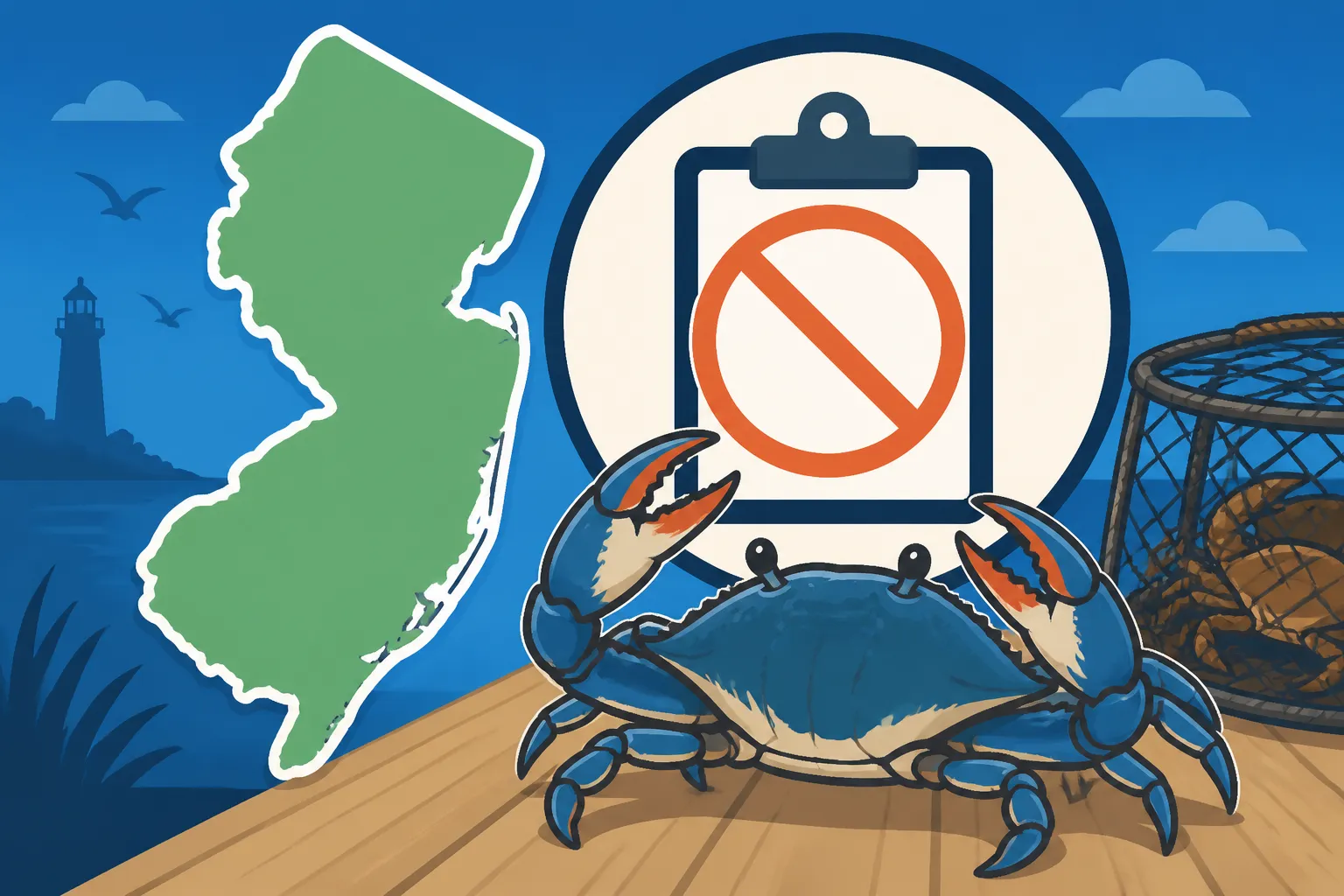
Let's cut right to the chase, because this is often where the confusion begins and ends for most folks: No, you generally do not need a specific license to engage in recreational crabbing in New Jersey. For the vast majority of us who are just looking to catch some blue crabs for personal consumption with common gear, the good news is you won't need to purchase a state license. You don't need a separate "crabbing license" in the same way you need a freshwater or saltwater fishing license for finfish.
This distinction is crucial, and it’s a relief for many who simply want to spend a pleasant afternoon on a dock or a small boat. You can grab your hand line, a trotline, or a few collapsible traps, and head out to your favorite tidal creek without stopping at a tackle shop specifically for a crabbing permit. It sounds almost too easy, doesn't it? But while the direct answer to the license question is often "no," there are certainly nuances and specific rules you must adhere to regarding gear, limits, and responsible practices. Ignoring these can land you in hot water, even without a "license" being involved.
Recreational vs Commercial Crabbing: A Clear Divide
The reason the license question often creates confusion lies in the very different rules for recreational versus commercial crabbing. For those who are trying to make a living by selling their catch, the regulations are significantly more stringent, and yes, they absolutely require specific permits and licenses. These commercial operations involve different gear, reporting requirements, and much larger harvest limits than what a recreational angler would ever consider.
Think of it like this: if you’re growing tomatoes in your backyard for your family’s dinner, you don’t need a permit. But if you’re running a farm and selling tomatoes at a market, you need various agricultural licenses and adhere to different standards. Crabbing follows a similar logic. The New Jersey Department of Environmental Protection (NJDEP) Division of Fish and Wildlife carefully manages both sectors, understanding the need to conserve crab populations while allowing both recreational enjoyment and commercial livelihoods. Most of us fall squarely into the recreational category, which means a simpler set of rules to follow – mainly centered around gear, size, and bag limits, rather than a purchasing a license.
Why the Confusion About Licenses Persists
Despite the clear "no license needed" for recreational crabbing, this question comes up constantly. Why? Well, New Jersey does have a comprehensive system for New Jersey Fishing License Guide for 2026 and a mandatory New Jersey Saltwater Registry Explained for catching finfish in marine waters. It’s easy to assume that if you need a license for striped bass or fluke, you’d need one for blue crabs too, especially since they often share the same habitats.
Many anglers who frequently target fish in the bays and estuaries are already familiar with the saltwater registry. They know that even if they're not explicitly buying a "license," they still need to register with the state annually for free to help gather crucial data on recreational fishing effort. However, this registry specifically pertains to finfish. Crabs, being crustaceans, fall under a different regulatory umbrella. So, while you might be registered to catch a weakfish in Barnegat Bay, that registration doesn't extend to crabbing, nor does it mean you suddenly need a separate crab-specific license. It’s a subtle but important distinction that often trips people up, leading to those moments of doubt when you're about to drop your first trap. Always remember to check the latest Reading the New Jersey Fish and Wildlife Digest to ensure you're up to date on all regulations, as rules can, and do, change.
Specific Scenarios: When a License (or Registry) Might Come Into Play
While recreational crabbing itself doesn't typically require a license, there are very specific circumstances that deviate from the norm, or where other regulations might be misconstrued. Understanding these exceptions is key to staying fully compliant.
Using Certain Gear Types for Commercial Purposes
The biggest differentiator between recreational crabbing (no license) and something that would require a license is often the intent and scale of your operation, especially tied to the gear you're using. If you're using specialized gear that is typically associated with commercial harvesting, or if you're deploying a large number of traps, you're likely crossing into territory that requires commercial permits.
For instance, while a recreational crabber might use a trotline with a few hundred feet of rope, a commercial operation could be running lines thousands of feet long with hundreds of baits. Similarly, the use of a large number of commercial-style crab pots would definitely flag you as needing appropriate commercial licensing. These commercial licenses are not something you can just pick up at a bait shop; they involve specific applications, fees, and often strict quotas or seasonal limitations. So, if your aspirations lean beyond a bushel or two for a family crab boil, you need to research the commercial regulations meticulously. Trying to operate on a commercial scale without the proper permits can lead to significant fines and penalties.
Commercial Crabbing: A World of Permits and Quotas
As touched upon, commercial crabbing is an entirely different beast requiring extensive licensing. Commercial crabbers in New Jersey must navigate a complex system of permits issued by the NJDEP. These permits are not just about paying a fee; they often involve proving a history of commercial fishing, adherence to gear specifications, and strict reporting of catches.
These regulations are in place to ensure sustainability. Commercial harvests can have a much larger impact on crab populations than recreational catches. Therefore, the state monitors commercial activity closely, implementing measures like limited entry permits, seasonal closures, and specific gear restrictions (e.g., trap construction, escape vents) to prevent overfishing. For the average person dipping a hand line off a dock, this level of regulation is entirely irrelevant, but it’s the reason why the overall "crabbing license" question becomes so muddled – because for a certain segment of crabbers, licenses are absolutely essential and heavily regulated.
Saltwater Registry for Finfish and Its Relationship to Crabbing
Another common source of confusion comes from New Jersey's mandatory saltwater recreational registry. As mentioned, if you're targeting finfish like flounder, bluefish, or striped bass in the marine and tidal waters of New Jersey, you must register with the state. This is a free registration, not a purchase, and it helps the state collect vital data for federal fisheries management. Many people correctly assume that if they’re fishing in saltwater, they need to register. Since blue crabs also live in saltwater, it’s a logical leap to think the registry might apply to them.
However, the New Jersey Saltwater Registry Program Requirements explicitly state that it's for finfish. Crabs are crustaceans, not finfish. Therefore, the saltwater registry does not cover crabbing, and you do not need to be registered to recreational crab. If you plan to also fish for finfish on the same outing, then yes, you would need to be registered for the finfish. But for solely crabbing, that particular requirement does not apply. It’s a good example of how specific the regulations can be, and why it's always best to clarify what exactly constitutes "fishing" versus "crabbing" in the eyes of the law.
Gear and Regulations for Recreational Crabbing
Even without a license, recreational crabbing in New Jersey comes with a clear set of rules designed to promote conservation and fair chase. These rules mainly focus on the type of gear you can use and the limits on what you can keep.
Legal Gear Types for Recreational Crabbing
New Jersey allows several common gear types for recreational crabbing, making it accessible to everyone from seasoned crabbers to families with young children. These include:
- Hand Lines: This is perhaps the simplest method, involving a line, a weight, and bait. You literally pull the crab up by hand or with a net.
- Dip Nets: Often used in conjunction with hand lines or for scooping crabs near structures.
- Foldable Traps or Ring Nets: These are popular, inexpensive, and easy to deploy. They lie flat on the bottom, and when you pull the line, the sides come up, trapping any crabs feeding inside. You can find many effective options for these on Amazon.
- Trotlines: These are longer lines laid out on the bottom with multiple baited drops. They are typically used from a boat. Recreational trotlines have specific length limits (usually no more than 150 feet) and you can’t deploy more than two.
- Collapsible Crab Traps: These are often cube-shaped and fold down for easy storage. They're usually dropped from docks or boats and retrieved after a waiting period. Again, a quick search on Amazon will show you countless types suitable for recreational use.
It’s important to note that certain gear types, like larger, commercial-style crab pots with external triggers or extensive trap lines, are generally restricted to commercial permit holders. Always double-check the current regulations in the New Jersey Fish and Wildlife Digest to ensure your gear is compliant.
Crab Pot and Trap Specifics for the Recreational Angler
When it comes to crab pots and traps, even for recreational use, there are rules. The most important details usually revolve around marking your gear and ensuring it doesn't become a hazard or "ghost fishing" device.
Any recreational crab pot or trap that is left unattended, such as a collapsible trap or ring net tied to a dock, must be clearly marked. This usually means attaching a buoy with your name and address or a unique identification number. This helps enforcement officers identify owners and prevents abandoned gear from becoming navigational hazards or continuing to catch crabs without being tended, which is wasteful. While you might not need a crabbing license, failing to mark your traps can still result in a fine, so don't overlook this crucial detail. These rules are put in place to ensure everyone can enjoy the waterways safely and that resources are managed responsibly.
When buying crab traps, whether from a local tackle shop or online via Amazon, look for those designed for recreational use, often with clear instructions on how to mark them or what sizes are appropriate. Avoid anything that looks overtly "commercial" unless you fully understand and comply with all commercial regulations.
Catch Limits and Size Restrictions for Blue Crabs
Here's where the rubber meets the road for recreational crabbers. While you don't need a license, you absolutely must adhere to catch limits and size restrictions. These rules are vital for maintaining healthy crab populations in New Jersey's bays and estuaries.
- Size Limit: For blue crabs, the minimum size limit is 4.5 inches from point to point of the carapace (shell). This means if the crab's shell measures less than 4.5 inches across its widest point, it must be immediately returned to the water. This allows younger crabs to mature and reproduce before being harvested. It's a critical conservation measure, ensuring future generations of crabs.
- Possession Limit: The daily possession limit for recreational crabbers is typically one bushel per person. A bushel is a fairly large quantity, usually around 50-60 crabs depending on their size, so this limit is more than generous for a family outing. Very few recreational crabbers ever reach this limit in a single day, but it’s good to be aware of.
- Female Crabs: A very important regulation is regarding female crabs. It is illegal to keep female blue crabs that are "berrying" (carrying eggs). These females, often called "sponge crabs," have a visible orange or black egg mass on their underside. They are the future of the crab population, and protecting them is paramount. Even if they meet the size limit, if they are carrying eggs, they must be released immediately. You can learn more about this by checking out Is It Legal to Keep Female Blue Claw Crabs in New Jersey?. Generally, it is also illegal to keep female crabs at all in some areas, or during specific seasons, so always refer to the latest digest. The best practice is to learn how to identify male and female crabs, and if in doubt, release the females, especially if they are immature or carrying eggs. This goes hand-in-hand with the broader discussion of How Bag and Size Limits Work in New Jersey across different species.
For a quick reference, here’s a table summarizing key recreational crabbing regulations:
| Regulation Type | Rule for Recreational Crabbing in New Jersey |
|---|---|
| Crabbing License | Not required for recreational purposes. |
| Saltwater Registry | Not required for crabbing; only for finfish. |
| Minimum Size Limit | 4.5 inches (point to point of carapace). |
| Daily Bag Limit | One bushel per person. |
| Female Crabs | Illegal to keep "berrying" (egg-bearing) females. Often illegal to keep any females. |
| Gear Marking | Unattended traps/pots must be marked with owner's name and address/ID. |
| Trotline Limit | Max 2 trotlines, each no more than 150 ft long. |
| Commercial Gear | Use of commercial gear requires special permits. |
Conservation and Responsible Crabbing Practices
As veteran anglers, we know that enjoying New Jersey's natural resources comes with a responsibility to protect them. Crabbing is no different. Responsible practices ensure that future generations can also enjoy this classic pastime.
Understanding Conservation Efforts for Blue Crabs
The health of New Jersey's blue crab population is constantly monitored by state biologists. Regulations like size limits, bag limits, and protection of "berrying" females are direct results of these conservation efforts. The success of these measures depends heavily on recreational crabbers understanding and adhering to them. When you release an undersized crab or a female carrying eggs, you are directly contributing to the sustainability of the fishery.
Blue crabs are an incredibly important species in our ecosystem, serving as both predator and prey, and their abundance reflects the overall health of our estuaries. Factors like water quality, habitat loss, and climate change all play a role in their populations, making our adherence to harvest regulations even more critical. Staying informed about current conditions and potential New Jersey Fishing Regulation Changes for 2026 is always a good idea.
Proper Crab Handling and Release Techniques
Even if you're not keeping a crab, proper handling is essential for its survival upon release. Blue crabs have powerful claws, so always handle them carefully, ideally by grasping the back of the carapace with your thumb and forefinger, well away from the claws. If using a net or trap, minimize the time the crab is out of the water.
When releasing undersized or "berrying" females, gently place them back into the water, allowing them to swim away naturally. Don't simply toss them from a height, as this can injure them. The goal is to maximize their chances of survival so they can continue to grow or reproduce. Every crab released safely contributes to the overall population, ensuring that there are plenty of crabs for everyone in the years to come. For more on the species itself, check out our New Jersey Blue Claw Crab Guide.
Safety Tips While Crabbing
While crabbing might seem like a low-risk activity, especially from a dock, basic safety rules are always paramount.
- Watch the Tides: Be aware of rising and falling tides, especially if you're crabbing from a location that might become submerged or difficult to access at high tide. The current can also be stronger on outgoing or incoming tides, making it harder to retrieve your gear. Understanding How to Read Tide Charts for Better Fishing in New Jersey can be incredibly useful, even for crabbing.
- Sun Protection: You'll likely be out in the sun for extended periods. Wear sunscreen, a hat, and sunglasses to protect yourself from harmful UV rays.
- Hydration: Bring plenty of water to stay hydrated, especially on warm days.
- Sharp Objects: Crab claws are sharp, and so are some parts of traps. Be careful when handling both. Consider bringing a pair of thick gloves, especially if you’re new to crabbing.
- Footwear: Wear appropriate footwear, especially if you're on slippery docks or uneven shorelines.
- Know Your Limits: Don't overload your cooler or bucket with crabs if it makes it too heavy to carry safely.
Top Spots for Crabbing Along the Jersey Shore
New Jersey is blessed with an abundance of estuaries, bays, and tidal creeks that are perfect for crabbing. While specific hotspots can change, the general types of locations remain consistent.
Popular Crabbing Piers and Docks
Many public piers and docks along the Jersey Shore offer fantastic crabbing opportunities, often with no boat required. These spots are particularly popular for families and beginners using hand lines or ring nets. Just be sure to check local signage for any specific rules or closures.
Some perennial favorites include:
- Public docks in Barnegat Bay: Towns like Forked River, Waretown, and Lacey Township have numerous public access points.
- Piers around the Manasquan Inlet and Point Pleasant Canal: These areas offer tidal flow which crabs love.
- Docks along the Navesink River: Areas in Red Bank and Fair Haven can be productive.
- Various public access points in the Great Egg Harbor Bay near Somers Point and Ocean City.
These locations are often bustling with activity on a summer day, with families enjoying the simple pleasure of pulling up a crab. You'll often find bait shops nearby, making it easy to grab some chicken necks or bunker to bait your traps.
Tidal Creeks and Back Bays: Prime Crabbing Habitat
The vast network of tidal creeks and back bays along the entire coast, from Sandy Hook to Cape May, are prime blue crab habitat. These shallow, brackish waters provide food and shelter for crabs, especially during warmer months.
If you have access to a small boat, kayak, or even a canoe, exploring these areas can lead to excellent catches. Look for areas with muddy bottoms, eelgrass beds, and Spartina marsh grass, as these are where crabs tend to hide and feed. Using a trotline in these calmer, shallower waters can be incredibly effective. Just be mindful of local boating regulations and property lines. Some particularly productive back bay systems include:
- Barnegat Bay: A true blue crab mecca, with countless creeks and shallower areas.
- Great Bay: Located near Atlantic City and Tuckerton, it's another expansive and productive system.
- Mullica River and its tributaries: This system offers a mix of fresh and brackish water, often holding large crabs.
- Absecon Bay and Lakes Bay near Atlantic City.
No matter where you choose to go, always respect private property, pack out everything you pack in, and leave the crabbing spot cleaner than you found it. After all, protecting these beautiful spots is just as important as catching dinner!
Disclaimer
The information provided in this guide is for general informational purposes only and is not intended as legal advice. Fishing and crabbing regulations in New Jersey are subject to change by the New Jersey Department of Environmental Protection (NJDEP) Division of Fish and Wildlife. Always consult the most current official New Jersey Fish and Wildlife Digest or visit the NJDEP website before engaging in any fishing or crabbing activity to ensure full compliance with all applicable laws and regulations.