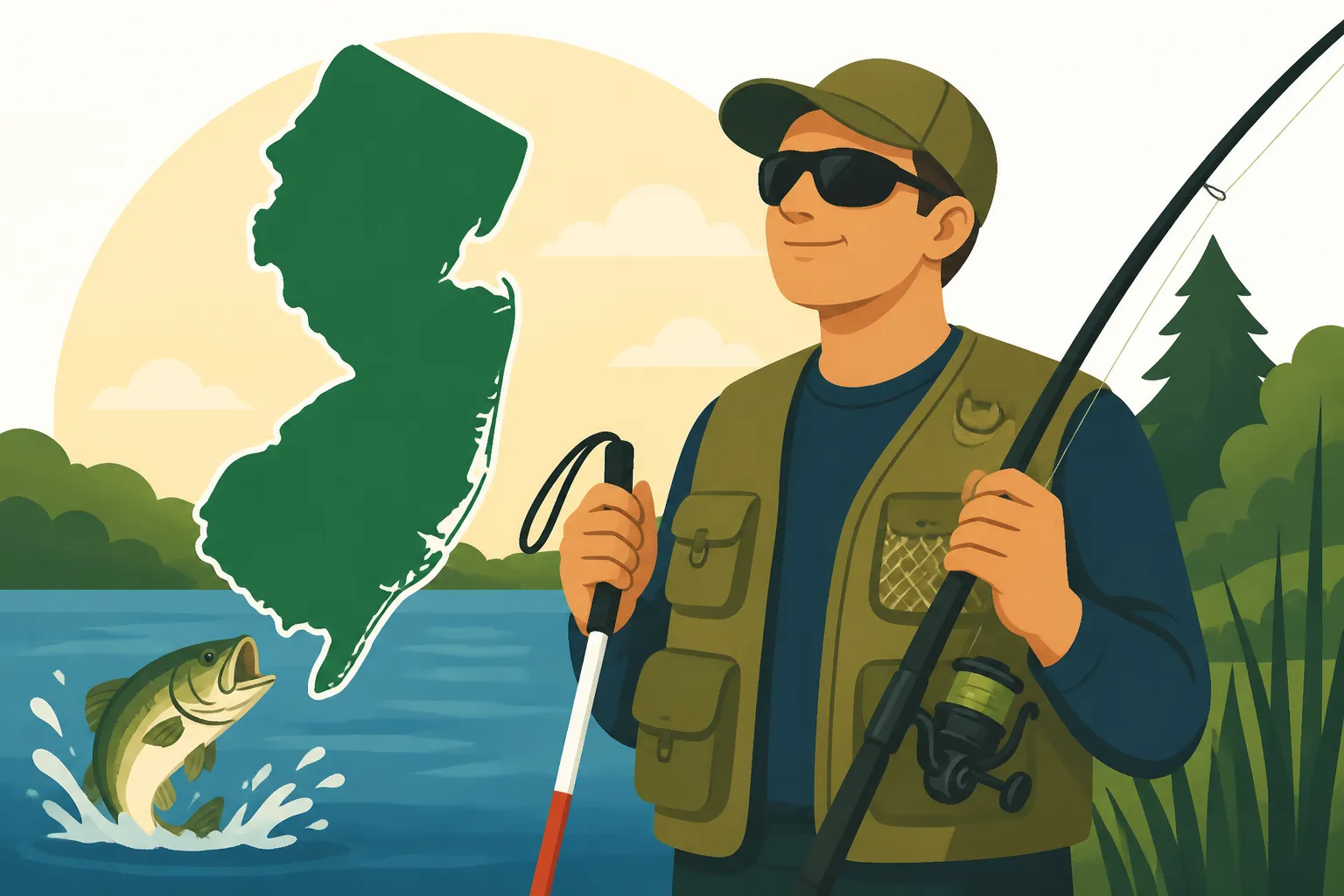
New Jersey Fishing License for Blind or Visually Impaired Anglers
It can feel incredibly frustrating when you're eager to get out on the water, but the sheer volume of regulations, permits, and licenses seems like an insurmountable hurdle, especially when navigating them with a visual impairment. You just want to enjoy the peace and thrill of fishing, not get bogged down in bureaucratic red tape. This guide is here to untangle the specifics of New Jersey's fishing license requirements for blind or visually impaired anglers, ensuring you have all the information you need to fish legally and confidently in the Garden State.
Understanding New Jersey's Fishing License Requirements for Visually Impaired Anglers
New Jersey recognizes the unique challenges faced by visually impaired individuals and has specific provisions to ensure that fishing remains an accessible and enjoyable pastime. It's a small but significant gesture that helps keep our beautiful waterways open to everyone. However, understanding exactly who qualifies and what those qualifications entail is crucial, as misinterpretations can lead to unnecessary stress or even legal issues, which no one wants on a relaxing day out.
Who Qualifies for the Exemption?
In New Jersey, the exemption from needing a fishing license specifically applies to residents who are legally blind. This isn't just a casual term; "legal blindness" is a medical and legal designation. Typically, it means that your central visual acuity does not exceed 20/200 in the better eye with correcting lenses, or your visual field is no greater than 20 degrees. It's not about having some vision loss, but about meeting a specific threshold.
To qualify for this exemption, the New Jersey Division of Fish and Wildlife requires official proof of your legal blindness. This usually comes in the form of a "Certification of Blindness" issued by the New Jersey Commission for the Blind and Visually Impaired (CBVI), or a statement from a licensed ophthalmologist or optometrist confirming your status. It’s important to remember that this exemption is for New Jersey residents only. If you're a non-resident who is visually impaired, you would typically still need to secure a standard nonresident fishing license, although always check the latest regulations as they can evolve. You can find more details on general requirements in our comprehensive guide on the New Jersey Fishing License Guide for 2026.
What the Exemption Covers
The good news is that if you meet the criteria for legal blindness and are a New Jersey resident, you are exempt from the requirement to possess a fishing license to fish in the state's public freshwaters and for marine species in state waters. This is a significant benefit, as it removes the financial and administrative burden of purchasing and renewing a license each year.
However, it's absolutely vital to understand that this exemption pertains only to the license itself. It does not exempt you from following all other fishing regulations. This includes critical rules such as bag and size limits for specific species, seasonal closures, gear restrictions, and any requirements for a New Jersey Trout Stamp if you plan on targeting trout in designated trout waters. Even though you don't need a license, you still need to be fully aware of and adhere to the (How Bag and Size Limits Work in New Jersey) and the(New Jersey Fishing Season Dates and Closures). Additionally, if you plan on fishing for certain marine species in federal waters beyond New Jersey's state jurisdiction, or if you're a non-resident, the specific requirements of the New Jersey Saltwater Registry Explained might still apply, so it's always worth double-checking.
Proof of Visual Impairment While Fishing
Even though you don't need a license, you do need to be able to demonstrate your eligibility for the exemption if asked by a New Jersey Conservation Police Officer. Think of it like a "proof of exemption" rather than a license. This means you should carry the official documentation that verifies your legal blindness whenever you are fishing.
Most commonly, this would be your Certification of Blindness from the CBVI or the signed statement from your eye care professional. It's highly recommended to keep this documentation in a waterproof and easily accessible pouch or wallet. You might even consider having a laminated copy. Officers are simply ensuring that everyone on the water is complying with the rules, and having your documentation readily available makes the process smooth and hassle-free. It's similar to how any angler would need to provide proof of their Carrying Proof of Your New Jersey Fishing License if requested.
How to Apply for Your New Jersey Fishing License Exemption
Navigating the application process for anything can be a headache, even more so when visual limitations come into play. But don't despair! New Jersey has a pretty straightforward system for obtaining your official certification, which then serves as your proof of exemption. The key is to understand the pathway and gather the necessary documents.
Steps for Obtaining the Exemption Card
The primary path to officially proving your legal blindness for the fishing license exemption is through the New Jersey Commission for the Blind and Visually Impaired (CBVI). The CBVI is the state agency responsible for providing services and certifications for individuals with visual impairments.
Here’s a general outline of the steps:
- Get a Medical Examination: The first step, if you haven't already, is to have a comprehensive eye examination by a licensed ophthalmologist or optometrist. They will assess your visual acuity and field of vision to determine if you meet the legal definition of blindness in New Jersey.
- Request Certification from CBVI: Once your eye care professional confirms your legal blindness, they can assist you in applying for or renewing your "Certification of Blindness" with the CBVI. The CBVI will require documentation from your doctor. They have specific forms that your ophthalmologist or optometrist will need to complete and submit.
- Receive Your CBVI Card: After your application is processed and approved, the CBVI will issue you an official identification card or letter of certification stating your legal blindness. This is the document you will carry with you when fishing.
It's a good idea to contact the CBVI directly to get the most up-to-date forms and instructions. Their staff can provide guidance and support through the process, making it much less daunting.
In-Person vs. Mail Application Options
While you won't be applying for the fishing license itself, the process of obtaining your CBVI certification might offer different submission methods. Typically, your ophthalmologist or optometrist's office will handle the submission of the medical forms to the CBVI on your behalf, often through mail or secure electronic means.
If you need to contact the CBVI directly for forms or assistance, they often have regional offices throughout the state. You can inquire if there's an option for in-person assistance, perhaps with a caregiver, if that's more convenient for you. However, most of the administrative heavy lifting should be done between your eye care professional and the CBVI, minimizing direct application steps for you. The goal is to make it as accessible as possible, so don't hesitate to ask about alternatives if you face challenges.
What to Carry While Fishing
This point bears repeating because it's so important for a smooth fishing trip. Even without a traditional fishing license, you must carry your proof of legal blindness, ideally the official Certification of Blindness from the New Jersey Commission for the Blind and Visually Impaired.
Example Scenario: Imagine you're enjoying a peaceful afternoon fishing at Lake Hopatcong, and a Conservation Police Officer approaches to check licenses. Instead of fumbling around, you calmly present your CBVI card. This immediately confirms your exemption status, and the officer can quickly verify your compliance with the regulations.
Consider these tips for carrying your documentation:
- Lamination: Get your CBVI card laminated or keep it in a sturdy, waterproof holder to protect it from moisture and wear.
- Accessibility: Store it in a designated, easy-to-reach pocket in your fishing vest or tackle bag, so you don't have to rummage for it.
- Digital Backup (with caution): While a physical card is usually preferred, having a clear digital photo of it on your phone might serve as a backup, though always prioritize the physical document. The rule for Showing a New Jersey Fishing License on Your Phone for standard licenses might offer some flexibility here, but a physical certification is still paramount for your exemption.
Tips for Visually Impaired Anglers to Enjoy Fishing in New Jersey
Fishing is a fantastic activity that engages all your senses – the feel of the rod, the sound of the water, the smell of the fresh air, and the thrill of a bite. A visual impairment doesn't have to dim that experience. In fact, many visually impaired anglers find unique ways to connect with nature and the sport. New Jersey offers a wealth of opportunities, and with a few adaptations and strategies, you can have incredibly rewarding days on the water.
Adaptive Fishing Gear and Tools
The world of fishing gear is constantly evolving, and there are many tools available today that can significantly enhance the experience for visually impaired anglers. It's about finding what works best for you and helps level the playing field.
- Tactile Indicators: Many reels now come with tactile clickers or audible drag systems that provide sensory feedback, letting you "feel" or "hear" the tension and action. Some anglers even add their own tactile markers to specific points on their rod or reel to help with consistent casting or retrieve.
- Large Print/High Contrast: For those with some residual vision, opting for fishing line in bright, high-contrast colors (like fluorescent yellow or green) can make it easier to see against different backgrounds. Larger print on fishing knot guides or tackle box labels can also be a game-changer.
- Voice-Activated Devices: While not specific to fishing, general voice-activated assistants on phones can help you look up quick facts like (New Jersey Fluke Size Limit: 18 Inches) or(New Jersey Striped Bass Slot Limit: 28 to 38 Inches) without needing to read fine print. In the future, specialized voice-activated fish finders might become more common, offering audible alerts for fish presence.
- Easy-to-Handle Tackle: Consider lures and baits that are easier to tie or attach, perhaps with larger eyelets or snap swivels. Pre-tied leaders can be a real time-saver. You can find a wide range of adaptive fishing gear, from brightly colored bobbers to large-handled reels, on platforms like Amazon. Many useful accessories, such as durable, easy-grip tackle boxes, are also readily available on Amazon.
- Specialized Rod Holders: For shore or pier fishing, a sturdy rod holder allows you to set your rod down, giving you a break and letting you focus on other sensory cues.
Fishing with a Companion or Guide
One of the most enriching ways for visually impaired anglers to enjoy fishing is by going with a trusted companion or an experienced fishing guide. This isn't just about assistance; it's about sharing the experience and enhancing safety.
- Companionship: Fishing buddies can help with tasks like baiting hooks, untangling lines, identifying promising spots, or simply reading the water for signs of fish activity. They can describe the scenery, point out wildlife, and celebrate catches with you, making the outing truly memorable.
- Professional Guides: Hiring a local fishing guide, especially one experienced with diverse clients, can open up new possibilities. A guide can take you to prime fishing spots, assist with casting techniques, and provide detailed descriptions of the environment and fish behavior. For instance, if you're keen on exploring the rich freshwater fishing New Jersey has to offer, a guide familiar with places like (Round Valley Reservoir Fishing Guide Services) or(Lake Hopatcong Bass Fishing Hotspots) could be invaluable. They handle the boat navigation and all the intricate details, allowing you to simply focus on the joy of fishing. You can find guides specializing in many techniques, even New Jersey Fly Fishing Guide Services for those who enjoy the finesse of that sport.
Accessible Fishing Spots in New Jersey
New Jersey is fortunate to have a variety of fishing locations that prioritize accessibility, making them ideal for visually impaired anglers. When looking for a spot, consider places with:
- Piers and Docks: Many public fishing piers along the Jersey Shore, like those in Belmar or Asbury Park, offer flat, stable surfaces, often with railings, making them safer and easier to navigate. They provide direct access to excellent saltwater fishing. Similarly, many lakes have accessible docks.
- Paved Pathways and Accessible Platforms: Numerous state and county parks have invested in accessible infrastructure. Look for fishing lakes or ponds with paved pathways leading to designated fishing platforms that are stable and barrier-free. These often include sturdy benches and sometimes even tactile warning strips near the water's edge. Spots within the Best New Jersey State Park Ponds for Family Fishing are often designed with accessibility in mind.
- Managed Freshwater Fisheries: Many freshwater lakes and ponds are regularly stocked with fish, increasing your chances of a successful outing from an accessible shore location. The Division of Fish and Wildlife website often provides details on accessible features at their managed sites. For a general overview, check out our guide on the Best Places to Fish in New Jersey and look for specific mentions of accessible facilities.
Important Considerations and Resources for Blind Anglers in New Jersey
While the thrill of the catch is a huge part of fishing, being well-informed and prioritizing safety are equally crucial, especially for visually impaired anglers. Knowledge about ongoing regulations, community support, and fundamental safety measures ensures that every trip is not only enjoyable but also safe and compliant.
Staying Informed on Regulations
Even with a license exemption, staying current with New Jersey's fishing regulations is not just advisable; it's mandatory. Regulations, especially bag and size limits, can change annually or even mid-season based on conservation needs. These rules apply to everyone, regardless of license status.
- New Jersey Fish and Wildlife Digest: The primary source for all regulations is the annual New Jersey Fish and Wildlife Digest. While it's a printed document, an accessible version, or information on how to obtain one, can usually be requested directly from the Division of Fish and Wildlife or the CBVI. Having a sighted companion read relevant sections to you can also be a great way to stay up-to-date. Understanding how to Reading the New Jersey Fish and Wildlife Digest is key for all anglers.
- Online Resources: The New Jersey Division of Fish and Wildlife website is regularly updated. While navigating websites can be challenging, many screen readers can assist with accessing this information. Focusing on specific searches for species you intend to target, such as "New Jersey fluke regulations" or "striped bass limits," can provide quick answers.
- Fishing Clubs and Associations: Joining local fishing clubs can be an excellent way to get real-time updates on regulation changes from fellow anglers. Many clubs are welcoming and can provide a supportive community.
Support Groups and Organizations
Connecting with others who share similar experiences can be incredibly empowering and informative. There are various organizations, both local and national, that cater to visually impaired individuals and sometimes have specific programs or resources for outdoor activities like fishing.
- National Federation of the Blind of New Jersey (NFB-NJ): This organization is a strong advocate for the blind community in New Jersey. They may have local chapters that organize social events or recreational outings, including fishing trips. Connecting with them could lead to opportunities to fish with other visually impaired anglers or find sighted volunteers.
- American Council of the Blind of New Jersey (ACBNJ): Similar to NFB-NJ, ACBNJ works to improve the quality of life for blind and visually impaired people. They might also offer recreational programs or a network of individuals interested in shared outdoor activities.
- Local Community Centers: Check with your local community or senior centers. They sometimes organize accessible recreational programs or can point you toward local fishing groups that are inclusive.
These organizations can be fantastic resources not only for fishing information but also for adaptive equipment recommendations. You might even find groups that organize excursions to locations like the accessible pier at Island Beach State Park, learning more about New Jersey's Island Beach State Park Shore Fishing Rules.
Safety First on the Water
Safety is paramount for all anglers, but for those with visual impairments, it requires an extra layer of awareness and preparation. Whether you're fishing from a boat, pier, or the shore, keep these points in mind:
- Personal Flotation Devices (PFDs): Always wear a life vest, especially when fishing near deep water, on a boat, or in unfamiliar territory. Even on a stable pier, accidents can happen. Modern PFDs are comfortable and non-restrictive.
- Communicate with Companions: If you're fishing with someone, establish clear communication signals. Let them know if you need to move, if you feel unsure about your footing, or if you've got a bite.
- Awareness of Surroundings: Rely on your other senses. Listen for boat traffic, other anglers, and the sounds of the water. Feel for changes in the ground underfoot.
- Appropriate Footwear: Wear sturdy, non-slip footwear, especially when on docks, piers, or uneven riverbanks.
- Sun Protection: Even if you can't see the sun, its UV rays are still active. Wear a hat, sunglasses (if applicable), and apply sunscreen regularly.
- First Aid Kit: Always have a basic first aid kit easily accessible for minor cuts, hook pricks, or other small injuries. You can find compact waterproof versions on Amazon. Even waterproof cases for keeping exemption cards safe are readily available on Amazon.
- Know Your Exit: Be aware of the safest and clearest path to and from your fishing spot, especially if conditions change (e.g., tide coming in, weather deteriorating).
By taking these precautions, visually impaired anglers can enjoy the serene and thrilling experience of fishing in New Jersey's diverse waters with confidence and peace of mind.
| Key Exemption Details for Visually Impaired Anglers in New Jersey |
|---|
| Who Qualifies? |
| What is Exempted? |
| Required Documentation? |
| What is NOT Exempted? |
| Where to Get Certification? |
| Recommended Action while Fishing? |
Disclaimer
The information provided in this guide is for general informational purposes only and is not intended as legal advice. Fishing regulations in New Jersey can change. It is always the angler's responsibility to consult the most current New Jersey Fish and Wildlife Digest or visit the official New Jersey Department of Environmental Protection (NJDEP) Division of Fish and Wildlife website for the precise and most up-to-date regulations before heading out to fish.