Best New Jersey Piers and Jetties for Shore Fishing
There's nothing quite like the salty air, the rhythmic crash of waves, and the thrill of a bending rod, but finding that perfect spot along the expansive New Jersey coastline can sometimes feel like searching for a needle in a haystack. We all dream of those easy-access locations where the fish are biting, without the hassle of a boat or specialized gear. This comprehensive guide is dedicated to helping you discover the very best piers and jetties in New Jersey, giving you a serious leg up on your next shore fishing adventure.
Why Piers and Jetties Are Prime Fishing Locations in New Jersey
When you think about shore fishing in New Jersey, your mind might immediately jump to miles of sandy beaches. While surf fishing has its own unique charm, piers and jetties offer a whole different ballgame, providing advantages that can drastically improve your chances of a successful outing. These structures aren't just convenient; they're fish magnets, designed by nature and enhanced by human engineering to create incredible angling opportunities.
Access to Deeper Water and Structure
One of the biggest advantages of fishing from a pier or jetty is the immediate access to deeper water that's usually out of reach for a typical surf caster. When you’re standing on the beach, you're primarily fishing the shallow, turbulent zone. Piers, however, extend hundreds or even thousands of feet out into the ocean, allowing your bait or lure to reach depths where larger, more elusive fish often hold. Jetties, those rock structures that protect inlets and shorelines, also push out into deeper channels, creating breaks in the current and attracting a host of marine life.
These deeper zones often hold complex underwater structures like natural reefs, artificial wrecks, or even the pilings and rock formations of the piers and jetties themselves. These structures are critical because they provide shelter, ambush points, and foraging grounds for a vast array of fish species. Think about it: baitfish, feeling vulnerable in open water, will naturally seek refuge around these structures. And where the baitfish go, the predatory species like striped bass, bluefish, tautog, and fluke will surely follow, creating a vibrant ecosystem right beneath your feet. You're essentially putting yourself right on top of where the action happens, without needing a boat.
Safety and Convenience for Anglers
Let's be honest, not everyone wants to wade out into crashing surf at dawn, wrestling with a huge rod and trying to avoid rogue waves. Piers and jetties offer a much safer and more convenient fishing experience for anglers of all ages and skill levels. You're typically on a stable, elevated platform, which means no fighting the currents, no getting soaked, and often much easier casting. Many popular piers are paved, well-lit, and feature railings, making them perfect for families or those with mobility concerns.
Beyond the physical stability, many commercial piers come equipped with amenities that make a full day of fishing much more comfortable. We're talking about bait and tackle shops right on site, offering everything from fresh bait to last-minute lures. Restrooms are often available, as are snack bars or small cafes. Some even have fish cleaning stations, which is a huge bonus after a successful trip. These conveniences transform a fishing trip from a rugged expedition into a relaxing, enjoyable day out, making it an excellent option for beginners, kids, or anyone just looking to unwind. You just need to remember to carry your proof of your New Jersey Fishing License Guide for 2026, as wardens do check these spots.
Concentrated Bait and Predator Activity
Piers and jetties act like natural gathering points in the marine environment, concentrating both baitfish and the larger predators that feed on them. Jetties, in particular, play a crucial role by disrupting the natural flow of currents, creating eddies and calm pockets where baitfish can rest and feed without expelling too much energy. These protected areas become nurseries and feeding grounds, attracting schools of spearing, anchovies, and juvenile forage fish.
The physical structures themselves also provide cover and a substrate for marine growth. Barnacles, mussels, and various forms of algae attach to pilings and rocks, becoming a food source for smaller crabs, shrimp, and juvenile fish. This entire food chain attracts a diverse range of species. For instance, the rocky crevices of a jetty are prime habitat for crabs, which are a favorite food of tautog. Meanwhile, the schools of baitfish milling around the pier pilings will inevitably draw in schools of hungry bluefish or migratory striped bass. It's a self-sustaining cycle that ensures consistent fishing opportunities throughout the seasons.
Northern Jersey Shore Piers and Jetties
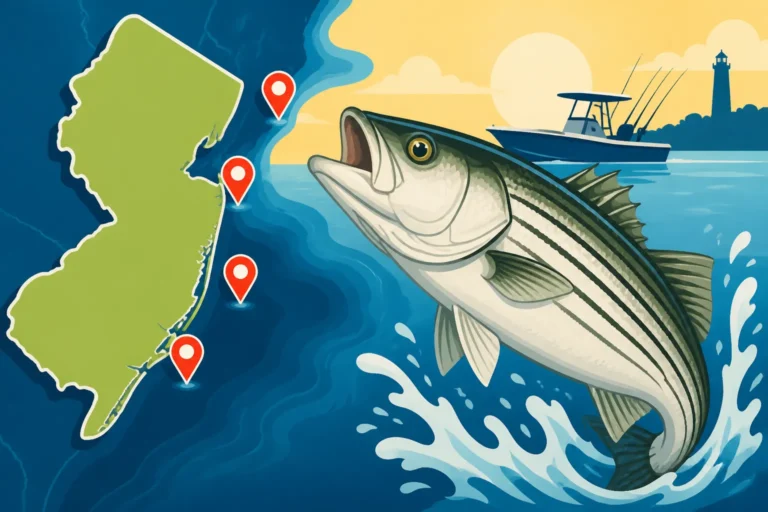
The northern stretch of the New Jersey coastline offers some fantastic pier and jetty fishing opportunities, from the busy waters of Raritan Bay down to the lively beaches of Monmouth County. These areas are particularly well-known for their spring and fall runs of striped bass and bluefish, but also hold plenty of other species throughout the warmer months.
Sandy Hook and Raritan Bay Hotspots
Sandy Hook, part of the Gateway National Recreation Area, is an iconic fishing destination at the very northern tip of the Jersey Shore. While it might not have traditional long commercial piers like some other locations, its extensive jetties and rock structures along the bay and ocean sides are legendary for shore anglers. The North Beach area and the jetties near Fort Hancock Fishing Access at Sandy Hook are prime spots. Here, you'll find anglers targeting striped bass, especially during their spring and fall migrations. The bay side can be excellent for fluke and bluefish in the summer, with calmer waters that are more forgiving for lighter tackle. The currents around the inlets and points here can be quite strong, so paying attention to the tide and safety is paramount.
Raritan Bay, nestled behind Sandy Hook, offers a different flavor of shore fishing. While much of it is accessed by boat, there are several bulkhead areas and smaller jetties, particularly around Keansburg and Union Beach, that can be productive. The bay is a nursery for many species and attracts a tremendous amount of bait, making it a hotspot for striped bass in the spring, often earlier than the oceanfront. Fluke, weakfish, and even some panfish can be caught from these shore access points. Anglers here often favor bait fishing with clam or bunker, but artificial lures can be effective during aggressive feeding periods. Don't forget, even on the bay side, understanding the New Jersey Saltwater Registry Explained is essential before you cast a line.
Monmouth County's Popular Piers
Moving south into Monmouth County, you hit some of the most famous fishing piers on the Jersey Shore. These are typically large, wooden structures extending far out into the ocean, providing excellent access to deeper water and a host of amenities.
The Asbury Park Fishing Pier Guide will tell you that this pier is a true landmark. It's a bustling spot, especially during the summer, attracting a diverse crowd of anglers. From this pier, you can expect to catch a wide variety of species depending on the season. Spring and fall see the migratory striped bass and bluefish making their appearance, often close to the pier pilings or at the end where deeper water is accessed. During the summer, fluke are a primary target, often caught by jigging bucktails or drifting bait along the bottom. You'll also find kingfish, porgies, sea bass, and even sharks (smaller species, of course) being pulled from its waters. The pier is well-maintained, usually has a bait shop nearby, and offers a lively atmosphere that makes for a great day, even if the fish aren't biting constantly.
Just a bit further south, the Belmar Fishing Pier Guide leads you to another angler favorite. The Belmar pier is renowned for its consistent fishing, particularly for fluke and striped bass. Like Asbury, it provides access to various depths, allowing for different fishing techniques. Many anglers here will use Sabiki rigs to catch baitfish like spearing or peanut bunker, then use that live bait to target larger predators. Bottom fishing with clam or squid is popular for kingfish, blowfish, and occasional weakfish. The pier's robust structure attracts a lot of smaller life, which in turn brings in larger gamefish. It's a fantastic spot for families, offering plenty of space and a friendly environment. Both Asbury Park and Belmar piers often have small fees for fishing, so be sure to check their websites before you go.
Central Jersey Shore Piers and Jetties
The central part of New Jersey's coastline is a dynamic region, characterized by major inlets, expansive bays, and some of the most productive fishing grounds in the state. Anglers venturing here will find a mix of natural and man-made structures that offer incredible opportunities.
Manasquan Inlet and Point Pleasant Canal
The Manasquan Inlet is a powerhouse fishing destination, known for its strong currents and a constant flow of baitfish, making it a magnet for game species. The Manasquan Inlet Fishing Guide is essential reading for anyone planning a trip here. On both the Point Pleasant Beach side and the Manasquan side, massive rock jetties extend into the ocean, providing prime positions for targeting a wide array of fish. Striped bass and bluefish are dominant here, especially during their migrations, often feeding aggressively in the turbulent waters at the mouth of the inlet. Tautog are also a major draw, hunkering down among the rocks and pilings, requiring specialized jigging techniques with green crabs. Fluke can be found in the calmer waters inside the inlet and along the edges of the main channel.
Connected to the Manasquan Inlet is the Point Pleasant Canal Fishing Guide, a unique waterway that connects the Manasquan River to the Barnegat Bay. This canal is famous for its powerful tidal currents and offers excellent fishing from its bulkheads and small access points. The canal is a migration route for many species, and it's not uncommon to see anglers reeling in striped bass, bluefish, and even weakfish right from the shore. Fluke also congregate in the deeper holes and eddies within the canal. The fishing here can be fantastic, but the currents demand heavy tackle and careful attention to your rig. It's a truly distinctive spot that highlights the diverse fishing environments New Jersey offers.
Barnegat Bay and Long Beach Island Access
Further south, we enter the realm of Barnegat Bay and Long Beach Island (LBI), a region famous for its shallow bay fishing and productive oceanfront surf. While LBI is primarily known for its surf fishing, the jetties that punctuate its shoreline, particularly at inlets, offer fantastic opportunities for pier-like access.
The Barnegat Light Surf Fishing Guide specifically focuses on the iconic Barnegat Inlet. The massive jetty here, extending far into the ocean, is one of the most productive shore fishing spots in the state. Anglers stand on its rocks, casting into the deeper waters of the inlet, the turbulent wash, and the open ocean. Striped bass, bluefish, tautog, and even weakfish are commonly caught here. During the fall run, the action can be absolutely frantic, with large schools of bunker being chased by hungry predators. Safety on the rocks is crucial here, as they can be slippery and exposed to strong waves.
Around the calmer waters of Barnegat Bay itself, you’ll find numerous bulkheads, small public docks, and shorter jetties that provide access. These spots are excellent for lighter tackle fishing, targeting fluke, blowfish, kingfish, and a variety of panfish. During the warmer months, crabbing from these structures is also incredibly popular, adding another layer of fun to your outing. While not always "piers" in the traditional sense, these accessible points along the bay offer sheltered, family-friendly fishing experiences that complement the more adventurous oceanfront jetty fishing. Utilizing resources like FishingBooker might even lead you to local guides who specialize in these hidden bay access points.
Southern Jersey Shore Piers and Jetties
As you journey further south along the New Jersey coast, the landscape shifts, but the excellent pier and jetty fishing opportunities remain plentiful. This region, from the bustling resorts of Atlantic City down to the quiet charm of Cape May, offers a unique blend of species and fishing experiences.
Atlantic City and Cape May Region
Atlantic City, famous for its boardwalks and casinos, also boasts several excellent fishing piers that offer a vibrant fishing scene right in the heart of the city. The Atlantic City Fishing Piers Guide will point you towards popular spots like the Ventnor City Fishing Pier and the Ocean City Fishing Pier. These piers stretch out over the surf, providing anglers with prime positions to target a variety of species. In the spring and fall, expect to see striped bass and bluefish activity. During the summer, fluke are a primary target, often caught by jigging Gulp! baits or drifting spearing. You'll also find kingfish, spot, croakers, and even some small sharks, particularly at night. The convenience of these piers, often with nearby bait shops and food vendors, makes them very popular for both locals and tourists looking to combine fishing with a boardwalk stroll.
Further south, toward the quiet charm of Cape May, the fishing opportunities take on a slightly different character. While there aren't many long commercial piers in Cape May itself, the numerous jetties and bulkheads along the harbor and oceanfront are legendary. The Cape May Point Surf Fishing Guide highlights the jetties that protect Cape May Point, offering access to deeper currents and the possibility of catching striped bass, bluefish, and drum fish. The Cape May Canal Fishing Guide provides details on fishing the canal that connects the Delaware Bay to the Atlantic Ocean. This canal can be highly productive for striped bass, weakfish, and fluke, especially around the bridges and deeper holes where fish congregate in the strong tidal flows. The confluence of the ocean and Delaware Bay in this region makes it a unique and biologically rich fishing ground.
Island Beach State Park and Delaware Bay Access
Island Beach State Park is a jewel of the New Jersey coast, a pristine barrier island offering miles of undeveloped coastline. While it's primarily known for its world-class surf fishing, the park also features a few key jetties and structures that enhance shore fishing access. The Island Beach State Park Fishing Access provides details on where anglers can fish. The park's famous Barnegat Inlet, at its northern end, boasts massive jetties (shared with Barnegat Light across the inlet) that are exceptional for targeting large striped bass, bluefish, and tautog. Further south within the park, while there are no lengthy piers, the smaller groins and jetty-like structures offer excellent access to deeper cuts and rips just beyond the immediate surf. These spots often hold fluke, kingfish, and even weakfish.
It's important to remember that accessing some areas of Island Beach State Park, especially with a 4×4 vehicle for surf fishing, requires an Island Beach State Park Surf Fishing Permit Cost. However, walking onto the jetties at the inlet for fishing typically falls under general park access rules.
Looking toward the Delaware Bay side, while not strictly "piers and jetties" in the ocean sense, the numerous small docks, bulkheads, and jetty-like structures that line the bay shore from Fortescue down to Maurice River Beach offer fantastic fishing. These spots are renowned for their spring drum fish runs, excellent crabbing, and opportunities for weakfish, striped bass, and white perch. The calmer, shallower waters of the bay provide a different type of shore fishing, often more accessible and less intimidating than the open ocean.
Essential Gear and Techniques for Pier and Jetty Fishing
Successfully fishing from piers and jetties in New Jersey requires a bit more than just a rod and a bucket of worms. While these spots offer convenience, the diverse species and varying conditions mean you need to come prepared with the right equipment and a good understanding of effective techniques.
Recommended Rods, Reels, and Lines
When choosing your gear for pier and jetty fishing, versatility is key. You're dealing with saltwater, strong currents, and often snag-prone environments, so robust equipment is a must.
- Rods: A medium-heavy spinning rod, typically in the 7 to 9-foot range, is an excellent all-around choice. This length provides good casting distance for reaching deeper waters while still being manageable in tighter spaces on a pier. Look for a rod with a strong backbone for fighting larger fish and enough sensitivity in the tip to detect subtle bites. If you're specifically targeting tautog on rocky jetties, a slightly shorter, stiffer rod (6.5 to 7.5 feet) with a fast action can be more effective for feeling those light bites and muscling fish out of structure. For heavier surf-oriented jetties like Barnegat Light, a 10-11 foot surf rod might be necessary to cast heavy sinkers and baits into the turbulent water.
- Reels: A durable, corrosion-resistant spinning reel in the 4000 to 6000 size range is ideal. Brands like Penn, Shimano, and Daiwa offer excellent saltwater-specific reels that can withstand the harsh marine environment. Ensure your reel has a smooth, reliable drag system, as you'll be putting it to the test with strong-pulling fish.
- Lines: Braided line is generally preferred for pier and jetty fishing due to its superior strength-to-diameter ratio, sensitivity, and casting distance. A 30 to 50-pound test braided line is a good starting point for most situations. The lack of stretch in braid helps you feel even the lightest nibbles and provides solid hooksets. Always use a fluorocarbon leader (20 to 50-pound test, depending on target species and water clarity) at the end of your braid. Fluorocarbon is nearly invisible underwater, abrasion-resistant, and crucial for preventing fish from seeing your main line.
Remember, the corrosive nature of saltwater means regular rinsing of your gear with fresh water after each trip is non-negotiable for longevity.
Baits, Lures, and Rigs for Success
The success of your pier and jetty fishing trip often hinges on choosing the right bait, lure, and rig for the conditions and target species.
-
Baits:
- Clam: A universal bait for almost anything that swims in New Jersey's saltwater. Great for kingfish, croakers, blowfish, weakfish, and even striped bass.
- Squid: Tougher than clam, making it great for bottom fish that nibble, and also effective for fluke, bluefish, and sea bass.
- Bunker (Menhaden): Live or fresh cut bunker is irresistible to striped bass and bluefish. Many anglers will try to snag live bunker with a treble hook or cast net, then fish them live or as chunks.
- Bloodworms/Sandworms: Excellent for striped bass, weakfish, and certain panfish, especially in cooler waters.
- Green Crabs/Fiddler Crabs: The absolute go-to bait for tautog. A whole or halved crab on a jig or bottom rig is deadly.
-
Lures:
- Bucktail Jigs: A classic, versatile lure. White, chartreuse, and pink are popular colors. Great for fluke, striped bass, and bluefish. Tip them with a Gulp! shrimp or a strip of squid for added attraction.
- Metal Jigs/Spoons: Excellent for casting long distances to schooling bluefish and striped bass, especially during blitzes. Popular brands include Hopkins and Kastmasters.
- Soft Plastics (Gulp!): Berkley Gulp! baits, especially the swimming mullet or shrimp patterns, are incredibly effective for fluke and can sometimes outperform natural bait.
- Swimming Plugs/Poppers: Topwater plugs are thrilling for striped bass and bluefish, especially at dawn or dusk when they're feeding on the surface.
-
Rigs:
- Bottom Rig (Hi-Lo Rig): The most common rig for general pier and jetty fishing. It consists of two hooks (often snelled) tied above a sinker, allowing you to present two baits at different depths. Great for kingfish, croakers, and smaller bottom species.
- Fish Finder Rig: Ideal for larger bait, like a whole bunker or a big chunk of clam, when targeting bigger striped bass or drum. A sliding sinker allows the fish to take the bait without feeling the weight of the sinker.
- Fluke Rig: Typically a bucktail jig on the bottom with a dropper loop above it for a teaser or another Gulp! bait. When drifting for fluke, a sinker with a leader and hook is also very effective.
- Tautog Rig: Usually a small jig head (1/2 to 2 oz) tipped with a green crab, or a traditional two-hook rig with a sinker on the bottom, designed to get bait right into the rocky structure.
It’s always a good idea to bring a variety of baits and lures, as fish preferences can change quickly. Checking with local bait and tackle shops or consulting FishingBooker for current reports before your trip can give you an edge.
Here's a quick comparison of some popular pier and jetty fishing techniques:
| Technique | Target Species | Common Bait/Lure | Best Conditions | Notes |
|---|---|---|---|---|
| Bottom Fishing | Kingfish, Fluke, Croaker, Blowfish | Clam, Squid, Bloodworm | Calm to moderate currents, good structure | Versatile, great for beginners. Use hi-lo or fish finder rigs. |
| Jigging | Fluke, Striped Bass, Black Sea Bass | Bucktails, Soft Plastics | Moderate to strong currents, deeper water | Active fishing, effective for predatory species. |
| Live Lining | Striped Bass, Bluefish | Live Bunker, Spearing | Strong currents, visible bait schools | Exciting for larger fish. Requires casting or snagging live bait. |
| Togging (Crabs) | Tautog | Green Crabs, Fiddler Crabs | Rocky structure, cooler water, moderate current | Requires patience and a strong hookset. |
| Casting Lures | Striped Bass, Bluefish | Metal Jigs, Plugs, Poppers | Active fish, blitzes, dawn/dusk | Great for covering water and targeting aggressive feeders. |
Safety Considerations and Best Practices
Fishing from piers and jetties can be incredibly rewarding, but it’s crucial to prioritize safety. The ocean environment can be unpredictable, and these structures present their own set of unique hazards.
- Watch Your Footing: Jetties, in particular, can be very slippery due to algae, wet rocks, and spray. Wear appropriate footwear with good grip. Piers can also be slick when wet.
- Be Aware of Currents and Waves: Strong currents can make casting difficult and retrieve challenging. Large waves can unexpectedly crash over jetties, so always keep an eye on the ocean. Never turn your back on the waves.
- Casting Etiquette: Piers and jetties are often crowded. Be mindful of other anglers around you, especially when casting. Always look before you cast to avoid hooking someone or tangling lines.
- Snag Prevention: Fishing around structure means snags are inevitable. Try to position yourself to cast parallel to the jetty or pier, rather than directly into the most tangled spots, unless you're specifically targeting species like tautog that live there. Carry extra rigs and sinkers.
- Proper Fish Handling: Bring a net or a gaff for larger fish. If you plan to release fish, handle them gently and get them back into the water quickly. For striped bass, which have a slot limit, proper handling during catch and release is vital. Learn about New Jersey Catch and Release Striped Bass Handling Rules.
- Check the Weather: Conditions can change rapidly on the coast. Always check the forecast before you head out, and be prepared for sudden changes in wind or precipitation.
- Carry a PFD (Personal Flotation Device): If you're fishing a jetty that extends far out or is exposed to strong waves, consider wearing a PFD, especially if you're not a strong swimmer or if conditions are rough.
- Know the Rules: Always have your New Jersey Fishing License Guide for 2026 and your New Jersey Saltwater Registry Explained documentation with you. Conservation Police Officers regularly check these popular spots.
By following these best practices, you can ensure your pier and jetty fishing trips are not only successful but also safe and enjoyable for everyone.
Navigating Regulations and Seasons
Fishing in New Jersey, particularly from easily accessible spots like piers and jetties, means you'll encounter a wide variety of species. To ensure a sustainable fishery and avoid penalties, it's absolutely crucial to understand the state's regulations and seasonal changes. Ignorance of the law is never an excuse, and New Jersey's Conservation Police take these rules seriously.
Understanding Licensing and Registration
Before you even cast a line from any New Jersey pier or jetty, you need to make sure you're properly licensed and registered. It can seem a bit confusing at first, but it's actually quite straightforward.
For any freshwater fishing, or if you're fishing from a pier or jetty that gives you access to a tidal river that's considered freshwater (like some spots up the Delaware River), you'll need a New Jersey Fishing License Guide for 2026. This applies to anyone age 16 to 69. If you're wondering, Do Kids Need a Fishing License in New Jersey?, the answer is generally no for those under 16, but check specific rules as they can sometimes vary. For older anglers, New Jersey Fishing Is Free for Anglers Age 70 and Older, which is a fantastic perk for our seasoned veterans.
However, most of the piers and jetties along the Jersey Shore offer access to saltwater. For saltwater fishing, New Jersey requires anglers to register with the New Jersey Saltwater Registry Explained program. The good news is that this registration is absolutely free! It's how the state gathers vital data on recreational catches, which is used to manage fish stocks. You don't need a separate license for saltwater, just the registration. This is a common point of confusion, so always double-check if you're covered for the type of water you'll be fishing. You can usually register online quickly and easily.
Key Bag and Size Limits
Once you're legal to fish, the next step is understanding what you can keep. New Jersey, like most states, implements strict How Bag and Size Limits Work in New Jersey to protect fish populations and ensure healthy breeding stocks. These limits vary significantly by species and can even change mid-season, so always consult the latest regulations.
For pier and jetty anglers, some of the most commonly targeted species with specific limits include:
- Striped Bass: This is one of the most popular gamefish, and their regulations are often discussed. Currently, New Jersey Striped Bass Slot Limit Explained means you can only keep fish within a specific length range (e.g., 28 to 31 inches, or 28 to 38 inches depending on the specific zone and federal regulations). Fish outside this slot must be immediately released unharmed.
- Fluke (Summer Flounder): These delicious flatfish are a staple of pier and jetty fishing in summer. New Jersey Fluke Size and Bag Limits Explained usually involve a minimum size limit (e.g., 18 inches) and a daily bag limit (e.g., 2-3 fish per angler).
- Black Sea Bass: Often caught incidentally or targeted specifically from deeper pier ends or jetties with access to structure. These also have strict size and bag limits that can change seasonally.
- Tautog (Blackfish): Found primarily on rocky jetties. Their season is often broken into spring and fall segments, each with specific size and bag limits.
It’s your responsibility to know these limits for every species you target. Carry a measuring tape, and if you’re unsure, it’s always best to release the fish. The best way to stay current is to check the New Jersey Fish and Wildlife Digest, which is updated annually and readily available online.
Seasonal Opportunities for Different Species
The beauty of fishing in New Jersey is the distinct seasonal variety. What you catch in April will likely be very different from what you catch in August or October. Understanding New Jersey Fishing Season Dates and Closures will help you plan your trips for maximum success.
- Spring (April – June): This is prime time for the striped bass migration. When Do Striped Bass Migrate Through New Jersey? They move north along the coast, often hugging the beaches and structure of piers and jetties, offering fantastic opportunities for anglers. Bluefish also start to show up, often in hungry schools. Fluke season typically opens later in the spring, and the first "keepers" are eagerly sought after.
- Summer (July – August): While the migratory striped bass may have moved north, resident striped bass can still be found around inlets and deeper structures. The New Jersey Fluke Season Start Date usually means excellent fluke fishing, especially in the bays and around calmer jetties. Kingfish, blowfish, and croakers are abundant on the bottom, making for great family fishing. Black sea bass and tautog seasons might also be open, though tautog are often less active in the warmest water.
- Fall (September – December): This is arguably the most exciting time for pier and jetty fishing. The striped bass and bluefish begin their southbound migration, often creating massive "blitzes" where they push baitfish against the shore. The action can be non-stop. Tautog fishing picks up significantly as water temperatures drop, and some of the largest specimens are caught from jetties. You might also encounter false albacore or even small tuna species from the end of long piers or jetties.
- Winter (January – March): Fishing from piers and jetties becomes much tougher in the colder months. Some anglers will brave the cold for tautog, especially on milder days. The New Jersey Black Sea Bass Season Dates might also open for brief periods in winter, allowing for targeting these tasty fish on deeper structures. However, for most species, this is a slow period.
Being aware of these seasonal patterns means you can tailor your gear and bait choices to what's likely to be around, increasing your chances of a memorable day on the water.
Maximizing Your Pier and Jetty Fishing Experience
Beyond just having the right gear and knowing the regulations, there are several nuances that can truly elevate your pier and jetty fishing experience in New Jersey. Tapping into local knowledge, understanding the tides, and being a responsible angler are all part of the equation for a successful and enjoyable outing.
Reading the Tides and Weather
The ocean is a dynamic environment, and its rhythms dictate fish behavior. Learning How to Read Tide Charts for Better Fishing in New Jersey is paramount for pier and jetty anglers, especially in areas with strong currents like inlets or canals. Generally, the incoming and outgoing tides, particularly around the "moving water" periods (an hour or two before and after high/low slack), are the most productive times. This moving water stirs up bait, pushes food around, and often encourages predators to feed.
For instance, the Best Tide to Fish a New Jersey Inlet for striped bass and bluefish is often a strong outgoing tide, as it washes baitfish out of the back bays and into the waiting mouths of predators positioned at the mouth of the inlet. For fluke, a slower drift on a rising tide might be more effective as they ambush prey along the bottom.
Weather also plays a critical role. Do Fish Bite Better Before or After a Storm? Often, fish become more active just before a major weather system moves in, sensing changes in barometric pressure. However, fishing during a storm can be dangerous and is generally not recommended. Post-storm, as the water clears and settles, can also be productive. Strong winds can make casting nearly impossible and create uncomfortable conditions, while calm, sunny days might mean clearer water where fish are warier. Always check the marine forecast in addition to the general weather, paying attention to wind speed, wave height, and potential for rain.
Respecting the Environment and Fellow Anglers
One of the cornerstones of responsible angling is showing respect for both the environment and your fellow fishermen. Piers and jetties are shared public spaces, and keeping them clean and accessible benefits everyone.
- Leave No Trace: Always pack out everything you pack in, including bait containers, tangled line, and food wrappers. Monofilament fishing line, in particular, is a hazard to wildlife, so dispose of it properly in designated recycling bins if available, or take it home. Keeping these spots clean ensures they remain beautiful and productive for years to come.
- Be Mindful of Space: Piers and jetties can get crowded, especially on prime fishing days. Give your fellow anglers enough space to cast and fight fish. Don't set up directly in front of someone or cast over their lines. A little courtesy goes a long way.
- Control Your Catch: If you're catching and releasing, do so carefully and quickly. For fish you intend to keep, be sure to dispatch them humanely and store them properly in a cooler. Don't leave fish lying on the pier or jetty to spoil.
- Noise and Behavior: Be aware of your noise level, especially if you're fishing early in the morning or late at night. Keep any music low and avoid overly boisterous behavior that might disturb others or scare fish.
Adhering to these simple principles ensures a pleasant experience for everyone and preserves these valuable fishing grounds for future generations.
Local Knowledge and Resources
While guides like this offer a great starting point, nothing beats hyper-local knowledge when it comes to pier and jetty fishing. The conditions, the best baits, and where the fish are holding can change daily.
- Bait and Tackle Shops: These are goldmines of information. The folks working at your local bait shop in Point Pleasant, Belmar, or Barnegat Light usually know exactly what's biting, where, and on what. They live and breathe fishing and are often happy to share tips, especially if you're buying bait from them. Don't be shy; ask what's hot!
- Fellow Anglers: Strike up conversations with experienced anglers on the pier or jetty. Most are passionate about fishing and, if approached respectfully, are often willing to share their wisdom. Just observe proper etiquette and don't interrupt them if they're busy reeling in a fish!
- Online Forums and Social Media: New Jersey has a very active online fishing community. Forums and social media groups dedicated to local fishing can provide real-time reports and insights into what’s happening at various spots.
- Official Resources: The New Jersey Department of Environmental Protection (NJDEP) Fish & Wildlife website is your official source for all regulations, stocking schedules (for trout in nearby freshwater systems that might be accessible), and important announcements. Always refer to the latest version of the Reading the New Jersey Fish and Wildlife Digest.
- Charter Services: If you're struggling to find fish from shore or want to try a different approach, consider looking into a local charter. Many reputable services, often found through platforms like FishingBooker, specialize in targeting specific species and can offer an incredible learning experience that will translate to your shore fishing skills. They know the deeper channels and structures that might be just beyond your casting reach.
By combining the information from this guide with real-time local intelligence, you'll be well on your way to maximizing every single one of your New Jersey pier and jetty fishing adventures.
Disclaimer
Please note: Fishing regulations, seasons, and access rules can change frequently. Always consult the latest New Jersey Department of Environmental Protection (NJDEP) Fish & Wildlife regulations before planning any fishing trip. This guide is for informational purposes only and should not be considered a substitute for official state publications.