Greenwood Lake Ice Fishing Conditions
The allure of ice fishing on Greenwood Lake is undeniable, but the rapidly changing nature of winter weather often leaves anglers frustrated and guessing about current ice conditions. It’s a real challenge to know when it's truly safe to venture out, and the worry about thin ice can quickly overshadow the excitement of a potential catch. This comprehensive guide aims to cut through that uncertainty, providing you with detailed insights into Greenwood Lake’s ice dynamics, how to accurately assess conditions, and crucial safety measures to ensure your hardwater adventures are both successful and secure.
Understanding Greenwood Lake's Ice Fishing Dynamics
Greenwood Lake, straddling the border between New Jersey and New York, is a unique body of water that presents both opportunities and challenges for ice anglers. Its substantial size and varied depths mean that ice formation is rarely uniform across the entire lake. One cove might be locked up tight, while a main channel still harbors dangerously thin ice or even open water.
How Greenwood Lake's Depth and Size Affect Ice Formation
Greenwood Lake is quite large, stretching about 9 miles long with depths reaching over 50 feet in some areas, though many sections are much shallower. This significant variance in depth plays a huge role in how quickly and consistently ice forms. Shallow coves, bays, and areas with less current will typically freeze first and hold thicker ice. Think of places like the northern coves near the New York side, or some of the smaller inlets on the New Jersey side, which often develop safe ice earlier in the season. These areas are usually less exposed to wind and have less water circulation, allowing the surface water to cool and freeze more rapidly.
Conversely, deeper sections of the lake, particularly the main channel and areas with any hint of current, will take much longer to freeze solid and are more prone to hidden dangers. The sheer volume of water in deeper spots retains heat longer, resisting the cold temperatures needed for stable ice. Even when the surface appears frozen, the ice over these deeper pockets can be considerably thinner and weaker than elsewhere. It's not uncommon to see anglers confidently fishing in a protected bay while just a stone's throw away, the main lake remains treacherous. Always approach deep water sections with extreme caution, even if the surrounding areas seem solid.
Key Factors Influencing Safe Ice Thickness
Beyond depth, several environmental factors continually influence the stability and safety of Greenwood Lake's ice. Ignoring these can turn a fun day into a perilous one.
Air Temperature: This is the most obvious factor. Consistent, prolonged periods of below-freezing temperatures are essential for ice to form and thicken. A few cold nights aren't enough; you need days, and preferably weeks, of sustained cold for truly safe ice. Even a brief warm spell can significantly degrade ice quality, turning solid ice into rotten, honeycombed ice that loses its structural integrity.
Wind: Wind can be a double-edged sword. While it might help to cool surface water initially, strong winds can keep larger areas of the lake from freezing over by creating waves and breaking up newly formed ice. Once ice has formed, strong winds can also cause cracks and shifts, compromising its stability, especially on larger, exposed sections of Greenwood Lake.
Snow Cover: A blanket of snow on the ice acts as an insulator. While this sounds good for keeping the ice cold, it can actually slow down the thickening process because it prevents the frigid air from directly contacting the ice surface. Heavy snow can also weigh down the ice, pushing water up through cracks and creating slushy, unsafe conditions that are difficult to navigate and deceptively dangerous.
Currents and Springs: This is perhaps the most dangerous hidden factor on any lake, and Greenwood Lake is no exception. Areas with inlets, outlets, or underwater springs can have localized currents that constantly erode ice from below, creating dangerously thin spots that are impossible to detect visually. Always be wary near these areas, as well as bridge abutments or narrow sections where water flow is restricted and therefore faster. Even small, seemingly insignificant currents can render ice unsafe.
Knowing these dynamics is the first step in assessing ice conditions. No two days are exactly alike on Greenwood Lake, and what was safe yesterday might not be safe today.
Typical Ice Fishing Season on Greenwood Lake
The ice fishing season on Greenwood Lake generally follows a predictable pattern, though it's heavily influenced by the severity of the winter. Most years, anglers might see initial skim ice form in the shallower, protected coves as early as late December. However, this early ice is almost always too thin to support human weight.
The sweet spot for ice fishing typically begins in mid-January and can extend through February, sometimes even into early March during particularly harsh winters. During this peak period, if temperatures have been consistently low, many of the lake's shallower sections and a good portion of the main body might become safe enough for foot traffic. It's during these months that local bait shops start buzzing with reports, and anglers with portable shanties become a common sight.
As March approaches and daylight hours lengthen, the ice begins its annual deterioration. Even if temperatures remain cool, the increased solar radiation weakens the ice, often turning it opaque and honeycombed – a condition known as "rotten ice." This ice can be incredibly dangerous, giving way without warning. Anglers should always exercise extreme caution as the season winds down and prioritize safety over one last fishing trip. The length and reliability of the season can vary significantly from year to year, so always check local conditions rather than relying on historical averages.
Assessing Current Ice Conditions on Greenwood Lake
Knowing the general dynamics of ice formation is one thing, but actually assessing the real-time conditions on Greenwood Lake requires a hands-on, cautious approach. Never assume; always verify.
Essential Tools and Techniques for Ice Measurement
Before you even step foot on the ice, you need the right tools and a systematic approach to check its thickness and quality. Your life, and potentially the lives of others, could depend on it.
Spud Bar: This is arguably your most important ice fishing safety tool. A spud bar is a long, heavy metal rod with a chisel-like point on one end. As you walk, you use it to continuously spud the ice ahead of you. A good rule of thumb: if one solid whack with the spud bar goes through, the ice is too thin. If it takes two or three whacks, proceed with extreme caution. If it takes four or more, the ice is likely safe for walking.
Ice Auger: Once you've spudded your way out a bit, drill a hole with your ice auger. This allows for a precise measurement.
- Step 1: Drill a hole. Make sure it's far enough from the shore to get a good reading of the ice you plan to fish.
- Step 2: Measure the ice. Use a tape measure or a marked stick. Lower it into the water until the end touches the bottom of the ice, then note where the top of the ice meets your measuring device. Be honest with your measurement; don't round up.
- Step 3: Repeat frequently. Don't just drill one hole near shore and assume the entire lake is the same. Drill holes every 15-20 feet as you move, especially when entering a new area or if the ice color or texture changes.
General Safe Ice Thickness Guidelines:
For personal safety, these are the widely accepted minimums:
| Activity | Minimum Safe Ice Thickness | Notes |
|---|---|---|
| Walking/Ice Fishing (Solo) | 4 inches (10 cm) | Clear, solid, new ice. Double-check for variations. |
| Small Group Activities | 5-7 inches (13-18 cm) | (e.g., snowmobile, ATV, a few anglers clustered) |
| Light Vehicle (Car/Small Truck) | 8-12 inches (20-30 cm) | Not recommended for Greenwood Lake due to varying conditions |
| Heavy Vehicle (Large Truck) | 12-15 inches (30-38 cm) | Never recommended for recreational ice fishing on Greenwood |
Remember, these are guidelines for clear, hard, new ice. Slushy, milky, or "rotten" ice can be significantly weaker, requiring double the thickness for the same safety margin. Always err on the side of caution. For more details on staying safe, consult resources like New Jersey Ice Fishing Safety Basics.
Visual Cues and Warning Signs for Unsafe Ice
Your eyes are powerful tools in assessing ice conditions, but you need to know what to look for. Don't be fooled by appearances; a seemingly solid white expanse can hide serious dangers.
Ice Color:
- Clear, Blue Ice: This is the strongest ice. It forms rapidly in consistently cold conditions and has few air bubbles. If you see 4 inches of clear blue ice, it's generally safe for a single angler.
- White or Opaque Ice: Often called "snow ice" or "slush ice," this forms when snow melts and refreezes, or when slush freezes. It contains many air bubbles, making it much weaker than clear ice. You'll need at least 6-8 inches of white ice for comparable safety to 4 inches of clear ice.
- Grey or Black Ice: This is a major warning sign. Grey or black ice indicates that water is present in the ice, or that the ice is "rotten" and deteriorating. It might be due to a warm spell, underlying current, or proximity to a spring. Avoid at all costs, as it has little to no structural integrity.
- Mottled Ice: Ice that looks like a patchwork of different colors often indicates varying thicknesses and strengths, making it unpredictable.
Cracks and Slush:
- Radial Cracks: These cracks radiate out from a heavy load, indicating stress. If they form under your weight, it's a sign the ice is too thin.
- Pressure Ridges: Often found on larger bodies of water like Greenwood Lake, these are areas where ice sheets have collided and buckled up. While visually dramatic, the ice around them can be highly unstable due to the constant pressure and movement.
- Slush: Puddles of slush on top of the ice, especially if they are deep, indicate that the ice below is either melting or unable to support the weight of the water and snow. It's often a sign of warming temperatures and deteriorating conditions.
Open Water: This one seems obvious, but people still get too close. Any visible open water on Greenwood Lake, especially in areas that should be frozen, is a dire warning. The ice surrounding open water can be incredibly thin and unstable due to constant water movement and warmth. Never approach open water on the ice.
The Sound of Ice: Experienced ice anglers often "read" the ice by listening. Strong, safe ice makes a resonant, booming, or cracking sound as pressure shifts. Thin, unsafe ice might make a dull thud or a crunching sound, which are red flags. This takes experience to interpret, but it's another layer of safety awareness. For more on what ice thickness is safe, refer to How Thick Should Ice Be Before You Fish on It?.
Leveraging Local Resources for Up-to-Date Information
While self-assessment is paramount, gathering intelligence from reliable local sources can significantly enhance your safety and success on Greenwood Lake.
Local Bait and Tackle Shops: These are often the absolute best source for real-time, hyper-local ice conditions. Shops like Tackle & Field in Wanaque (which isn't far from Greenwood Lake) or other smaller, local spots usually have a finger on the pulse of what's happening on the ice. They talk to anglers coming off the lake daily and can provide invaluable reports on specific areas that are safe or dangerous. They often know when How Cold Does It Need to Be to Ice Fish in New Jersey? for good ice to really form. Don't just call; stop in, buy some bait, and chat with the folks behind the counter. Their knowledge is gold.
Online Forums and Social Media Groups: Many dedicated New Jersey fishing forums or local Facebook groups for anglers are fantastic resources. People often post real-time updates, photos, and reports on ice thickness and fish activity. However, always exercise caution with online reports. Verify information from multiple sources and don't blindly trust an anonymous post. Cross-reference with official warnings and your own assessment.
Official NJDEP Warnings: The New Jersey Department of Environmental Protection (NJDEP) Division of Fish and Wildlife will sometimes issue warnings or advisories regarding unsafe ice conditions on specific bodies of water. Always check their official channels or local news sources before heading out. While they might not provide daily granular updates, their warnings are serious and should be heeded without question.
Professional Guides and Charters: If you're new to Greenwood Lake or ice fishing in general, consider hiring a local guide. Guides not only know where the fish are but, more importantly, they are intimately familiar with the lake's ever-changing ice conditions. They have the experience and equipment to navigate safely. While FishingBooker is a great resource for booking a variety of fishing charters and guides, remember to specifically look for guides specializing in ice fishing on Greenwood Lake, as they will have the most up-to-date knowledge on safe access points and conditions. This can be an excellent way to learn the ropes safely.
By combining personal diligence with trusted local intelligence, you can make much more informed decisions about when and where to safely enjoy ice fishing on Greenwood Lake.
Species to Target and Techniques for Greenwood Lake Ice Fishing
Greenwood Lake offers a diverse fishery, and many species remain active under the ice, providing exciting opportunities for anglers willing to brave the cold. Understanding what's biting and how to catch them will greatly increase your chances of success.
Popular Fish Species in Greenwood Lake During Winter
Greenwood Lake is known for several species that really come alive under the ice. Knowing their typical behavior can help you zero in on productive areas.
Walleye: These toothy predators are a top target for many ice anglers on Greenwood Lake. Walleye often hold in deeper sections, particularly near drop-offs, underwater humps, or structural elements where they can ambush baitfish. They are most active during low light conditions, so early morning and late afternoon into dusk are prime times. Look for them in areas adjacent to the main lake basin. New Jersey Walleye Fishing Waters often includes Greenwood Lake.
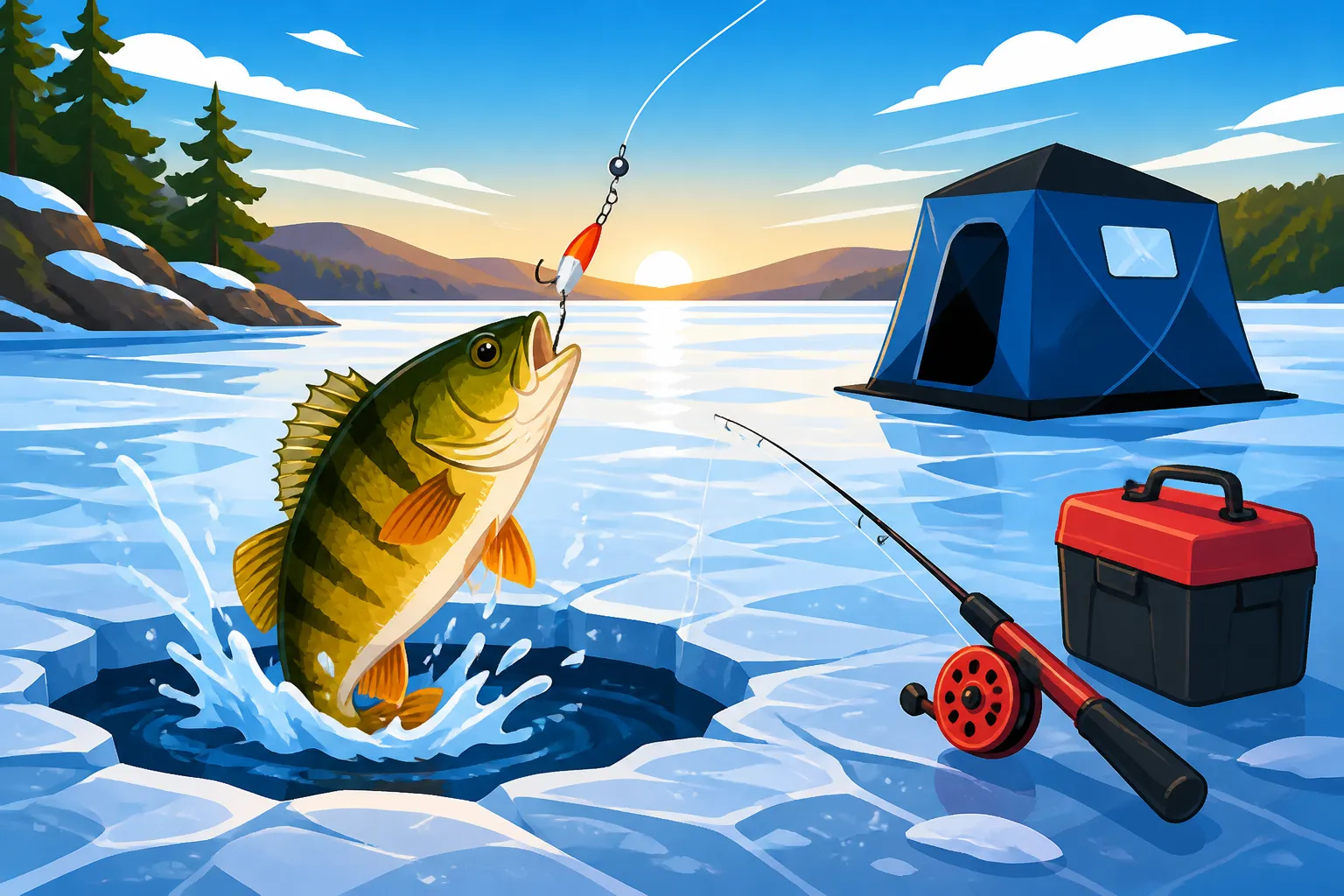
Yellow Perch: A staple of ice fishing, yellow perch are abundant in Greenwood Lake and are fantastic table fare. They are often found in schools, so once you find one, you're likely to find more. Perch tend to prefer areas with softer bottoms, weed beds (especially dying ones that still hold insect larvae), or along the edges of drop-offs in moderate depths. They are generally active throughout the day.
Chain Pickerel: These aggressive predators are always a fun catch on the ice. They are ambush predators and will lurk in weed beds, around submerged brush, or along the edges of shallow coves. Pickerel are not particularly picky and will strike at a variety of baits. They are usually found in shallower waters than walleye.
Largemouth Bass: While perhaps not the primary target for ice anglers, largemouth bass are present and can be caught, especially in shallower, weedy coves. They become much less active in cold water, often "wintering" in deeper holes adjacent to weed lines or structure. A slow presentation is key for these cold-blooded fish. For more on the lake's general fish species, check out the Greenwood Lake Fishing Guide.
Crappie: Both black and white crappie inhabit Greenwood Lake, often schooling around submerged timber, docks, or brush piles in moderate depths. They can be elusive but, once located, provide fast action. Crappie are light biters in cold water, so sensitive gear is a must. Many anglers love to target them, and New Jersey Crappie Fishing Guide might offer further tips applicable to Greenwood Lake.
Recommended Baits and Lures for Hardwater Action
Choosing the right bait and presentation is crucial when fish activity levels are lower due to cold water.
Live Minnows: These are often the undisputed champions for ice fishing, especially for species like walleye, perch, and pickerel.
- Tip-Ups: Many anglers use tip-ups rigged with small to medium-sized live minnows (like shiners or fatheads). The minnow's natural movement is often all it takes to entice a strike from a cautious fish. Set your minnow just above the bottom or suspended at mid-depth, depending on the target species.
- Jigging: Small minnows can also be hooked through the back just behind the dorsal fin and jigged slowly, mimicking a wounded baitfish.
Jigging Lures:
- Small Spoons (e.g., Swedish Pimple, Kastmaster): These are excellent for perch, crappie, and even walleye. Tip them with a small piece of bait (a maggot, wax worm, or a tiny minnow head) to add scent and appeal. The flash and flutter on the drop can trigger strikes.
- Soft Plastics: Tiny soft plastics on jig heads (e.g., tube jigs, small grubs) can be deadly for panfish and even bass. Experiment with colors, but natural hues or bright "glow" patterns often work well.
- Hardwater Jigs (e.g., Tear Drop Jigs, Fiska Jigs): These small jigs are perfect for panfish. Again, tipping them with live bait like a wax worm or a few maggots significantly increases their effectiveness.
Scent is Key: In cold water, fish rely heavily on their sense of smell. Don't be shy about adding scent attractants to your lures or using scented baits. Sometimes just a tiny bit of scent can make all the difference for a sluggish fish.
Strategic Fishing Locations on Greenwood Lake's Ice
Finding fish under the ice is often about understanding structure and depth, combined with local knowledge.
Shallow Coves and Bays: These are often the first areas to freeze safely and can hold good numbers of panfish (perch, crappie) and pickerel, especially if they have residual weed beds or submerged brush. Examples might include the various smaller coves along the New Jersey shoreline, or inlets where water is calmer.
Weed Lines: Even dormant or dying weed beds can hold concentrations of baitfish and, consequently, predator species. Fish the edges of these weed beds, particularly where they meet deeper water. The transition zone is often key.
Drop-Offs and Contours: Walleye, in particular, love drop-offs. Look for areas where the depth rapidly changes from, say, 15 feet to 30 feet. Fish the shelf just before the drop or right at the break line. Contour maps (which you can find online or at local bait shops) are invaluable for identifying these spots.
Underwater Humps and Structure: Any isolated structure on the lake bottom, such as rock piles, submerged timber, or humps, will attract fish. These act as ambush points and cover. Modern fish finders (flashers or graph units) are incredibly helpful for identifying these hidden gems under the ice.
Public Access Points: While less about "strategic" fishing, knowing accessible spots is important. Areas around public boat launches or parks often have designated parking and access to reasonably safe ice (once conditions allow). Always check for specific local regulations or signs regarding ice fishing access, as these can vary. When planning a trip, remember that guides found through services like FishingBooker will already know the best and safest access points, taking the guesswork out of your hands.
Safety First: Staying Safe While Ice Fishing Greenwood Lake
No amount of fish is worth risking your life. Ice fishing on Greenwood Lake, or any body of water, demands respect for the environment and an unwavering commitment to safety.
Essential Safety Gear for Every Ice Angler
Even on what appears to be perfectly safe ice, conditions can change rapidly, and accidents can happen. Being prepared is not optional; it's mandatory.
Ice Picks: These are small, sharp metal spikes connected by a cord that you wear around your neck or in an easily accessible pocket. If you fall through the ice, you use the picks to gain traction on the slick edge of the hole, pulling yourself out. They are simple, inexpensive, and literally life-saving. Never go on the ice without them.
Flotation Suit or PFD (Personal Flotation Device): A specialized flotation suit (often called an "ice fishing suit") provides warmth, waterproofing, and built-in buoyancy, significantly increasing your survival time and chances of self-rescue if you go through the ice. At a minimum, wear a life vest or PFD over your outer layers. While perhaps less comfortable than a dedicated suit, it's far better than nothing.
Rope: Carry at least 50 feet of sturdy rope (nylon or polypropylene, which floats). This can be used to throw to a struggling friend who has fallen through, allowing them to pull themselves to safety without you having to get too close to the dangerous edge. A small throw bag designed for water rescue is ideal.
First-Aid Kit: A basic first-aid kit, kept dry in a waterproof bag, is essential for treating minor cuts, scrapes, or other injuries that can occur in a cold, exposed environment. Include hand warmers.
Mobile Phone (in a waterproof case): Keep your phone fully charged and protected from water and cold. It's your lifeline to emergency services if something goes wrong. Extreme cold can drain batteries quickly, so consider a portable power bank.
Other Essentials: A headlamp or flashlight (even during the day), a whistle to signal for help, and extra layers of dry clothing are also highly recommended. Hypothermia is a serious risk if you get wet in freezing temperatures.
The Buddy System and Communicating Your Plans
Perhaps the easiest and most effective safety measure for ice fishing is to simply not go alone.
Never Go Alone: Always fish with a buddy. If one person falls through or gets into trouble, the other can provide immediate assistance, throw a rope, or call for help. Two sets of eyes are better than one for spotting dangerous conditions.
Tell Someone Your Plans: Before you leave home, inform a trusted friend or family member exactly where you're going on Greenwood Lake, your planned route, and when you expect to return. Give them a description of your vehicle. If you don't check in by a certain time, they should know to call for help. This simple step can drastically reduce the time it takes for rescuers to find you if an emergency occurs. Many seasoned anglers consider this just as important as carrying ice picks.
Understanding and Adhering to New Jersey Ice Fishing Regulations
Beyond ice safety, it’s critical to understand and follow the specific rules set by the state of New Jersey for fishing, especially on a dual-state lake like Greenwood.
New Jersey Fishing License Requirements: If you are 16 years of age or older, you need a valid New Jersey Fishing License Guide for 2026 to fish any freshwater in the state, including Greenwood Lake on the New Jersey side. This applies to ice fishing as well. Remember that residency rules apply, and costs differ for residents and non-residents. Make sure you understand New Jersey Resident Fishing License Requirements or New Jersey Nonresident Annual Fishing License Requirements if you're not a local.
New Jersey Freshwater Fishing Regulations: Be familiar with the general New Jersey Freshwater Fishing Regulations Every Angler Should Know. These cover things like daily bag limits, minimum size limits, and tackle restrictions for species like walleye, bass, and pickerel. Regulations can change, so it's always wise to check the current New Jersey Fish and Wildlife Digest before your trip.
Ice Fishing Specific Rules: New Jersey does have specific regulations for ice fishing. For instance, there are limits on the number of devices (rods or tip-ups) an angler can use at once. Typically, you are allowed up to five devices. Also, know the rules for unattended lines. Your name and customer ID number must be legible on any device left unattended. A highly specific rule, and crucial for your day on the ice, relates to New Jersey Ice Fishing License Rules.
Greenwood Lake's Unique Situation: Since Greenwood Lake is shared with New York, specific reciprocal agreements might apply, but generally, if you're fishing on the New Jersey side, you need a New Jersey license and must follow New Jersey's rules. If you venture into New York waters, you'll need a New York fishing license and must adhere to their regulations. Always carry your license and be prepared for potential checks by conservation police officers. Ignorance of the law is never an excuse.
By prioritizing safety, using common sense, and respecting the regulations, your ice fishing adventures on Greenwood Lake can be incredibly rewarding and, most importantly, safe.
Disclaimer
The information provided in this guide is for general informational purposes only and does not constitute professional advice. Ice conditions are highly variable and can change rapidly. Always exercise extreme caution, use appropriate safety gear, and personally verify ice thickness and safety before venturing onto any frozen body of water. Relying solely on past reports or general guidelines can be dangerous. The author and publisher are not responsible for any accidents, injuries, or losses incurred while ice fishing. Stay safe on the ice!