New Jersey Nonresident Annual Fishing License Requirements
Planning a fishing trip to the beautiful waters of New Jersey from out of state can be incredibly exciting, but the licensing rules for nonresidents can often feel like a tangled line, creating more questions than answers. It's easy to get confused about what you need, especially when comparing annual options to shorter-term permits. This comprehensive guide is designed to untangle all the complexities of obtaining your New Jersey nonresident annual fishing license, ensuring your trip is smooth sailing and regulation-compliant, whether you're casting lines in freshwater lakes or along the vast coastline.
Why a Nonresident Annual License is Essential
As an out-of-state angler, it's not always obvious why you need to jump through hoops to fish in a state that isn't your primary residence. But New Jersey's fishing license system isn't just about collecting fees; it's a vital part of maintaining the incredible fishing opportunities the state offers. Ignoring this requirement can lead to unpleasant surprises, jeopardizing your trip and potentially leading to fines.
Funding Critical Conservation Efforts
Every dollar collected from fishing license sales, including those purchased by nonresidents, is earmarked for the New Jersey Division of Fish and Wildlife. This money directly supports a wide array of programs that benefit everyone who enjoys New Jersey's aquatic environments. Think about it: the state actively manages fish populations, stocks trout and other species in various waterways, conducts scientific research to understand ecological health, and maintains public access points like boat ramps and fishing piers. Without these funds, the quality and accessibility of New Jersey's fishing spots would quickly decline. Your annual nonresident license isn't just a permit; it's a direct contribution to keeping New Jersey's fisheries thriving for generations to come. It’s a way for all of us, residents and visitors alike, to pitch in and ensure we continue to have healthy fish to catch.
Ensuring Fair Resource Management
New Jersey's fish populations, both freshwater and saltwater, are a shared natural resource. Whether you're targeting largemouth bass in Lake Hopatcong or striped bass along the coast, these fish don't recognize state lines or residency status. The licensing system helps the state manage the overall fishing pressure on these populations. By requiring everyone who fishes to purchase a license, the Division of Fish and Wildlife can better estimate the total number of anglers and, by extension, the collective impact on fish stocks. This data is crucial for setting sustainable bag limits, size restrictions, and season dates that protect vulnerable species while allowing for recreational enjoyment. It ensures that the state can maintain a balance, so there are enough fish for everyone to enjoy catching, now and in the future.
Legal Obligation and Avoiding Penalties
Let's be frank: fishing without the proper license is illegal, plain and simple. New Jersey Conservation Police Officers routinely patrol waterways, conduct checks at boat ramps, and even approach anglers fishing from shore or kayaks. They are highly trained professionals who know the regulations inside and out, and they take their job seriously. If you're caught fishing without a valid New Jersey nonresident annual fishing license, you could face significant penalties. These aren't just minor slaps on the wrist; fines can be substantial, often ranging from several hundred dollars, and in some cases, you might even have your fishing gear confiscated. Beyond the monetary cost, it can certainly put a damper on your vacation or planned fishing excursion. Trust me, paying for the license upfront is a far less stressful and less expensive option than dealing with the legal repercussions later. It's always best to be prepared and understand the Penalties for Fishing Without a License in New Jersey before you even cast your first line.
Defining "Nonresident" for Fishing Licenses in New Jersey
This might seem like a no-brainer, but what exactly does "nonresident" mean in the eyes of the New Jersey Division of Fish and Wildlife when it comes to fishing licenses? It's not always as straightforward as having an out-of-state driver's license, especially for those with complex living situations or ties to the Garden State. Getting this definition wrong can lead to purchasing the wrong type of license, which is just as problematic as not having one at all.
What Constitutes New Jersey Residency
For fishing license purposes, New Jersey generally defines a resident as someone who has maintained their domicile within the state for a continuous period of at least six months immediately preceding the application for a license. Your domicile is essentially your permanent home, the place where you intend to return whenever you're away. This means that simply owning property in New Jersey or spending summers here doesn't automatically qualify you for a resident license if your primary, permanent home is elsewhere.
Factors that typically prove New Jersey residency include:
- Voter Registration: Being registered to vote in a New Jersey municipality.
- Driver's License: Holding a valid New Jersey driver's license.
- Vehicle Registration: Having your vehicles registered in New Jersey.
- Income Tax Filings: Filing New Jersey state income tax as a resident.
- Property Ownership/Lease: Having a primary residence (owned or rented) where you reside for the majority of the year.
If you cannot provide sufficient documentation for these, or if your primary domicile is clearly outside the state, you will be classified as a nonresident. It's always a good idea to check the specific What Documents Prove New Jersey Residency for a Fishing License if you're unsure, as requirements can sometimes be quite detailed.
Special Cases: Students, Military, and Property Owners
Life isn't always neat and tidy, and residency rules try to account for some of these complexities.
- College Students: If you're an out-of-state college student attending a New Jersey institution, you might still be considered a nonresident for fishing license purposes, even if you live here for most of the academic year. Your "permanent domicile" usually remains your home state. However, it's worth checking with the Division of Fish and Wildlife if you have established significant ties, as some situations might vary. Generally, a nonresident college student will still need a nonresident license.
- Military Personnel: Active-duty military personnel permanently stationed in New Jersey are typically considered residents for licensing purposes, even if their home of record is another state. This is a common courtesy extended to those serving our country. However, you'll need to provide proof of your active-duty status and permanent stationing within New Jersey. Conversely, if you're a New Jersey resident serving elsewhere, you usually maintain your resident status.
- Property Owners: Owning a second home or vacation property in New Jersey does not, in itself, grant you resident fishing license status. Your primary domicile must be in New Jersey for at least six continuous months to qualify. Many out-of-state property owners happily purchase nonresident licenses, understanding they are contributing to the very resources that draw them to their New Jersey properties. It's a common scenario for those who frequent the Jersey Shore with a summer home, for example.
Types of Nonresident Licenses Available
New Jersey understands that not every angler visiting the state needs a full year of fishing access. While this guide focuses on the annual option, it's helpful to know what else is out there, as sometimes a shorter-term license might fit your trip better. However, for those planning multiple visits or extended stays, the annual license is usually the most economical and hassle-free choice.
The Annual Option: Deep Dive into Benefits and Cost
The New Jersey nonresident annual fishing license is exactly what it sounds like: a permit that allows you to fish in New Jersey's freshwaters for a full calendar year. This license is valid from the date of purchase through December 31st of the same year, meaning if you buy it in July, it still expires on December 31st. This is an important distinction to remember, as it's not a 365-day license from the purchase date.
Benefits of the Annual License:
- Cost-Effective: If you plan on fishing for more than a few days throughout the year, the annual license almost always works out to be cheaper than purchasing multiple short-term licenses. For example, if you visit for a week in the spring and another in the fall, two 7-day licenses could exceed the cost of one annual.
- Convenience: Once you have it, you don't have to worry about buying another license every time you cross the border. Just make sure to carry your proof of license, which you can keep on your phone or a printed copy in your tackle box.
- Full Access: It provides unrestricted access to New Jersey's freshwater fishing opportunities for the entire year, allowing you to experience different seasons and target various species.
- Support for Fisheries: As mentioned, your purchase directly contributes to the conservation and management of New Jersey's fish and wildlife resources.
Cost Considerations:
The cost of a New Jersey nonresident annual fishing license can vary slightly from year to year, so it's crucial to check the most current fees directly on the New Jersey Division of Fish and Wildlife website or through a licensed vendor. As of the most recent information, the fee for a nonresident annual freshwater fishing license is typically around $49.50. This fee does not include a trout stamp, which is a separate requirement if you plan to fish for or possess trout. The New Jersey Trout Stamp Cost for Residents and Nonresidents is an additional, separate purchase.
Comparing Annual to Short-Term Licenses
For nonresidents, New Jersey also offers short-term fishing licenses that might be suitable for brief trips. These include the 7-day vacation license and, sometimes, a 2-day option.
| License Type | Duration | Typical Nonresident Cost | Best For |
|---|---|---|---|
| Annual Freshwater | Calendar Year | ~$49.50 | Frequent visitors, extended stays, multiple trips throughout the year |
| 7-Day Vacation Freshwater | 7 consecutive days | ~$34.50 | Single, week-long fishing trips, casual anglers visiting once |
| 2-Day Vacation Freshwater | 2 consecutive days | ~$19.50 | Weekend trips, very short visits |
(Note: Prices are approximate and subject to change. Always verify current fees with the NJ Division of Fish and Wildlife.)
As you can see, if you plan to fish for more than a few days over the course of the year, the annual license quickly becomes the better value. For instance, if you come down for two separate three-day weekends, the cost of two 2-day licenses ($39) is already very close to the annual, making the annual a no-brainer for any additional fishing. The New Jersey 7-Day Vacation Fishing License Explained and New Jersey 2-Day Vacation Fishing License Explained articles can provide more detailed information if you're leaning towards a shorter-term option.
Additional Stamps and Registries
Purchasing your nonresident annual freshwater fishing license is a critical first step, but it's not always the only step. Depending on what and where you plan to fish, you might need additional permits or registrations.
- Trout Stamp: If your plans include targeting trout in any of New Jersey's freshwater streams, rivers, or lakes, you absolutely need a trout stamp in addition to your basic freshwater fishing license. This applies whether you're fly fishing the Musconetcong River or bait fishing a stocked lake. The trout stamp helps fund the state's extensive trout stocking program, which provides incredible opportunities for anglers. You can purchase this concurrently with your annual license. Check out New Jersey Trout Stamp Requirements Explained for all the specifics.
- Saltwater Registry: This is a huge point of confusion for many anglers. If you plan to fish in any saltwater body in New Jersey—this includes the ocean, bays like Barnegat Bay or Raritan Bay, tidal rivers up to the salt line, and even fishing from piers or jetties—you do not need a New Jersey freshwater fishing license. Instead, you need to register with the New Jersey Saltwater Recreational Registry Program. Crucially, this registry is free for all anglers, residents and nonresidents alike. However, it is a separate requirement from the freshwater license. Many anglers mistakenly believe their freshwater license covers all types of fishing, but that's not the case. If you intend to fish both freshwater and saltwater, you'll need your freshwater license (plus a trout stamp if applicable) AND you must register with the saltwater program. This topic is covered in much more detail in the New Jersey Saltwater Registry Explained article. It’s essential to understand the difference between Freshwater vs Saltwater Fishing Rules in New Jersey.
How to Obtain Your Nonresident Annual License
Getting your New Jersey nonresident annual fishing license is a straightforward process, thanks to modern technology. You have a few convenient options, whether you prefer to do things from the comfort of your home or visit a local retailer upon arrival. Knowing the steps in advance can save you valuable fishing time.
Online Purchase Process
This is, by far, the easiest and most recommended method for most nonresidents. The New Jersey Division of Fish and Wildlife operates a user-friendly online licensing system that is accessible 24/7.
Here’s a step-by-step breakdown:
- Visit the Official Website: Navigate to the New Jersey Division of Fish and Wildlife's official licensing portal. Be sure you're on the official state site to avoid scams.
- Create an Account (if new): If you've never purchased a New Jersey fishing or hunting license before, you'll need to create a customer profile. This involves providing personal information such as your name, address, date of birth, and usually, a valid form of identification like your driver's license number from your home state.
- Select License Type: Once logged in, you'll see a menu of available licenses. Choose the "Nonresident Annual Freshwater Fishing License." If you plan to fish for trout, remember to also add the "Trout Stamp."
- Review and Pay: Double-check your selections and personal information. The system will calculate the total cost, including any transaction fees. You'll typically use a credit or debit card for payment.
- Print or Save: After successful payment, you'll receive a confirmation and a link to download or print your license immediately. Make sure to do this! You'll want to have a physical copy or a digital image on your phone to present to a Conservation Police Officer if requested. You can even find waterproof cases on Amazon to keep your printed license safe while you’re out on the water.
This online method is quick, efficient, and ensures you have your license in hand before you even leave your home state.
In-Person Retailers
For those who prefer a more traditional approach or find themselves in New Jersey without a license and need one quickly, you can purchase a nonresident annual fishing license at various authorized retail agents throughout the state.
These agents typically include:
- Sporting Goods Stores: Larger chains like Dick's Sporting Goods or smaller, independent tackle shops.
- Bait and Tackle Shops: Often the best source for local advice and up-to-date information on fishing conditions, along with your license.
- Walmart Locations: Many Walmart stores with a sporting goods department are licensed vendors.
- Select County Clerk Offices: Although less common for fishing licenses than hunting, some county offices may offer this service.
When purchasing in person, be sure to bring:
- Valid Photo ID: Your driver's license from your home state is usually sufficient.
- Method of Payment: Cash or credit/debit card.
The vendor will enter your information into the state's licensing system and print your license on the spot. This can be a great option if you need to ask local questions or pick up some last-minute bait or tackle. The state provides a convenient online tool to find Retailers That Sell New Jersey Fishing Licenses, Including Walmart near your destination.
Digital vs. Physical Proof of License
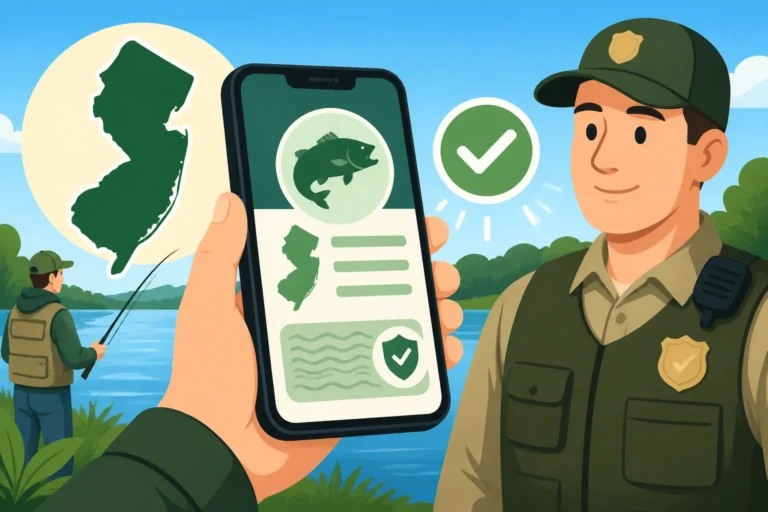
In today's digital age, carrying a physical paper copy of your fishing license might feel a bit old-fashioned. Good news: New Jersey generally allows anglers to carry either a printed copy or a digital image of their valid license on a mobile device, such as a smartphone.
However, there are a few important caveats:
- Readability: Your digital license must be clearly legible on your device. Ensure your screen is bright enough, and the image isn't blurry or tiny.
- Accessibility: You must be able to retrieve and display it quickly. Don't rely on being able to access it in an area with no cell service, or on a phone with a dead battery. It’s a good idea to download the image directly to your phone’s photo gallery, rather than relying on an email attachment.
- Physical Backup: While a digital copy is generally acceptable, having a laminated physical copy tucked away in your tackle box or wallet is a fantastic backup. Technology can fail, and a physical license never needs charging. Many anglers purchase a small waterproof document holder, often found on Amazon, for this very reason.
The most important thing is that you have proof of your valid license on your person whenever you are engaged in fishing activities. The Conservation Police want to see that you've complied with the law, and being able to show that easily makes their job, and your experience, much smoother. More detailed information can be found in the guide on Carrying Proof of Your New Jersey Fishing License.
Crucial Regulations Beyond the License
Simply having your nonresident annual fishing license (and any required stamps or registries) is a fantastic start, but it's only one piece of the puzzle. New Jersey has a comprehensive set of regulations designed to protect its fisheries and ensure fair angling for everyone. As a nonresident, it's your responsibility to be aware of and adhere to these rules, just like a local angler would.
Saltwater Registry for Coastal Anglers
Let's reiterate this because it's a common point of confusion: if you're fishing in New Jersey's saltwater, whether it's the Atlantic Ocean, Delaware Bay, Barnegat Bay, or any other tidal estuary, you do not need a freshwater fishing license. Instead, you must register with the New Jersey Saltwater Recreational Registry Program. The good news? This registry is absolutely free for everyone, residents and nonresidents alike.
- Why it's Separate: The saltwater registry is primarily for data collection, helping the National Marine Fisheries Service (NMFS) and state agencies estimate the number of saltwater anglers and their catch. This data is vital for federal fisheries management.
- How to Register: You can easily register online through the New Jersey Division of Fish and Wildlife website. It takes just a few minutes. You'll provide basic information, and once completed, you're all set.
- Proof: Similar to a freshwater license, you should carry proof of your registration, whether it's a printed confirmation or a digital image on your phone.
- Charter Boat Anglers: If you're fishing on a licensed New Jersey charter or party boat, the vessel's federal permit generally covers its passengers, so you typically don't need to register individually. However, always confirm with your captain beforehand, as rules can occasionally change or vary.
The main takeaway here is: freshwater fishing requires a license and potentially a trout stamp. Saltwater fishing requires a free registration. They are entirely separate.
Bag and Size Limits for Nonresidents
Once you've got your license and, if applicable, your saltwater registry, the next crucial step is understanding the specific rules for the fish you're targeting. New Jersey imposes strict bag limits (how many fish you can keep) and size limits (the minimum or maximum length a fish must be to be kept) for nearly all recreational species. These limits apply equally to residents and nonresidents. There are no special allowances or stricter rules for out-of-state anglers.
- Species-Specific Rules: These limits vary significantly by species, body of water, and even time of year. For example, the New Jersey Striped Bass Slot Limit Explained is a specific length range, not just a minimum. Fluke (summer flounder) also have particular size and bag limits, which can even differ slightly depending on where you're fishing, such as Delaware Bay Fluke Rules vs the Rest of New Jersey.
- Checking the Digest: The absolute best resource for up-to-date bag and size limits is the current New Jersey Fish and Wildlife Digest. This publication is available online on the Division's website and often in print at license vendors. It's your fishing bible for the season.
- Measuring Fish: Always carry a reliable measuring device. If a fish is undersized, it must be released immediately and carefully. Handling guidelines are often provided for species like striped bass to ensure their survival upon release.
Always check the current regulations before you head out. Ignorance of the law is not an excuse, and Conservation Police don't make exceptions, regardless of where you call home.
Fishing Season Dates and Closures
Just as important as bag and size limits are the season dates. Many popular fish species in New Jersey have specific open and closed seasons. This is especially true for freshwater species like trout and certain saltwater species.
- Trout Season: New Jersey has a defined trout season, with specific opening days for spring and fall stocking, and sometimes a pre-season closure period where certain waters are closed to fishing to allow for stocking without angler interference. If you plan to fish for trout, you need to know When Does New Jersey Trout Season Open in 2026 and understand New Jersey Trout Season Preseason Closure Explained.
- Marine Species: Saltwater species also have seasons. Black sea bass, tautog, and even fluke have specific windows when they can be harvested. These dates are set through a combination of state and federal regulations, often changing year to year based on stock assessments.
- Checking Before You Go: Before any fishing trip, it's wise to consult the latest Fish and Wildlife Digest or the Division's website. Regulations can, and do, change. What was legal last year might not be this year. Staying informed prevents accidental violations and ensures you're fishing ethically and legally. Remember, the goal is conservation, so respecting these closures is paramount for maintaining healthy fish populations.
Common Misconceptions and Troubleshooting
Even with all the information at hand, anglers, especially nonresidents, often encounter lingering questions or common misunderstandings about New Jersey's fishing license requirements and regulations. Let's clear up some of these points to ensure your fishing experience is as smooth as possible.
Reciprocity with Neighboring States
A very common question for nonresidents, especially those living near state borders, is whether their home state's fishing license is valid in New Jersey waters, or vice-versa. The simple answer, in most cases, is no. Generally, a New Jersey fishing license is only valid for New Jersey waters, and a Pennsylvania or New York license is only valid for their respective state's waters.
However, there are some specific exceptions, primarily regarding shared border waters:
- Delaware River (Pennsylvania Border): This is one of the most frequently asked-about areas. Anglers fishing the non-tidal portions of the Delaware River (upstream of the I-95 bridge at Trenton) can typically fish with either a valid New Jersey or Pennsylvania freshwater fishing license. This is a special reciprocal agreement to simplify fishing on a shared waterway. However, it's crucial to confirm the specific boundaries and rules, as some tributaries or specific stretches might still require the license for the state you're physically in. The article on Do You Need Two Licenses to Fish the Delaware River Between New Jersey and Pennsylvania dives deeper into this specific situation.
- Delaware Bay: For saltwater fishing in Delaware Bay, if you are registered with the New Jersey Saltwater Registry, you are covered for New Jersey's portion. However, Delaware has its own fishing license and registration requirements. There are no broad reciprocity agreements for saltwater licenses with neighboring states.
- Other Border Waters: For other border waters, like Greenwood Lake (shared with New York), specific reciprocal agreements often exist. Always verify these directly with the New Jersey Division of Fish and Wildlife or the appropriate agency in the neighboring state. Don't assume.
Unless there is a very specific and published reciprocal agreement for a particular body of water, you will need a New Jersey license (or registry) to fish in New Jersey waters.
What if You Lose Your License?
It happens to the best of us. You're out on the water, you reach for your wallet, and your fishing license is nowhere to be found. Panic sets in. Don't worry, it's not the end of your fishing trip.
- Online Reprint: If you purchased your license online, the easiest solution is to log back into your customer profile on the New Jersey Division of Fish and Wildlife's licensing portal. You should be able to access your purchase history and reprint your license. Many anglers keep a PDF copy of their license stored in cloud storage or their email, making it easy to access from any device.
- Retailer Reprint: If you purchased your license at a local vendor, you might be able to return to that same vendor or another authorized agent and request a reprint. They can usually look up your information in the state system. There might be a small fee for a reprint.
- Digital Backup: This is where having that digital image on your phone (downloaded, not just in an email) really pays off. If your physical copy is lost, your phone can serve as immediate proof. However, ensure your phone is charged and accessible.
The key is to rectify the situation as quickly as possible. Fishing without proof of a valid license, even if you technically bought one, can still lead to issues with Conservation Police. Having that backup, whether digital or another physical copy, is a smart move.
Avoiding Penalties and Conservation Police Interactions
No one wants their fishing trip interrupted by a Conservation Police Officer, but these interactions are part of responsible angling. Knowing how to handle them and what to expect can make a big difference.
- Know the Rules: This cannot be stressed enough. The best way to avoid penalties is to thoroughly understand the New Jersey Freshwater Fishing Regulations Every Angler Should Know and all relevant bag, size, and season limits for the species you are targeting. Read the Digest. Check the website. The more informed you are, the less likely you are to make a mistake.
- Always Carry Your License (or Proof): We've covered this extensively, but it's paramount. If an officer asks to see your license and you can't produce it, you're immediately starting off on the wrong foot. Keep it in a safe, accessible, and preferably waterproof spot. You can even find specific pouches on Amazon designed to hold and protect licenses and other small documents for outdoor activities.
- Be Polite and Cooperative: Conservation Police Officers are doing their job. If they approach you, be respectful, answer their questions truthfully, and comply with their requests (like showing your license, measuring your fish, or opening your cooler). A cooperative attitude goes a long way. Aggression or evasiveness will only escalate the situation.
- Report Violations: If you witness a fishing violation (e.g., someone keeping undersized fish, exceeding bag limits, or fishing illegally), it's your civic duty as an angler to report it. You can contact the New Jersey Division of Fish and Wildlife Law Enforcement directly. This helps protect the resources we all value.
Ultimately, your nonresident annual fishing license is more than just a piece of paper; it's your ticket to enjoying the diverse and abundant fishing opportunities New Jersey has to offer. By understanding the requirements, staying informed on regulations, and practicing responsible angling, you'll ensure many memorable trips to the Garden State's waters.
Disclaimer
The information provided in this guide is intended for general informational purposes only and may not reflect the most current regulations. Fishing rules, license costs, and season dates are subject to change at any time by the New Jersey Division of Fish and Wildlife. It is the angler's responsibility to consult the official New Jersey Fish and Wildlife Digest or visit the New Jersey Division of Fish and Wildlife's website for the most up-to-date and accurate information before engaging in any fishing activity.