Best Lure Color for Bluefish
It's a question every angler has pondered, staring at a tackle box filled with dozens of lures: "What's the best color to catch a bluefish today?" It can feel like a guessing game, especially when you're out on the water, the sun is blazing or the clouds are thick, and the fish just aren't cooperating. You've heard all the old adages – "match the hatch," "bright colors for murky water" – but applying it to those toothy, aggressive bluefish in New Jersey can still leave you scratching your head. This guide is here to cut through the confusion, helping you understand the real science and practical application behind choosing the best lure color for bluefish, no matter what the Jersey Shore throws at you.
Why Bluefish Are Less Picky Than Other Species
Let's be honest, bluefish aren't known for their subtlety. Unlike a wary striped bass or a finicky trout, a bluefish's primary mode of operation is pure, unadulterated aggression. They are the bullies of the ocean, often charging into schools of baitfish, chopping them to pieces in a feeding frenzy known as a "Bluefish Blitzes Along the Jersey Shore." This aggressive nature is actually a blessing when it comes to lure selection because it means they're often less discerning about color than other species.
Their voracious appetite and opportunistic feeding habits mean that if something moves fast and looks remotely like food – or even just looks annoying – they'll often smash it. This isn't to say color is irrelevant, but it's usually secondary to the action and retrieve of your lure. You'll find that a fast retrieve, an erratic jerk, or a strong surface commotion will often trigger a strike even if the color isn't "perfect." However, understanding which colors tend to elicit the most consistent strikes can certainly give you an edge, turning a slow day into a productive one.
The "Natural" Versus "Attractor" Color Debate
When it comes to lure colors for bluefish, anglers often fall into two camps: those who swear by "natural" colors that mimic baitfish, and those who prefer "attractor" colors designed to grab attention. Both have their place in a bluefish angler's arsenal, and knowing when to deploy each is key.
Natural colors are those that closely resemble the baitfish commonly found in New Jersey waters, such as bunker (Atlantic menhaden), spearing, sand eels, or juvenile herring. These typically include various shades of silver, white, green, and occasionally brown or olive. The idea here is simple: if the bluefish are actively feeding on a particular bait, presenting a lure that looks identical is often your best bet. This is especially true when the fish are "keyed in" on a specific forage, perhaps during a mass migration or when large schools of bait are present. When bluefish are gorging themselves on a plentiful food source, they tend to be less interested in something that looks out of place.
On the other hand, attractor colors are those bright, often unnatural hues designed to stand out. Think chartreuse, fluorescent orange, vibrant pink, or even bright red. These colors are particularly effective in conditions where visibility is low, such as murky water, overcast days, or during dawn and dusk. The goal of an attractor color isn't necessarily to fool the bluefish into thinking it's a specific baitfish, but rather to make it impossible to ignore. Bluefish, being highly visual predators with excellent eyesight, will often strike these bright lures out of pure reaction or aggression, even if they aren't actively hunting for food. It's about triggering that predatory instinct, rather than a perfect mimicry.
Top Lure Colors for Bluefish in New Jersey Waters
When you're out there, whether you're surf fishing along Island Beach State Park or casting from a boat in Raritan Bay, having a few go-to colors can make all the difference. Here are the tried-and-true winners for bluefish in New Jersey.
Classic Silver and White – Mimicking Baitfish
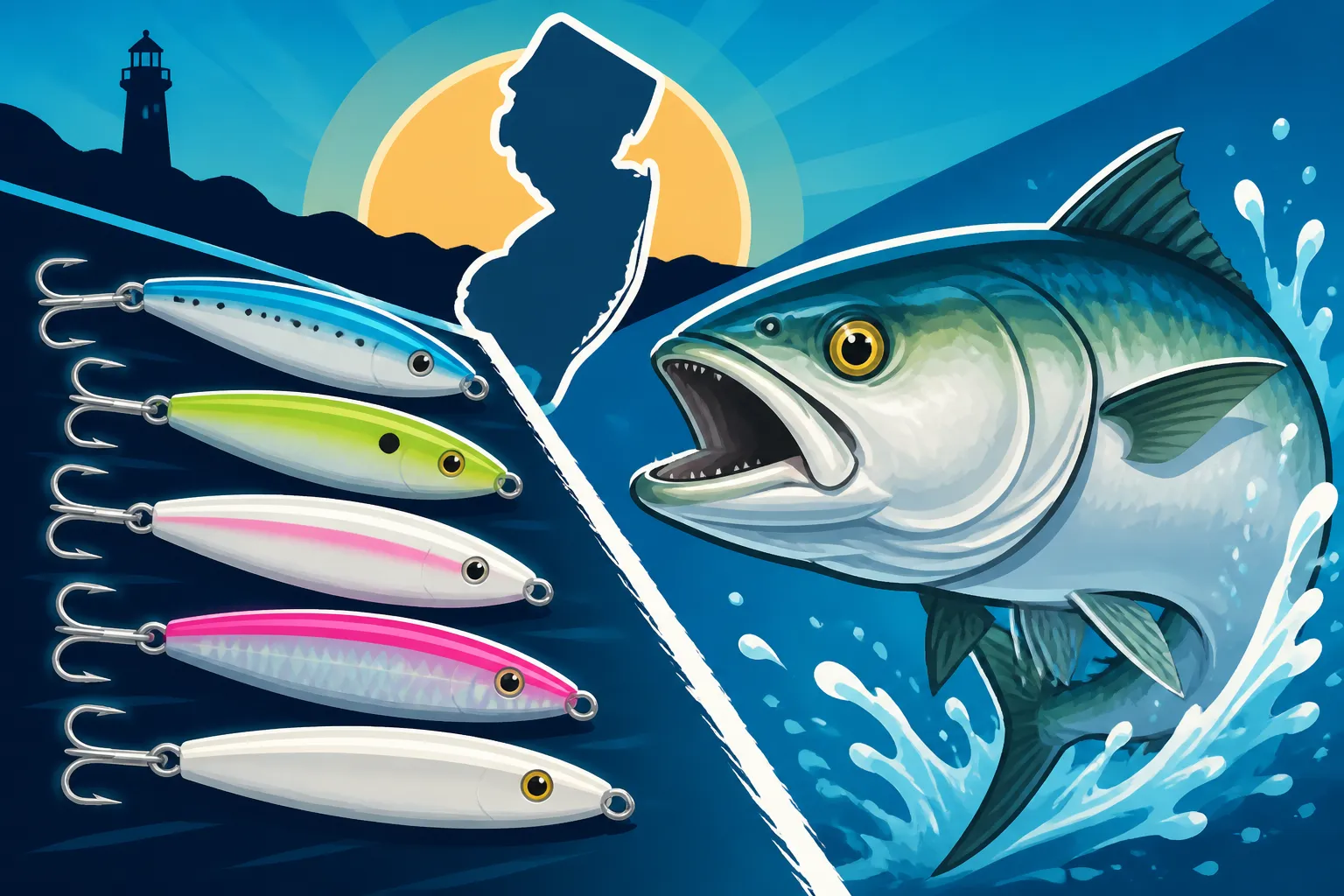
If there's one color combination that should be in every bluefish angler's tackle box, it's silver and white. This is the universal bluefish slayer. Why? Because it perfectly mimics the flash and shimmer of countless baitfish that bluefish gorge on: spearing, juvenile bunker, mullet, and various other silversides. When sunlight hits a silver or white lure, it creates a flash that is incredibly enticing to a bluefish, making it look like a distressed or fleeing baitfish.
These colors are exceptionally effective in clear to moderately clear water, especially on sunny days. The natural light penetration allows the silver and white to truly shine, replicating the reflective scales of real baitfish. Metal jigs like a classic Kastmaster or a Hopkins spoon in silver are absolute staples for surf anglers and boaters alike. For surface action, a white or chrome pencil popper can be deadly during a "Bluefish Blitzes Along the Jersey Shore" as it churns and sprays water, mimicking fleeing bait. Even soft plastics in white can be fantastic, offering a more subtle, yet equally effective, presentation. You can find a huge variety of these classic lures on platforms like Amazon, ensuring you're always stocked up.
Chartreuse and Bright Green – Visibility is Key
When the water gets a bit cloudy, or the light starts to fade, your natural silver and white lures might not be cutting it. That's when you reach for chartreuse and bright green. These highly visible, vibrant colors are fantastic for standing out in less-than-ideal conditions. Bluefish have excellent eyesight, but in stained or dark water, a lure needs to emit a strong visual signal to get noticed. Chartreuse does exactly that.
Think of it this way: in murky water, a natural silver lure might just disappear, blending into the gloom. But a bright chartreuse lure glows, making it an easy target for a cruising bluefish. These colors are particularly effective during overcast days, at dawn or dusk, or after a good rain has muddied up the nearshore waters or bays. Many anglers swear by soft plastics like Got-Cha plugs or Savage Gear Sand Eels in chartreuse, fished with a quick, erratic retrieve. They also work wonders on bucktails when fishing deeper channels or around structure. The bright hue can often trigger a pure reaction strike, even if the bluefish aren't actively chasing a specific bait. It's almost like a "grab me!" signal that their aggressive nature can't resist.
Blue and Bunker Patterns – Matching the Hatch
Sometimes, especially during the spring and fall migrations, bluefish are absolutely keyed in on bunker (Atlantic menhaden). These oily baitfish are a primary food source, and when they're present in large schools, imitating them closely can be incredibly effective. This is where blue and bunker-patterned lures shine. These patterns often combine shades of blue, green, and silver, sometimes with a touch of black or dark grey on the back, perfectly mimicking the look of a bunker.
You'll find these patterns on various lures, from lipped swimming plugs designed to imitate a fleeing baitfish (like those from Yo-Zuri or Cotton Cordell) to larger soft plastics. When the bluefish are busting on schools of bunker, casting a blue/silver plug into the fray can result in instant hook-ups. This is especially true in areas like Sandy Hook Bay or Barnegat Bay, where bunker congregate in vast numbers. The key here is not just the color, but often the size and profile of the lure. If you're seeing big bunker, use a lure that's similarly sized. Remember, even though bluefish are aggressive, sometimes the best strategy is to present exactly what they're already eating.
Pink and Orange – The Reaction Strike Inducers
While not always mimicking a specific baitfish, pink and orange lures can be surprisingly effective for bluefish, especially when you need to trigger a reaction strike. These fluorescent colors are highly visible and often irritate bluefish into biting out of pure aggression. They work across a range of water clarities and light conditions, making them versatile additions to your tackle box.
Many surf anglers swear by pink or fluorescent orange soft plastics, particularly for jigging or fast retrieves. When fished erratically, these lures can provoke a savage strike from a bluefish that might otherwise ignore more subdued offerings. Consider a pink Slug-Go or a bright orange bucktail when you're casting into a mix of active fish and want to stand out from the crowd. Sometimes, when a school of bluefish is competing heavily for food, a bizarrely colored lure can be the one that gets hit simply because it's different and demands attention. Don't underestimate the power of these vibrant, "unnatural" colors to tap into a bluefish's primal, aggressive instincts.
Here's a quick reference table for common bluefish lure colors and their optimal conditions:
| Lure Color | Primary Bait Mimicked | Best Water Clarity | Best Light Conditions | Why It Works |
|---|---|---|---|---|
| Silver / White | Spearing, Mullet, Bunker | Clear to Moderate | Sunny, Bright | Mimics flash of natural baitfish, high visibility |
| Chartreuse / Bright Green | General Attractor | Murky, Stained | Overcast, Dawn/Dusk | High visibility, stands out, triggers reaction |
| Blue / Bunker Patterned | Bunker, Herring | Moderate to Clear | Sunny, Moderate | "Matches the hatch" when bunker are prevalent |
| Pink / Fluorescent Orange | General Attractor | All (especially murky) | All (especially low light) | Provokes aggression, high contrast, reaction strike |
| Dark Blue / Black | General Attractor | All | Night, Deep Water | Strong silhouette against lighter background |
Factors Influencing Lure Color Choice Beyond Just the Fish
Choosing the best lure color for bluefish isn't just about what they might eat, but also about the environmental conditions and even your presentation. Ignoring these factors can mean the difference between a successful outing and a frustrating one.
Water Clarity and Light Conditions
This is perhaps the most critical factor after the presence of fish themselves. The way light penetrates the water, and how clear that water is, drastically impacts how your lure appears to a bluefish.
- Murky Water: When the water is churned up, muddy from rain, or just naturally stained (common in back bays after heavy tides), bright, high-contrast colors are your best friends. Think chartreuse, fluorescent orange, or even stark white. These colors maintain their visibility even when light penetration is poor, allowing bluefish to spot them from a distance. A dark lure in murky water would simply disappear.
- Clear Water: In crystal clear water, such as you might find on an outgoing tide at a pristine beach or in some cleaner inlets, you want to opt for natural, realistic colors. Silver, white, blue, and green patterns that accurately mimic baitfish will be most effective. The fish have excellent visibility, so a realistic presentation is key. Flashy metallics, like a chrome spoon, work exceptionally well here because they reflect the ample light, creating a lifelike shimmer.
- Sunny Days: Bright sunlight allows for the maximum reflection from metallic lures. Silver, chrome, and pearl white will sparkle and flash, mimicking fleeing baitfish perfectly. Natural patterns also look their best under direct sunlight.
- Overcast/Low Light (Dawn/Dusk): These conditions often call for a transition. At dawn or dusk, or on heavily overcast days, you might find success with brighter attractor colors that provide a strong visual signal. However, also consider lures that create a strong silhouette against the changing sky. Black or dark blue, while seemingly counterintuitive, can be surprisingly effective in low light or at night because they create a sharp, undeniable silhouette against the ambient light from above. This makes them easy for a bluefish to see from below.
Remember to observe the water. If you can only see a few feet down, lean towards brighter options. If you can see the bottom in several feet of water, go natural.
Baitfish Presence and Availability
While bluefish are aggressive, they are also opportunistic predators. If there's a specific baitfish species in abundance, the bluefish will likely be keyed in on it. This is where the concept of "matching the hatch" truly applies.
- Identical Imitation: If you're seeing schools of small, slender spearing flickering in the waves, a thin, silver or white lure will be your best bet. If larger, broader bunker are being annihilated by blues, then a blue/silver or green/silver plug with a wider profile will often outperform anything else. This is where understanding what local baitfish are present during different "New Jersey Fishing Season Dates and Closures" becomes invaluable.
- Adaptation: Sometimes, the bluefish aren't strictly selective, but if they are gorging themselves on a particular food source, mimicking that prey is an easy way to get their attention. Pay attention to what's in the water, what local bait shops are selling, and what others are catching. If everyone around you is catching fish on a certain color that looks like the prevalent bait, don't be afraid to switch over.
- Absence of the Right Bait: Interestingly, sometimes the absence of their preferred baitfish can make bluefish more willing to strike any bright, flashy, or irritating lure. If the bait is scarce, they might be less discerning and more likely to hit something that simply stands out.
Lure Action and Presentation Over Color
Here's the honest truth: for bluefish, the action and presentation of your lure often trump color choice. Bluefish are highly reactive and aggressive. A poorly presented lure in the "perfect" color will almost always be ignored in favor of a well-presented lure in a "sub-optimal" color.
- Fast Retrieves: Bluefish love a chase. A quick, erratic retrieve that mimics a fleeing baitfish is incredibly effective. Whether you're using a metal jig, a popper, or a swimming plug, cranking it in quickly with occasional pauses or jerks will often provoke a strike.
- Erratic Movement: Don't just reel straight in. Incorporate twitches, jerks, and pauses into your retrieve. This erratic movement suggests a wounded or confused baitfish, an easy meal for a bluefish. Poppers, in particular, benefit from this, creating surface commotion that drives bluefish wild.
- Surface Commotion: Lures that create a splash or disturbance on the surface, like poppers or walk-the-dog baits, are incredibly effective for bluefish, especially during feeding blitzes. The commotion acts as a beacon, drawing them in from a distance.
While color helps, remember that your retrieve speed and technique are often the primary triggers for bluefish. Experiment with different retrieves until you find what they're responding to on any given day.
Practical Tips for Bluefish Lure Color Selection in New Jersey
Armed with this knowledge, you're ready to make more informed decisions about your lure colors. But here are a few more practical tips to keep in mind when you're out there tackling the choppers of the Jersey Shore.
Don't Be Afraid to Experiment
This is probably the most crucial tip for any type of fishing, and especially for bluefish. Fishing conditions can change by the hour, and what worked yesterday might not work today. Bluefish preferences can also shift.
Always start with a proven, reliable color like silver/white or chartreuse. But if you're not getting bites after 15-20 minutes, switch it up! Try a different color, a different lure type, or even a different retrieve speed. Many experienced anglers keep a variety of colors and lure types readily accessible in their tackle bag. You might be surprised at what suddenly sparks their interest. Having a good selection of various lure colors from places like Amazon means you'll always have options on hand. Remember, sometimes the fish are there, but you just haven't shown them the right presentation yet.
Think About Contrast and Silhouette
Beyond the actual hue of the lure, consider how it creates contrast and a silhouette in the water. This is particularly important in low light or deep/murky conditions.
- Strong Silhouette: In very low light (dawn, dusk, or night fishing), a dark lure (black, dark blue, dark purple) can be incredibly effective. From below, looking up at the lighter sky, a dark lure creates a crisp, clear silhouette that's easy for a bluefish to spot. The specific color matters less than the distinct profile.
- High Contrast: In murky water, bright colors like chartreuse or fluorescent orange provide high contrast against the dull, dark background. This makes them stand out visually, almost "glowing" in the reduced light.
- Flash for Attraction: In clear water, metallics and reflective surfaces create flash, mimicking the scales of baitfish and drawing attention.
It's not always about the "natural" color, but about making your lure as visible or as intriguing as possible under the given conditions.
Terminal Tackle and Durability
While not directly related to color, the durability of your terminal tackle cannot be overstated when it comes to bluefish. Those razor-sharp teeth are legendary for shredding soft plastics, cutting through monofilament leaders, and even bending hooks.
Invest in lures with strong, reputable hooks and robust construction. Use a strong monofilament or fluorocarbon leader, or even a wire leader if the bluefish are particularly toothy. Sometimes, a lure in a slightly less "ideal" color but made with high-quality components will last through multiple strikes and catch more fish than a "perfectly" colored lure that gets destroyed after one bite. Brands that are known for robust construction, with thick plastic bodies and strong split rings, are worth the investment when targeting these powerful fish. Ensuring your tackle is up to the task means you can keep fishing efficiently without constant re-rigging, no matter what color lure you're using. If you're wondering what kind of leader to use, check out our guide on New Jersey Striped Bass Slot Limit Explained, as many leader setups overlap for these two species.
Remember, bluefish are a blast to catch, and a little bit of strategic thinking about lure color can significantly improve your success rate on the water. Keep experimenting, keep observing, and most importantly, keep enjoying the thrill of the chase!
Disclaimer
Fishing conditions, regulations, and fish behavior can change. Always consult the latest New Jersey Fish and Wildlife regulations before heading out. This guide is for informational purposes only and does not constitute professional advice.