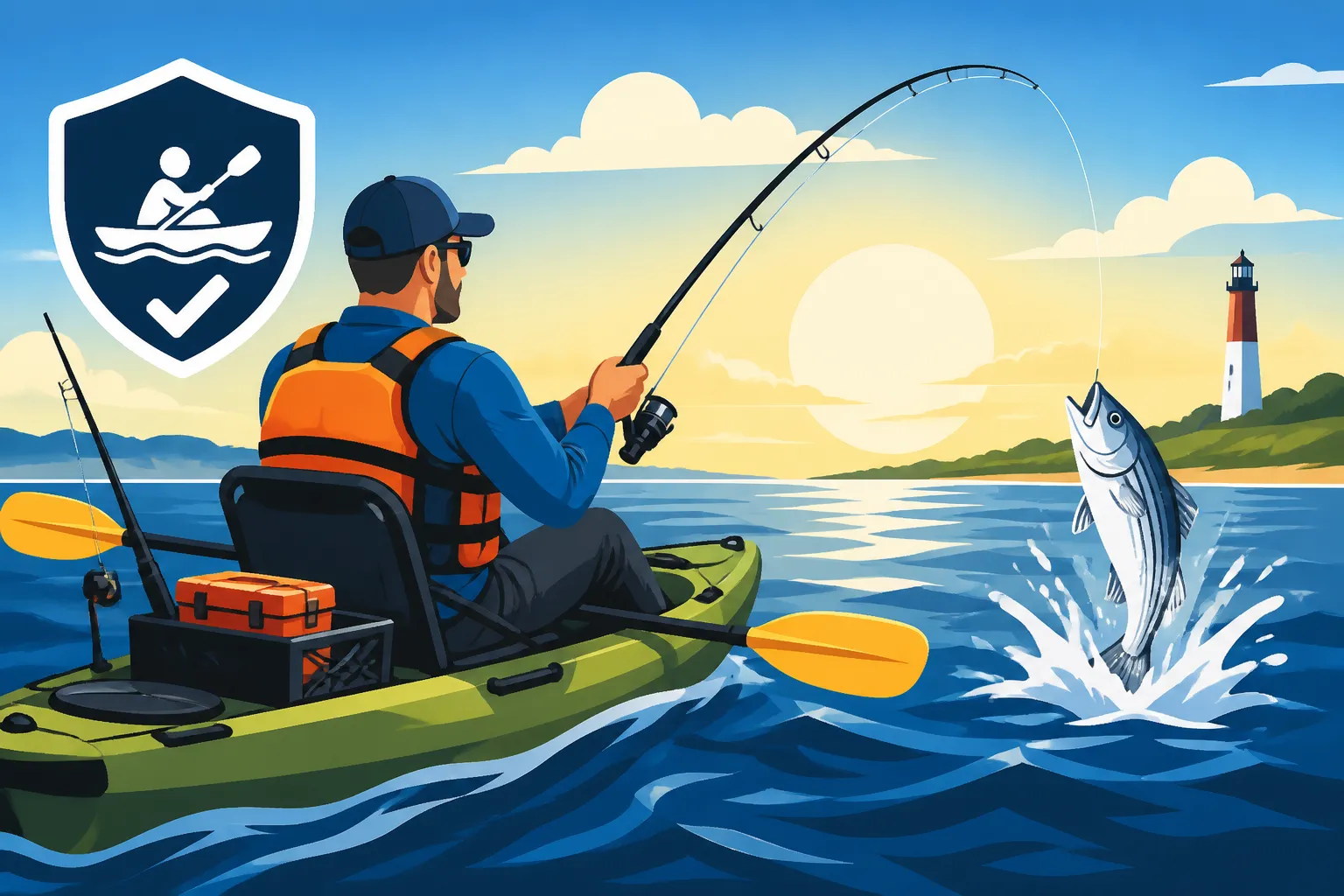
How to Fish From a Kayak Safely in Open Bays
The idea of gliding silently through a New Jersey bay, casting for stripers or fluke from your kayak, is undeniably appealing. But the peaceful image often masks the very real dangers that open bay waters present to kayak anglers. You're not just dealing with the fish; you're contending with powerful currents, unpredictable weather, and constant boat traffic from much larger vessels. This guide will walk you through how to tackle New Jersey's open bays safely and confidently, ensuring your fishing adventures are memorable for the right reasons.
Understanding the Unique Challenges of Open Bay Kayak Fishing in New Jersey
New Jersey's open bays, like Barnegat Bay, Great Bay, and sections of Raritan Bay, offer incredible fishing opportunities, but they also come with a distinct set of challenges that are far different from fishing a calm freshwater lake or a small river. These challenges demand respect, preparation, and a healthy dose of caution.
Weather and Water Conditions
One of the biggest hurdles for kayak anglers in open bays is the rapidly changing weather and water conditions. What starts as a glassy calm morning can quickly turn into a choppy, white-capped nightmare.
Imagine this scenario: you've launched your kayak on a beautiful summer morning into Barnegat Bay, the sun is shining, and there's barely a ripple. You paddle out a mile or two to a promising spot, perhaps a channel edge where you expect to find some fluke. You're focused on your jigging technique, maybe trying to catch some dinner for your family. An hour passes, and suddenly the wind picks up, seemingly out of nowhere. The gentle breeze becomes a stiff southerly, and the bay, which seemed so docile, now has whitecaps making your kayak pitch and roll. The paddle back to shore, which felt effortless an hour ago, now feels like an uphill battle against the wind and a building chop. This isn't just uncomfortable; it's exhausting and potentially dangerous, especially if you're not used to prolonged effort against adverse conditions. Strong currents, often driven by the tides, can also sweep you off course faster than you might realize, pulling you towards main channels or out into inlets. Understanding How to Read Tide Charts for Better Fishing in New Jersey is crucial here, as a strong outgoing tide combined with a stiff wind can create formidable conditions even for experienced paddlers.
Boat Traffic and Navigation
Another significant concern in New Jersey's open bays is the sheer volume of boat traffic. From pleasure cruisers heading to the ocean to fast-moving center consoles and lumbering commercial vessels, you are a tiny, low-profile craft in a busy aquatic highway.
Think about a typical Saturday afternoon on the Toms River or the Point Pleasant Canal, both of which lead into larger bays. Powerboats are zipping by, jet skis are carving wakes, and larger fishing vessels are making their way to their spots. Your small kayak, often a muted color like olive green or tan, can be incredibly difficult for these larger boats to see, especially if they're moving at speed or if the sun is low in the sky. A close call with a large wake can easily capsize an unprepared kayak angler, sending you and your gear into the water. Navigating marked channels, while sometimes necessary to reach prime fishing grounds, means putting yourself directly in the path of this high-speed traffic. Even fishing near popular areas like the Barnegat Bay Bluefish and Fluke Spots means you'll share the water with many other anglers in bigger boats. You need to be constantly aware, looking over your shoulder, and making yourself as visible as possible.
Physical Demands and Endurance
Kayak fishing in open bays isn't just a leisurely paddle; it's a genuine workout that requires a decent level of physical fitness and endurance. You're not just sitting there; you're paddling, balancing, casting, reeling, and potentially fighting a strong fish, all from a relatively unstable platform.
Imagine hooking into a hefty striped bass in Raritan Bay, perhaps a strong fish pushing the slot limit. You're trying to steer your kayak away from nearby boats or structures, keep the fish from running under your boat, and manage your line, all while battling the fish's powerful runs. This fight can last minutes, sometimes even longer, and it demands constant core engagement and arm strength. If you're not accustomed to sustained physical exertion, you can quickly become fatigued. Fatigue isn't just uncomfortable; it compromises your decision-making, paddle stroke efficiency, and ability to handle unexpected situations, like a sudden chop or an evasive boat. Getting tired two miles from your launch point with the wind against you is a recipe for a miserable and potentially dangerous end to your fishing trip. Building up your paddling endurance and practicing your casting and fish-handling techniques on calmer days can make a world of difference.
Essential Safety Gear for Bay Kayak Anglers
Being prepared with the right safety gear isn't just a good idea; it's non-negotiable when you're heading out onto New Jersey's open bays. These aren't just suggestions; they are critical items that could save your life or prevent a serious incident.
Personal Flotation Devices PFDs and Safety Aids
This is the absolute first and most important piece of safety gear: a comfortable, properly fitting Personal Flotation Device (PFD). It's not enough to have it stowed away; it needs to be worn at all times while on the water.
Many kayak anglers resist wearing a PFD, especially on warm days, thinking they're strong swimmers. But imagine you get capsized by a rogue wake, hit your head, or get entangled in fishing line. Even the strongest swimmer can be overwhelmed in cold water, strong currents, or if injured. A PFD keeps your head above water, allowing you to focus on self-rescue or signaling for help. Beyond the PFD, a loud whistle is a minimal requirement; it's surprisingly effective for drawing attention. Consider a signal mirror for daytime use and a waterproof, handheld VHF radio for communicating with other boaters or the Coast Guard, especially if you're venturing far from shore. Cell phone service can be spotty in some bay areas, and a VHF radio doesn't rely on cell towers. When shopping for these items, look for bright, highly visible colors for your PFD, like neon green, orange, or yellow, which can significantly increase your visibility to other boaters. You can find excellent, low-profile fishing PFDs designed for comfort and mobility on platforms like Amazon, many with pockets for essentials.
Visibility and Navigation Tools
Given the busy nature of New Jersey's bays and your low profile, making yourself seen is paramount, and knowing where you're going and how to get back is equally vital.
A bright, elevated kayak flag is a must for daytime use. This flag, typically mounted on a flexible pole, increases your vertical profile, making it much easier for larger boats to spot you over waves. For dawn, dusk, or night fishing (if allowed in your chosen area), a 360-degree white light, visible for at least two miles, is legally required and critical for your safety. Navigation can be handled by a dedicated GPS unit or a robust smartphone app with marine charts. While smartphones are convenient, ensure they are in a waterproof case or dry bag, and always have a portable power bank. A traditional compass and a waterproof chart of the bay should be carried as a backup in case electronics fail. Knowing how to use them without power is a skill worth practicing. Finding your way back to your launch point in unexpected fog can quickly become disorienting without reliable navigation tools. Amazon offers a wide selection of kayak flags, lights, and waterproof phone cases that can be invaluable.
Emergency and Self-Rescue Equipment
Even with the best planning, things can go wrong. Having the right emergency gear and knowing how to use it are crucial for effective self-rescue.
A paddle leash is a simple, inexpensive item that can prevent you from losing your paddle if you capsize or accidentally drop it. A bailing sponge or small pump is essential for removing water from your kayak after a capsize or if you take on waves. Carry a waterproof dry bag containing a basic first aid kit, any necessary medications, a spare paddle (if space allows), and perhaps a small space blanket. Most importantly, practice self-rescue techniques, such as a wet exit (getting out of a capsized kayak) and re-entry (getting back in). Practice in calm, shallow water first, with a buddy. It's much harder to do in cold water, with current, or when fatigued, so knowing the motions instinctively is a huge advantage. Many anglers also carry a multi-tool and line cutters for unexpected snags or emergencies. You can assemble a comprehensive emergency kit by browsing various components available on Amazon.
Here's a quick look at some key safety items:
| Safety Gear Item | Why It's Essential | Considerations |
|---|---|---|
| PFD (Life Vest) | Keeps you afloat if you capsize or fall overboard. | Wear it, don't just stow it. Choose bright colors. |
| Whistle | Signals for help or alerts other boaters. | Attach to your PFD. |
| VHF Radio | Direct communication with other boats/Coast Guard. | Waterproof, handheld model with fresh batteries. |
| Kayak Flag/Light | Increases your visibility to larger vessels. | Flag for day, 360-degree white light for low light/night. |
| GPS/Chartplotter | For navigation and tracking your location. | Waterproof, with updated charts, or reliable smartphone app + power. |
| Compass & Paper Chart | Backup navigation in case of electronics failure. | Know how to use them. |
| Paddle Leash | Prevents losing your paddle if you drop it or capsize. | Simple, yet critical. |
| Bailing Sponge/Pump | Removes water from your kayak after a capsize or waves. | Essential for recovery. |
| Dry Bag with First Aid Kit | Protects essentials and provides medical supplies. | Include personal meds, sun protection. |
| Throw Rope/Tow Line | For assisting another kayaker or being towed. | Practice deploying it. |
Pre-Trip Planning and On-Water Best Practices
The success and safety of your kayak fishing trip in New Jersey's open bays often hinge on what you do before you even launch. Good planning is your first line of defense against unforeseen issues.
Checking Forecasts and Tides Rigorously
Never, ever head out into an open bay without thoroughly checking the weather and tide forecasts. This isn't just about comfort; it's about survival.
You need to consult multiple reliable weather sources, paying close attention to wind speed and direction, potential for thunderstorms, and air and water temperatures. A 10-knot wind might be a gentle breeze on land, but it can quickly create uncomfortable chop and make paddling extremely difficult in an open bay. The interaction of wind against current can make things even worse. Likewise, understanding the local tide charts is paramount. A strong outgoing tide can quickly pull you away from your intended fishing area or even out an inlet if you're not careful. Knowing when slack tide occurs can offer a window of calmer conditions for crossing open water or targeting specific species like fluke that often bite better with moving water. Always have a mental "bail-out" plan: what will you do if the weather suddenly turns? Where is the nearest safe landing spot? What's your route back? Never hesitate to cancel or cut short a trip if conditions look iffy; the fish will still be there another day.
Filing a Float Plan and Buddy System
This is one of the easiest and most effective safety measures, yet it's often overlooked by solo anglers: tell someone where you're going and when you expect to return.
A float plan doesn't have to be formal. It can be a simple text message or a conversation with a family member or friend. Include your launch location, your intended fishing area, how long you plan to be out, and a description of your kayak. If you don't check in by your designated return time, they know to start looking or call for help. Even better than a float plan is the buddy system. Fishing with a friend in another kayak provides immediate assistance if something goes wrong. If one person capsizes, the other can help with re-entry, retrieve gear, or signal for help. It's a huge force multiplier for safety. Ensure you have a reliable way to communicate with your buddy while on the water, whether it's through short-range VHF radios or even just keeping within shouting distance.
Launching, Landing, and Managing Your Kayak in Currents
Getting on and off the water, especially in variable conditions, requires skill and careful planning. Your launch and landing spots are just as important as your fishing spots.
Before you even launch, scout your access point. Is there ample parking? Is the shore rocky, sandy, or muddy? Are there any strong currents near the launch? Ideal launch spots often offer protected, sandy beaches where you can easily slide your kayak into the water without immediately being buffeted by waves or current. New Jersey has many great spots, and researching Best Kayak Launch Spots on Barnegat Bay can give you a head start. When launching or landing in choppy conditions, timing is everything. Wait for a lull in the waves, or use the momentum of a small incoming wave to push you safely onto the sand. Once on the water, be mindful of currents. Kayak-specific anchoring systems, often consisting of a small anchor, rope, and a trolley system that allows you to deploy the anchor from the bow or stern, are crucial for holding your position in a bay. Make sure your anchor is appropriate for the bottom type (mud, sand, shell) and that you understand how to safely deploy and retrieve it without capsizing. Never tie an anchor directly to your kayak without a quick-release mechanism; if your anchor gets snagged, you need to be able to free yourself instantly to avoid being pulled under.
Angling Safely and Responsibly in Busy Bay Waters
Once you're out there, paddling and fishing, safety remains paramount. It's not just about avoiding hazards; it's about being a responsible and considerate angler.
Managing Gear and Your Catch
One of the biggest challenges of kayak fishing is operating in a confined space. Clutter can be a serious safety hazard.
Every rod, tackle box, cooler, and piece of gear needs to be secured. Rod leashes prevent your expensive setups from ending up on the bay floor if you flip or a big fish pulls them overboard. Tackle boxes should be latched and ideally secured to the kayak. When you hook a fish, especially a larger one, maintain your balance. Many capsizes happen when anglers overreach, twist awkwardly, or are pulled off balance by a strong fish. Try to keep your body centered and let the rod do the work. When landing a fish, use a net if possible, or handle it carefully to avoid hooks. If you're keeping your catch, a fish bag or cooler should be secured behind your seat or in the bow well, positioned to maintain stability. Don't let a cooler full of fish shift and throw off your balance. Consider how many rods you can realistically manage; while New Jersey allows multiple rods, on a kayak, How Many Fishing Rods Can You Use at Once in New Jersey? might be fewer than you think is safe.
Interaction with Other Boaters
Sharing the water means understanding and respecting other boaters. Kayakers have a right to be there, but they also have a responsibility to be seen and to avoid becoming a hazard.
Wherever possible, stay out of main navigational channels, especially those marked for deeper draft vessels. These are high-traffic zones where larger boats often travel at speed. If you must cross a channel, do so quickly and directly, crossing at a right angle to the flow of traffic. Be aware of right-of-way rules; typically, larger, less maneuverable vessels have the right-of-way over smaller, more agile ones. However, this doesn't mean they always see you. Assume you are invisible until proven otherwise. Use your flag, your bright PFD, and your whistle. Never make sudden, unpredictable movements that could confuse other boaters. A wave of your paddle or a clear hand signal can often communicate your intentions. Always keep a vigilant lookout, scanning 360 degrees for approaching vessels.
Environmental Awareness and Conservation
Being a responsible angler extends beyond just personal safety; it includes protecting the beautiful New Jersey waters and the fish within them.
Respect local regulations, including New Jersey Saltwater Registry Explained and all bag and size limits for species you target. If you're practicing catch and release, do so ethically. Learn proper fish handling techniques to minimize stress and injury to the fish, especially larger game species. Avoid disturbing nesting birds or other wildlife in sensitive marsh areas. Be mindful of your trash; any plastics, fishing line, or food wrappers can easily blow out of your kayak and into the bay, harming marine life. Pack out everything you pack in, and perhaps even a little extra if you see litter left by others. Our bays are a precious resource, and responsible angling ensures they remain healthy for future generations. For specific catch and release guidelines, refer to Catch and Release Rules in New Jersey.
Disclaimer
This article is for general informational purposes only and does not constitute professional advice. Laws, prices and regulations vary by location and change over time. Consult a qualified professional for guidance on your specific situation.