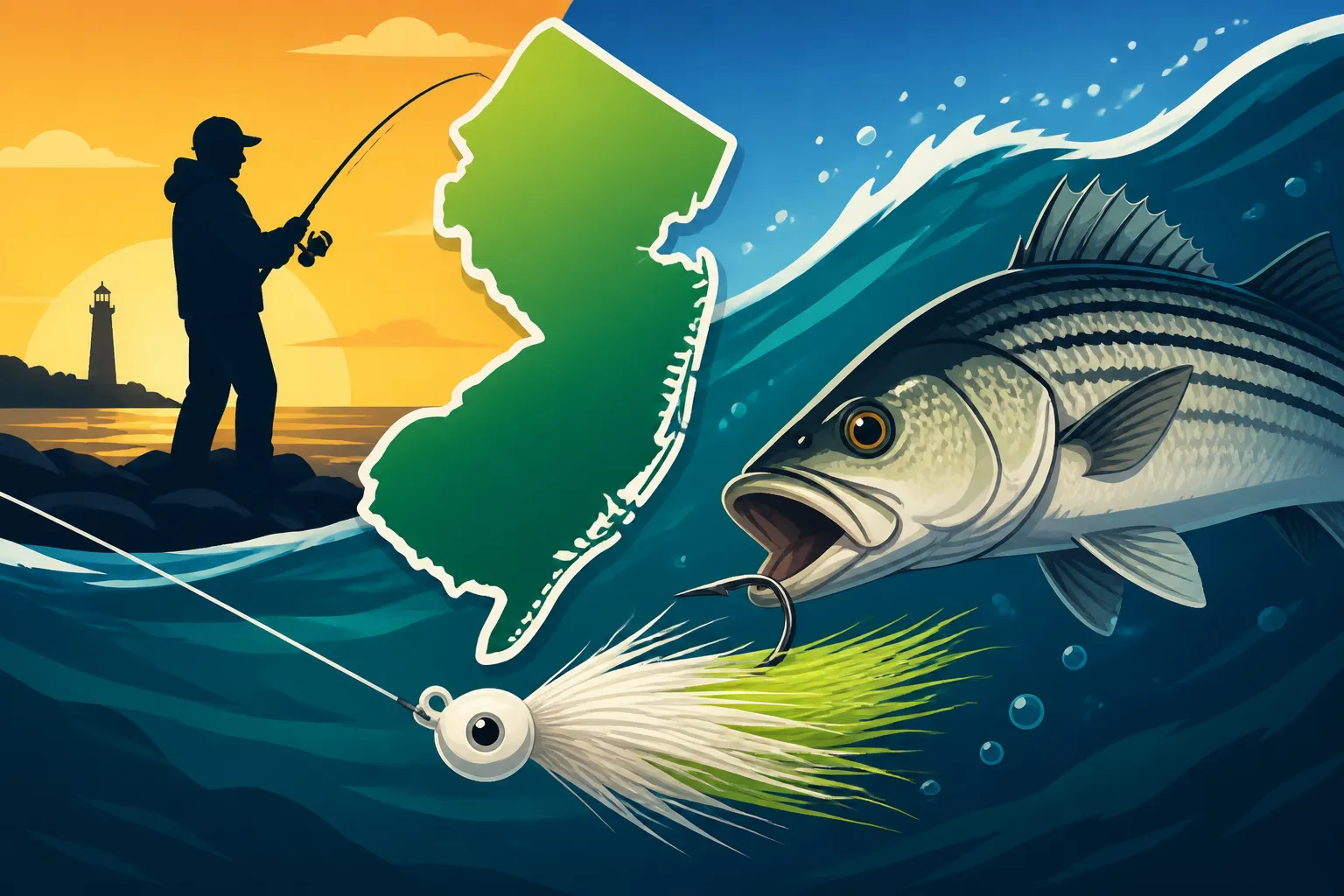
Bucktail Jigging Techniques for New Jersey Anglers
For many New Jersey anglers, the frustration of a slow bite, especially when fish are around but just not committing, is all too real. You’ve seen the schools on the finder, or maybe even witnessed a distant blitz, but your usual go-to lures aren’t cutting it. That’s where the timeless art of bucktail jigging comes into its own. This comprehensive guide is going to strip away the mystery and dive deep into the specific techniques that make bucktail jigs so incredibly effective in our diverse New Jersey waters, helping you turn those frustrating days into successful outings.
What Makes Bucktail Jigs So Effective in New Jersey?
There’s a reason bucktail jigs have stood the test of time, remaining a staple in tackle boxes from Cape May to Sandy Hook. It’s not just about tradition; it's about their inherent versatility and ability to fool a wide array of predatory fish in almost any condition New Jersey can throw at you. These humble jigs, often just a lead head with deer hair tied around it, possess a magical quality that other lures sometimes lack.
The Unmatched Versatility of the Bucktail
One of the biggest selling points of the bucktail jig is its incredible adaptability. Think about it: whether you're bouncing it along the bottom in a sandy bay for fluke, ripping it through an inlet for striped bass, or even jigging vertically over a wreck for black sea bass, the bucktail excels. Unlike highly specialized lures that only work in certain situations or for specific species, a bucktail can be fished effectively in virtually any water column and current speed. This means you don't need a tackle box overflowing with a dozen different lure types for various scenarios; a few bucktails of different weights and colors can cover an enormous amount of ground. This adaptability saves you money and space, and frankly, simplifies your fishing.
Mimicking Natural Prey with Lifelike Action
The beauty of a bucktail jig lies in its simplicity and how expertly it imitates natural baitfish. The natural deer hair, especially when wet, flares and contracts, creating an irresistible pulsing action in the water. This isn't a rigid piece of plastic; it's a dynamic lure that responds to every twitch of your rod tip and every ebb and flow of the current. When paired with a soft plastic or pork rind trailer, that action is amplified, making it look even more like a fleeing shrimp, a wounded bunker, or a darting spearing. This lifelike presentation, particularly when jigged or retrieved correctly, triggers an instinctual strike response from predatory fish who simply can't resist a struggling meal. It’s that natural, subtle movement that often coaxes a bite when flashier, harder lures get ignored.
Essential Gear for Bucktail Jigging in New Jersey
To truly get the most out of bucktail jigging, you need the right tools for the job. It's not about having the most expensive gear, but rather the right combination of rod, reel, line, and of course, the jigs themselves, to maximize your control and feel. Trying to throw a tiny bucktail with a heavy surf rod or struggling to feel a light bite with a cheap, unresponsive setup can be incredibly frustrating and will definitely impact your success rate.
Choosing the Right Rod and Reel Combination
For bucktail jigging, sensitivity and responsiveness are key. You want to feel every bump, every twitch, and every subtle take.
- Rods: Look for a medium-light to medium power rod with a fast or extra-fast action. This combination gives you the backbone to cast jigs effectively and fight fish, but also a sensitive tip to detect subtle bites and impart precise action to your jig. For bay and inlet fishing, a 6.5 to 7.5-foot rod is usually ideal. If you're planning on some serious surf fishing with bucktails, you might opt for a longer, more powerful surf rod, perhaps 9 to 10 feet, to handle casting heavier jigs into strong winds and currents, but still with a good tip for feel. Brands like St. Croix, Tsunami, and Penn offer excellent options across various price points.
- Reels: A quality spinning reel in the 3000 to 5000 size range, depending on your target species and environment, is perfect. It should have a smooth drag system and a good retrieve ratio, typically in the 5.0:1 to 6.2:1 range, which allows you to work the jig efficiently and take up slack quickly. Shimano and Daiwa are popular choices known for their durability and performance. You can find a wide selection of suitable rods and reels on platforms like Amazon, often with helpful reviews from other anglers.
Line, Leader, and the Bucktail Itself
Don't skimp on your line and leader; they are your direct connection to the fish.
- Main Line: Braided line is almost a necessity for bucktail jigging. Its lack of stretch provides incredible sensitivity, allowing you to feel every interaction with the bottom and every tentative strike. It also offers superior casting distance compared to monofilament. A 15 to 30 lb test braided line is a good all-around choice for most New Jersey bucktailing scenarios.
- Leader: You'll want to connect a fluorocarbon leader to your braid using a strong knot like an FG knot or an Albright knot. Fluorocarbon is nearly invisible in water, more abrasion-resistant, and provides a bit of shock absorption. Use a leader in the 20 to 40 lb test range, typically 3 to 5 feet long, depending on water clarity and how toothy your target species might be.
- Bucktail Jigs: The jig itself is crucial. They come in various weights (from 1/4 oz for shallow backwater fluke to 4 oz or more for strong inlet currents or deep wrecks) and colors. White, chartreuse, olive, and pink are perennial favorites in New Jersey. Have a selection of weights and colors on hand to match the conditions and local baitfish. For deeper dives into lure choices, check out our guide on Best Lures for Striped Bass Fishing.
Mastering the Art of Bucktail Jigging for Specific Species
The beauty of bucktail jigging is that while the core concept remains the same – impart action to a weighted jig – the nuances shift significantly depending on what you're trying to catch. A subtle drift for fluke is vastly different from an aggressive retrieve for a striped bass, and understanding these distinctions is what separates a good angler from a great one.
Striped Bass: Aggression and Structure
Striped bass are aggressive predators, and they often react well to an energetic bucktail presentation. When targeting stripers with bucktails, you're often looking for current and structure.
- Retrieve: There are a few go-to retrieves. One popular method is a "rip and fall" technique. Cast your bucktail out, let it sink to the desired depth (often near the bottom, especially in cooler water or strong current), then give your rod a sharp upward twitch, causing the jig to "jump." Immediately drop your rod tip, allowing the jig to flutter back down on a semi-slack line. Many strikes occur on the fall, so pay close attention. Another effective method, especially in strong currents like those found in the Manasquan Inlet or Point Pleasant Canal, is to cast upstream and across the current, letting the bucktail sink and sweep through the strike zone, bouncing occasionally off the bottom. A steady, moderate retrieve with occasional twitches can also work, mimicking a fleeing baitfish.
- Where to Target: Look for areas with current breaks, eddies, and submerged structure like rocks, pilings, or bridge abutments. These are ambush points where stripers wait for baitfish to be swept by. Early morning, late evening, and night are prime times for bucktailing stripers, especially around brightly lit bridges and jetties. For more detailed information, our guide on How to Fish for Striped Bass in New Jersey offers invaluable insights.
Fluke: The Art of the Drift and Bounce
Fluke, or summer flounder, are masters of camouflage, lying in wait on the bottom to ambush prey. Your bucktail jig needs to mimic their natural forage, like spearing, sand eels, or smaller crustaceans, and present it right in their strike zone.
- Retrieve: This is all about the "lift and drop" or "drift and bounce." When fishing from a boat, you'll want to drift with the current or wind, allowing your bucktail to sweep naturally across the bottom. Cast your bucktail slightly ahead of your drift, let it sink, and then gently lift your rod tip about a foot or two, allowing the jig to rise off the bottom. Immediately drop your rod tip back down, letting the bucktail flutter back to the bottom. The goal is to keep the jig making intermittent contact with the bottom without dragging it. The flutter on the fall is what often triggers a fluke's strike. If you're fishing from shore or a pier, a very slow, subtle retrieve with short, gentle hops can replicate this action.
- Trailers are Key: A soft plastic grub or Gulp! Swimming Mullet is almost mandatory when fluke fishing with bucktails. These trailers add scent, color, and additional lifelike action, making your bucktail even more irresistible. Many anglers argue that a plain bucktail alone is less effective for fluke than one with a juicy trailer. For further tips, read our article on How to Fish for Fluke in New Jersey. Remember to stay up to date on the New Jersey Fluke Size and Bag Limits Explained.
Black Sea Bass: Vertical Jigging Over Structure
Black sea bass are structure-oriented fish, often found congregating around wrecks, reefs, and rocky bottom. Vertical jigging a bucktail is an incredibly effective way to target them.
- Retrieve: Once you've located a promising piece of structure, drop your bucktail jig straight down to the bottom. Once it hits, quickly reel up a few cranks to get it just off the structure. Then, use short, sharp jigs of the rod tip, anywhere from a few inches to a foot, allowing the bucktail to dance and dart, mimicking a startled baitfish or a small squid. Again, many strikes will happen on the fall, so be ready. Don't be afraid to vary your jigging cadence until you find what the fish prefer.
- Where to Target: Head boats and private charters often target black sea bass over New Jersey's many artificial reefs and natural wrecks. Consult our New Jersey Artificial Reef Fishing Guide to find some prime locations. These fish are aggressive, but you need to put the jig right in front of them. Check the New Jersey Black Sea Bass Season and Limits before heading out.
Bucktail Jigging Techniques for Different New Jersey Environments
New Jersey offers a vast array of fishing environments, from the pounding surf to serene freshwater lakes, though bucktails truly shine in our saltwater bays, inlets, and ocean. Each environment presents unique challenges and opportunities for the bucktail angler, demanding specific adjustments to your approach. The current, depth, and type of structure dictate how you'll present your lure.
Surf Fishing with Bucktails
Fishing the surf with bucktails is a classic Jersey Shore pastime, yielding everything from striped bass to bluefish and even fluke. It’s a challenging but rewarding endeavor that requires specific gear and tactics.
- Casting Distance: When you're standing on the beach, getting your bucktail out to where the fish are holding, often in troughs, sloughs, or around sandbars, is paramount. This requires a longer, more powerful surf rod (typically 9-11 feet) and heavier bucktails (often 2-4 oz) to punch through the wind and waves. A spinning reel with excellent line lay and a robust bail system is also key.
- Reading the Water: The most crucial skill for surf bucktailing is learning to read the beach. Look for cuts, rips, and pockets where fish might ambush bait. Cast into these areas, allowing your bucktail to sink and drift naturally with the undertow and current. A slow, sweeping retrieve with occasional pauses and lifts can be very effective. Many strikes will come as the jig is tumbling or being swept by the current. Remember, sand crabs and sand eels are common forage here, so white, natural bunker colors, and chartreuse bucktails are often very productive. You can learn more about finding these productive spots in Where to Surf Fish for Striped Bass in New Jersey.
Inlets and Estuaries: Navigating Strong Currents and Structure
New Jersey's inlets, like Barnegat Inlet or Manasquan Inlet, are dynamic environments characterized by strong currents, rocky jetties, and deep channels. These are prime locations for striped bass, bluefish, and even large fluke.
- Current Management: The strong currents here mean you need to use heavier bucktails (often 1.5-3 oz) to reach the bottom and stay in the strike zone. The technique often involves casting upstream and letting the jig swing downstream with the current, bouncing it along the bottom or near the structure. It’s a delicate dance of line control, feeling the jig tap the bottom, and being ready for a strike at any moment. You need to quickly reel up slack as the jig swings, maintaining contact.
- Targeting Structure: Inlets are packed with fish-holding structure – jetty rocks, bridge pilings, channel edges. Cast tight to these structures, but be prepared for snags. The fish are often tucked right into the current breaks, waiting for an easy meal. This is where a good braided line and fluorocarbon leader with strong knots truly shine, helping you resist abrasion against barnacle-covered rocks. Our guide on Best New Jersey Piers and Jetties for Shore Fishing can help you find excellent inlet spots. Understanding How to Read Tide Charts for Better Fishing in New Jersey is absolutely critical here, as incoming and outgoing tides often concentrate fish.
Bays and Backwaters: Finesse in Shallower Waters
New Jersey's vast bay systems, like Barnegat Bay or Great Bay, offer excellent bucktailing opportunities, particularly for fluke. These waters are often shallower and have less intense currents than the open ocean or inlets, requiring a more finessed approach.
- Lighter Jigs and Subtle Presentation: In the bays, you'll typically use lighter bucktails, ranging from 1/4 oz to 1 oz, depending on depth and current. The key is a slower, more subtle retrieve. When drifting for fluke, the goal is to make your bucktail appear as natural as possible. Gentle lifts and drops, just enough to get the jig off the bottom before letting it settle back down, are incredibly effective. Avoid aggressive jerks unless you're trying to elicit a reaction strike from a bluefish or a more active striped bass.
- Soft Bottom vs. Hard Bottom: Pay attention to the bottom composition. In muddy or sandy areas, a gentle bounce is best to avoid stirring up too much silt. Over shell beds or rocky patches, a slightly more pronounced hop can help keep your jig from getting snagged while still attracting attention. Utilizing scent on your trailers can be especially effective in murkier bay waters where fish rely more on their sense of smell. For those exploring the inner reaches, knowing How to Find Structure When Fishing New Jersey Bays can significantly boost your success.
Common Mistakes and How to Avoid Them When Bucktail Jigging
Bucktail jigging, despite its fundamental simplicity, has its pitfalls. Many anglers, especially beginners, make common errors that drastically reduce their chances of success. It's not always about having the "secret lure" or the "magic spot"; sometimes, it's about refining your technique and avoiding habits that actively deter fish. Learning from these mistakes is a huge step toward becoming a more proficient bucktail angler.
Using the Wrong Weight Bucktail
This is probably the most frequent mistake. A bucktail that is too light won't reach the bottom in current or deep water, or it will be swept away too quickly. One that is too heavy will constantly snag, drag unnaturally, and won't have the enticing flutter on the fall that makes bucktails so effective.
- The Goldilocks Principle: You want a bucktail that is "just right." This means it's heavy enough to reach the bottom and maintain contact, but light enough to still have that natural, fluttering action when you lift and drop it.
- Adjust to Conditions: Always start with a weight you think might work, then adjust. If you're not feeling the bottom, go heavier. If you're constantly snagging or it feels like a dead weight, go lighter. Wind, current, and depth are your primary factors. A good rule of thumb for fluke drifting is to use the lightest jig you can get away with while still maintaining bottom contact. For striped bass in strong currents, a heavier jig might be necessary to cut through the water.
Neglecting the Trailer
While a bucktail jig alone can catch fish, for many species in New Jersey, particularly fluke and black sea bass, a trailer dramatically increases its effectiveness. Many anglers skip this step, thinking the bucktail is enough.
- Enhanced Appeal: Trailers add scent, extra flash, color contrast, and more erratic action, making your presentation far more enticing. Natural pork rind, various soft plastics (like Berkley Gulp! Alive! shrimp or swimming mullet), or even strips of natural bait like squid or spearing can be used.
- Experimentation: Different trailers work better on different days. For fluke, the popular chartreuse Gulp! Swimming Mullet is often deadly. For striped bass, a larger soft plastic paddle tail can add bulk and vibration. Don't be afraid to experiment with different sizes and colors until you find what the fish are keying in on. Just like selecting the right jig, having a variety of trailers on hand, easily found on Amazon or at local tackle shops, is a smart move. Our guide to Best Bait for Fluke Fishing elaborates further on this.
Improper Retrieval and Presentation
Knowing when and how to vary your retrieve is critical. A mechanical, unchanging retrieve will often yield minimal results. Fish aren't always in the same mood or reacting to the same stimulus.
- Read the Fish: If fish are actively chasing bait on the surface, a faster, more aggressive retrieve might be best. If they're sluggish or holding tight to the bottom, a slow, subtle bounce and crawl will be more effective.
- Vary Your Cadence: Don't be afraid to experiment. Try short, sharp jerks; long, sweeping lifts; steady retrieves with twitches; or even just letting the bucktail sit on the bottom for a few seconds. The "fall" is often when a strike occurs, so always maintain enough slack line to allow the jig to flutter naturally, but not so much that you can't feel a bite.
- Know Your Target: As discussed, fluke respond to a bounce and flutter, stripers often hit a rip and fall, and sea bass prefer vertical jigging. Tailor your retrieve to the species you're targeting and the conditions you're facing.
Advanced Tips and Tricks for New Jersey Bucktail Anglers
Once you've mastered the basics of bucktail jigging, there's a whole new level of nuance and refinement that can elevate your success from occasional catches to consistently productive outings. These advanced tips focus on tuning into your environment, fine-tuning your presentation, and thinking like the fish you're pursuing.
Understanding Current and Structure
Many anglers understand that current and structure are important, but truly understanding them is a game-changer. It's not just about fishing in the current; it's about fishing the edges and breaks of the current where fish expend less energy but can still ambush prey.
- Current Breaks: Look for areas where fast-moving water meets slower water. This could be behind a jetty, a large rock, a bridge piling, or even a subtle drop-off. Fish often position themselves in the slower water, facing into the current, waiting for bait to be swept by. Casting your bucktail into the faster current and letting it swing into the current break can be incredibly effective.
- Bottom Structure: Pay attention to your fish finder or topographical charts to identify subtle changes in the bottom – humps, rocks, shell beds, ditches, or sudden depth changes. These are natural ambush points. Learn to "feel" the bottom with your bucktail; differentiate between sand, mud, and hard structure. A little "tick" on a hard bottom is often a great place to pause or make another lift. Our guide on How to Find Structure When Fishing New Jersey Bays provides more detail on this.
The Nuances of Color and Scent
While white and chartreuse are universal bucktail colors, being mindful of water clarity, light conditions, and local baitfish can give you an edge.
- Water Clarity: In murky or stained water, brighter colors like chartreuse, orange, or even dark colors (to create a strong silhouette) can be more visible. In clear water, more natural colors like olive, white, or silver/blue can be less intimidating and more realistic.
- Light Conditions: On bright, sunny days, metallic or glittery bucktails can reflect light, mimicking scales. On overcast days or at dawn/dusk, solid, opaque colors might be better. At night, white or glow-in-the-dark jigs can be effective, especially under dock lights or bridge lights.
- Scent: Don't underestimate the power of scent, especially for bottom-dwelling species like fluke. As mentioned, Gulp! products are heavily scented and incredibly effective. You can also add commercial scent sprays or gels to your bucktails and trailers. The scent trail can draw fish in from a distance and encourage them to hold onto the bait longer, giving you more time to set the hook.
Subtle Rod Movements and Line Control
The most effective bucktail jigging often involves subtle, almost imperceptible rod movements, combined with impeccable line control. It’s less about brute force and more about finesse.
- Minimalist Approach: Instead of big, sweeping jerks, try small, wrist-flick twitches. For fluke, sometimes just the motion of the boat or kayak, combined with holding your rod steady, is enough to impart the necessary action. The goal is to make the bucktail look alive, not like it’s being dragged or violently manipulated.
- Line Sag and Feel: After a lift, allow just enough slack for the bucktail to flutter naturally on the fall, but not so much that you can’t feel a strike. This requires constant attention to your line; watch for any sudden twitches, pauses, or changes in how the line is moving, as these often indicate a bite. If you see a twitch, quickly reel down to remove slack and set the hook. A high-quality braided line helps immensely with this crucial feedback loop. You want to feel connected to your lure. For beginners seeking to build their gear, check out our guide on Best New Jersey Fishing Gear for Beginners.
Bucktail Jig Weight and Color Guide for New Jersey Anglers
Choosing the right bucktail weight and color is crucial for success. This table provides a general guide for common New Jersey fishing scenarios. Remember, conditions change, so always be ready to adapt!
| Target Species | Environment/Conditions | Recommended Weight Range | Recommended Colors | Notes |
|---|---|---|---|---|
| Fluke (Summer Flounder) | Shallow bays (3-10 ft), light current | 1/4 oz – 3/4 oz | White, Chartreuse, Pink | Lighter jig, slower drift, ALWAYS use a Gulp! or pork rind trailer. |
| Deeper bays/Inlets (10-25 ft), moderate current | 3/4 oz – 1.5 oz | White, Chartreuse, Pink, Green | Maintain bottom contact, subtle lifts. | |
| Ocean/Heavy Current (20-50+ ft) | 1.5 oz – 4 oz+ | White, Chartreuse, Blue | Heavier jig to cut current, can be jigged vertically. | |
| Striped Bass | Shallow backwaters/Calm inlets | 1/2 oz – 1 oz | White, Chartreuse, Yellow | Fished with a steady retrieve or soft "rip and fall." |
| Strong inlets/Jetties/Surf | 1.5 oz – 4 oz+ | White, Chartreuse, Bunker, Black | Rip and fall aggressively, cast into current breaks. | |
| Deep water/Offshore structure | 3 oz – 8 oz+ | White, Chartreuse, Blue | Vertical jigging, heavy-duty tackle. | |
| Black Sea Bass | Reefs/Wrecks/Structure (20-100+ ft) | 1 oz – 4 oz+ | White, Pink, Chartreuse, Dark Green | Vertical jigging over structure, sharp hops, use squid or clam strip trailers. |
| Bluefish | Bays/Inlets/Surf (Active fish) | 1 oz – 3 oz | White, Chartreuse, Blue, Silver | Fast retrieve, can be very aggressive, use wire leader if many choppers around. |
Disclaimer
Fishing regulations, including size and bag limits, fishing seasons, and license requirements, are subject to change by the New Jersey Department of Environmental Protection (NJDEP) Division of Fish and Wildlife. Always consult the latest edition of the New Jersey Fish and Wildlife Digest or the official NJDEP website before heading out on any fishing trip to ensure compliance with current laws. This guide is for informational purposes only and does not constitute legal advice.