How to Jig for Striped Bass
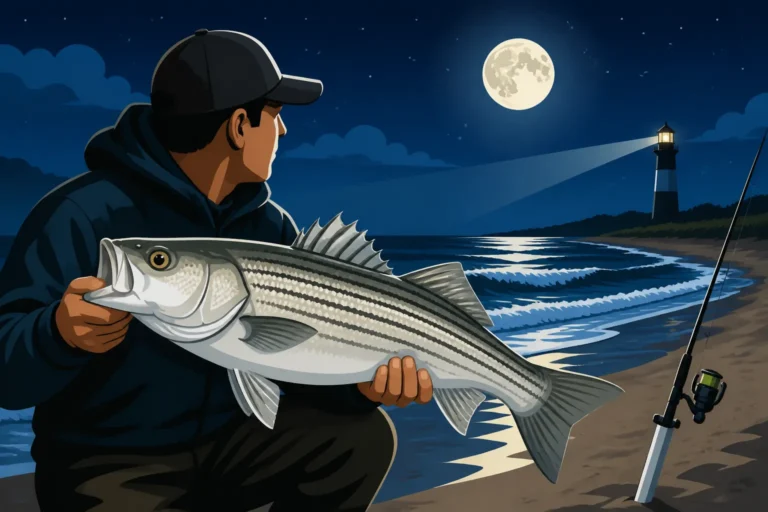
Feeling that intense pull of a powerful striped bass on the end of your line is one of the most exhilarating experiences an angler can have in New Jersey. But let's be honest, sometimes those elusive stripers seem to mock our best efforts, especially when they're holding deep or ignoring traditional baits. That's where jigging comes in, offering a dynamic, hands-on approach that can turn a slow day into an unforgettable one. This comprehensive guide will break down everything you need to know about jigging for striped bass in our waters, from gear to techniques and the best spots to try your luck.
Understanding Striped Bass Behavior for Jigging Success
To truly excel at jigging for striped bass, you need to think like a striper. These powerful fish are opportunistic predators, constantly on the hunt for an easy meal. Understanding their natural instincts and how they interact with their environment is paramount to presenting a jig effectively. It’s not just about dropping a piece of metal in the water; it’s about making that jig irresistible.
Why Stripers Strike Jigs: Mimicking Prey
Striped bass are highly visual hunters, especially in clear to moderately turbid water. They react instinctively to movement, flash, and vibration. A properly worked jig mimics a variety of their natural prey, such as bunker (menhaden), spearing, silversides, and even squid. When a jig darts, flashes, or pulses through the water, it often looks like a wounded baitfish struggling to escape, triggering an aggressive predatory strike. It's a prime example of the "match the hatch" principle, but instead of just matching size and color, you're also matching the erratic, vulnerable movements of bait.
Think about a school of bunker being harassed by stripers. Individual baitfish scatter, some become disoriented, and a striper will often target the easiest meal. Your jig, when animated correctly, should replicate that very distress. Whether it's the quick flash of a metal jig or the subtle undulation of a soft plastic, the goal is to make it appear like something the striper simply can't resist. This aggressive feeding behavior makes them perfect targets for active jigging presentations.
Seasonal Movements and Feeding Patterns
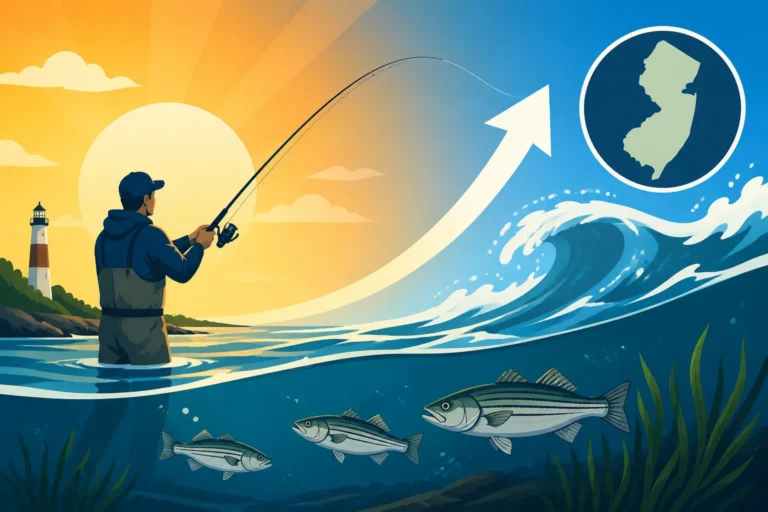
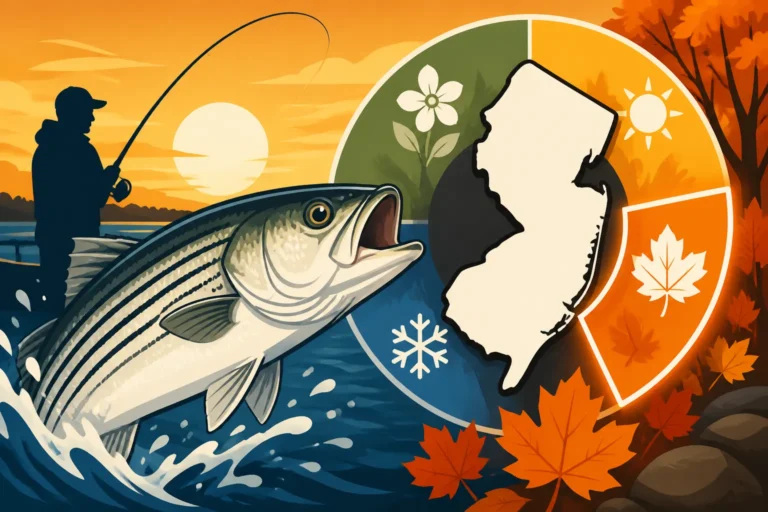
New Jersey's striped bass fishery is largely migratory, meaning their presence and feeding habits change dramatically with the seasons. In the spring, as water temperatures rise, stripers migrate north along our coast and into our rivers and bays for spawning. During this time, they are often hungry after their winter dormancy and travel, making them excellent targets in tidal rivers and inlets. They'll actively chase jigs, especially when bunker or herring are plentiful. Understanding When Do Striped Bass Migrate Through New Jersey? is crucial for planning your trips.
As summer progresses, many larger stripers move offshore to cooler waters, but plenty of resident fish remain in our bays, inlets, and along the beaches. These fish might be found shallower in low light conditions or holding tight to structure during the day. Come fall, the famed "fall run" brings waves of large, migratory stripers south along the coast, gorging themselves on baitfish before heading to their wintering grounds. This is often considered the absolute Best Time of Year to Fish for Striped Bass in New Jersey with jigs, as the fish are aggressive and plentiful, often found in large schools. Knowing these patterns helps you predict where the fish will be and how they might be feeding, allowing you to select the right jig and technique for the specific conditions.
Essential Gear for Striped Bass Jigging in New Jersey
Having the right equipment can make all the difference when jigging for striped bass. It’s not just about having a rod and reel; it’s about having a setup that allows you to effectively present your jig, detect subtle bites, and most importantly, handle a powerful fish that might weigh dozens of pounds. Skimping on quality here can lead to frustrating break-offs and missed opportunities.
Rods, Reels, and Line Choices
For striped bass jigging, you need a rod with a fast action tip and a strong backbone. A fast action allows for quick, sharp jig movements and excellent bite detection, while the powerful backbone is essential for setting the hook and muscling a big striper away from structure. Rod lengths typically range from 6'6" to 7'6" for boat fishing, and sometimes longer (8-10 feet) for shore or jetty jigging to achieve greater casting distance. Medium-heavy to heavy power rods are generally preferred. Many anglers find the Shimano Teramar or St. Croix Mojo Salt series to be excellent choices, though you can find solid entry-level options on Amazon that still offer good performance.
Matching that rod with a robust spinning reel (size 4000-6000) or a conventional reel (like a Penn Fathom or Daiwa Lexa) is crucial. The reel needs a smooth drag system, enough line capacity, and a high retrieve rate to keep up with fast-moving fish. For line, braided line is almost universally preferred for jigging. Its lack of stretch offers superior sensitivity, allowing you to feel every bump and subtle bite, and its thinner diameter cuts through the water better, helping your jig get down faster. A good starting point is 30-50 lb test braid, which should be paired with a 3-6 foot leader of 40-60 lb fluorocarbon. The fluorocarbon leader is nearly invisible underwater and offers excellent abrasion resistance, which is vital when fishing around rocks or wrecks.
Types of Jigs and Their Applications
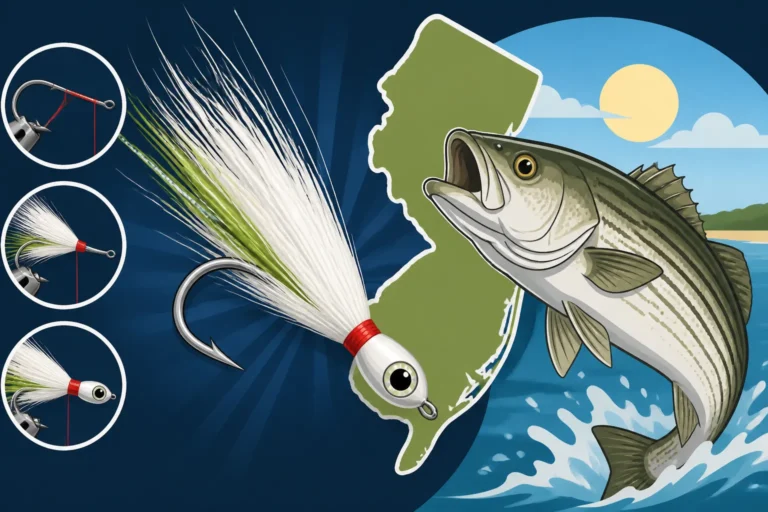
The world of striped bass jigs is vast and varied, each designed for specific situations and presentations. The most iconic New Jersey striper jig is arguably the bucktail. Classic bucktail jigs, often dressed with deer hair, come in various weights (from 1/2 oz to 6 oz or more) and colors (white, chartreuse, yellow). They excel at mimicking baitfish like spearing or peanut bunker and can be fished effectively by bouncing them along the bottom or swimming them through the water column. Adding a soft plastic trailer, like a Berkley Gulp! Swimming Mullet, can significantly enhance their appeal. These are a staple for any angler looking to catch stripers in our region.
Metal jigs, often called "diamond jigs" or "vertical jigs," are heavy, slender lures designed to sink quickly and flash enticingly as they fall. They are incredibly effective when stripers are feeding on vertically oriented baitfish, such as sand eels or bunker, in deeper water. Popular choices include the A.C. Plug, Shimano Butterfly jigs, or simple diamond jigs in silver, chrome, or blue/silver patterns. Lastly, soft plastic jigs, such as large paddletails or Fin-S Fish, rigged on a weighted jig head, offer a more subtle presentation. These are fantastic for imitating larger baitfish and can be fished with a slow, sweeping retrieve that mimics a swimming fish. You can find a huge variety of these jig types, often in multi-packs, on Amazon, which is a great way to build your tackle box.
| Jig Type | Best Application | Key Characteristics | Advantages |
|---|---|---|---|
| Bucktail Jig | Bouncing bottom, mimicking small baitfish, structure fishing | Deer hair, lead head, various weights/colors | Versatile, classic, customizable with trailers |
| Metal Jig (Diamond/Vertical) | Deeper water, vertical presentations, fast currents, mimicking sand eels/bunker | Heavy, slender, chrome/silver finishes | Fast sink rate, intense flash, good for deep schools |
| Soft Plastic Swimbait (Paddle Tail) | Mimicking larger baitfish, slow retrieves, shallower water | Rubber/silicone body, lifelike tail action, needs jig head | Realistic movement, versatile, good for wary fish |
Terminal Tackle and Accessories
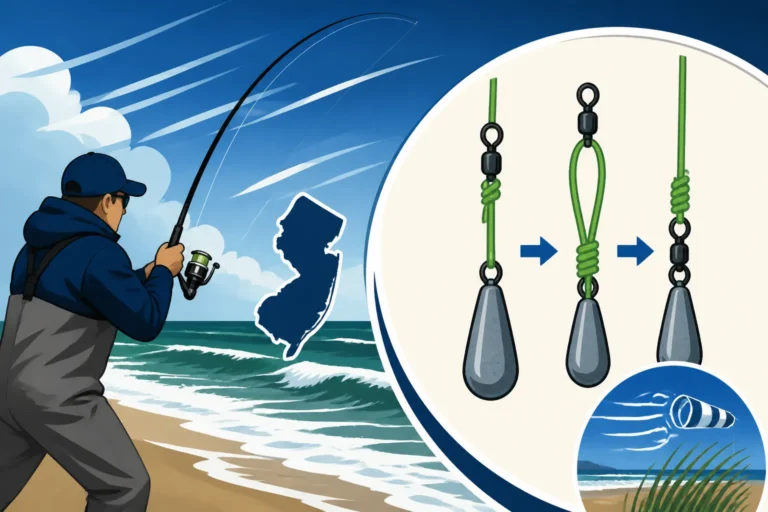
Beyond your rod, reel, and jigs, a few other pieces of terminal tackle and accessories are essential for a successful striped bass jigging trip. High-quality swivels and snaps are a must. Ball-bearing swivels help prevent line twist, especially with spinning jigs, and heavy-duty snaps (like Coastlock snaps) allow for quick jig changes without retying. Always match the strength of your snaps and swivels to your main line and leader; a weak link in the chain is exactly what a powerful striper will exploit.
You'll also want to carry a good pair of pliers or braid scissors for cutting line and removing hooks. Stripers have strong jaws, and sometimes hooks can be buried deep. A long-nosed dehooker or even a pair of gloves can protect your hands. If you're planning to keep a legal fish, a fish gripper or BogaGrip is invaluable for safely handling the fish, especially if you're alone. A reliable tackle bag or box to organize your jigs and terminal tackle will keep you efficient on the water. For anyone just starting out, picking up a Best Beginner Rod and Reel Combo for Saltwater Fishing will get you on the right track, and often these kits come with some basic accessories to get you started.
Mastering Jigging Techniques for New Jersey Stripers
Jigging is an active fishing method that requires constant engagement and a feel for what your lure is doing beneath the surface. It's not just about casting and reeling; it's about imparting lifelike action to your jig that stripers can't ignore. The beauty of jigging lies in its versatility, allowing you to adapt your presentation to different depths, currents, and fish moods.
Vertical Jigging for Deeper Water
Vertical jigging is often employed from a boat when you've located schools of striped bass holding in deeper water or near substantial structure like wrecks, reefs, or channel edges. The technique involves dropping a metal jig directly down to the fish, then using various rod movements to bring it to life. The most common method is a sharp, upward sweep of the rod tip, lifting the jig several feet off the bottom, followed by a controlled fall. As the jig falls, it flutters and flashes, often eliciting strikes on the drop.
Pay close attention to your line as the jig descends; a sudden slackening or twitch might indicate a bite. Once the jig hits bottom, retrieve a few cranks to avoid snags, then repeat the process. Vary the speed and height of your sweeps, as well as the pause on the fall, until you find what the fish prefer. Sometimes a fast, aggressive snap-and-fall is key, while other times a slow, rhythmic lift and gentle flutter is more effective. This technique is particularly deadly in areas like the offshore lumps or deeper channels in Raritan Bay Striped Bass Spots where fish are concentrated.
Casting and Retrieving Jigs from Shore or Boat
Casting jigs, especially bucktails or soft plastics, is a popular method for targeting stripers in shallower waters, along beaches, inlets, or from jetties. The idea is to cast your jig out, let it sink to the desired depth (often near the bottom or structure), and then retrieve it with a series of hops, sweeps, or steady retrieves that mimic a swimming baitfish. When fishing from shore or a jetty, casting distance can be critical, so technique plays a big role here.
A common retrieve involves a few quick cranks of the reel handle, followed by a twitch or sweep of the rod, then a pause to let the jig sink slightly. This creates an erratic, darting motion that predatory fish love. Experiment with the speed of your retrieve and the amount of "action" you impart. Sometimes a slow, steady retrieve with a paddletail is all it takes; other times, a fast, aggressive "burn and kill" retrieve with a metal jig can trigger reactionary strikes. Pay close attention to how the current affects your jig, and adjust your presentation to keep it in the strike zone. This technique is highly effective during the spring and fall runs when stripers are actively patrolling the surf line or moving through inlets.
"Snap Jigging" and "Slow Pitch" Methods
Beyond the basics, two more refined jigging techniques that can be incredibly effective for striped bass are "snap jigging" and "slow pitch jigging." Snap jigging is an aggressive, high-energy technique often used with metal jigs or heavy bucktails. It involves a very sharp, quick snap of the rod tip, causing the jig to shoot upwards rapidly, followed by an immediate free-spool or slack line drop. The goal is to imitate a fleeing baitfish with an explosive burst of speed. Stripers often hit the jig on the fall after this erratic ascent. This method is particularly good when fish are highly aggressive or when you need to cover water quickly.
Slow pitch jigging, on the other hand, is a more subtle and nuanced approach, gaining popularity from its effectiveness in deep water for a variety of species. It uses specialized, flexible rods and jigs designed to flutter and swim with minimal input. The technique involves rhythmic, short lifts of the rod tip, often combined with a quarter or half turn of the reel handle, allowing the jig to slowly "pitch" and "glide" sideways on the fall. This simulates a wounded or disoriented baitfish drifting lazily. While it requires more specialized gear, the slow, tantalizing action can be deadly on finicky or pressured stripers, especially those holding tight to structure or in cooler water. Both methods demonstrate the wide range of presentations possible when you learn How to Jig for Striped Bass effectively.
Prime Locations and Conditions for Jigging Striped Bass
Successfully jigging for striped bass in New Jersey isn't just about having the right gear and knowing the techniques; it's also about understanding where and when to apply them. Stripers are creatures of habit and environment, always seeking out food, cover, and comfortable water conditions.
Inlets, Rivers, and Bays: Key Structures
New Jersey's numerous inlets, tidal rivers, and expansive bays offer prime opportunities for jigging striped bass. Inlets like Manasquan Inlet, Barnegat Inlet, or the Point Pleasant Canal are natural funnels for migratory fish and baitfish. Stripers often hold along the jetties, bridge pilings, or in the deeper channels, ambushing prey as the current sweeps by. Jigging these areas requires precise casting to structure and adapting to strong currents. For example, knowing How to Fish Around Bridge Pilings is essential for success.
Our tidal rivers, such as the Raritan, Mullica, or Delaware (for its migratory runs), also hold stripers, especially in spring. Here, you'll want to target deeper bends, submerged timber, or confluence points where baitfish concentrate. Bays like Raritan Bay and Barnegat Bay are vast, but certain areas consistently produce, such as mussel beds, channel edges, or around bridges and docks. Knowing How to Find Structure When Fishing New Jersey Bays can significantly improve your odds. These structures provide cover and ambush points, making them ideal places to present a jig.
Nearshore Reefs, Wrecks, and Rockpiles
When fishing the open ocean off the Jersey Shore, nearshore reefs, wrecks, and natural rockpiles become prime targets for vertical jigging. Artificial reef sites, like those developed by the New Jersey Division of Fish and Wildlife, attract a plethora of marine life, including striped bass, black sea bass, and tautog. These underwater structures provide complex habitats where stripers can hide and feed. Using your boat's fish finder to pinpoint the exact location of these structures and marking fish is crucial before you start dropping jigs.
These deep-water structures often hold larger, migratory stripers, especially during the colder months when they seek deeper, more stable temperatures. The key here is precise boat positioning, often using a trolling motor with GPS spot-lock, to stay directly over the structure and the fish. Drop your jigs right into the heart of the school or directly on the structure. This is where heavy metal jigs shine, as they sink quickly through the water column and withstand strong currents, ensuring your presentation gets to where the fish are holding.
Tides, Currents, and Water Temperature
Tides and currents are perhaps the most critical factors when jigging for striped bass, especially in New Jersey's coastal waters. Stripers are often most active during periods of strong current, which disorients baitfish and makes them easier targets. Both the start of the incoming and outgoing tides, and the peak of the current flow, can be incredibly productive. Learning How to Fish a Rising Tide and How to Fish a Falling Tide offers significant advantages. Slack tide, when the water is still, often results in slower fishing, as baitfish can hold more easily.
Water temperature also plays a significant role in striper behavior. They are anadromous fish, thriving in a range of temperatures but generally preferring cooler waters, typically from the low 50s to low 70s Fahrenheit. In spring, warmer water pockets near river mouths or shallow flats can attract fish, while in summer, they may seek deeper, cooler water. Conversely, in the fall, cooling water temperatures trigger their migratory feeding frenzy. Monitoring local water temperatures and understanding Best Water Temperature for Striped Bass Fishing helps you narrow down potential hot spots and predict feeding windows.
Advanced Tips and Common Mistakes to Avoid
Jigging for striped bass is a skill that improves with practice, but there are always ways to refine your approach and avoid common pitfalls that can cost you fish. Even seasoned anglers can learn new tricks or revisit forgotten basics to enhance their success.
Reading Your Electronics for Optimal Jig Placement
Modern fish finders and sonar units are powerful tools for jigging anglers. Don't just look for blobs on the screen; learn to interpret what your electronics are telling you. A solid arch or a tight school of marks near the bottom usually indicates fish holding tight to structure, perfect for vertical jigging. Dispersed marks higher in the water column might suggest stripers actively chasing bait, calling for a casting and retrieving approach. Understanding how to use a fish finder to "read" the water column is paramount.
Look for baitfish schools as well. Stripers are rarely far from their food source. If you mark a dense ball of bait, chances are stripers are nearby or actively feeding on them. Furthermore, keep an eye on bottom contours, submerged rocks, wrecks, or sudden depth changes. These "breaks" in the bottom topography are natural ambush points. Many anglers make the mistake of dropping a jig blindly; instead, use your electronics to put your jig directly in front of the fish, whether they're hugging the bottom or suspended mid-water.
Matching the Hatch: Baitfish Imitation
While a jig's action is key, don't underestimate the importance of "matching the hatch" – choosing a jig that closely resembles the size, shape, and color of the dominant baitfish in the area. If stripers are feeding on small sand eels, a slender metal jig in silver or olive green will be more effective than a bulky white bucktail. If they're gorging on large bunker, a big paddletail soft plastic or a heavier bucktail with a wide profile is a better choice. Carry a variety of jigs in different sizes, weights, and colors.
Observation is your best friend here. Look for birds diving, baitfish showering on the surface, or even cast nets if permissible, to see what the stripers are keying in on. Pay attention to local reports, too; a quick check with bait shops or online forums can often tell you what kind of baitfish are present. The Best Lures for Striped Bass Fishing often change seasonally and regionally, so staying informed and adaptable will significantly increase your hook-up rates. Sometimes, even the subtle difference between a chartreuse and a natural bunker color can be the deciding factor on a finicky bite.
Fighting and Landing Stripers on Jigs
Once you hook a striper on a jig, the fight is on! Striped bass are powerful fighters, especially larger ones. Your jigging setup, with its stout rod and strong braided line, is designed for this. When a fish strikes, often on the drop, reel down quickly to take up any slack and set the hook with a firm, upward sweep of the rod. Avoid the temptation to horse the fish in; instead, use the drag system on your reel to tire the fish out. Let the rod do the work, keeping a bend in it to absorb runs and head shakes.
Keep constant pressure on the fish. A common mistake is to pump and reel without keeping tension, which can lead to slack line and thrown hooks. When the fish runs, let it go, maintaining a smooth drag. When it pauses, pump the rod up and reel down, gaining line steadily. For larger fish, especially when fishing from a boat, communicate with your captain or boatmates to avoid tangles. If you intend to release the fish, minimize handling, use a dehooker, and get it back into the water quickly. For those aiming for a legal keeper, consult the New Jersey Marine Fish Size Chart 2026 and always check the current New Jersey Striped Bass Slot Limit Explained to ensure compliance. Knowing the proper Catch and Release Rules in New Jersey is also important for conservation.
Disclaimer
Always check the latest regulations from the New Jersey Department of Environmental Protection (NJDEP) Division of Fish and Wildlife before heading out, as rules for seasons, sizes, and bag limits can change. This guide is for informational purposes only and does not constitute legal advice.