How to Drop Shot for Smallmouth Bass
It's incredibly frustrating when you're out on the water, you know the smallmouth bass are there, you're marking them on your fish finder, but they just won't hit anything you throw at them. They're hugging the bottom, maybe suspended slightly, and completely ignoring your traditional jigs or crankbaits. This guide is dedicated to tackling that precise problem, diving deep into the highly effective, yet often misunderstood, drop shot technique, which is a game-changer for enticing those notoriously finicky New Jersey smallmouth to bite.
What is Drop Shot Fishing and Why It's So Effective for Smallmouth?
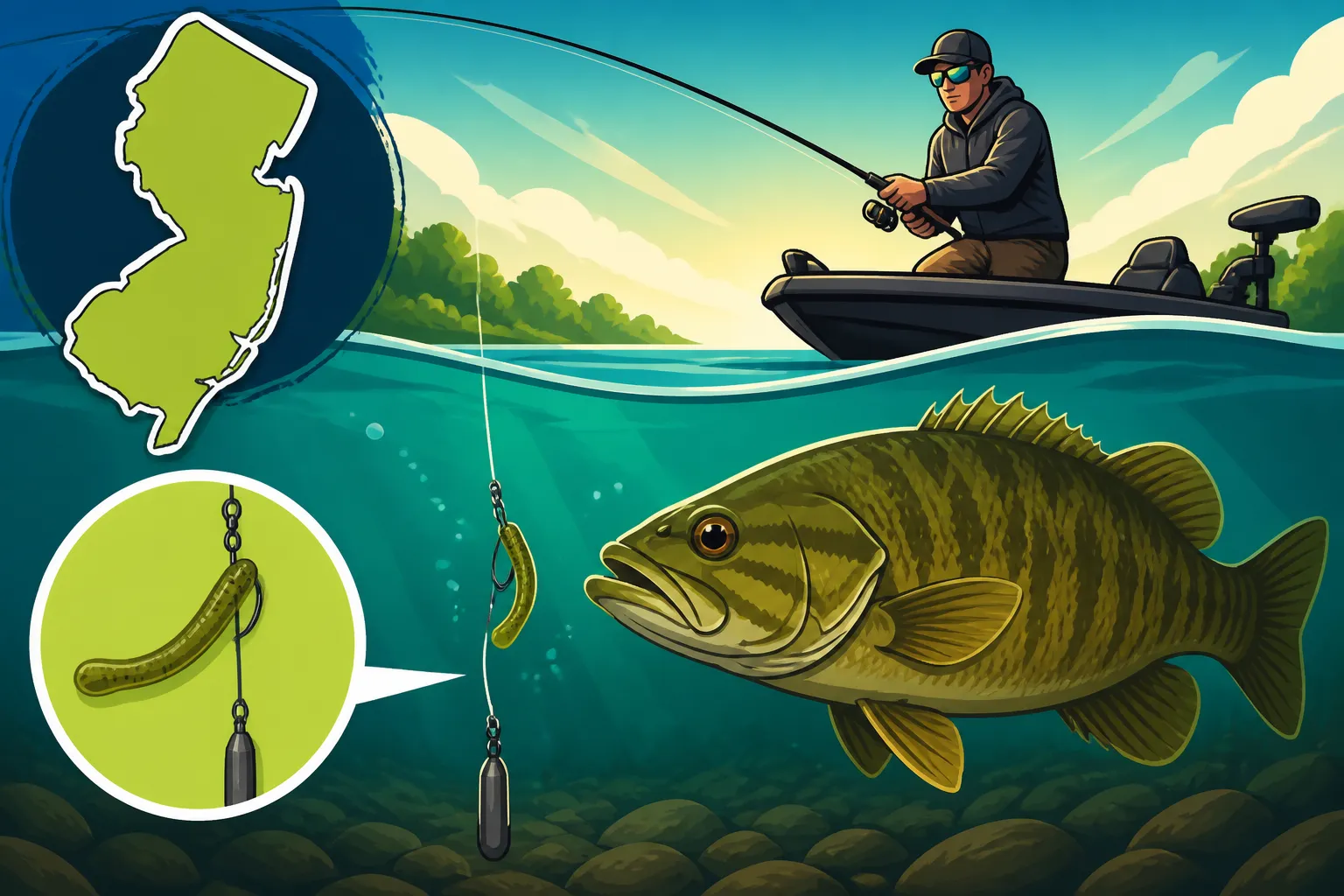
Drop shot fishing is one of those techniques that, once you "get" it, opens up a whole new world, especially when you're targeting smallmouth bass in tough conditions. It’s fundamentally different from most other bass fishing methods, and that difference is exactly why it shines when other presentations fail. Instead of a weight pulling your bait down from the front or directly behind it, the drop shot places the weight at the very end of your line, allowing your hook and bait to suspend above it at a predetermined depth.
Understanding the Unique Presentation
Imagine a natural baitfish or an invertebrate just hovering perfectly still in the water column, perhaps struggling slightly, right in the strike zone of a waiting smallmouth. That's essentially what the drop shot rig mimics. Because the weight is below the hook, your soft plastic bait is free to move incredibly naturally with even the slightest twitch of the rod tip, or even just the subtle currents in the water. It dances and quivers in place, almost effortlessly, without ever falling to the bottom or being dragged unnaturally by the sinker. This means you can keep your bait in a productive zone for an extended period, literally "dropping" it right in front of a bass's face and keeping it there, teasing them until they can't resist. This static yet lively presentation is often too tempting for even the most pressured smallmouth to ignore. The subtlety is key; it's not about aggressive retrieves but about finesse and persistence.
The Finicky Nature of New Jersey Smallmouth
If you've spent any time chasing smallmouth bass in New Jersey, particularly in clear water lakes like Round Valley Reservoir or in the well-fished stretches of the Delaware River, you know they can be incredibly finicky. These aren't necessarily dumb fish. They've seen it all. They're often in areas with significant fishing pressure, and they become highly adept at distinguishing natural forage from something artificial. Water clarity also plays a huge role; in crystal clear conditions, a bass has more time to inspect your offering, and any unnatural movement or presentation can send them packing. This is where the drop shot excels. Its ability to present a bait in such a lifelike, non-threatening manner often triggers strikes when bigger, more aggressive baits get completely ignored. It’s about appealing to their instinct, not necessarily their aggression. When those smallmouth are suspended over deep structure, or tucked tight against a rock pile, a drop shot is often the only way to get your bait directly into their personal space without spooking them. Knowing how to adapt to these challenging fish is crucial, and the drop shot is a top-tier tool for the job.
Essential Gear for Drop Shotting Smallmouth Bass in New Jersey
Success with drop shot fishing isn't just about the technique; it's also heavily reliant on having the right tools. Because this is a finesse presentation, every component of your setup, from your rod to your hook, plays a critical role in detecting those subtle smallmouth bites and effectively fighting the fish. Skimping on quality here can lead to a lot of frustration and lost fish.
Rod and Reel Selection for Optimal Feel and Control
For drop shotting, you're going to want a spinning rod and reel setup. A good quality, lightweight spinning reel, perhaps a 2000 or 2500 series, is perfect. The key is smooth drag and reliable operation, as you'll be making a lot of casts and subtle adjustments. As for the rod, this is where many anglers make mistakes. You need a rod that offers both sensitivity and a good backbone. A fast to extra-fast action rod, typically in the 6'6" to 7'2" range, is ideal. The fast tip allows you to feel the most delicate takes and impart subtle action to your bait, while the medium-light to medium power provides enough strength to set the hook and fight a strong smallmouth without overpowering your light line.
For instance, a G. Loomis NRX+ 822S DSR (Drop Shot Rod) or a St. Croix Legend Tournament Bass rod specifically designed for drop shotting would be top-tier choices. However, for those looking for excellent value without breaking the bank, brands like Dobyns Fury Series or a Fenwick HMG offer fantastic performance. You want a rod that feels like an extension of your arm, allowing you to interpret what's happening underwater with incredible detail. Many anglers find great options for these types of specialized rods on platforms like Amazon, often reading user reviews to guide their choices. When selecting your setup, remember that balance is everything; a well-balanced rod and reel combo reduces fatigue and enhances your feel for the bait. This focus on sensitivity is also important when considering other freshwater techniques, as you can see in our guide on New Jersey Freshwater Fishing Regulations Every Angler Should Know.
Line Choices That Make a Difference
Your choice of fishing line is perhaps even more critical for drop shotting than for other techniques. The goal is maximum sensitivity and minimal visibility. The standard setup involves a main line of braided line, typically 8 to 15 lb test, tied to a fluorocarbon leader.
- Braided Main Line: Braided line has virtually no stretch, which gives you incredible sensitivity to feel those light bites, especially when fishing deep or in windy conditions. The thinner diameter also helps with casting distance and cutting through the water. While it's visible to fish, it will be above your leader, so it's less of a concern.
- Fluorocarbon Leader: This is where the magic happens. Fluorocarbon is nearly invisible underwater because its refractive index is very close to that of water. It also has good abrasion resistance, which is vital when fishing around rocky structure. A 6 to 10 lb test fluorocarbon leader is usually perfect for smallmouth. The length of your leader can vary, but generally, 6 to 10 feet is a good starting point. You'll attach the braid to the fluorocarbon using a strong knot like an FG knot or an Albright knot, which passes smoothly through your rod guides. If you're struggling to choose, check out our piece on Spinning Reel vs Baitcasting Reel for Bass Fishing for more insights into line pairing.
Hooks, Weights, and Lure Recommendations
The devil is truly in the details when it comes to terminal tackle for drop shotting. Using the right hook, weight, and soft plastic bait can make or break your day on the water.
- Hooks: You'll primarily be using specialized drop shot hooks or thin wire Octopus hooks, typically in sizes #1 to #2/0, depending on your bait size. The key is that they are super sharp and designed to keep your soft plastic perfectly horizontal. For example, a Gamakatsu Drop Shot/Split Shot Hook is a fantastic choice. The hook should be tied directly to your fluorocarbon leader using a Palomar knot, making sure to pass the tag end back through the eye of the hook from the top, so the hook stands out perpendicular to the line. This ensures your bait presents naturally.
- Weights: Drop shot weights are usually slender, cylindrical, or teardrop-shaped, designed to slip through rocks and cover with minimal snagging. They feature a swivel and a line clip that allows you to easily adjust your leader length without re-tying. Weights typically range from 1/8 oz to 1/2 oz. For most New Jersey smallmouth fishing, 1/4 oz to 3/8 oz is standard. You might go heavier in deep water or strong current, or lighter in shallow, calm conditions. You can often find multi-packs of these various weights on Amazon, which is convenient for trying different sizes.
- Lures: The world of soft plastic drop shot baits is vast, but certain styles consistently perform well for smallmouth. Small finesse worms (3-5 inches), minnow imitations (like a small flukes or shad), tubes, and creature baits are all excellent choices. Colors should match the forage in the water you're fishing. Natural hues like green pumpkin, watermelon, brown, and natural shad are always good starting points. Brands like Keitech, Z-Man, Berkley, and Yamamoto offer a wide range of highly effective drop shot baits. The goal is a bait that has subtle action and looks realistic as it hangs suspended.
Here's a quick reference table for common drop shot weights and their ideal applications:
| Weight Size | Ideal Depth Range | Current Strength | Wind Conditions | Common Use Case |
|---|---|---|---|---|
| 1/8 oz | 5-15 feet | None to Light | Calm | Shallow finesse, super wary fish |
| 3/16 oz | 10-25 feet | Light | Light | Versatile for calm, moderate depths |
| 1/4 oz | 15-35 feet | Moderate | Moderate | Standard for most conditions |
| 3/8 oz | 25-50+ feet | Strong | Windy | Deep water, heavy current, quick descent |
| 1/2 oz | 40-70+ feet | Very Strong | Very Windy | Extreme depth, strong drifts |
Mastering the Drop Shot Rig for New Jersey Smallmouth
Getting the rig tied correctly is half the battle when it comes to drop shotting. A poorly tied knot or an incorrectly positioned hook can ruin the natural presentation that makes this technique so effective. It might seem a little fiddly at first, but with a bit of practice, you’ll be tying perfect drop shot rigs quickly and confidently.
Step-by-Step Rigging Guide
Let's break down the process of tying a classic drop shot rig, ensuring your bait sits just right and attracts those smallmouth.
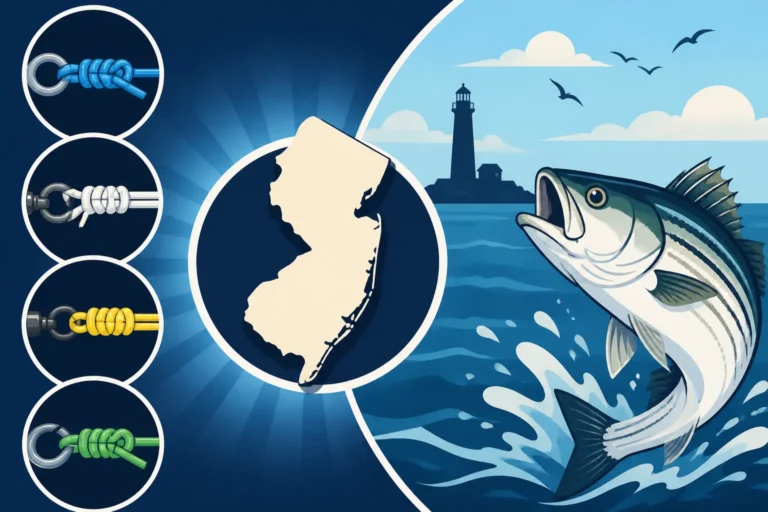
- Attach Your Leader: First, you need to connect your braided main line to your fluorocarbon leader. As mentioned, an FG knot is incredibly strong and streamlined, but if that’s too complex, a double uni knot or an Albright knot will also work. Make sure these knots are tied correctly and cinched down tight to avoid slippage, especially with the slick fluorocarbon.
- Tie the Hook: Take the free end of your fluorocarbon leader and tie your chosen drop shot hook (e.g., a #1 or #1/0 specialized drop shot hook) using a Palomar knot. This knot is excellent for strength and reliability.
- Orient the Hook: This is the crucial step. After tying the Palomar knot and before trimming the tag end, take the tag end of the fluorocarbon line and pass it back down through the eye of the hook. This will make the hook stand out horizontally, perpendicular to your main line, which is exactly how you want your soft plastic to sit. This ensures maximum natural movement and optimal hook-up angles.
- Attach the Weight: Now, take the long tag end that's still hanging from the hook (this is the section you just passed back through the eye) and attach your drop shot weight to it. The specialized drop shot weights have a line clip or a swivel design that lets you just thread the line through and cinch it, or tie a simple overhand knot above the clip to secure it. This allows you to adjust the distance between your bait and weight easily.
That's it! Your rig is now ready for bait. The beauty of this setup is its simplicity and effectiveness. Once you've practiced it a few times, you'll be able to rig up quickly on the water, adapting to changing conditions by simply sliding the weight up or down the line to adjust your leader length.
Customizing Your Leader Length for Different Conditions
The length of the line between your hook and your drop shot weight, often called the leader length, is a critical adjustment that can dramatically impact your success. It determines how high off the bottom your bait will suspend, and knowing when to change it can be a real game-changer.
- Short Leader (6-12 inches): Use a shorter leader when smallmouth are tightly relating to the bottom, perhaps hugging structure or feeding on benthic organisms. This keeps your bait right in their strike zone without being too far off the bottom. It's also useful when fishing in very snaggy areas where you want to minimize the chances of your bait getting caught in addition to your weight. If you're fishing clear, shallow flats where bass are easily spooked, a shorter leader can also keep the bait subtle and close to cover.
- Medium Leader (12-24 inches): This is your all-around, go-to leader length. It's effective in most situations, allowing the bait to suspend clearly above the bottom yet still look like an easy meal. This length is great when fish are a little more active, or when you're probing different depths quickly. It provides enough separation for the bait to dance freely.
- Long Leader (24-48+ inches): A longer leader is ideal when smallmouth are suspended higher off the bottom, or when fishing over very deep structure where bass might be looking up for their meals. It's also a fantastic choice when fishing over thick vegetation or rubble where you want your bait to clear the snags, presenting clean above the cover while your weight still maintains bottom contact. In extremely clear water, a longer leader can also help create more separation between your main line and the bait, making the presentation even more stealthy. Think about the clarity of water in places like Round Valley Reservoir Fishing Guide and how a longer leader might benefit you there.
Remember, experimenting with leader length is crucial. Don't be afraid to change it throughout the day based on what your electronics are telling you about fish behavior and how they're reacting to your bait.
Advanced Drop Shot Techniques and Presentation for Fussy Bass
Once you've mastered the basic rig, it's time to refine your presentation. Smallmouth, especially those in pressured New Jersey waters, often require a delicate touch and a keen understanding of their environment. Advanced drop shot techniques focus on exploiting these nuances to trigger bites from even the most cautious fish.
Reading the Bottom and Targeting Key Structure
Your fish finder is your best friend when drop shotting, but knowing how to interpret what it's telling you is crucial. Smallmouth bass are notorious structure-oriented fish, and they'll often hold tight to specific features on the bottom.
- Interpreting Sonar: Look for hard bottom changes, rock piles, ledges, submerged humps, old roadbeds, or even individual boulders. These are prime smallmouth real estate. A good unit will show you distinct arches for fish, often hovering right above or slightly off these structures. Your goal is to drop your bait precisely into these zones. Learning How to Read a Fish Finder for Beginners can drastically improve your targeting skills.
- Bottom Contact Feel: Even without a fish finder, you can learn a lot by feel. As your weight hits the bottom, pay attention to the feedback through your sensitive rod. A hard thud indicates rock or gravel, a soft mushy feel suggests mud or silt, and a subtle tic-tic-tic might mean scattered small rocks or shells. Smallmouth prefer harder bottoms, so focus your efforts there. Once you feel your weight make contact, lightly lift and drop your rod tip to let the weight tap the bottom, keeping your bait suspended just above it. This tapping motion can create puffs of silt, mimicking feeding activity and drawing attention to your bait. This is particularly effective when targeting fish in rocky areas of the Delaware River Fishing in New Jersey.
Subtle Twitches and Slack Line Tricks That Trigger Bites
The beauty of drop shotting is often in what you don't do. Overworking the bait is a common mistake.
- The "Dead Stick": Sometimes, the most effective presentation is no presentation at all. After casting and letting your weight settle, simply let your bait sit perfectly still. The natural currents in the water will impart subtle movement, making your soft plastic appear incredibly lifelike. Many smallmouth will pick up a "dead sticked" bait without warning.
- The Quiver: When you need a little more action, apply small, gentle twitches of your rod tip. These aren't big jerks, but rather tiny vibrations that make your bait quiver and dance in place. Think of it like a subtle shiver or a struggling baitfish. The key is to keep the weight on the bottom while the bait above it moves. Keep your eye on the line; sometimes the only indication of a bite is a slight "tick" or a sudden slackening.
- Slack Line Drops: When fishing vertically, or with a very slight current, try letting a little slack into your line and then slowly taking it up. This causes your bait to slowly "fall" and "rise" in the water column, much like a wounded baitfish struggling against gravity. This upward and downward motion can be irresistible to smallmouth watching from below. The next time you're targeting New Jersey Smallmouth Bass on the Delaware River, try these subtle movements to see what gets their attention.
Adapting Your Approach to Current and Wind
New Jersey offers a diverse range of fishing environments, from the flowing waters of the Delaware River to the often breezy conditions on large lakes. Drop shotting successfully means adapting to these external forces.
- Dealing with Current: In rivers and tidal waters, current can be your friend or your foe. Use it to your advantage by positioning your boat (or yourself, if shore fishing) upstream and allowing the current to carry your bait naturally downstream into promising areas. You might need to increase your weight size to ensure your drop shot maintains bottom contact without getting swept away too quickly. When the current is strong, minimize extraneous rod movements and let the water do most of the work, imparting a natural flow to your bait. A heavier weight will also help you feel the bottom better.
- Fishing in Wind: Wind creates chop on the surface and can make boat control difficult, but it also creates current and can position baitfish. The biggest challenge is maintaining sensitivity and feeling bites. If possible, use your trolling motor or anchor to maintain a steady position. Increase your weight size to keep contact with the bottom, and try to cast directly into or with the wind to manage line bow. Watch your line entry point into the water very closely for any sudden movements or slackening that could indicate a bite. Sometimes, using a slightly stiffer rod action can help in cutting through the wind-induced line slack.
Where and When to Drop Shot for Smallmouth in New Jersey
New Jersey might be known for its stunning coastline and incredible saltwater fishing, but it also boasts some fantastic smallmouth bass opportunities. Knowing where to go and when to employ your drop shot skills can significantly increase your chances of success.
Prime New Jersey Smallmouth Waters to Explore
Smallmouth bass thrive in clear, cool water with rocky bottoms, and luckily, New Jersey has several excellent locations that fit this description perfectly.
- Delaware River: Without a doubt, the Delaware River is a smallmouth haven. From the upper reaches near Port Jervis down to Trenton, the river offers miles of prime smallmouth habitat with rocky riffles, deep pools, and current seams. The drop shot is incredibly effective here, allowing you to present a bait naturally in the current. Focus on eddies, current breaks behind large boulders, and deeper holes. Many anglers successfully target these fish from kayaks or small boats, but there are also numerous shore access points. A comprehensive guide like How to Catch Smallmouth Bass on the Delaware River can provide even more detailed spots.
- Round Valley Reservoir: This deep, clear reservoir in Hunterdon County is a trophy smallmouth factory. Its gin-clear waters and steep, rocky drop-offs make it an ideal location for drop shotting. Smallmouth often suspend over deep structure here, and a drop shot is perfect for targeting them. Look for main lake points, submerged humps, and steep rock ledges. Access can be tricky, as gas motors are prohibited, but electric motors and car-top boats are allowed. If you're serious about this body of water, our New Jersey's Round Valley Reservoir Fishing Guide is an invaluable resource.
- Lake Hopatcong: While better known for its largemouth and muskie, Lake Hopatcong, New Jersey's largest lake, also holds a healthy population of smallmouth bass, particularly in its deeper, rockier sections. Focus on offshore humps, rock piles, and distinct drop-offs. The smallmouth here can be a bit more elusive but are often larger.
- Merrill Creek Reservoir: Another deep, clear, and cold water reservoir, Merrill Creek is known for its excellent smallmouth fishing. Like Round Valley, it's electric-motor only, contributing to a more pristine fishing experience. The key here is to target the deeper humps, points, and transition areas between rocky and softer bottoms.
- Greenwood Lake: Straddling the New York-New Jersey border, Greenwood Lake offers another opportunity for smallmouth. Its deep, rocky sections provide ideal habitat. Look for them around offshore structure, especially during the warmer months. Our Greenwood Lake Fishing Guide can point you to specific areas.
Seasonal Considerations for Drop Shot Success
Smallmouth bass behavior changes significantly throughout the year, and understanding these patterns will help you determine when the drop shot will be most effective.
- Spring (Pre-spawn and Spawn): As water temperatures rise into the 40s and 50s, smallmouth begin to move shallower, staging for the spawn. The drop shot is deadly during this period. Fish will often hold on secondary points, rock shelves, and deeper edges of spawning flats. A slowly quivering drop shot is perfect for tempting these still-lethargic fish. During the actual spawn, smallmouth will be on beds, and while they can be caught, targeting them is often discouraged to protect the population.
- Summer (Post-spawn and Mid-summer): This is arguably the prime time for drop shotting smallmouth in New Jersey. After the spawn, bass move to deeper, cooler waters, often suspending over main lake humps, deep points, and offshore structure in lakes, or holding in deeper pools and current breaks in rivers. They become more active feeders but can still be particular about presentations, especially on bright, sunny days. The drop shot allows you to precisely target these deeper fish and keep your bait in their strike zone for extended periods. This is often the Best Season for Smallmouth Bass on the Delaware River.
- Fall (Feeding Frenzy): As water temperatures begin to drop in the fall, smallmouth enter a feeding frenzy, bulking up for winter. While they may respond to more aggressive techniques, the drop shot remains highly effective, particularly on days when fish are a bit less active or when they're congregated tightly on specific deep structure. They might chase baitfish more actively, but a slow, methodical drop shot can pick off those wary individuals.
- Winter (Ice Fishing): While ice fishing for smallmouth in New Jersey is less common than for other species, if you find open water or safe ice on smallmouth lakes, the drop shot is an incredibly effective technique through the ice. A small, subtle presentation right in front of a suspended smallmouth is often the only way to get a bite from these cold-water dwellers.
Common Drop Shot Mistakes and How to Avoid Them
Even with the right gear and knowledge of the technique, it's easy to fall into common traps that can hinder your drop shot success. Being aware of these pitfalls and knowing how to correct them will significantly improve your catch rates.
Over-Working the Bait and Losing the Natural Appeal
This is perhaps the most common mistake beginners make with a drop shot rig. We're often conditioned to aggressively retrieve or jig our lures, but with drop shotting, less is often more, especially for smallmouth.
- The Problem: Many anglers constantly twitch, lift, and drop their rod, making the bait jump and move too much. While some movement is good, excessive action can make the bait look unnatural or even spook a wary smallmouth. It loses that subtle, suspended, easy-meal appeal. Smallmouth, particularly in clear water or under pressure, prefer a bait that looks injured or just barely moving, not one frantically darting around.
- The Fix: Practice the "dead stick" method first. Cast your bait, let the weight settle, and then do absolutely nothing for 10-20 seconds. Let the natural water movement give the bait life. Then, try very subtle twitches – just enough to make your rod tip quiver. Imagine you're just trying to make the bait breathe. Lift your rod tip only enough to feel the weight lightly tap the bottom, then let it settle again. The goal is to keep your bait in the strike zone, quivering enticingly, not moving across a large area. Remember, the drop shot's strength is its ability to stay in one spot.
Using the Wrong Sized Gear for the Conditions
Matching your gear to the specific fishing conditions is paramount for drop shot success, but it's another area where anglers can falter. Too heavy or too light can both be problematic.
- The Problem: Using a heavy action rod with thick line can overpower the delicate nature of the drop shot, making it difficult to impart subtle action to your bait and feel light bites. Conversely, using gear that's too light for deep water or heavy current can result in poor bottom contact, line management issues, and lost fish if a bigger bass hits. For example, trying to use a 1/8 oz weight in strong current on the Delaware River will just get swept away, while a 1/2 oz weight in 10 feet of calm water is overkill and less sensitive. Similarly, using a too-large hook can hinder the bait's natural movement.
- The Fix: Always consider the depth, current, wind, and target fish size. For most New Jersey smallmouth, a medium-light to medium power, fast action spinning rod is ideal. Match your line appropriately – 8-15 lb braid to a 6-10 lb fluorocarbon leader. Refer to the drop shot weight table above and adjust your weight size according to the conditions. If you can't feel the bottom, go heavier. If your bait feels unnatural or you're getting snagged too much, go lighter or adjust your leader length. Think about the specific regulations too, such as those found in the New Jersey Freshwater Fish Size Chart 2026, to understand the size of fish you might encounter and the gear needed to handle them responsibly. Making sure your gear is balanced and suited to the environment will enhance both your sensitivity and your fish-fighting ability.
Ignoring Your Electronics for Deeper Insights
In today's age of advanced sonar technology, not using your fish finder effectively when drop shotting is like fishing blindfolded. Smallmouth often suspend or relate to subtle bottom features that are impossible to find without good electronics.
- The Problem: Many anglers will simply cast and retrieve, hoping to hit a fish. While this can work occasionally, it's a highly inefficient way to drop shot, especially in larger, deeper bodies of water. You might be fishing over barren bottom, completely missing schools of suspended bass or isolated pieces of cover. Not knowing the exact depth fish are holding at, or the type of bottom you're over, wastes valuable time and effort.
- The Fix: Before making a single cast, spend time idling around promising areas with your boat, meticulously scanning with your fish finder. Look for sudden depth changes, rock piles, humps, ledges, and most importantly, baitfish and bass arches. Pay attention to where the bass are holding relative to the bottom – are they right on it, or suspended 5 feet up? This tells you exactly how long your leader should be. Use your GPS to mark these spots. Once you've identified a promising area, use your trolling motor (if applicable) to stay precisely on top of it, allowing for vertical presentations that put your bait directly into the strike zone. If you're new to this technology, learning How to Read a Fish Finder for Beginners is a crucial step to unlocking the full potential of your drop shot game. By actively using your electronics, you transform from guessing to targeting, dramatically increasing your efficiency and success.
Disclaimer
The information provided in this guide is for general informational purposes only. Fishing regulations, season dates, and limits in New Jersey can change frequently. Always consult the most current New Jersey Fish and Wildlife Digest or their official website before heading out on the water. Fishing can be inherently dangerous; always prioritize safety and wear appropriate personal flotation devices when on the water.