Why Have Weakfish Numbers Declined in New Jersey?
It’s a sad truth for many of us who’ve spent years fishing the waters of the Garden State: the weakfish, once a ubiquitous presence and a prized catch, just aren't what they used to be. You remember those days, don't you? Casting into a tide rip in Barnegat Bay or along the surf, and feeling that distinctive, powerful thump on your line, followed by a vigorous fight. The vibrant purple and gold hues shimmering in the sun, that unmistakable "dog tooth" in its upper jaw, and the subtle "weak" bite – it was truly a special fish. But now, those experiences are far rarer, leaving many anglers scratching their heads and wondering, "What happened?" This guide will delve deep into the complex factors contributing to the decline of weakfish numbers in New Jersey, exploring everything from environmental shifts to historical fishing pressures, and discuss what's being done to help this iconic species recover.
A Historical Look at New Jersey's Weakfish Fishery
For decades, the weakfish, or Cynoscion regalis, was a cornerstone of both recreational and commercial fishing in New Jersey. They were so abundant that catching a cooler full was not just a dream, but often a reality for many anglers, especially during their peak seasons. The weakfish fishery supported countless livelihoods and provided endless enjoyment for families and serious fishermen alike.
The "Trout of the Sea"
You often hear weakfish fondly referred to as the "trout of the sea," and it's not hard to see why. Their beautiful iridescent colors – often a shimmering green-gold on the back fading to silver, with distinctive wavy lines and black spots – made them a sight to behold. But beyond their beauty, they were also a fantastic fighting fish, offering thrilling battles on light tackle, especially in the shallower bay waters. This made them incredibly popular with recreational anglers across the state, from the Delaware Bay up to Sandy Hook. They were predictable, plentiful, and a joy to catch, truly embodying the spirit of New Jersey's inshore fishing scene. Many old-timers will tell you stories of the weakfish blitzes that rivaled even bluefish frenzies, with acre after acre of boiling water, weakfish chasing bait right up onto the beaches.
Peak Years and Early Warning Signs
The late 1970s and early 1980s are often considered the golden age for weakfish in New Jersey. Anecdotes from anglers and commercial landing reports from that era paint a picture of extraordinary abundance. Schools of weakfish were so vast that you could almost guarantee a catch, whether you were drifting a shedder crab in the back bays or working a soft plastic bait along a sod bank. However, by the late 1980s and early 1990s, the first subtle shifts began to emerge. Some seasons felt a little less productive, the average size of fish seemed to shrink slightly, and those massive schools became less frequent. It wasn't an overnight crash, but a gradual, insidious trend that, looking back, was a clear signal that something was amiss. Researchers and dedicated anglers started to notice these changes, prompting initial concerns about the sustainability of the fishery. These early warning signs, while perhaps not fully understood at the time, were the precursors to the more severe decline we've witnessed in recent decades.
Understanding the Primary Causes of Weakfish Decline
The decline of weakfish isn't due to a single culprit; it's a complex tapestry woven from various environmental and ecological factors. It's a prime example of how interconnected marine ecosystems are and how multiple stressors can impact a species.
Habitat Loss and Degradation
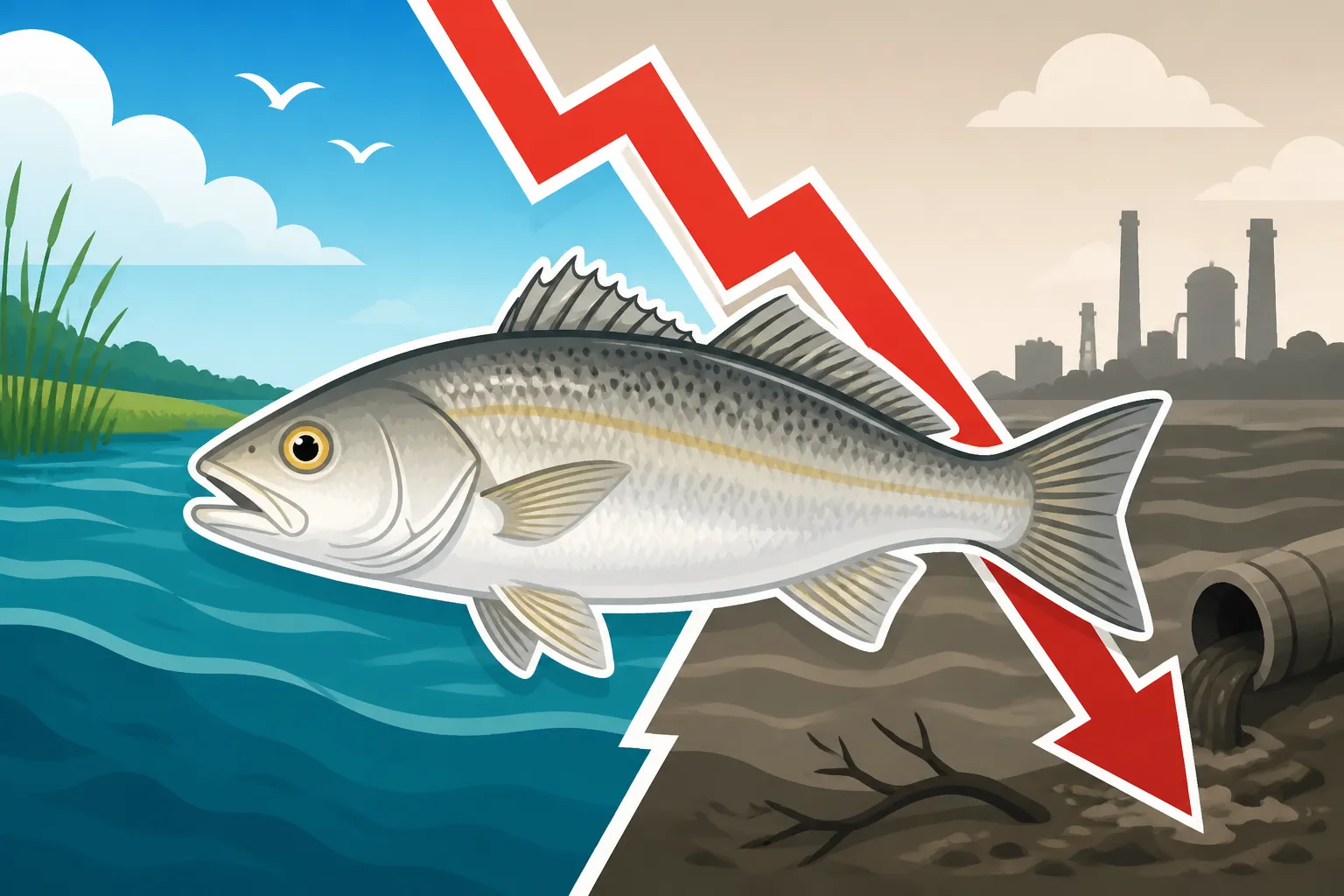
Weakfish rely heavily on healthy estuarine environments and coastal waters for their spawning grounds, nurseries, and feeding areas. Unfortunately, these critical habitats have faced immense pressure over the years. Development along the New Jersey coastline has led to the loss of vital marshlands, seagrass beds, and other natural structures that young weakfish depend on for shelter and food. Pollution, stemming from both point sources (like industrial discharges) and non-point sources (like stormwater runoff containing pesticides, fertilizers, and other chemicals), further degrades water quality. This pollution can directly harm weakfish, reduce the abundance of their prey, or make their habitats uninhabitable. Imagine trying to raise your kids in a constantly shrinking, increasingly toxic environment – it's a tough ask for any species. The impact of development on coastal ecosystems is a serious issue that affects many species, not just weakfish.
Predation and Competition
The delicate balance of the marine food web also plays a significant role. Weakfish, especially juveniles, are prey for a host of other species, including larger predatory fish and marine mammals. While this is a natural part of any ecosystem, an increase in predator populations or a decrease in weakfish numbers due to other factors can exacerbate the problem. For instance, the recovery of striped bass populations in the region, while a great success story for that species, might mean more pressure on juvenile weakfish as a food source. Additionally, competition for food resources with other species can also impact weakfish growth and survival rates. It's a constant struggle for survival out there, and when a species is already stressed, increased predation or competition can push it further down.
Climate Change and Water Temperature Shifts
Our changing climate is another major factor that cannot be overlooked. Weakfish are temperature-sensitive, and shifts in ocean temperatures can significantly affect their spawning success, migration patterns, and overall distribution. New Jersey's waters have been experiencing warming trends, which can alter the timing of weakfish migrations or the availability of their preferred prey. Warmer waters can also increase the metabolic rates of fish, requiring them to consume more food, which might be scarce. Furthermore, changes in salinity due to altered precipitation patterns can impact their estuarine nursery habitats. It's like trying to live in a house where the thermostat is constantly fluctuating wildly, making it harder to thrive. Understanding how to read tide charts for better fishing in New Jersey can give you a local advantage, but broad climate patterns are a much bigger challenge.
The Role of Forage Fish
Weakfish are opportunistic feeders, but they rely heavily on abundant schools of smaller "forage fish" like Atlantic menhaden, bay anchovies, and silversides. If the populations of these critical prey species decline, it directly impacts the weakfish's ability to find enough food to grow and reproduce. Forage fish populations are themselves subject to environmental pressures, fishing pressure, and climate change. The health of the entire ecosystem hinges on the availability of these smaller baitfish. Without a robust food supply, weakfish struggle to maintain healthy populations, even if other factors were stable. Anglers often discuss what forage fish do saltwater gamefish feed on, and for weakfish, these smaller baitfish are absolutely crucial.
The Impact of Fishing Pressure and Management
While environmental factors are significant, human fishing activities have also historically contributed to the weakfish decline, prompting various management efforts.
Commercial and Recreational Fishing
In their heyday, weakfish were targeted heavily by both commercial and recreational anglers. Commercially, they were a valuable species, caught in large numbers using various gear types, including gillnets and trawls. Recreationally, the sheer abundance meant that bag limits were often generous, and anglers kept many fish. When a species is extremely abundant, it's easy to underestimate the cumulative impact of widespread fishing pressure. The sheer volume of weakfish being harvested for decades, combined with their relatively short lifespan (they generally live 6-10 years) and late maturity compared to some other species, meant that even a slight overestimation of their population size could lead to significant overfishing. It's easy to think "there's always more," until suddenly, there isn't. This historical pressure undoubtedly played a role in reducing the spawning stock biomass, making the population more vulnerable to other environmental stressors. For more details on catch limits, you can always check the New Jersey Weakfish Bag Limit Explained.
Regulatory Responses and Their Effectiveness
Recognizing the decline, fisheries managers in New Jersey and across the Mid-Atlantic implemented various regulations to protect weakfish. These included reduced bag limits, increased size limits, and commercial quotas. For example, back in the peak, you might have been able to keep a dozen or more fish. Now, the regulations are much stricter, reflecting the critical need for conservation. Many anglers remember the frustration of these changes, feeling like their cherished fishery was being taken away, but these measures were a direct response to alarming stock assessments. While these regulations have been crucial in preventing a complete collapse, the slow pace of recovery indicates the severity of the initial decline and the persistence of other ecological challenges. It's a tough balancing act for regulators, trying to manage a recovering stock while still allowing some access for anglers. The state often updates its rules, so always refer to the latest New Jersey Fishing Season Dates and Closures.
Here’s a simplified overview of how regulations have shifted for weakfish over time:
| Era | Bag Limit (Recreational) | Size Limit (Recreational) | Commercial Harvest | Stock Status |
|---|---|---|---|---|
| Late 1970s-80s | Very generous (e.g., 10+) | Often none or very low | High | Abundant |
| Early 1990s | Reduced (e.g., 8-10) | Increased slightly | Moderate | Declining |
| Late 1990s-2000s | Further reduced (e.g., 6) | Further increased | Reduced | Severely Depleted |
| 2010s-Present | Highly restricted (e.g., 1) | Higher | Minimal/Prohibited | Critically Low/Stable |
Note: This table provides a generalized trend. Specific regulations varied by year and jurisdiction.
Bycatch Issues
Another often overlooked aspect of fishing pressure is bycatch – the unintentional capture of non-target species. Weakfish, especially juveniles, can be inadvertently caught in commercial gear targeting other species, such as trawls for croaker or scup, or even in gillnets set for other inshore species. While efforts have been made to reduce bycatch through gear modifications and restrictions, it remains a challenge, particularly for a species that congregates in large schools and shares habitats with many other fish. Each weakfish caught and discarded as bycatch, even if it survives the initial trauma, contributes to mortality that impacts the overall population. It's a difficult problem to solve because weakfish share the same waters with so many other commercially viable species.
What's Being Done and What Anglers Can Do
The situation for weakfish is undoubtedly challenging, but it's not without hope. Dedicated researchers, conservationists, and responsible anglers are all playing a part in trying to understand and reverse the decline.
Ongoing Research and Monitoring
Scientists at institutions like Rutgers University and federal agencies such as the National Oceanic and Atmospheric Administration (NOAA) are continuously conducting research to better understand weakfish biology, population dynamics, and the specific environmental factors impacting their survival. This includes studies on their spawning habits, migratory routes, diet, and genetic diversity. They also conduct stock assessments to estimate the current population size and predict future trends, which are crucial for setting informed management measures. Anglers themselves often play a vital role by participating in programs like the New Jersey Recreational Fishing Survey: Why You Might Get a Call, providing invaluable data on their catches (or lack thereof). This scientific groundwork is the backbone of any successful conservation effort. It's a painstaking process, but absolutely necessary to get a clear picture of what's happening beneath the waves.
Conservation Measures and Sustainable Practices
Conservation efforts are multi-faceted. Beyond regulations, there's a strong push for habitat restoration projects, especially for vital seagrass beds and marshlands. Reducing pollution through improved stormwater management and advocating for cleaner waterways benefits weakfish and the entire ecosystem. For anglers, adopting sustainable practices is paramount. Practicing catch and release for weakfish, especially larger breeding-size individuals, allows them to reproduce and contribute to the population. Using appropriate gear that minimizes harm to released fish, like circle hooks for bait fishing, is also highly recommended. You can find many of these conservation-minded fishing tools and resources on sites like Amazon, making it easier than ever for anglers to make responsible choices. Learning how to catch weakfish in New Jersey with minimal impact is key to helping them recover.
The Importance of Angler Reporting
As an angler, you are truly on the front lines of conservation. You spend countless hours on the water and often witness firsthand the subtle shifts in fish populations. Your observations are incredibly valuable! Reporting your catches (or lack thereof), noting unusual environmental conditions, or participating in citizen science programs can provide critical data to researchers and fisheries managers. Many states, including New Jersey, have mechanisms for anglers to report specific observations. This helps to corroborate scientific surveys and provides a real-time pulse on the health of local fisheries. Don't underestimate the power of your anecdotal evidence when compiled with thousands of other anglers' reports. This collective knowledge helps paint a clearer picture and informs future management decisions, proving that every angler has a role to play in the weakfish's future.
Disclaimer
Please remember that fishing regulations, including bag and size limits, seasons, and licensing requirements, are subject to change. Always consult the latest New Jersey Fish and Wildlife Digest or visit the official New Jersey Department of Environmental Protection (NJDEP) website before heading out on the water. This guide is for informational purposes only and does not constitute legal advice regarding fishing regulations.