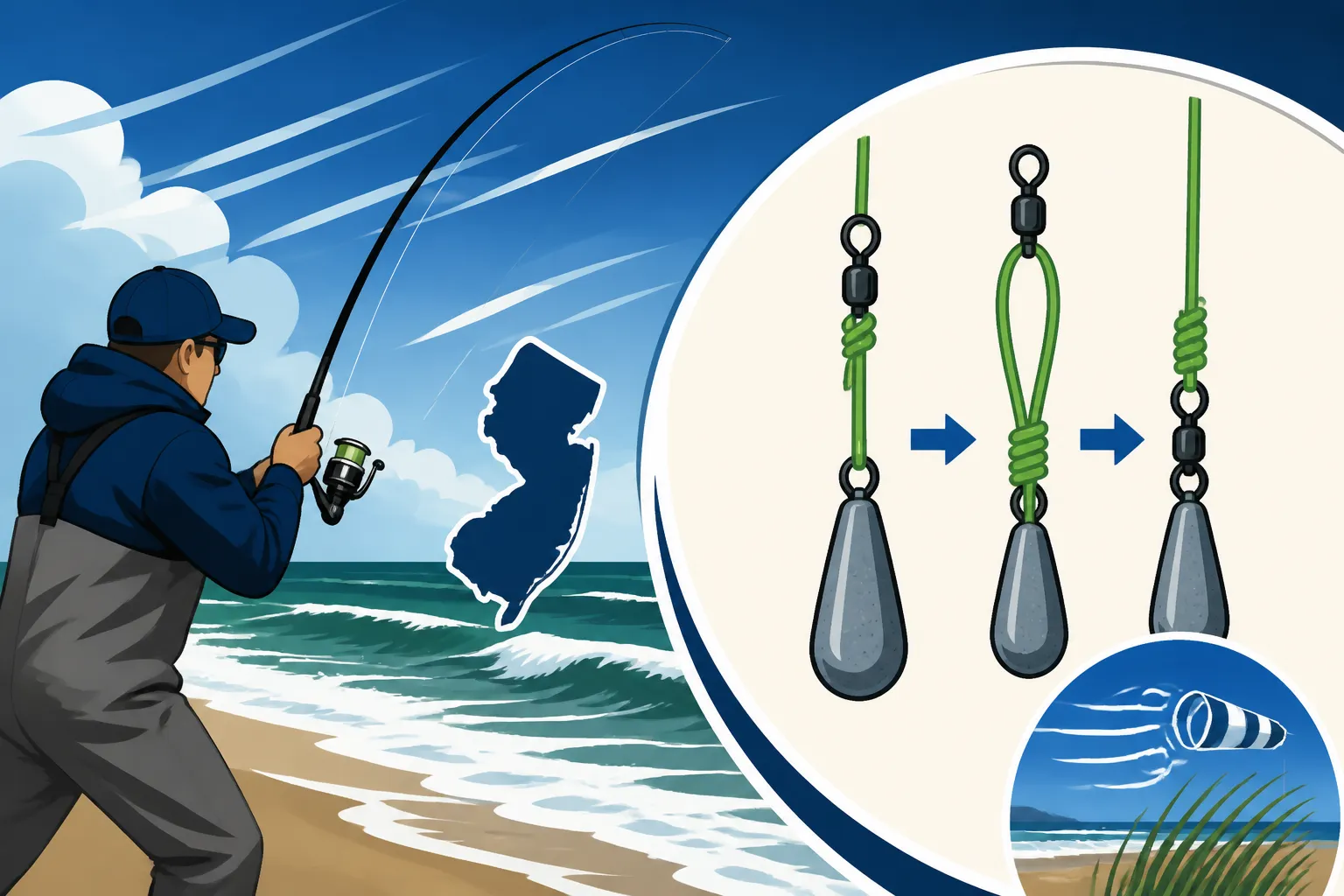
How to Rig a Sinker for Surf Fishing in Windy Conditions
There’s nothing quite as frustrating as heading out for a prime surf fishing session along the beautiful New Jersey coast, only to be met with a relentless, whipping wind. You cast your line with anticipation, watch your sinker fly, and then immediately feel that tell-tale drag as the current and wind grab hold, sweeping your perfectly placed bait far down the beach or worse, into a snaggier patch of rocks. It’s a battle many of us know all too well, one that can quickly turn a hopeful day into a series of re-casts and re-rigs. But don't despair! This guide is here to arm you with the knowledge and techniques to effectively rig your sinker for surf fishing, even when Mother Nature decides to crank up the gusts.
Understanding the Challenge: Why Wind is Your Surf Fishing Nemesis
We’ve all been there: standing on the sand, trying to hold our ground against a stiff breeze, only to have our fishing line become a giant sail. The wind isn't just an inconvenience; it's a formidable opponent that demands specific strategies to overcome.
The Unseen Force: How Wind and Current Work Against You
Imagine your fishing line as a series of tiny strings strung through the air and water. The more surface area those strings present, the more the wind and current can push against them. When a strong wind blows across the beach, it doesn't just push your body around; it creates significant drag on your main fishing line, especially the section above the water. This drag pulls at your sinker, making it incredibly difficult for it to settle and hold its position on the bottom.
To compound this, strong winds often accompany or contribute to more powerful waves and currents. The undertow can be fierce, churning up the sand and creating a chaotic environment where lighter sinkers simply get rolled around like pebbles. Your bait, instead of sitting enticingly in a prime feeding lane, ends up tumbling uncontrollably, becoming an unappetizing blur to any passing fish. It's a recipe for lost bait, constant re-casting, and a whole lot of frustration. It takes away from the peaceful experience we all crave when we hit the beach for some New Jersey Surf Fishing Techniques.
Common Sinker Mistakes in Windy Weather
Many anglers, especially those new to the game or those used to calm conditions, make a few key mistakes when the wind picks up.
First, relying on a standard pyramid sinker in heavy wind and strong current is often a losing battle. While pyramid sinkers are excellent for sandy bottoms in calmer conditions due to their sharp edges digging in, they can easily be dislodged and rolled when the forces of nature intensify. They simply don't have enough grip to maintain their position when a persistent undertow or a big wave hits.
Second, many of us underestimate just how much weight we actually need. There’s a natural inclination to use the lightest tackle possible for better casting distance and a more sporting fight, but in windy conditions, that philosophy can backfire spectacularly. A sinker that felt perfectly adequate on a calm day might become entirely useless when the wind is gusting at 20 knots and the waves are pounding. Failing to upsize your sinker weight significantly is a quick way to spend more time reeling in empty lines than actually fishing.
Lastly, it’s a mistake to stick to one sinker type or weight throughout your trip. New Jersey's weather, especially along the coast, can be notoriously fickle. Conditions can change rapidly, with winds shifting direction or increasing in intensity. If you're not prepared to adapt your sinker choice – both in type and weight – you'll find yourself struggling needlessly. It’s all about being flexible and responsive to what the ocean is throwing at you.
The Right Sinkers for the Fight: Choosing Your Anchors
When the wind is howling and the waves are crashing, you need a sinker that’s built to grab hold and refuse to let go. Forget the dainty stuff; it’s time to bring out the heavy artillery.
The Mighty Sputnik Sinker: Your Best Friend Against the Wind
If there’s one sinker that truly shines in windy, high-current surf conditions, it’s the sputnik sinker, often called a spider weight. You’ve probably seen them – they look like a traditional lead sinker with four stiff wire arms protruding from the bottom. These wires are the secret sauce. When the sinker hits the bottom, those wires splay out and dig into the sand, acting like tiny anchors. They create an incredible amount of holding power, far surpassing what a pyramid or bank sinker can achieve.
The beauty of sputnik sinkers is how they resist being rolled by the current and waves. The wires create a much larger footprint and a grippier surface, allowing your bait rig to stay exactly where you want it. This means your bait remains stationary and visible, maximizing your chances of a bite. You might think those wires would snag all the time, but they're surprisingly good at releasing, especially on sandy bottoms. As you retrieve, the pressure on the line often causes the wires to fold back, making it easier to pull free.
Pros of Sputnik Sinkers:
- Exceptional Holding Power: unparalleled ability to anchor your bait in strong currents and heavy surf.
- Reduced Bait Sweep: keeps your bait precisely in the strike zone longer.
- Versatile for Rough Conditions: ideal for situations where other sinkers fail.
Cons of Sputnik Sinkers:
- Bulkier Profile: can be a bit more cumbersome to cast, especially in lighter setups.
- Potential for Snags: while often self-releasing, they can still snag on particularly rocky or shelly bottoms, especially if the wires get bent permanently.
- Retrieval Effort: can require a bit more effort to pull free from the sand, which might feel like a snag at first.
You can often find a good selection of sputnik sinkers, from smaller 3-ounce versions to hefty 8-ounce models, on Amazon or at your local tackle shop. Having a few different weights in your surf bag is a smart move.
Pyramid and Flat-Bottomed Sinkers: When and How to Use Them
While sputniks are the kings of extreme conditions, that doesn’t mean your trusty pyramid and flat-bottomed (bank) sinkers are useless. They still have their place, even on a breezy day, but you need to know their limitations and how to compensate.
Pyramid sinkers, with their triangular shape and pointed edges, are designed to dig into soft sand and hold. In moderate wind and current, on a predominantly sandy bottom, they can still perform adequately, especially if you go up a weight size or two from what you'd typically use. If the wind is a slight breeze and the current isn't ripping, a heavier pyramid (say, 4-6 ounces) might be all you need to keep your bait in place.
Flat-bottomed or bank sinkers, which often look like an elongated teardrop, offer a different kind of resistance. Their flatter sides help them settle and lie low on the bottom, which can make them less prone to rolling than a perfectly round sinker. While they don't dig in like a pyramid or sputnik, their heavier profile and larger surface area can provide more stability than a lighter, more streamlined option. Again, the key here is weight. If you're opting for a pyramid or bank sinker in windy conditions, don't be shy about increasing the weight. Instead of a 3 oz, try a 5 or 6 oz. You might sacrifice a little casting distance, but you’ll gain immensely in holding power, which is far more critical in these situations. Remember, the goal is to keep your bait still.
Swivel and Clip Designs: Why They Matter for Wind Resistance
Beyond the sinker itself, the components that connect it to your line play a crucial role. A good quality swivel, specifically a barrel swivel or a high-strength snap swivel, is vital. Why? Because the constant tugging and rolling of a sinker in rough conditions, combined with the wind putting pressure on your line, can cause severe line twist. Line twist weakens your line, makes casting a nightmare, and can lead to tangles and break-offs. A swivel allows your line to turn independently of your rig, significantly reducing this issue.
Additionally, consider using a sturdy snap or clip, like a duo-lock snap, to attach your sinker to your main rig. This isn't directly about wind resistance, but it's about efficiency. When conditions are changing rapidly – as they often do with wind – you want to be able to quickly swap out sinker weights or even switch from a pyramid to a sputnik without having to cut and re-tie your entire setup. This saves time, reduces frustration, and keeps your bait in the water longer, which is paramount on a tough day. Many pre-made surf rigs come with these clips built right in for convenience. You can also pick up packs of sturdy snap swivels from a reliable online retailer like Amazon.
Rigging Strategies to Conquer the Gusts
Choosing the right sinker is only half the battle. How you integrate that sinker into your overall rig can make all the difference when dealing with relentless wind and current.
The Fish-Finder Rig: Minimizing Drag and Maximizing Sensitivity
The fish-finder rig is an absolute workhorse for surf fishing, and it’s particularly effective in windy conditions because of its unique design. The core principle is that your sinker is threaded onto your main line via a slider, which then ties to a barrel swivel. Your leader, with the hook and bait, is tied to the other end of the swivel. This setup allows the sinker to sit on the bottom and hold, while your main line can slide freely through the sinker’s attachment point.
Why is this so great in the wind? Even if your sinker occasionally shifts a few inches under extreme pressure, your bait, attached to the leader, can still move naturally with the subtle currents without directly feeling the full tug of the heavy sinker. More importantly, when a fish bites, it pulls on your leader and the swivel, but the main line slides through the sinker. This means the fish feels minimal resistance from the heavy weight, often leading to a more confident bite.
To assemble this rig:
- Thread a plastic fish-finder slider onto your main line.
- Attach a strong barrel swivel to the end of your main line.
- Tie a monofilament or fluorocarbon leader (typically 18-36 inches long, depending on conditions and target species) to the other end of the swivel.
- Tie your hook to the end of the leader.
- Clip your chosen sinker (sputnik or heavy pyramid) to the snap on the fish-finder slider.
This rig minimizes the chances of fish dropping the bait due to sinker resistance, even when the wind and waves are creating a lot of movement on your main line. It's a fantastic rig to master for general surf fishing, and invaluable for challenging days. For more detailed insights, check out our guide on How to Rig for Surf Fishing in New Jersey.
The High-Low Rig: Keeping Bait Above the Wash
Another staple of surf fishing, the high-low rig, also known as a top-and-bottom rig, can be very effective in windy conditions, especially if you’re looking to present multiple baits or keep your offerings slightly elevated from the bottom churn. This rig typically features two or three snelled hooks extending from dropper loops, with a heavy sinker at the very bottom.
The key to its success in wind is the sinker’s direct connection to the end of the rig. A heavy sinker, especially a sputnik, on the bottom acts as a powerful anchor for the entire setup. The dropper loops keep your baits slightly off the bottom, preventing them from being buried in sand or tangled in debris that the strong current might be kicking up. This can be particularly useful when targeting species like fluke or kingfish that might be cruising just above the bottom, or if you're dealing with a lot of seaweed and churn.
When using a high-low rig in windy conditions, don’t skimp on the leader material. Opt for a heavier monofilament or fluorocarbon (e.g., 30-50 lb test) for the main body of the rig itself. This will help it stand up to the abuse of strong currents, wave action, and any fish you hook. You can buy these rigs pre-made or tie your own. The advantage of making your own is customizing the dropper loop length and the distance between hooks to suit the conditions and the bait you're using. If you're looking for Best Bait for Surf Fishing in New Jersey, consider clams or bunker chunks on a high-low rig.
Weighting Your Line: Going Heavier When in Doubt
This might sound simple, but it’s often overlooked: when the conditions are tough, use the heaviest sinker you can reasonably cast. There’s no prize for using the lightest weight if your bait is constantly being washed ashore or moving out of the strike zone. If you’re typically throwing a 3 oz sinker, and the wind picks up, don’t hesitate to bump it up to 4, 5, or even 6 ounces. On really brutal days, some anglers will go up to 8 ounces or more, especially when using a robust surf rod.
The principle here is straightforward: increased weight directly translates to increased resistance against external forces like wind and current. While a heavier sinker might slightly reduce your casting distance, the ability to hold bottom is far more critical for successful surf fishing in adverse conditions. It’s a trade-off, and in this scenario, stability wins. Pay attention to how your line is behaving. If it feels like your sinker is dragging, it almost certainly is. That’s your cue to increase the weight. Keep a selection of weights in your tackle bag, knowing that conditions can shift hour by hour.
Advanced Tips for Windy Weather Surf Fishing Success
Mastering sinker rigging is a huge step, but a few more strategic considerations can truly elevate your game when battling the elements.
Reading the Conditions: Beyond the Wind Flag
The wind flag flapping wildly at the beach entrance is an obvious sign, but truly effective windy-weather surf fishing requires a deeper understanding of the water itself. Don't just look at the overall choppiness; observe the wave patterns closer to shore. Are there strong undertows pulling parallel to the beach? Is the water visibly churning around a sandbar or jetty? These localized currents, often amplified by wind-driven waves, are what will specifically dictate how your sinker holds.
Consider casting angle. Instead of casting directly out, try casting slightly into the wind or at an angle that allows the current to settle your rig naturally into a desired position, perhaps a slough or trough. This can give your sinker a moment to dig in before the full force of the current hits it directly. Knowing how to interpret these subtle cues will dramatically improve your ability to keep your bait in the zone. It also helps to consult a detailed forecast that includes tide charts, as understanding How to Read Tide Charts for Better Fishing in New Jersey can give you an edge in predicting current strength.
Rod and Reel Setup for Battling the Wind
Your rod and reel combination is your primary tool for fighting the wind, not just the fish.
- Longer, Stiffer Surf Rods: A surf rod in the 10-12 foot range, with a medium-heavy to heavy action, is your ally. The longer length provides better leverage for casting heavier sinkers and allows you to keep more line out of the water, thus reducing wind drag. A stiffer backbone helps you punch through the wind with your cast and control your line more effectively once it's in the water. For more on this, check out our guide on Best Rod Length for Jersey Shore Surf Fishing.
- Heavier Braided Line: Braided line, with its thinner diameter compared to monofilament of the same breaking strength, offers less surface area for the wind to grab. This means less line bow and more direct contact with your sinker. However, ensure you're using a heavy enough pound test (e.g., 30-50 lb test for surf fishing) to handle the fish and the stresses of casting heavy weights. Just be mindful that braid has no stretch, so a good knot is essential. We have a great article on What Pound Test Line for Surf Fishing that can help you decide.
- Robust Reel with Good Drag: A dependable spinning reel built for saltwater, with a smooth, powerful drag system, is non-negotiable. You'll be putting a lot of strain on it when casting heavy sinkers into the wind and fighting fish in turbulent water.
Strategic Casting and Retrieval
Even with the perfect sinker and rig, a sloppy cast or an inattentive retrieve can undermine your efforts.
- Lower Your Rod Tip: Immediately after your cast, lower your rod tip toward the water. This simple action helps reduce the amount of line exposed to the wind, minimizing drag and helping your sinker settle faster and more securely.
- Maintain Line Tension: While you don't want to constantly reel in a way that pulls your sinker, keeping a gentle, consistent tension on your line is crucial. This helps you feel subtle bites, distinguish a fish from a snag, and prevents excessive slack that the wind can grab and turn into a massive bow. Too much slack also means you won't feel your sinker dragging until it's too late.
- Slow, Deliberate Retrieval: When it's time to reel in, do so slowly and steadily. This allows your sinker's wires (if using a sputnik) to fold in or for other sinkers to dislodge from the sand without tearing up your tackle. Rushing can lead to snags and lost gear.
- Know When to Move or Adjust: Sometimes, despite your best efforts, the wind and current are just too strong for a particular spot. Don’t be afraid to move down the beach, try a different access point (perhaps one with a jetty offering some protection), or switch to a different technique entirely. Patience is key, but so is knowing when to adapt. For tips on maximizing your casts, take a look at our article on How to Cast Farther When Surf Fishing.
Remember, fishing in windy conditions is challenging, but it's also incredibly rewarding when you crack the code. By understanding the forces at play, selecting the right sinkers, employing smart rigging strategies, and refining your technique, you can still have a productive and enjoyable day on the New Jersey surf. Don’t let a little wind blow away your fishing plans!
Sinker Comparison for Windy Conditions
To help you quickly decide which sinker might be best for your next windy surf outing, here’s a handy comparison:
| Sinker Type | Ideal Conditions (Wind/Current) | Key Advantages | Potential Disadvantages | Best For |
|---|---|---|---|---|
| Sputnik (Spider) | Moderate to Heavy Wind/Current | Superior holding power, digs into sand with wires. | Can be bulky, slight risk of snagging on rocky bottoms. | Anchoring bait in rough surf, strong undertow, exposed beaches. |
| Pyramid | Light to Moderate Wind/Current | Good digging action in sandy bottoms, casts well. | Easily dislodged in heavy current, less grip than sputnik. | General surf fishing on sandy beaches with lighter conditions. |
| Flat-Bottomed (Bank) | Light to Moderate Wind/Current (with sufficient weight) | Sits low, less likely to roll than round sinkers. | Doesn't dig in, relies on weight for stability. | When you need more weight than a pyramid but don't want a sputnik. |
Disclaimer
This article is for general informational purposes only and does not constitute professional advice. Laws, prices and regulations vary by location and change over time. Consult a qualified professional for guidance on your specific situation.